

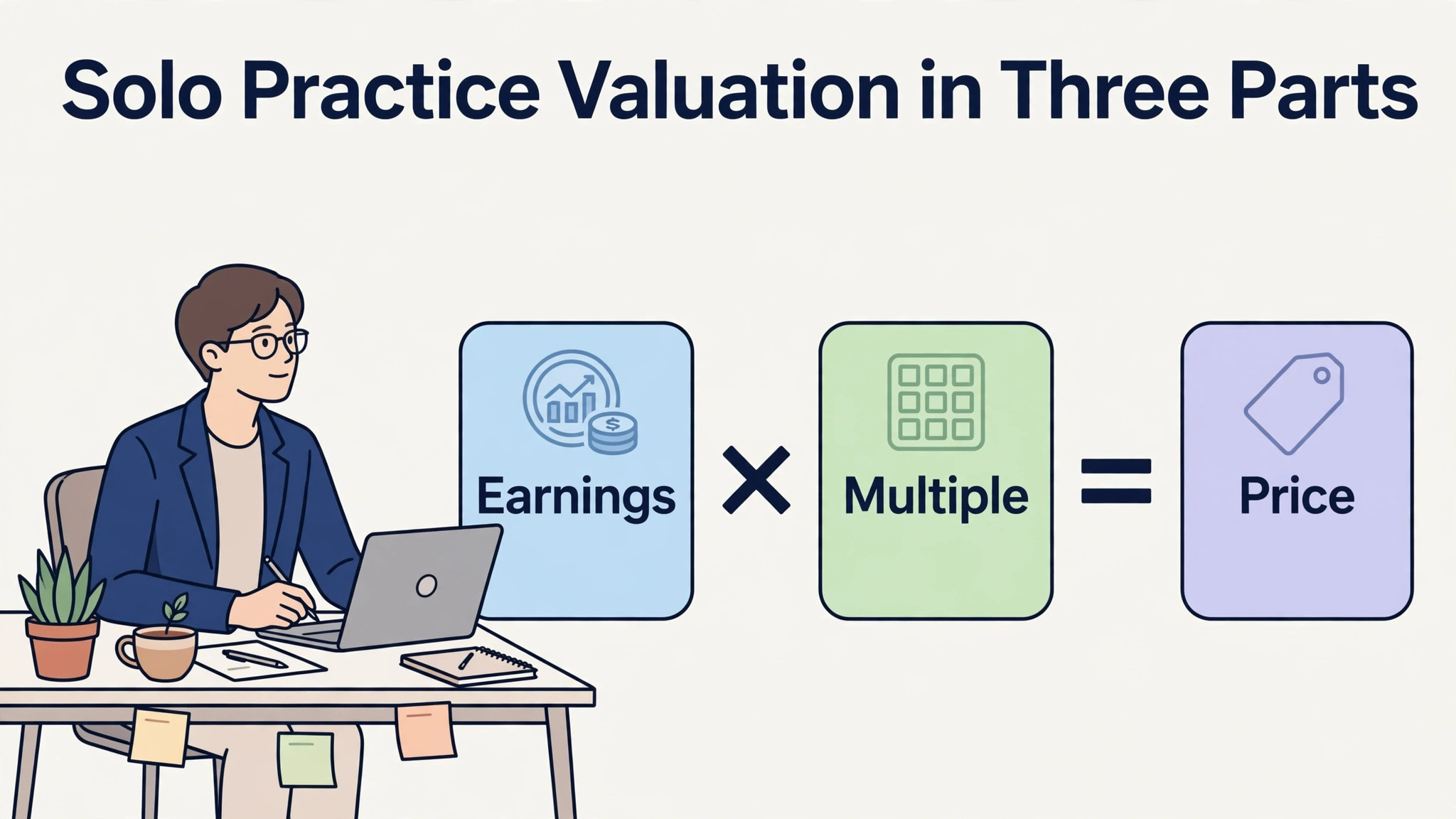
Small service businesses commonly sell for somewhere between 1.65 times and 3.5 times seller discretionary earnings, with the exact multiple set by how independent the business is from its owner. That single range explains why two firms with similar revenue can sell for very different prices. One firm has documented systems, recurring contracts, and a team that stays after the owner leaves. The other firm is the owner, plus a phone number and a client list. This guide explains how to value a small service business from verified earnings, not from guesswork, and it works through three full valuations so you can see how the method behaves at different sizes.
A valuation is not a price tag you print and defend at all costs. It is a reasoned range that a buyer, a lender, and an appraiser can all follow. The range comes from earnings, from the risk that those earnings survive a change of owner, and from checks against revenue and assets. When those three views agree, the range is strong. When they disagree sharply, the disagreement itself tells you where to look harder, usually at owner pay, at customer concentration, or at earnings that have not been verified.
Read this guide as a working method, not as a substitute for a professional appraisal. A formal valuation for a sale, a partnership buyout, or a tax matter should come from a qualified appraiser or broker who has seen your books. The method here will help you prepare for that conversation, test an asking price, and spot a valuation that rests on inflated earnings or an unjustified multiple.
How to Value a Small Service Business With Real Numbers
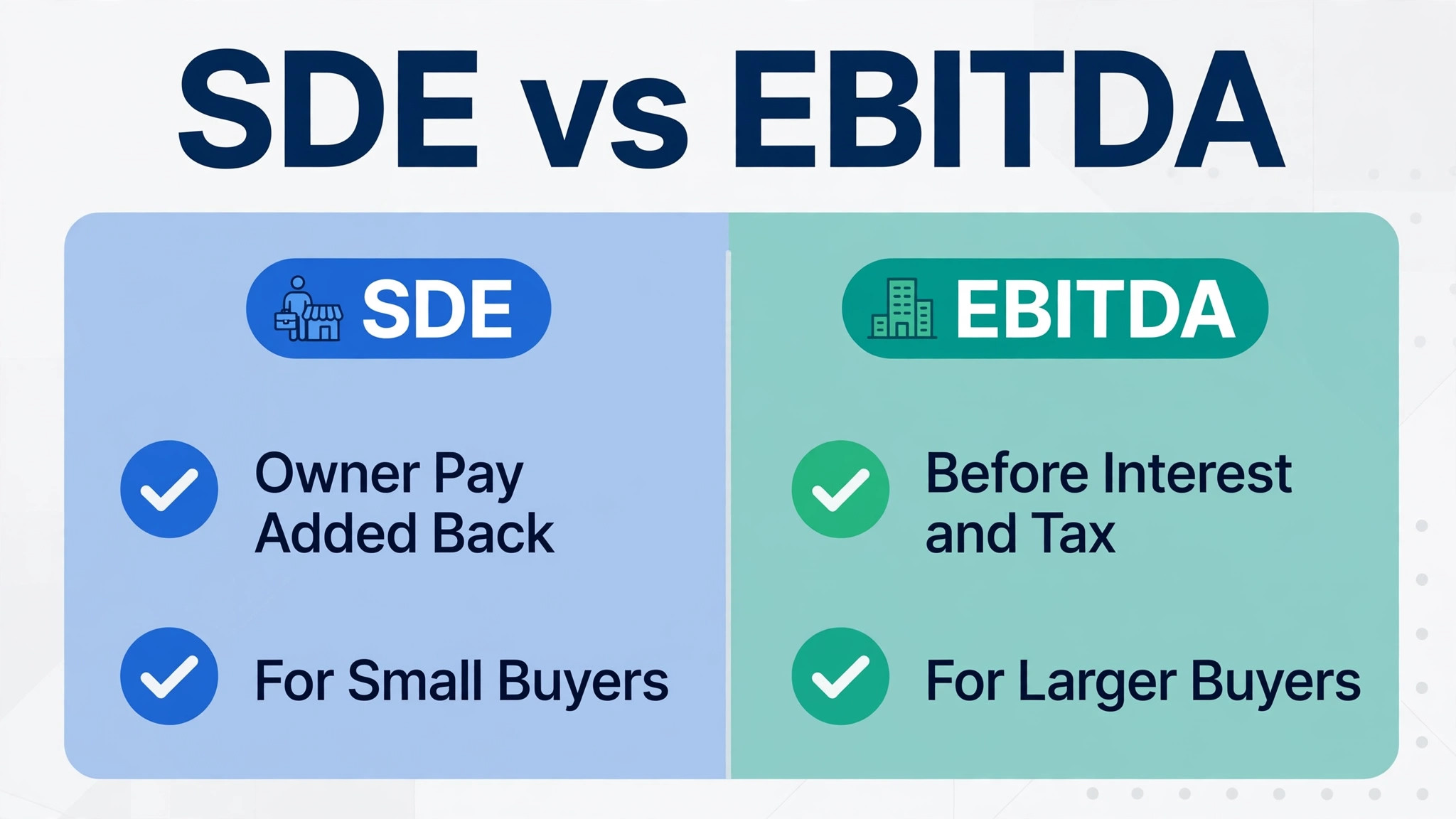
The standard method for owner operated service firms starts with seller discretionary earnings, usually shortened to SDE. SDE is the total financial benefit to a single owner operator. It starts with net profit, then adds back the owner salary, owner benefits, personal expenses paid by the business, and genuine one off items. The result approximates what a buyer operator would take home from running the business themselves. That is why SDE, rather than revenue or raw profit, is the headline figure for most small service sales.
Verification comes before multiplication. A multiple applied to unverified earnings produces a confident looking number that falls apart during diligence. Gather three years of profit and loss statements, tax returns, and bank statements, and reconcile them. List every add back with supporting evidence, such as an invoice, a policy document, or a clear note explaining a one off cost. Remove any add back you cannot defend, because a buyer will remove it anyway and will trust the remaining numbers less for having found the weak one.
The multiple then reflects risk and transferability. A solo practice with no team, no written contracts, and heavy owner dependence sits at the low end of the range. A firm with a manager, recurring contracts, documented procedures, and a spread customer base sits higher. Industry matters too, since buyers pay differently for recurring maintenance contracts than for project work that must be rewon every year. The multiple is a market judgement, not a formula, so it should be supported by comparable sales in your industry where you can find them.
Seller Discretionary Earnings, Built Step by Step
Building SDE correctly is the most important skill in this guide, because every later step multiplies whatever figure you produce. Start with reported net profit from the tax return or the profit and loss statement, and use the same source consistently across years. Then add back the owner salary and payroll taxes on that salary, since a buyer operator would take that benefit in a different form. Add back owner benefits such as health insurance paid by the business, a business vehicle used personally, and retirement contributions for the owner, where those items are genuinely owner benefits rather than operating costs.
Next, adjust for one off and non recurring items, in both directions. A lawsuit settlement, a flood repair, or a single large bad debt can depress one year earnings unfairly, so a documented one off cost can be added back. Equally, a one off windfall, such as a single grant or an unusual large project that will not repeat, should be removed from sustainable earnings. The test for every adjustment is simple. Would a new owner, running the same business in a normal year, experience this item again. If the answer is no, adjust it. If the answer is uncertain, leave it in and explain it.
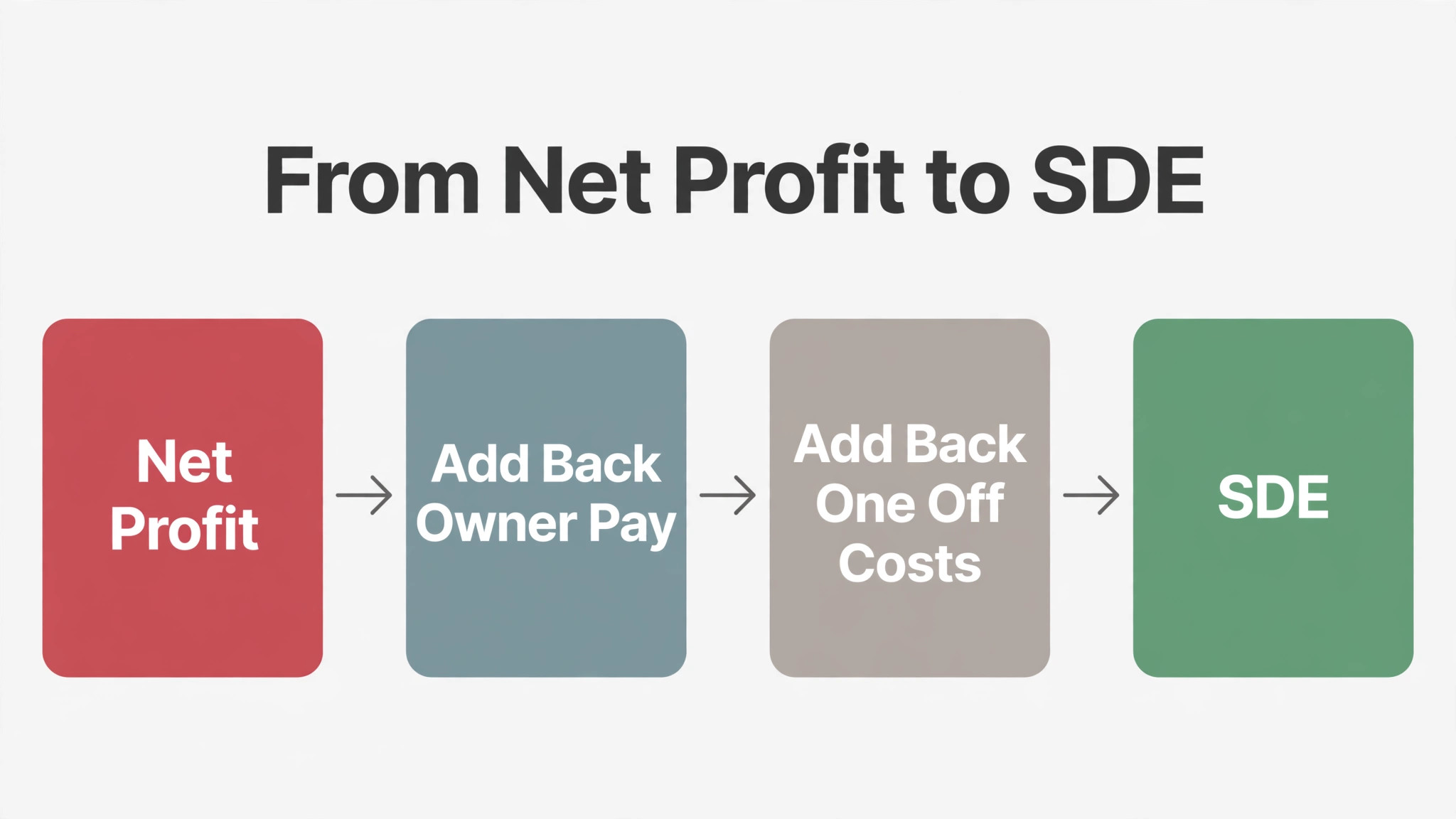
Normalise owner pay with care, because it cuts both ways. If you pay yourself far below a market salary for the work you do, SDE looks higher than the cash a buyer operator will really enjoy, since the buyer must either do the work unpaid or hire someone. If you pay yourself far above market, SDE looks lower than the business can sustain. Record the market salary for your role from a credible source, such as a salary survey or a recruiter estimate, and show the adjustment openly. Buyers respect a valuation that prices the owner job honestly.
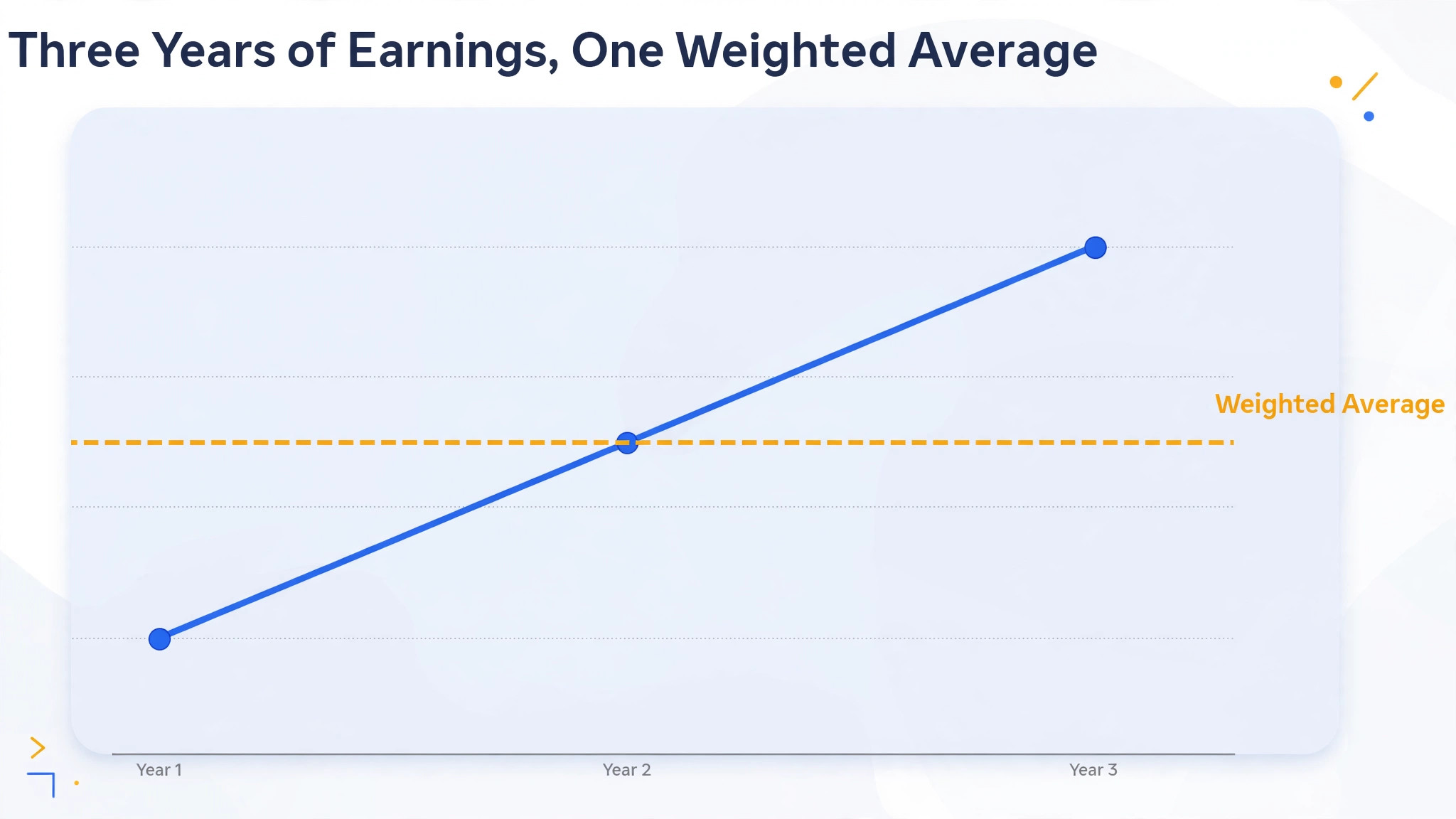
Finally, average the result thoughtfully. A three year weighted average, with the most recent year weighted most heavily, smooths a single odd year without hiding a decline. If earnings are falling year by year, say so plainly and use the recent trend as the base, not the three year peak. A valuation built on a declining trend and priced as if growth were certain will not survive a lender review, and it damages the seller credibility that the rest of the negotiation depends on.
Three Methods Side by Side, and When Each One Matters
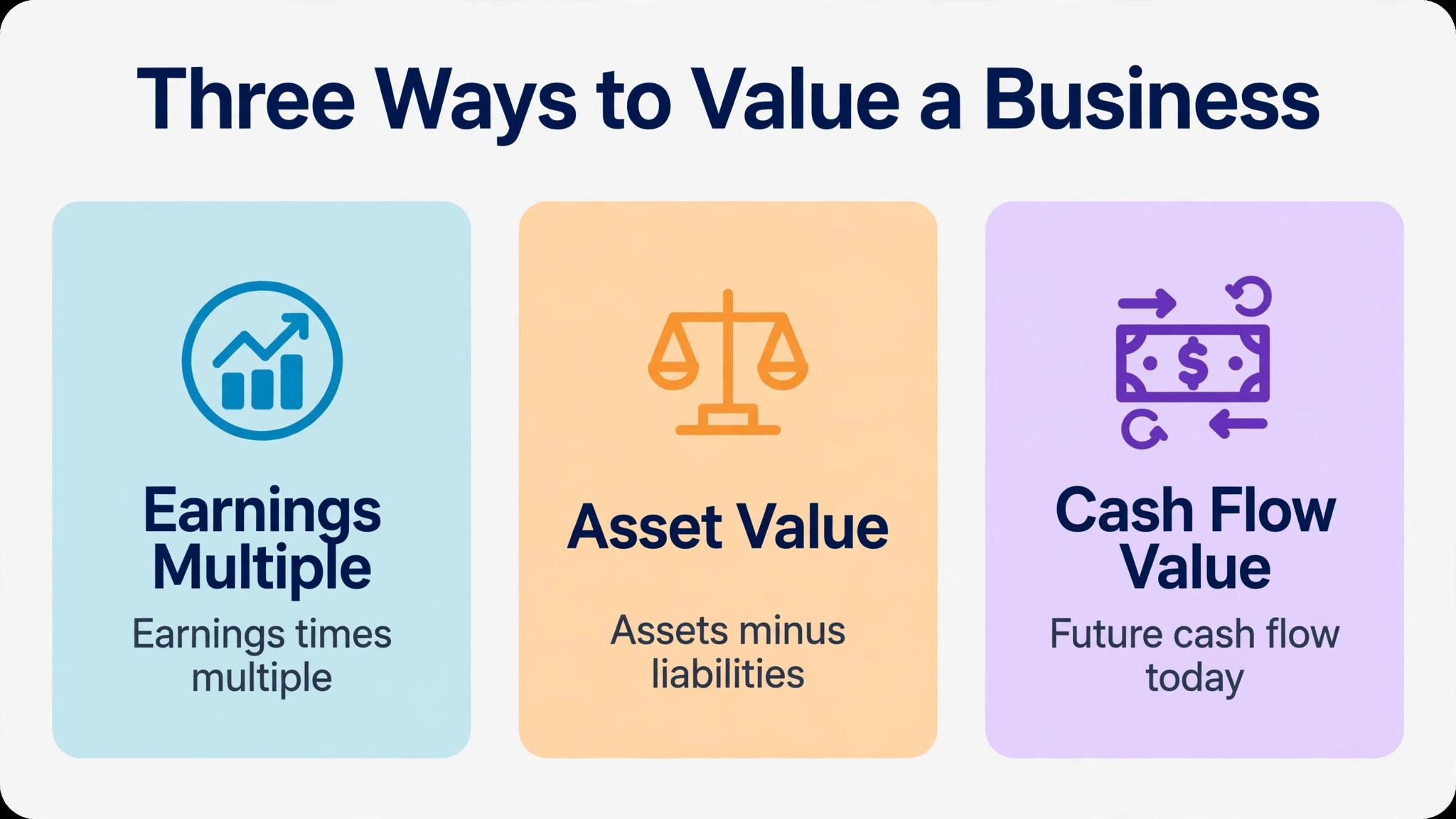
Earnings multiples do most of the work for service businesses, but two other methods provide essential checks. A revenue multiple values the business as a fraction of annual sales, commonly around 0.3 to 0.5 times revenue for smaller service firms and higher for firms with strong recurring revenue. An asset based value totals the saleable assets and subtracts liabilities, which sets a floor for firms with valuable equipment, vehicles, or inventory. For a people based service firm with few hard assets, the asset value is usually far below the earnings value, and that gap is normal, not a warning sign.
Use the three methods in a clear order. Build the SDE multiple valuation first, since buyers of service firms pay for earnings. Run the revenue multiple as a sanity check, asking whether the implied revenue multiple looks plausible for your industry and margin level. Run the asset value as a floor check, asking what a buyer would own if earnings stopped tomorrow. When the earnings value sits well above the asset floor and the revenue check looks plausible, the valuation has a coherent story. When the earnings value implies a revenue multiple far outside the normal range for your industry, recheck the earnings and the margin before trusting the result.
| Method | What it measures | Typical small service range | Best use |
|---|---|---|---|
| SDE multiple | Owner operator cash benefit times a market multiple | 1.65 to 3.5 times SDE | Headline valuation for owner operated firms |
| Revenue multiple | Annual sales times a market fraction | 0.3 to 1.5 times revenue | Sanity check, varies widely by margin |
| Asset value | Assets minus liabilities | Varies by equipment and inventory | Floor check, liquidation view |
Discounted cash flow analysis, which projects future cash flows and discounts them to present value, suits larger firms with stable, predictable earnings and a management team. For a small owner operated firm, a discounted cash flow model adds assumptions without adding accuracy, because the forecast depends on the same earnings and risk judgements as the multiple method. Keep the model simple, show your inputs, and let a professional appraiser add complexity where the deal size justifies it.
Worked Valuation One, a Solo Consulting Practice
A solo consultant earns 220,000 dollars in annual revenue and reports 95,000 dollars in net profit after paying a modest owner salary of 40,000 dollars. The owner also receives health insurance worth 9,000 dollars through the business and ran a one off website rebuild costing 6,000 dollars in the year being measured. SDE starts at 95,000 dollars, adds back the 40,000 dollar salary, the 9,000 dollar benefit, and the 6,000 dollar one off cost, giving SDE of 150,000 dollars. That figure represents the total benefit the owner draws from the practice in that year.
The multiple for a solo practice is low, because the business depends almost entirely on one person. Clients buy the consultant, not a team or a system, and there are no written retainers beyond a few months. A multiple of 1.5 times SDE reflects that risk, giving an earnings value of 225,000 dollars. The revenue check gives 220,000 dollars times 0.75, which is 165,000 dollars, and the asset value is close to zero, since the practice owns a laptop and little else. The earnings value sits above both checks, which is expected for a profitable solo practice, but the gap between 225,000 dollars and the revenue check suggests caution about pricing above the earnings figure.
The buyer cash flow test sharpens the picture further. A buyer who pays 225,000 dollars and must replace the consultant work, either by doing it themselves or by hiring, effectively buys a job plus a client list. If the buyer is an operator who will do the work personally, the price can work.
If the buyer must hire a replacement at a market salary, the remaining cash flow after that salary is far smaller, and the price must fall. This worked example shows why learning how to value a small service business starts with owner dependence, not with revenue. The solo practice is worth a real amount, but its value is capped by the fact that the owner is the product.
Worked Valuation Two, a Five Person Cleaning Firm
A cleaning firm with five staff earns 620,000 dollars in annual revenue and reports 110,000 dollars in net profit after paying the owner a salary of 70,000 dollars. The owner also receives a vehicle benefit worth 8,000 dollars, and the year included a one off legal cost of 7,000 dollars for a contract dispute that has been settled. SDE starts at 110,000 dollars, adds back the 70,000 dollar salary, the 8,000 dollar benefit, and the 7,000 dollar one off cost, giving SDE of 195,000 dollars. Recurring contract revenue makes up 70 percent of sales, which strengthens the figure, while the top customer represents 18 percent of revenue, which is acceptable but worth noting.
The multiple for a five person firm with a supervisor, recurring contracts, and documented cleaning procedures is higher than for a solo practice. A multiple of 2.5 times SDE reflects a business that can run for weeks without the owner on site, giving an earnings value of 487,500 dollars. The revenue check at 0.5 times revenue gives 310,000 dollars, and the asset value, covering vehicles, equipment, and working capital net of liabilities, comes to roughly 90,000 dollars. The earnings value sits comfortably above the asset floor, and the implied revenue multiple of about 0.79 times revenue looks plausible for a recurring revenue service firm with healthy margins.
The buyer test here looks much stronger. A buyer can hire a manager at a market salary, keep the supervisor in place, and retain most contract revenue through a structured handover. Debt service on a loan for 487,500 dollars must still fit inside the cash flow after a replacement salary and working capital needs, so the buyer will model that carefully.
But the firm has passed the key test that the solo practice failed. It is a business with a team and contracts, not only a person, and the multiple rewards that difference. This contrast is the heart of how to value a small service business across sizes, since team depth and recurring revenue move the multiple more than revenue alone.
Worked Valuation Three, a Ten Person Marketing Agency
A marketing agency with ten staff earns 1,400,000 dollars in annual revenue and reports 210,000 dollars in net profit after paying the owner a salary of 120,000 dollars. The owner also receives benefits worth 15,000 dollars, and the year included a one off office move cost of 20,000 dollars. SDE starts at 210,000 dollars, adds back the 120,000 dollar salary, the 15,000 dollar benefits, and the 20,000 dollar one off cost, giving SDE of 365,000 dollars. The agency has a general manager, account managers for each major client, and retainer contracts covering 60 percent of revenue, but the top two clients together represent 38 percent of sales, which tempers the result.
For a firm of this size, buyers increasingly look at earnings before interest, taxes, depreciation, and amortisation, known as EBITDA, alongside SDE. EBITDA here is roughly SDE minus a market salary for a general manager, since the owner no longer needs to do the day to day work personally. If a general manager costs 110,000 dollars, EBITDA is about 255,000 dollars. A multiple of 3.5 times SDE gives 1,277,500 dollars, while a multiple of 4.5 times EBITDA gives 1,147,500 dollars. The two methods land in a similar range, which increases confidence, and a sensible valuation range for this agency is roughly 1.1 million to 1.3 million dollars before working capital adjustments.
The revenue check at 0.75 times revenue gives 1,050,000 dollars, close to the bottom of the earnings range, and the asset value is modest, covering computers, working capital, and a small amount of equipment. The main risk is client concentration, since losing one of the top two clients would remove nearly a fifth of revenue. A buyer may therefore structure part of the price as a deferred payment tied to client retention, which protects the buyer without forcing the seller to accept a lower headline price. The agency example shows how a larger firm earns a higher multiple, but also how concentration and management depth, not headcount alone, decide where inside the range the price lands.
What Moves Your Multiple Up or Down
Seven factors move the multiple more than any others, and each one is at least partly within the owner control. Recurring or contracted revenue moves the multiple up, because buyers pay for revenue that renews without being rewon. A documented team with a manager moves it up, because the business survives the owner departure. A spread customer base moves it up, because no single loss breaks the earnings. Growth over three years moves it up, because buyers pay for momentum as well as current earnings. Clean, reconciled books move it up, because lenders finance what they can verify.
Owner dependence, customer concentration, and declining earnings move the multiple down, sometimes sharply. A business where the owner holds every key relationship, signs every quote, and fixes every problem will be priced as a job purchase, however strong the profit looks. A business with thin margins will also be priced lower, because a small revenue dip wipes out profit. If your multiple comes out at the low end, do not argue with the market. Fix the factor that caused it, or accept a price that reflects it, and use the remaining preparation time to move the factor that matters most.
A practical way to use this list is to score your own business on each factor from weak to strong, then estimate where the multiple should sit before you talk to a broker. If five factors are strong and two are weak, a mid to upper multiple is defensible. If four factors are weak, expect the low end and plan improvements before listing. That self scoring exercise turns a vague hope about price into a specific improvement plan, and it prepares you for the exact questions a buyer will ask first. It is also the fastest way to see how to value a small service business from the buyer side, since buyers score the same factors before they offer.
The Buyer Cash Flow Test Every Valuation Must Pass
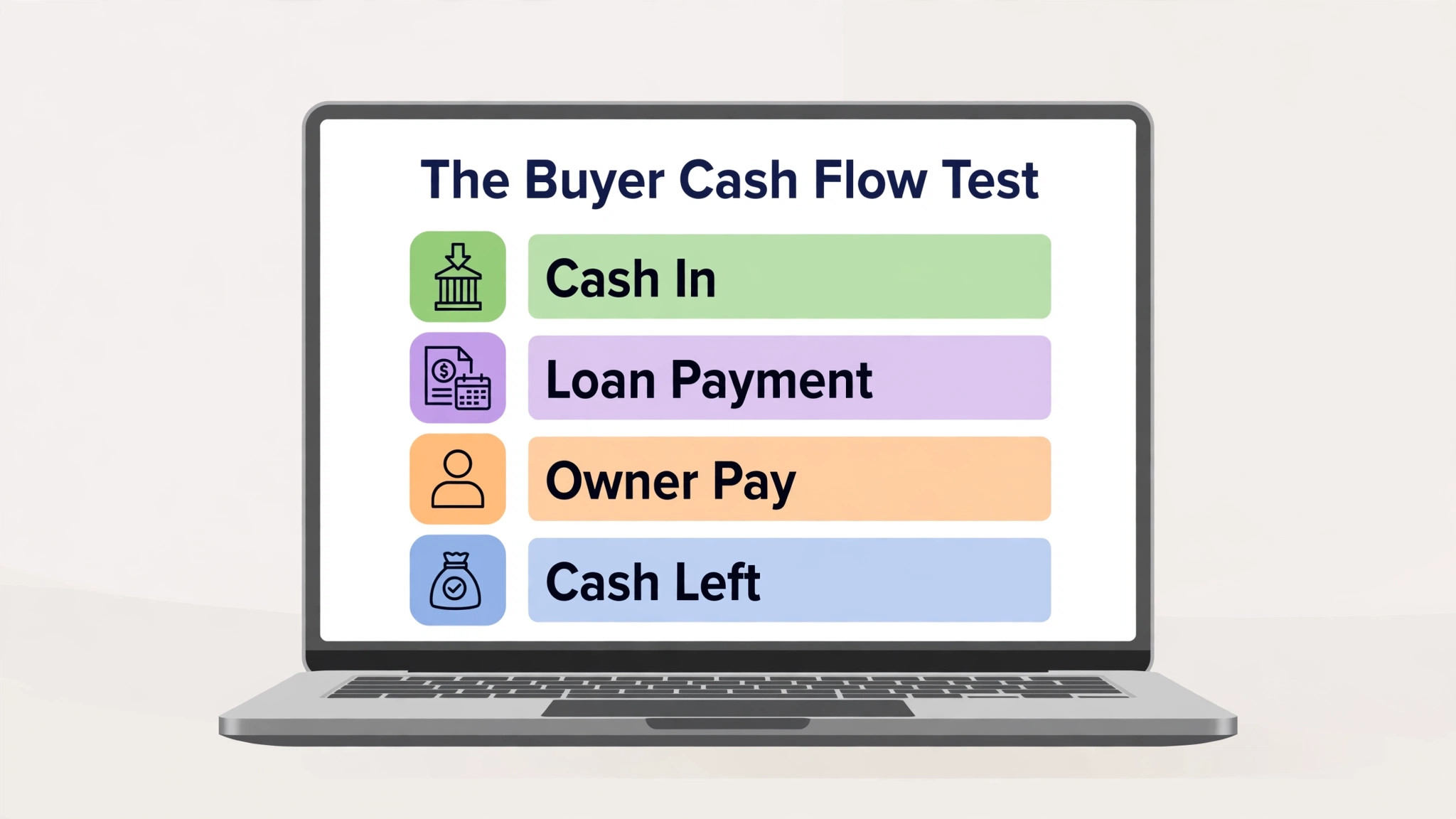
A valuation that a buyer cannot finance is a valuation that will not close. After the multiple produces a headline figure, test it from the buyer side. Start with SDE or EBITDA, subtract the market cost of replacing the owner work, subtract annual debt service on the purchase loan, and subtract working capital needs for the year. What remains is the cash the buyer actually keeps. If that remainder is thin or negative, the price is too high for a financed buyer, however reasonable the multiple looked in isolation.
Run the test at three prices, the bottom, the middle, and the top of your range. The bottom price should leave comfortable buyer cash flow even under cautious assumptions. The middle price should leave adequate cash flow under normal assumptions. The top price will only work for a cash buyer or a strategic buyer who gains extra value from the acquisition, such as an existing competitor who can remove duplicated costs. Pricing for the top of the range and expecting a financed buyer to stretch is the most common reason a well prepared business sits unsold.
Include working capital honestly in the test. A service business that must fund payroll before clients pay, carry receivables for 45 days, or hold deposits for future work needs cash to operate, and that cash must come from somewhere. A buyer who discovers a working capital gap after agreeing a price will reopen the negotiation, so surface the requirement early and agree how it will be handled in the deal structure. A valuation that survives this test is one a lender can support, and lender support is what turns an agreed price into a completed sale.
Mistakes That Inflate or Destroy a Valuation
The most damaging mistake is inflating add backs. Every undocumented personal expense added back to earnings, every normal operating cost described as one off, and every family salary for work never done weakens the valuation. Buyers and their accountants test add backs line by line, and a valuation that loses credibility on add backs loses credibility on everything else. Keep add backs few, large, documented, and defensible, and accept a lower SDE that a buyer will believe over a higher SDE that a buyer will reject.
The second mistake is valuing on a single exceptional year. A year boosted by a one off project, a pandemic era spike, or a single large client win does not represent sustainable earnings. Use a weighted average, disclose the exceptional year openly, and let the buyer see the trend. A valuation anchored to the peak year invites a price cut when diligence reveals the normal run rate, and it wastes the early goodwill that a transparent seller earns.
The third mistake is ignoring the difference between SDE and EBITDA. SDE suits an owner operator buyer who will run the business personally. EBITDA suits a buyer who will hire management and step back. Applying an EBITDA multiple to SDE, or an SDE multiple to EBITDA, produces a figure that looks professional and is wrong. State which earnings figure you used, show the bridge between the two, and let the buyer follow the logic. Clarity on this single point prevents more valuation arguments than any other disclosure.
The fourth mistake is forgetting that value and price are not the same thing. Value is what the method produces. Price is what a specific buyer will pay, given their financing, their strategic benefit, and the deal terms. A seller who insists on the top of the valuation range while refusing deferred terms, a handover period, or a retention structure may lose a buyer who would have paid the full price on better terms. Treat the valuation as the anchor, and negotiate terms around it with the same care you gave to the numbers.
A Short Pre Valuation Checklist
Before you ask a broker or appraiser for a figure, run a short self check that takes an afternoon and saves weeks of back and forth. Gather three years of tax returns, profit and loss statements, and bank statements, and note every place where the figures disagree. List your add backs with evidence, and delete any you cannot defend in a single sentence. Calculate SDE for each of the last three years, then calculate the weighted average with the most recent year weighted most heavily. Those three steps give you a defensible earnings base, which is the hardest part of the whole exercise.
Next, score the multiple drivers honestly. Note your recurring revenue share, your top customer share, your team depth, and your growth trend, and write one sentence of evidence for each score. Then run the buyer cash flow test at a low, a mid, and a high multiple, subtracting replacement salary, debt service, and working capital needs at each price.
If only the low price leaves comfortable buyer cash flow, your realistic range is lower than you hoped, and that knowledge is valuable before a broker conversation, not after one. This checklist approach to how to value a small service business keeps the conversation grounded in evidence, and it gives a professional appraiser a clean starting pack instead of a pile of unreconciled records.
Finally, decide what you will do with the result. If the range is strong, set the asking price inside it and prepare the sale packet around the same numbers. If the range is weak, pick the one multiple driver you can improve fastest, such as converting verbal work into written retainers or appointing a supervisor, and set a date to revalue.
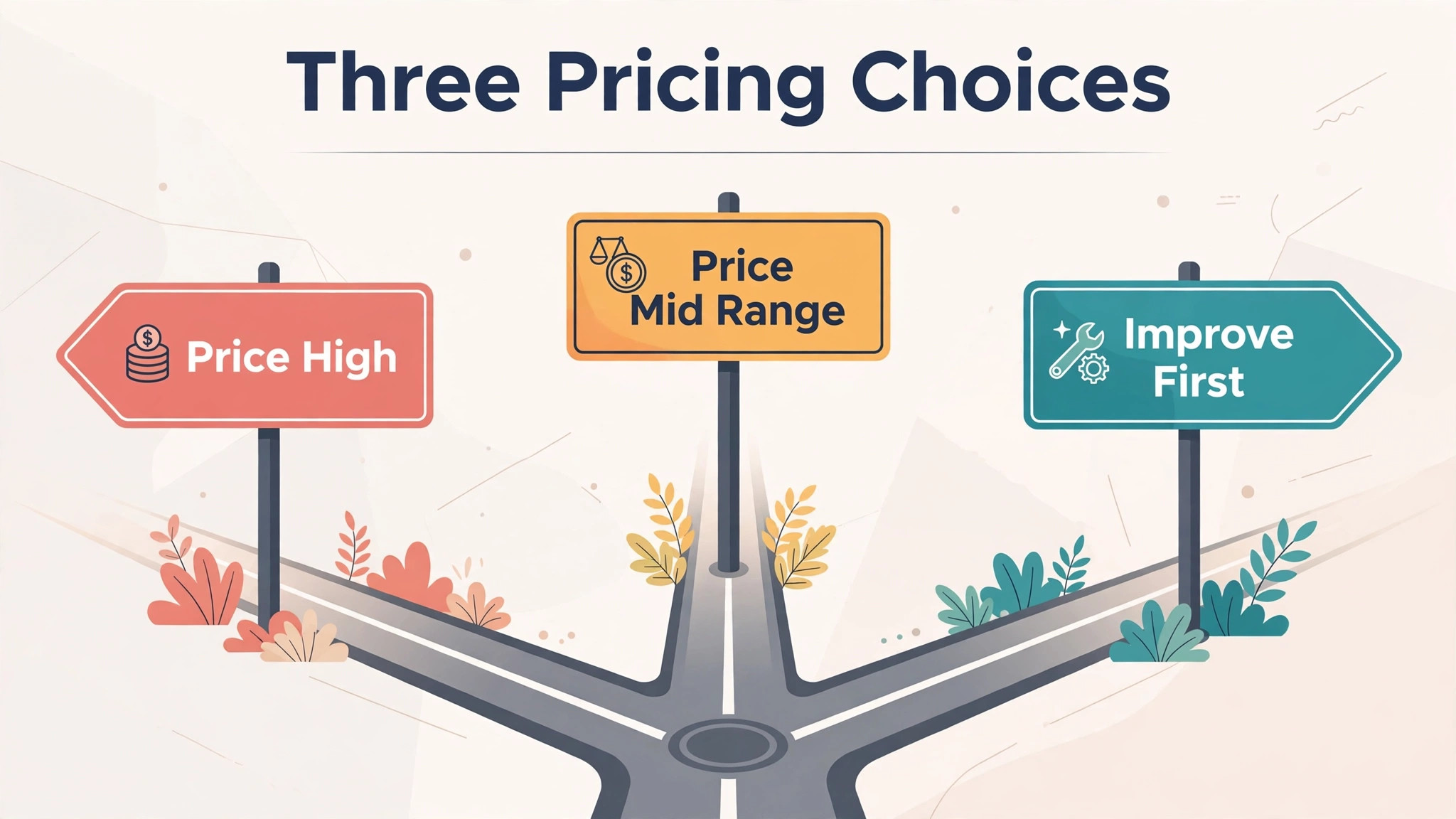
A valuation is most useful when it changes a decision, whether that decision is to list now, to improve first, or to hold. Owners who treat the figure as a verdict miss its real value, which is as a plan. Used that way, the method behind how to value a small service business becomes a management tool, not only a sale tool, and it improves the business even if you decide not to sell at all.
Frequently Asked Questions
What is the difference between SDE and EBITDA?
SDE is the total benefit to a single owner operator, including salary, benefits, and defensible add backs. EBITDA is operating profit before interest, taxes, depreciation, and amortisation, and it suits businesses with a management team in place. For a small owner operated service firm, SDE is the standard figure. For a larger firm where the owner is already replaced by managers, EBITDA becomes the more useful measure. Show both where the business sits near the boundary, and explain the bridge between them.
How many years of financials should a valuation use?
Three years is the standard, with the most recent year weighted most heavily. Three years shows stability or decline, smooths a single odd year, and gives a lender enough history to assess risk. A business younger than three years can still be valued, but the range will be wider and the multiple lower, because the earnings history is shorter. Keep monthly records as well, since a buyer will ask how the current year is trading against the historical average.
Does revenue matter if my profit is strong?
Revenue matters as a check, not as the headline. A lean, highly profitable firm is worth more than a high revenue firm with thin margins, because buyers buy cash flow, not sales. Revenue multiples can understate a profitable firm and overstate an unprofitable one, so use the revenue multiple to test the earnings valuation, not to replace it. If the implied revenue multiple looks far outside the normal range for your industry, recheck margins and earnings before trusting the result.
How do I value a business with no assets?
Most service businesses are valued on earnings, not on assets, because their value sits in client relationships, contracts, systems, and team capability. The asset value for such a firm is a floor, not a target, and it will often be close to working capital alone. Buyers understand this, and they pay for transferable earnings. Document the contracts, the procedures, and the team that make those earnings transferable, since that documentation is what turns personal goodwill into business value.
When should I pay for a professional valuation?
Pay for a professional valuation before you set an asking price, before a partnership buyout, and before any transaction where tax or legal consequences depend on the figure. A broker or appraiser brings comparable sales data, industry multiple evidence, and a defensible report that a lender can rely on. The cost of a professional valuation is small compared with the cost of pricing too high and sitting unsold, or pricing too low and leaving money behind.
Can I increase my valuation before selling?
Yes, and the fastest levers are the multiple drivers in this guide. Convert verbal arrangements into written retainers, spread revenue across more customers, document procedures, and appoint a manager who can run daily work. Each improvement moves the multiple, not only the earnings, so the effect compounds. Even six months of cleaner books and a more independent team can shift a valuation range meaningfully, which is why preparation time is worth more than a last minute pricing argument.
More Reading on Stratilyze
– How to Choose a Business Bank Account as a Small Business – How to Write a Scope of Work as a Small Business – How to Set Service Prices for a Trades Business