

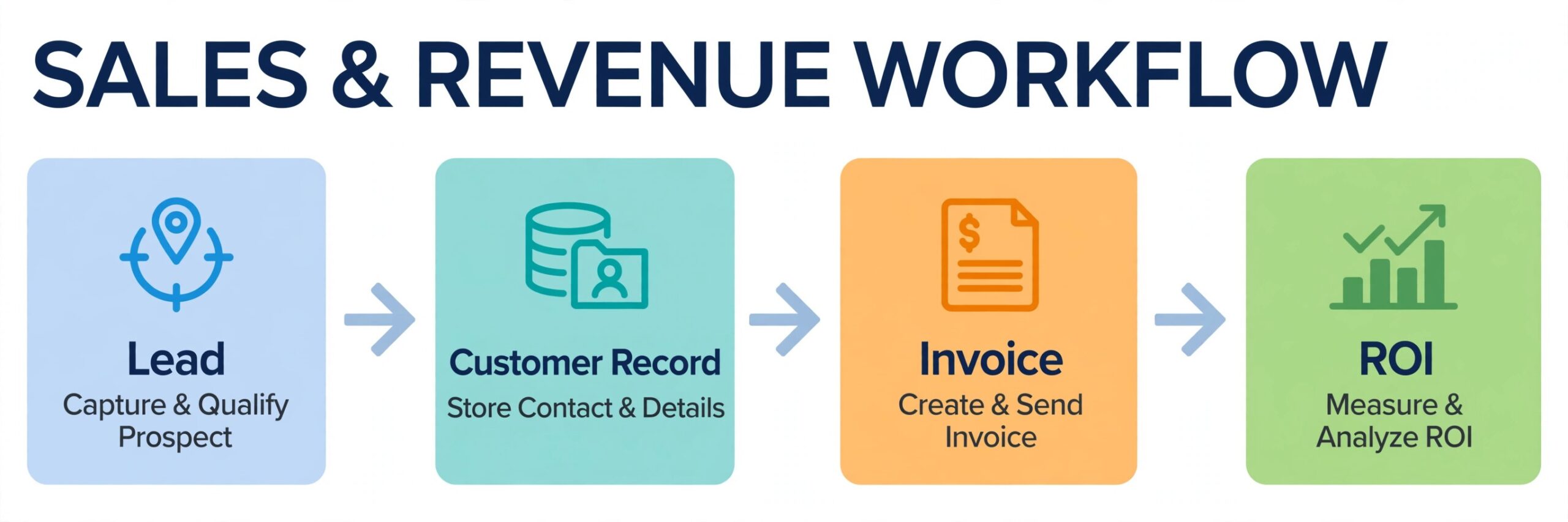
The verdict is simple, and it is worth stating plainly at the start. If you cannot trace a customer back to the channel that brought them, you cannot know whether your marketing worked, however good your reports look. Learning how to track marketing ROI small business owners can trust starts with one discipline, which is to record the source of every lead on the customer record, follow that record to the invoice, and then compare revenue with cost by channel. Everything else in this guide, from tracking numbers to attribution rules, exists to make that one discipline possible.
Most small businesses can tell you what they spent on marketing last month. Far fewer can tell you which spending produced the customers who paid, and that gap is rarely caused by the ad platform. It is caused by the phone call, the estimate, and the signed job that happen after the click, outside the place the report is looking. A click report tells you what you bought. A lead to revenue report tells you what came back. This guide builds the second kind of report, with a worksheet and a monthly review checklist you can run without expensive software.
Marketing ROI itself is a simple formula. Take the revenue attributed to a channel, subtract what the channel cost, divide by what it cost, and multiply by one hundred to read it as a percentage. The formula is never the hard part. The hard part is the word attributed, because if you cannot say which jobs came from which channel, any ROI figure is a guess with a percentage sign on it. The rest of this guide is about making attribution honest, repeatable, and useful for decisions.
Why Lead Counts Mislead Small Businesses
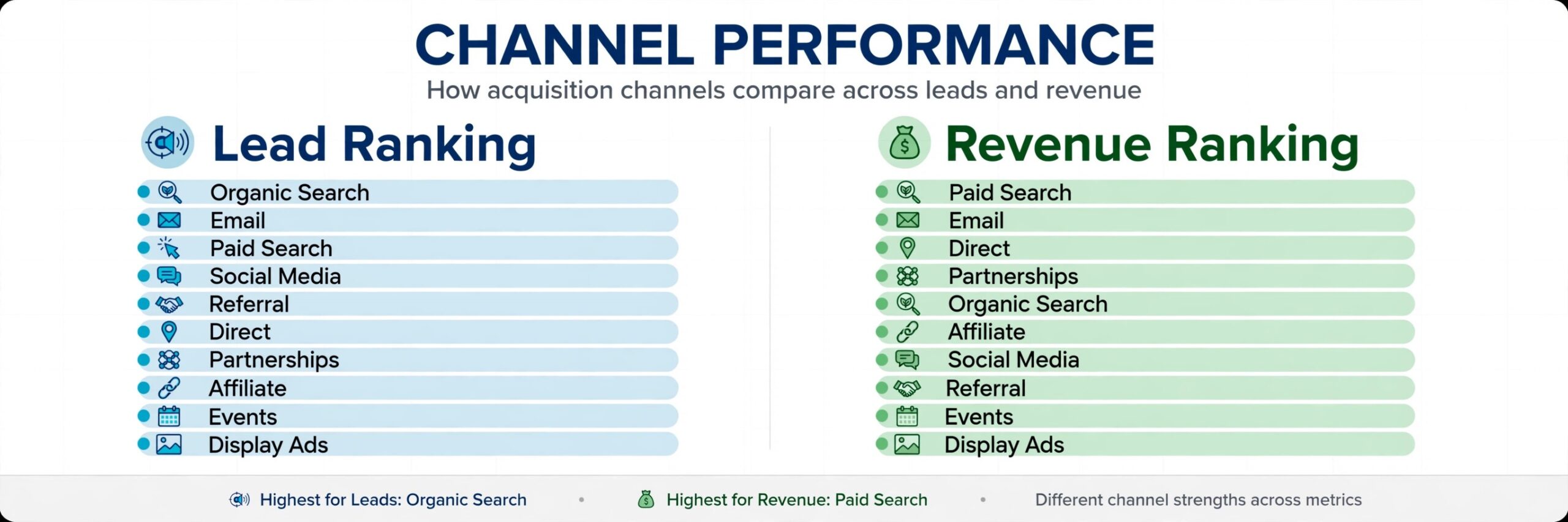
Lead counts are the most misleading marketing number for a small business, because the channel that produces the most leads is frequently not the channel that produces the most revenue. A channel can flood you with enquiries that never close, while a quieter channel produces fewer, better fitting customers who pay promptly and return. A report that ranks channels by lead volume will tell you to fund the noisy channel and starve the profitable one, which is the opposite of what a good ROI report should do.
The problem grows when phone calls are missing from the report. For many service businesses, the phone is where the customer actually raises a hand, yet form fills alone are counted, calls arrive as one undifferentiated pile, and the most valuable leads have no origin at all. A business that counts only forms will undervalue every channel that drives calls, and it will overvalue channels that drive easy form fills from people who never buy. That bias alone can justify a whole tracking project.
Close rate by source is the antidote. When you know how many qualified conversations from each source became paying work, you can see quality, not just volume. A channel with a high close rate deserves more funding, even if its lead count is modest, because each lead is worth more. A channel with a low close rate needs a different conversation, either about targeting, about the offer, or about whether the channel fits your business at all. Lead counts describe effort. Close rates and revenue describe results, and ROI decisions should be based on results.
Set Up Tracking Before You Spend Another Dollar
Good tracking starts before the next campaign, not after it, because data you did not capture at the start cannot be reconstructed later, and that timing rule is central to how to track marketing ROI small business owners can rely on.
The first step is to give every channel its own way to be recognised. Tag every link you control with a consistent source label, using a short, standard name for each platform, so form fills carry their source with them. Do not tag links between pages of your own website, because that restarts the visit and overwrites where the customer really came from. Keep a short list of approved source names, and do not let staff invent new spellings, because messy source values will silently split one channel into several in your reports.
The second step is to give phone calls a source as well. Dynamic call tracking shows a different number to visitors from each source, so a call from a search ad, a local listing, and a social post each arrive labelled. Without it, calls arrive as one pile, and the channel that drives calls looks invisible. If full call tracking is too costly at first, start with a simpler version, using a separate number for your main paid channel and for your main listing, and asking every caller how they heard about you. That manual step is crude, but it is far better than no call source at all.
The third step is to write the source onto the customer record, not only into an analytics tool. When the source field on a contact or a job record is blank, the trail ends at the first conversation and never reaches the invoice. Make the source field required on every form and every intake script, with a dropdown of approved sources plus an other box for details. Train staff to ask the question on every call, in the same words, and to record the answer before they move on. Clean source data at intake is the cheapest tracking investment a small business can make.
The Metrics That Belong on Your Dashboard
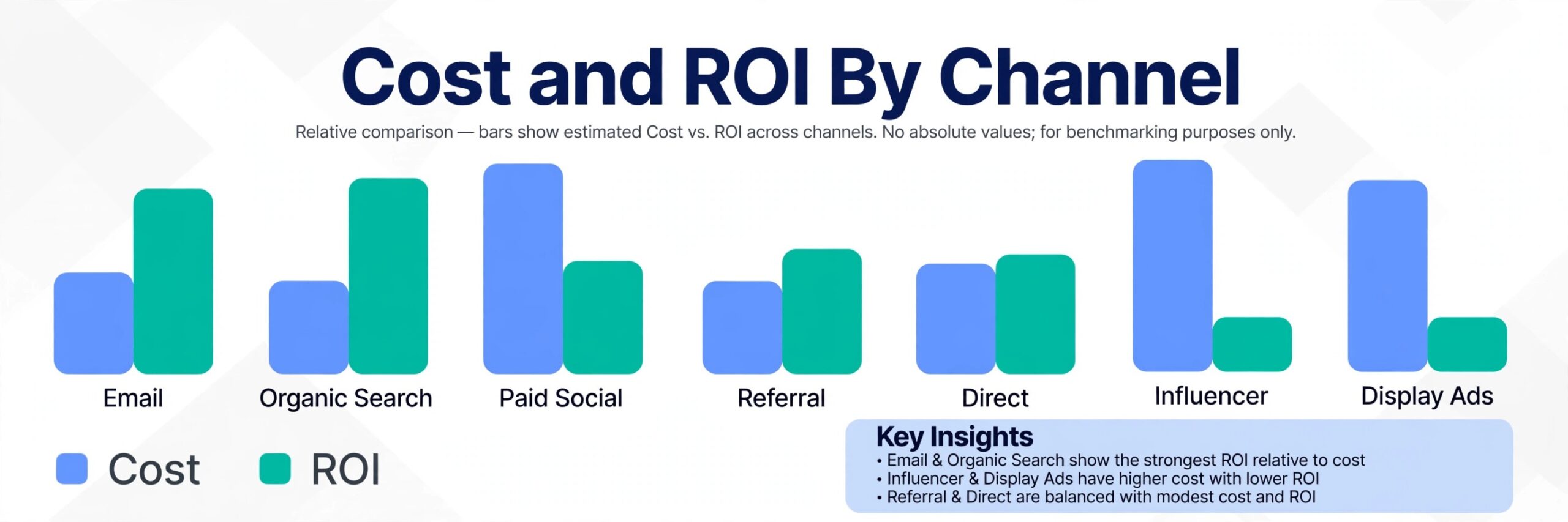
A small business dashboard should be short, because a long dashboard is rarely read. Put the metrics closest to the bank account first, and treat vanity metrics as diagnostic detail, not as headlines. Cost per customer, which is total channel cost divided by customers won from it, tells you what a customer from that channel actually cost. Revenue or gross profit per customer tells you what that customer was worth. Close rate by source tells you how efficiently conversations became work. Cost per qualified lead, excluding spam, wrong numbers, and existing customers, tells you whether a channel is producing real prospects or just noise.
ROI by channel, using the formula from the introduction, belongs on the dashboard, but only after the metrics above are trustworthy. A ROI figure built on guessed attribution will mislead you with confidence, while a ROI figure built on traced revenue will guide you even when it is imperfect. Also track booked appointment rate, which is how many qualified conversations turned into an estimate or a visit, because it separates a marketing problem from a sales or scheduling problem. If a channel produces many qualified conversations but few bookings, the problem may be response speed or availability, not the channel itself.
Impressions, clicks, and raw lead counts still have a place, but only as diagnosis. A sudden drop in clicks may explain a drop in leads, and a high click cost may explain a high cost per customer. Those numbers help you fix a campaign, but they do not tell you whether the campaign earned money. Keep them on a second page of the dashboard, not on the headline page, so the monthly review starts with revenue, cost, and customers, and only then looks at activity.
Attribution Rules a Small Team Can Actually Follow
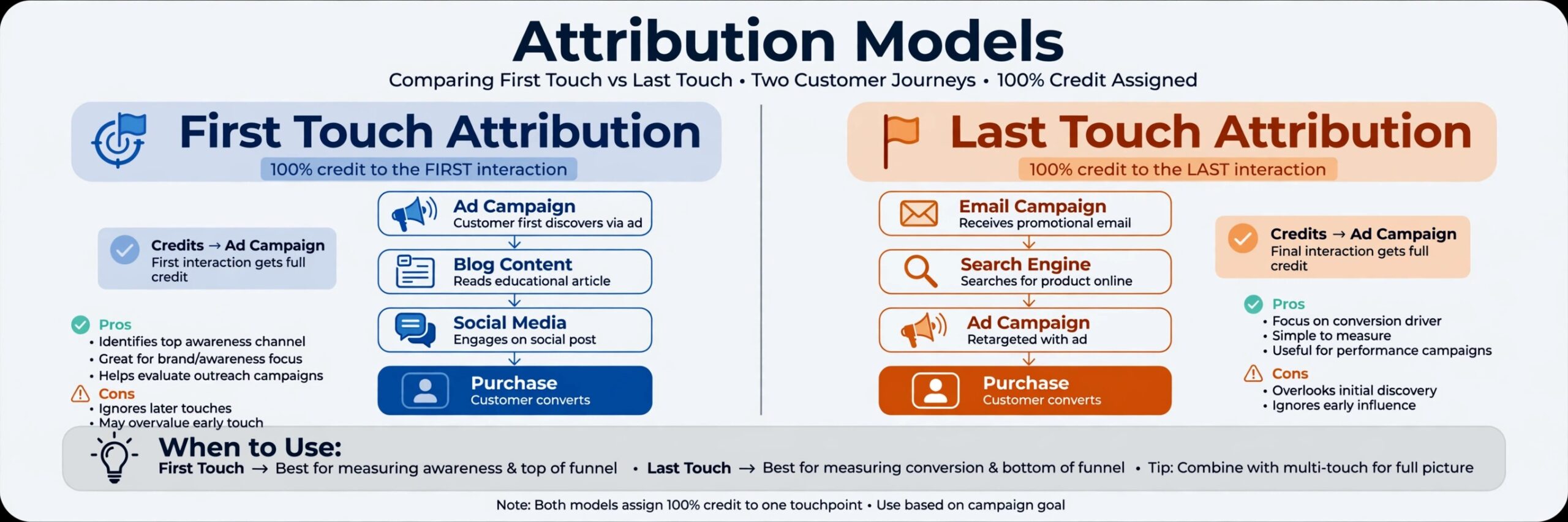
Perfect attribution is not available to a small business, and chasing it will waste time that should go to basic tracking. A useful answer starts with a few clear rules, applied consistently, so everyone reports the same way. The first rule is to record both the first touch and the last touch where you can, but to choose one primary rule for ROI decisions and stick to it for at least a quarter. First touch credits the first interaction that brought the customer, which suits businesses where discovery matters most. Last touch credits the final interaction before enquiry, which is easier to capture but often credits a search for your own name after earlier work did the persuading.
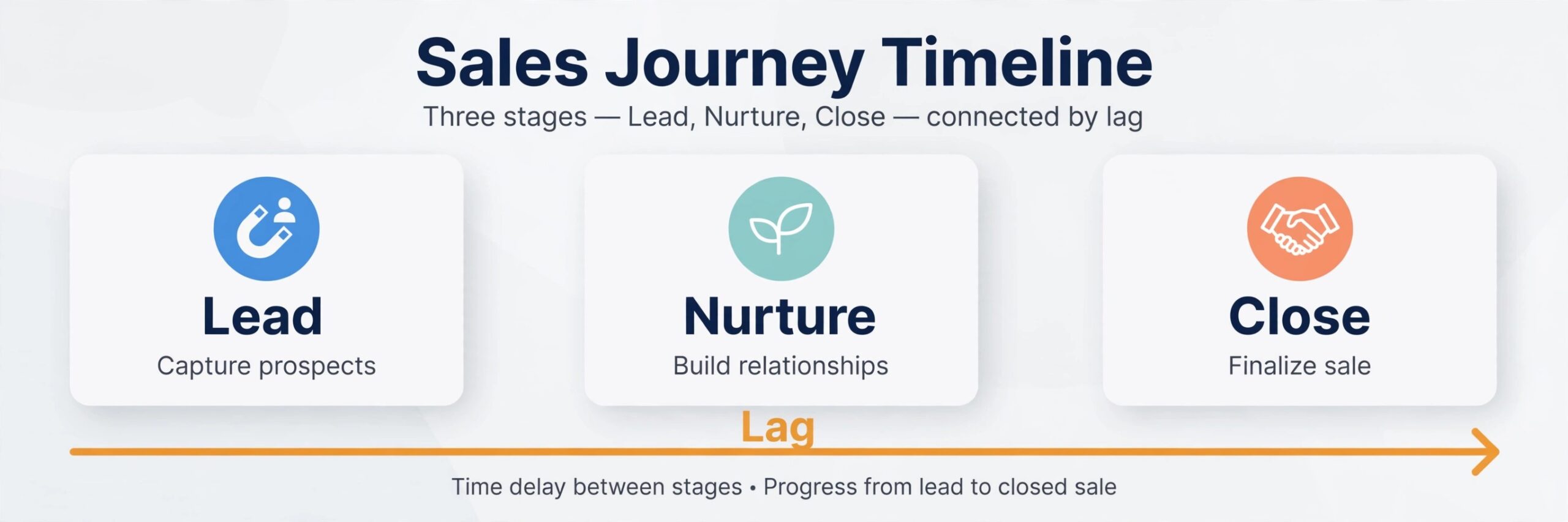
The second rule is to handle the lag honestly. A deal closing this month may come from a lead generated months ago, so attributing by close date alone credits whatever channel was running when the deal closed, not the channel that found the customer. Where you can, join the revenue to the original source on the customer record, and note the lag in your monthly review. Where you cannot, state the lag as a limitation, and avoid comparing a channel that produces fast sales with a channel that produces slow sales over a single month. Compare them over a quarter, or over the typical sales cycle for your business, so slow channels get a fair reading.
The third rule is to decide what counts as a qualified lead, and to apply that definition to every channel. A qualified lead should be a real prospect with a real need, a real contact, and a reasonable fit for your service, not a spam form, a wrong number, or an existing customer asking a routine question. Write that definition down, share it with staff who qualify calls and forms, and review a sample of leads each month to check that the definition is being applied consistently. Without a shared definition, one channel will look better simply because its leads were counted more loosely.
The fourth rule is to keep a simple multi touch note for important deals. When a large customer mentions several channels, such as a social post, a blog article, and then a search for your name, record all three on the customer record, even if your primary ROI rule credits only one. That note prevents the common error of crediting the last click with all the value, and it helps you see which channels assist sales even when they rarely close them alone. Over time, those notes reveal assist patterns that a single touch report would hide, such as a channel that rarely produces the final enquiry but often starts the journey.
The ROI Tracking Worksheet
Copy the worksheet below for each channel, each month, and keep the completed copies so you can compare quarters fairly. Fill it from your customer records and your invoices, not from an ad platform report alone, because only the customer record and the invoice together prove revenue.
- Channel name, using your approved source list.
- Total channel cost for the month, including ad spend, tool fees, and staff time where you can estimate it.
- Sessions or calls or form fills from that channel, as a volume note only.
- Qualified leads from that channel, using your written definition.
- Customers won from that channel, traced to a customer record.
- Revenue from those customers, traced to invoices or payments received.
- Gross profit from those customers, where you can calculate it reliably.
- Cost per customer, calculated as total cost divided by customers won.
- Revenue per customer, calculated as revenue divided by customers won.
- Close rate by source, calculated as customers won divided by qualified leads.
- ROI for the channel, calculated as revenue minus cost, divided by cost.
- Lag note, stating whether revenue came from leads generated in an earlier month.
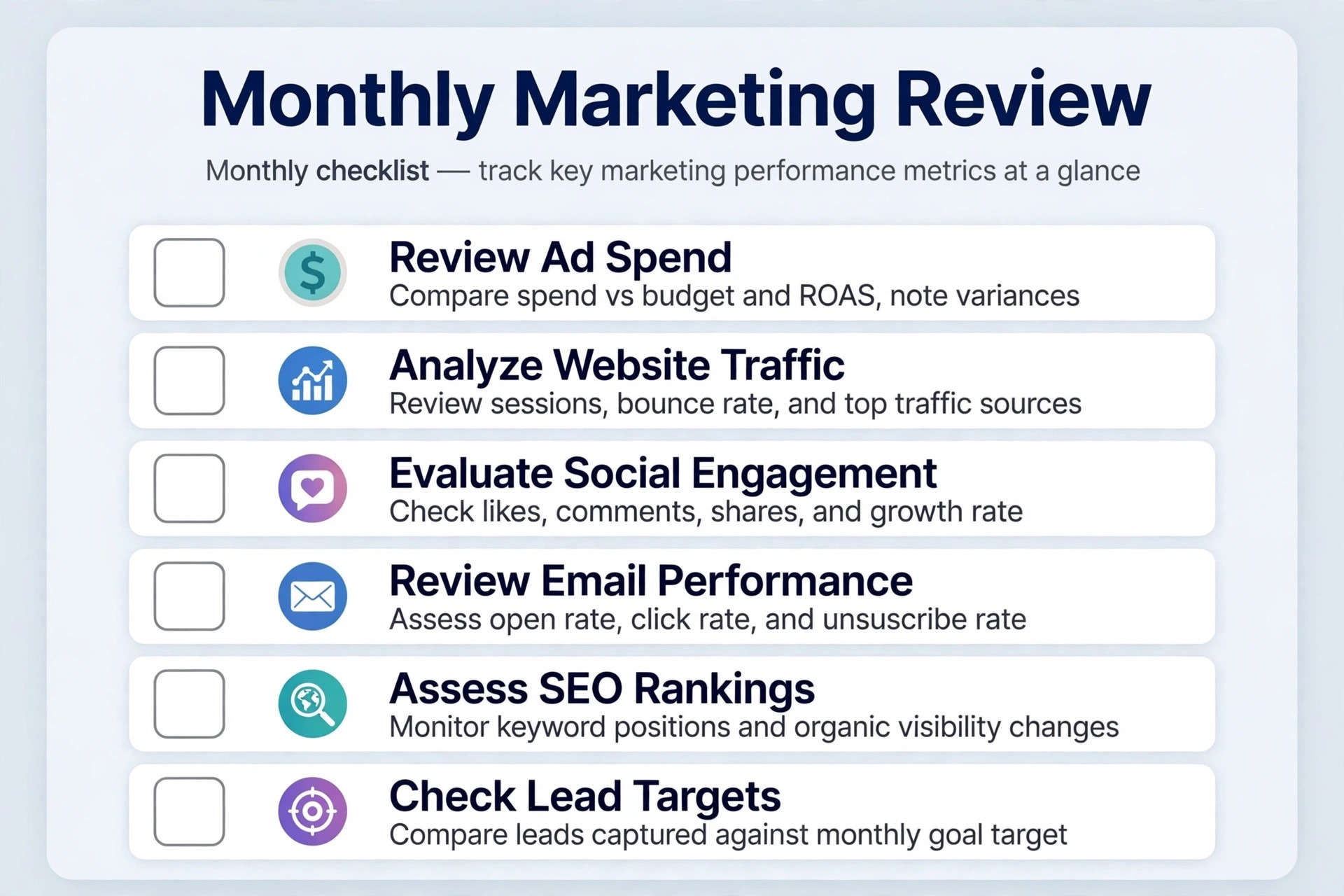
- Action for next month, such as fund more, hold steady, fix targeting, or pause and test.
Work through one channel fully before you add the next, because a worksheet filled from guessed numbers is worse than a short worksheet filled from traced numbers. If a channel has no traced revenue yet, record that honestly, with a note about lag or about missing call tracking, rather than estimating a revenue figure to make the sheet look complete. An honest gap is a task to fix. A guessed figure is a decision made on false confidence, and it will be repeated next month as if it were evidence.
Reading the Worksheet Without Fooling Yourself
A worksheet that ranks channels by revenue, rather than by lead volume, will often surprise you, and that surprise is the point. Look first for disagreement between the lead ranking and the revenue ranking. Where they disagree, the revenue ranking should guide funding, and the lead ranking should prompt a question about targeting or qualification. A channel that produces many leads but little revenue may be attracting the wrong audience, or it may be producing leads that your team cannot close because response is slow. Both problems have different fixes, so check response times and qualification before you cut the channel.
Look next for channels with high revenue per customer but high cost per customer. Those channels may still be profitable, especially if customers return or refer others, but they need a lifetime view, not a single month view. Record repeat purchases and referrals where you can, even if only as a note on the customer record, so a channel that brings loyal customers is not judged only by its first sale. Conversely, a channel with low cost per customer but low revenue per customer may be bringing small, one off jobs that cost more to serve than they earn. Profit, not revenue alone, should guide the final call where you can calculate it.
Also watch for seasonal and campaign effects. A channel that looks weak in a holiday month, or strong during a promotion, may simply reflect timing, not quality. Compare like with like, using the same months last year or a rolling quarter, and note any promotion, price change, or service change that could explain a shift. A monthly review that ignores context will chase noise, moving money every month in response to random variation, while a quarterly review with context will make steadier, better decisions.
The Monthly Review Checklist
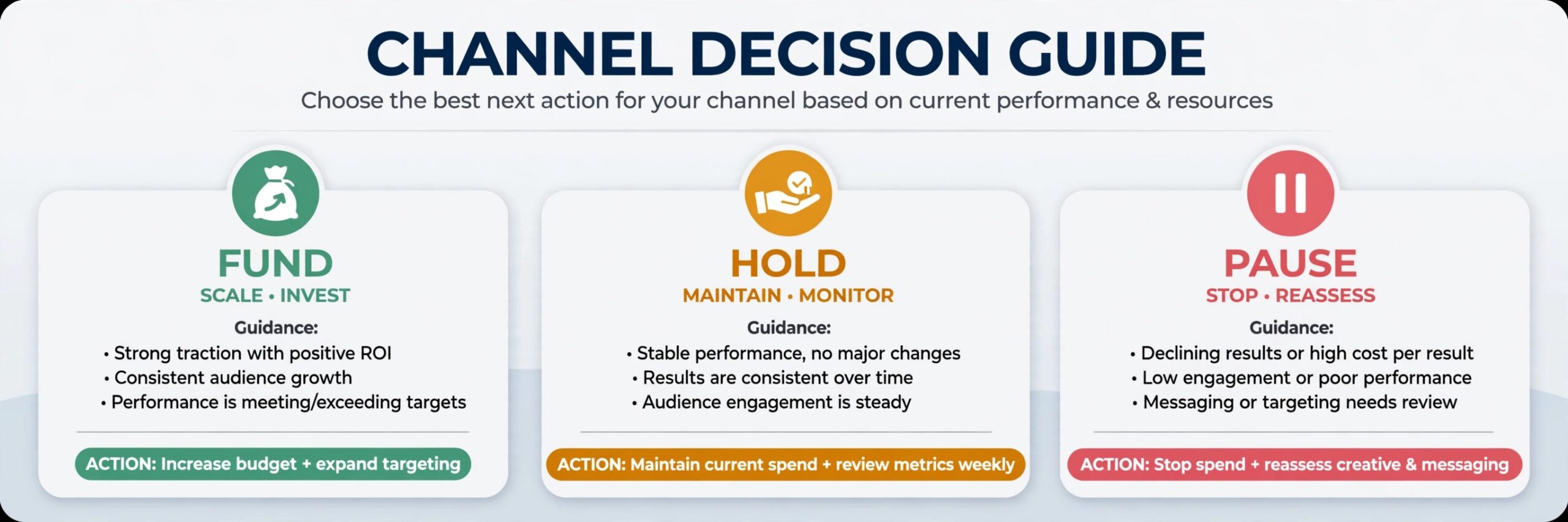
Run the review on the same day each month, with the same people, using the same worksheet, so the habit survives busy periods. The checklist below keeps the review short, factual, and decision focused, rather than a long discussion of activity metrics that lead nowhere.
- Pull channel costs from invoices and ad accounts, not from memory.
- Pull qualified leads and customers won from customer records, by source.
- Pull revenue from invoices or payments received, not from pipeline estimates.
- Calculate cost per customer, revenue per customer, close rate, and ROI by channel.
- Rank channels by revenue and by profit, and compare with the lead volume ranking.
- Note lag, seasonality, promotions, and any missing call or form tracking.
- Decide for each channel whether to fund more, hold steady, fix, or pause.
- Record one action per channel, with an owner and a date, not a list of ideas.
- Check that source names are clean, and merge duplicates before next month.
- Archive the worksheet and the decisions, so next quarter can be compared fairly.
The most important part of the review is the decision record. A review that ends with interesting observations but no funding decision has not done its job. For each channel, write one sentence, such as fund more because revenue per customer exceeds cost by a clear margin, or pause for two weeks to test whether leads fall, with an owner and a date to check the result. That record turns the next review into a test of a previous decision, rather than a fresh argument about the same numbers.
A useful test for an expensive channel you cannot judge is a pause test. Pause one campaign for a set window, such as two weeks, or hold it back in one comparable area, and watch what happens to calls, leads, and revenue. If nothing changes, you found money to move. If calls and revenue fall in the paused area, the campaign was doing something, even if your attribution could not prove it. Pick comparable periods, avoid holidays, and state the test in advance, so the result is trusted when it arrives.
Fixing the Most Common Tracking Gaps
The first gap is missing call sources, which this guide addressed with call tracking and with a consistent intake question. If calls still arrive without a source, check whether staff are asking the question, whether the form has a source field, and whether the call tracking number is actually showing on the pages and listings it should cover. A gap that is measured, even crudely, can be improved. A gap that is ignored will grow, because staff will assume someone else is recording the source.
The second gap is estimates and signed jobs living in a different system from leads. When leads live in one tool and invoices live in another, the trail breaks, and ROI becomes a guess. The fix does not require one expensive system. It requires a shared customer identifier, such as a name plus a phone number or an email, and a routine for joining the lead record to the invoice record at month end. Even a simple monthly join, done carefully, will produce a far better ROI report than two separate reports that never meet.
The third gap is repeat and referral revenue being credited to the wrong channel. A returning customer who searches for your name and calls should not be credited to search as if it were a new acquisition, because the channel that first brought them did the work. Record returning customers separately, and judge acquisition channels by new customers, while judging retention channels by repeat revenue. That separation prevents a common error, where a business funds search heavily because it looks profitable, while starving the channel that actually found those customers in the first place.
The fourth gap is messy source values, such as free text, legacy spellings, and duplicate names for the same channel. Normalise case and obvious duplicates before grouping, state what you merged, and lock the approved source list so new spellings cannot creep in. A monthly clean, taking only a few minutes, will keep your reports comparable over time, while a year of messy values will make trend analysis impossible without a painful cleanup.
How to Track Marketing ROI Small Business Teams Can Sustain
A tracking system that only works when one enthusiastic person runs it will fail when that person is busy, on leave, or leaves the business. Sustainability comes from simplicity, routine, and shared ownership. Keep the worksheet to one page per channel, keep the source list short, keep the review to one hour per month, and assign a backup owner for the review. A simple system run every month beats a sophisticated system run twice a year, because decisions need current data, not perfect data from six months ago.
Start small if you are starting from nothing. Track one paid channel and one organic channel well, with call tracking, source fields, and a monthly worksheet, before you add more channels. That focused start will teach your team the habit, reveal the gaps in your intake, and produce one trustworthy ROI figure that you can act on. Once that habit is solid, add the next channel, using the same worksheet and the same review. Growth in tracking should follow growth in confidence, not growth in tools bought.
Learning how to track marketing ROI small business teams can sustain also means accepting imperfection in public. State your attribution rule, state your lag, state your missing data, and make decisions with those limits in mind, rather than pretending the report is exact. A report that states its limits will be trusted, and its decisions will be cautious where they should be cautious. A report that pretends to be exact will be trusted until it is wrong, and then it will be ignored entirely, which is a worse outcome than a cautious report ever is.
For related reading, see client feedback loop, invoicing software, time tracking software, field service software and membership software. Those posts cover adjacent client, billing, and operations work, and the same lesson applies when you learn how to track marketing ROI small business owners can act on. Record the source, follow it to the invoice, compare revenue with cost by channel, and review monthly with a decision for each channel. Do that consistently, and your marketing budget will follow evidence, not habit.
A Worked Example With Illustrative Numbers
A worked example, labelled as illustrative rather than as a market result, shows why tracing revenue matters more than counting leads. Imagine two channels in one month. Channel A produces 60 qualified leads at a total cost of 1,200, and 6 of those leads become customers, each paying 500, for revenue of 3,000. Channel B produces 20 qualified leads at a total cost of 800, and 8 of those leads become customers, each paying 500, for revenue of 4,000. A lead ranking would fund Channel A. A revenue ranking funds Channel B, because its ROI is higher and its close rate is far stronger, even though it produced fewer leads.
Calculate both channels the same way to see the difference clearly. Channel A cost per customer is 200, revenue per customer is 500, and ROI is revenue minus cost divided by cost, which is 150 percent on these illustrative figures.
Channel B cost per customer is 100, revenue per customer is 500, and ROI is 400 percent on the same illustrative basis. Those figures do not prove that Channel B will always win, because next month may bring different leads, different prices, or a seasonal shift. They do show why a decision based on lead volume alone would have moved money to the weaker channel, and why a disciplined method for how to track marketing ROI small business owners can defend must rank by revenue and profit, not by volume.
Now add the lag and repeat notes that a careful review would include. If two Channel B customers return for a second job worth 500 each, the lifetime revenue from that month cohort rises, and Channel B looks stronger still.
Repeat revenue should be recorded separately and not double counted as new acquisition. If Channel A leads close slowly, with several deals still in progress at month end, its month end ROI will understate its eventual result, and a quarterly review will give it a fairer reading. A method for how to track marketing ROI small business teams can sustain must hold both notes in the same review, so a slow channel is not cut for being slow, and a fast channel is not overfunded for being fast.
Use the example as a template for your own numbers, replacing the illustrative figures with traced revenue from your customer records and invoices. Keep the calculation method identical each month, keep the source definitions identical, and keep the lag note with every cohort, so comparisons stay fair. When you learn how to track marketing ROI small business owners can use for funding decisions, the worked example is less important than the habit it teaches, which is to trace, calculate, compare by revenue, and record the context before you move money.
Frequently Asked Questions
What is a good marketing ROI for a small business
There is no universal good figure, because ROI depends on margins, repeat purchases, and sales cycles. A useful benchmark is your own past performance by channel, compared over quarters, rather than a published industry average. Judge a channel by revenue per customer, cost per customer, and profit, and by whether repeat and referral value makes a modest first sale ROI worth funding.
How do you calculate marketing ROI
Use revenue attributed to the channel, minus what the channel cost, divided by what it cost, then multiply by one hundred for a percentage. The formula is simple, but the attribution is the hard part, so only use revenue traced to a customer record and to an invoice or payment received, not pipeline estimates or lead counts.
What is the difference between first touch and last touch attribution
First touch credits the first interaction that brought the customer, which suits businesses where discovery matters most. Last touch credits the final interaction before enquiry, which is easier to capture but often credits a search for your own name after earlier work did the persuading. Choose one primary rule, apply it consistently for a quarter, and record other touches as notes for important deals.
How do you track ROI when most leads come by phone
Use call tracking numbers by source, so calls from different channels arrive labelled, and ask every caller how they heard about you, recording the answer on the customer record. Without call source data, phone driven channels will look invisible, and your ROI report will undervalue the channels that actually bring customers.
How often should a small business review marketing ROI
Review monthly for decisions, using a worksheet by channel, and judge trends quarterly, because a single month can be distorted by lag, seasonality, or a promotion. A monthly review with one recorded action per channel, and a quarterly trend check, gives you both timely decisions and a fair view of slow channels.
Should you pause a channel if ROI looks low for one month
Not on one month alone, unless the loss is large and the cause is clear. Check lag, seasonality, qualification, and response times first, and consider a short pause test in a comparable area or period to see whether leads and revenue actually fall. A pause test gives you evidence, while a hasty cut based on one month may remove a channel that was assisting sales in ways your primary attribution rule did not capture.