

Compare two promises. The first says, in large letters, that you guarantee complete satisfaction. The second says that if the work does not meet the agreed specification within thirty days, you will redo the affected part at no extra charge, or refund that part, provided the client reports the problem in writing and gives you access to fix it. The first promise sounds stronger, and it is far weaker, because nobody can tell what it means, when it applies, or what happens next. Learning how to write a service guarantee small business buyers can actually rely on means choosing the second kind of promise, specific, bounded, and easy to claim.
A good guarantee does not try to remove all risk from buying. It removes the specific risk the buyer is most afraid of, and it states plainly what the buyer must do to qualify and what you will do in return. That clarity helps you as much as it helps the buyer. It reduces disputes, because both sides can read the same terms. It reduces fear, because the buyer knows the remedy before they pay. And it protects your margins, because a bounded promise costs far less than an open ended one that a disappointed buyer can stretch in any direction.
This guide builds a guarantee you can publish with confidence. It covers the four parts every strong guarantee needs, the types of guarantee that fit different services, the exclusions that keep a promise honest, a copy-ready template, and a claim handling checklist that turns a complaint into a second chance to earn trust. It offers operational guidance only, not legal advice, and it notes where a local professional should review your final wording before you publish it.
Why Vague Guarantees Hurt Small Businesses
Vague guarantees feel safe when you write them, because they commit to nothing specific, and that is why learning how to write a service guarantee small business owners can enforce matters more than choosing bold wording. They become dangerous when a buyer relies on them. A promise of satisfaction, quality, or excellence has no measurable standard, so a buyer who is unhappy for any reason can claim the guarantee was broken, and you have no agreed test to answer them with. The argument then becomes about feelings, not about work, and feelings are hard to settle fairly.
Vague wording also invites the wrong buyers. A buyer who wants a risk free result, rather than a well performed service, will be attracted by an unlimited promise and disappointed by any limit you later try to impose. A specific guarantee does the opposite. It attracts buyers who understand what you do, what you will redo, and what sits outside the promise. Those buyers are easier to serve, easier to satisfy, and more likely to refer others, because they were never misled about what they bought.
There is a cost argument as well. An open ended guarantee creates an open ended liability that you cannot price, staff, or insure against with confidence. A bounded guarantee, with a window, a remedy, and exclusions, can be costed. You can estimate how often claims will arise, what a redo costs, and what a partial refund costs, and you can set your price accordingly. That is why published guarantee guides stress the same four components again and again, the window, the conditions, the remedy, and the exclusions. Without them, a guarantee is a slogan. With them, it is a business tool.
The Four Parts Every Guarantee Needs
Every guarantee worth publishing answers four questions, and the answers should be visible in the same place, not scattered across terms, FAQs, and sales pages, which is a central lesson in how to write a service guarantee small business buyers can check. First, what is covered. Name the service, the specification it must meet, and the standard you will judge it against. A cleaning service might promise a specified checklist completed to an agreed standard. A repair service might promise that the repaired part functions as specified. A coaching service might promise delivery of a specified programme, not a guaranteed personal outcome. The covered work must be something you control.
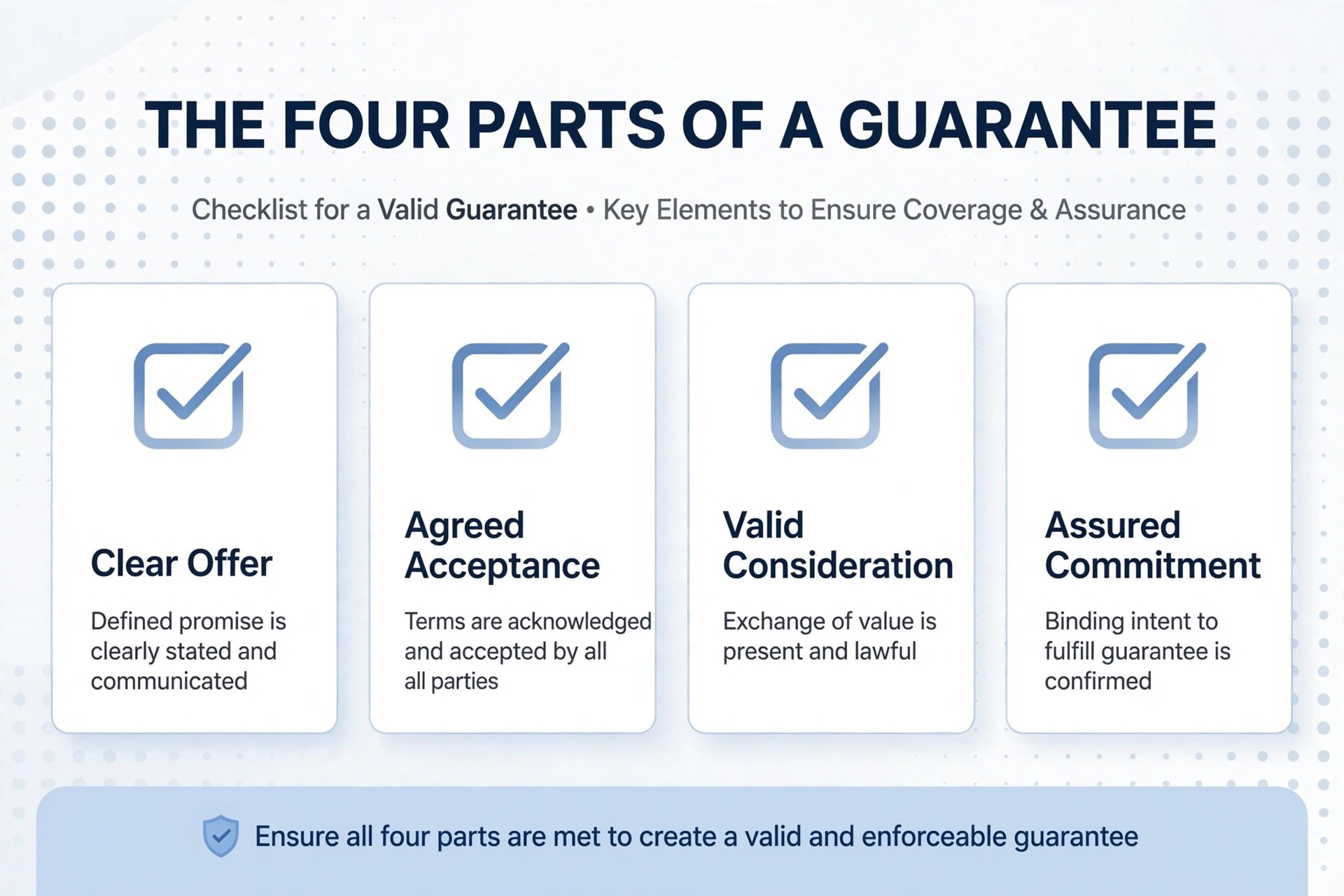
Second, for how long. State the window clearly, including what event starts it. Is it thirty days from delivery, ninety days from completion, or until a specified milestone. Published warranty examples commonly use thirty or ninety day windows for services, with the period starting at completion. Choose a window you can honour without resentment, and state it in days, not in vague words like soon or for a while. A window that is too long for your cost structure will be regretted. A window that is too short to be useful will not persuade anyone.
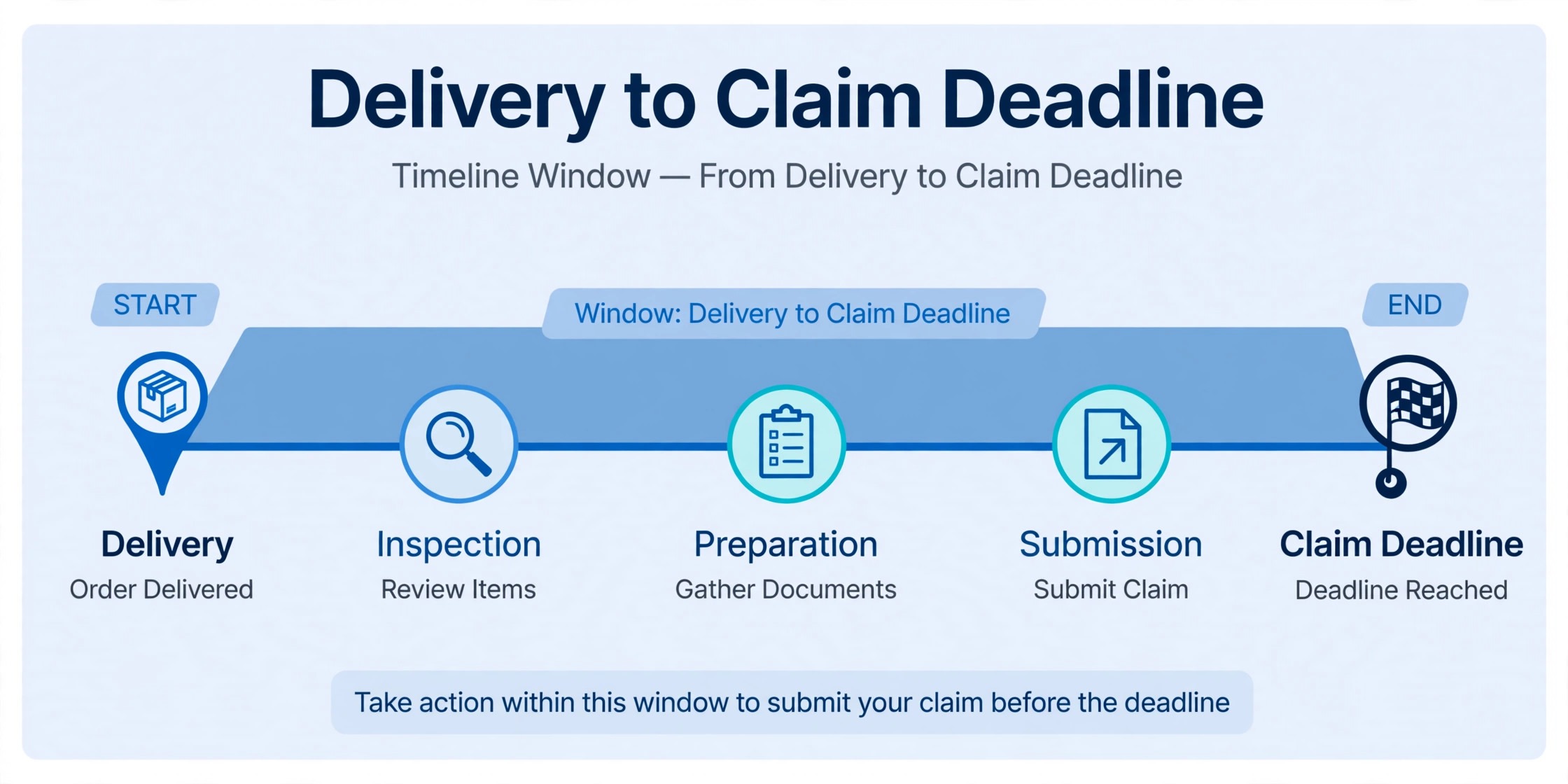
Third, what the buyer must do to qualify. Common conditions include reporting the problem in writing within the window, describing the problem specifically, giving you access or information to fix it, and completing any client steps the service depends on. Those conditions are fair, provided they are stated before purchase and are reasonable to meet. A condition that is hidden, or that requires the buyer to prove something impossible, will turn a guarantee into a dispute.
Fourth, what you will do if the guarantee is triggered. Name one remedy, or a small set of remedies in order, such as redo the affected work, provide extra support for a stated period, issue a credit against future work, or refund the affected part. State who chooses the remedy, and state any cap, such as a refund limited to the fee paid for the affected part. A remedy that is clear before purchase is easy to deliver after purchase, and that ease is what turns a claim into retained trust.
Five Guarantee Types, and When Each Fits
Different services need different promises, and choosing the wrong type creates claims you never intended to offer. A satisfaction redo guarantee fits work where quality can be judged against a specification, such as cleaning, repair, design delivery, or a completed report. The remedy is to redo the affected part, which costs you time rather than cash, and which shows confidence in your work. It fits best when a redo can actually fix the problem.
A conditional results guarantee fits services where the outcome depends partly on the client, such as coaching, training, or marketing support. The remedy applies only if the client completes the agreed steps, such as attending sessions, submitting work, or providing information on time. Published examples of this type make the refund or extension conditional on completing a stated number of core sessions and an implementation checklist by a stated date. That structure filters for committed buyers, and it protects you from claims by buyers who never did the work.
A trial window guarantee fits services where the buyer needs to experience the service before committing, such as a short introductory programme or a first month of support. The buyer can leave within a stated window, often with a refund of the unused part, provided they followed the trial terms. Keep the window short enough to be affordable, and state what happens to work already delivered during the trial, so nobody expects a full refund for work already used.
A response time guarantee fits support and maintenance services, where speed matters more than a single outcome. It promises a first response, or a first visit, within a stated time during stated hours, with a stated remedy if that time is missed, such as a credit. Do not promise a fix time unless you control the cause, because a fix often depends on parts, access, or a third party. A response promise is honest. A fix promise for a problem you do not control is not.
A price or scope guarantee fits services where the buyer fears hidden charges. It promises that the quoted price covers the stated scope, with changes priced and approved in writing before they are done. That promise costs you discipline, not money, because it forces clear quotes and written change approvals. It also reduces the most common service dispute, which is not about quality at all, but about a bill the buyer did not expect.
| Guarantee type | Best fit | Typical remedy | Main risk if vague |
|---|---|---|---|
| Redo guarantee | Specification based work | Redo affected part | Unlimited redo demands |
| Conditional results | Client dependent outcomes | Extension or partial refund if conditions met | Promising an outcome you do not control |
| Trial window | First experience of a service | Exit within window, refund of unused part | Refund for work already used |
| Response time | Support and maintenance | Credit if response time missed | Promising a fix time you cannot control |
| Price and scope | Quoted project work | Price held for stated scope | Hidden charges and scope creep |
Use one primary guarantee per service, and state it plainly. Stacking several guarantees on one service sounds generous, but it creates overlapping promises that are hard to administer and easy to dispute. If you offer a redo guarantee and a trial window, state how they interact, which applies first, and whether a buyer can claim both. Simplicity is a feature of a guarantee, not a limitation.
Scope, Remedy, and Exclusions in Plain Language
Scope is the most important sentence in your guarantee, because it decides what a claim is about, so anyone learning how to write a service guarantee small business clients will accept should draft scope before drafting sales copy. Write scope as a list of what is included, using the same words as your quote and your deliverables list. If your quote lists a report, a set of revisions, and a handover call, your guarantee scope should use those same terms. A buyer should be able to match the guarantee to the quote without guessing. Where scope is complex, attach the specification to the guarantee, or refer to it by a clear title and date.
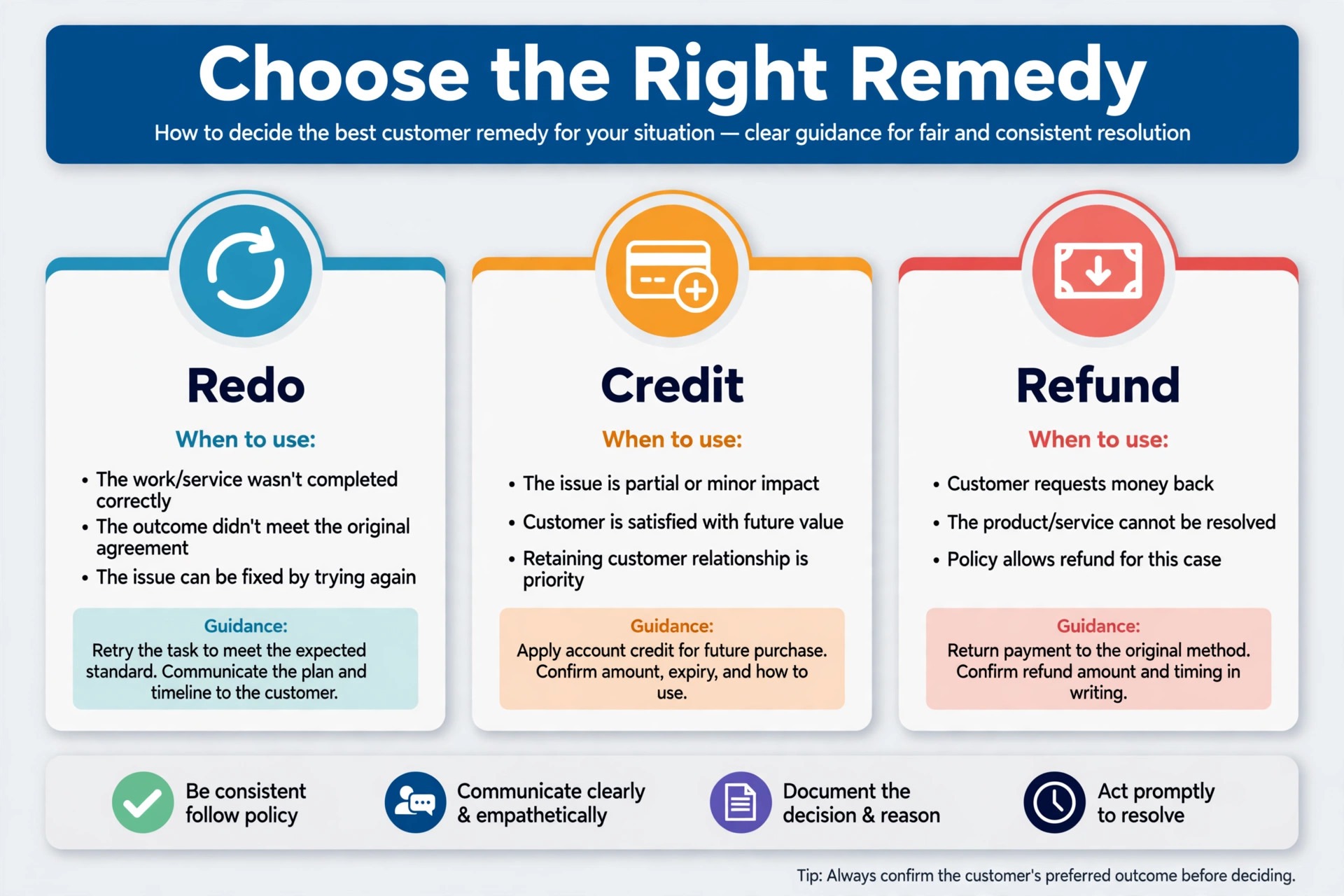
Remedy should be written as a sequence, not as a vague offer to make it right. For example, first you will review the claim and inspect the work, then you will redo the affected part within a stated time, and if a redo cannot fix the problem, you will refund the fee for that part. That sequence gives the buyer a path and gives you a fair chance to fix the work before paying money back. State any cap on refunds, and state whether a replacement or a credit is at your choice or the buyer choice. Published warranty practice commonly places the choice of remedy with the provider, within the stated options, and that approach keeps remedies workable.

Exclusions keep the promise honest, and they should be specific, not a long list of legal phrases. Common service exclusions include problems caused by misuse, by changes made by the buyer or a third party after delivery, by use outside the agreed specification, by normal wear, by a buyer failure to provide required information or access, and by events outside your reasonable control, such as a supplier outage or a platform change. List exclusions with concrete examples from your own work, so a buyer can understand them without legal training. An exclusion that a buyer cannot understand will feel like a trap, even if it is fair.
Also state what the guarantee does not promise. It does not promise a business outcome that depends on the buyer market, on third parties, or on factors outside the service. It does not cover work done by others after delivery, unless you state otherwise. It does not extend the window because a buyer reported a problem late, unless you agree an extension in writing. Those boundaries, stated early, are what allow you to offer a generous remedy within the promise, because you know where the promise ends.
How to Write a Service Guarantee Small Business Buyers Will Believe
Trust in a guarantee comes from detail, not from bold type. A buyer believes a promise when they can see the window, the conditions, the remedy, and the exclusions in one short block, written in plain language, and when the same promise appears on the quote, on the sales page, and in the terms. Inconsistency destroys trust faster than a modest remedy. If your sales page promises a full refund and your terms offer only a redo, a buyer will rightly feel misled, even if the redo is fair.
Write the guarantee in the buyer voice, not in a defensive voice. State what you will do, not only what you will not do. A guarantee that is mostly exclusions reads like a refusal, while a guarantee that leads with the remedy and then states fair boundaries reads like confidence. Put the remedy near the top, the window and conditions next, and the exclusions after, in short lines a busy buyer can scan. That order matters, because most buyers read the first lines and skim the rest.
Test the wording with a simple question. Could a reasonable buyer, reading it once, tell you what to do if the work is not right, how long they have, and what they will get. If the answer is no, the wording is not ready, however impressive it sounds. Ask a colleague or a trusted client to read it and explain it back to you. Their explanation will reveal gaps faster than any internal review, because they do not share your assumptions about what your service includes.
Learning how to write a service guarantee small business buyers will believe also means matching the promise to your delivery capacity. A thirty day redo promise is only credible if you have time reserved to do redos, and a response time promise is only credible if someone actually monitors requests during the stated hours. A guarantee that your team cannot deliver will generate claims you resent, and resentment shows in how claims are handled. Promise what you can staff, and staff what you promise.

The Guarantee Template
Copy the template below, fill in the bracketed parts with your own service details, and publish the completed version in the same words wherever the guarantee appears, because consistency is a core rule in how to write a service guarantee small business teams can actually use. Keep a copy with every quote, so the buyer is not asked to remember a promise they saw on a sales page months earlier.
- We guarantee that the service described in the quote will meet the specification stated in the quote.
- The guarantee window starts on the date of delivery or completion stated in the quote.
- The guarantee window lasts for a stated number of days from that date.
- To claim, the buyer must report the problem in writing within the window.
- The claim must describe the problem specifically and identify the affected part of the work.
- The buyer must give us reasonable access and information to inspect and fix the problem.
- If the claim is covered, we will first redo the affected part at no extra charge within a stated time.
- If a redo cannot fix the problem, we will refund the fee paid for the affected part, up to that fee.
- The remedy is limited to the affected part, not to the whole engagement, unless the quote states otherwise.
- The guarantee does not cover problems caused by misuse, by changes made after delivery, or by use outside the agreed specification.
- The guarantee does not cover problems caused by a buyer failure to provide required information or access on time.
- The guarantee does not cover outcomes that depend on third parties, on market conditions, or on factors outside the service.
- The guarantee does not cover work done by others after delivery, unless the quote states otherwise.
- The buyer must complete any client steps stated in the quote to qualify for a conditional remedy.
- This guarantee is part of our terms and applies as written, without extra promises made outside the quote.
Adapt the remedy line to your guarantee type. For a trial window, replace the redo line with the exit and refund of the unused part. For a response time guarantee, replace it with the response time and the credit if that time is missed. For a conditional results guarantee, keep the client completion conditions prominent, because they are the core of that promise. The template is a structure, not a finished legal document, and a local professional should review your final version before you rely on it in a dispute.

The Claim Handling Checklist
A guarantee is judged by how claims are handled, not by how the promise reads on a sales page. The checklist below turns a claim into a calm, repeatable process that protects the buyer, your team, and your record. Keep one completed checklist per claim, and review claims monthly for patterns.
- Acknowledge the claim in writing within one working day, with a named contact and a next step.
- Record the claim date, the service, the affected part, and the remedy the buyer is seeking.
- Check the claim against the guarantee window, the scope, and the conditions, and note the result.
- Inspect the work or request the specific information needed to judge the claim.
- Decide whether the claim is covered, partly covered, or not covered, with a short reason.
- Tell the buyer the decision plainly, with the remedy and the date it will happen if covered.
- Deliver the remedy on the stated date, and confirm completion in writing.
- If the claim is not covered, explain which term applies and offer a fair paid option if one exists.
- Record the cost, the time taken, and the lesson for future quotes or delivery.
- Review claims monthly for repeated problems, and fix the cause, not only the claim.
Speed matters in the first step. A claim acknowledged quickly, even before a decision is made, reduces anger and gives you time to judge fairly. Silence, by contrast, turns a fixable problem into a dispute, because the buyer assumes the worst while waiting. A named contact matters for the same reason. A buyer who knows who is handling their claim does not need to chase several people, and your team does not need to reconstruct the claim from scattered messages.
Handle a partly covered claim with the same care as a fully covered one. State what is covered, what is not, and why, in plain language tied to the guarantee terms. Offer a redo for the covered part, and a priced option for the rest, if that is fair. Many buyers accept a partly covered decision when the reasoning is clear and the covered remedy is delivered promptly. They resist a blanket refusal that gives no reason and no path forward, even when the refusal is technically correct.

Publishing the Guarantee Without Creating New Risk
Where you publish matters, and a complete method for how to write a service guarantee small business buyers will trust must keep the sales summary and the full terms identical in meaning. Put the full guarantee in your terms and on the quote, and put a short, accurate summary on the sales page that matches the full version. The summary should state the window, the remedy, and the main condition, with a link or a note pointing to the full terms. A sales page summary that omits the conditions will be treated by buyers as the whole promise, and the full terms will feel like fine print when a claim arises.
Train the team who sells and delivers the service on the guarantee, because extra promises made in conversation can override a written template in a buyer mind, and sometimes in a dispute. Staff should know the window, the remedy, and the exclusions, and should know to refer a buyer to the written guarantee rather than improvising a new promise to close a sale. Record any special promise made to a specific buyer in writing, with its own window and remedy, so it does not become a general promise for every buyer.
Review the guarantee after every claim that surprises you, and after every quarter in which claims cluster around one service or one term. A cluster usually means a scope description is unclear, a delivery step is weak, or a condition is unrealistic. Fix the cause, update the guarantee wording if needed, and tell existing buyers if a change affects them. A guarantee that improves with claims becomes a sales asset. A guarantee that never changes, despite repeated claims, becomes a warning sign.
Mistakes That Make Guarantees Backfire
The first mistake is promising a result you do not control, such as a sales figure, a ranking, or a personal outcome that depends on the buyer actions. That promise will be claimed, and you will have no fair defence, because the buyer can always point to the result not happening. Promise delivery to a specification, response within a time, or a redo of work that does not meet that specification, and keep outcome promises conditional and explicit.
The second mistake is offering a refund without a cap or a process. An uncapped refund promise invites claims for the whole engagement when only a small part was affected, and it makes pricing impossible. Cap refunds to the affected part, state the claim process, and offer a redo first where a redo can fix the problem. The third mistake is hiding the guarantee in terms that nobody reads, while advertising a bold summary elsewhere. Buyers will judge you by the summary, so make the summary accurate.
The fourth mistake is handling claims slowly or defensively. A slow claim process turns a small fix into a public complaint, while a prompt, factual process turns the same problem into a story about good service. The fifth mistake is never reviewing claims. If the same problem appears three times, the guarantee is not the problem. The delivery, the quote, or the scope description is, and fixing that cause will reduce claims more than tightening the guarantee wording ever will.
For related reading, see client feedback loop, field service software, membership software, POS system and HoneyBook cost. Those posts cover adjacent client, delivery, and pricing work, and the same lesson applies when you learn how to write a service guarantee small business buyers can trust. Be specific about scope, window, remedy, and exclusions, publish the same promise everywhere, and handle claims quickly and fairly. A guarantee written that way sells the work, protects the margin, and turns a problem into a reason to stay.
Frequently Asked Questions
How long should a service guarantee last
There is no universal period. Published service warranty examples commonly use thirty or ninety days from completion, with the period starting at a stated event. Choose a window you can staff and afford, state it in days, and tie it to delivery or completion so both sides can calculate it without argument.
Should a small business offer a money back guarantee
Only if the remedy fits the service and the cost is bounded. A full refund for a whole engagement is risky when only a small part was affected. A safer pattern is a redo first, then a refund limited to the affected part, with clear claim conditions. A trial window with a refund of the unused part can also work for introductory services.
What should a service guarantee exclude
Exclude, with concrete examples, problems caused by misuse, changes after delivery, use outside the agreed specification, a failure to provide required information or access, and events outside your reasonable control. Exclusions should be specific and understandable, not a long list of phrases that a buyer cannot apply to their own situation.
How do you handle a guarantee claim fairly
Acknowledge it in writing within one working day, record the service and the affected part, check it against the window, scope, and conditions, inspect the work, and tell the buyer the decision plainly with a remedy and a date if covered. If it is not covered, explain which term applies and offer a fair paid option where one exists.
Does a guarantee need legal review
This guide offers operational guidance only, not legal advice. A short review by a local professional is wise before you publish, especially if you sell regulated services, sell across regions, or offer refunds and credits that interact with consumer protection rules in your market. Check the current rules that apply to your service before you rely on the wording in a dispute.
Can you offer different guarantees for different services
Yes, and you usually should. A repair service, a coaching programme, and a support service need different promises, because they are judged differently and fixed differently. Use one primary guarantee per service, state it plainly, and state how guarantees interact if a buyer purchases more than one service from you.