
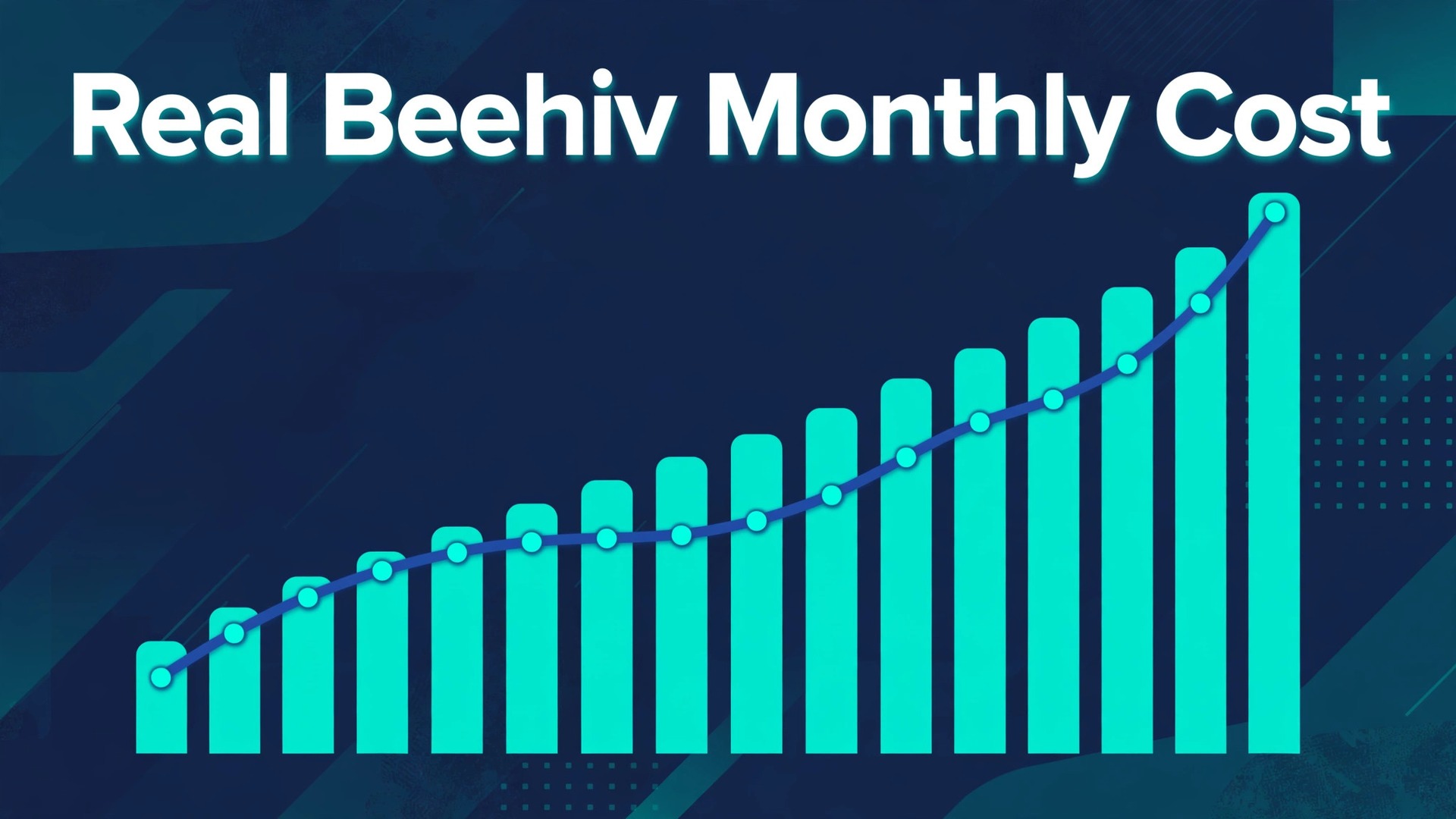
The problem with pricing a newsletter is that the bill grows even when the team does not. A business can hire nobody, change nothing about how it works, and still watch the cost of Beehiiv for small business monthly climb, because Beehiiv prices by subscriber count rather than by seat. The plan sets the features, the subscriber tier sets the price inside the plan, and a list that doubles can lift the monthly total even though the team stayed exactly the same size.
Beehiiv is a newsletter platform that bundles a website, email publishing, audience growth tools and monetisation in one account. A small business can publish a newsletter, grow a list through recommendations, sell paid subscriptions and run ads, without stitching together a separate email tool, website builder and payment system. That bundling is the main reason to consider it, and it is also the main pricing trap, because the bill follows the audience, not the payroll.
This guide works through the published plans, the subscriber tiers that drive the price, the real monthly totals for teams of 2, 5, 10 and 25, the fees that sit outside the plan price, and the situations where each plan earns its fee. Prices below come from Beehiiv pricing summaries checked in October 2026 that repeat the vendor figures, in United States dollars. Beehiiv renamed its plans on 1 October 2026, from Launch, Scale and Max to Free, Lite and Pro, and raised prices for new customers at the same time, so treat every figure here as a starting point and check the vendor pricing page before you sign.
Subscriber Tiers Set the Price, Not Seats
Beehiiv sells four plans, and the first thing to grasp is that two of its limits work independently. The plan decides which features the business gets, such as paid subscriptions, automations and branding removal. The subscriber tier decides what a paid plan costs, and that tier rises as the active subscriber count rises. Paying the entry price for Lite does not buy capacity for 100,000 subscribers, even though Lite supports audiences up to that size at higher tiers.
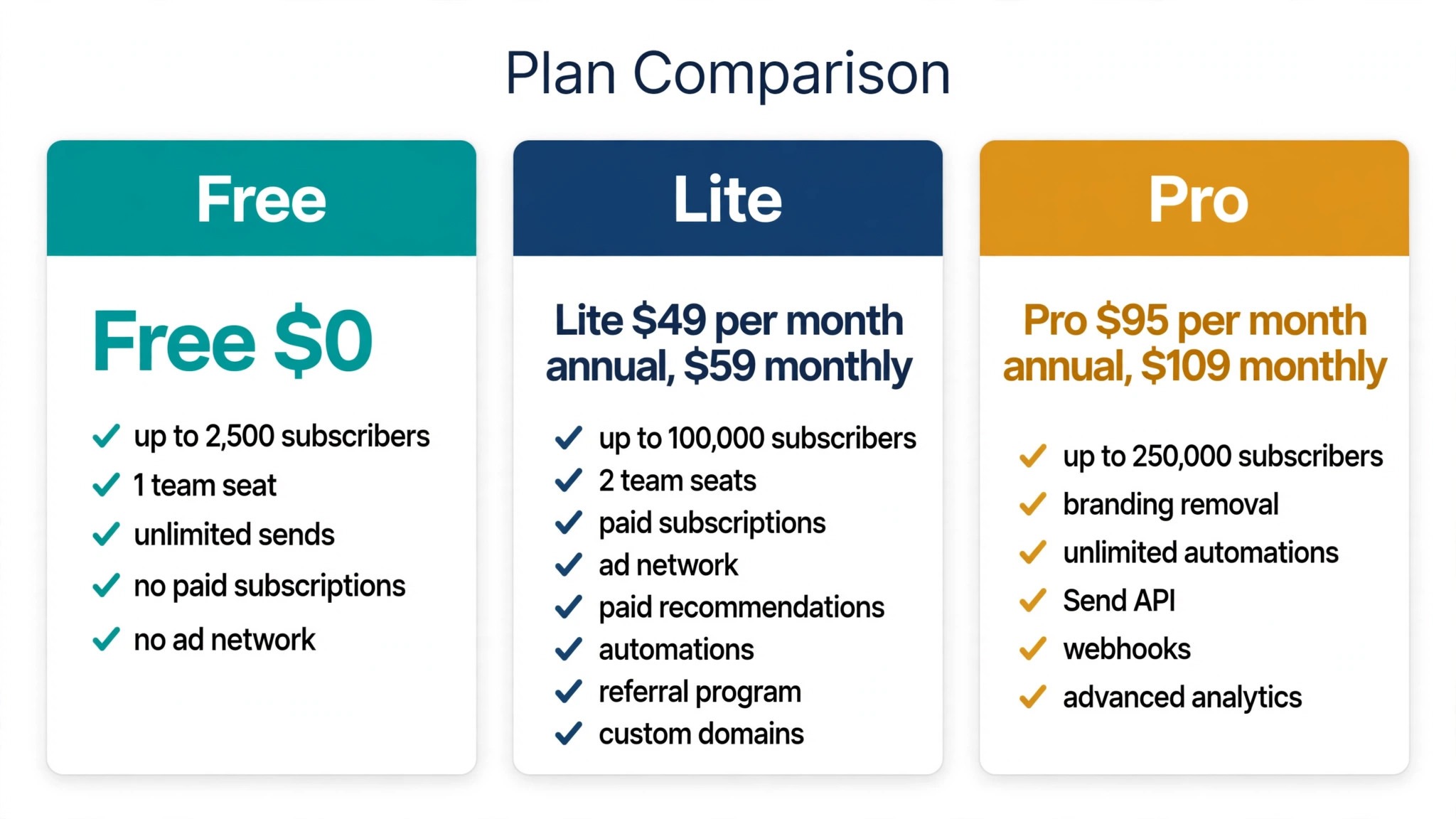
| Plan | Monthly billing at 1,000 subscribers | Annual billing at 1,000 subscribers | Maximum subscribers supported | What unlocks |
|---|---|---|---|---|
| Free | $0 | $0 | 2,500 | Newsletter, website and podcast tools, unlimited sends, 1 publication, 1 team seat |
| Lite | $59 per month | $49 per month | 100,000 | Paid subscriptions, ad network, paid recommendations, automations, referral program, custom domains |
| Pro | $109 per month | $95 per month | 250,000 | Everything in Lite plus branding removal, unlimited automations, Send API, webhooks, advanced analytics |
| Enterprise | Custom pricing | Custom pricing | Custom | Dedicated IPs, single sign-on, account manager, audiences above Pro limits |
The free plan is roomy on list size and thin on earning tools. It costs $0 for up to 2,500 subscribers with unlimited sends, which is generous for a business testing whether a newsletter earns its place. It does not include paid subscriptions, the ad network or automations beyond a single welcome email, so a business that wants to earn from the list must move to Lite. That gap is deliberate, and it is why the cost of Beehiiv for small business monthly starts at Lite for any business that wants to earn.
Lite is the first plan where the newsletter can earn. Paid subscriptions, the ad network, paid recommendations, automations, surveys, polls, A and B testing and the referral program arrive together. Pro then removes Beehiiv branding, lifts automations to unlimited, and adds the Send API, webhooks and advanced analytics for teams that run the newsletter as a serious channel. Enterprise is quote-only, for audiences above 250,000 subscribers and for businesses that need dedicated sending infrastructure and single sign-on.
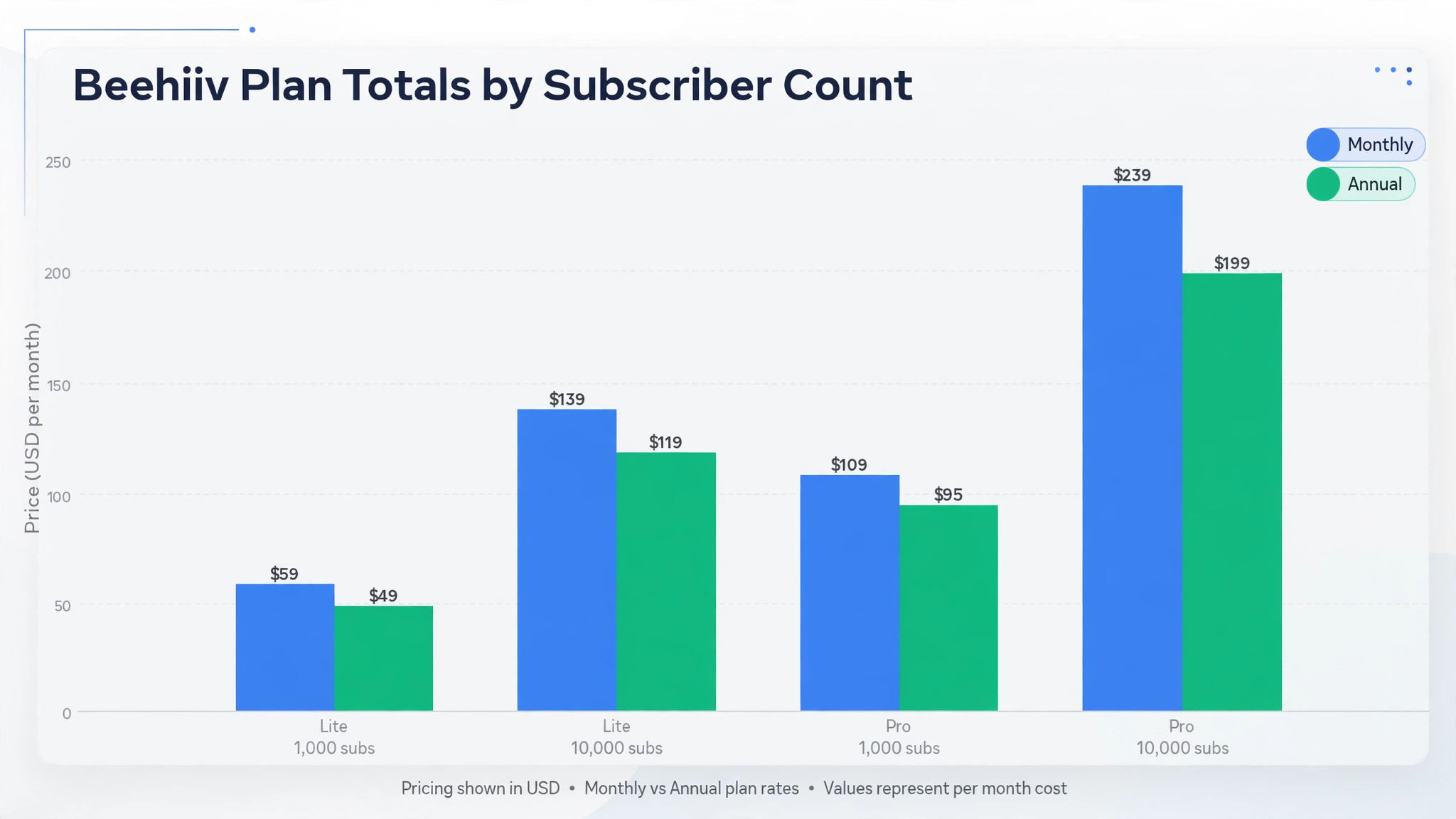
The subscriber step is where the bill moves. At 10,000 subscribers, published summaries put Lite at $139 a month on monthly billing or $119 a month on annual billing, against $59 and $49 at 1,000 subscribers. Pro at 10,000 subscribers costs $239 a month on monthly billing or $199 a month on annual billing, against $109 and $95 at 1,000 subscribers. A list that grows tenfold roughly doubles the plan price, so a business should budget for the subscriber count it expects in twelve months, not only for the count it has today.
The Cost of Beehiiv for Small Business Monthly by Team Size
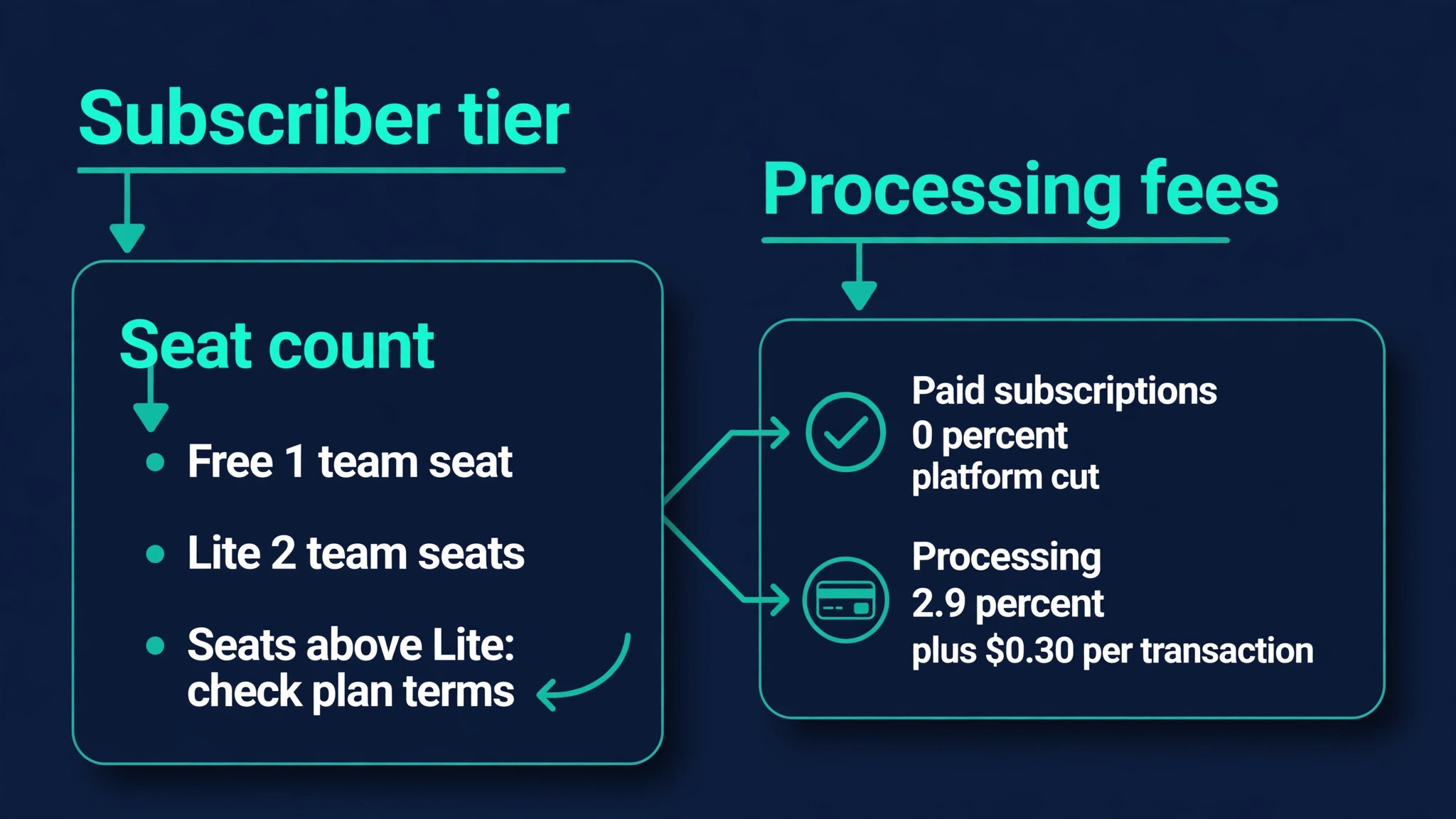
The table below looks unusual beside a CRM pricing table, because the totals do not rise with team size. That flatness is the point, and it is why the cost of Beehiiv for small business monthly needs a different budgeting habit. The plan price stays the same whether two people or 25 people work on the newsletter, but the seat allowance inside each plan is limited, with Free allowing one team seat and Lite allowing two in published summaries. Larger teams must confirm extra seat terms on the vendor pricing page, since published guides differ on the exact allowance above Lite.
| Team size | Lite annual at 1,000 subscribers | Lite monthly at 1,000 subscribers | Pro annual at 1,000 subscribers | Pro monthly at 1,000 subscribers | What changes with team size |
|---|---|---|---|---|---|
| 2 seats | $49 | $59 | $95 | $109 | Fits the Lite seat allowance in published summaries |
| 5 seats | $49 | $59 | $95 | $109 | Plan price flat, confirm extra seat terms on the vendor page |
| 10 seats | $49 | $59 | $95 | $109 | Plan price flat, confirm extra seat terms on the vendor page |
| 25 seats | $49 | $59 | $95 | $109 | Plan price flat, confirm extra seat terms on the vendor page |
A two person team on Lite pays $49 a month billed annually, which is easy to approve and easy to keep. The same team on monthly billing pays $59, a gap of $10 a month, so a new team loses little by starting monthly and proving the fit first. At 10 or 25 seats the Lite total stays $49 a month billed annually at the 1,000 subscriber tier, which is the opposite of CRM pricing, where every seat adds to the bill. The saving is real, but it only holds while the seat allowance holds, so a team with many editors should get the seat terms in writing before assuming the flat price covers everyone.
Annual billing means paying for a full year in advance, so the monthly figure looks lower but the cash leaves the business sooner. Lite billed annually costs $588 a year at the entry tier, against $708 a year on monthly billing, a saving of $120 a year. Pro billed annually costs $1,140 a year at the entry tier, against $1,308 a year on monthly billing, a saving of $168 a year. Those savings reward certainty, but only take them after a monthly trial has proved the newsletter habit, because the saving disappears if the team stops publishing and the unused months are not refunded.
The subscriber tier, not the seat count, is what moves the totals in the table. A five person team on Lite at 10,000 subscribers pays $119 a month billed annually, against $49 at 1,000 subscribers, a jump of $70 a month with no change in team size. A five person team on Pro at 10,000 subscribers pays $199 a month billed annually, against $95 at 1,000 subscribers. Budget the newsletter on a subscriber forecast, with price steps marked at the tiers the list will cross, and review that forecast every quarter as the list grows.
Monetisation Maths That Change the Answer
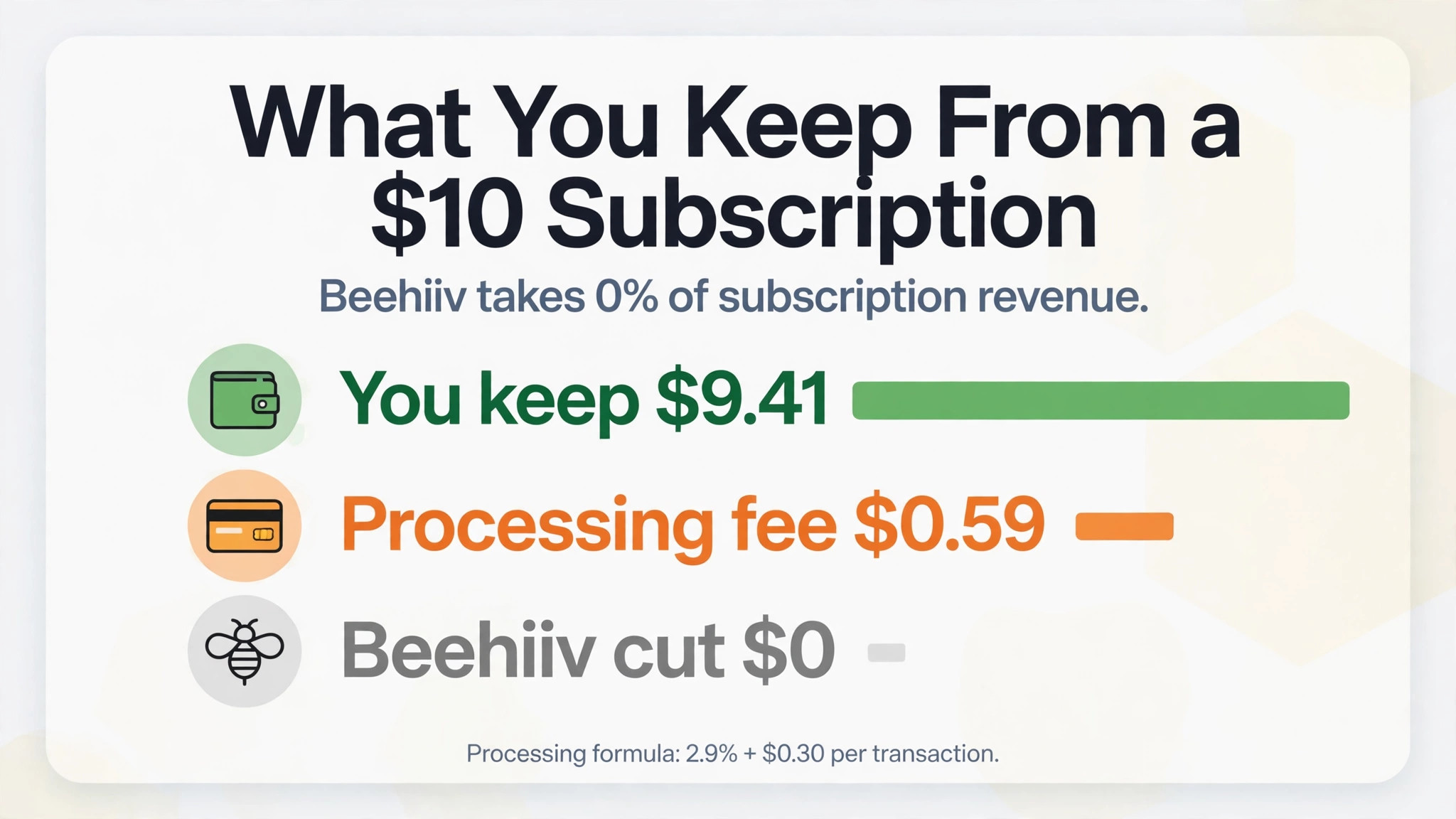
Beehiiv takes 0% of paid subscription revenue on paid plans, and that single figure changes how the monthly cost should be judged. A business that sells paid subscriptions keeps what it earns, minus payment processing fees, which published summaries put at Stripe standard rates of 2.9% plus $0.30 per transaction. A $10 monthly subscription therefore leaves about $9.41 after processing, with no platform cut on top. That fixed-cost shape is the fairest way to judge the cost of Beehiiv for small business monthly for a paid newsletter.
Compare that with a platform that takes a percentage of every sale, where the same subscription can lose a dollar or more before processing, and the Beehiiv plan price starts to look like a fixed cost against variable revenue.
The maths work in reverse for a free newsletter with no paid tier. A business that never sells subscriptions and never runs ads pays the plan price for publishing and growth tools alone, with no revenue to offset it. Lite at $49 a month billed annually costs $588 a year, and that cost must be justified by leads, sales or brand value that the newsletter creates elsewhere. A free newsletter that brings no measurable return is a $588 hobby, and a buyer should set a clear target before paying, such as leads per issue or sales attributed to the list.
Ad revenue sits between those two cases. Lite and Pro include access to the ad network, and published summaries note an advertised average ad figure of around $39 a month, without saying which list sizes or periods that average covers. Treat that average as marketing, not as a budget line, and model ad revenue only from the business own list size and niche.
Paid recommendations add a second growth revenue line, where publications pay to recommend each other, and the referral program turns readers into recruiters. Those tools reward a list that is already engaged, since recommendations convert best when readers trust the sender. A new list should budget for the plan price first and treat recommendation revenue as a bonus. The honest budget is plan price plus processing fees, with ad and recommendation revenue counted only after it arrives.
A Subscriber Growth Example, Worked Out in Full
Take a small business that starts with 800 subscribers, publishes weekly, and grows to 9,000 subscribers over a year through recommendations and a lead magnet. On the free plan the business pays $0 at the start, but cannot sell paid subscriptions or run automations, so the growth tools that would speed the list are missing. On Lite billed annually the business pays $49 a month at the 1,000 subscriber tier, then $119 a month as it approaches 10,000 subscribers. Over the year the plan cost rises with the list, even though the team never changes, and that rise should be in the first budget, not discovered at renewal.
Monthly billing changes the same example in a way that matters for cash flow. Lite for the same business rises from $59 a month at the entry tier to $139 a month at 10,000 subscribers on monthly billing. Over a year, monthly billing on Lite at the entry tier alone costs $120 more than annual billing. That difference buys flexibility during the early months, when publishing habit is still unproven, but it should be a deliberate choice rather than an accident of signing up on the monthly option and forgetting to switch. Prove the weekly habit first, then take the annual saving.
The example also shows why Pro deserves a quote before the list crosses 10,000 subscribers. Pro at 10,000 subscribers costs $199 a month billed annually, against $119 for Lite, a gap of $80 a month for branding removal, unlimited automations, the Send API and advanced analytics. A business that runs complex automations or sends through the API will use that gap daily, while a business that sends one weekly issue will not. Price Pro against the automations the team runs today, not against the hope that a higher tier must grow the list faster, since tier alone never grows a list.

The plan price is only the first line of the bill, and small businesses get caught out less by the headline plan than by the extras that arrive as the list grows. Work through the checklist below before you sign, and put a figure beside each line for your own subscriber count and team size.
– Payment processing fees on paid subscriptions, at Stripe standard rates of 2.9% plus $0.30 per transaction in published summaries. Beehiiv takes 0% itself, but processing still applies to every sale. – Subscriber tier steps, where growth from 1,000 to 10,000 subscribers roughly doubles the Lite and Pro prices. Forecast the list for twelve months and mark the tiers it will cross. – Extra team seats beyond the plan allowance, where published guides differ on the exact terms. Confirm seat terms in writing for teams larger than two people. – A custom domain and design help, where paid plans include custom domains but a business may still pay a designer or developer for templates and landing pages. – Migration work, including importing a list, cleaning dead addresses, rebuilding automations and templates, and warming up sending so deliverability holds. This work is usually staff time rather than a vendor fee, but it is still a cost. – Annual prepayment, which lowers the monthly figure but takes the full year payment at once, and can strain a small business in a quiet month. – Paid growth costs outside Beehiiv, such as lead magnets, ads and sponsorships that drive subscribers. The plan price never includes the cost of acquiring the list. – A separate tool bought because a Beehiiv feature falls short, such as advanced design, community or course hosting, which quietly turns a bundle saving into two subscriptions.
Migration deserves a paragraph of its own, because it is where small businesses lose the most time. A list grown for years in another tool usually contains dead addresses, duplicates and unengaged readers. Importing that list untouched counts dead readers against the subscriber tier, and can push the business onto a higher tier before the first issue sends. Clean before importing, remove long unengaged readers, and import in stages so deliverability problems show up early.
The subscriber tier trap works quietly too. A business on Lite at 900 subscribers looks safe, until a viral issue, a partnership or a lead magnet adds 500 readers in a week and the next tier applies. The fix is not a small top up fee but a higher monthly price from then on, which can double the bill at 10,000 subscribers. Check the real subscriber count, including inactive readers, and leave headroom before choosing a billing plan. Removing dead readers before you buy is free, and it can keep a business on a lower tier for another year.
What the Monthly Fee Actually Buys
The fee buys one account for publishing, growth and earning, and that single account is the core of the product. A newsletter, a website, a podcast host, a community space and digital products live together, so a reader can discover the publication, subscribe, read past issues and buy without moving between platforms. For a small business with no marketing team, that single system saves small amounts of time many times a week, and those savings add up to more than any single headline feature. Teams that already run best-in-class tools for each job may get less from the same fee, which is why the fit question should be settled first.
Publishing tools turn a draft into a sent issue and a web page at once, with templates, scheduling and analytics that show what readers opened and clicked. Growth tools then turn readers into recruiters, through recommendations, referrals and the ad network, so the list can grow without paid ads alone. Monetisation tools turn readers into revenue, through paid subscriptions with no platform cut, paid recommendations and digital products. Beehiiv strength is that it bundles those tools at a flat plan price, so the cost does not rise with every sale.
The fee also buys limits and guardrails that are easy to overlook. Subscriber tiers, automation counts and seat allowances all rise with the plan, and each one can become the reason a business upgrades later. A business that plans to run many automations, send through the API or host a large team needs to check those specific limits against the plan table, not against a general feeling that a higher plan must include everything. The cheapest way to buy Beehiiv is to match the plan to the three tools the business will use every week, and to ignore the rest of the feature list until those three are working well.
Support and administration are part of the purchase too. All plans bring admin work on subscribers, segments, automations and templates. A small business should name one person as the newsletter owner, even if that person also sells, because a publication with no owner drifts. Issues slip, segments go stale, and automations keep firing long after the campaign ends. The owner does not need to be technical, but the role needs to exist.
When It Is Worth It and When It Is Not
Beehiiv is worth the fee when a small business treats the newsletter as a product or a serious channel, will publish weekly, and wants growth and earning tools in the same account. In that situation, the cost of Beehiiv for small business monthly buys back staff time that would otherwise go to copying content between an email tool, a website builder and a payment system. The test is simple. If the business publishes every week, grows the list deliberately and earns or generates leads from it, Beehiiv fits the working week instead of fighting it. Lite is usually the plan that passes that test, because it is the first plan with paid subscriptions and automations together.
Beehiiv is a weaker buy when the newsletter is occasional, when the list is tiny and static, or when a simple email tool already covers the job. A business that sends one update a quarter may do fine with a free plan or a cheaper email tool for far less money, and a business that mainly needs a website should compare website builders before buying a newsletter platform. Beehiiv is also a weak buy when nobody will own the publication, because newsletters need a cadence, and a cadence without an owner becomes a draft folder full of good intentions.
Audience size changes the answer as well. A business with 800 subscribers can often justify Lite, because the bill is small and the growth tools alone may pay for it in new readers.
A business with 10,000 subscribers on Pro billed annually pays $199 a month, which is a serious line item that needs to earn its keep in subscriptions, leads or ad revenue, not in tidiness alone. At that size, the buyer should set a clear target before signing, such as subscribers per month, paid conversion or leads per issue, and should check progress against that target after ninety days. If the target is not moving, the plan or the channel is wrong, and changing early is cheaper than paying for another year.
How to Keep the Bill Down
Start on the lowest plan that contains the tools you will actually use in the first month, not the plan you hope to grow into. Many businesses buy Pro for unlimited automations they plan to build later, then pay for months while the automations stay on a to do list. A better path is to run Lite until publishing is a weekly habit and automations are a daily tool, then upgrade when a specific need appears and can be named. Upgrades take effect quickly, while downgrades after an annual payment do not refund the unused months, so the safe direction is to start low and climb.
The cost of Beehiiv for small business monthly also falls when list hygiene is taken seriously. Clean the list before buying and every quarter after, removing dead and long unengaged readers so the business stays inside its subscriber tier. Publish on a cadence the team can sustain, since a weekly issue that actually sends grows the list faster than a daily ambition that stalls. Annual billing is the other large saving, worth about a sixth of the monthly billing total on Lite, but only take it after a monthly trial has proved the publishing habit, because the saving disappears if the team stops sending.
Other savings come from preparation rather than negotiation. Build one automation well instead of five automations badly. Use the free plan with real readers and real issues, and judge the trial by whether subscribers grew and opened. Finally, check each year whether the plan still matches usage, and re-check the subscriber count at the same time, since a cleaned list can drop a business back to a lower tier at renewal.
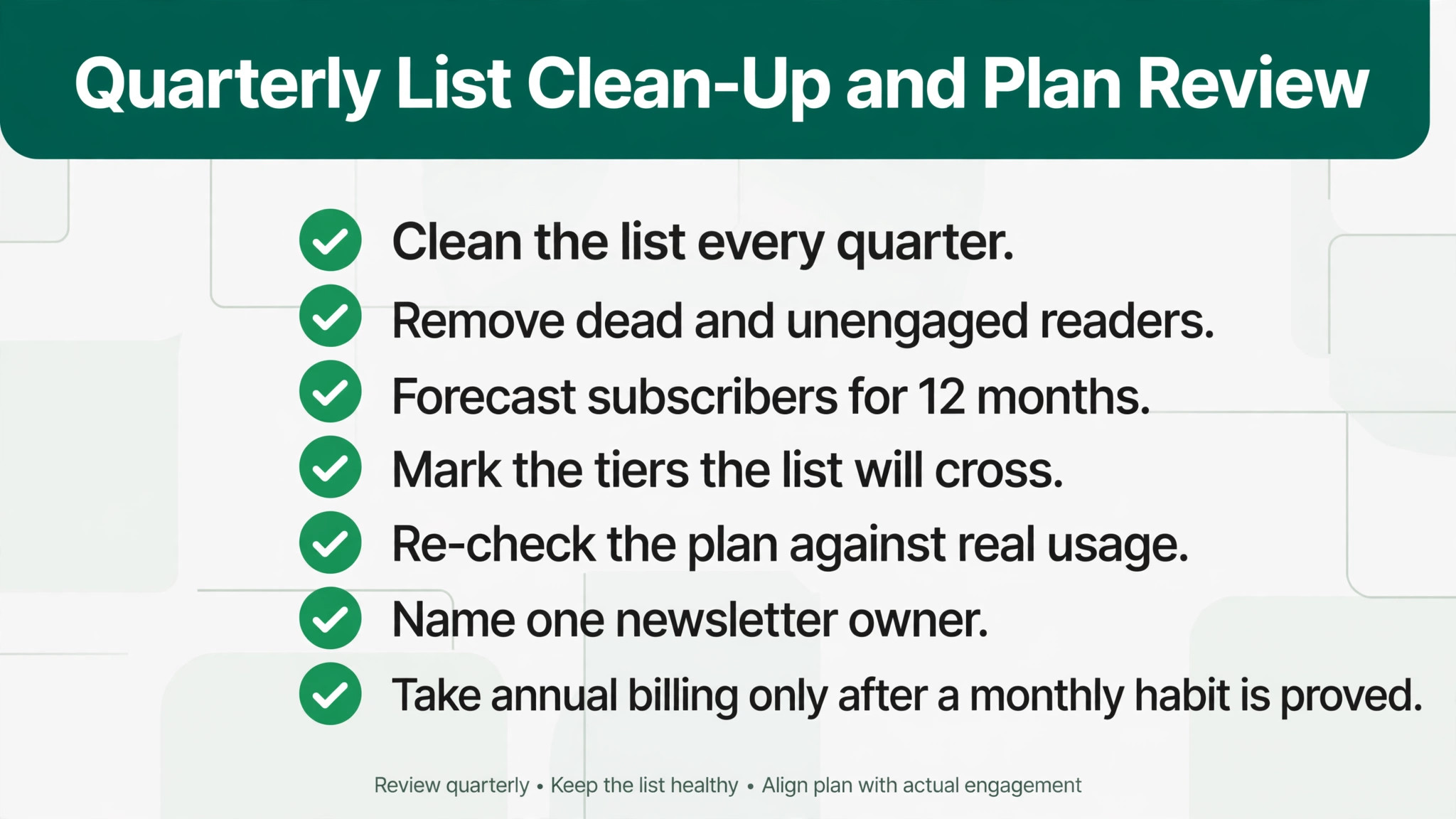
– Audit the subscriber list every quarter and remove dead and long unengaged readers. – Start on Lite if paid subscriptions or automations are the must have, and upgrade only for a named need. – Take annual billing only after a monthly habit has proved the fit. – Name one newsletter owner, so issues, segments and automations stay current. – Forecast subscribers for twelve months, and mark the tiers the list will cross. – Re-check the plan each year against real usage, not against the plan made at signup.
Frequently Asked Questions
What does Beehiiv cost each month for a team of five?
A team of five on Lite pays $49 a month billed annually or $59 a month billed monthly at the 1,000 subscriber tier, and that plan total is the number to put in a budget, since the price does not rise per seat. On Pro, the same team pays $95 a month billed annually or $109 billed monthly at the same tier. Add Stripe processing fees on any paid subscriptions, and confirm extra seat terms for a team of five on the vendor pricing page, since published guides differ on seat allowances.
Is annual billing worth it for a small business?
Annual billing is worth it once the publishing habit has proved itself, because it cuts the monthly billing total on every paid plan, by $10 a month on Lite and $14 a month on Pro at the entry tier. It is not worth it during the first trial period, because the saving is lost if the team stops publishing and the unused months are not refunded. A sensible path is to pay monthly for one to three months, confirm that issues are actually sending weekly, and then switch to annual billing for the saving. Mark the renewal date at signup, so the decision to continue is deliberate.
Why does the price rise when the team stays the same?
The price rises because Beehiiv prices by subscriber tier, not by seat, so a growing list lifts the bill even when headcount never changes. At 10,000 subscribers, Lite costs $119 a month billed annually, against $49 at 1,000 subscribers, and Pro costs $199, against $95. The practical defence is to forecast subscribers for twelve months, clean dead readers every quarter, and budget for the tiers the list will cross. Budget the rise in advance, since the cost of Beehiiv for small business monthly follows the audience, not the payroll. A list that grows is good news, but it should be budgeted as a rising cost, not discovered at renewal.
Does Beehiiv take a cut of paid subscriptions?
No, Beehiiv takes 0% of paid subscription revenue on paid plans, and that is one of its strongest selling points. Payment processing fees still apply, at Stripe standard rates of 2.9% plus $0.30 per transaction in published summaries, so a $10 subscription leaves about $9.41 after processing. The free plan does not include paid subscriptions at all, so a business that wants to sell subscriptions must move to Lite or Pro. Check the current processing terms at signup, since processors can change their rates.
Does Beehiiv offer a free plan?
Yes, Beehiiv offers a free plan for up to 2,500 subscribers with unlimited sends, one publication and one team seat. It is a genuine way to test publishing with a real audience, and it suits a business that is still deciding whether a newsletter earns its place. A business that wants paid subscriptions, the ad network or automations must move to a paid plan, since those tools are not on Free. Treat the free plan as a publishing trial, not as a monetisation plan.
Can a business downgrade after paying annually?
Downgrades are possible in principle, but annual payments are generally not refunded for unused months, so a business that downgrades mid year may not see the saving until the next billing cycle. That is why starting low matters more than starting high. Monthly billing keeps downgrades simple, at the cost of a higher plan price, while annual billing rewards certainty with a lower price. Check the current terms at signup and get the renewal and downgrade rules in writing if the contract value is large.
What should a business check before signing up?
Check five things in order. First, count subscribers honestly, including inactive readers, and forecast growth for twelve months. Second, count team seats and confirm extra seat terms. Third, name the three tools that must work in week one, and test those tools in the trial. Fourth, get the total bill in writing, including processing fees and the billing period. Fifth, name a newsletter owner and set a ninety day review against a clear target, such as subscribers per month or leads per issue. A business that checks those five points will rarely be surprised by the bill.
Verdict
For a small business that publishes weekly and wants growth and earning tools in one account, Lite is the sensible default, and the cost of Beehiiv for small business monthly at that plan is fair for what it returns in audience growth and subscription revenue. Start on monthly billing, prove the weekly habit with real issues, then move to annual billing for the saving, and keep the list clean. Pro suits a business that runs unlimited automations or sends through the API daily, while Free suits a business that is still testing whether a newsletter earns its place.
Beehiiv is not the cheapest email tool on the market, and it does not try to be. Its value comes from bundling publishing, growth and earning at a flat plan price with no cut of subscription revenue, so businesses that only send occasional updates should look elsewhere. Price the subscriber forecast, price the processing fees, and re-check the plan every year. Done that way, Beehiiv is a predictable cost for a small business, and done carelessly, it is an easy way to pay a higher tier price for dead readers.
More Reading on Stratilyze
– Cost of Zapier for Small Business Monthly – Cost of Grammarly for Small Business Monthly – Best Website Builder for Wedding Photographers – Cost of Copper for Small Business Monthly – Cost of Keap for Small Business Monthly