

A hair salon that loses a client to a no-show loses more than one appointment. It loses the colour, the retail and the rebooking that client would have made for the next six weeks, and the empty chair still costs the same rent. The best salon software for hair salons in this guide was picked to fill the chair, take the deposit before the appointment, and bring the client back on time.
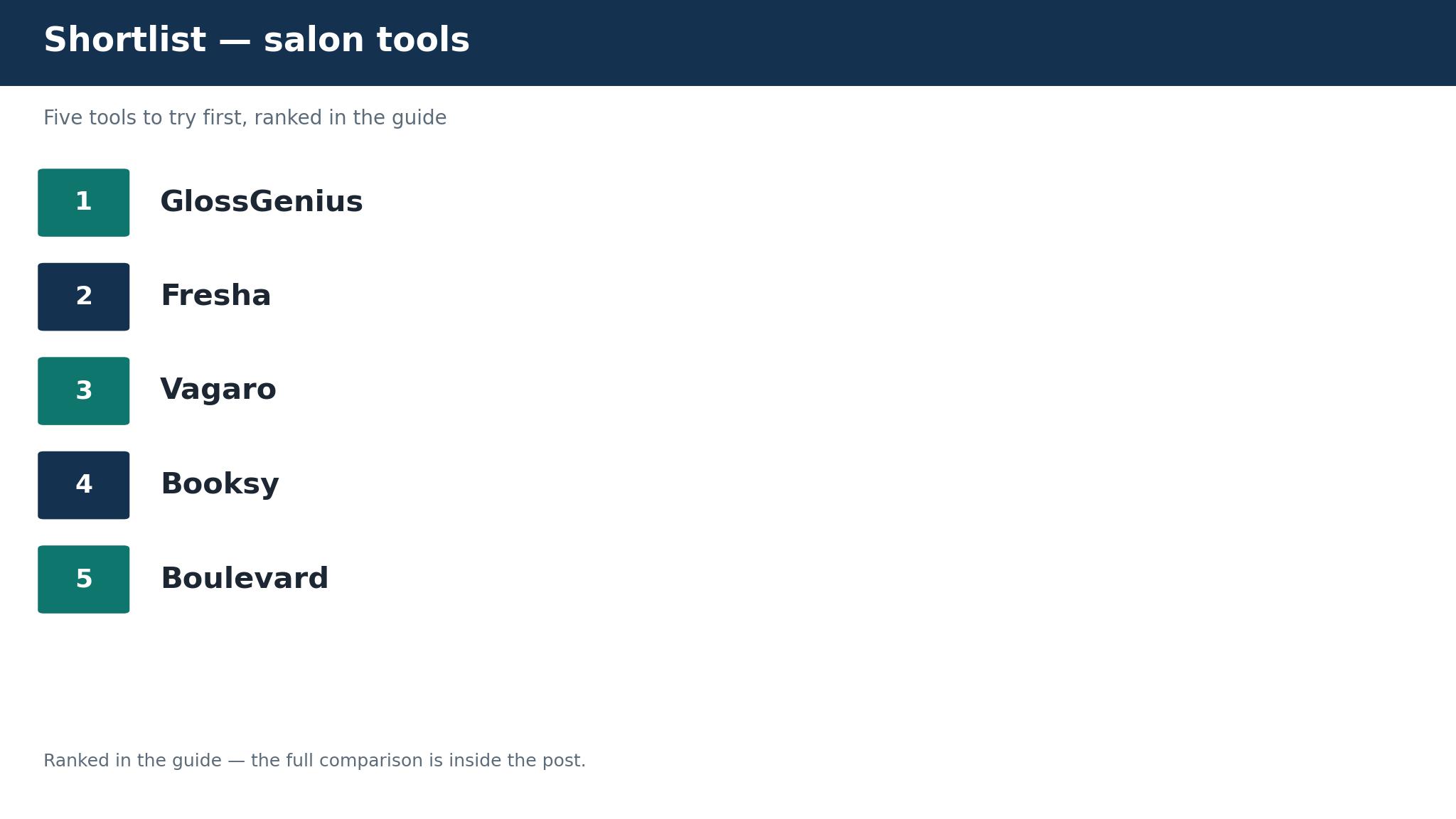
GlossGenius leads for solo stylists and small teams that want one predictable bill, Fresha leads for salons that want new clients from a marketplace, and Vagaro leads for multi-chair salons that want the broadest feature set near 30 dollars a month. The twelve tools below are ordered by the job each one does best, so a booth renter, a four-chair salon and a growing team each get a different winner.
Vendor pricing pages checked in November 2026 put GlossGenius Standard at about 24 dollars a month on annual billing, so confirm the figure on the vendor page before you pay. A low headline figure rarely tells the whole story, because payment processing, marketplace commission and texting all move the monthly bill.
How to Judge the Best Salon Software for Hair Salons
Start with the total cost, because the subscription is the smallest part of the bill. Fresha charges 20 percent of a new marketplace client first booking, Booksy Boost takes 30 percent of the first visit, and payment processing runs 2.2 to 3.5 percent on every ticket. The best salon software for hair salons is judged first on what a full month actually costs, and a 20 dollar plan with a 20 percent commission costs more than a 100 dollar plan with no commission once the bookings start flowing.
Next, check the no-show protection. A salon that takes deposits and card-on-file details loses far fewer appointments than one that relies on reminders alone, and the tools in this guide differ on whether deposits, no-show fees and waitlists are included or charged extra. A four-chair salon losing two appointments a week to no-shows is losing more than the software costs in a month.
Finally, look at the chair count, not the headline price. Per-staff pricing compounds fast, so a plan that looks cheap for one stylist can cost five times more for five. Model the price for the chairs the salon actually runs, including the processing and the marketplace fees, before comparing two tools.
The 12 Tools at a Glance
Read the table as a map of trade-offs, then read the detail entries for the two or three tools that match how many chairs the salon runs.
| Tool | Best for | Starting price |
|---|---|---|
| GlossGenius | solo stylists and small teams | from about 24 dollars a month on annual billing |
| Fresha | salons that want discovery | from about 19.95 dollars a month solo, 14.95 dollars per team member |
| Vagaro | three to seven chair salons | from about 30 dollars a month for one bookable calendar |
| Booksy | stylists with an established book | from about 29.99 dollars a month plus 20 dollars per extra team member |
| Boulevard | colour-heavy salons with a front desk | from about 143 dollars a month on annual billing for up to 5 calendars |
| Mangomint | salons that want premium workflow | from about 130 dollars a month solo |
| Square Appointments | solo operators who already take Square payments | free tier, paid tiers from about 29 dollars a month |
| Mindbody | salons that also sell classes or memberships | quote only |
| Timely | salons that want simple online booking | from about 20 dollars a month |
| Goldie | solo stylists who want a free start | free tier, paid from about 19.99 dollars a month |
| Schedulicity | salons that want booking plus marketing | from about 29 dollars a month |
| Zenoti | multi-site salon groups | quote only |
A single row will not pick your tool, because two buyers with different work need different machines, so use the rows that speak to your job. Skim the rest of the salon software for hair salons guide, but read the detail entries for the two or three tools that match where the work actually happens. The best salon software for hair salons that fits is the one that matches the job, not the one with the longest list.
Best Pick by Job
The second tool in each row covers what the first leaves open for salon software for hair salons. Read both names in the salon software for hair salons pair, not just the first.
| Job type | First pick | Second tool | Why this pair works |
|---|---|---|---|
| Run a solo chair or a small team | GlossGenius | Square Appointments | One predictable bill plus a genuinely free tier covers the small-salon job from two angles |
| Win new clients from a marketplace | Fresha | Booksy | A large marketplace plus a consumer app covers the discovery job end to end |
| Run a four to seven chair salon | Vagaro | Boulevard | Broad features at a low price plus a premium front-desk tool covers the multi-chair job |
| Keep the monthly bill flat | GlossGenius | Vagaro | A flat subscription plus a capped all-in-one covers the predictable-cost job honestly |
| Grow to a premium or multi-site salon | Boulevard | Mangomint | A premium front desk plus a colour-heavy workflow covers growth from one salon to a group |
A salon that needs the best salon software for hair salons to stop losing money to no-shows should start with GlossGenius for deposits and a flat bill, and keep Fresha as the discovery channel. A salon with four or more chairs should start with Vagaro, because the per-calendar price stays low while the feature set covers the whole front desk.
The 12 Tools in Detail
The twelve tools below are the ones that matter for a working hair salon in 2026. Every entry sets out the tool’s strongest job, its price, and the place where it falls short, so you can match the tool to the chair count and the client flow. The best salon software for hair salons that fits the way the salon books matters more than the one with the longest feature list, so read the entries for your job first and skim the rest.
1. GlossGenius
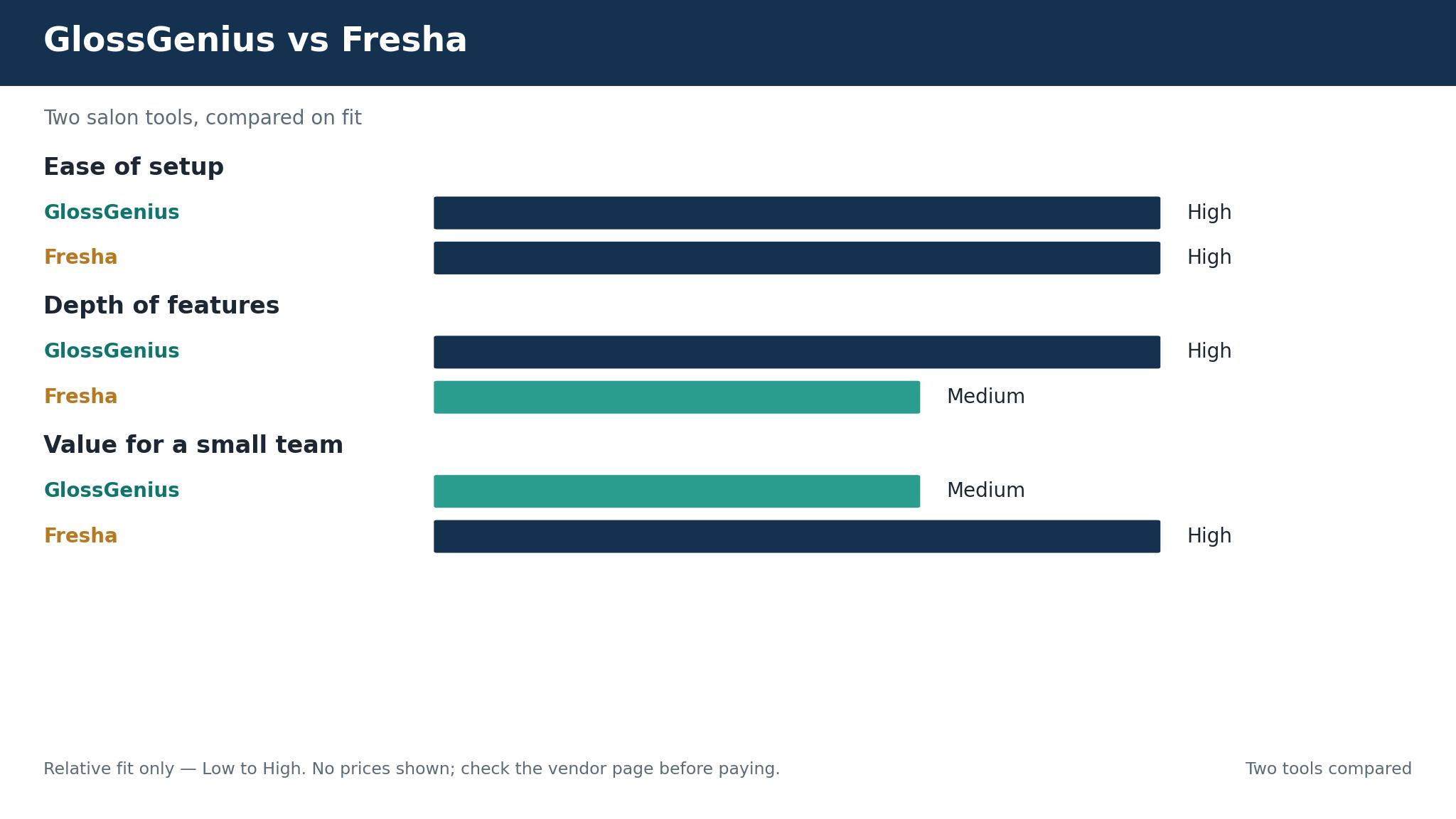
Solo stylists and small teams get the most from GlossGenius, which wraps deposits, card-on-file, no-show policies and unlimited email marketing into one predictable bill. Gold covers up to 9 staff for about 56 dollars a month, and the setup holds steady through a packed week.
The Standard plan opens at about 24 dollars a month on annual billing. Keep a copy of the written quote before you agree to anything, because sales-led pricing gets repackaged and the figure you saw first is only the start.
Custom commissions sit on the Platinum tier at about 168 dollars a month, so a salon that needs them pays considerably more. That single gap does not dislodge GlossGenius from the top spot for salons weighing their booking options, since the flat bill and deposit tools carry the daily work.
Hand GlossGenius real appointments instead of demo data, then check on the third morning whether anyone opens it unprompted. A tool the team reaches for without a reminder has passed the only test that counts.
2. Fresha
Booking, point of sale and a marketplace that books millions of appointments a month come together in Fresha, at the lowest card rate in this guide. Salons hunting for new clients get the most from it, because the discovery channel does real work every day instead of sitting on a feature list.
Fresha opens at about 19.95 dollars a month for a solo stylist and 14.95 dollars per team member. Treat that figure as the floor, not the total, and check the tier above the entry plan for the features that decide the purchase.
A new marketplace client costs a one-time 20 percent commission with a 6 dollar minimum, which adds up fast for a busy salon. When that commission lands on the work a salon does every day, Fresha is the wrong buy, so read the entry below instead. When it rarely applies, the marketplace reach is worth the price.
Judge what Fresha costs each month by the hours the trial gives back. Count those hours first, then decide whether the subscription earns its keep.
3. Vagaro
Three to seven chair salons get the strongest all-round value from Vagaro, which puts booking, point of sale, marketing and payroll in one place. The multi-staff job shaped how Vagaro was put together, rather than being added to it afterwards.
A single bookable calendar opens at about 30 dollars a month. Pick the entry tier that covers the core work and find out what the move up costs before the trial period closes.
Each extra staff calendar adds about 10 dollars a month, so a seven-chair salon pays considerably more than the headline figure suggests. Judge that extra cost against the breadth of the feature set. Vagaro keeps third place because the value for a multi-staff salon still comes out ahead once the drawback is counted.
Book Vagaro solid on the busiest day in the diary, not the quietest one, and let ten genuine appointments decide whether the trial becomes a subscription.
4. Booksy
Stylists with an established book will find Booksy hard to beat, because its consumer marketplace reaches 40 million users and the booking flow is the fastest in this guide for a returning client. The job Booksy does best is bringing a full book back through the door with less effort.
The entry plan runs from about 29.99 dollars a month plus 20 dollars per extra team member. Published prices go stale quickly, so treat the vendor page as the authority and confirm the current figure there on the day you decide, before you pay anything.
Boost takes 30 percent of a new client first visit, which is the highest commission here. Booksy stays fourth for salons sizing up their options on the strength of that 40-million-user marketplace, with the commission kept in full view rather than hidden.
A trial earns its verdict from live bookings, so run Booksy through ten appointments on a busy Saturday and let that busy Saturday be the test.
5. Boulevard
Colour-heavy salons with a front desk should put Boulevard near the top of the list. Its scheduling handles finishing time, back-to-back colour and front-desk workflow better than any tool in this guide, and it holds up across a busy week.
Boulevard lists at about 143 dollars a month on annual billing for up to 5 calendars. Read that as the starting figure and look at the plan above the entry tier, because that is usually where the features that matter sit.
The weak spot is the price, which is steep for a small salon, and the monthly-billing figure runs about 159 dollars. When that price bites into the everyday work, skip Boulevard and read the entry below instead. When the front desk is the bottleneck, the cost is easier to defend.
Boulevard justifies what it charges each month through the hours the trial gives back, so count those hours before deciding anything.
6. Mangomint
Mangomint covers the whole appointment, from booking to checkout, with a polish that suits a premium salon. Salons that want premium workflow will notice the difference in the daily routine, not in a list of features.
The solo plan starts at about 130 dollars a month. Let the core job pick your starting tier, then find the upgrade cost before the trial finishes, so the second month holds no surprise.
Its limit is the price, which climbs with the team, and a five-stylist salon pays about 170 dollars a month. Read that cost against the polish of the workflow. Mangomint keeps sixth place because covering the full appointment this cleanly still outweighs what it charges.
Before the trial ends, Mangomint should have carried ten genuine appointments on a busy day, because the demo never shows the failure modes that matter.
7. Square Appointments
Solo operators who already take Square payments have an obvious starting point here. Square Appointments is the only genuinely free tier in this guide, and a solo stylist can run bookings and payments on it without a monthly fee. The solo-payments job shaped it from the start, rather than being bolted on later.
Paid tiers begin at about 29 dollars a month, with the free tier covering the basics. Prices shift often, so open the vendor pricing page and read the current figure for the plan you actually need before you hand over any payment.
The trade-off is a simpler feature set than the salon-first tools, so marketing and client management need add-ons. Square Appointments keeps seventh place for salons weighing a free start, because the only genuinely free tier in this guide still carries real weight.
Run Square Appointments on live bookings for a fortnight and see whether the team still opens it on the third morning, because an unopened tool is a cost whatever the price.
8. Mindbody
Salons that also sell classes or memberships have a different job, and Mindbody answers it by covering bookings, memberships and retail in one platform, which suits a salon that also runs a studio. The job above is the one Mindbody was made for.
Pricing is quote only. Read that as the floor and price the plan above the entry tier before deciding, because the features that matter tend to sit there.
Quote-based pricing is the first problem, and the platform is heavier than a hair-only salon needs. If either of those touches the daily work, Mindbody rules itself out, and the entry below is the better read. When classes and memberships are the business, the weight is easier to carry.
Work out what Mindbody is worth from the hours the trial saves, not from the list price, because the price only adds up against the time it gives back.
9. Timely
Salons that want simple online booking should look at Timely first. Its booking page is clean and fast, the calendar handles the daily flow without a learning curve, and it holds up across a busy week.
Timely opens at about 20 dollars a month. The first tier is enough when it covers the central job, but the upgrade price is worth knowing before the trial window closes.
Marketing and point-of-sale features run lighter here than in Vagaro or GlossGenius. Stack that gap beside the clean booking flow. Timely still takes ninth place for salons comparing their options, because simple booking done well beats a heavier tool nobody enjoys opening.
The test Timely has to pass is a packed Saturday, so load it with ten genuine appointments and see what breaks before the trial ends.
10. Goldie
Solo stylists who want a free start get a genuine one from Goldie, whose free tier covers booking and reminders, while the paid tier adds the client management a growing chair needs. The free-start job is where Goldie shows its value in the daily routine, not in a feature list.
The paid tier begins at about 19.99 dollars a month, with the free tier underneath it. Before you pay, check the vendor site itself for the live price on the day you buy, because the number quoted here can move with billing terms and add-ons.
The free tier covers one user only, so a team outgrows it quickly. Goldie keeps tenth place for salons weighing a free start, because a free tier that covers booking and reminders for a solo stylist still earns its spot.
A fortnight of live bookings is the real test for Goldie, and the telling moment is whether anyone opens it unprompted on the third morning.
11. Schedulicity
Booking plus marketing in one monthly price is the Schedulicity offer, pairing online booking with email marketing and client reminders. The combined job shaped how it was put together, rather than being added afterwards.
Schedulicity lists at about 29 dollars a month. Read that as the starting figure and look at the plan above the entry tier, because that is usually where the features that matter sit.
The interface feels older than the newer tools, and the point-of-sale features are basic. When that dated feel slows down the front desk every day, Schedulicity is a miss, so move one entry down. When booking and reminders are all the salon needs, it does the job.
Work out what Schedulicity is worth from the hours the trial saves, not from the list price, because a subscription only pays for itself in time given back.
12. Zenoti
Multi-site salon groups have an enterprise job, and Zenoti answers it with depth across several locations, inventory and staff management in one contract. The group job is the one Zenoti was made for.
Pricing is quote only. Choose the starting tier on the strength of the core job it covers, and get the upgrade price in writing before the trial runs out, because the features that matter often sit higher.
Quote-based pricing is the first problem, and the platform is built for groups rather than a single salon. A one-site salon that feels either of those every day should skip Zenoti and read the next entry down. For a group, the depth still carries the ranking and twelfth place stands.
Try Zenoti the way the work actually happens, on a busy day with ten genuine appointments, and the decision at the end of the fortnight will make itself.
What a Five-Stylist Salon Actually Pays Each Month
For a five-stylist salon, the published monthly prices run from free on Square Appointments to about 170 dollars on Mangomint, with GlossGenius Gold at about 56 dollars, Vagaro at about 70 dollars and Fresha Team at about 75 dollars in between. The subscription is only the start, because processing at 2.4 percent on 20,000 dollars of monthly sales is another 480 dollars, and that number is the same on every tool.
The best salon software for hair salons in this guide includes one genuine free tier in Square Appointments, which is why a solo stylist should not pay for software before the chair is full. Add the subscription, the processing, the marketplace commission and the texting together before you compare two tools, or the comparison is fiction.
| Cost band | What it covers | Who it fits |
|---|---|---|
| Free tier | No monthly fee, basic booking | A solo stylist starting out |
| Flat subscription | About 24 to 56 dollars a month | A solo stylist or a small team |
| Per-staff pricing | About 70 to 110 dollars a month for five chairs | A four to seven chair salon |
| Premium or enterprise | About 143 dollars a month and up | A premium salon or a group |
Four Hair-Salon Mistakes That Empty the Chair
The first mistake is choosing on the subscription and ignoring the marketplace commission. A salon gaining 30 new marketplace clients a month at an 80 dollar ticket pays about 480 dollars in commission on Fresha, which is more than the subscription on any tool in this guide. The commission is the real price, and the subscription is the small print.
The second mistake is taking bookings without a deposit. A client who has paid nothing can cancel without thinking, and a salon that loses two appointments a week to no-shows is losing more than the software costs in a month. Deposits and card-on-file details are not rude, they are how a salon protects the chair.
The third mistake is buying for one chair and pricing for five. A plan that costs 24 dollars for a solo stylist can cost 150 dollars for five, and a salon that discovers that after signing has to migrate or overpay. Model the price for the chairs the salon actually runs before the trial ends.
The fourth mistake is letting the rebooking slide. A client who leaves without a next appointment is a client who books somewhere else, and the salon that asks at the chair keeps the client for years. The software should prompt the rebooking before the client stands up, because that prompt is worth more than any marketing email.
Deposits, Rebooking and the Client Who Comes Back on Time
Deposits change client behaviour. A client who has paid 20 dollars to hold a colour appointment shows up, and a client who has paid nothing cancels when something better comes along. The tools in this guide differ on whether deposits, no-show fees and waitlists are included, so test the deposit flow on a real booking before the trial ends, because the tool that protects the chair is worth more than the tool with the prettier calendar.
Rebooking is the second discipline. The best salons rebook at the chair, while the client is still in the cape and the next appointment is six weeks away. The software should surface the next slot before the client stands up, and the stylist should ask while the hair still looks good. A salon that rebooks 70 percent of clients at the chair never has an empty week.
Retail is the third revenue line the software should support. A client who buys the shampoo the stylist used is a client who comes back, and the point of sale should track which stylist sold what so commissions are right. A tool that treats retail as an afterthought leaves money on the table every single day.
One Trial Week With GlossGenius
One real week with GlossGenius shows whether the best salon software for hair salons in this guide fits the daily work. On day one with GlossGenius, load ten real appointments from last week and run the whole workflow through the tool instead of the demo data. Day three with GlossGenius tells the team whether the tool fits the work or fights it, and that answer beats any feature list.
Price the week as well. Add the subscription, the per-seat fee and the add-ons the trial actually used for GlossGenius, then compare that total with what the old way cost in time. Three hours saved a week pays for almost any tool in this guide, so judge GlossGenius on that arithmetic. The notes from the trial week with GlossGenius decide the renewal in a year, so keep them.
Your First Fortnight With the New Salon System
Do these steps in order, on real work from your own week, before you pay for a second month of the best salon software for hair salons in this guide.
- Import every client record and check that the history lands on the right chair.
- Set the deposit and no-show policy, and test it on one real booking.
- Price the tool for the chairs the salon actually runs, including processing.
- Build the online booking page and test it on a phone.
- Set the rebooking prompt so it appears before the client stands up.
- Test the waitlist on a fully booked Saturday.
- Ask three regular clients what confused them about the booking page.
- Cancel the tool nobody opened twice during the trial week, and pay for the one the team kept using, which in this guide is usually GlossGenius.
Frequently Asked Questions
Which salon software is best for a solo hair stylist in 2026?
GlossGenius is the best first pick for a solo stylist, because Standard is about 24 dollars a month on annual billing with deposits, card-on-file and unlimited email marketing in one predictable bill. Square Appointments is the free alternative for a stylist who already takes Square payments.
How much does Fresha cost a five-stylist hair salon each month?
Fresha Team is about 14.95 dollars per team member, so about 75 dollars a month for five stylists. The subscription is only part of the bill, because a new client found through the Fresha marketplace costs a one-time 20 percent commission with a 6 dollar minimum.
Is Vagaro good value for a four-chair hair salon?
Yes. Vagaro starts from about 30 dollars a month for one bookable calendar, with each extra staff calendar at about 10 dollars a month, so a four-chair salon pays about 60 dollars a month. It is the broadest feature set near that price in this guide.
What does GlossGenius Gold cover for a small hair salon team?
GlossGenius Gold covers up to 9 staff for about 56 dollars a month, or about 48 dollars billed yearly, with deposits, no-show policies, a waitlist and rebooking reminders. Custom commissions sit on Platinum at about 168 dollars a month, and payroll is extra.
Does Booksy charge commission on new clients for hair salons?
Booksy Boost takes 30 percent of a new client first visit, which is the highest commission in this guide. The subscription itself is about 29.99 dollars a month plus 20 dollars per extra team member, so a salon should price the commission against the new clients the marketplace actually sends.
Should a hair salon take deposits on every appointment?
Yes, for colour and long appointments at least. A deposit and card-on-file details cut no-shows sharply, and the tools in this guide that include them, including GlossGenius and Fresha, make the deposit part of the booking flow rather than a separate step. A client who has paid to hold the chair shows up.
Fill the Chair, Take the Deposit, Rebook at the Cape
The best salon software for a hair salon is not the cheapest per month. It is the one that fills the chair, takes the deposit before the appointment, and brings the client back on time. GlossGenius is that tool for most small salons, Fresha is the discovery pick for salons that want new clients, and Vagaro is the choice for a four to seven chair salon that wants the broadest feature set near 30 dollars a month.
Price the tool for the chairs the salon actually runs, test the deposit on a real booking, and let the no-show rate decide the purchase. The clients are already looking, and the chair they book is the one that was ready when they called.