
A single enterprise event program can cost more than 100,000 dollars over three years once the license, the per-registrant fees and the implementation are added together, according to 2026 buyer guides that priced Cvent in detail. That figure explains why the top 10 event management software for corporate event planners is a buying decision that deserves a spreadsheet, not a demo. The wrong platform locks a team into a contract that charges for modules nobody opens, while the right one pays for itself in one well-run conference.
Corporate events differ from community events in three ways. The audience is a business audience, so the agenda, the networking and the follow-up all carry revenue. The compliance burden is real, with procurement, data rules and sponsor contracts to satisfy. And the program runs all year, so the tool must handle ten events, not one, without the price multiplying by ten.
This guide compares ten platforms that fit a corporate planning team in 2026. Pricing figures here were taken from vendor pages and 2026 buyer guides checked in November 2026. Cvent, Whova, Bizzabo, Splash, Airmeet and RingCentral Events do not publish full rate cards, so this guide gives the reported figures and marks them as reported rather than as list prices. The verdict at the end names one pick for a mid-size corporate team and one for an enterprise program.
A planning team does not need the platform with the longest feature list. It needs the one that gets attendees checked in fast, keeps the agenda in their pocket, and proves the return on the event to the finance team afterward.
What a Corporate Event Platform Has to Get Right
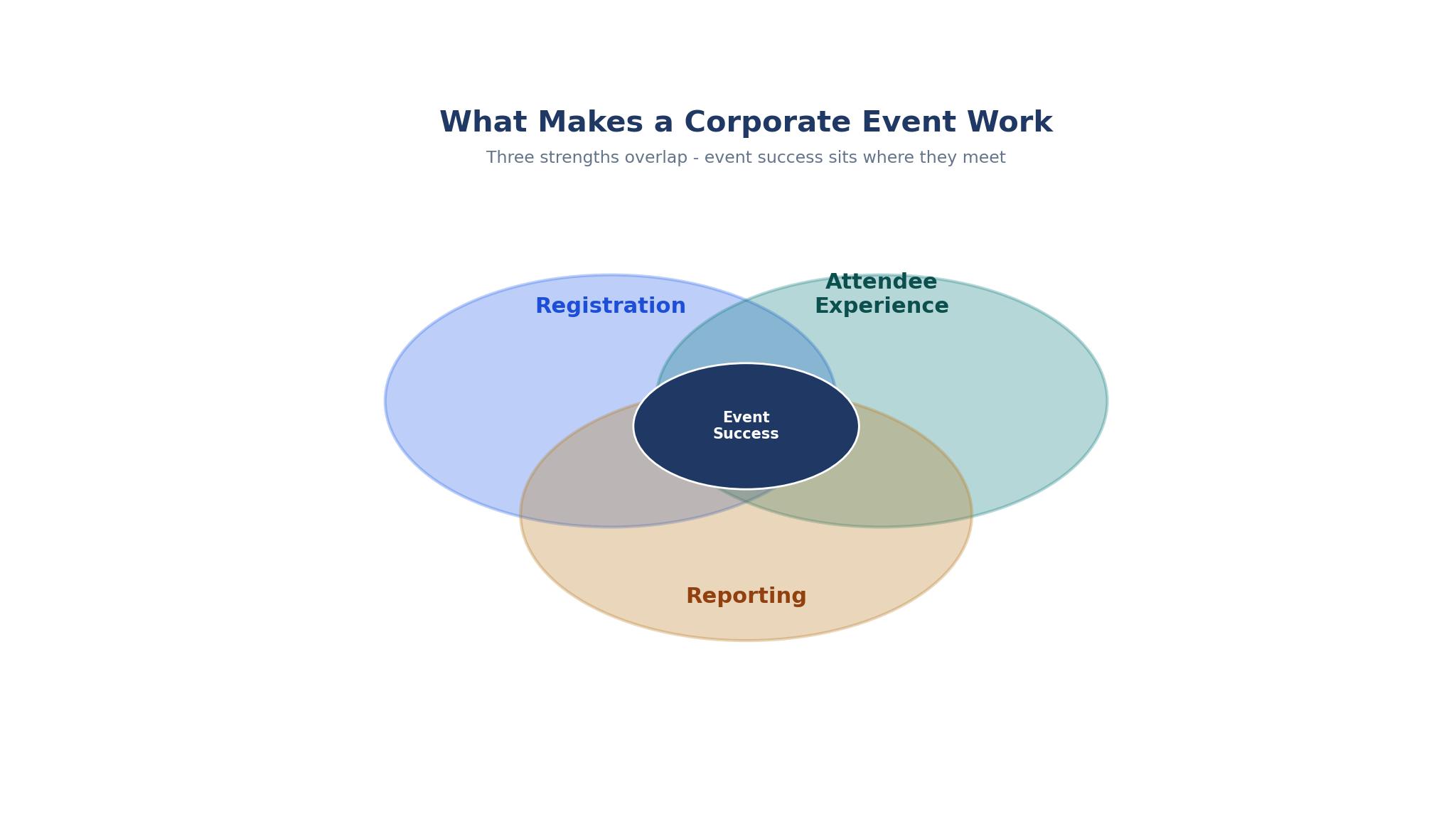
Registration comes first. A corporate event needs branded registration, ticket types, approval flows and payment handling that work for a thousand attendees without a spreadsheet on the side. The top 10 event management software for corporate event planners in this guide was judged first on whether registration, badging and check-in run from the same system, because a registration that works and a check-in that fails is a lobby full of angry executives.
Second, the attendee experience has to hold up in the room. A native event app with the agenda, the maps, the speaker details and the networking tools is now the baseline, not a luxury. Attendees who cannot find their next session in the app will ask the staff, and the staff will spend the day giving directions instead of running the event.
Third, the reporting has to satisfy finance and marketing together. A corporate team must show who attended, who engaged, which sessions drew a crowd and which sponsors got value, and the numbers must come from one system rather than from three exports stitched together in a spreadsheet.
Per-Event or Per-Year, the Model Decides the Bill
Event platforms charge in two ways, and the model matters more than the starting price. Annual licenses like Cvent typically start around 19,500 dollars a year, with per-registrant fees near 7 dollars per person per event and implementation fees from 5,000 to 50,000 dollars. Bizzabo is reported near 17,999 dollars a year. Those figures buy depth, but a team that runs three events a year pays the same as a team that runs thirty.
Per-event pricing flips the math. EventMobi charges 3,000 dollars per event or 8,900 dollars a year for unlimited events, while Whova is quote-based and reported at 2,000 to 15,000 dollars per event. Nunify starts at 24 dollars a month for its Essential tier, with check-in from 49 dollars a month and the event app from 99 dollars a month, which makes it the cheapest honest entry in this guide for a mid-size corporate event.
The honest comparison is a year of real events. Count the events, the attendees and the modules the team actually opens, then price each platform on those numbers. A team that runs two conferences a year pays less on per-event pricing, while a team that runs twenty pays less on an annual license. The only way to know is to run the actual program through both models.
The 10 Tools at a Glance
The table below gives the short version of the top 10 event management software for corporate event planners, with the starting price each vendor lists or the reported figure where pricing is quote-only. Read it as a shortlist, then use the detailed sections to review check-in speed, the attendee app and the reporting before choosing.
| Tool | Main job | Best for | Starting price |
|---|---|---|---|
| Cvent | Enterprise event program | Large enterprise conferences | Custom quote |
| Bizzabo | Event marketing platform | Corporate marketing events | Custom quote |
| Whova | Attendee engagement app | Academic and association conferences | Custom quote |
| EventMobi | Event platform with apps | Organizers running several events a year | $3,000 per event |
| Nunify | Corporate and hybrid events | Mid-size corporate events | $24 per month |
| Eventbrite | Ticketing and registration | Paid events with simple needs | Free for free events |
| Splash | Event marketing | Corporate event marketing | Custom quote |
| Airmeet | Virtual and hybrid events | Hybrid programs with a virtual audience | Custom quote |
| RingCentral Events | Virtual and hybrid events | Teams already on RingCentral | Custom quote |
| Accelevents | Event management platform | Mid-size conferences and trade shows | Custom quote |
Best Pick by Job
No single platform fits every program, so the table below matches the top 10 event management software for corporate event planners to the five most common buying situations. Find the row that describes the program, then test the two tools named there on a real event before paying.
| Job type | First pick | Second tool | Why this pair works |
|---|---|---|---|
| Mid-size corporate events | Nunify | EventMobi | Nunify covers registration and check-in cheaply, while EventMobi adds apps and badging |
| Enterprise conference program | Cvent | Bizzabo | Cvent gives the deepest enterprise set, while Bizzabo adds CRM-driven marketing |
| Attendee engagement first | Whova | EventMobi | Whova runs the best attendee community, while EventMobi adds a stronger platform |
| Hybrid events with virtual audience | Airmeet | RingCentral Events | Airmeet is built for virtual delivery, while RingCentral fits teams already on its suite |
| Simple paid ticketing | Eventbrite | Nunify | Eventbrite handles ticketing with no setup, while Nunify adds check-in and an app |
How to Judge the Top 10 Event Management Software for Corporate Event Planners
Judging the top 10 event management software for corporate event planners starts with a check-in test, not a demo. Time how long it takes to check in fifty attendees with the platform badge printing and the app, and count how many need staff help. The tools that clear fifty people in ten minutes are the ones that will survive a Monday morning lobby. The tools that need a workaround for badging will fail in front of the whole company.
Next, test the attendee app where the event happens. Walk the venue with the app, open the agenda, find a session, message another attendee and check the map, all on the venue Wi-Fi. An app that needs perfect connectivity will fail in a basement ballroom, and the offline capability is worth more than any feature on the sales page.
Finally, check the sponsor report. Ask the system to show what a sponsor received, from booth visits to lead scans to session attendance, in a format the sponsor will accept. A platform that cannot prove sponsor value will cost the team its sponsors, and that loss is larger than any license fee.
The 10 Tools in Detail
Each entry below covers what the tool does best, where it falls short, and who it fits, plus a practical test to run during the trial. The order follows the glance table, and the prices are the starting figures from the top 10 event management software for corporate event planners shortlist above.
1. Cvent
Cvent is the enterprise standard for event programs, covering venue sourcing, registration, the Attendee Hub app, onsite check-in and compliance reporting in one system. It has more than 200 integrations, a venue marketplace with nearly 340,000 venues, and it was named a Leader in the 2026 Gartner Magic Quadrant for Event Marketing and Management Platforms for the third year running. Pricing is custom quote, typically starting around 19,500 dollars a year.
The drawback is cost and weight. The median smaller enterprise usage runs about 19,550 dollars a year, per-registrant fees sit near 7 dollars per person per event, implementation runs 5,000 to 50,000 dollars, and the total cost over three years can exceed 100,000 dollars. Smaller teams often pay for modules they never open.
Cvent suits a large enterprise with a year-round event program, a procurement process and compliance needs. It is too much platform, and too much money, for a team that runs two events a year.
To test it honestly, ask the vendor for a written quote that lists the license, the per-registrant fees, the implementation and the modules, then price a year of real events against it. The written quote is the test, because the headline number is never the total.
2. Bizzabo
Bizzabo is a comprehensive event management platform for enterprise conferences, summits and expos, with strong CRM-driven event marketing and a SmartBadge for onsite engagement. It syncs with HubSpot and other CRMs, so the marketing team can see which contacts attended, which sessions they joined and what that means for the pipeline. Pricing is custom quote, reported near 17,999 dollars a year.
The drawback is the same as Cvent, which is enterprise pricing and enterprise weight. A smaller team will find the platform deep but expensive, and the value only appears when the event program is large enough to use the marketing depth.
Bizzabo suits a corporate marketing team that runs conferences to fill the pipeline and wants the CRM connection to prove it. It fits an enterprise that already runs HubSpot and wants events inside the same story.
To test it honestly, run a test event through the HubSpot sync, and check that attendance, session joins and lead scans all land on the right contact records. The sync is the feature being bought here.
3. Whova
Whova is the strongest attendee engagement platform in this guide, with community boards, in-app messaging, live polling, matchmaking and an agenda that attendees actually use. It integrates with membership systems like Wild Apricot, iMIS and Glue Up, which makes it the default for academic and association conferences. Pricing is quote-based and billed a la carte, reported at 2,000 to 15,000 dollars per event.
The drawback is the pricing model. The a la carte structure makes the total hard to predict, and a team should get the full breakdown in writing before signing, not just the headline number. It is also more attendee-app-led than full-platform, so a team that needs deep venue sourcing will look elsewhere.
Whova suits an association, an academic conference or a corporate event where attendee networking is the main value. It fits a program where the app is the event, not an accessory.
To test it honestly, run a real community board for a week before the event, and count how many attendees post, message and connect without staff prompting. The community activity is the test.
4. EventMobi
EventMobi is a genuine event platform with registration, white-label apps, onsite badging and virtual or hybrid delivery, priced at 3,000 dollars per event or 8,900 dollars a year for unlimited events. It suits an organizer running a handful of solid events a year without a dedicated events department, and its offline event app works when the venue Wi-Fi does not.
The drawback is that it sits between the cheap tools and the enterprise platforms, so a very small team may find 3,000 dollars per event steep, while a large enterprise may find the depth thinner than Cvent. It is a middle-market tool, and it should be judged as one.
EventMobi suits an association, a nonprofit or a corporate events team running two or more events a year. It fits a program that needs a real platform without an enterprise contract.
To test it honestly, run the offline app with the venue Wi-Fi switched off, and check that the agenda, the maps and the attendee list still work. The offline test is the one that matters on the day.
5. Nunify
Nunify is the strongest pick in this guide for a mid-size corporate event, covering registration, onsite check-in and badging, a native event app, AI networking and virtual or hybrid streaming. It starts at 24 dollars a month for Essential, with check-in from 49 dollars a month and the event app from 99 dollars a month, which makes it the cheapest honest entry for a corporate team.
The drawback is scale. Nunify is built for the 200 to 2,000-person conference, incentive trip or hybrid town hall, and a very large enterprise program with complex compliance needs may outgrow it. The brand is also smaller than Cvent or Bizzabo, so a procurement team may ask more questions.
Nunify suits a corporate events team running mid-size events that need real check-in speed and badging depth. It is the best value in this guide for a team that runs several events a year.
To test it honestly, time a fifty-person check-in with badge printing in the trial, and compare the minutes against the current system. Check-in speed is the feature being bought here.
6. Eventbrite
Eventbrite is the simplest ticketing tool in this guide, and it is free for free events, with paid ticketing fees of about 3 percent plus 99 cents per ticket, usually paid by the attendee. It handles registration, ticketing and payment with almost no setup, and it is the fastest way to put a paid corporate event on sale.
The drawback is depth. Eventbrite is a ticketing platform, not a full event management system, so it lacks the attendee app, the badging, the sponsor tools and the deep reporting a corporate program needs. A team that runs a conference on Eventbrite alone will need other tools for the day itself.
Eventbrite suits a simple paid event, a workshop or a corporate gathering where ticketing is the whole job. It is the wrong platform for a multi-day conference.
To test it honestly, sell fifty tickets, check the payout timing and the refund flow, and confirm the attendee list exports cleanly for the check-in team. The export is where a ticketing-only tool shows its limits.
7. Splash
Splash is an event marketing platform built for corporate teams that run events to build the brand and fill the pipeline. It offers branded registration pages, AI attendance forecasting and strong marketing integrations, and it fits a team that treats each event as a campaign rather than as a logistics exercise.
The drawback is that pricing is custom quote, and the platform is marketing-led rather than operations-led. A team that needs deep onsite check-in, badging and venue management will find Splash lighter than Cvent or EventMobi.
Splash suits a corporate marketing team that runs branded events and wants the registration page and the follow-up to look expensive. It fits a program where the marketing matters as much as the logistics.
To test it honestly, build a branded registration page in the trial, run a test campaign to a hundred contacts, and check the attendance forecast against the actual registrations. The forecast is the feature that justifies the price.
8. Airmeet
Airmeet is built for virtual and hybrid events, with a virtual venue, networking lounges, sponsor booths and engagement tools designed for an audience that is partly online. It suits a corporate team whose events now have a real virtual audience rather than a livestream tacked on at the end.
The drawback is that pricing is custom quote, and the platform is virtual-led rather than onsite-led. A team that runs mostly in-person events with a small virtual audience will find the onsite tools thinner than EventMobi or Nunify.
Airmeet suits a hybrid program where the virtual audience is half the event or more. It fits a corporate team that runs town halls, summits and training with a distributed audience.
To test it honestly, run a test hybrid session with fifty virtual attendees and ten in the room, and check that the virtual audience can network, ask questions and visit a sponsor booth without staff help. The virtual experience is the product here.
9. RingCentral Events
RingCentral Events, formerly Hopin, is the virtual and hybrid platform for teams already running RingCentral. It covers virtual venues, registration, engagement and analytics in one system, and it fits a company that wants its events inside the same communications suite as its meetings and phones. Pricing is custom quote.
The drawback is the same as Airmeet, which is that it is virtual-led, and the pricing is quote-only, so the cost only appears after a sales conversation. A team with no RingCentral footprint gets less value from it than a team already on the platform.
RingCentral Events suits a corporate team already on RingCentral that runs hybrid events and wants one vendor for meetings and events together. It is a weak pick for a team with no RingCentral tools.
To test it honestly, run a test event with the team own RingCentral accounts, and check that the registration, the venue and the analytics all work without a second login. One login is the promise being bought.
10. Accelevents
Accelevents is a mid-size event management platform covering registration, mobile apps, badging and exhibitor tools for conferences and trade shows. It suits an organizer who needs a real platform without an enterprise price, and it handles the trade show side, with exhibitor management and lead retrieval, better than the simpler tools in this guide.
The drawback is that pricing is custom quote, and the platform is less well known than Cvent, Bizzabo or Whova, so a procurement team may ask for more references. The feature set is solid but not the deepest in any one area.
Accelevents suits a mid-size conference or trade show organizer who needs registration, apps and exhibitor tools in one system. It fits a program with sponsors and booths rather than a simple internal meeting.
To test it honestly, run the exhibitor lead retrieval in the trial, and check that a scanned badge lands on the right exhibitor record with the right notes. Lead retrieval is where a trade show platform earns its fee.
What a Year of Events Really Costs
Price a program of five events with 500 attendees each, and the models separate clearly. Nunify at the Engage tier of 99 dollars a month costs about 1,188 dollars a year plus the check-in tier, which is the cheapest real platform in this guide. EventMobi at 8,900 dollars a year for unlimited events costs more, but it covers all five events with apps and badging included. Eventbrite at 3 percent plus 99 cents per ticket costs about 2,500 dollars per 500-person paid event if the attendees pay the fee, or the same amount from the organizer budget if the team covers it.
The enterprise platforms look different at the same scale. Cvent at a reported 19,500 dollars a year plus 7 dollars per registrant per event costs about 37,000 dollars for five 500-person events before implementation. Bizzabo at a reported 17,999 dollars a year lands in the same range. Those figures are only justified when the program is large, the compliance needs are real, and the venue sourcing saves money elsewhere.
The lesson is to count the events before choosing the model. A team that runs two events a year should buy per-event pricing, while a team that runs twenty should buy an annual license. The top 10 event management software for corporate event planners splits on this point more than on any feature, so the buyer should price the real program rather than the demo.

Mistakes That Waste the First Event
The most common mistake is buying the platform a month before the event. A new system needs time for registration setup, app content, badge design and staff training, and a team that buys late will run the event on a half-configured platform. Buy at least three months before the first event, and run a small internal event on the platform first.
The second mistake is ignoring the venue Wi-Fi. An attendee app that needs perfect connectivity will fail in a basement ballroom, and a check-in system that needs the cloud will stall the lobby. Test the app and the check-in on the venue network during the site visit, not on the office network.
The third mistake is forgetting the sponsor report. A platform that cannot prove sponsor value in a format the sponsor accepts will cost the team its sponsors, and that loss is larger than any license fee. Ask for the sponsor report in the trial, and show it to a real sponsor before signing.
Frequently Asked Questions
How much does event management software cost?
A mid-size corporate team can run Nunify from 24 dollars a month, or EventMobi at 3,000 dollars per event or 8,900 dollars a year for unlimited events. Enterprise platforms cost far more, with Cvent typically starting around 19,500 dollars a year plus about 7 dollars per registrant per event and implementation fees from 5,000 to 50,000 dollars. Whova is quote-based and reported at 2,000 to 15,000 dollars per event. The total depends on the number of events and attendees, not just the license.
What is the best event management software for corporate events?
Nunify is the best pick for a mid-size corporate team, because it covers registration, check-in, badging and an event app from 24 dollars a month. Cvent is the best pick for a large enterprise program with venue sourcing and compliance needs, and Whova is the best pick when attendee engagement is the main value. The right choice turns on the size of the program and the number of events a year.
Does Cvent publish its pricing?
No, Cvent does not publish a full rate card, and pricing is custom quote. Buyer guides in 2026 report a typical starting point near 19,500 dollars a year, with per-registrant fees near 7 dollars per person per event and implementation fees from 5,000 to 50,000 dollars. A buyer should get a written quote that lists every line before signing, because the headline number is never the total.
Can one platform handle hybrid events?
Yes, and Airmeet and RingCentral Events are built for hybrid delivery with a virtual venue, networking and sponsor booths for the online audience. Nunify and EventMobi also cover hybrid events with streaming alongside onsite check-in and apps. A team should test the virtual experience with real remote attendees before choosing, because a livestream tacked onto an onsite platform is not a hybrid event.
What is the difference between Whova and Cvent?
Whova leads with the attendee experience, with community boards, networking and an agenda app that conferences lean on, and it is priced per event on a quote basis. Cvent is an enterprise program system spanning venue sourcing, registration, onsite operations and reporting, licensed annually through procurement. A conference that values networking should pick Whova, while an enterprise program that values sourcing and compliance should pick Cvent.
Should a small team buy Bizzabo?
No, not unless the team runs enterprise conferences and needs CRM-driven event marketing at scale. Bizzabo is reported near 17,999 dollars a year, which buys depth a small team will not use. A mid-size team will get far more value from Nunify or EventMobi at a fraction of the price and the setup time.
Our Verdict for a Corporate Team Buying Event Software in 2026
For a mid-size corporate team, Nunify is the pick. It covers registration, check-in, badging and an event app from 24 dollars a month, and it does the onsite work that decides whether an event feels professional. A large enterprise program should buy Cvent instead, because the venue sourcing, the compliance reporting and the depth earn the price at scale.
The decision rule is simple. Time a fifty-person check-in, walk the venue with the attendee app, and price a full year of real events before signing. The platform that passes those three checks is the right one, and the team should retest it after the first event, because the first event always reveals what the demo hid.