
Swept is the best janitorial software pick for commercial cleaning companies that manage crews across many buildings, because Launch costs $30 a month per location and prices the work the way janitorial contracts actually scale. Jobber is the pick for residential and mixed-service cleaning businesses that need quoting and invoicing, and ZenMaid is the pick for a solo cleaner on a tight budget. The twelve tools below compare pricing models, inspection depth and crew tools, so a cleaning company can buy the system that fits its buildings rather than the one with the loudest ads.
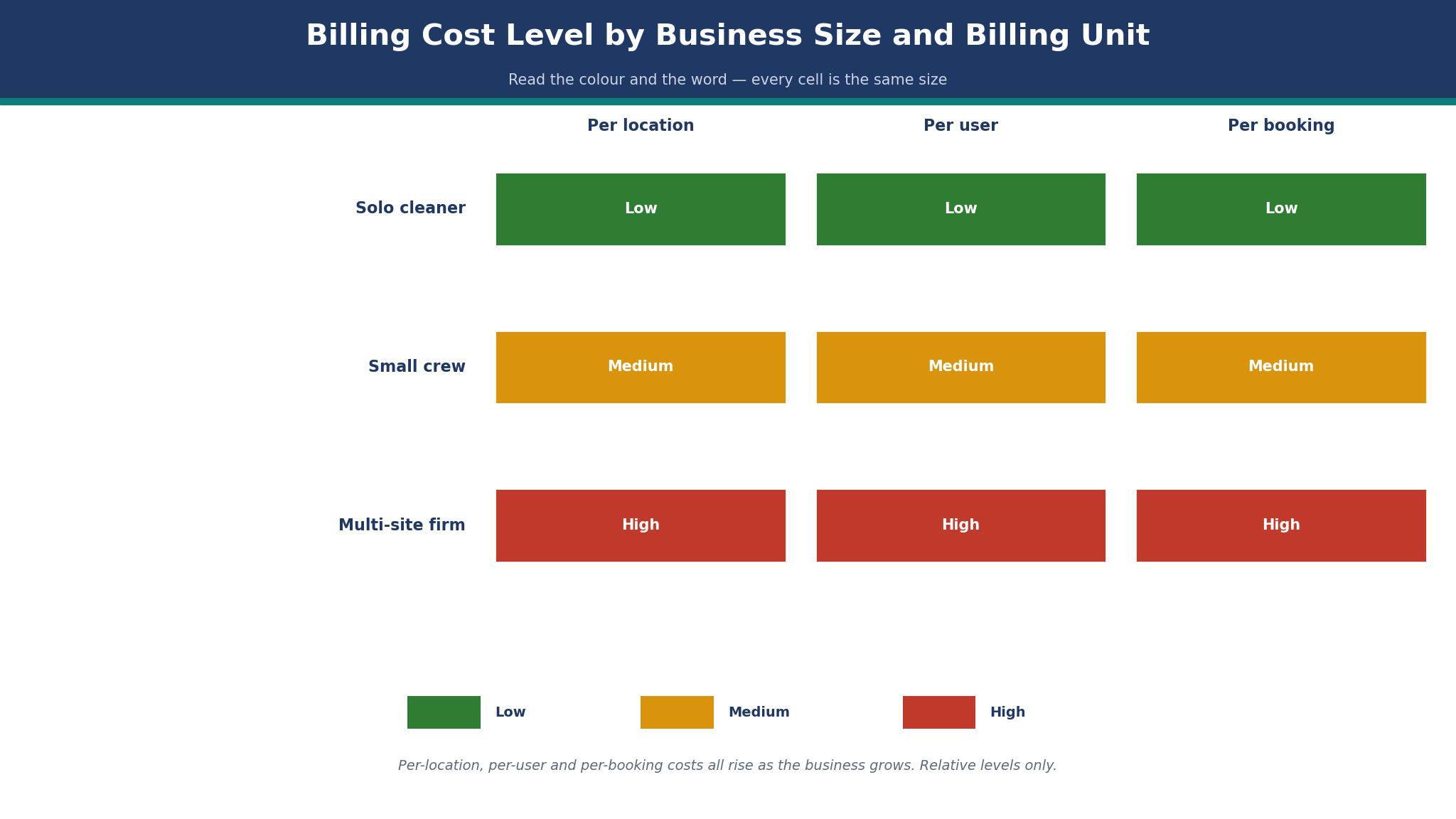
Janitorial pricing is the first thing to understand, because no two vendors charge the same way. Swept charges per location, Jobber charges per user, ZenMaid charges a base fee plus a per-seat rate, and Janitorial Manager quotes by building count with reported prices starting near $1,000 a month. A company that prices a tool against the wrong unit will be surprised by the first invoice, so this guide states the billing unit for every tool.
The work itself decides the winner. A commercial crew needs site inspections, cleaner checklists and supply tracking across dozens of locations, while a residential cleaner needs online booking, quotes and card payments. The tools below split cleanly along that line, and the guide names the split for every entry.
The 12 Tools at a Glance
| Tool | Main job | Best for | Starting price |
|---|---|---|---|
| Swept | Multi-location janitorial operations | Commercial crews, many sites | $30 per month per location |
| Jobber | Field service quoting and scheduling | Residential and mixed cleaning | $49 per month |
| Housecall Pro | Field service with dispatch | Growing home-service teams | $59 per month |
| ZenMaid | Residential cleaning scheduling | Solo cleaners and small teams | $19 per month |
| Janitorial Manager | Commercial cleaning contracts | Large multi-building contracts | Quote-based |
| CleanGuru | Cleaning bids and operations | Companies that bid contracts | $59 per month |
| MaidCentral | Maid service operations | Residential maid companies | Quote-based |
| Connecteam | Crew communication and scheduling | Distributed cleaning crews | Free for up to 10 users |
| ServiceM8 | Job management for small teams | Small cleaning businesses | Free tier |
| Launch27 | Cleaning business booking | Booking-led cleaning firms | Quote-based |
| FieldEdge | Field service for larger teams | Larger service operations | Quote-based |
| ServiceTitan | Enterprise field service platform | Large multi-crew operations | Quote-based |
Best Pick by Job
| Job type | First pick | Second tool | Why this pair works |
|---|---|---|---|
| Commercial crew, many locations | Swept | Janitorial Manager | Swept prices per location, Janitorial Manager handles big contracts |
| Residential or mixed cleaning | Jobber | Housecall Pro | Jobber polishes quoting, Housecall Pro adds dispatch depth |
| Solo cleaner on a budget | ZenMaid | Connecteam | ZenMaid is $19 a month, Connecteam is free to 10 users |
| Company that bids contracts | CleanGuru | Swept | CleanGuru builds the bid, Swept runs the sites |
| Crew communication first | Connecteam | ServiceM8 | Connecteam is free to start, ServiceM8 adds job costing |
A commercial cleaning company should start with Swept. Launch costs $30 a month per location for one to fifteen locations, Optimize costs $150 a month and adds inspections, and Scale costs $225 a month and adds supply tracking and client portals. The per-location model means a fifty-location operation pays far more than a five-location one, so model the site count before committing, because that is the number that decides the real bill.
A residential cleaner should start with Jobber instead. Core costs $49 a month for one user on annual billing, with quoting, recurring scheduling, job checklists and QuickBooks sync in one package. When you compare the best janitorial software side by side, the split is clear, because Swept is built for buildings and Jobber is built for homes, and buying the wrong one means paying for workflows your crew will never open.
Which Janitorial Software Is Best for a Multi-Location Crew?
Swept is the best pick for a multi-location crew, because it is built around locations rather than users. Scheduling, time tracking, inspections and messaging all sit under the building they belong to, and unlimited users means the whole crew can be on the system without a per-seat charge. The geofenced time tracking cuts payroll leakage, and the multilingual messaging keeps a diverse crew in the loop.
Janitorial Manager is the better pick when the contracts themselves are the work. It prices by building count, starting near $1,000 a month in several guides, and covers bidding, inspections, quality scoring and client reporting for large multi-building accounts. The price puts it out of reach for a small crew, but a company running dozens of buildings needs that depth.
Connecteam is the third option for a crew that mainly needs communication and scheduling. The free plan covers up to ten users, and paid plans start at $29 a month, so a small crew can start without a purchase order. The trade-off is depth, because Connecteam is a general crew tool rather than a janitorial specialist, and it has no inspection scoring.
How to Choose the Best Janitorial Software
Start by naming the billing unit that matches your business. A commercial company with fifty sites should price per location, because Swept at $30 a month per location scales with the contract book. A residential company with five cleaners should price per user, because Jobber at $49 a month for one user and ZenMaid at $19 plus $4 a seat scale with the crew. The wrong unit turns a cheap tool expensive.
Next, check the inspection workflow. Commercial clients ask for proof that the work happened, so Swept inspections, Janitorial Manager quality scoring and CleanGuru site checks matter more than a pretty calendar. Ask each vendor how inspection results reach the client, because a report the client never sees is wasted effort.
Then look at payroll handling. Jobber and Housecall Pro do not run payroll themselves, so hours export to a payroll provider on every pay run. Swept tracks time against locations, which makes the export cleaner, but the payroll step still sits outside the tool. Budget the extra step rather than discovering it in the first pay cycle.
Finally, test the mobile app with one real crew for two weeks. Cleaners work from a phone, not a desk, so the app decides whether checklists get completed or ignored. If the crew cannot log a visit in under a minute, the system will sit unused and the office will go back to paper.
The 12 Tools in Detail
The twelve tools below cover commercial specialists, residential generalists and enterprise platforms. Each one is judged on pricing model, inspection depth and crew tools, so this roundup of the best janitorial software stays honest about who each tool is actually built for.
1. Swept
Swept is the commercial janitorial specialist in this guide, built for companies managing cleaners across locations. Launch costs $30 a month per location for one to fifteen locations, Optimize costs $150 a month on monthly billing, or $120 on annual billing, and Scale costs $225 a month, or $180 annual. The plans add inspections, supply tracking, client portals and checklists as you climb, and unlimited users means the crew size never drives the price.
The per-location model is both the strength and the risk. A company with five sites pays $150 a month on Launch, while a company with fifty sites pays far more, so growth in contracts means growth in software cost. The tool is also weaker on the lead-to-paid flow than Jobber, because quoting and invoicing are not its centre.
It suits janitorial companies managing cleaners across many buildings. The location-based scheduling, geofenced time tracking and cleaner messaging are the core of the job, and the inspection tools give clients the proof they ask for.
Ask Swept for a quote by your location count, and confirm which inspection features sit on Optimize before you pick a tier.
2. Jobber
Jobber is the best-known name in home service software, and cleaning companies use it to run the whole operation from quoting to invoicing. Core costs $49 a month for one user, Connect runs from $119 to $399 by team size, and Grow runs from $199 to $499, with $29 a month for each extra user beyond a tier. The package covers recurring scheduling, custom quote templates, job checklists and QuickBooks sync, with a 14-day trial.
The per-user fees are the thing to watch. A five-person crew costs far more than the headline $49, and automation features such as automatic payments and follow-ups need the higher tiers. Jobber also does not run payroll itself, so hours export to a payroll provider on every pay run.
It suits solo operators and small teams that want polished all-in-one field service. The quoting flow is the best in this guide, and the mobile app is one cleaners actually use.
Request the Core quote for your user count, and price the extra users before you compare Jobber against a per-location tool.
3. Housecall Pro
Housecall Pro is the field service generalist for growing home-service teams, with dispatch, scheduling, invoicing and payments in one system. Basic starts at $59 a month for a single user on annual billing, or $79 month to month, Essentials runs $149 for up to five users, and Max reaches $299. The dispatch board and the customer notifications are the strongest parts of the package.
The generalist focus is the limit for janitorial work. Housecall Pro has no commercial inspection scoring and no per-location pricing, so a multi-building crew will find the site tools thinner than Swept. Payroll also runs through integrations rather than native processing, which adds a step on every pay run.
It suits residential and mixed-service cleaning businesses that are growing past five staff. The dispatch tools keep a busy day organised, and the payment flow collects card payments at the job.
Ask Housecall Pro for the Essentials quote for five users, and test the dispatch board with a real day of jobs before you commit.
4. ZenMaid
ZenMaid is the residential cleaning specialist, built for solo cleaners and small teams that book recurring home cleans. Starter costs $19 a month plus $4 per seat and handles up to 40 appointments a month, with higher tiers adding booking, text reminders and client management. The interface is simple, the setup is fast, and the price is the lowest paid entry in this guide.
The residential focus is also the boundary. ZenMaid has no commercial inspection workflow, no per-location billing and no bidding tools, so a company that cleans offices will outgrow it quickly. The appointment cap on Starter means a busy team moves up a tier sooner than the headline price suggests.
It suits solo cleaners and small residential teams that want booking without complexity. The text reminders cut no-shows, and the flat base fee keeps the monthly bill predictable.
Start on Starter for one cleaner, and count your monthly appointments before you pick a tier.
5. Janitorial Manager
Janitorial Manager is the enterprise tool for large commercial cleaning contracts, with bidding, inspections, quality scoring, supply tracking and client reporting built for multi-building accounts. Pricing is quote-based and set by building count, with several guides reporting prices starting near $1,000 a month. There is no free trial, and the sales process is a full demo followed by a scoped quote.
The price is the barrier. A small or mid-size crew cannot justify $1,000 a month for software, and the implementation is a project rather than a signup. The depth is the reason it exists, because a company running dozens of buildings needs contract-level reporting that no $30 tool provides.
It suits large janitorial companies with multi-building contracts and a quality team. The inspection scoring and the client reports are the features that win and keep big accounts.
Request a scoped quote by building count, and ask for a reference client of similar size before you start the sales process.
6. CleanGuru
CleanGuru is the bidding and operations tool for cleaning companies that win work by proposal. Paid plans start at $59 a month, and the package covers bid building, job costing, scheduling and client management, with the bid calculator as the standout feature. A company that prices contracts by the square foot will find the costing tools save hours on every proposal.
The operations depth is thinner than Swept or Jobber. CleanGuru builds the bid well, but the day-to-day crew tools, inspections and messaging are lighter, so a company that needs both bidding and site operations may run two tools. The price also climbs with the feature set, so confirm which tier carries the bid tools you need.
It suits companies that bid commercial contracts and need accurate costing. The bid templates and the cost breakdowns turn a day of spreadsheet work into an hour.
Ask CleanGuru for the tier that includes bid costing, and test one real proposal end to end before you pay.
7. MaidCentral
MaidCentral is the residential maid service platform, built for companies that run recurring home cleans with teams of maids. The system covers scheduling, client management, maid tracking and payments, with a focus on the recurring residential workflow rather than commercial sites. The vendor quotes each company after a demo, so there is no published price to budget from.
The residential focus is the limit. MaidCentral has no commercial inspection scoring and no per-location model, so a company that cleans offices will find the wrong tool. The quote-only pricing also means no number to budget from the website, which slows the shortlist.
It suits residential maid companies with recurring clients and several teams. The maid tracking and the recurring schedule keep a busy residential book organised without spreadsheets.
Request a demo and a written quote for your team size, and compare the monthly figure against Jobber before you decide.
8. Connecteam
Connecteam is the crew communication tool that many cleaning companies adopt first, because the free plan covers up to ten users with scheduling, messaging, forms and time tracking. Paid plans start at $29 a month and add more users, automation and integrations. The mobile app is the centre of the product, and a distributed crew can check a shift, read a message and submit a form from one place.
The generality is the trade-off. Connecteam is not a janitorial tool, so there is no inspection scoring, no per-location billing and no bid costing. A company that needs those workflows will outgrow it, though many small crews never do, because communication and scheduling are the whole job at their size.
It suits distributed cleaning crews that need communication first and software second. The free plan is genuinely usable, and the paid tiers stay cheap as the crew grows.
Start on the free plan with ten users, and move to a paid tier only when automation or integrations become necessary.
9. ServiceM8
ServiceM8 is the small-team job manager, with a free tier for light use and paid plans priced per user for heavier volumes. The system covers quoting, scheduling, invoicing and payments, with a simple job card that a cleaner can follow from the phone. The free tier lets a solo operator start without a subscription, which is rare in this category.
The small-team focus is the ceiling. ServiceM8 has no commercial inspection workflow and no per-location pricing, so a multi-building crew will need a second tool for site quality. The paid plans also scale per user, so a growing crew sees the bill climb with every hire.
It suits small cleaning businesses that want job management without a monthly commitment. The free tier covers a light workload, and the paid tiers add capacity rather than complexity.
Try the free tier with real jobs for a month, and move to a paid plan when the job volume passes the free limit.
10. Launch27
Launch27 is the booking-led platform for cleaning firms that take most jobs online. The system covers online booking, scheduling, payments and customer management, with a booking flow that a homeowner can complete without a phone call. Pricing is quote-based, so the vendor sets the figure after a demo and a look at booking volume.
The booking focus is also the gap. Launch27 is weaker on commercial site operations and inspections than Swept, and the quote-only pricing means no number to compare before the sales call. A company that cleans offices will find the wrong tool, while a booking-led residential firm will find the right one.
It suits cleaning firms that win work through online booking. The booking page converts better than a phone number alone, and the scheduling automation cuts office admin.
Request a quote by booking volume, and test the customer booking flow yourself before you sign.
11. FieldEdge
FieldEdge is the field service platform for larger service operations, covering dispatch, scheduling, invoicing, payments and customer management at a scale beyond a small cleaning crew. The system handles multi-crew days, complex dispatch and integrated payments, with a depth that suits a company running many teams across a region. Pricing is quote-based, so the vendor scopes the figure after a demo.
The scale is the barrier for a small cleaner. FieldEdge is built for larger operations, so a five-person crew will pay for dispatch depth it never uses, and the implementation is longer than a signup. The janitorial-specific tools are also thinner than Swept, because FieldEdge serves many trades.
It suits larger cleaning operations that need serious dispatch. The multi-crew scheduling and the payment flow keep a busy regional operation organised.
Ask FieldEdge for a scoped quote by crew count, and confirm the implementation timeline in writing before you commit.
12. ServiceTitan
ServiceTitan is the enterprise field service platform, built for large multi-crew operations with deep dispatch, marketing, payments and reporting. The system covers the whole business from the first call to the final invoice, with analytics that a large operator needs to run a region. Pricing is quote-based, and the implementation is a project with onboarding and training.
The enterprise weight is the reason a small cleaner should skip it. The price is negotiated per engagement, the rollout runs for weeks, and a small crew will use a fraction of the platform. A large janitorial company with several branches is the right buyer, because the reporting and the marketing tools repay the cost at scale.
It suits large multi-crew cleaning operations that need an enterprise platform. The dispatch depth and the business analytics are the strongest in this guide at that scale.
Request a scoped quote by branch count, and speak to a cleaning company of similar size before you start the rollout.
Swept vs Jobber: Per Location Against Per User
The pricing model is the first difference, and it decides the winner before any feature comparison. Swept Launch costs $30 a month per location, so a company with ten sites pays $300 a month, while Jobber Core costs $49 a month for one user, so a company with ten cleaners pays far more than the headline once extra users are added at $29 each. A commercial company should model the site count, and a residential company should model the crew count, because the two models punish different kinds of growth.
The feature split follows the pricing split. Swept is built around locations, with inspections, geofenced time tracking and cleaner messaging tied to the building. Jobber is built around the customer, with quoting, recurring scheduling and invoicing tied to the home. A commercial crew will open Swept daily and Jobber rarely, while a residential cleaner will do the opposite.
The deciding factor is the contract book. A company whose revenue comes from buildings should take Swept, because the per-location price matches the way contracts scale and the inspection tools keep clients. A company whose revenue comes from homes should take Jobber, because the quoting flow wins jobs and the scheduling keeps a small crew organised. That split is the cleanest way to read the best janitorial software when the choice narrows to two.
What Does Janitorial Software Cost per Month?
The honest range among the best janitorial software runs from free to about $1,000 a month. Connecteam is free for up to ten users, ServiceM8 offers a free tier, and ZenMaid starts at $19 a month plus $4 a seat. Swept starts at $30 a month per location, Jobber at $49 a month for one user, Housecall Pro at $59 a month, and CleanGuru at $59 a month, while Janitorial Manager is reported near $1,000 a month for large contracts.
The billing unit changes the real cost more than the headline does. A ten-location company on Swept Launch pays $300 a month, a ten-user company on Jobber pays hundreds more once extra users are added, and a ten-user crew on Connecteam pays $29 a month on a paid plan. The same ten people cost very different amounts depending on whether the vendor counts sites, seats or bookings.
The honest way to budget is to price your real unit for a year. Count locations for Swept, count users for Jobber and Housecall Pro, count appointments for ZenMaid, and ask Janitorial Manager, MaidCentral, Launch27, FieldEdge and ServiceTitan for a written quote. The cheapest headline is rarely the cheapest year, and the quote-only tools need a number before they can be compared at all.
Can Janitorial Software Handle Inspections and Quality Checks?
Yes, on the commercial tools in this guide. Swept Optimize adds inspections with results the client can see, Janitorial Manager scores quality across buildings, and CleanGuru covers site checks as part of its operations flow. The inspection report is the proof a commercial client asks for, and a tool that captures it on the phone at the site is worth more than a checklist on paper.
The workflow decides whether inspections actually happen. A cleaner who can complete an inspection in under two minutes at the end of a visit will do it every time, while a form that takes ten minutes will be skipped on a busy day. Swept and Janitorial Manager both keep the inspection short, which is why their scores are trusted, while a general tool with a long form will show gaps in the data.
The limit is the follow-up. An inspection that finds a problem needs a task, an owner and a deadline, or the score is just a number. The best janitorial software turns a failed check into a re-clean task automatically, and the manager can see the fix without chasing the crew. Ask each vendor how a failed inspection becomes a task before you buy.
A 30-Day Janitorial Software Rollout Plan
Days one to ten are the count. List every location, every cleaner and every recurring job, because the billing unit decides the price and the list decides the setup. Days eleven to twenty are the pilot. Put one crew on the tool, run inspections on two buildings, and check that scheduling, time tracking and messaging all work from the phones the crew actually carries.
Days twenty-one to thirty are the read. Ask the office to answer three questions from the system alone, starting with which locations were cleaned this week, then which cleaner is overloaded, then which client is due an inspection report. If the system answers all three without a spreadsheet, it earns the rollout. If the office has to call the crew to find out, the setup is wrong.
The full rollout follows only when the pilot crew says the app is fast enough. A rollout that skips the pilot will cost more in missed checklists than it saves in office time, and a crew that hates the app will go back to paper within a week. Keep the pilot small, keep the inspections short, and let the crew decide the pace.

Frequently Asked Questions
Which janitorial software is cheapest for a solo cleaner?
ZenMaid Starter at $19 a month plus $4 per seat is the cheapest paid plan in this guide, with 40 appointments a month included. Connecteam is free for up to ten users, and ServiceM8 offers a free tier for light use. A solo cleaner who books online should start with ZenMaid, because the booking and reminder tools are built for residential work.
Does Swept charge per user or per location?
Swept charges per location, not per user. Launch costs $30 a month per location for one to fifteen locations, with unlimited users included. A company with fifty locations pays far more than a company with five, so model the site count before you commit, because locations are the number that drives the bill.
Is Jobber good for commercial janitorial work?
Jobber works for residential and mixed-service cleaning, but it is not built for commercial janitorial operations. It has no per-location pricing and no commercial inspection scoring, so a multi-building crew will find Swept or Janitorial Manager a better fit. A company that cleans homes and a few offices can still use Jobber well.
Can janitorial software run payroll?
No, not natively in most cases. Jobber and Housecall Pro handle payroll through integrations and exports, while Swept tracks time against locations and exports the hours. The payroll step sits outside the tool on every entry here, so budget the export and the payroll provider as part of the monthly cost.
How much does Janitorial Manager cost?
Pricing is quote-based and set by building count, with several guides reporting prices starting near $1,000 a month for large multi-building contracts. There is no published price and no free trial, so a company has to request a scoped quote. A small crew comparing the best janitorial software should shortlist Swept instead, because the price gap is too wide to bridge.
Does Connecteam really offer a free plan?
Yes. Connecteam is free for up to ten users, with scheduling, messaging, forms and time tracking included. Paid plans start at $29 a month and add more users, automation and integrations. The free plan is genuinely usable for a small crew, though it has no inspection scoring or bid costing.
The Janitorial Software Decision by Company Size
A commercial company with many locations should take Swept Launch at $30 a month per location, because the pricing matches the contract book and the inspection tools keep clients. A residential cleaner should take ZenMaid at $19 a month, because the booking and reminder tools are built for homes and the price is the lowest in this guide. A growing home-service team should take Jobber Core at $49 a month, because the quoting flow wins jobs and the scheduling keeps a crew organised.
A large company with multi-building contracts should take Janitorial Manager, because no cheaper tool offers its bidding and quality depth, and the reported price near $1,000 a month is the cost of that scale. Count your locations, count your crew, and trial one tool from the best janitorial software shortlist with one crew for thirty days, and let the inspection reports decide.