

Breezy HR is the top 10 recruiting software for small businesses pick for most small teams, because Startup costs $157 a month on annual billing with unlimited users, a visual pipeline and a free plan for one open position. Workable is the pick for a team that posts to many job boards, and JazzHR is the pick for a US small business that will prepay annually. The fifteen tools below compare flat pricing, per-user pricing and quote-only enterprise plans, so a small business can buy the hiring system that fits its hiring volume rather than the one with the biggest brand.
A small business hires in bursts. Three roles open at once, then nothing for six months, and the hiring tool has to fit both rhythms without charging for the quiet months. A flat monthly plan suits a team that hires steadily, a free plan suits a team that hires one role at a time, and an annual prepay suits a team that knows the hiring calendar a year ahead. This guide states the billing model for every tool, because the model decides the real cost.
The buying trap is the add-on. Workable Standard costs $299 a month, but texting costs $89, video interviews cost $109 and assessments cost $59 extra, so the full setup reaches $556 a month. Breezy AI scoring runs on credits, and Greenhouse charges an implementation fee on top of the quote.
The 15 Tools at a Glance
| Tool | Main job | Best for | Starting price |
|---|---|---|---|
| Breezy HR | Visual pipeline ATS | Hiring one role at a time | $157 per month |
| Workable | Job board posting ATS | Posting to many boards | $299 per month |
| JazzHR | US small-business ATS | Annual prepay buyers | $1,000 per year |
| Greenhouse | Structured hiring ATS | Mid-size teams with recruiters | Quote-based |
| Lever | CRM plus ATS | Teams that source talent | Quote-based |
| Recruitee | Collaborative hiring ATS | Teams that hire together | Quote-based |
| Zoho Recruit | Budget ATS in Zoho suite | Shops already on Zoho | Free plan |
| Manatal | Low-cost ATS with AI | Small teams that want AI | $15 per user per month |
| BambooHR | HR suite with ATS | Teams already on BambooHR | Quote-based |
| SmartRecruiters | Enterprise hiring platform | Larger small businesses | Quote-based |
| Jobvite | Enterprise recruiting suite | Teams that need automation | Quote-based |
| Ashby | Modern ATS with analytics | Data-led hiring teams | Quote-based |
| Gem | Sourcing CRM plus ATS | Teams that source first | Quote-based |
| Rippling | HR suite with ATS | Teams already on Rippling | Quote-based |
| JuggleHire | Low-cost ATS with AI | Small teams on a budget | $15 per month |
Best Pick by Job
| Job type | First pick | Second tool | Why this pair works |
|---|---|---|---|
| Hiring one role at a time | Breezy HR | JazzHR | Breezy is free for one role, JazzHR is $1,000 a year |
| Posting to many job boards | Workable | Breezy HR | Workable posts everywhere, Breezy costs half as much |
| US small business, annual budget | JazzHR | Breezy HR | JazzHR is $1,000 a year, Breezy is $1,884 a year |
| Structured hiring, many roles | Greenhouse | Lever | Greenhouse structures interviews, Lever adds sourcing |
| Small team that wants AI cheap | Manatal | JuggleHire | Manatal is $15 a user, JuggleHire is $15 a month |
A small team hiring one role at a time should start with Breezy HR. Startup costs $157 a month on annual billing, or $189 month to month, with Growth at $273 and Business at $439, and the free Bootstrap plan allows one active position at a time with unlimited users and candidates. The drag-and-drop pipeline, candidate self-scheduling and one-way video interviews cover the hiring work, though AI scoring is a paid add-on and e-sign sits on Growth.
A team that posts to many job boards should start with Workable instead. Standard costs $299 a month on annual billing for companies up to 20 employees, Premier costs $599 and Enterprise costs $719, with texting at $89, video interviews at $109 and assessments at $59 a month extra.
Which Recruiting Software Is Best for Hiring One Role at a Time?
Breezy HR is the best pick for hiring one role at a time, because the free Bootstrap plan allows one active position with unlimited users and candidates, and Startup at $157 a month adds the full pipeline when the hiring picks up. That free start for one role is the test that matters most in the top 10 recruiting software for small businesses, because a team that hires rarely should not pay a monthly fee for quiet months.
JazzHR is the better pick if the team will prepay annually. Hero costs $1,000 a year, billed yearly only, with Plus at $3,480 and Pro at $5,508, and the page states buyers save up to 24 percent by paying yearly.
JuggleHire is the third option for a team on the tightest budget. Starter costs $15 a month with video, assessments and three open jobs, and Unlimited costs $49 a month with unlimited jobs and team members, automations and offer e-signatures.
How to Choose the Top 10 Recruiting Software for Small Businesses
Start with the hiring volume, not the feature list. A team that hires one role at a time can run on Breezy free or JuggleHire Starter at $15 a month, a team that hires five roles a quarter needs Breezy Startup at $157 or Workable Standard at $299, and a team that hires dozens of roles needs Greenhouse or Lever on a quote. Count last year hires, divide by four, and pick the tier that covers the quarterly number.
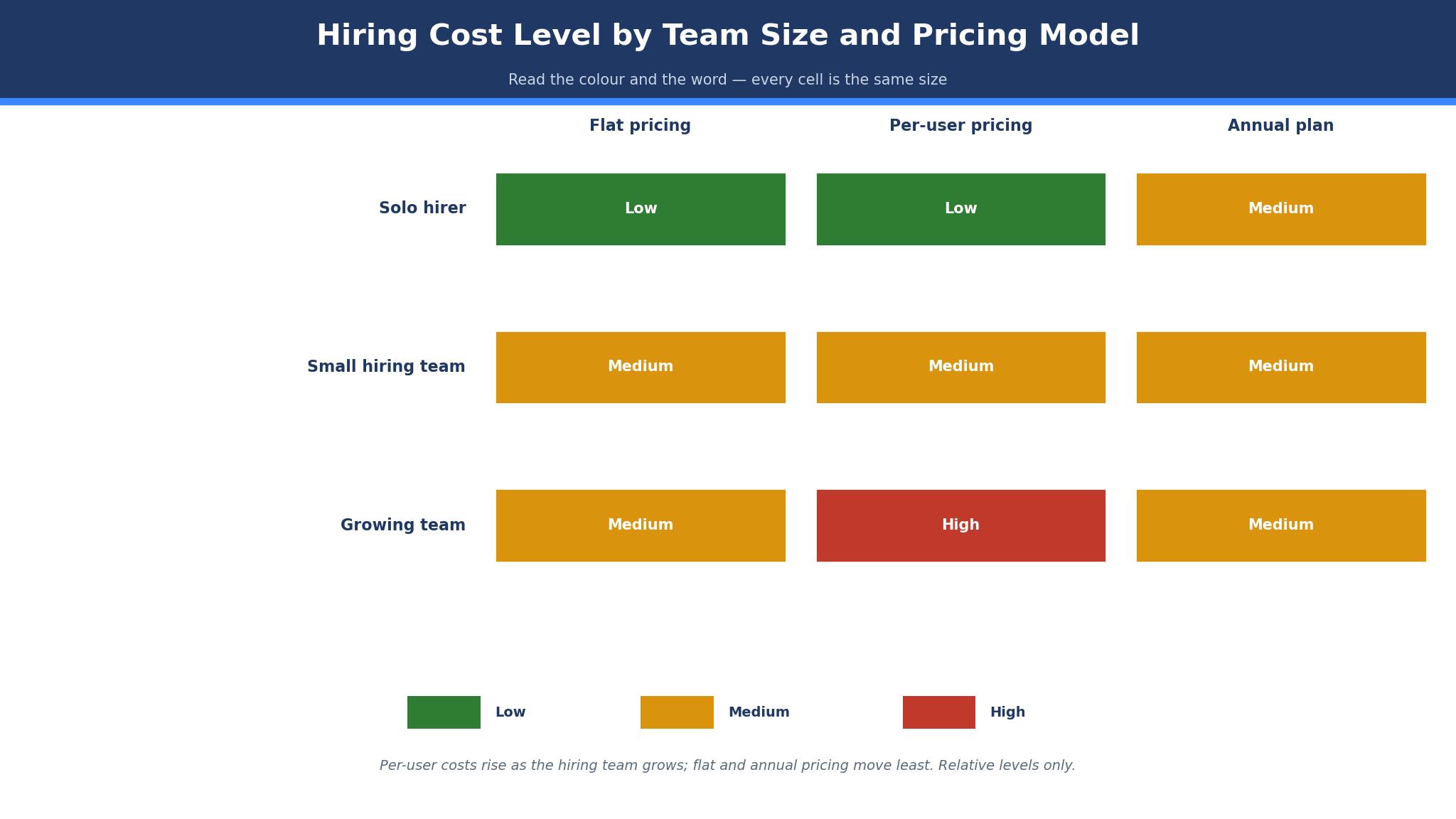
Next, check the billing model. Workable charges by company-size band rather than per user, Breezy charges a flat monthly fee with unlimited users, and JazzHR charges per company with yearly-only billing on Hero. A six-person company pays $299 a month on Workable Standard and $157 on Breezy Startup for similar hiring, so the model matters more than the headline.
Then look at the add-ons. Workable texting, video and assessments cost $89, $109 and $59 a month extra, Breezy AI scoring runs on credits from $30 per 100,000, and Greenhouse charges an implementation fee on top of the annual contract. Write down the full setup cost for each finalist, because the add-ons can double the monthly bill.
Finally, test the candidate experience with one real role. Post the job, apply as a candidate, and check that the application takes under five minutes on a phone.
The 15 Tools in Detail
The fifteen tools below cover flat-price ATS platforms, annual-prepay systems and quote-only enterprise suites. Each one is judged on billing model, add-on cost and candidate experience, so this roundup of the top 10 recruiting software for small businesses stays honest about the full hiring price.
1. Breezy HR
Breezy HR is the closest thing to enterprise polish at small-business prices, with a drag-and-drop pipeline, candidate self-scheduling, one-way video interviews and a large integration list. Startup costs $157 a month on annual billing, or $189 month to month, Growth costs $273 and Business costs $439, with Custom Pro priced on request. The free Bootstrap plan allows one active position at a time with unlimited users and candidates, and paid plans carry unlimited users.
The add-ons are the thing to price. AI scoring runs on credits from $30 per 100,000, SMS is a paid add-on, and e-sign is locked behind Growth, so the full setup costs more than Startup alone.
It suits teams that hire one role at a time and want a visual pipeline. The self-scheduling and the video interviews save hours on every hire, and the flat price with unlimited users keeps the cost predictable.
2. Workable
Workable is the job board posting ATS, built for teams that fill roles by posting to many boards and managing the flow in one place. Standard costs $299 a month on annual billing for companies up to 20 employees, Premier costs $599 and Enterprise costs $719, with a 15-day trial and no free plan. The Job Brief Agent comes with Standard, and the platform covers sourcing, screening, scheduling and offer management in one system.
The add-ons are the cost that decides the pick. Texting costs $89 a month, video interviews cost $109 and assessments cost $59, so the full setup reaches $556 a month on annual billing, which is nearly double the Standard headline.
It suits teams that fill roles by posting to many job boards. The posting reach and the screening tools cover the volume hiring work, and the AI agents help a small team source faster.
3. JazzHR
JazzHR is the cheapest annual entry price in this guide, with Hero at $1,000 a year, Plus at $3,480 and Pro at $5,508 on annual billing. Hero is billed yearly only, with no monthly option, and the page states buyers save up to 24 percent by paying yearly. The platform is owned by Employ, the same company as Lever, and covers job posting, candidate tracking, screening and reporting for a US small business.
The Hero limits are the trade-off. Hero carries a low job allowance and no AI matching, so a team that opens many roles at once will need Plus at $3,480, which is close to Workable Standard at $3,588 a year.
It suits US small businesses that want a mature ATS at a low annual price. The job posting and the screening tools cover the daily hiring work, and the yearly billing keeps the monthly admin at zero.
4. Greenhouse
Greenhouse is the structured hiring ATS, and the place teams go when they outgrow Workable rather than a cheaper alternative. The platform sells three plans, Core, Plus and Pro, and publishes no prices at all, with the FAQ stating that pricing is customised and buyers should contact Greenhouse for a personalised quote. Third-party guides put annual contracts for small companies in the mid four figures, rising well past $25,000 a year for larger ones, with an implementation fee quoted on top.
The quote-only model is the barrier for a small business. A team cannot compare Greenhouse against Breezy at $157 a month without a sales conversation, and the implementation fee arrives on top of the annual contract.
It suits mid-size teams with dedicated recruiters and dozens of open roles. The interview kits and the scorecards keep hiring consistent, and the reporting shows the pipeline clearly.
5. Lever
Lever is the CRM plus ATS, built for teams that source talent rather than waiting for applications. The platform combines candidate sourcing, nurturing and tracking in one system, with a focus on the talent pipeline that a pure ATS misses. Pricing is quote-based, so the vendor sets the figure after a demo and a look at the team size and the hiring volume.
The sourcing focus is both the strength and the limit. Lever covers the pipeline well, but a small team that hires one role at a time will find the CRM depth more than it needs, and the quote-only pricing means no number to compare before the sales call.
It suits teams that source talent proactively. The CRM keeps the pipeline warm, and the ATS tracks the candidates through to offer.
6. Recruitee
Recruitee is the collaborative hiring ATS, built for teams that hire together with shared pipelines, scorecards and interview scheduling. The platform covers job posting, candidate tracking, collaborative evaluation and reporting, with a focus on the hiring team rather than the recruiter alone. Pricing is quote-based, so the vendor sets the figure after a sales conversation, with third-party reviews noting the ranges rather than a published price.
The quote-only pricing is the drawback for a small business. A team cannot compare Recruitee against Breezy at $157 a month without a sales call, and the collaborative tools are the reason to make the call.
It suits teams that hire together and want shared evaluation. The collaborative pipeline keeps every interviewer aligned, and the reporting shows the hiring flow clearly.
7. Zoho Recruit
Zoho Recruit is the budget ATS in the Zoho suite, built for shops already on Zoho that want hiring inside the same system. The free plan covers light use, and paid plans start at $25 per recruiter per month, with higher tiers adding automation, AI and integrations. The Zoho suite link is the appeal, because the hiring data sits next to the CRM and the HR tools the business already uses.
The suite dependence is the limit. Zoho Recruit covers the hiring work well, but a team outside Zoho will find the setup longer than a standalone ATS, and the AI features sit on the higher tiers.
It suits shops already on Zoho that want budget hiring. The price is the lowest per-recruiter entry here, and the suite keeps the data in one place.
Start on the free plan with one role, and move to a paid tier when automation becomes a daily need.
8. Manatal
Manatal is the low-cost ATS with AI, built for small teams that want candidate scoring and sourcing without an enterprise price. Professional costs $15 per user per month, Enterprise costs $35, and the plans include AI screening, candidate sourcing, pipeline management and reporting. The per-user price keeps the cost low for a small team, and the AI tools cover the screening work that eats a hiring manager’s week.
The small scale is the boundary. Manatal covers the ATS work well, but the integrations and the enterprise reporting are thinner than Greenhouse or Lever, so a team that grows past a dozen hires a quarter will need a bigger system.
It suits small teams that want AI screening at a low price. The candidate scoring and the sourcing tools save hours on every role, and the per-user billing keeps the cost honest.
Start on Professional for one user, and test the AI screening on a real role before you roll it out.
9. BambooHR
BambooHR is the HR suite with an ATS add-on, built for teams already on BambooHR that want hiring inside the same system. The platform covers HR records, onboarding, time off and performance alongside the applicant tracking, with the hiring data sitting next to the employee record. Pricing is quote-based, so the vendor sets the figure after a demo and a look at the headcount.
The suite dependence is the limit. BambooHR covers the HR work well, but a team that only needs hiring will pay for an HR suite it never opens, and the quote-only pricing means no number to compare before the sales call. A team already on BambooHR should add the ATS, because the integration removes a whole system.
It suits teams already on BambooHR that want hiring inside the HR suite. The employee record and the applicant record share one system, and the onboarding flow starts the moment the offer is signed.
10. SmartRecruiters
SmartRecruiters is the enterprise hiring platform, built for larger small businesses that need marketplace integrations, AI screening and global hiring. The platform covers job posting, candidate tracking, collaborative hiring and analytics, with a depth that suits a team running many roles across locations. Pricing is quote-based, so the vendor sets the figure after a demo.
The enterprise weight is the reason a tiny team should skip it. The price is negotiated per engagement, the rollout runs for weeks, and a team hiring one role at a time will use a fraction of the platform.
It suits larger small businesses that need enterprise hiring depth. The integrations and the AI screening cover the volume work, and the analytics show the pipeline clearly.
11. Jobvite
Jobvite is the enterprise recruiting suite, built for teams that need automation across the whole hiring flow. The platform covers sourcing, applicant tracking, onboarding and analytics, with automation that moves candidates through the pipeline without manual steps. Pricing is quote-based, so the vendor sets the figure after a demo and a look at the hiring volume.
The enterprise focus is the barrier for a small team. Jobvite is built for volume hiring, so a team with a handful of roles a year will pay for automation it never uses, and the implementation is longer than a signup. A team that hires steadily at volume will value the automation, while a team that hires in bursts will not.
It suits teams that need automation across a high hiring volume. The sourcing and the onboarding tools cover the full flow, and the analytics keep the pipeline visible.
12. Ashby
Ashby is the modern ATS with analytics at its centre, built for data-led hiring teams that want to see the pipeline clearly. The platform covers applicant tracking, scheduling, scorecards and reporting, with analytics that show where candidates drop out and which sources work. Pricing is quote-based, so the vendor sets the figure after a demo.
The analytics focus is both the strength and the limit. Ashby shows the hiring data better than any tool here, but a team that hires a handful of roles a year will not need that depth, and the quote-only pricing means no number to compare before the sales call. A data-led team hiring steadily will value the reporting, while a team that hires rarely will not.
It suits data-led hiring teams that want analytics. The pipeline reports and the source tracking keep hiring honest, and the modern interface is easy to learn.
13. Gem
Gem is the sourcing CRM plus ATS, built for teams that source talent first and track it second. The platform covers candidate sourcing, outreach sequences, pipeline management and analytics, with a focus on the outbound work that a pure ATS misses. Pricing is quote-based, so the vendor sets the figure after a demo and a look at the team size.
The sourcing focus is the boundary. Gem covers outbound hiring well, but a team that hires from inbound applications will find the CRM depth more than it needs, and the quote-only pricing means no number to compare before the sales call. A team that sources engineers or salespeople proactively will value the outreach tools.
It suits teams that source first and hire second. The outreach sequences keep the pipeline full, and the analytics show which sources convert.
14. Rippling
Rippling is the HR suite with an ATS inside, built for teams already on Rippling that want hiring next to payroll, IT and HR. The platform covers applicant tracking, onboarding, payroll and device management in one system, with the hiring data flowing straight into the employee record. Pricing is quote-based, so the vendor sets the figure after a demo and a look at the headcount.
The suite dependence is the limit. Rippling covers the HR work well, but a team that only needs hiring will pay for a suite it never opens, and the quote-only pricing means no number to compare before the sales call. A team already on Rippling should add the ATS, because the onboarding flow starts the moment the offer is signed.
It suits teams already on Rippling that want hiring inside the HR suite. The payroll and IT links remove the manual onboarding work, and the ATS covers the hiring flow underneath.
15. JuggleHire
JuggleHire is the low-cost ATS with AI included, built for small teams on a budget that want ranking, video and assessments without add-on fees. Starter costs $15 a month with video, assessments and three open jobs, and Unlimited costs $49 a month with unlimited jobs and team members, automations and offer e-signatures. The AI candidate ranking, async video interviews, skills assessments, scheduling and scorecards are all included in the price.
The small scale is the boundary. JuggleHire has no SMS, no HRIS and no sourcing suite, so a team that needs those should stay on Workable or Breezy, though the $15 entry is the cheapest paid start in this guide.
It suits recruitment teams and small agencies that want AI hiring cheap. The unlimited jobs on the $49 tier cover a busy quarter, and the included assessments keep the screening honest.
Start on Starter with three open jobs, and move to Unlimited when the hiring picks up.
Workable vs Breezy HR: Posting Power Against Flat Price
The price gap is the first difference, and it is wide. Workable Standard costs $299 a month for companies up to 20 employees, while Breezy Startup costs $157 a month with unlimited users, so a small team pays about $3,588 a year on Workable and about $1,884 a year on Breezy.
The add-on gap runs the other way on the full setup. Workable texting, video and assessments cost $89, $109 and $59 a month extra, so the full setup reaches $556 a month, while Breezy AI scoring runs on credits and e-sign sits on Growth at $273.
The deciding factor is the hiring volume and the posting need. A team that fills roles by posting to many boards should take Workable, because the reach and the screening tools cover the volume work. A team that hires one role at a time should take Breezy, because the flat $157 price with unlimited users is the cheapest honest setup in this guide. That split is the cleanest way to read the top 10 recruiting software for small businesses when the choice narrows to two.
What Does Small Business Recruiting Software Cost?
The honest range in this guide runs from free to $299 a month for a published plan. Breezy is free for one open position, JuggleHire Starter costs $15 a month, Manatal costs $15 per user per month, Zoho Recruit offers a free plan, Breezy Startup costs $157, JazzHR Hero costs $1,000 a year and Workable Standard costs $299.
The add-ons change the real cost more than the headline does. Workable Standard at $299 becomes $556 a month with texting, video and assessments, Breezy AI scoring runs on credits from $30 per 100,000, and Greenhouse charges an implementation fee on top of the annual contract. The top 10 recruiting software for small businesses all price differently, so a team should work out the full setup cost before comparing any two prices.
The honest way to budget is to price the full setup for a year. A team hiring steadily pays about $1,884 a year on Breezy Startup, $3,588 on Workable Standard, $6,672 on Workable with all three add-ons, $1,000 on JazzHR Hero and $588 on JuggleHire Unlimited, before tax and before implementation fees.
Can Recruiting Software Post to Job Boards and Screen Candidates?
Yes, on the top 10 recruiting software for small businesses tools in this guide that build posting and screening into the core. Workable posts to many job boards with screening built in, Breezy syndicates to 50-plus job boards with candidate self-scheduling, and JazzHR covers job posting, candidate tracking and screening for a US small business. Manatal adds AI screening, JuggleHire adds AI candidate ranking and skills assessments, and Greenhouse adds structured interview kits and scorecards.
The screening depth decides whether the posting pays. A tool that posts everywhere but screens nothing will flood the pipeline with unqualified candidates, while a tool with AI scoring and skills assessments will surface the best three.
The limit is the application length. A tool that posts to fifty boards but makes candidates fill a twenty-minute form will lose the best applicants, because the best candidates apply to five roles in one evening and finish the shortest form first. Test the application as a candidate on a phone, and cut every field that is not needed to decide the first interview.
A 30-Day First Hire Plan
Days one to seven are the role. Write the job brief, agree the must-have skills, and set the salary range, because a vague brief attracts vague candidates. Days eight to fourteen are the post. Publish the role on the chosen tool, syndicate it to the job boards, and share it with the team for referrals, then check that the application takes under five minutes on a phone.
Days fifteen to twenty-one are the screen. Score every candidate with the same scorecard, run the video interviews, and shortlist three for a final interview.
The plan earns its keep when the hire starts within thirty days and the source is recorded. A hire without a source record teaches the team nothing about which board worked, and the next hire will cost the same guesswork.

Frequently Asked Questions
Which recruiting software is best for a small business hiring one role?
Breezy HR is the best pick, because the free Bootstrap plan allows one active position with unlimited users and candidates, and Startup costs $157 a month when hiring picks up. JazzHR Hero at $1,000 a year is the alternative for a team that will prepay, while JuggleHire Starter at $15 a month is the cheapest paid start. A team hiring one role should start on Breezy free.
Does Workable really cost $299 a month?
Workable Standard costs $299 a month on annual billing for companies up to 20 employees, with Premier at $599 and Enterprise at $719. Texting costs $89, video interviews cost $109 and assessments cost $59 a month extra, so the full setup reaches $556 a month.
Is JazzHR really $1,000 a year?
Yes. JazzHR Hero costs $1,000 a year, billed yearly only, with Plus at $3,480 and Pro at $5,508 on annual billing. Hero carries a low job allowance and no AI matching, so a team that opens many roles will need Plus. The page states buyers save up to 24 percent by paying yearly.
Can Greenhouse work for a small business?
Greenhouse suits a mid-size team with dedicated recruiters rather than a small business, because the platform is quote-based with an implementation fee on top. Third-party guides put small-company contracts in the mid four figures a year and upward.
Does Breezy HR offer a free plan?
Yes, with a limit. Breezy Bootstrap is free for one active position at a time, with unlimited users and candidates. Startup costs $157 a month on annual billing, Growth costs $273 and Business costs $439. AI scoring runs on credits, and e-sign sits on Growth, so the full setup costs more than Startup alone.
How long does it take to make a first hire?
Thirty days is realistic for a first hire, with seven days for the role brief, seven days for the post, seven days for screening and seven days for interviews and the offer.
The Recruiting Pick by Hiring Volume
A team hiring one role at a time should take Breezy HR free, because one active position costs nothing and Startup at $157 a month covers the growth. A team that posts to many boards should take Workable Standard at $299 a month, because the reach and the screening tools cover the volume work.
A small team that wants AI cheap should take JuggleHire Unlimited at $49 a month, because ranking, video and assessments are all included. Write the brief, post the role, score every candidate the same way, and let the source data decide the next hire from the top 10 recruiting software for small businesses shortlist.