

Healthie is the best nutrition practice software pick for dietitians who bill insurance, because its Core plan costs 19.99 dollars a month for 10 clients and covers charting, telehealth and insurance paperwork in one real electronic health record. Practice Better is the pick for program led practices, with unlimited clients at 99 dollars a month. The fifteen tools below compare price, client limits and clinical depth, so a practitioner can pick the platform that fits the practice they run today and the one they want next year.
A nutrition practice runs on more than meal plans. The practitioner needs scheduling, charting, telehealth, messaging, payments and food logging in one place, and the client needs an app that makes following the plan easy. A tool that only makes meal plans leaves the practitioner juggling five other apps, while a tool that only manages the practice leaves the client with a PDF.
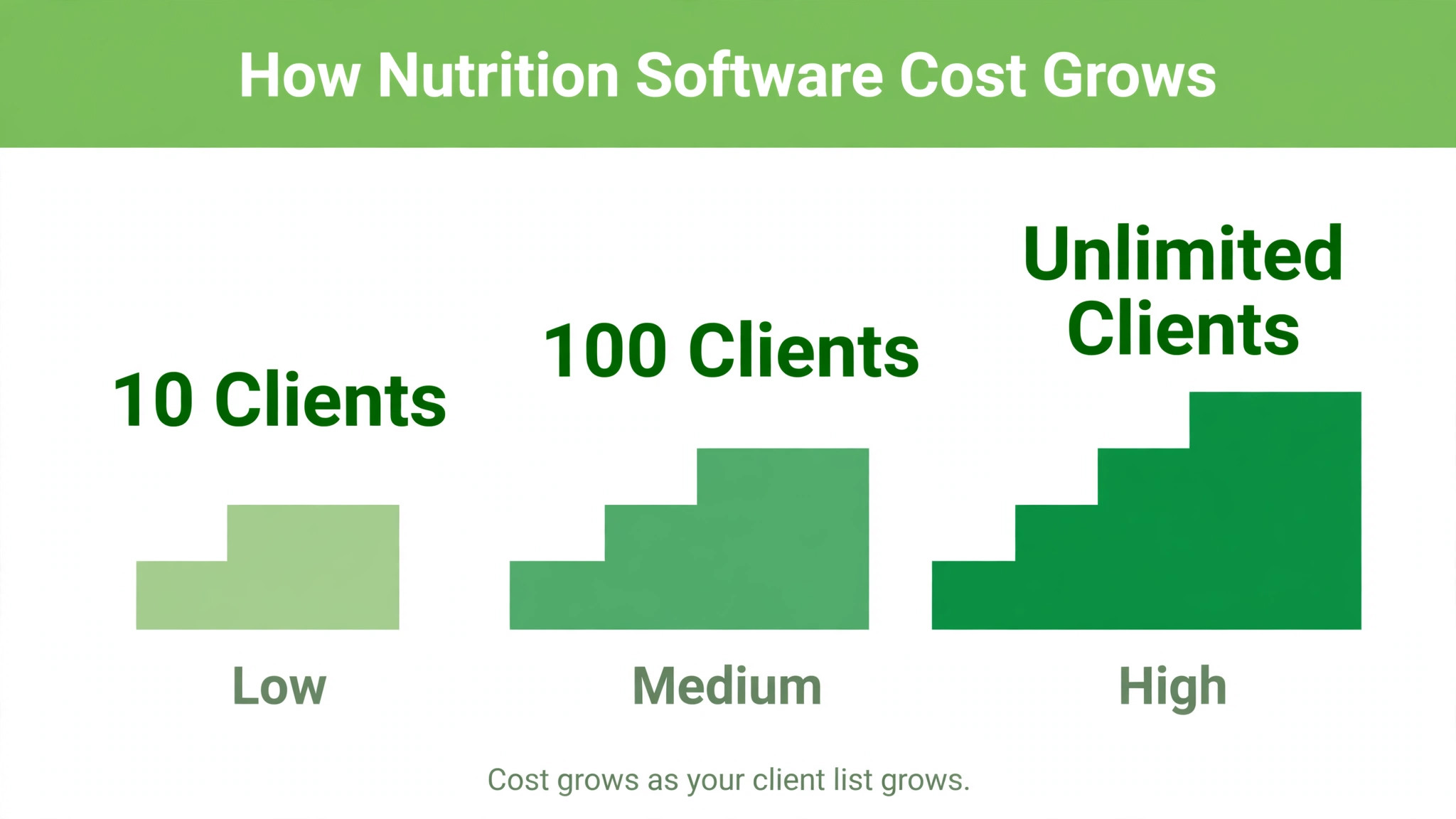
The buying problem is the client limit. Most platforms price by active clients, so a practice that grows from 10 clients to 100 clients pays far more, and the cheapest plan at 10 clients can become the most expensive plan at 100. This guide shows the client count on every price, so the cost at the practice real size is clear.
The 15 Tools at a Glance
| Tool | Main job | Best for | Starting price |
|---|---|---|---|
| Healthie | EHR plus insurance billing | Clinical practices | 19.99 dollars a month |
| Practice Better | All in one practice platform | Program led practices | 35 dollars a month |
| NutriAdmin | Meal plans and admin | Fast meal plan generation | 34.99 dollars a month |
| Nutrium | Budget clinical consults | Low cost meal planning | 25 dollars a month |
| Kalix | Practice management | Small practices | 27 dollars a month |
| Nutrena | AI diet planning | Unlimited clients | 25 dollars a month |
| Eat This Much Pro | Meal plan specialist | Meal planning only | 15 dollars a month |
| Foodzilla | AI meal planning | White label client apps | 45 dollars a month |
| SimplePractice | Practice management | Multi discipline clinics | 29 dollars a month |
| Jane | Scheduling and charting | Allied health clinics | 54 dollars a month |
| Cliniko | Practice management | Clinics with teams | 45 dollars a month |
| Noterro | Scheduling and notes | Small clinics | 25 dollars a month |
| Zanda | Practice management | Growing clinics | Quote-based |
| That Clean Life | Meal planning | Branded meal plans | 39 dollars a month |
| Evolution Nutrition | Meal planning | Custom meal plans | Quote-based |
Entry prices run from 15 dollars to 54 dollars a month, but the client count decides the real cost. A plan that costs 19.99 dollars for 10 clients is cheap for a new practice and expensive for a busy one, so a practitioner should price the plan at the client count they expect in a year rather than the count they have today.
Best Pick by Job
| Job type | First pick | Second tool | Why this pair works |
|---|---|---|---|
| Insurance billing practice | Healthie | Practice Better | Healthie owns claims, Practice Better owns programs |
| Program led practice | Practice Better | Healthie | Practice Better is cheapest at scale, Healthie adds EHR |
| Fast meal plans | NutriAdmin | Eat This Much Pro | NutriAdmin plans in a minute, Eat This Much Pro is cheaper |
| Budget practice | Nutrium | Kalix | Nutrium costs least, Kalix adds practice tools |
| White label client app | Foodzilla | Practice Better | Foodzilla brands the app, Practice Better brands the portal |
Healthie wins the clinical pick because it is the only tool in this guide that feels like a real electronic health record rather than a coaching app with charting added on. Core costs 19.99 dollars a month for 10 active clients, Essentials costs 49.99 dollars a month for 250 clients and adds superbills and CMS-1500 forms, and Plus costs 129.99 dollars a month for unlimited clients with group telehealth, eFax and advanced reporting. A 14 day trial is included.
Practice Better wins for program led practices because programs arrive two tiers earlier than on Healthie, and unlimited clients cost 99 dollars a month instead of 129.99 dollars. Sprout is free for up to 3 clients, Starter costs 35 dollars a month for 10 clients, Professional costs 69 dollars a month for 300 clients, and Plus costs 99 dollars a month for unlimited clients. That value at scale is the reason a practice built on programs should look here first, and it is the sharpest contrast in this look at the best nutrition practice software for a practitioner whose business runs on courses rather than one to one sessions.
Which Nutrition Software Suits a Practice That Bills Insurance?
Healthie suits a practice that bills insurance best, because it carries the full clinical stack in one place. The platform covers charting, telehealth, scheduling, superbills, insurance claims and faxing, with Essentials at 49.99 dollars a month for 250 clients adding the CMS-1500 forms a biller needs. A practice that bills insurance without an EHR will spend hours on paperwork that Healthie automates, and that time is the real cost of choosing a coaching app instead.
Practice Better is the better pick for a practice that bills insurance only sometimes. Its Starter plan at 35 dollars a month covers the practice basics, and the higher tiers add programs and protocols that Healthie charges more for. A practice that bills a few claims a month and sells mostly programs should weigh the program tools more than the claims tools.
SimplePractice is the third option for a multi discipline clinic. The Essential plan starts at 29 dollars a month, with scheduling, notes, billing and telehealth for many allied health professions. A clinic with dietitians, therapists and coaches in one practice will find SimplePractice fits the whole team, while Healthie fits the dietitian alone.
How to Choose the Best Nutrition Practice Software
Start with the billing job. A practice that bills insurance needs an EHR with superbills, CMS-1500 forms and claims, so Healthie fits. A practice that sells programs and packages needs a platform with courses and group programs, so Practice Better fits. A practice that only needs meal plans needs a specialist like NutriAdmin or Eat This Much Pro. Matching the platform to the money job avoids paying for depth the practice never uses.
Next, price the plan at the client count expected in a year. Healthie Core at 19.99 dollars covers 10 clients, Practice Better Starter at 35 dollars covers 10 clients, and Nutrium at 25 dollars covers 10 clients a month. A practice that grows to 100 clients will pay 49.99 dollars on Healthie Essentials, 69 dollars on Practice Better Professional, and far less on a tool with unlimited clients. Count the clients in a year, not the clients today.
Then check the client app. A practice lives or dies by whether clients log food, message and book, so the client app must be easy and the food database must cover the foods the clients actually eat. NutriAdmin has no native client app, with clients using a web portal, while Healthie, Practice Better and Nutrium all offer a client mobile app. A practice whose clients are mostly on phones should favour a native app.
Finally, confirm the privacy paperwork. A US practice needs a signed HIPAA business associate agreement, so ask for it before paying. Healthie and Practice Better both sign BAAs, NutriAdmin claims HIPAA support and the BAA should be confirmed, and Nutrena does not sign HIPAA BAAs, so it does not suit a US covered health entity. That check matters more than any feature, because a platform without a BAA cannot legally hold patient data.
The 15 Tools in Detail
The fifteen tools below cover EHR platforms, all in one practice tools and meal planning specialists. Each one is judged on price, client limits, clinical depth and the client app, so this roundup of the best nutrition practice software stays honest about what each platform includes at its entry price.
1. Healthie
Healthie is the most complete practice platform in this guide, and the only one that feels like a real electronic health record. Core costs 19.99 dollars a month for 10 active clients, Essentials costs 49.99 dollars a month for 250 clients and adds superbills, CMS-1500 forms, custom forms and group messaging, and Plus costs 129.99 dollars a month for unlimited clients with group telehealth on HIPAA compliant Zoom, online programs, eFax and advanced reporting. A 14 day trial is included.
The strength is the clinical depth, because charting, telehealth, scheduling and insurance paperwork live in one place. The drawback is the price at scale, because unlimited clients cost 129.99 dollars a month against 99 dollars on Practice Better. It suits clinical dietitians and group practices that bill insurance.
2. Practice Better
Practice Better is the broadest all in one tool for wellness practices, covering scheduling, telehealth, programs, protocols, charting and a good client portal. Sprout is free for up to 3 clients, Starter costs 35 dollars a month for 10 clients, Professional costs 69 dollars a month for 300 clients and adds fixed date programs, Plus costs 99 dollars a month for unlimited clients, and Team costs 155 dollars a month. A meal planning add on costs 15 dollars a month per practitioner on paid plans.
The strength is the value at scale, because unlimited clients cost less than Healthie and programs arrive earlier. The drawback is the clinical depth, because the EHR and claims tools are thinner than Healthie. It suits nutrition and functional medicine practitioners who run programs.
3. NutriAdmin
NutriAdmin is built around one promise, a branded meal plan in about a minute. The price is set by how many new clients the practice takes each month, at 34.99 dollars for 10, 49.99 dollars for 20 and 74.99 dollars for 40, billed monthly, with a 14 day trial. The platform covers CRM, scheduling, payments, questionnaires and quick auto generated meal plans.
The strength is the meal plan speed and the intake forms, which are the most flexible in this guide. The drawback is the client side, because there is no native client app and clients use a web portal. It suits solo practitioners who want fast meal plans and strong admin tools.
4. Nutrium
Nutrium is the budget meal planning pick in this guide, with a low entry price and a strong food database. The price starts at 25 dollars a month, with 39 dollars for unlimited clients, and a 14 day trial is included. The platform covers clinical consults, meal planning, food logging and client messaging, with a client mobile app.
The strength is the price, because it is the cheapest full practice tool with a client app. The drawback is the US food database, because Nutrium is European in origin and US buyers should check the database covers the foods their clients eat. It suits budget conscious practitioners who want clinical consults and meal planning.
5. Kalix
Kalix is a practice management tool for small nutrition and allied health practices, with scheduling, notes, billing and client messaging. The price starts at 27 dollars a month, with a free trial included. The platform is simple and clean, with a short learning curve for a solo practitioner.
The strength is the simplicity, because a small practice can set it up in a day. The drawback is the meal planning depth, because Kalix manages the practice rather than generating meal plans. It suits a small practice that needs admin tools and pairs them with a separate meal planner.
6. Nutrena
Nutrena is an AI assisted diet planning platform with unlimited clients on all plans. The price is 25 dollars a month globally, with a 30 day Pro free trial, and the platform covers automated 7 day AI diet plan drafting, consultation scheduling and a food database of 20,000 plus foods. The unlimited client count is the standout, because most rivals charge more as the client list grows.
The drawback is the privacy limit, because Nutrena does not sign HIPAA BAAs, so it does not suit a US covered health entity. The micronutrient calculation is also thinner than the clinical tools. It suits solo dietitians and clinics outside the US system who want unlimited clients without rising software costs.
7. Eat This Much Pro
Eat This Much Pro is the meal plan specialist in this guide, built for practitioners who want fast automatic meal plans rather than a full practice platform. Paid plans start at 15 dollars a month, with a free trial for professionals. The tool generates meal plans from calorie and macro targets, with a large food database and client sharing.
The strength is the meal plan quality for the price, because it is the cheapest specialist in this guide. The drawback is the scope, because it plans meals and does little else, so a practice still needs scheduling, charting and payments elsewhere. It suits a practitioner who wants a meal planning specialist beside a practice platform.
8. Foodzilla
Foodzilla is an AI powered meal planning platform with white label client apps, built for practitioners who want their own branded app. The price starts at 45 dollars a month, with AI meal planning, food scanning and a white label client app included. The platform suits a practice that wants clients in a branded app rather than a generic portal.
The strength is the branding, because the client app carries the practice name and colours. The drawback is the price for a meal planner, because 45 dollars a month is more than Eat This Much Pro for a similar job. It suits a practice that sells programs and wants a branded client experience.
9. SimplePractice
SimplePractice is a practice management platform for many allied health professions, with scheduling, notes, billing and telehealth. The Essential plan starts at 29 dollars a month, with higher tiers adding more features and client messaging. The platform is well known and widely used, with a large template library for notes and forms.
The strength is the breadth, because a clinic with several professions can run them all on one platform. The drawback is the nutrition depth, because the meal planning tools are thinner than the nutrition specialists. It suits a multi discipline clinic that needs one practice system for the whole team.
10. Jane
Jane is a scheduling and charting platform for allied health clinics, with online booking, charting, billing and telehealth. The price starts at 54 dollars a month, with a free trial included. The interface is clean and the booking experience is the best in this guide for clients.
The strength is the scheduling and the client booking flow, because clients can book, pay and fill forms in one place. The drawback is the price and the nutrition depth, because Jane is a general clinic tool rather than a nutrition platform. It suits an allied health clinic where dietitians work alongside other practitioners.
11. Cliniko
Cliniko is a practice management platform for clinics with teams, covering scheduling, treatment notes, billing and reporting. Paid plans start at 45 dollars a month, with a free trial included. The platform handles multi practitioner scheduling well, with individual calendars and shared reporting.
The strength is the team tooling, because a clinic with several practitioners can manage them all in one place. The drawback is the nutrition specificity, because Cliniko has no meal planning and no food database. It suits a clinic with a team that needs scheduling and notes rather than nutrition tools.
12. Noterro
Noterro is a scheduling and notes platform for small clinics, with online booking, SOAP notes, billing and client reminders. Paid plans start at 25 dollars a month, with a free trial included. The platform is simple, affordable and quick to set up for a solo practitioner.
The strength is the price and the simplicity, because a small clinic can run on 25 dollars a month. The drawback is the depth, because Noterro has no meal planning, no programs and no insurance claims depth. It suits a small clinic that needs scheduling and notes at a low price.
13. Zanda
Zanda, formerly Power Diary, is a practice management platform for growing clinics, with scheduling, notes, billing and telehealth. Pricing is quote based on the vendor site, with plans sized by practitioner count and features. The platform covers the full clinic workflow with strong reporting.
The strength is the growth path, because a clinic can start small and add practitioners without changing systems. The drawback is the quote only pricing, which makes budgeting harder without a sales call. It suits a growing clinic that wants a long term practice system.
14. That Clean Life
That Clean Life is a meal planning platform for practitioners who want branded meal plans with recipes and grocery lists. Paid plans start at 39 dollars a month, with a free trial included. The platform covers meal plan creation, recipe libraries and client sharing, with a focus on clean eating and whole foods.
The strength is the recipe quality and the branding, because the meal plans look polished and carry the practice brand. The drawback is the scope, because it plans meals and does not manage the practice. It suits a practitioner who sells meal plans as a product rather than as part of a consult.
15. Evolution Nutrition
Evolution Nutrition is a meal planning platform for practitioners who want custom meal plans with detailed macro control. Pricing is quote based, and the platform covers meal plan building, client profiles and nutrient analysis. The customisation is the selling point, because a practitioner can control every macro and every food choice.
The drawback is the quote only pricing and the narrow scope, because it plans meals without practice management. It suits a practitioner who wants deep custom meal plans and is willing to ask for a quote.
Healthie vs Practice Better, Clinical Depth Against Program Value
The clinical depth is the first difference. Healthie is a real electronic health record, with charting, superbills, CMS-1500 forms, insurance claims and eFax in one place. Practice Better covers charting and programs well, but the claims and EHR depth are thinner. A practice that bills insurance daily will feel the difference in hours saved on paperwork.
The second difference is the program value. Practice Better gives programs on Professional at 69 dollars a month, two tiers below Healthie Plus at 129.99 dollars, and unlimited clients cost 99 dollars a month instead of 129.99 dollars. A practice that sells courses and group programs will save money and get the program tools sooner on Practice Better.
The deciding factor is the money job. A clinical practice that bills insurance should take Healthie, because the EHR and claims tools repay the higher price. A program led practice should take Practice Better, because the program tools and the lower unlimited price fit the business model. That split is the cleanest way to read the best nutrition practice software when the choice narrows to these two.
What Does Nutrition Practice Software Cost as You Grow?
A new practice with 10 clients pays little. Healthie Core costs 19.99 dollars a month, Practice Better Starter costs 35 dollars, NutriAdmin costs 34.99 dollars, Nutrium costs 25 dollars, and Nutrena costs 25 dollars with unlimited clients. At 10 clients, the cheapest full platform is Healthie Core, and the difference between the cheapest and dearest is only about 15 dollars a month, which is why the best nutrition practice software for a new practice is rarely the cheapest one.
A practice with 100 clients pays far more. Healthie Essentials at 49.99 dollars covers 250 clients, Practice Better Professional at 69 dollars covers 300 clients, and NutriAdmin at 49.99 dollars covers 20 new clients a month. A practice that takes 40 new clients a month pays 74.99 dollars on NutriAdmin, while a practice with unlimited clients pays 129.99 dollars on Healthie Plus or 99 dollars on Practice Better Plus.
A group practice with several practitioners pays the most. Practice Better Team costs 155 dollars a month, Healthie Group starts at 149.99 dollars a month, and the per practitioner add ons add up. A group should price the platform for the practitioner count and the client count together, because a platform that is cheap for one practitioner can be expensive for five.
How Do I Move Clients to a New Practice Platform?
Start with the client list. Export the clients from the old tool, check the list for duplicates and dead records, and import the clean list into the new platform. A practice that imports a dirty list will spend months fixing records, so the cleanup before the move matters more than the import itself.
Next, move the active plans first. Clients with a live meal plan or a current program should move first, because they need the new platform immediately, while past clients can move later. Tell every active client what changes, when it changes, and how to log in, because a client who cannot log in will call the practice instead of using the app.
Then run both systems for a month. Keep the old platform live while the new one settles, and check that appointments, messages and payments all work. Cancel the old platform only when the new one has run clean for thirty days, because a rushed switch loses client trust faster than it saves money.
A First-Month Setup Plan for a New Nutrition Practice
Week one is the foundation. Set up the profile, the services and the prices, connect the calendar, and add the intake forms. A practice that sets the services and prices first will avoid rework later, because every later step depends on those choices.
Week two is the client move. Import the client list, invite active clients to the new app, and test the booking and messaging with two friendly clients. A test with real clients finds the problems a demo never shows, and the fix list from that test is the most valuable document in the first month.
Weeks three and four are the launch. Publish the booking link, send the first program or meal plan, and watch the client logins daily. A practice that watches logins in the first month learns which clients need help, and a quick call to a client who has not logged in saves a cancellation. That attention in the first month is what turns a new platform into a working practice, and it is the step that makes the best nutrition practice software pay off.

Frequently Asked Questions
Is Healthie worth 19.99 dollars a month?
Yes, for a clinical practice. Healthie Core costs 19.99 dollars a month for 10 active clients, with charting, telehealth and scheduling in a real electronic health record. A practice that bills insurance will need Essentials at 49.99 dollars a month for superbills and CMS-1500 forms, so the real cost depends on the billing job, and that billing test is the first filter when owners compare the best nutrition practice software.
Does Practice Better have a free plan?
Yes. Practice Better Sprout is free for up to 3 clients, with scheduling and basic practice tools. Starter costs 35 dollars a month for 10 clients, Professional costs 69 dollars a month for 300 clients, and Plus costs 99 dollars a month for unlimited clients.
Can NutriAdmin replace a full practice platform?
Mostly, for a solo practitioner. NutriAdmin covers CRM, scheduling, payments, questionnaires and fast meal plans at 34.99 dollars a month for 10 new clients. The limit is the client side, because there is no native client app, so a practice whose clients live on phones should weigh that gap.
Which nutrition software is cheapest?
Nutrium at 25 dollars a month and Nutrena at 25 dollars a month are the cheapest full tools in this guide, with Nutrena offering unlimited clients. Eat This Much Pro at 15 dollars a month is cheaper still, but it plans meals only and does not manage the practice.
Do these tools sign a HIPAA agreement?
Healthie and Practice Better both sign HIPAA business associate agreements. NutriAdmin claims HIPAA support and the BAA should be confirmed before paying. Nutrena does not sign HIPAA BAAs, so it does not suit a US covered health entity.
Which tool is best for meal planning alone?
NutriAdmin is the best pick for fast branded meal plans, generating a plan in about a minute at 34.99 dollars a month. Eat This Much Pro is the budget pick at 15 dollars a month, and That Clean Life is the pick for branded plans with recipes at 39 dollars a month.
Pick for the Client Count You Will Have
A clinical practice that bills insurance should take Healthie, because the EHR and claims tools are the deepest in this guide. A program led practice should take Practice Better, because the program tools arrive earlier and unlimited clients cost less. A solo practitioner on a budget should take Nutrium or Nutrena, because the price is low and the tools cover the basics well.
Price the plan at the client count expected in a year, confirm the HIPAA agreement before paying, and test the client app with real clients. The best nutrition practice software is the one that fits the practice at the size it will be, not just the size it is today.