
Gusto is the top 10 hr software for small businesses pick for most US small businesses, because its Simple plan costs 49 dollars a month plus 6 dollars per person and covers full service payroll, tax filing and basic HR in one place. BambooHR is the pick for growing teams that want people operations depth, with Core at 10 dollars per employee per month. The eight tools below compare price, payroll depth and team size fit, so a small business can pick the system its team will actually use.
HR software for a small business is not a smaller version of enterprise software. A team of ten needs payroll done right, time off tracked, onboarding handled and benefits managed, all without a dedicated HR person. A system that needs an administrator to run it will sit unused, while a system the owner can run in an hour a week will pay for itself in the first month.
The buying problem is the module trap. Rippling starts at 8 dollars per user per month for the HR core, but payroll, benefits and IT are separate modules that raise the real cost to 15 to 25 dollars per employee. BambooHR quotes rather than publishing prices, and payroll is a paid add on. This guide shows the real all in cost, so the cheap headline price is compared honestly.
The 8 Tools at a Glance
| Tool | Main job | Best for | Starting price |
|---|---|---|---|
| Gusto | Payroll plus HR | US small businesses | 49 dollars a month plus 6 dollars a person |
| BambooHR | Core HR and people ops | Growing teams | 10 dollars an employee a month |
| Rippling | HR plus IT plus spend | Fast growing tech teams | 8 dollars a user a month |
| Zoho People | Budget core HR | Smallest budgets | 1.50 dollars a user a month |
| Deel | Global hiring and HRIS | Global teams | Free HRIS up to 200 |
| Justworks | PEO payroll and benefits | Small teams wanting benefits | 59 dollars an employee a month |
| Paychex Flex | Payroll and HR services | Teams wanting a service | Quote-based |
| Homebase | Scheduling and time tracking | Hourly teams | Free |
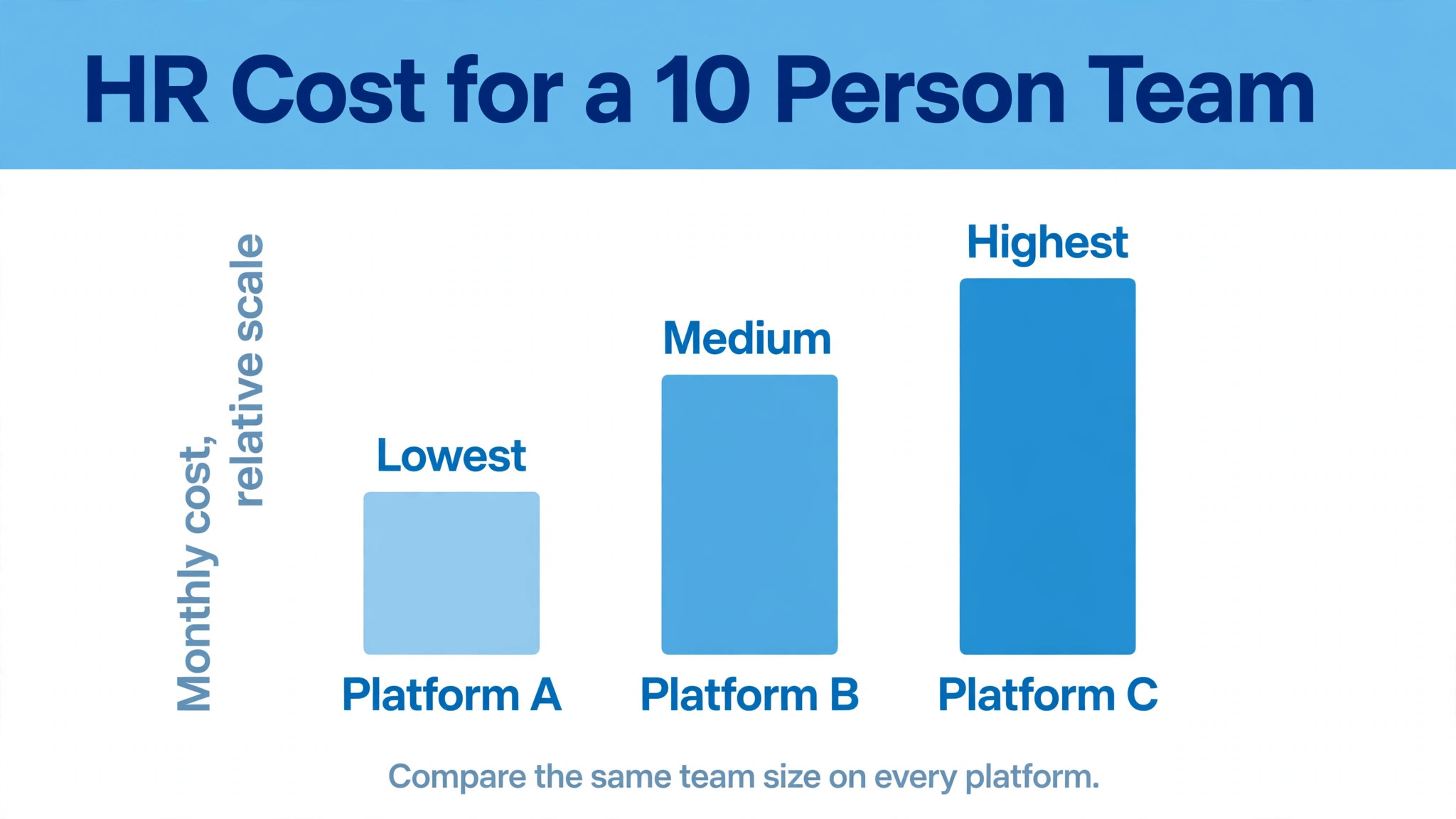
Entry prices run from free to 59 dollars per employee per month, but the base fee and the modules decide the real total. A ten person team on Gusto Simple pays 109 dollars a month, the same team on BambooHR Core pays about 100 dollars a month at the published rate, and the same team on Rippling pays about 115 dollars a month before modules, which shows how close the headline prices really are.
Best Pick by Job
| Job type | First pick | Second tool | Why this pair works |
|---|---|---|---|
| US payroll plus HR | Gusto | Paychex Flex | Gusto is simplest, Paychex adds service depth |
| Growing team, people ops | BambooHR | Rippling | BambooHR owns people data, Rippling adds IT |
| Tech team, HR plus IT | Rippling | BambooHR | Rippling unifies IT, BambooHR is simpler |
| Smallest budget | Zoho People | Homebase | Zoho is cheapest HR, Homebase is free for hourly |
| Global team | Deel | Rippling | Deel owns global hiring, Rippling adds IT |
Gusto wins the general pick because it is the clearest starting point for a small US business that needs payroll and light HR at a published price. Simple costs 49 dollars a month plus 6 dollars per person and covers payroll, tax filing and basic HR for one state. Plus costs 80 dollars a month plus 12 dollars per person and adds time tracking, PTO and next day deposit, while Premium costs 180 dollars a month plus 22 dollars per person. A ten person team pays 109 dollars a month on Simple, which is the most transparent price in this guide.
BambooHR wins for growing teams because its people data, onboarding and performance tools are the cleanest in this guide. Core costs 10 dollars per employee per month for companies above 25 employees, with Pro at 17 dollars and Elite at 25 dollars, and a flat monthly minimum near 250 dollars for teams under 25. Payroll is a paid add on at 4 to 7 dollars per employee per month. That depth is the reason a team of 25 to 150 should look here first, and it is the sharpest contrast in this look at the top 10 hr software for small businesses for a team that has outgrown payroll alone.
Which HR Software Fits a 10-Person Team Best?
Gusto fits a 10 person team best, because the price is published, the payroll is full service and the setup takes two to four weeks. A ten person team pays 109 dollars a month on Simple, with payroll, tax filing and basic HR included, and the owner can run it without an HR hire. The US only limit is the main drawback, because a team with anyone outside the United States needs a second system.
Zoho People is the better pick for a 10 person team on the smallest budget. The free plan covers up to five users, and paid plans start at 1.50 dollars per user per month, so a ten person team pays about 15 dollars a month. The trade off is the payroll, because Zoho People is core HR rather than payroll, so the team needs a separate payroll tool.
Homebase is the third option for a 10 person hourly team. The Basic plan is free, with scheduling, time tracking and team messaging, and Essentials costs 24.95 dollars a month per location. A cafe, a shop or a restaurant with hourly staff will get more value from Homebase than from a payroll first HR system, because the daily job is scheduling rather than HR records.
A fourth path suits a team with people abroad. Deel HRIS is free for up to 200 employees, with employee records, time off and documents for a global team. A ten person team with two people overseas can run Deel for the global record and Gusto for US payroll, though the two tool stack needs care to keep the records in sync.
How to Choose the Top 10 HR Software For Small Businesses
Start with the payroll job. A US business that needs payroll done correctly should take Gusto, because the payroll is full service with automatic tax filing. A business that already has payroll and needs people operations should take BambooHR, because the HR depth is the point. A business that needs HR, IT and spend in one system should take Rippling, because the unified record is the value.
Next, count the real monthly cost for the whole team. Gusto Simple at 49 dollars plus 6 dollars per person costs 109 dollars a month for ten people, BambooHR Core at 10 dollars per employee costs about 100 dollars a month for ten people once the flat minimum is passed, and Rippling at 8 dollars per user plus a 35 dollar base costs about 115 dollars a month before modules. The headline prices look different, but the ten person totals are close, so the decision should rest on features rather than price.
Then check the team size the tool is built for. Gusto suits teams under 50 employees, BambooHR suits teams of 25 to 200, and Rippling suits teams of 50 or more with IT needs. A ten person team that buys Rippling pays for IT depth it will not use, while a 100 person team that buys Gusto will outgrow it. Ask how many people the business will have in two years, not just today.
Finally, check the compliance help. A small business needs I-9 forms, payroll tax withholding and benefits enrolment done correctly, and the tool should guide the owner through each step. Gusto handles the tax filing, BambooHR covers compliance training in its Core plan, and Justworks as a PEO takes on more of the employer responsibility. That help matters more than any dashboard, because a compliance mistake costs far more than a subscription.
One more check matters for a team that hires fast. Ask how onboarding works, because a new hire should get their documents, their pay setup and their app access on day one. Rippling automates the IT side of onboarding, BambooHR covers the HR side with checklists, and Gusto covers the payroll side. A team that hires monthly should weigh the onboarding tools as heavily as the payroll price.
The 8 Tools in Detail
The eight tools below cover payroll first HR, people operations, unified HR and IT, and free options for hourly teams. Each one is judged on price, payroll depth, team size fit and ease of use, so this roundup of the top 10 hr software for small businesses stays honest about base fees, modules and minimums.
1. Gusto
Gusto is the simplest payroll first choice for a small US business, with transparent pricing and full service payroll. Simple costs 49 dollars a month plus 6 dollars per person and covers single state payroll, tax filing and basic HR. Plus costs 80 dollars a month plus 12 dollars per person and adds multi state payroll, time tracking, PTO and next day deposit. Premium costs 180 dollars a month plus 22 dollars per person.
The strength is the transparency, because Gusto is the only tool in this guide that publishes its full price list, and the payroll just works. The drawback is the US only limit, because Gusto does nothing for a hire outside the United States, and a team that hires abroad needs a second system. It suits US only teams under 50 employees who want payroll and HR in one place.
2. BambooHR
BambooHR is the core HR system for growing teams, with clean people data, onboarding, time off tracking, benefits tracking and performance tools. Core costs 10 dollars per employee per month for companies above 25 employees, Pro costs 17 dollars and Elite costs 25 dollars, with a flat monthly minimum near 250 dollars for smaller teams. Payroll is a paid add on at 4 to 7 dollars per employee per month, and a 7 day free trial is included.
The strength is the people operations depth and the ease of use, because the employee record, the onboarding and the reporting are the best in this guide. The drawback is the price opacity, because BambooHR does not publish its prices and a team must ask for a quote. It suits growing teams of 25 to 200 employees who want HR depth.
3. Rippling
Rippling is the unified platform for HR, IT and spend, built on one employee record that automates app access, device ordering and email setup alongside HR onboarding. The HR core starts at 8 dollars per user per month plus a base fee of about 35 to 40 dollars a month, with payroll, benefits and IT as separate modules in the quote. Most teams land at 15 to 25 dollars per employee once they add payroll and benefits.
The strength is the automation, because one change to an employee record updates every system at once. The drawback is the cost and the weight, because the full stack can reach 60 to 80 dollars per user per month and a tiny team will find it heavy. It suits fast growing tech companies that need HR and IT under one roof.
4. Zoho People
Zoho People is the lowest cost entry point in this guide, with a free plan for up to five users and paid plans from 1.50 dollars per user per month. The platform covers core HR, time off, attendance and performance, with a clean interface and a short setup. A ten person team pays about 15 dollars a month on the entry paid plan.
The strength is the price, because no other HR system in this guide starts this cheap. The drawback is the payroll gap, because Zoho People is core HR rather than payroll, so the team needs a separate payroll tool. It suits a small business on the tightest budget that needs HR records without payroll.
5. Deel
Deel is the global hiring platform in this guide, with a free HRIS for up to 200 employees and paid tools for global payroll, contractor management and employer of record services. The free HRIS covers employee records, time off and documents for a global team, which is the cheapest way to manage people across borders.
The strength is the global coverage, because Deel handles hiring in countries where Gusto cannot operate. The drawback is the US payroll depth, because Deel is built for global teams rather than for a US only small business. It suits a team with people in several countries who need one HR record.
6. Justworks
Justworks is a professional employer organisation, or PEO, that handles payroll, benefits and compliance for small teams. The price starts at 59 dollars per employee per month, with health insurance, tax filing and HR support included. The PEO model means Justworks takes on more of the employer responsibility than a software tool does.
The strength is the benefits and the compliance cover, because a small team gets large company benefits and expert help. The drawback is the price, because 59 dollars per employee per month is the highest headline price in this guide, and a ten person team pays 590 dollars a month. It suits a small team that wants benefits and compliance handled for them.
7. Paychex Flex
Paychex Flex is the payroll and HR service from one of the largest payroll companies in the US, with a platform that covers payroll, tax, benefits and HR support. Pricing is quote based, sized by employee count and services, and the platform suits teams that want a service behind the software. The implementation is handled by Paychex, so the owner does less setup work.
The strength is the service depth, because a team gets a payroll company behind the tool rather than just software. The drawback is the quote only price and the older interface, because Paychex Flex feels less modern than Gusto or Rippling. It suits a team that wants a service relationship rather than a self service tool.
8. Homebase
Homebase is the free scheduling and time tracking tool for hourly teams, with a Basic plan that costs nothing and covers scheduling, time clock and team messaging. Essentials costs 24.95 dollars a month per location and adds more features, while higher tiers add hiring and HR tools. The platform suits cafes, shops, restaurants and other businesses with hourly staff.
The strength is the price and the hourly focus, because the free plan covers the daily job of an hourly team. The drawback is the HR depth, because Homebase is scheduling first and HR second, so a team that needs payroll and benefits will need another tool. It suits an hourly team that needs scheduling more than HR records.
Gusto vs BambooHR, Payroll First Against People Ops
The main job is the first difference. Gusto is payroll first, with full service payroll, automatic tax filing and light HR in one place, at a published price of 49 dollars a month plus 6 dollars per person on Simple. BambooHR is people operations first, with clean employee records, onboarding, performance and reporting, at 10 dollars per employee per month on Core with payroll as a paid add on.
The second difference is the price clarity. Gusto publishes every price, so a ten person team can calculate 109 dollars a month on Simple before talking to anyone. BambooHR quotes rather than publishing, with a flat monthly minimum near 250 dollars for teams under 25, so a small team must ask for a price and may pay more than the published per employee rate suggests.
The deciding factor is the team need. A team under 25 that needs payroll done right should take Gusto, because the payroll is the job and the price is clear. A team of 25 to 150 that needs people operations should take BambooHR, because the HR depth repays the quote. That split is the cleanest way to read the top 10 hr software for small businesses when the choice narrows to these two.
A third difference is the trial. BambooHR offers a 7 day free trial, Gusto offers a demo and a first month trial period on some plans, and both let a team test the interface before paying. A team should add two real employees and run one pay cycle in the trial, because the trial pay run shows more than any demo.
What Does HR Software Cost for 10 Employees?
A ten person team pays about 109 dollars a month on Gusto Simple, at 49 dollars plus 6 dollars per person. The same team pays about 100 dollars a month on BambooHR Core at 10 dollars per employee, though the flat minimum near 250 dollars a month for teams under 25 may apply instead, so a small team should confirm the minimum in writing. Rippling costs about 115 dollars a month at 8 dollars per user plus a 35 dollar base, before modules, and that close spread is the first thing to grasp when comparing the top 10 hr software for small businesses.
The modules change the total fast. Rippling payroll and benefits modules raise the real cost to 15 to 25 dollars per employee, so a ten person team pays 150 to 250 dollars a month for the full stack. BambooHR payroll adds 4 to 7 dollars per employee per month, so a ten person team pays 140 to 170 dollars a month with payroll. Gusto Plus at 80 dollars plus 12 dollars per person costs 200 dollars a month for ten people, with time tracking and multi state payroll included.
The cheapest ten person team pays about 15 dollars a month on Zoho People, or nothing on Homebase Basic for an hourly team, or nothing on Deel HRIS for up to 200 employees. The cheapest option is not always the cheapest team, because a free HR tool without payroll still needs a payroll tool, and the two tool stack can cost more than Gusto alone.
The benefits line is the other cost to count. Justworks at 59 dollars per employee per month includes health insurance administration and HR support, while Gusto includes health insurance administration when it acts as broker. A team that values benefits should compare the total benefits cost, not just the software price, because the insurance line is larger than the software line for most small teams.
How Do I Switch Payroll Without Missing a Pay Run?
Start with the payroll calendar. Pick a switch date between pay runs, and run the last pay run on the old system before moving. A switch in the middle of a pay period creates errors, because hours, deductions and tax filings split across two systems. The cleanest switch is at a quarter end, when the tax filings reset.
Next, move the employee data. Export the employee records, the pay rates, the tax forms and the time off balances, and import them into the new system. Check every record by hand, because a wrong pay rate or a missing tax form will cost money on the first pay run. Gusto and BambooHR both offer implementation help, and a team should use it rather than importing alone.
Then run a parallel pay run. Process one pay period in both systems and compare the results line by line, then pay from the new system only when the numbers match. A parallel run takes an extra hour and catches the errors that a blind switch misses, and that hour is the cheapest insurance a small business can buy.
A 30-Day HR Setup for a Small Business
Days one to ten are the people data. Add every employee, their pay rate, their tax forms and their time off balance, and check each record against the payroll file. A setup that starts with clean people data will run clean for a year, while a setup that starts with dirty data will create errors on every pay run.
Days eleven to twenty are the policies. Set the time off rules, the overtime rules and the onboarding checklist, and tell the team how to request time off and where to find their pay slips. A team that knows the rules will use the system, while a team that was never told will keep asking the owner by text.
Days twenty one to thirty are the first pay run. Process payroll in the new system, check the tax filing, and ask the team whether their pay slips look right. A first pay run that matches the old system proves the setup, and a team that trusts the first pay run will trust the system. That trust is what turns a new HR tool into a working habit, and it is the step that makes the top 10 hr software for small businesses pay off in the first month.

Frequently Asked Questions
Is Gusto good for a 10 person business?
Yes. Gusto Simple costs 49 dollars a month plus 6 dollars per person, so a ten person team pays 109 dollars a month for full service payroll, tax filing and basic HR. The setup takes two to four weeks, and the owner can run it without an HR hire, though Gusto is US only, and that published price is the usual reason owners pick it from the top 10 hr software for small businesses.
Does BambooHR include payroll?
No, payroll is a paid add on. BambooHR Core costs 10 dollars per employee per month for companies above 25 employees, with payroll sold separately at 4 to 7 dollars per employee per month. A team that needs payroll and HR in one price should compare Gusto, where payroll is included in the base plan.
Is Rippling too much for a small business?
For a team under 25, usually yes. Rippling starts at 8 dollars per user per month plus a base fee, but the full stack with payroll and benefits reaches 15 to 25 dollars per employee, and the IT depth is built for larger teams. A small US team that needs payroll and light HR will find Gusto simpler and cheaper.
What is the cheapest HR software for a small business?
Zoho People is the cheapest paid HR tool in this guide, with a free plan for up to five users and paid plans from 1.50 dollars per user per month. Homebase Basic is free for hourly teams, and Deel HRIS is free for up to 200 employees. The cheapest HR tool is not always the cheapest team, because payroll may need a separate tool.
Does Deel work for a US only team?
Deel works, but it is built for global teams rather than for a US only small business. The free HRIS covers employee records for up to 200 people, while the US payroll depth is thinner than Gusto. A US only team should take Gusto, while a team with people abroad should take Deel.
How long does HR software take to set up?
Gusto and BambooHR both take two to four weeks for a small team, while Rippling takes four to eight weeks because the IT setup adds work. A team that switches payroll should plan the move between pay runs, and a parallel pay run in both systems catches errors before the first live payroll.
Buy Payroll First, Add HR Depth Later
A US small business should take Gusto, because 49 dollars a month plus 6 dollars per person buys payroll done right with HR included. A growing team should take BambooHR, because the people operations depth repays the quote once the team passes 25 people. A tech team should take Rippling, because the unified HR and IT record saves hours every week.
Start with payroll, add HR depth when the team grows, and switch between pay runs with a parallel run to catch errors. The top 10 hr software for small businesses all promise to save time, but only the tool that fits the team size, the payroll job and the budget will actually do it. A team that gets those three right will spend less time on admin and more time on the work that grows the business.