
Your gym does not have a motivation problem. It has a follow up problem. Members join in January, attend for three weeks, then drift away while nobody notices until the payment fails or the membership ends. Classes fill unevenly, trainers spend evenings answering the same pricing questions, and front desk time goes to bookings that a link could have handled. The best AI tools for gyms fix that middle part: the bookings, reminders, programmes, and messages that keep a member showing up long enough for results to appear.
This guide compares 8 tools, from full gym management platforms to focused coaching and marketing apps. Some are built for large clubs. Others suit a small strength gym, a boutique studio, or a hybrid gym with online coaching. Prices change often, so treat every pricing note as an October 2026 starting point and check at checkout before you buy. The goal is not to collect software. It is to pick the smallest set that keeps classes full, members retained, and trainers coaching instead of typing.
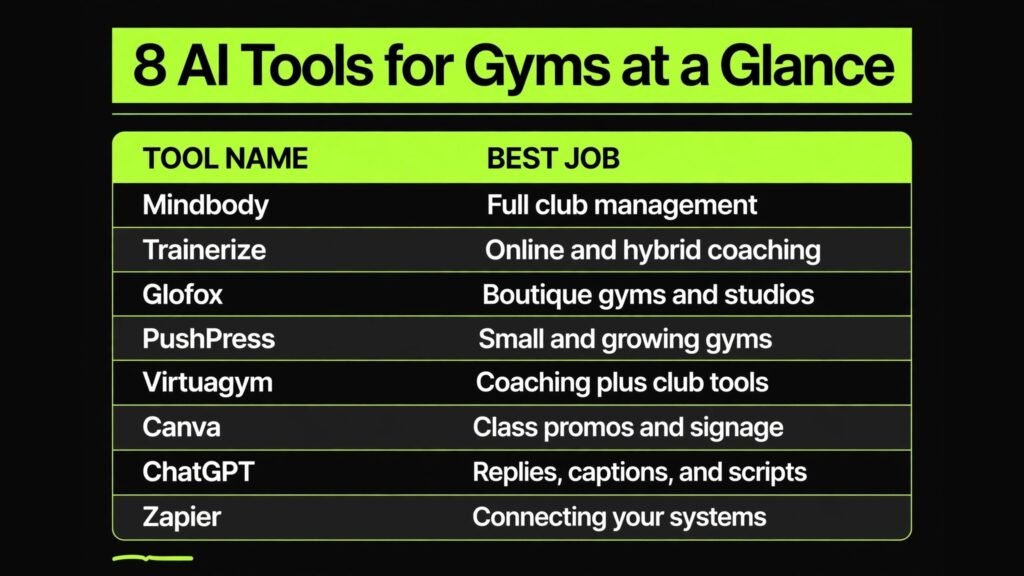
At a Glance: 8 Tools Compared
| Tool | Best for | Main strength | Watch out for |
|---|---|---|---|
| Mindbody | Full club management | Bookings, payments, and discovery | Can feel heavy for a small gym |
| Trainerize | Online and hybrid coaching | Programme delivery and check ins | Needs trainer time to set up well |
| Glofox | Boutique gyms and studios | Clean member app and bookings | Smaller marketplace than Mindbody |
| PushPress | Small and growing gyms | Simple billing and member tools | Fewer advanced marketing features |
| Virtuagym | Coaching plus club tools | Workouts, nutrition, and community | Setup needs a clear launch plan |
| Canva | Class promos and signage | Fast branded graphics | Templates need your real photos |
| ChatGPT | Replies, captions, and scripts | Speed on everyday writing | Must be checked for prices and safety claims |
| Zapier | Connecting your systems | Automates follow ups and alerts | Test every flow before launch |
Platforms That Run the Whole Gym
1. Mindbody
Mindbody is the most established all in one option for gyms, studios, and wellness businesses. It handles class bookings, memberships, payments, staff schedules, and a member app, and it also lists your business in a discovery marketplace where new customers can find classes. For a mid sized gym with many classes and multiple trainers, that combination reduces the number of systems you need to check each morning. Reports show which classes fill, which times sit empty, and which membership types actually renew.
Pricing is subscription based and varies by features and business size, so check at checkout and ask about transaction costs as well as the monthly fee. Watch out for complexity. Mindbody can do a great deal, which means a small gym can spend weeks configuring options it will never use. Start with bookings, payments, and memberships, launch those cleanly, and add marketing tools only after the core flow works. Also watch the member experience: test booking, cancelling, and buying a pass on a phone yourself, because that is how most members will use it.
2. Glofox
Glofox suits boutique gyms and studios that want a polished member app without the weight of a very large platform. Members can book classes, buy memberships, and manage their own accounts, while staff get a clear view of attendance and revenue. Its design feels modern, which matters for a boutique brand where the app is part of the product. If your gym sells an experience as much as a workout, a clean booking flow supports that promise.
Pricing is subscription based, so check at checkout for the tier that matches your class volume and staff count. Watch out for discovery. Glofox does not offer the same large marketplace reach as Mindbody, so you will need your own marketing to fill classes. That is fine if you already have a strong local presence or social following, but it is a real trade off for a brand new gym that needs foot traffic from search.
3. PushPress
PushPress is built for small and growing gyms, especially CrossFit style boxes, strength gyms, and community focused training spaces. It covers memberships, billing, class reservations, and member management in a simpler package than the largest platforms. The appeal is focus. You get the tools a small gym uses every day, without a long menu of features aimed at a multi site chain.
Pricing is subscription based, so check at checkout. Watch out for marketing depth. PushPress is strong on operations, but you may still need separate tools for email, social design, and content. That is not a flaw if you prefer best in class tools for each job, but count the total cost and the number of logins before you decide. For a gym with one location and a tight team, simplicity often wins over breadth.
4. Virtuagym
Virtuagym combines club management with coaching tools, including workout plans, nutrition guidance, challenges, and community features. That mix suits gyms that want members to stay engaged between visits, not just book a class and leave. A member who gets a plan, logs workouts, and joins a challenge is more likely to return than a member who only receives a payment receipt. Trainers can also deliver programmes and check progress without building a separate online coaching system.
Pricing depends on modules and member numbers, so check at checkout and clarify which coaching features are included in your tier. Watch out for launch effort. A community and coaching app only works if trainers post, members are onboarded in person, and challenges have a clear start and end. Plan a launch week, show members the app on their first visit, and assign one staff member to keep it active for the first month.
Coaching, Content, and Retention Tools
5. Trainerize
Trainerize is made for personal trainers and hybrid gyms that sell coaching beyond the gym floor. Trainers can build programmes, assign workouts, track client check ins, share habit goals, and message clients in one place. For a gym that wants to add online coaching, small group training, or a hybrid membership, Trainerize gives that offer a professional home instead of a messy mix of spreadsheets, PDFs, and chat threads.
Pricing is subscription based by trainer or client volume, so check at checkout. Watch out for content creation time. The platform looks empty until a trainer builds programmes, exercise libraries, and check in templates. Budget that build time before you sell the service, and start with three strong programmes rather than twenty thin ones. Clients judge coaching by the quality of the first two weeks, not by the size of the library.
6. Canva
Canva handles the visual work that fills classes: class timetables, challenge posters, social posts, in gym signage, and member welcome cards. Its AI tools help remove backgrounds, resize designs, and suggest text, but the real value for a gym is consistency. One set of brand colours, one font pairing, and real photos of your coaches and members will make your gym recognisable in a crowded feed.
Pricing includes a free plan and paid plans for brand controls, so check at checkout. Watch out for stock photo sameness. A generic fitness image tells a potential member nothing about your gym. Use your own photos, your own class names, and your own timetable. A slightly imperfect real photo outperforms a perfect generic image, because it shows the room the person will actually walk into.
7. ChatGPT
ChatGPT is useful for the writing that surrounds a gym: replies to pricing questions, class descriptions, challenge rules, onboarding emails, and social captions. Give it your membership options, class schedule, cancellation policy, and tone, and the first draft arrives in seconds. That speed matters when a potential member messages at 9 pm and a reply the next morning is too late.
Access includes a free tier and paid plans, so check at checkout. Watch out for two risks. First, never let it invent prices, class times, or health claims. Check every draft against your real schedule and policies. Second, keep medical and injury advice out of AI drafts. General fitness information is one thing; personal health guidance belongs to a qualified professional who knows the member. Use AI for admin and marketing copy, and keep coaching judgment human.
8. Zapier
Zapier connects your gym tools so follow up happens without manual work. A new trial booking can trigger a welcome message and a staff task. A missed class can trigger a friendly check in the next day. A membership ending soon can trigger a retention task for a coach. These small automations are where retention is won, because they catch the quiet members who stop coming without complaining.
Pricing is tiered by task volume, so check at checkout and estimate bookings and messages honestly. Watch out for message overload. Automate the first helpful check in, not five messages in three days. Test every flow with a test member, and make sure a human can step in when a reply needs empathy rather than another automated note.
Best Pick by Job
| Job | Best pick | Why it wins |
|---|---|---|
| Full club bookings and payments | Mindbody | Broadest all in one system |
| Boutique studio experience | Glofox | Clean member app and booking flow |
| Small gym operations | PushPress | Simple, focused, community friendly |
| Coaching between visits | Virtuagym | Plans, challenges, and community in one app |
| Online and hybrid coaching | Trainerize | Programme delivery built for trainers |
| Class promos and signage | Canva | Fast, consistent, brand controlled |
| Replies and marketing copy | ChatGPT | Speed when given your real details |
| Automated follow ups | Zapier | Catches quiet members before they leave |
How to Choose the best AI tools for gyms
Start with your churn pattern, not a feature list. Look at the last 90 days and ask where members drop off. If trials never convert, fix booking and follow up first. If new members vanish after week three, fix onboarding and coaching check ins. If classes are half empty at certain times, fix timetabling and promotion before you buy a new platform. The tool should match the leak, or it will simply add cost to the same problem.
Next, test the member journey on a phone. Book a class, cancel it, buy a pass, and message the gym. If any step confuses you, it will confuse a new member. Then test the staff journey. Can a trainer check a class list in seconds? Can front desk staff see who is overdue? Can you export attendance and revenue without a spreadsheet workaround? A tool that looks good in a demo but slows down a busy front desk will fail in real use.
Finally, count total cost and total logins. A single platform may cost more per month but save three separate subscriptions and hours of copying data. Separate best in class tools may fit better if you already use some of them well. Either path works, provided you choose deliberately and review after 60 days. Keep what members actually use, and cancel what only looked good in the sales call.
Gyms that rely on social discovery can borrow practical ideas from our guide to the best AI tools for Instagram, and gyms that also coach clients one to one may find parallels in the best AI tools for fitness coaches.
Three Gym Workflows That Keep Members Coming Back
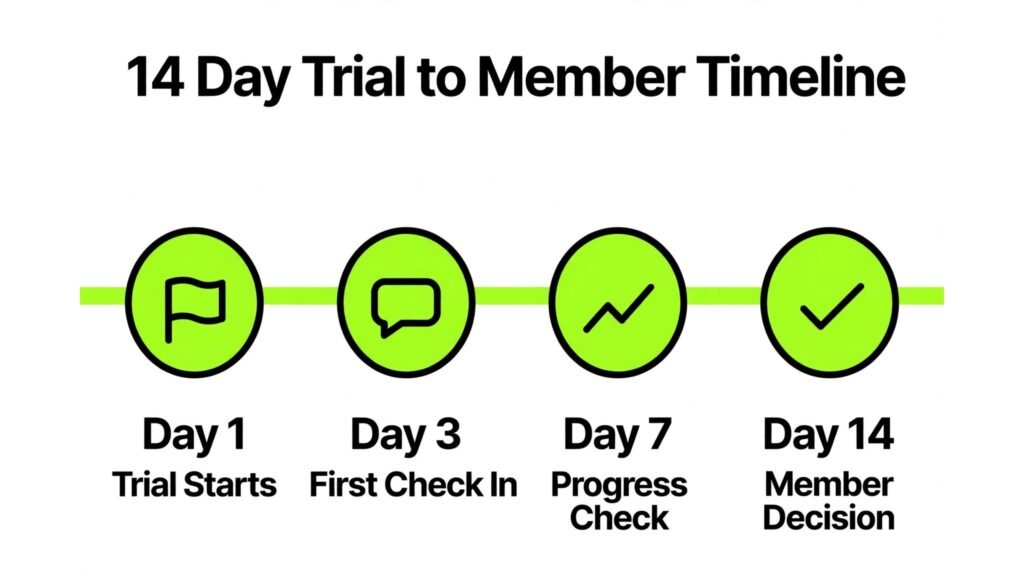
Workflow 1: Trial to member in 14 days
A trial should have a plan, not just access. Day one, the member books through your platform, receives a welcome message with class times, and meets a coach for a short intro. Day three, a check in asks how the first class felt. Day seven, the member gets a simple programme or a recommended class path, not a generic PDF. Day fourteen, a coach reviews attendance and has a short conversation about membership, with a clear recommendation based on what the member actually attended. Zapier can trigger the reminders, but the conversation stays human. Gyms that run this workflow convert more trials because the member feels seen, not just sold to.
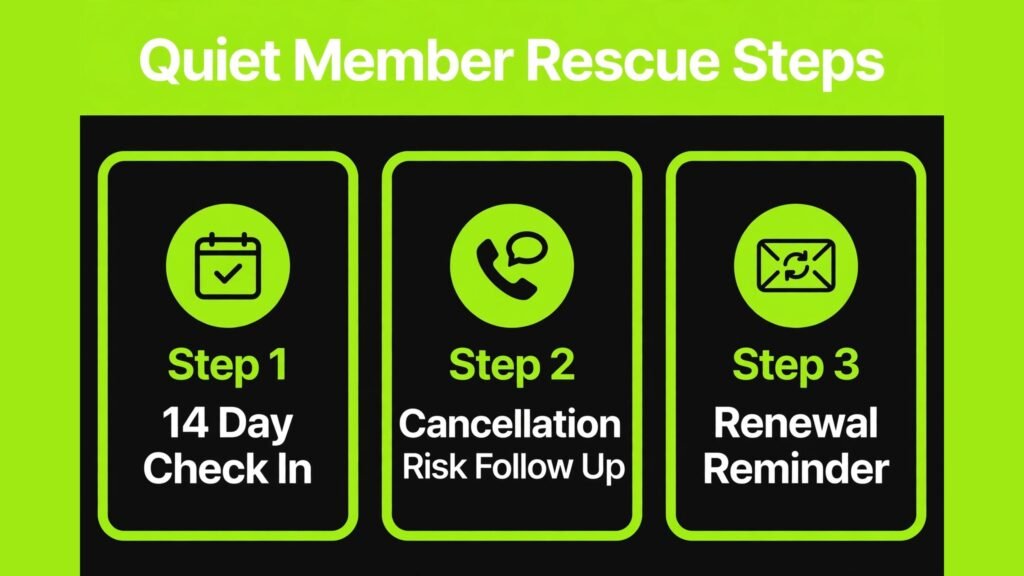
Workflow 2: The quiet member rescue
Every gym has members who pay but stop attending. The rescue workflow starts with data: who has not attended in 14 days, who booked then cancelled twice, and who has a membership ending in 30 days. Each group gets a different message. The 14 day group gets a friendly check in and an easy class suggestion. The cancellation group gets a question about timing or class type, not a discount. The ending group gets a coach conversation about progress and next goals. Discounts have a place, but they rarely fix a timetable clash or a lost habit. A relevant class suggestion often does.
Workflow 3: Challenge and community
Challenges work when they are simple, social, and short. Pick one clear goal, such as eight classes in four weeks, and track it in your coaching app. Post a weekly leaderboard or progress update in Canva, celebrate small wins in class, and close with a social event or a members only session. Keep prizes modest and participation based, so beginners can win by showing up rather than by being the fittest person in the room. A challenge that only rewards top performers can push new members away, which is the opposite of retention.

Choosing by Gym Type: The Same Tools, Different Priorities
A large commercial club, a boutique studio, and a strength gym do not need the same setup, even when they use the same tools. The difference is which problem hurts most, and which feature you will use every day versus once a quarter.
A large club with hundreds of members and a full timetable needs reliability first. Bookings must handle peak hour traffic, payments must reconcile cleanly, and staff must see class lists without delay. Mindbody fits that profile because breadth matters more than simplicity when you have many membership types and many trainers. The trade off is training time. Budget staff training, write short internal guides for common tasks, and test the busiest class booking flow before you rely on it. A large club that launches a platform badly will hear about it from hundreds of people in one week, so a careful launch is not optional.
A boutique studio with one or two rooms and a strong brand needs a different balance. The member app is part of the experience, the class list is smaller, and personal service is the selling point. Glofox fits well here because the booking flow is clean and the brand presentation is strong. Marketing matters more, because a boutique studio cannot rely on walk past traffic alone. That means Canva templates, regular social posts, and a clear trial offer need the same attention as the platform itself. A beautiful app with empty classes is still a failing studio, so review class fill rates weekly and adjust times, instructors, or class formats based on real attendance, not on what looked good on the original timetable.
A strength gym or community box needs simplicity and trust. Members value coaching, community, and a straightforward membership, not a complex app with features they never open. PushPress fits that profile, often paired with Trainerize for programming. The key test is whether a coach can run a class, check attendance, and message a member without leaving the floor for ten minutes. If the system pulls coaches away from coaching, it is hurting the product it was bought to support. Keep the tech stack small, keep the community rituals strong, and use automation only for follow ups that would otherwise be forgotten.
A hybrid gym that sells both in person training and online coaching needs a coaching home first and a booking system second. Trainerize or Virtuagym should be judged by programme quality, check in flow, and how easily a client can find today’s workout. Many hybrid gyms fail by selling online coaching before building programmes, so reverse the order. Build three complete programmes, test them with existing members, collect feedback, and only then advertise the online offer. A hybrid offer built on real programmes retains clients. An offer built on a sales page alone does not survive the first month.
Pricing and Total Cost in Plain Terms
Monthly fees are only part of gym software cost. Transaction fees on payments, charges for extra staff seats, costs for text messages, and the time your team spends on setup all count. Before you choose, list every cost for a typical month at your current member count, then repeat the maths at double that count. A platform that looks cheap at 100 members can become expensive at 300, and a platform that looks pricey at launch can become good value once it replaces three other tools.
Also consider switching cost. Moving member data, payment details, and class history takes time and carries risk, especially for billing. Ask each vendor how migration works, what data exports look like, and whether you can leave with your member list intact. A tool that locks your data in is a long term risk, even if the first year price is attractive. Finally, review your stack every six months. Cancel tools that nobody opens, renegotiate tiers when member numbers change, and keep a simple renewal calendar so a forgotten subscription does not quietly eat your margin.
Staff Roles: Who Owns Each Tool
Software fails when everyone owns it and nobody owns it. Assign clear roles. One person owns bookings and payments, and checks class lists and failed payments each morning. One coach owns programming and check ins, and reviews client progress weekly. One person owns marketing content, and publishes on a fixed weekly rhythm rather than when inspiration strikes. The owner reviews retention data monthly, not daily, and makes timetable or pricing decisions from that review. These roles do not need to be full time jobs. In a small gym, one person may hold two roles, but the responsibility must still be named. Unnamed responsibility becomes nobody’s job, and the tool quietly stops working.
Train staff in short sessions, not one long launch day. Fifteen minutes on bookings, fifteen on payments, and fifteen on member messaging, each with a real task to complete, beats a two hour presentation that everyone forgets. Keep a one page guide at reception for the five most common member questions, and update it whenever a new confusion appears. Good documentation is boring, but it is what makes a gym platform survive staff holidays and turnover.
Mistakes to Avoid
The first mistake is buying a platform before fixing your timetable. If classes clash, run too long, or leave no beginner friendly option, no app will fill them. Audit the timetable first, with honest attendance data, and cut or move weak slots.
The second mistake is automating every message. Members can tell when nobody is listening. Automate reminders and first check ins, but reply personally when a member shares an injury, a schedule problem, or a complaint. That reply is retention work, not admin.
The third mistake is launching a coaching app with no content. Members open an empty app once. Build programmes, welcome videos, and check in templates before launch, and onboard members in person so they know where to find their plan.
The fourth mistake is judging success by sign ups alone. Track trial conversion, 30 day attendance, 90 day retention, and class fill rates. A gym can grow sign ups while losing members faster, and only retention data shows that problem early.
The fifth mistake is ignoring front desk feedback. Staff hear every booking problem first. Ask them weekly what confused members, what took too long, and what they worked around. Fix those friction points before adding new features.

Frequently Asked Questions
What are the best AI tools for gyms on a tight budget?
Start with PushPress or Glofox for operations, plus Canva and ChatGPT for marketing. That combination covers bookings, billing, promos, and replies without a large platform fee. Add Trainerize only when you sell coaching as a separate service.
Can AI replace a personal trainer?
No. AI can deliver programmes, reminders, and tracking, but it cannot watch form, adjust for injury, or motivate a person through a hard week. The best gyms use AI to handle admin so trainers spend more time coaching, not less.
How do I stop members leaving after the first month?
Onboard with a plan, check in at day three and day fourteen, and recommend classes based on actual attendance. Members leave when they feel anonymous. A short personal check in, at the right time, does more than a discount email.
Do I need a member app, or is a website enough?
A website can take bookings, but an app keeps the gym in a member’s daily view and makes rebooking faster. If most of your members book on phones, an app usually pays for itself in higher attendance and fewer missed classes.
What should I automate first?
Automate trial follow up, missed class check ins, and membership ending reminders. Those three flows catch members at the moments they are most likely to leave, and they run without adding daily work for staff.
How long does it take to switch gym platforms?
Allow four to six weeks for data migration, staff training, and member onboarding, and avoid switching during a peak joining period. Run the new system alongside the old one for a short overlap, and test billing with a small group before moving everyone.
What to Measure in the First 90 Days
A new tool deserves a fair trial, and a fair trial needs numbers agreed in advance. Before launch, record your baseline for trial conversion, 30 day attendance, 90 day retention, class fill rate, and failed payment rate. Then review the same numbers at 30, 60, and 90 days. If trial conversion rises but 90 day retention does not, your onboarding still needs work. If class fill rises at peak times but falls elsewhere, your timetable needs adjustment, not more marketing. If failed payments fall, your billing flow is working. These numbers keep the conversation honest, because software vendors will show you logins and clicks, while your business lives or dies on members who keep showing up and keep paying.
Also collect qualitative feedback. Ask ten members what confused them, ask trainers what slowed them down, and ask front desk staff what they worked around. Small friction points, such as a confusing cancellation button or a class list that loads slowly, matter more than a missing advanced feature. Fix friction first, then judge whether the tool deserves a second year. A gym that reviews honestly at 90 days rarely wastes money on software for long, because the data makes the keep or cancel decision clear.
Closing Verdict: Retention Is the Product
The strongest conclusion from these 8 tools is not about software at all. A gym keeps members when booking is easy, coaching feels personal, and nobody disappears unnoticed. Mindbody suits a larger club that needs breadth. Glofox and PushPress suit smaller gyms that value clarity. Trainerize and Virtuagym add coaching depth. Canva, ChatGPT, and Zapier remove the admin that steals trainer time. Pick the platform that fits your size, add one coaching tool and one marketing tool, and judge the set by 90 day retention, not by how impressive the demo looked. That measure, more than any feature list, tells you whether the tools are working. Revisit the numbers each quarter, keep the tools that move retention, and remove the rest without sentiment. A lean stack that staff and members actually use will always beat a large stack that only looks impressive on paper.