
The old way to run a pet sitting business was a paper diary, a phone full of unanswered texts, and a frantic search for a key code ten minutes before a visit. The new way looks very different: bookings confirmed in minutes, visit notes sent with photos automatically, reminders that go out before a client forgets, and a calendar that shows exactly which homes, pets, and time windows are covered each day. If you want to learn how to start a pet sitting business with AI, that contrast is the whole opportunity. Pet owners do not just buy time with their animals. They buy trust, clear communication, and proof that their pet was safe and happy while they were away. AI helps a small, local business deliver that proof consistently, even when you are the only sitter or a team of two or three.
This guide is practical, not theoretical. It covers the services to offer, the safety and insurance basics you must not skip, pricing that covers travel and time, and a step by step setup for bookings, client communication, and daily visits. It also compares tools honestly, shows how to choose a setup that fits a solo sitter versus a small team, and lists the mistakes that cause cancellations, bad reviews, and burnout. You do not need to be technical. You need a clear offer, a reliable routine, and tools that reduce admin so you can spend more time with animals and less time chasing messages.
What a modern pet sitting business actually sells
Pet sitting is a trust business first and a scheduling business second. Owners hand you their house keys, alarm codes, vet details, and a family member who cannot speak for themselves. That is why reviews mention communication more than any other factor. Owners want to know the visit happened on time, what the pet ate, whether medication was given, how the walk went, and whether anything unusual happened. A short update with a photo after each visit does more for repeat bookings than a discount ever will.
AI supports that trust in specific ways. It can draft visit update templates that you personalise with real observations, summarise a pet profile into a one page visit sheet, remind you about medication times and feeding windows, and turn booking messages into a clean calendar entry. It can also help you write service pages that answer local search questions, such as what areas you cover, what pets you accept, and how last minute bookings work. What AI cannot do is replace the visit itself, judge an animal’s health, or handle an emergency. Your judgment, your presence, and your record keeping are the service. AI simply makes the admin around that service faster and less error prone.
The market also rewards specialisation. General pet sitting competes with every neighbour who loves dogs. A focused offer stands out: cat only sitting for owners who want quiet, low stress home visits; puppy visits for owners who work long days; senior pet care with medication support; or house sitting combined with plant and mail care for travellers. Each focus changes your pricing, your visit length, and your marketing. Pick a focus you can deliver safely, then build your routines, checklists, and client forms around it.
The first decision in how to start a pet sitting business with AI
Before you buy tools or build a website, decide what kind of sitter you will be. That decision shapes your area, your prices, your intake form, and your daily routine. A sitter who covers a small area well will earn more trust, and more repeat bookings, than a sitter who covers a whole city badly. The phases below follow that order: services and limits first, safety second, pricing third, and tools last, because tools should support a clear offer, not replace one.
Phase 1: Decide your services, area, and limits
Start by defining exactly what you will and will not do. Common services include drop in visits (typically 20 to 60 minutes), dog walking, overnight house sitting, and boarding in your own home where local rules allow it. Each has different risks. Drop in visits are easier to scale across a day. Overnight sitting pays more per client but blocks your calendar and requires clear rules about sleep, extra pets, and emergencies. Boarding in your home adds cleaning, insurance, and local regulation questions. Many successful sitters start with drop in visits and dog walking, add overnight sitting once routines are proven, and only consider boarding after insurance and local rules are confirmed.
Set a service area you can cover without rushing. A 15 to 20 minute drive radius in a city, or a set of named neighbourhoods and villages in a rural area, keeps visits on time and travel costs predictable. List the area on your service page and in booking forms, and decline work outside it politely rather than accepting a long drive that makes you late for the next client. Also set pet limits: maximum number of pets per visit, breeds or sizes you are comfortable handling, and whether you accept unvaccinated pets, aggressive animals, or pets with complex medical needs. Clear limits protect animals, protect you, and make your marketing clearer. Owners respect a sitter who says “I specialise in cats and small dogs” more than one who says yes to everything and struggles.
Create a simple intake form before your first paid visit. It should capture owner contact and emergency contact, vet name and phone, vaccination status, feeding amounts and times, medication names and doses, walk routine, house access details, and behaviour notes such as fear triggers, recall reliability, and reactions to other dogs. Store this securely, not in scattered chat messages. AI can help you turn a long form into a concise visit sheet for each day, but the original details must come from the owner and be checked at a meet and greet. Never rely on memory for medication or access codes.
Phase 2: Safety, insurance, and the meet and greet
Safety is not paperwork for its own sake. It is what lets you handle a locked gate, a sick pet, or a power cut without panic. Before you take paid work, research insurance for pet sitters in your country and region, including public liability and care, custody, and control cover where available. Check whether you need a business registration, tax registration, or a local licence for boarding. Requirements vary widely, so confirm with an official source or a local business advisor rather than copying advice from another country. Keep proof of insurance ready to share with owners who ask, because many will, and it is a strong trust signal.
Write a short terms document covering cancellation, late booking fees, key handling, vet emergency authorisation, and what happens if a pet damages property or needs urgent care. For vet emergencies, get written permission in advance to seek treatment up to an agreed amount, and agree how the owner will reimburse costs. Keep a local emergency list on your phone: nearest emergency vet, your regular vet contacts for clients, and a backup sitter you trust. If you are ill or your car breaks down, a backup plan is not optional. Clients with travel plans need to know someone will still cover the visit.
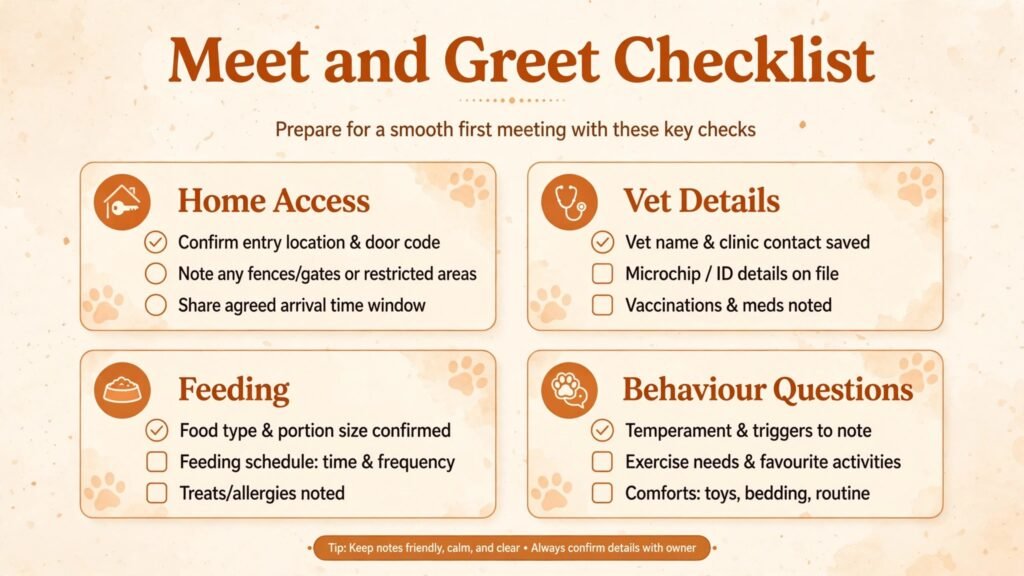
The meet and greet is your most important sales and safety tool. Visit the home before the first booking, meet the pet in its own space, watch how it reacts to you, test handling, feeding, and lead work, and walk through access, alarms, and hazards. Use a checklist so you do not forget questions: where is food stored, where are leads and waste bags, what is the toilet routine, what should you do if the pet hides or refuses food, and who is the backup contact? Charge for your time if meet and greets become long, or include one free meet and greet for bookings over a certain length and charge for others. Either way, treat it as a professional step, not a casual chat. A good meet and greet prevents most first visit problems.
For health context, owners often ask about diet, behaviour, and vet care, and sitters who understand basic pet health communication stand out. This guide to the best AI tools for veterinarians is useful background for how vet practices organise records and client updates, and it can help you write clearer visit notes that vets and owners both understand. You are not a vet, and you should never diagnose, but clear, factual notes help a vet act faster if a pet becomes unwell.

Phase 3: Price so travel, time, and risk are covered
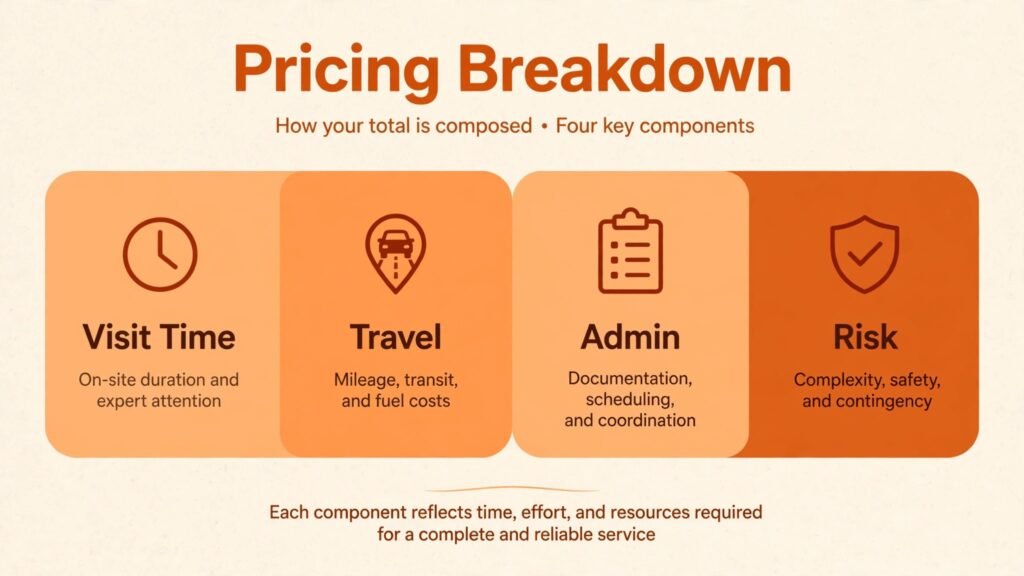
Pricing for pet sitting fails when sitters price only the visit minutes and forget travel, admin, and risk. A 30 minute visit often involves 20 minutes of driving, 10 minutes of messaging and notes, and fuel or transit costs. Price the whole job. Start by listing your costs: insurance, transport, phone and tools, cleaning supplies, taxes, and a buffer for cancellations. Then set a target hourly rate for all work time, not just time in the home. If a visit plus travel plus admin takes 70 minutes, price it as 70 minutes of work.
Common pricing structures include per visit rates for drop ins, per walk rates for dog walking, and per night rates for house sitting, with add ons for extra pets, medication, holiday dates, and last minute bookings. Holiday pricing deserves care. Many sitters charge a premium for public holidays and peak travel periods, and state it clearly on their booking page. Clients accept holiday premiums when they are published in advance. They resent surprise surcharges added after booking. Publish your holiday rates, cancellation windows, and last minute fees before peak season, not during it.
Offer packages that encourage repeat use without discounting you into losses. A pack of ten drop in visits, a weekly dog walking plan, or a returning client rate for a second booking can work, provided the discount is small and tied to commitment. Avoid unlimited or heavily discounted introductory offers that fill your calendar with low paying work. It is better to have five well paying regular clients than fifteen clients who expect premium communication at budget prices. Review rates quarterly. If you are fully booked two weeks ahead, if fuel costs rise, or if you add a new service such as medication support, raise new client rates and give existing clients notice of the change.
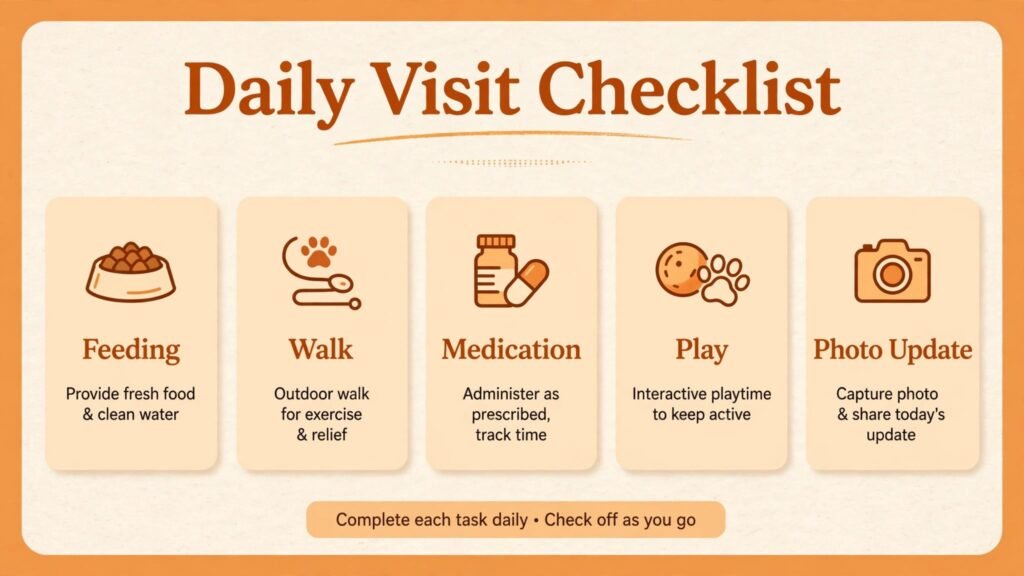
A simple pricing example helps owners understand value. Show what a visit includes: arrival window, feeding, fresh water, toilet break or walk, play or calm company, medication if agreed, home check, and a photo update. When owners see the full list, they compare you on service, not just on a headline price. That list also protects you, because it defines what is not included, such as grooming, training, or extended stays beyond the booked window, unless agreed separately.
Phase 4: Set up bookings, reminders, and visit notes with AI
Your booking system can be simple at first: a booking form, a calendar, and a messaging template set. The key is that every booking creates the same record: owner, pet, dates, visit times, address, access notes, and payment status. AI tools can help you draft confirmation messages, reminder messages, and visit updates from that record, but the record itself must be accurate. A common setup uses a form tool or a pet sitting platform for bookings, a calendar for daily routes, and a notes app for pet profiles. As you grow, a dedicated pet sitting software product may be worth the cost because it combines bookings, invoicing, GPS visit tracking, and client updates in one place. Check official pricing and features before you switch, and test it with a few real bookings before moving all clients.
Build a daily routine that AI supports but does not replace. Each morning, review the day route in order, check access notes and medication times, and confirm any changes with owners. During each visit, note real observations: appetite, water intake, toilet, energy, and anything unusual. After the visit, send a short update with one or two photos, using a template you personalise. “Bella ate all her breakfast, enjoyed a 25 minute walk, and is now resting by the window” is specific and reassuring. A generic “Visit done, all good” is not. Save visit notes in the pet profile so the next visit, or a backup sitter, can see patterns over time.
AI can also help with the parts of the business owners never see. It can draft service page copy for your area, suggest answers to common questions, summarise feedback to spot patterns (for example, owners repeatedly asking about holiday availability), and help you write a monthly email to past clients with seasonal reminders, such as summer heat precautions or holiday booking deadlines. Use those drafts as starting points, then edit for local accuracy. Mention your real area names, real services, and real booking windows. Local accuracy is what makes a small business page rank and convert. Generic copy about pet care in general will not.
Admin help matters even more if you work alone. A virtual assistant, even part time, can handle inbox triage, booking confirmations, and invoice chasing while you are on visits. If you are considering that kind of support, this overview of the best AI tools for virtual assistants shows how admin workflows are organised, and you can borrow the same checklist approach for your own booking inbox. Keep client data handling simple and secure: use one system for pet profiles, limit who can see access codes, and delete old codes when a client leaves.
Phase 5: Win local clients without paid ads
Local trust beats broad advertising for pet sitting. Start with a Google Business Profile, a simple website or landing page with your services, area, prices, and booking form, and profiles on local pet sitting platforms where owners search. Ask every happy client for a review, and make it easy: send a short message after a successful booking with a direct review link. Reviews that mention punctuality, communication, and specific pet care carry more weight than star ratings alone. Aim for ten strong reviews before you spend on ads, because ads that send people to a page with no proof waste money.
Community marketing works well in this niche. Join local pet groups, attend adoption events where appropriate, partner with groomers, vets, and pet shops for referrals, and offer a useful local guide, such as a seasonal pet safety checklist for your area. Social media helps when it shows real work: a short video of a calm first visit, a photo update style post (with owner permission), or a tip about summer walks. Keep owner privacy and home details out of public posts. Never post an address, a key location, or a photo that reveals when a home is empty. For social content ideas, this guide to the best AI tools for Instagram can help you plan posts that show care and reliability without oversharing.
Referrals deserve a clear ask. At the end of a good booking, tell the owner: “If you know another pet owner in the area who needs a sitter, I would be glad to meet them.” A small thank you, such as a discount on a future visit for a successful referral, can help, but the main driver is the visit experience itself. Past clients who book again are your most profitable clients, because you already know the pet, the home, and the routine. Send a short check in before holidays and school breaks, when travel spikes, and remind owners to book early. That single habit can fill peak periods weeks in advance.
If you also offer related home services, be careful not to blur your offer. Pet sitting clients want a pet specialist, not a general handyman. A related guide on how to start a cleaning business with AI shows how service businesses organise bookings and checklists, and the lesson transfers: clear scope, a checklist per job, and a photo proof step at the end. Borrow the system, keep the pet focus.

Tools compared: booking, communication, and daily operations
| Job | Good options | Best for | Watch out for |
|---|---|---|---|
| Bookings and invoicing | Pet sitting platforms, Calendly plus invoicing, dedicated pet sitting software | Clean booking records, payment tracking | Platform fees; check what the fee covers |
| Calendar and routes | Google Calendar, Apple Calendar, route planning apps | Daily visit order, travel time, reminders | Double booking if bookings live in two places |
| Client messages | WhatsApp Business, email templates, platform messaging | Fast confirmations, visit updates, photos | Scattered details; keep pet profiles in one place |
| AI drafting and notes | ChatGPT, Claude, Notion AI | Update templates, service pages, visit summaries | Generic text if you skip personalisation |
| Photos and proof | Phone camera, platform visit reports | Timed photo updates owners trust | Privacy; never share addresses or empty home clues |
| Payments | Bank transfer, Stripe, PayPal, platform payments | Deposits, holiday prepayment, clear records | Late payment; set terms before the booking |
Choose one booking source of truth. If bookings come through a platform, a form, and direct messages, move them into one calendar and one pet profile on the same day you accept them. That discipline prevents the most common pet sitting error: a missed visit because a message was buried. Test your tools on a quiet week before peak season. A tool that works for five clients may break at twenty, when routes, medication times, and holiday requests overlap.
How to choose: solo sitter, small team, or platform first
Your setup should match your current size, not the size you hope to reach in two years. A solo sitter needs a simple form, a calendar, a notes system, and a messaging template set. That is enough for ten to twenty regular clients. A sitter with a helper or a small team needs shared access to pet profiles, a clear route assignment system, and a rule for who sends the owner update. Without that rule, owners receive duplicate messages or, worse, no message because each person assumed the other sent it.
A platform first approach suits sitters who want bookings without building a website. Platforms bring demand, handle payments, and provide review systems, but they take a fee and control client communication. A direct booking approach suits sitters who want higher margins and repeat clients, but it requires more marketing work upfront. Many sitters use both: platforms for early clients and reviews, direct bookings for repeat clients who already trust them. Whatever you choose, keep your own client list and pet profiles outside any single platform, so a platform change does not erase your business history.
Ask three questions before you add a tool. Does it reduce missed visits or admin time this month? Can you use it one handed on a walk, or does it require a desk? Does it keep owner and pet data in one secure place? If a tool fails any of those tests, it is not helping a pet sitting business, even if it looks impressive in a demo.
Mistakes that cost bookings and reviews
The first mistake is accepting every booking. A pet you cannot handle safely, an area you cannot reach on time, or a date you already filled will cost more in stress and reputation than the fee is worth. Decline early and recommend another sitter where possible. Owners remember honest referrals.
The second mistake is weak communication. No update, a late update, or a vague update makes owners anxious, even if the visit was perfect. Send the update within the promised window, with a photo and one specific observation. If something goes wrong, tell the owner promptly and factually, with what you did and what you need from them. Silence during a problem destroys trust faster than the problem itself.
The third mistake is poor key and access management. Lost keys, forgotten codes, and unlabelled keys cause missed visits and security risks. Label keys by client code, not by address, store them securely, log who holds each key, and return keys promptly after the last booking. Test access at the meet and greet, not on the first paid visit.
The fourth mistake is no backup plan. Illness, car trouble, and family emergencies happen. A backup sitter, even for emergencies only, and a clear message template for owners, turn a crisis into a managed change. Without a backup, one bad week can produce several cancelled trips and lost clients.
The fifth mistake is underpricing holidays and last minute work. Peak periods are when your time is scarcest and your costs are highest. Publish holiday rates early, require deposits for peak bookings, and set a last minute booking cutoff. Clients who book early get the best availability. Clients who book late pay for the disruption, and most accept that when the rule is clear.
The sixth mistake is posting the wrong content online. Photos that show a home empty, an address, or an owner travel dates create a security risk and breach trust. Always get permission, check backgrounds, and post after the trip, not during it, unless the owner explicitly asks for a live update on a private channel.

Frequently asked questions
How much money do I need to start a pet sitting business with AI?
Startup costs can be low if you start with drop in visits: insurance, a phone, transport, basic supplies, and a simple booking system. The larger cost is time for meet and greets, marketing, and building reviews. Avoid buying expensive software before you have regular clients. Add tools as bookings grow and the tool cost is covered by retained income.
Do I need qualifications to become a pet sitter?
Requirements vary by location and service type, especially for boarding. Pet first aid training, animal handling experience, and insurance are strong trust signals even where they are not legally required. Check local rules for your area, and be honest about your experience and limits in your marketing. Owners prefer a clear, honest sitter over an overstated one.
How does AI help without replacing personal care?
AI helps with drafting, reminders, summaries, and admin, while the visit itself remains fully human. Use AI for templates and checklists, then add real observations from each visit. Never let an automated message claim a visit happened before you have completed it, and never use AI to invent a pet health observation. Accuracy in visit notes is a safety issue, not just a writing issue.
What should I charge for overnight house sitting?
Overnight rates depend on your area, the number of pets, the length of stay, and what is included, such as morning and evening walks, feeding, medication, and home checks. Research local sitters with similar services, calculate your full time cost including overnight presence and travel, and publish a clear per night rate with add ons. Holiday and last minute rates should be stated separately.
How do I handle a pet emergency during a visit?
Stay calm, follow the owner emergency plan, contact the vet, and message the owner promptly with facts: what happened, what you observed, and what care you have arranged. Keep vet details and emergency authorisation in the pet profile, not only in chat history. After the incident, write a factual note for the owner and the vet, and review whether your intake form or checklist needs an update.
Can I run pet sitting part time at first?
Yes, many sitters start part time with a limited area and a small number of regular clients, then expand as demand grows. Part time works best with drop in visits and dog walking on fixed days, clear availability windows, and honest booking limits. Do not accept overnight bookings on days you cannot guarantee presence, and keep a backup contact for days you are unavailable.
Closing check: a business owners can trust on day one
A pet sitting business grows when owners feel informed, pets feel calm, and visits happen exactly as promised. That result comes from a focused service list, a clear area, strong safety routines, honest pricing, and a booking system that never loses a detail. AI makes the admin lighter and the communication sharper, but the core promise remains human: you showed up, you paid attention, and you told the owner the truth about their pet.
Start with ten local owners, five excellent meet and greets, and a simple booking routine you can repeat without stress. Collect reviews that mention punctuality and communication, keep pet profiles accurate, and review your prices and area every quarter. Over time, repeat bookings and referrals will do more for your calendar than any single marketing tactic. That steady, trusted local reputation is the real asset of a pet sitting business, and it is built one reliable visit at a time.