
The verdict is clear: print on demand with AI works best as a design and testing business, not as a passive income shortcut. If you treat it as a way to upload hundreds of generic designs and wait for sales, you will compete with thousands of similar listings and earn very little. If you treat it as a way to serve a specific audience with designs they actually want, test ideas quickly with AI help, and improve listings from real sales data, you can build a real small business with no inventory. Learning how to start a print on demand business with AI is therefore less about generating images fast and more about choosing the right niche, making designs people recognise, and marketing consistently.
Print on demand means a third party prints and ships a product only after a customer orders it. You design the product, list it on a platform or your own store, and the provider handles printing, packing, and shipping. You earn the difference between the sale price and the provider cost, minus platform fees. AI helps with design ideas, mockups, product descriptions, and marketing copy, but it does not remove the need for good design judgement, audience research, and customer service. This guide walks through the full process, step by step, with tools compared, costs explained, mistakes to avoid, and answers to common questions.
Step 1: Choose a Niche and Audience Before You Design Anything
A print on demand niche should be specific enough that a buyer feels the design was made for them. General designs for everyone rarely sell, because they compete with every other general design on the platform. Specific designs for nurses, for trail runners, for teachers of a certain subject, for fans of a hobby, or for people in a local community have a clearer buyer and clearer marketing channels. Choose an audience you understand or are willing to research deeply, because you will need to know their jokes, their frustrations, their language, and what they already own.
Use AI for research, but verify with real communities. Ask a chat tool to list sub niches, common phrases, gift occasions, and problems in your chosen audience. Then check those ideas in real places: social groups, forums, bestseller lists, and review comments. Look for phrases buyers use themselves, not phrases AI invented. A design that uses a real phrase from the community will feel authentic. A design that uses a generic AI phrase will feel like it was made for no one in particular.
Validate with a small test before you build a large catalogue. Design ten products for one niche, list them well, and promote them in one or two relevant channels for a month. Track views, favourites, and sales. If one design direction gets far more interest, expand in that direction. If none get interest, change the niche or the design angle, not just the colours. Ten well researched designs in a clear niche will teach you more than one hundred random designs across ten niches.
Step 2: Plan Products, Margins and Platforms
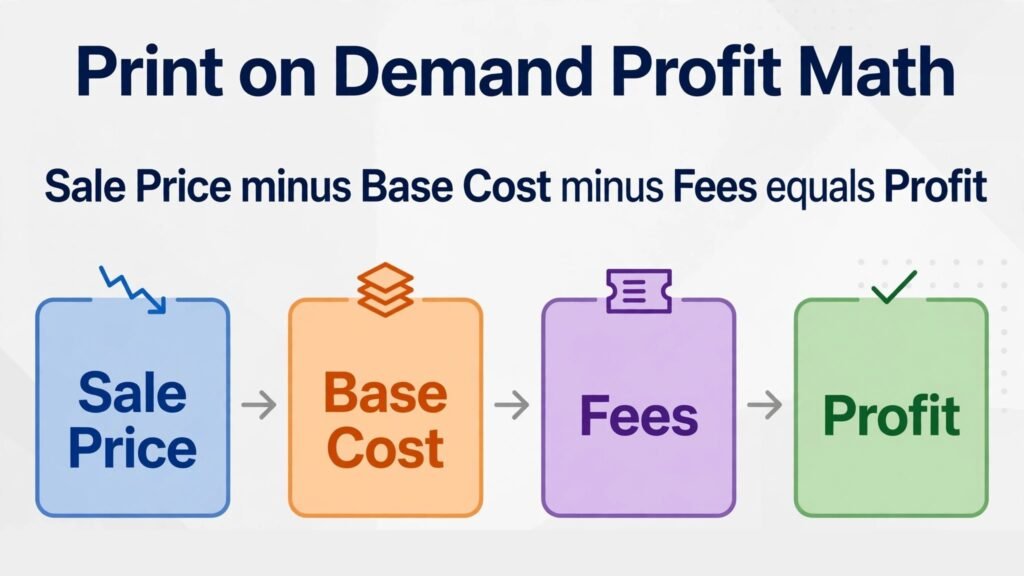
Product choice affects profit more than design choice in many cases. T-shirts are popular but competitive and often low margin after fees. Hoodies, sweatshirts, mugs, tote bags, posters, and phone cases each have different base costs, shipping costs, and buyer expectations. Check base costs on your provider platform before you set prices, because a design that looks profitable on a T-shirt may lose money on a hoodie after shipping. Set prices by working backwards: sale price minus base cost minus platform fees minus payment fees equals profit. If profit is too low to justify marketing time, choose a different product or raise the price with better design and listing quality.
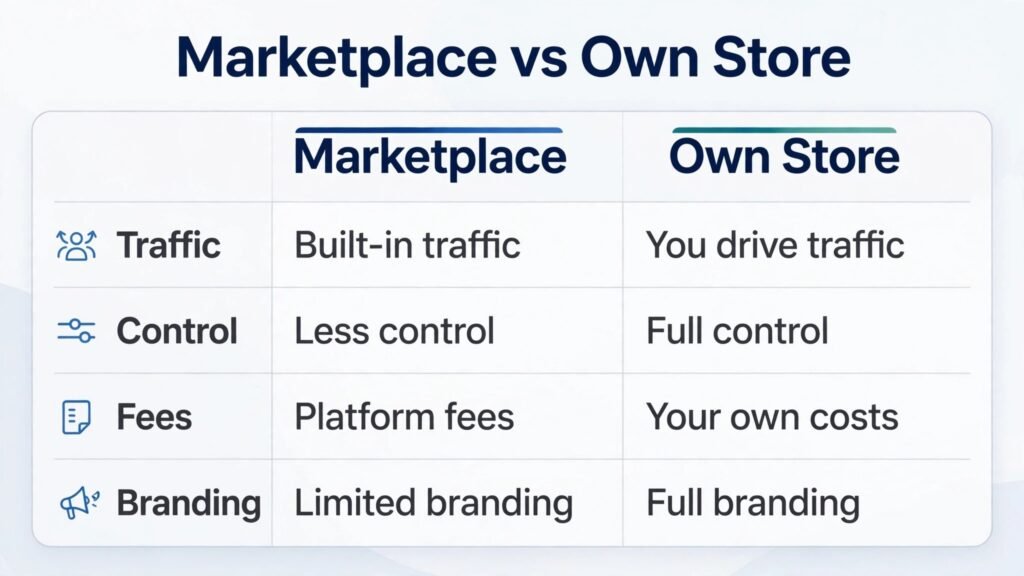
Platform choice depends on your goal. Printful and Printify let you connect to your own store on Shopify, Etsy, or WooCommerce, giving you control over branding and pricing. Etsy gives built in search traffic but also strong competition and fees. Redbubble and TeePublic give built in traffic and handle more of the store work, but give less control over pricing and branding. Amazon Merch on Demand gives huge traffic but has an application process and tier limits for new sellers. Many sellers start on Etsy or a marketplace to test demand, then move winning designs to their own store for higher margins and customer control.
Check provider quality before you scale. Order samples of your own products, wash a T-shirt as a customer would, check print placement, colours, and fabric feel, and photograph the sample for listings. Sample quality issues found early save refunds and bad reviews later. Also check shipping times and return policies for your main markets, because buyers in different countries face different delivery times and costs. State shipping expectations clearly in listings to reduce complaints.
Step 3: Create Designs With AI, Then Refine Them Like a Designer
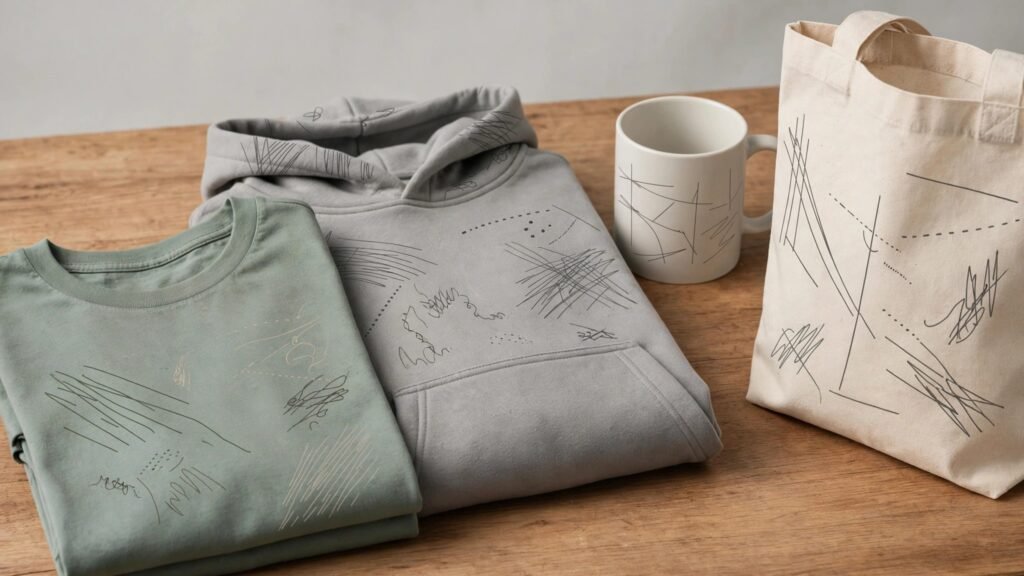
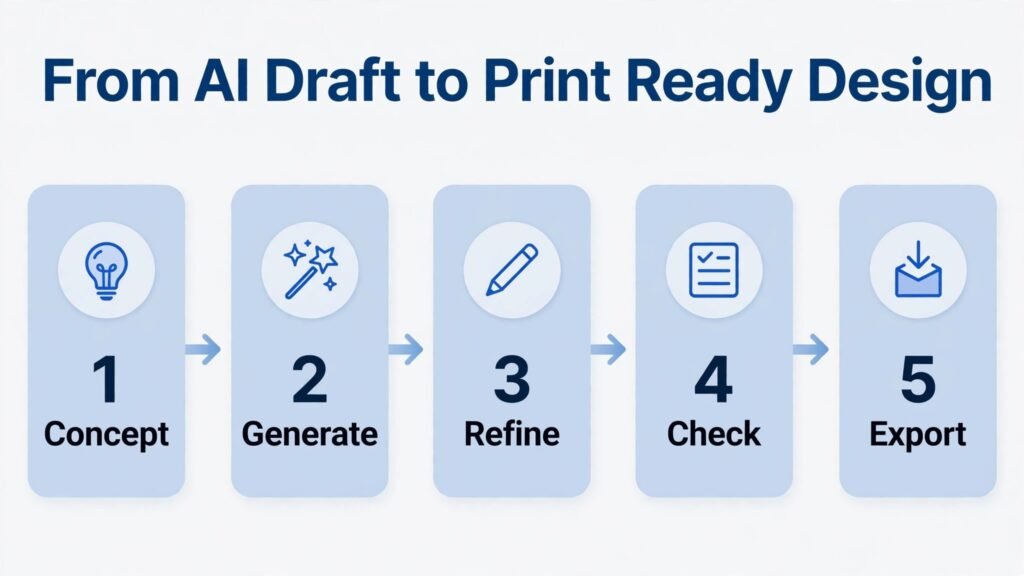
AI design tools can generate ideas, illustrations, and typography drafts quickly, but raw AI output rarely sells as a final product. Start with a concept, not a prompt. Write down the message, the visual idea, the style, and the audience in one sentence. For example: a funny, minimal line illustration for trail runners, with a short phrase about muddy shoes, in two colours, suitable for a dark T-shirt. That concept guides the AI tool and gives you a standard to judge outputs against. Generate several variations, then pick the strongest one and refine it.
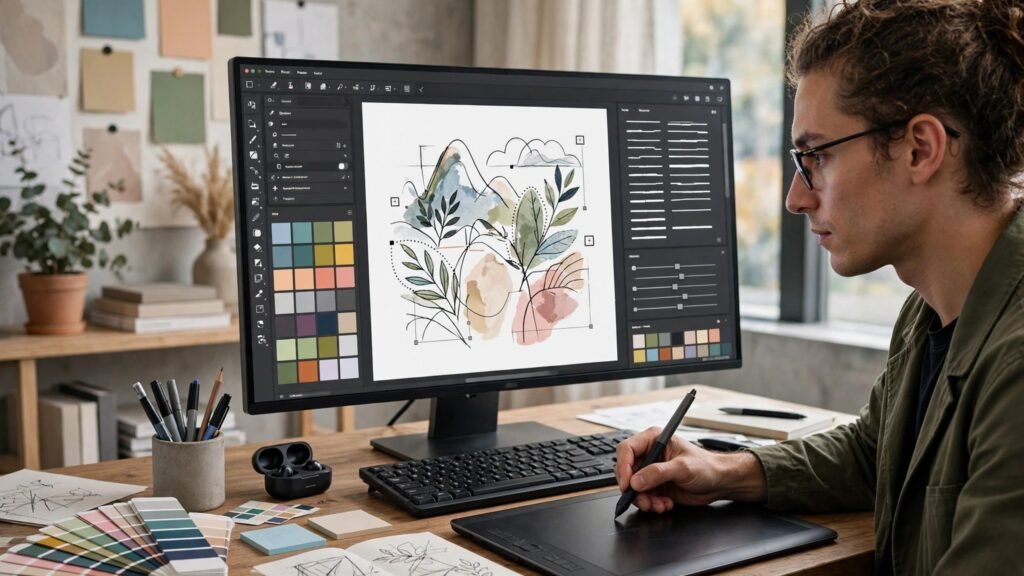
Refinement matters for print. Check that text is spelled correctly, that lines are clean at print size, that colours work on both light and dark products, and that the design has enough contrast to be readable from a distance. Use a design tool like Canva, Photoshop, or Affinity to clean up edges, adjust spacing, and export at the resolution your provider requires. Avoid designs that rely on trademarked characters, logos, celebrity names, or copyrighted phrases. AI tools can generate images that look like protected work, but selling them can lead to takedowns and account loss. When in doubt, create original art and original wording.
Build a design system for your brand. Use a consistent colour palette, typography style, and layout approach across products, so buyers recognise your shop. That consistency also speeds up future designs, because you are not starting from scratch each time. Keep a folder of approved fonts, colours, and templates, and note which designs sold well and why. Over time, that folder becomes your brand guide and your best source of new ideas, because it is based on your own sales data, not on generic trends.
Step 4: Write Listings That Help Buyers Choose and Search Find You
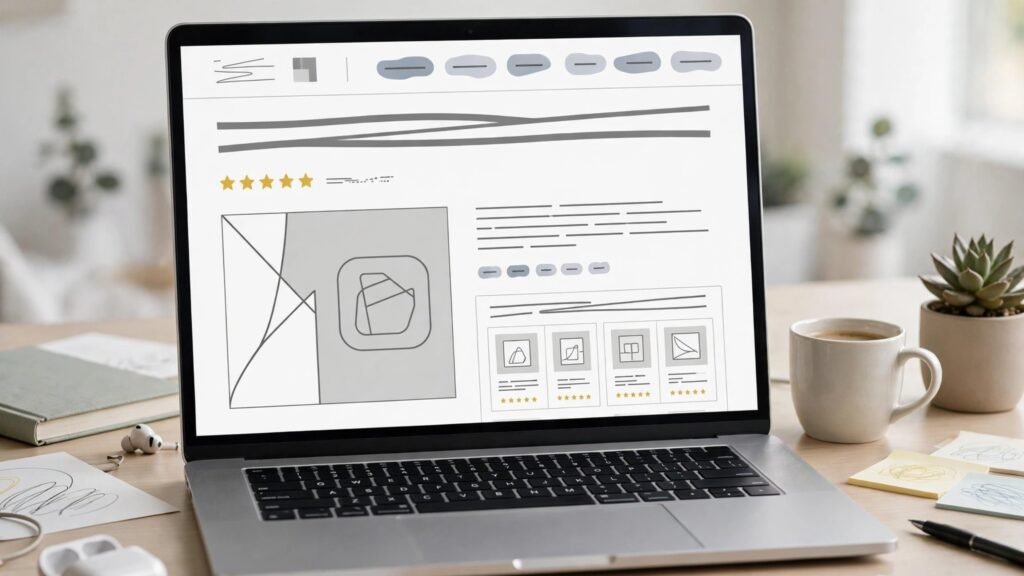
A good listing answers buyer questions before they ask them. Title should include the product, the design theme, and the audience or occasion, in natural language. Description should explain the design idea, the product details, sizing, material, care instructions, and shipping expectations. Tags should include niche terms, occasion terms, and style terms that real buyers search for, not just single generic words. AI can draft titles, descriptions, and tags from your design notes, but edit them for accuracy and for your brand voice.
Mockups sell the product. Use provider mockups for accuracy, but also create lifestyle mockups that show the product in use, such as a mug on a desk or a T-shirt worn outdoors. AI mockup tools and Canva templates can help, but use real sample photos when possible, because they show true colours and fit. Show the design on multiple product colours where relevant, and show close ups of print detail. Buyers who cannot see detail clearly are less likely to buy, and more likely to return a product that looked different in the listing.
Search optimisation for marketplaces is different from blog SEO. On Etsy and similar platforms, title words, tags, and category choice matter most, along with sales history and reviews. Use all available tag slots with relevant phrases, renew or update listings that get views but no sales, and test title changes one at a time. AI can suggest tag variations, but check search volume and relevance by looking at what top sellers in your niche actually use. Copying top seller tags blindly without relevance will bring the wrong traffic and hurt conversion.
Step 5: Launch Your Store, Test Designs and Read the Data
Launch with a focused catalogue, not a huge one. Twenty to thirty well made listings in one niche, with good mockups and descriptions, will perform better than two hundred rushed listings. Announce the launch to any audience you already have, such as social followers, newsletter subscribers, or community members, with a clear story about who the designs are for. Offer an opening discount only if margins allow it, and set a clear end date so the offer does not become permanent.
Testing should be structured. Each week, note which listings get views, favourites, and sales, and which get nothing. For listings with views but no sales, the problem may be price, mockup, description, or product choice. For listings with no views, the problem may be title, tags, or niche demand. Change one variable at a time, such as title or main mockup image, and track the result for two weeks before changing again. AI can help you summarise weekly data into themes, but you should look at raw numbers yourself to avoid missing a small signal, such as one design that gets favourites from a specific country or age group.
Customer feedback is also data. Read reviews and messages for comments about sizing, print quality, and design appeal. If several buyers mention sizing runs small, update the listing with a sizing note and consider a different product blank. If buyers love a design but want it on a different product, add that product version quickly while interest is fresh. That responsiveness turns one winning design into a small product family, which is often more profitable than chasing a new winning design every week.
Marketing for print on demand works best when it shows the product in a real context. Short videos of the product being worn or used, behind the scenes design videos, and customer photos with permission all outperform static product images alone. Use AI to draft social captions, video scripts, and email copy, but film real products and real people where possible. A short video that shows a hoodie fit, fabric, and print detail answers buyer questions better than ten polished mockups.
Social proof builds trust. Encourage buyers to share photos, feature customer photos in your store and social channels with permission, and respond to reviews promptly and politely, even when a review is critical. A thoughtful reply to a problem can turn a disappointed buyer into a repeat buyer, and it shows future buyers that you care about quality. Keep a simple email list for your store, separate from marketplace followers, so you can announce new designs to people who already bought from you. Repeat buyers are cheaper to reach than new buyers, and they often buy gifts for others in the same niche.
Paid ads can help, but only after organic listings show promise. Start with a small daily budget on one platform, test one winning design with clear targeting to your niche audience, and track profit after ad cost, not just clicks. If ads bring clicks but no sales, fix the listing or the product offer before increasing spend. Many new sellers lose money on ads because they promote untested designs. Let sales data choose the ad product, not enthusiasm for a new design.
Step 7: Manage Operations, Quality and Growth Sustainably
Operations for print on demand are lighter than for inventory businesses, but they still need attention. Check orders daily at first, confirm that provider production times are normal, and reply to buyer messages within a day where possible. Keep a simple spreadsheet of designs, platforms, base costs, sale prices, and profit per product, updated monthly. That sheet prevents the common problem of selling a product at a loss after a provider price change or a platform fee change. Check provider pricing at checkout and in provider announcements regularly, since base costs change through the year.
Quality control should be ongoing. Order new samples when you change provider, product blank, or design style. Check print placement on different sizes, because a design centred on a medium shirt may sit differently on a large hoodie. If a provider has repeated quality issues, switch provider for that product rather than hoping the next order will be better. Your shop reputation depends on provider quality, even though you do not print the product yourself.
Growth should be steady, not sudden. Add new designs each week based on sales data and seasonal occasions, expand winning designs to new products, and retire designs that get no views after several months of good listings. Seasonal planning helps: design for gift occasions, holidays, and niche events at least six weeks before the occasion, so listings have time to gain search traction. Keep your catalogue focused. A shop with 100 strong listings in one niche often outperforms a shop with 1,000 scattered listings, because buyers trust a focused shop and search engines understand what it sells.
Seasonal Planning, Gift Occasions and Scaling What Works
Seasonal planning is one of the most reliable ways to grow a print on demand shop, because buyers search for gifts and occasion products on a predictable calendar. Plan at least six weeks ahead for major gift occasions, and at least four weeks ahead for niche events such as a hobby competition, a school term start, or a professional awareness week. That lead time matters because listings need time to gain views, because providers need time to print and ship, and because buyers often shop early for gifts. A design uploaded the week before a holiday will rarely rank in time to capture that demand, however good it is.
Build seasonal collections around your existing niche, not around every holiday. If your niche is trail running, a winter collection for cold weather runners, a spring race season collection, and a gift collection for running partners will feel natural. If your niche is teaching, a back to school collection, a teacher appreciation collection, and an end of term gift collection will feel natural. Seasonal designs that fit the niche will sell to your existing audience and attract new buyers through occasion searches. Seasonal designs that jump to unrelated holidays will confuse your shop identity and dilute search relevance.
Scaling should follow proof, not hope. When a design sells repeatedly, expand it in three ways before you chase a new idea. First, add it to a second product that the same buyer would want, such as a mug version of a popular T-shirt design, or a tote version of a popular poster. Second, create a variation with a different colour scheme or a small wording change for a related sub audience, such as a version for a different role within the same profession. Third, improve the listing with better mockups, customer photos, and a clearer title based on the search terms that brought sales. Those three expansions are lower risk than a brand new design, because they build on proven demand.
Scaling also means watching for limits. A design that sells well on one marketplace may need different sizing, pricing, or mockups on your own store. A provider that handled ten orders a week well may struggle at one hundred orders in a holiday week, so check provider capacity and shipping times before a seasonal push. Keep a simple calendar that shows design deadlines, listing dates, promotion dates, and provider cut off dates for holiday shipping. That calendar prevents the common seasonal mistake of promoting a product after the last safe shipping date has passed, which leads to disappointed buyers and refund requests.
Finally, keep a balance between evergreen and seasonal designs. Evergreen designs sell slowly all year and provide a stable base. Seasonal designs spike and then fall, but they bring new buyers who may then buy evergreen designs. A healthy shop often has about seventy percent evergreen listings and thirty percent seasonal listings, adjusted for your niche. Review that balance each quarter, retire seasonal designs that no longer fit, and update evergreen listings with new mockups and titles so they do not look stale. Growth in print on demand is rarely one viral design. It is a catalogue that gets a little stronger each month, with seasonal spikes that bring new audiences into that catalogue.
Tools Compared for Print on Demand With AI
| Tool | Job | Strength | Limit | Best for |
|---|---|---|---|---|
| Printful | Fulfilment | Quality control, branding options | Higher base costs on some products | Own store sellers |
| Printify | Fulfilment | Wide provider choice, pricing options | Quality varies by provider | Price sensitive sellers |
| Midjourney | Design generation | Strong illustration styles | Needs refinement for print | Illustrative designs |
| DALL-E / ChatGPT images | Design generation | Easy prompts, editing | Style consistency needs work | Quick concept drafts |
| Canva | Design and mockups | Templates, mockups, easy editing | Templates can look generic | Beginners and mockups |
| Placeit | Mockups | Realistic product mockups | Subscription cost adds up | Lifestyle mockups |
| Etsy | Marketplace | Built in search traffic | Fees and competition | Testing demand |
| Shopify | Own store | Control, branding, apps | Needs traffic driving | Brand building |
Check base costs, shipping, and plan pricing at checkout for each tool and provider, since costs change and vary by product and country. Start with one fulfilment provider, one design tool, and one sales channel. Add more only when sales data shows a clear need.
How to Choose Tools for how to start a print on demand business with AI
Choose fulfilment by quality and margin, not just by low base cost. Order samples from two providers for your main product, compare print quality, fabric, shipping time, and customer service, then choose the provider that gives the best balance. A slightly higher base cost with fewer returns and better reviews often earns more profit than the cheapest provider with quality complaints.
Choose design tools by your skill and style. If you are a beginner, Canva plus an AI image tool gives a fast start with templates and easy editing. If you have design experience, Photoshop or Affinity plus Midjourney gives more control over print ready files. If your designs are mainly typography, focus on font licensing and layout tools rather than image generation. Check font licences for commercial use before you sell, because free for personal use does not always mean free for products.
Choose sales channel by traffic versus control. Marketplaces bring traffic but take fees and limit branding. Your own store gives control but needs marketing. Many successful sellers use both: marketplaces for discovery, and their own store for repeat buyers and higher margins. For related seller guides, readers may also check best AI tools for print on demand sellers, best AI tools for etsy sellers, and best AI tools for amazon sellers. Creators who also sell digital products may find how to create a digital product with AI useful for a second income stream.
Mistakes to Avoid in Print on Demand With AI
The first mistake is uploading generic AI designs with no niche. Generic designs compete on price alone, and price competition rarely sustains a business. The second mistake is ignoring trademark and copyright rules. Using protected characters, logos, band names, or slogans can lead to takedowns, even if AI generated the image. Create original work and check phrases before you list.
The third mistake is poor mockups and listings. A great design with a blurry mockup, vague title, and missing sizing info will lose to a good design with a clear listing. The fourth mistake is pricing without checking profit. Always calculate profit after base cost, fees, and shipping, and update prices when costs change. The fifth mistake is never ordering samples. Samples reveal print, colour, and sizing issues that mockups hide.
The sixth mistake is spreading across too many niches and platforms at once. Focus on one niche and one main channel until you have sales data, then expand. The seventh mistake is relying only on ads without organic traction. Ads amplify a working listing. They do not fix a listing nobody wants. The eighth mistake is ignoring customer messages and reviews. In print on demand, service is your brand, because you do not control printing directly. Fast, polite, helpful replies protect your reputation and bring repeat sales.
Frequently Asked Questions
How much money do I need to start print on demand with AI?
You can start with low upfront costs, because you do not buy inventory. Main costs are platform fees, sample orders, design tool subscriptions if you choose paid tools, and optional marketing. Many sellers start with free tiers and a small sample budget, then reinvest profits into more samples and marketing. Check provider base costs and platform fees before you price products, so you do not sell at a loss.
Is print on demand still profitable in 2026?
Yes, for focused shops with original designs, good listings, and consistent marketing. Generic shops with hundreds of similar designs struggle, because competition is high and margins are thin. Profit comes from niche focus, product choice, pricing discipline, and repeat buyers, not from volume alone. Treat it as a real business with testing and improvement, not as a set and forget income stream.
Can AI design all my products?
AI can generate ideas and drafts, but final designs need human refinement for print quality, spelling, originality, and brand consistency. AI also cannot judge whether a design will resonate with a specific community as well as a human who knows that community. Use AI to speed up ideation and drafting, then refine, test, and improve based on sales data.
Which platform is best for beginners?
Etsy is often easiest for beginners because it brings search traffic and handles checkout, while Printful or Printify connected to Etsy handles fulfilment. Redbubble and TeePublic are also beginner friendly for marketplace selling with less store setup. Choose the platform where your niche audience already shops, and test with a small catalogue before committing to a large store build.
How long does it take to get first sales?
First sales timing varies by niche, listing quality, and marketing. Some sellers get a sale in the first month with focused promotion, while others take several months to gain search traction. Consistent listing improvement and promotion in relevant communities usually matter more than catalogue size. Track views and favourites as early signals, even before sales, because they show whether titles, tags, and designs attract the right audience.
Do I need design skills to succeed?
Design skills help, but they can be learned. Start with simple, clean designs in your niche, learn basic typography and colour rules, and study top sellers in your niche for layout and style, without copying them. AI tools lower the barrier, but judgement about what looks good on a product and what a buyer wants still comes from practice and feedback. Order samples and ask honest friends in your niche for opinions before you scale a design.
What about trademarked phrases and fan art?
Avoid selling designs that use trademarked names, logos, characters, or distinctive slogans without permission, even if AI generated them or you changed a word. Fan art policies vary by platform and rights holder, and many fan designs get removed. When in doubt, create original art and wording, and check platform policies and trademark databases for phrases you plan to use commercially. Original work is safer and builds a brand you own.
Conclusion: Build a Focused Shop, Test Fast, Improve From Sales
Learning how to start a print on demand business with AI is not about uploading the most designs. It is about serving one audience well, with designs they recognise, listings they trust, and products that arrive in good quality. Choose a niche you understand, plan margins and platforms carefully, use AI to draft and refine designs faster, write listings that answer buyer questions, launch with a focused catalogue, market with real product content, and improve from sales data and customer feedback. Start with ten tested designs this month, order samples, publish with care, and let real buyer response guide your next designs. That focused, testing led approach is what turns print on demand from a hopeful upload habit into a sustainable small business.