

Most new freelance writers do not fail because they cannot write. They fail because they have no clear offer, no repeatable way to find clients, and no system for turning a blank page into a finished draft on a deadline. If you are trying to learn how to start a freelance writing business with AI, the real problem is not the writing itself. It is building a small business around writing that pays consistently, without spending every evening chasing low paying gigs or rewriting the same kind of article for clients who do not value it. AI changes that equation, but only if you use it as a production system, not as a shortcut that produces generic work.
The writers who earn well in 2026 share a pattern. They pick one kind of client, one kind of deliverable, and one workflow they can repeat. They charge for outcomes and expertise, not for hours spent staring at a screen. They use AI to research faster, outline better, draft first versions, check facts, and polish copy, while keeping judgment, interviews, examples, and final decisions firmly human. This guide shows you how to do that step by step, from choosing a niche to landing your first five paying clients, pricing your work, and building a business that can grow beyond one off articles.
The model behind how to start a freelance writing business with AI
A freelance writing business is not a portfolio site and a rate card. It is a service that solves a specific problem for a specific buyer. A SaaS company needs product led blog posts that rank and convert trial signups. A financial advisor needs clear explainers that build trust and answer client questions before a sales call. A local clinic needs service pages and email sequences that turn searches into bookings. Each buyer values different proof, different tone, and different results. Your job is to match your writing to that value and charge accordingly.
AI fits this model in four places. First, research: AI can summarise a topic, surface competing angles, and help you spot gaps in existing articles. Second, structure: AI can turn research notes into a logical outline with headings that answer real search intent. Third, drafting speed: AI can produce a rough first draft from your outline and source notes, which you then rewrite in your own voice with real examples. Fourth, quality control: AI can check consistency, readability, and coverage, flag missing sections, and help you tighten weak paragraphs. What AI should not do is invent statistics, fake quotes, replace interviews, or publish unchecked claims. Clients pay you for accuracy and judgment. Protect that, and AI becomes an advantage. Lose it, and you become easy to replace.
Think of your business in three layers: positioning (who you help and what result you promise), delivery (how you research, draft, edit, and hand over work on time), and commercial work (pricing, contracts, invoicing, and client acquisition). Build a working offer first, test it with real clients, and polish your brand as you earn.
Step 1: Choose a niche you can price well
A niche is not just a topic you like. It is a market where buyers already spend money on content, where you can learn the language quickly, and where your work can be measured. Good starting niches in 2026 include B2B software, finance and fintech, health and wellness for clinics and brands, eCommerce and product guides, education and online courses, and professional services such as legal, accounting, and consulting. Each of these buyers needs content regularly, understands why expertise costs more, and often buys in packages rather than single articles.
To choose, score three options against four questions. Do businesses in this niche already publish weekly or monthly? Can you name ten companies that might hire you? Do you understand, or can you quickly learn, their buyers and buying objections? Can you show a sample that looks like work they already pay for? The niche with the highest score wins, even if it is not your favourite hobby topic. Passion helps you persist, but paying demand keeps the business alive while you build skill.
Avoid starting too broad. “I write everything for everyone” sounds flexible, but it forces every prospect to guess whether you can help them. “I write SEO blog posts and email sequences for B2B software companies” lets a marketing manager decide in ten seconds. You can widen later, after you have testimonials and case results in one area. Early focus also makes AI more useful, because you can build reusable research prompts, outline templates, and style notes for one kind of article, instead of starting from zero every time.
Spend one week on niche validation before you build anything else. Read twenty top articles in your chosen niche and note what they miss: outdated examples, thin comparisons, no pricing context, no steps, no expert quotes. Interview two people who work in that field, even informally, and ask what content they wish existed. Write two strong samples that fill those gaps. Those samples become your sales material, and the gaps become your pitch. If you cannot find gaps or buyers, that is useful information. Pick a different niche before you invest months.

Step 2: Define services clients actually buy
Clients rarely buy “writing” in general. They buy packages tied to a job. A useful starter menu has three offers. First, SEO blog posts, typically 1,500 to 2,500 words, with research, internal linking suggestions, meta title and description, and a clear call to action. Second, website and landing page copy, including home, service, and about pages, where clarity and conversion matter more than length. Third, email sequences, such as welcome series, nurture series, and launch emails, where the client measures opens, clicks, and replies.
Add a fourth offer only when you have proof it works, such as case studies, LinkedIn posts, or lead magnets. Too many offers confuse buyers and stretch your delivery. Each offer needs a clear scope: what is included, how many revision rounds, what you need from the client, and how long delivery takes. For example, a blog post package might include a brief, outline approval, one draft, two revision rounds, and a final document with suggested images and links. Stating this upfront prevents scope creep, where a “quick article” slowly becomes research, design feedback, social captions, and endless edits for the same fee.
AI helps you deliver these packages faster, but your pricing should reflect value and turnaround, not just time saved. If AI cuts drafting time by half, do not automatically cut your price by half. Use the saved time to add research depth, interview a source, include original examples, or take on another client. That is how AI raises income: better work per week, not cheaper work per article. Be transparent with clients about your process in general terms. You can say you use AI tools for research and drafting support, with human research, fact checking, and final editing on every piece. Most professional clients accept that in 2026, provided accuracy and originality remain your responsibility.

Step 3: Price for profit from the first client
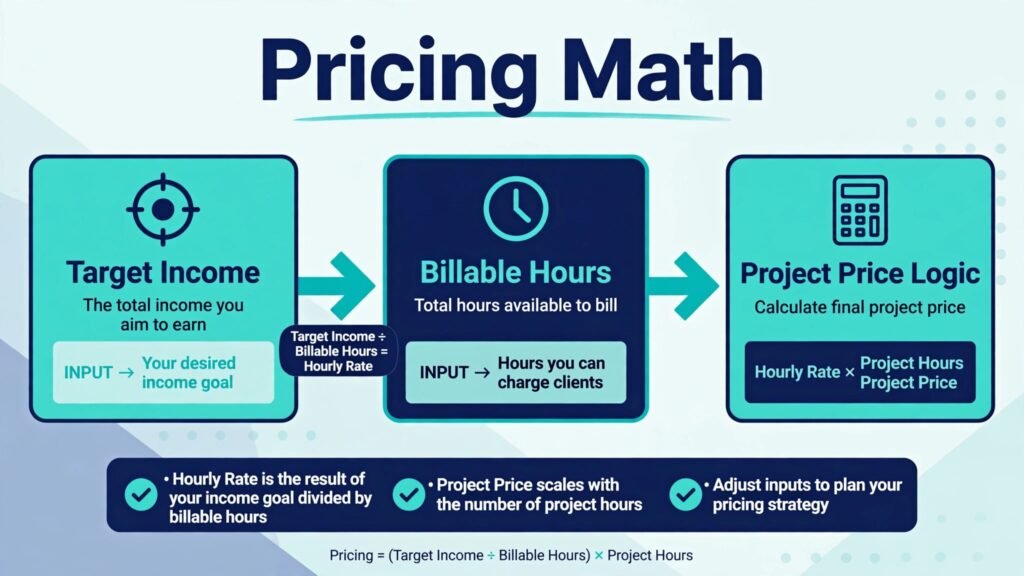
Pricing is where many new writers stall. They ask what others charge, copy a low number, and then resent every project. Start with the math instead. Decide your target monthly income, your available billable hours, and your costs, including tools, taxes, and time for pitching and admin. If you want 3,000 dollars a month and you can realistically deliver 60 billable hours, you need an effective rate of 50 dollars per hour before costs. Translate that into project prices. A well researched 2,000 word article that takes six hours including research, drafting, editing, and revisions should be priced around 300 dollars at that rate, before you add value for expertise, urgency, or usage.
Per word rates can mislead. A 10 cent per word article sounds simple, but it rewards length over quality and punishes concise, high value copy. Project pricing and monthly retainers work better for most freelancers. A monthly retainer of four blog posts, for example, gives the client predictable output and gives you predictable income. Offer a small discount for retainers, but only in exchange for commitment, such as a three month minimum and a clear monthly scope. Never discount for vague promises of future work.
Raise rates as proof grows. After five published pieces in a niche, after a client reports traffic or lead growth, or after your calendar fills two weeks ahead, raise new client rates by 15 to 25 percent. Existing clients can stay at old rates for a defined period, then move to the new rate with notice. Keep a rate sheet for yourself, even if you do not publish it. It stops you from accepting a low fee in a moment of panic when a month looks quiet. Quiet months are normal. A pipeline, not a price cut, is the answer.
Practical pricing checks help. Before you quote, confirm word count, research depth, interviews, revision rounds, deadline, and rights. Put the quote in writing, with a deposit for new clients on larger projects and clear payment terms. Professional terms attract professional clients.
Step 4: Build an AI assisted workflow that keeps your voice
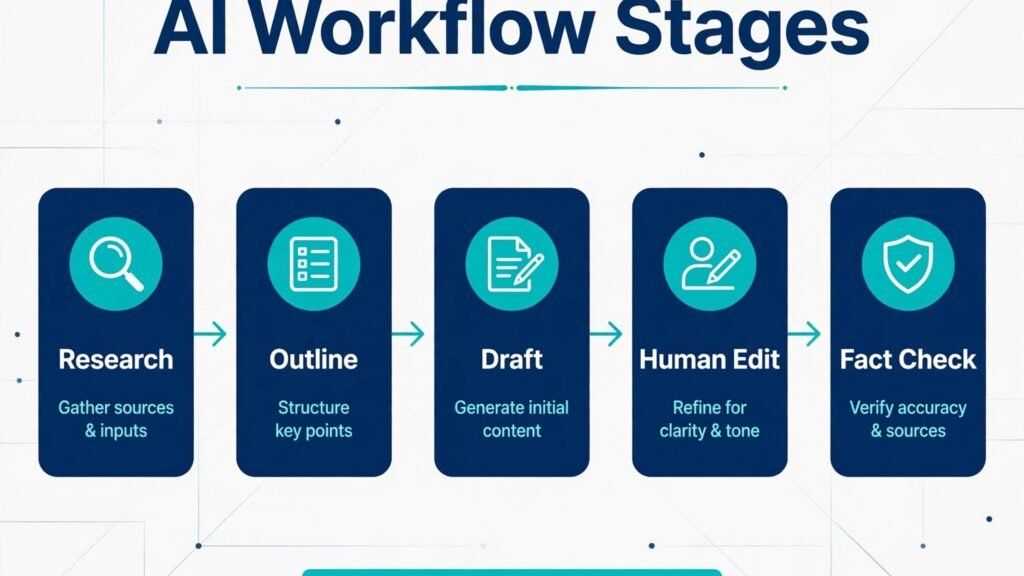
A good workflow has stages, and AI has a different job at each stage. Start with a client brief and search intent. Before you write, list the reader, their problem, what they need to decide, and what action the piece should drive. Then research primary sources: official product pages, help docs, reports, and expert interviews. Use AI to summarise long sources and to compare viewpoints, but verify every number, date, and claim against the source itself. If you cannot verify it, cut it or label it clearly as an estimate that needs client confirmation.
Next, build an outline that a reader can scan in thirty seconds. Headings should promise answers, not just topics. “How pricing works” is weaker than “What pricing includes, and what costs extra.” Include one section competitors miss, such as a comparison table, a decision checklist, or common mistakes. That single addition often separates a useful article from a generic one. Feed your outline and research notes to your AI tool for a first draft, with explicit instructions: use the outline order, use short paragraphs, include examples, avoid filler, and flag any claim that lacks a source.
Then comes the human pass, and this is where your value lives. Rewrite the opening in your own words. Replace vague statements with specific ones. Add a real example, a client scenario based on patterns you have seen (without inventing a named person or fake result), or a trade off the reader should weigh. Check tone against the client brand: a fintech post should sound precise and cautious, a consumer wellness post can be warmer and more direct. Read the draft aloud. If a sentence sounds like it could belong in any article on the internet, rewrite it or cut it.
Editing with AI works best as a checklist, not a rewrite button. Ask the tool to check for repetition, missing transitions, unclear headings, and unsupported claims. Ask it to suggest a stronger conclusion, not to write one you paste blindly. Run a final fact pass: names, prices, product features, and links. For prices, always note that the reader should check checkout or the official pricing page, because plans change often and an outdated price damages trust faster than almost any other error. Keep a style sheet per client with preferred terms, banned claims, and formatting rules, so your tenth article for that client sounds as consistent as your first.
Step 5: Create proof before you have clients
You do not need twenty clients to look credible. You need three excellent samples, one clear offer page, and a simple way for prospects to contact you. Write samples for your chosen niche, not for yourself. If you target B2B software, write a comparison post, a how to guide, and a landing page draft for a fictional product category, clearly labelled as a sample, with realistic structure and research. Show your process in each sample: a strong opening, scannable headings, a comparison table, and a useful conclusion. Prospects judge samples by whether they can imagine that quality on their own site.
Your online presence can be simple. A one page site or a well organised portfolio page with your services, samples, testimonials as you earn them, and a contact form is enough. A LinkedIn profile that states your niche and shares one useful insight per week often brings more leads than a complex site. Share what you learn: a pricing insight, a headline test, a before and after edit. That content proves expertise and attracts the exact buyers you want. For a deeper look at tools built for this kind of work, see this guide to the best AI tools for freelance writers and compare them against your workflow before you pay for several subscriptions at once.
Collect testimonials early and specifically. After a good delivery, ask the client for two sentences: what problem you solved and what changed. “Great writer, fast delivery” is weak. “She turned our vague brief into a post that our sales team now sends to prospects before calls” is strong. With permission, add the client name and result. One specific testimonial beats five generic ones. Keep samples updated. Replace your weakest sample every quarter with a stronger recent piece, so your portfolio improves as your skills do.
Step 6: Find your first five paying clients
Client acquisition has three reliable channels for beginners: warm outreach, content led inbound, and freelance platforms used strategically. Warm outreach means contacting people you already know, former colleagues, small business owners, and niche community members, with a specific offer, not a general “let me know if you need writing.” A good message names their site, notes a content gap you spotted, and offers one sample idea with a clear next step. Send ten such messages per week, track replies, and follow up once after five working days. Most beginners quit after the first silence. Follow up is where many first clients come from.
Content led inbound takes longer but compounds. Publish weekly on LinkedIn or your own blog about your niche, answering real questions buyers ask. Over three months, that body of work becomes proof and a search asset. Platforms such as Upwork and similar marketplaces can provide early paid work, but use them to learn and earn testimonials, not as a permanent home. Choose jobs that match your niche, write proposals that reference the client’s actual need, and price for profit. Avoid bidding wars on generic jobs where the lowest price wins. Your goal is five clients who pay fair rates and might return, not fifty one off jobs that drain you.
Referrals deserve a system from day one. At the end of a successful project, ask: “Who else in your network publishes content like this and might need help?” Most happy clients know someone. Offer a simple thank you, not a complex affiliate scheme, and keep in touch with past clients monthly with a short useful note, such as a new article idea for their blog. Past clients are the cheapest source of new work, and they already trust your delivery. Track your pipeline in a simple sheet: prospect, date contacted, follow up date, status, and next action. A business runs on follow ups, not on hope.

Tools compared: research, drafting, editing, and delivery
You do not need every tool. You need one reliable tool per stage, plus a way to manage projects and invoices. The table below compares common choices by job, not by hype. Check official pricing pages before you subscribe, because plans and limits change, and free tiers may be enough at the start.
| Job | Good options | Best for | Watch out for |
|---|---|---|---|
| Research and outlining | ChatGPT, Claude, Perplexity | Fast summaries, angle ideas, outline drafts | Unverified claims; always check sources |
| Long form drafting | ChatGPT, Claude, Notion AI | First drafts from your outline and notes | Generic tone if you skip the human rewrite |
| Editing and clarity | Grammarly, Hemingway style checks, built in AI editors | Grammar, readability, tighter sentences | Overcorrection of brand voice and technical terms |
| SEO and briefs | Surfer, Frase, Rank Math guidance | Search intent, heading coverage, keyword gaps | Chasing scores instead of reader value |
| Project and invoicing | Notion, Trello, Wave, PayPal invoicing | Briefs, deadlines, payments in one place | Too many tools; keep the stack small |
Start with one AI writing tool, one editing aid, and one project tool. Add an SEO tool only when clients pay for SEO work and the cost is covered by a retainer. If you already use Notion for client work, this overview of Notion alternatives can help you decide whether a different workspace fits your delivery system better. Similarly, if your main drafting tool feels limited, reviewing ChatGPT alternatives can reveal a better fit for long form work, without changing your whole workflow. Test a tool on a real sample before you commit. A tool that saves thirty minutes per article pays for itself quickly. A tool you open twice and abandon is just a subscription.
For agencies and larger content teams, the workflow shifts from single articles to calendars, multiple writers, and brand consistency. If that is your direction, this guide to the best AI tools for content agencies shows how teams organise research, editing, and approvals at scale. Solo writers can borrow the same idea on a smaller scale: a shared style sheet, a content calendar, and a checklist for every delivery.
How to choose the right setup for your first 90 days
Choice overload kills momentum. Use this simple decision frame for your first quarter. If you have no clients yet, choose one niche, one offer (SEO blog posts), and one AI tool. Spend 60 percent of your time on outreach and samples, 30 percent on delivery, and 10 percent on admin. If you have two or three clients, add a second offer, such as email sequences, and a retainer option. Spend more time on delivery quality and referrals, less on cold outreach. If you are fully booked, raise rates, narrow your niche further, or productise one offer into a fixed price package with a clear turnaround.
Ask three questions before buying any tool or course. Does it solve a bottleneck you have this month, not a hypothetical problem next year? Can you measure the time or income it saves within two weeks? Does it fit the clients you already serve, or only the clients you wish you had? If the answer to any question is no, skip it. Early money is better spent on a professional domain, invoicing, and a buffer for slow months than on a large tool stack.
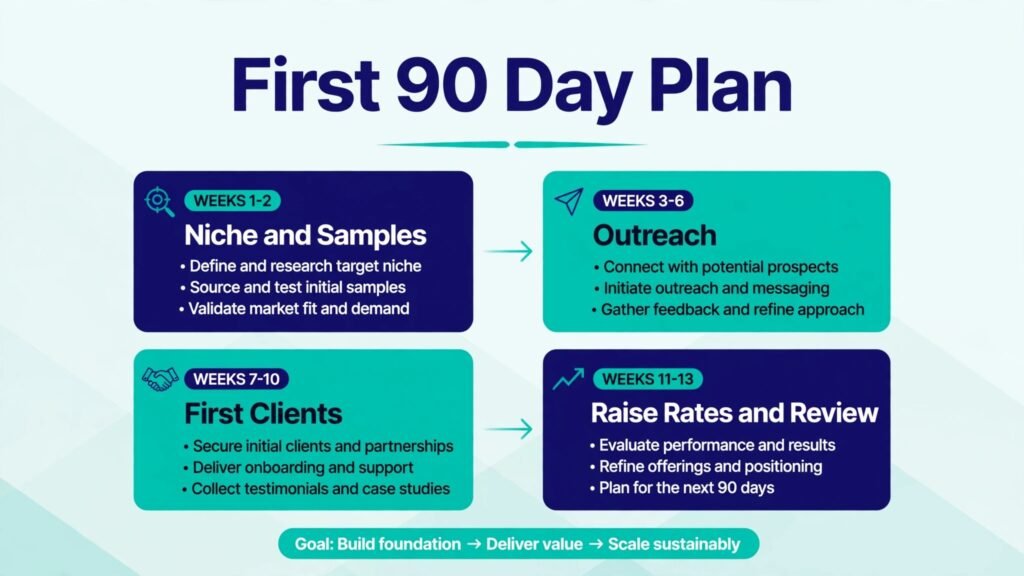
Your 90 day plan can be concrete. Weeks 1 to 2: pick a niche, write two samples, set up a simple portfolio and rate sheet. Weeks 3 to 6: send ten targeted outreach messages per week, publish one useful post per week, and apply selectively for niche platform jobs. Weeks 7 to 10: deliver first paid work, collect testimonials, and offer retainers to happy clients. Weeks 11 to 13: review what paid best, raise rates for new clients, replace your weakest sample, and plan the next quarter around the offer that earned most. Progress is visible in that plan. If outreach is not happening, the plan tells you exactly where to fix it.
Also consider how writing connects to a wider personal brand. Many freelance writers earn more once buyers recognise their name in a niche. Building a focused presence, with consistent samples and insights, supports higher rates over time. This guide on how to build a personal brand with AI explains how to turn weekly writing into a recognisable presence without turning every day into content creation. Similarly, some writers add a digital product, such as a template pack or a short guide, as a second income stream once their service income is stable. This overview of how to create a digital product with AI shows how to test that idea without distracting from client work.
Mistakes that keep new freelance writers underpaid
The first mistake is pricing by fear. Writers accept a low fee because the month looks empty, then discover the project takes twice as long as expected and blocks better work. Protect your calendar with a minimum project fee and a clear scope. If a prospect cannot meet the minimum, offer a smaller scoped version, such as a shorter post or a single landing page section, rather than discounting the full project.
The second mistake is letting AI do the thinking. A draft that reads well but says nothing new will not rank, will not convert, and will not earn a repeat order. Always add something only you can add: an interview insight, a comparison based on testing, a decision framework, or a specific example from the niche. That addition is the product. AI is the production aid.
The third mistake is no contract. Even a simple written agreement covering scope, revisions, deadline, payment terms, and rights prevents most disputes. State who owns the work after payment, how revisions work, and what happens if the client pauses the project. Professional clients respect this. Clients who resist basic terms are a warning sign.
The fourth mistake is invisible marketing. Writers who only write for clients, and never publish under their own name, stay dependent on whoever finds them. Publish one insight per week, even if it is short. Over a year, that habit creates a portfolio, a network, and inbound leads that no platform algorithm can take away.
The fifth mistake is poor boundaries around revisions. Unlimited revisions sound generous, but they signal that your time has no limit. Offer two revision rounds included, with additional rounds billed separately. Ask for consolidated feedback in one document, not scattered messages over weeks. Good revision discipline improves the work and the relationship, because both sides know what “done” means.
The sixth mistake is ignoring taxes and cash flow. Set aside a portion of every payment for taxes, track expenses for tools and software, and keep a simple monthly profit check: income minus costs minus time spent on unpaid work. Freelancing feels successful when the bank balance grows, but it is sustainable only when the effective hourly rate, after admin and pitching, still meets your target. Review that number quarterly and adjust rates or offers accordingly.
Frequently asked questions
Do I need experience to start a freelance writing business with AI?
You need demonstrable skill, not years of employment. Strong samples in one niche, a clear offer, and a professional delivery process can win first clients. Start with smaller projects, overdeliver on research and clarity, and build testimonials quickly. Experience grows fastest from paid work with real feedback, so do not wait for permission to start.
How much can a new freelance writer earn in the first year?
Income varies widely by niche, pricing, and outreach consistency. A writer with a focused niche, project pricing, and steady outreach can move from occasional articles to a part time or full time income within six to twelve months. Writers who stay in low price generic work, or who pitch sporadically, earn far less. Track your effective rate and your pipeline weekly, because those two numbers predict income better than any average figure online.
Will clients reject work made with AI help?
Most professional clients care about accuracy, originality, and results, not about whether a tool assisted drafting. Be honest in general terms about your process, keep human research and editing central, and never submit unchecked AI output. If a client requires fully human written work with no AI assistance, respect that brief and price it accordingly, or decline if it does not fit your model. Transparency protects trust on both sides.
Which niche pays best for freelance writers?
Finance, B2B software, healthcare, and professional services often pay more because content influences high value decisions and buyers have larger budgets. However, the best niche for you is one where you can produce credible, specific work quickly and find buyers consistently. A well chosen mid priced niche with steady demand often beats a high priced niche where you cannot yet show proof.
Should I use a freelance platform or find clients directly?
Use both at the start, with different goals. Platforms can provide early paid work and reviews. Direct outreach and referrals build higher paying, longer term relationships and reduce platform fees over time. As direct clients grow, shift time away from platforms. Your long term goal is a client base that returns and refers, not a feed of one off jobs.
How do I avoid AI sounding generic in client work?
Start from your own outline and research notes, not from a generic prompt. Add specific examples, comparisons, trade offs, and a clear point of view. Rewrite openings and conclusions in your own voice, cut vague claims, and verify every fact. If a paragraph could fit any article on the topic, it needs a specific detail or it should be removed. Specificity is what clients pay for.
Final verdict: start narrow, ship weekly, raise rates
You do not need a perfect brand, a large tool stack, or a long client list to begin. You need a niche with paying buyers, a clear offer, a workflow that uses AI for speed and keeps human judgment for quality, and a weekly habit of outreach and publishing. Start with two strong samples, send ten targeted messages per week, deliver your first projects with care, and turn happy clients into retainers and referrals. Review your rates and your weakest offer every quarter, replace what does not pay, and deepen what does.
The freelance writers who succeed in 2026 are not the ones who write fastest. They are the ones who choose a market, prove value in that market, and build systems that let them deliver better work each month. AI gives you speed. Your niche, your standards, and your follow through give you a business. Begin this week with one niche decision, one sample, and ten outreach messages. That small, repeatable start is how a writing skill becomes a writing business.