
Published guides put a typical blog post anywhere from about $150 to about $800, and a monthly retainer anywhere from about $1,000 to about $12,000. That spread is not a mistake. It reflects niche, experience, research load and what is actually included, which is why comparing freelance writing rates packages side by side matters more than copying one number from a rate chart. A generalist beginner and a specialist finance writer can both write 1,500 words, but they are not selling the same service.
This guide to freelance writing rates packages uses published rate guides and marketplace pages as its anchor, then explains how to turn those ranges into a quote for your own work. You will see per-word, per-project and retainer pricing compared on the same terms, rates by niche and experience, what a solid package should include, and how revision and rush terms change the final price. Prices vary by market and by client, so every figure below is given as a range, with the reason for the range stated plainly.
Why Published Rates Spread So Wide
The first reason for the spread is research. A 1,000 word post on a familiar topic can take two hours. The same length on an unfamiliar regulated topic can take a full day once you add source reading, fact checking, expert interviews and legal care. A rate that only counts words ignores that difference, so guides that include research heavy work always sit higher.
The second reason is risk. Copy that sells a product, explains a medical treatment or gives financial guidance carries a higher cost of error than a general lifestyle post. Clients pay more when a mistake could cost them customers or trust. That is why medical, legal, finance and technical writing sit at the top of most published charts.
The third reason is the buyer. A small business buying one post a month, a trade publication buying on an editorial budget and a large software company buying a content program are not buying in the same market. Editorial outlets often pay fixed per-word rates set by policy. Content marketing clients often pay per project and judge the work by leads and search results. Agencies in between may pay less per piece but offer steady volume. Your rate should reflect which buyer you are talking to, not only how many words you write.
Experience is the fourth driver, and published surveys make the gap stark. One 2026 survey summary put beginning writers under two years at an average of about $0.15 per word, intermediate writers at about $0.50, expert writers at about $1.25 and premium writers with a decade or more at about $2.50 or higher. Those are averages across niches, not promises, but they explain why two writers can quote the same brief at prices five times apart and both be fairly priced for their level.
Per-Word Pricing and When It Works
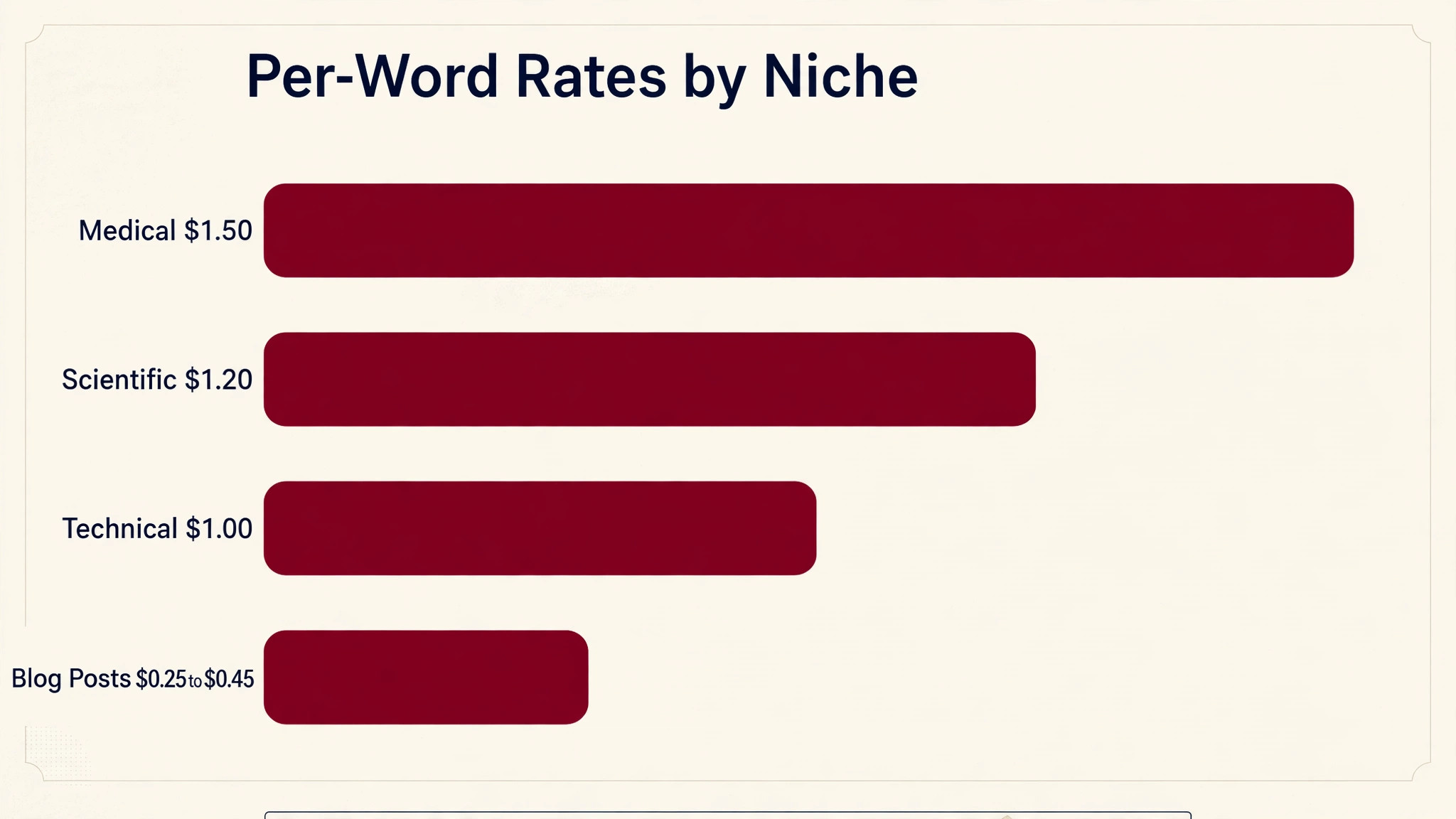
Per-word pricing is simple. You agree a rate, count the final words and multiply. The Editorial Freelancers Association 2026 rate chart, based on a survey of more than 1,100 editorial professionals about work done in 2025, gives useful medians. Medical writing sits at a median of about $1.50 per word, scientific writing at about $1.20, technical writing at about $1.00, business and marketing writing at about $0.32 to $0.875, journalism at about $0.40 to $0.50, and blog posts and articles at about $0.25 to $0.45. Those medians describe working professionals, not beginners, and they are a better starting point than content mill rates.
In freelance writing rates packages, per-word pricing works best when the brief is fixed, the length is agreed in advance and the research load is light. Blog posts, news style articles and product descriptions fit that shape. It works poorly when the job needs interviews, data analysis or strategy, because the thinking time is invisible in the word count. A precise 800 word piece that took six hours of research can pay less per hour than a loose 1,500 word piece written in two hours, which is exactly backwards.
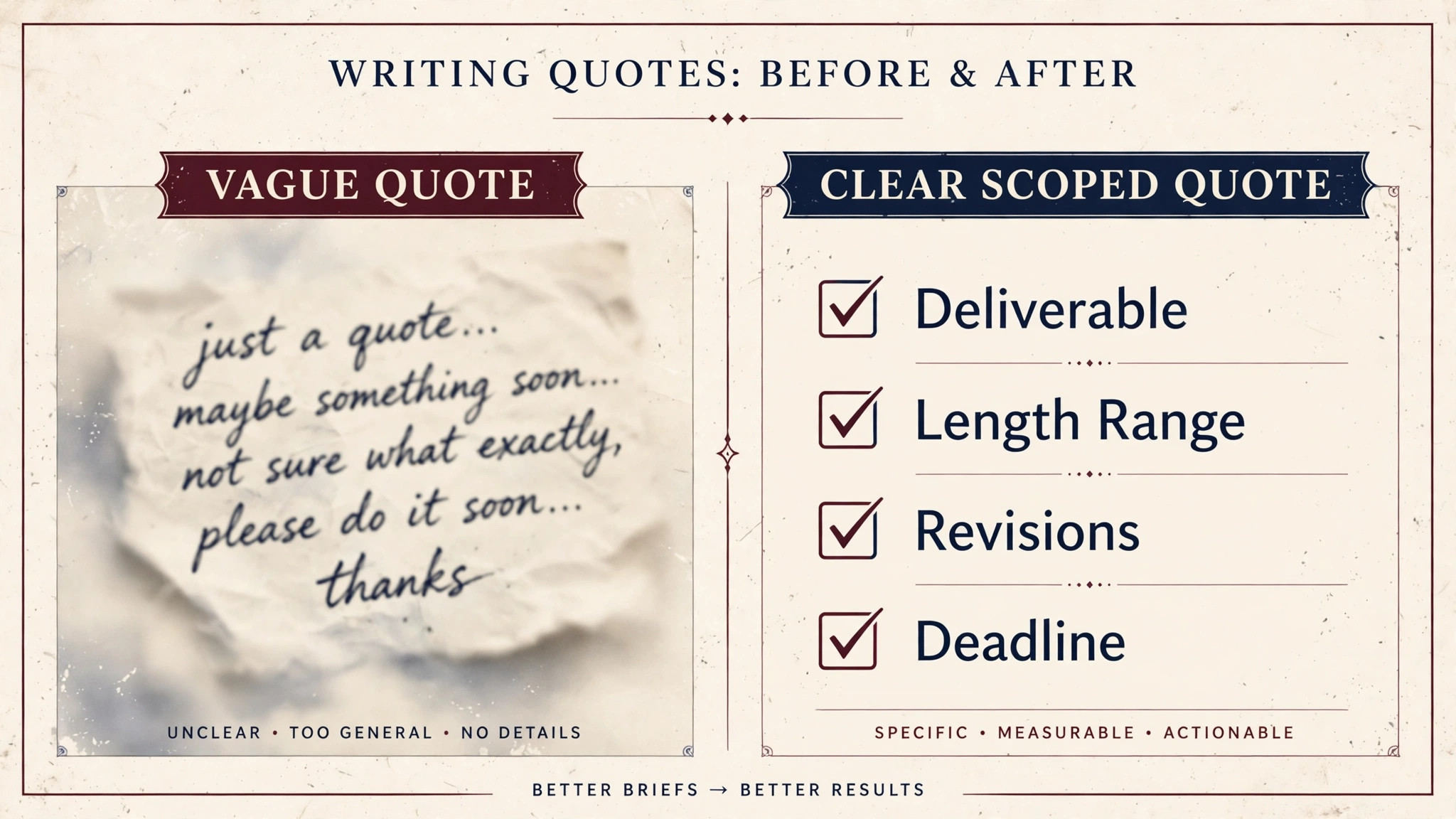
Set a floor as well as a rate. A minimum fee per piece, for example $150 or $250 depending on your level, stops short pieces from becoming unpaid admin. State whether the count is final published words or draft words, whether headings and captions count, and what happens if the client asks for a longer piece mid-draft. Without those three lines, a per-word quote can drift by hundreds of dollars.
Watch for the low end trap. Guides consistently warn that rates below about $0.10 per word usually mean very junior writers, high volume mills or work where quality is not the priority. If a client offers that level for expert work, decline or offer a smaller deliverable, not a rushed acceptance. Divide the fee by every hour the job takes, including email, revisions and admin. If that number falls below your target hourly rate, the per-word rate is too low for that brief.
Per-Project Pricing and When It Wins
Per-project pricing charges one flat fee for a defined deliverable. Published 2026 ranges from project guides put a 1,200 to 1,500 word blog post at about $150 to $800, a case study of 1,000 to 2,000 words at about $800 to $2,500, an email sequence of five to seven emails at about $500 to $2,000, a landing page at about $500 to $1,500 in general guides and up to about $5,000 for senior copywriters, and a white paper of 2,500 to 5,000 words at about $2,000 to $7,000 in general guides and up to about $10,000 at senior level.
Website copy for five to seven pages runs about $1,500 to $3,000 at junior level, about $3,000 to $7,000 at mid level and about $7,000 to $15,000 at senior or specialist level.
In freelance writing rates packages, project pricing wins when the value is clear and the scope can be written down. The client knows the total before work starts, which removes the anxiety of an open hourly meter. The writer keeps the gain from working efficiently, which rewards experience. It also forces a better brief, because a flat fee only works when both sides agree what counts as done. Vague scope is the main way project pricing fails, and the fix is a written scope, not a higher fee alone.
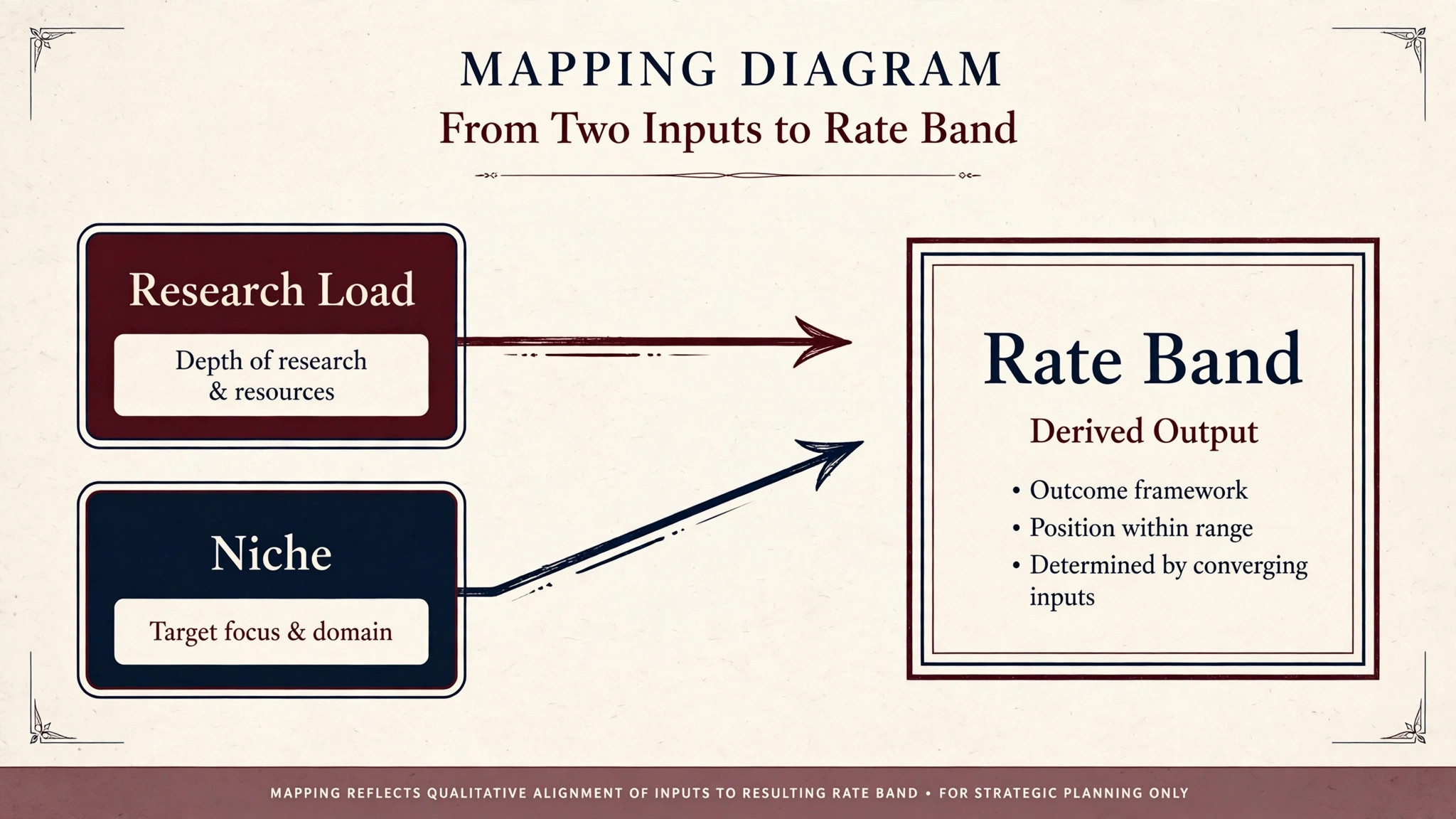
Build a project quote from time, not from hope. Estimate research hours, interview hours, writing hours and revision hours separately, multiply by your target hourly rate, then add a buffer of about 20 to 30 percent for scope drift and admin. That buffer is standard advice in project pricing guides, and it is not padding. It covers the extra round of feedback, the delayed source and the short call that turns into an hour. If the result looks high against the published range, check whether the brief is heavier than the typical job in that range before you cut the price.
Project pricing also lets you price outcomes honestly. A landing page that must convert and a white paper that supports a product launch are not priced like a blog post, even at similar word counts. State that distinction in the quote so the client sees why the fee differs.
Retainer Pricing and Steady Income
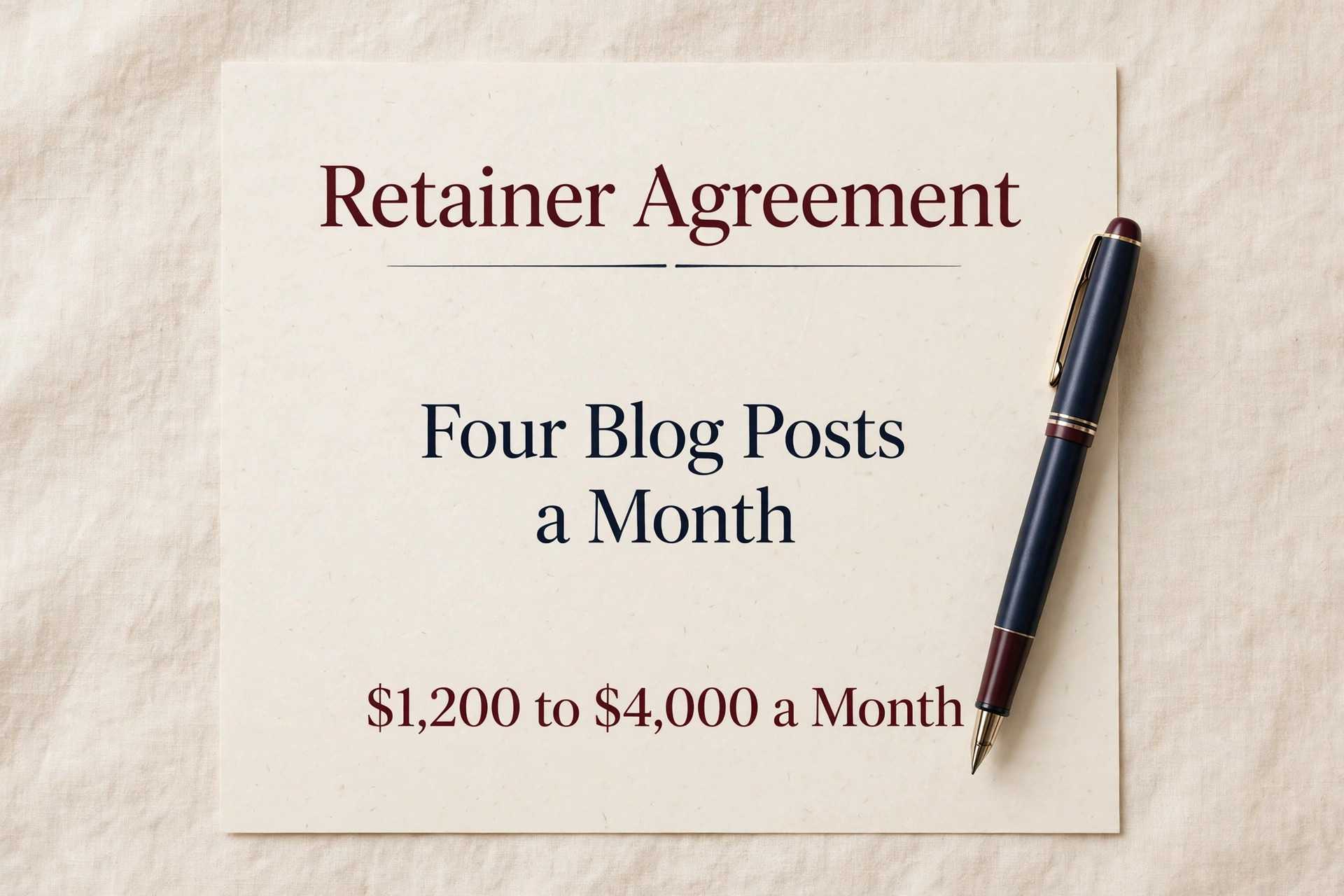
Among freelance writing rates packages, a retainer is a fixed monthly fee for a defined volume of work and guaranteed capacity. Published ranges vary by level and scope. One employer guide puts monthly retainers at about $1,000 to $2,500 for junior writers, about $2,500 to $5,000 for mid-level writers and about $5,000 to $12,000 or more for senior and specialist writers. A hiring guide puts four blog posts a month at about $1,200 to $4,000, twenty hours of writing a month at about $1,000 to $3,000 and ongoing content management at about $2,000 to $10,000 or more.
A 2026 market sample put four blog posts a month plus light editing at a median of about $2,400, with a range of about $1,800 to $4,000, and a weekly newsletter plus occasional articles at a median of about $3,200.
Retainers suit clients who publish every week and need a writer who already knows their voice, product and audience. The writer gains predictable income and fewer sales hours. The client gains priority, faster turnaround and a writer who improves with each piece. That mutual gain is why retainers often include a small discount against one-off project fees, typically in the range of 10 to 20 percent, in exchange for a commitment of three months or more.
A retainer must still define volume in writing. State the number of pieces, the length range, the formats included and the turnaround for each. State what happens to unused capacity at month end, because that is the most common retainer dispute. The cleanest models are use it or lose it with a short rollover of one piece, or a bank of hours that expires after 30 days. Also state how extra work is charged, whether at the same effective rate or at a rush rate, and how either side can pause or end the agreement with notice, usually 30 days.
Do not sell a retainer before you have delivered one-off work for the client, unless the scope is very simple. One trial project tells you how fast they approve and how many reviewers are involved. Those facts decide whether the retainer price is profitable.
How freelance writing rates packages Compare on the Same Job
The table below puts the three models on one job so the comparison is fair. The job is four blog posts a month, each about 1,500 words, for a mid-level business client with light research and two revision rounds. The figures draw on the published ranges quoted above, and the retainer row reflects the usual small discount for a three month commitment.
| Model | How the fee is set | Typical monthly total for this job | Best for | Main risk |
|---|---|---|---|---|
| Per word | Rate times final words | About $1,500 to $5,250 at $0.25 to $0.875 per word | Fixed briefs and editorial work | Research time is unpaid |
| Per project | Flat fee per piece | About $1,200 to $3,200 at $300 to $800 per post | Defined deliverables with clear value | Scope creep without a written scope |
| Retainer | Fixed monthly fee for set volume | About $1,200 to $4,000 for four posts a month | Regular publishing and steady income | Unused capacity disputes and slow approvals |
Read the table as a range, not a verdict. Per-word looks cheapest at the low end because the low end assumes general content and little research. Retainer looks expensive at the high end because the high end assumes a specialist writer and priority capacity. For the same writer and the same brief, the three models should land in a similar band. If one model quotes far below the others for identical work, something is missing from the scope, usually research, revisions or turnaround.
The choice also depends on who carries the risk of a longer piece. Under per-word pricing, the client pays more if the piece grows. Under project and retainer pricing, the writer absorbs small growth and charges for large growth. That is why those quotes need a length range and an extra word rate past the agreed range.
Rates by Niche and Experience
Niche changes the rate more than any other single factor. Medical, scientific and technical writing lead published charts because they need verified facts, precise terms and often a background the writer spent years building. Finance and legal writing sit close behind for the same reason, plus the cost of an error. Business to business software writing pays well because the buyer is a company with a marketing budget and a long sales cycle, not a reader browsing for free. General lifestyle, travel and entertainment writing pays less because supply is large and the research load is lighter, though strong personal brands in those niches still command high fees.
Experience moves the rate within each niche. A beginner guide summary suggests starting at about $0.05 to $0.10 per word, or about $50 to $150 per article, and raising rates by about 15 to 25 percent every six months as the portfolio strengthens. A detailed per-article guide puts beginners at about $0.05 to $0.15 per word, intermediate writers at about $0.25 to $0.50, experienced writers at about $0.50 to $1.00, specialists at about $1.00 to $1.50 or more, and conversion copywriters at about $0.75 to $1.50 or more.
Hourly guides tell the same story in different units, with entry writers at about $20 to $35 an hour, experienced content writers at about $40 to $75, specialists at about $60 to $150 and premium copywriters at about $100 to $250.
| Niche or level | Published per-word signal | Published hourly signal | What drives the top of the range |
|---|---|---|---|
| Medical writing | About $1.50 median | About $113 median | Verified accuracy and specialist background |
| Scientific writing | About $1.20 median | About $113 median | Source quality and technical precision |
| Technical writing | About $1.00 median | About $99 median | Product knowledge and documentation care |
| Business and marketing | About $0.32 to $0.875 median | About $75 median | Strategy, interviews and conversion intent |
| Journalism | About $0.40 to $0.50 median | About $85 median | Reporting time and editorial standards |
| Blog posts and articles | About $0.25 to $0.45 median | About $88 median | Search intent and research depth |
| Beginner, general | About $0.05 to $0.15 | About $20 to $35 | Portfolio building and simple briefs |
| Specialist or premium | About $1.00 to $2.50 or more | About $100 to $250 or more | Scarce expertise and proven results |
Use the table to place yourself inside freelance writing rates packages, then test the placement against your own hours. If your effective hourly rate on specialist work falls below the hourly signal for that niche, your per-word or project rate is too low for the brief, even if it matches a published per-word range. Conversely, if a general post pays well above the niche signal because you write it fast and clean, that is a good client to keep, not a reason to raise the price until the client leaves.
Geography and channel also shift the rate. Direct clients usually pay more than agencies, and agencies usually pay more than content platforms, because each middleman takes a margin. A marketplace that takes 10 to 20 percent changes the effective rate, so quote platform work higher or treat the fee as a cost in your hourly maths.
The Package Builder. What a Good Package Should Include
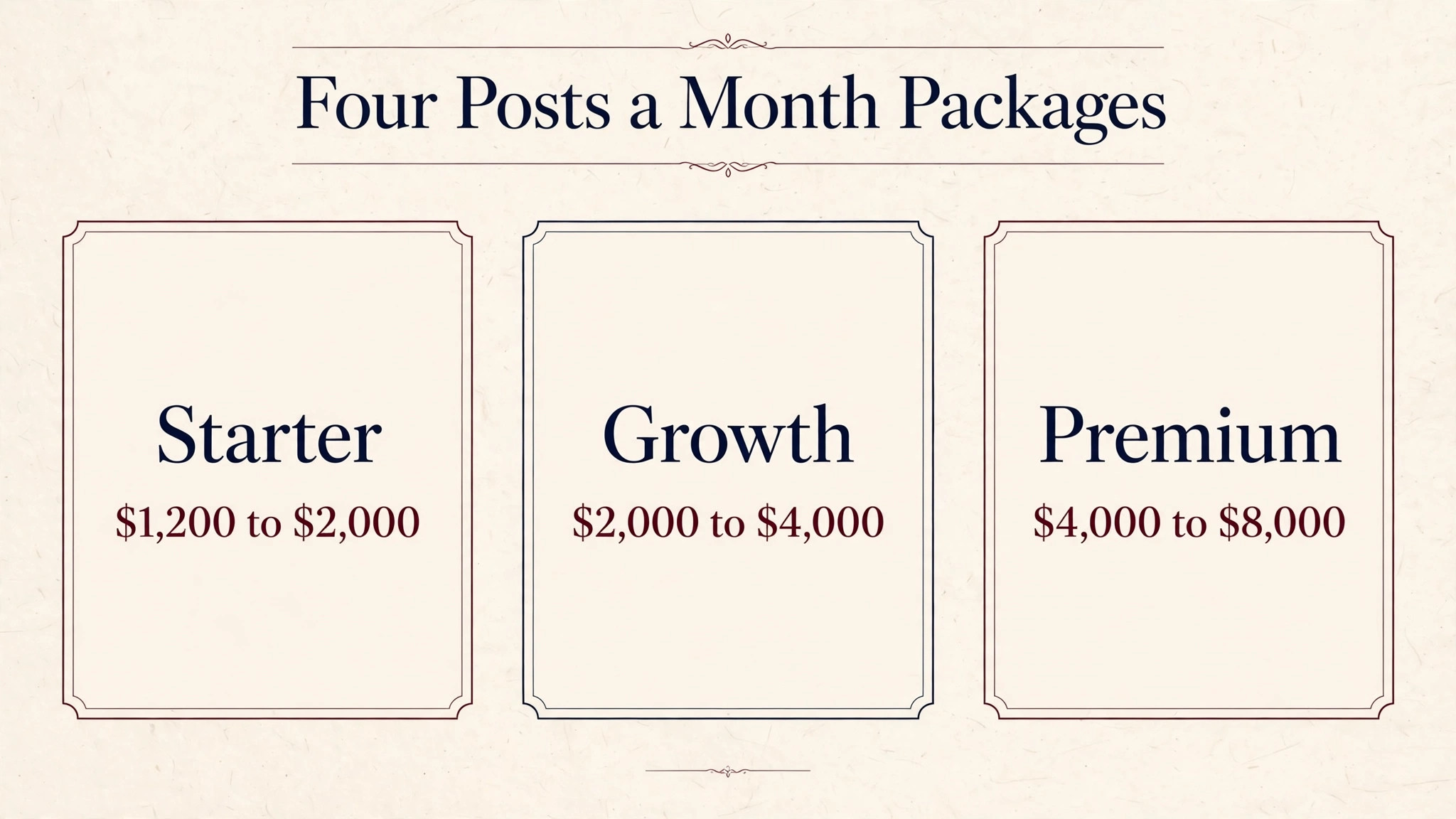
In freelance writing rates packages, a package is more than a price. It is a promise about what the client gets, how many times they can ask for changes, how fast it arrives and what happens when the brief changes. The builder below gives three tiers for a common offer, four blog posts a month. Adjust the numbers to your niche, but keep the structure, because clients compare structure as much as price.
| Package tier | Monthly fee signal | What is included | Turnaround and revisions |
|---|---|---|---|
| Starter | About $1,200 to $2,000 | Four posts up to 1,000 words, brief template, one keyword focus per post, one image suggestion list | Five working days per post, one revision round |
| Growth | About $2,000 to $4,000 | Four posts up to 1,500 words, search intent notes, internal link suggestions, meta description per post, monthly topic plan | Four working days per post, two revision rounds |
| Premium | About $4,000 to $8,000 or more | Four posts up to 2,000 words, expert interviews or source checks, original examples, content brief approval, monthly performance notes | Three working days per post, two revision rounds plus priority queue |
Build your own package with this checklist. First, name the deliverable in one line, including format, length range and count. Second, list the research included, such as source checks, interviews or data work, and state what counts as extra. Third, list the extras that clients value but often forget, such as meta descriptions, image briefs, social snippets or upload to their content system. Fourth, set revision rounds, turnaround and approval time in the same section, so speed and changes are priced together. Fifth, state payment terms, including deposit, due date and late fee. Sixth, state ownership and usage, including when rights transfer, usually on full payment, and whether the writer may show the work in a portfolio.
Price the tiers so the middle tier is the obvious choice for most clients. The starter tier should be genuinely useful but limited in length or revisions. The premium tier should add research and speed that a busy client will pay for, not just more words.
Revision, Rush and Extra Terms That Change the Price
In freelance writing rates packages, revisions are where many quotes quietly lose money. Two rounds is the standard in most package guides, and it is a sensible default. Define a round as one consolidated set of comments from the client, not a drip of new comments over a week. State that a round covers edits to the agreed brief, while a change of angle, audience or length counts as new work and is quoted separately. State the approval window too, for example five working days, after which the draft is treated as accepted or the project pauses. Without that line, a draft can sit for a month and then return with a new strategy.
Rush work deserves a separate rate, stated before the client needs it. A common approach is a 25 to 50 percent surcharge for turnaround under half the standard time, and a higher surcharge for weekend or same day work. The surcharge is not a penalty. It pays for rearranged work, evening hours and the risk of displacing another client. Put the rush rule in the package so a rushed request is a simple yes at a known price, not a negotiation under pressure.
Extras to price in advance include interviews beyond the agreed count, extra images or charts, uploading and formatting in a content system, search optimisation beyond the agreed scope, and translation or repurposing into social posts. Each extra is small alone, but together they can double the hours on a fixed fee job. A short extras list with a price or an hourly rate for each item stops that drift and often increases the total sale, because clients add the extras they actually want.
Payment terms are part of the price. A 50 percent deposit on project work, monthly payment in advance on retainers, and a late fee after 14 or 30 days are standard protections. New clients with no history are a fair reason to ask for full payment in advance on a first small project. State the currency, the payment method and who pays platform or transfer fees, because those details cause more friction than the headline rate.

How to Quote in Seven Steps
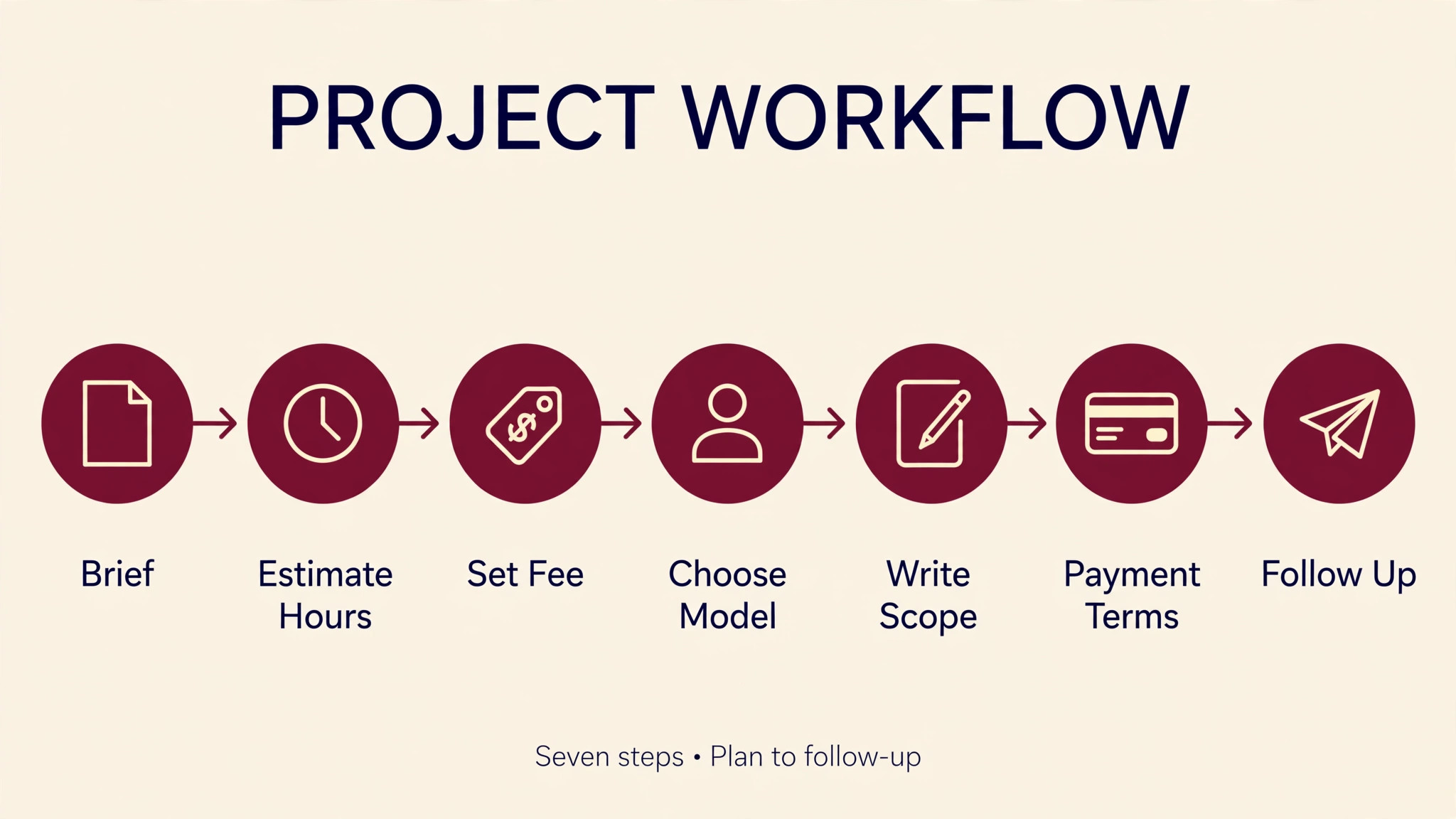
Quoting freelance writing rates packages well is a process, and following the same steps each time keeps your prices consistent and your scope clean.
- Clarify the job in writing. Ask for audience, purpose, length range, format, deadline, reviewers and examples of work the client likes. If the client cannot answer, offer a short paid discovery call or a smaller trial piece before quoting a large package.
- Estimate hours by task. Split research, interviews, writing, editing and admin. Use your past timed work where possible, not a guess. If a similar post took six hours last month, it will take about six hours again unless the brief is simpler.
- Convert hours to a fee. Multiply by your target hourly rate, then add the buffer of 20 to 30 percent for scope drift. Compare the result with the published range for that deliverable and niche. A large gap in either direction is a signal to recheck the brief, not to force the number to match.
- Choose the model that fits the brief. Use per-word for fixed editorial work, per-project for defined deliverables with clear value, and retainer for regular publishing with a committed client. Offer the client the model that makes their budgeting easiest, provided it still pays you fairly.
- Write the scope as a short list. Include deliverables, length range, research included, revision rounds, turnaround, approval window and extras pricing. Send the scope with the price, never the price alone, so the client compares like with like.
- State payment and start terms. Include deposit, due dates, late terms, ownership on payment and the start date once the deposit clears. A quote without a start condition invites a client to hold your calendar for free.
- Follow up once, then move on. If the client asks for a lower price, offer a smaller scope rather than a discount on the same scope. Removing an interview, a revision round or a length band keeps the rate intact and gives the client a real choice.
Keep a simple quote log with brief, hours estimated, hours actual, fee and effective hourly rate. After ten jobs, the log shows which niches and models pay best for you, which is more useful than any published chart. Review it quarterly and raise the rates for the work that consistently beats your target, while dropping or repricing the work that consistently falls short.
Mistakes That Shrink the Effective Rate
The most common mistake is quoting words without counting research. A writer who charges $300 for a post that needs four hours of source work and two interviews has not charged $300 for writing. They have charged $300 for a full day. The fix is the task split in the quoting steps, applied before the price is sent.
The second mistake is unlimited revisions. A friendly line such as revisions until you are happy sounds generous and becomes expensive the moment a third reviewer joins. Cap rounds, define a round, and price further rounds at an hourly or fixed rate. Clients respect a clear limit more than they respect an open promise that later causes tension.
The third mistake is discounting to win work that will not repeat. A one-off discount for a client who will order monthly is a sensible investment. The same discount for a one-off buyer is simply lost income. Tie discounts to commitment, volume or advance payment, and put the condition in writing so the standard rate returns automatically when the condition ends.
The fourth mistake is ignoring admin time. Briefing calls, email, invoicing, file handling and chasing approvals are work. The 20 to 30 percent buffer covers part of it, and a minimum fee covers the rest on small jobs.
For a wider view on setting up the business around these rates, see how to start a freelance writing business with AI and how to get clients as a freelancer with AI. Tool choice also affects speed, so best AI tools for freelance writers is worth reading before you promise a turnaround that your workflow cannot support.
Related reading. If you write for clients alongside your own projects, the cost side of freelancing matters as much as the rate side, and the real cost of starting a freelance design business shows how tools, tax reserves and client acquisition change the maths, even though the craft is different. Pair that cost view with your rate log, and you will see your true margin per client, not just your headline fee.
Frequently Asked Questions
How much should a beginner freelance writer charge per word?
A beginner guide summary suggests about $0.05 to $0.10 per word, or about $50 to $150 per article, with rises of about 15 to 25 percent every six months as the portfolio strengthens. A detailed per-article guide puts beginners at about $0.05 to $0.15 per word. Start near that range for simple briefs, set a minimum fee per piece, and raise the rate when repeat clients and a stronger portfolio prove the higher price.
Is per-word or per-project pricing better for blog posts?
Per-word suits fixed briefs with light research and an agreed length, because the fee is easy to calculate and compare. Per-project suits briefs with research, interviews or conversion goals, because it pays for the thinking and the result, not only the word count. For most business blog work, per-project wins once research takes more than an hour or two, while per-word remains fair for straightforward editorial posts.
What is a fair monthly retainer for four blog posts?
Published hiring guides put four blog posts a month at about $1,200 to $4,000, and a 2026 market sample put four posts plus light editing at a median of about $2,400. The fair figure inside that range depends on length, niche, research load and turnaround. A general 1,000 word set sits near the low end, while specialist 1,500 to 2,000 word posts with interviews sit near the high end.
How many revision rounds should a writing package include?
Two rounds is the standard default in most package guides, with each round defined as one consolidated set of comments on the agreed brief. One round suits short, simple pieces. More than two rounds should be priced as an extra, because open ended revisions are the fastest way to cut an effective hourly rate in half. State the approval window alongside the round count.
Should I charge extra for rush work?
Yes, and the rush rate should be stated in the package before a rush request arrives. A surcharge of about 25 to 50 percent for turnaround under half the standard time is a common approach, with a higher rate for weekend or same day work. The surcharge covers rearranged work and displaced clients, and it turns a stressful request into a simple priced option.
How do I raise my rates with existing clients?
Give notice, tie the rise to a clear reason, and offer a choice. Tell the client the new rate, the date it starts, usually the next month or the next project, and what stays the same or improves, such as turnaround or research depth. Offer a retainer or volume commitment at a smaller rise if you want to keep the client. Clients accept rises far more easily when the notice is early and the scope is unchanged.
Your Rate Card, Ready to Send
The right price is the one that pays for research, judgement and revisions as well as typing. Use published ranges to place yourself, use your own timed hours to test that placement, and write the scope so the client can see what the fee covers. Start with one model that fits your current clients, whether that is per-project for defined deliverables or a small retainer for a regular publisher, and add the other models as your work mix changes. Review your quote log each quarter, raise the rates on work that beats your target, and reprice or drop the work that does not. That habit does more for income than any single rate chart.