

Kasisto KAI is the best ai chatbots for banks pick for large banks that want a branded virtual assistant inside their own app, because 1,800 plus pre-built banking intents cover the questions customers actually ask. interface.ai is the pick for credit unions and community banks, with agentic chat and voice built for smaller cores. The ten tools below compare banking depth, compliance posture and deployment time, so a bank can pick the assistant its customers will trust with their money.
A bank chatbot is not a website widget. It answers balance questions, moves money, flags fraud and handles disputes, which means every wrong answer costs the bank real money and real trust. The vendors in this guide build for that reality, with banking specific language models, audit trails and guardrails on every turn.
The buying problem is opacity. Nearly every enterprise banking vendor sells on a custom quote, so there is no price list to compare. This guide says plainly where the price is quote only, what the deployment looks like, and which vendor fits which size of bank, because a community bank and a tier one bank should never buy the same system.
The 10 Tools at a Glance
| Tool | Main job | Best for | Starting price |
|---|---|---|---|
| Kasisto KAI | Branded in-app banking assistant | Large banks, tier one | Quote-based |
| interface.ai | Agentic chat and voice for smaller banks | Credit unions, community banks | Quote-based |
| Glia | AI plus human agents across channels | Banks unifying voice and chat | Quote-based |
| Kore.ai BankAssist | Retail banking virtual assistant | Global 2000 banks | Quote-based |
| Cognigy | Enterprise conversational AI platform | Banks building custom assistants | Quote-based |
| Gradient Labs | Per resolution banking assistant | Banks and fintechs, frontline work | Per resolution |
| Boost.ai | Banking virtual agent with guardrails | Banks wanting fast deployment | Quote-based |
| LivePerson | Conversational AI across channels | Large banks, omnichannel | Quote-based |
| Amelia | Digital employee for banking | Banks automating back office too | Quote-based |
| Avaamo | Conversational AI for regulated firms | Banks needing multilingual support | Quote-based |
Best Pick by Job
| Job type | First pick | Second tool | Why this pair works |
|---|---|---|---|
| Large bank, branded in-app assistant | Kasisto KAI | Kore.ai BankAssist | Kasisto leads on banking intents, Kore.ai adds 250 plus use cases |
| Credit union or community bank | interface.ai | Glia | interface.ai is built for smaller cores, Glia unifies the channels |
| Bank wanting voice and chat together | Glia | interface.ai | Glia blends bot and human mid call, interface.ai adds BankGPT voice |
| Bank building a custom assistant | Cognigy | Kore.ai BankAssist | Cognigy is the flexible platform, Kore.ai brings ready made flows |
| Bank or fintech, per outcome pricing | Gradient Labs | Boost.ai | Gradient Labs charges per resolution, Boost.ai deploys fast |
A large bank should start with Kasisto KAI. The platform has built bank specific conversational AI since before most rivals existed, with 1,800 plus pre-built banking intents and a banking specific language model called KAI-GPT. The SaaS tier recertified SOC 2 Type II in January 2026, and a FedRAMP Moderate authorisation is on the roadmap, which are the signals a regulated buyer checks before procurement starts.
A credit union or community bank should start with interface.ai instead. The platform offers BankGPT voice and chat, contact center automation and Smart Collections, with performance based pricing available, and it is purpose built for credit union and community bank cores rather than global banks. That is the core test when you compare the best ai chatbots for banks, because a tool built for a tier one bank will drown a community bank in implementation time.
Which AI Chatbot Is Best for a Community Bank?
interface.ai is the best pick for a community bank, because it is purpose built for credit unions and community banks rather than adapted from an enterprise platform. BankGPT handles voice and chat, the contact center automation covers the phones as well as the app, and the Smart Collections tool chases overdue payments without a collector. The performance based pricing option means the bank can tie part of the cost to the outcomes the assistant delivers.
Glia is the better pick if the community bank wants one system across every channel. The ChannelLess design blends the bot and the live agent mid conversation, so a customer who starts with the bot and needs a person never repeats the story. Glia says more than 700 financial institutions use the platform, and the pricing is a negotiated platform fee with $0 per minute, $0 per seat and $0 per token under its Priceless Pricing model.
Boost.ai is the third option for a community bank that wants a fast deployment. The virtual agent comes with banking guardrails and pre-built flows, and the setup is shorter than the enterprise platforms here. The price is quote based, so the bank has to ask, but the deployment time is the selling point for a team with no AI engineers.
How to Choose the Best AI Chatbots for Banks
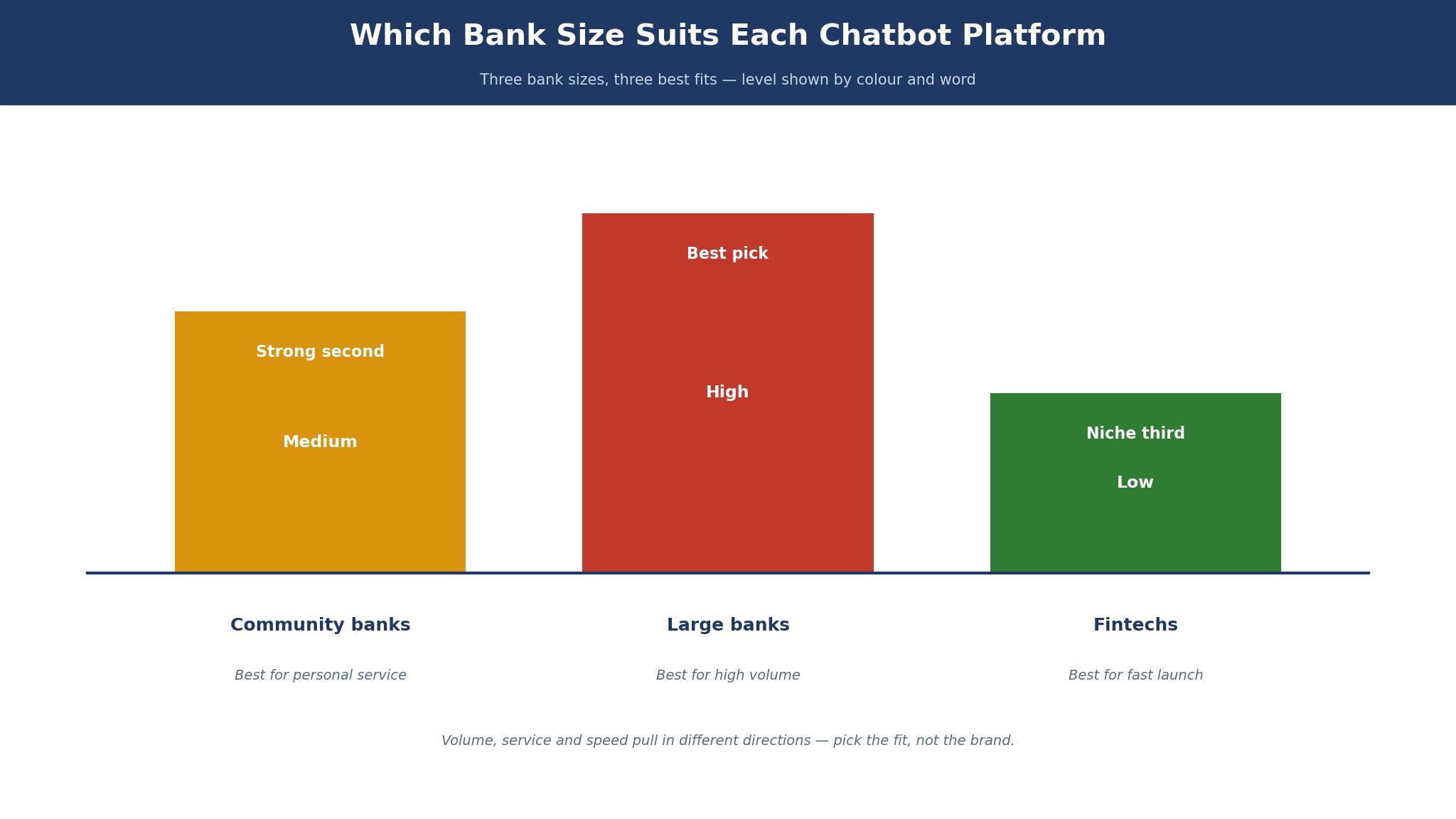
Start by matching the vendor to the bank size. A tier one bank needs Kasisto, Kore.ai or Cognigy, because the deployment scale and the compliance depth match. A community bank needs interface.ai, Glia or Boost.ai, because the implementation is shorter and the cores are the ones the bank actually runs. A vendor built for the wrong size will cost more and deliver less.
Next, check the compliance posture. The best ai chatbots for banks carry SOC 2 Type II, offer audit trails on every conversation, and put guardrails on every turn so the assistant cannot invent a rate or a policy. Ask for the compliance documents before the demo, because a vendor that cannot produce them will fail procurement later.
Then look at the banking depth. Kasisto offers 1,800 plus pre-built intents, Kore.ai offers 250 plus retail banking use cases, and a general chatbot offers none of either. Finally, check the deployment time, because an enterprise rollout runs longer than a typical software purchase, and a community bank should favour the vendors that go live in weeks rather than quarters.
The 10 Tools in Detail
The ten tools below cover banking specialists, enterprise platforms and per resolution newcomers. Each one is judged on banking depth, compliance posture, deployment time and the price model, so this roundup of the best ai chatbots for banks stays honest about the quote only market.
1. Kasisto KAI
Kasisto KAI is a conversational banking assistant purpose built for banks and credit unions, with 1,800 plus pre-built banking intents and the KAI-GPT banking specific language model. The assistant lives inside the bank own app and channels, handling balances, payments, transaction disputes and card management. Pricing is quote only and tiered by deployment model, and implementation for a full scale rollout runs longer than a typical software purchase.
The enterprise focus is the drawback for a smaller bank. The implementation timeline is long, the price is negotiated per engagement, and a single branch institution will find the platform more than it needs. The SaaS tier recertified SOC 2 Type II in January 2026, which is a real compliance signal, but the rollout still needs a project team.
It suits large banks wanting a branded in-app virtual assistant. The intent library and the banking language model are the deepest in this guide, and the tier one deployments prove the platform at scale.
Ask Kasisto for a scoped quote for your channel count, and speak to two banks of similar size before you start the rollout.
2. interface.ai
interface.ai serves credit unions and community banks with agentic chat and voice, contact center automation and Smart Collections. BankGPT handles voice and chat in one system, and the performance based pricing option ties part of the cost to the outcomes delivered. The platform is purpose built for credit union and community bank cores, which is the detail that matters most for a smaller institution.
The smaller bank focus is also the limit. A global bank with complex multi country operations will find less depth here than Kasisto or Kore.ai, and the platform is less proven at tier one scale. Pricing is quote only, so the bank has to ask, though the performance based option is a fairer model than a flat platform fee.
It suits credit unions and community banks wanting agentic chat and voice. The core fit and the shorter deployment make it the most practical pick for a smaller bank in this guide.
Request a quote for your member count and channel count, and ask how the performance based pricing is measured before you sign.
3. Glia
Glia builds AI customer service only for banks and credit unions, covering voice, chat and digital channels, and its homepage says more than 700 financial institutions use it. The ChannelLess architecture blends the bot and the live agent mid conversation, so a customer never repeats the story when the bot hands over. Glia claims its banking AI can automate up to 80 percent of interactions across voice and digital channels, a figure from its own homepage.
Glia does not publish a price. Its Priceless Pricing charges $0 per minute, $0 per seat and $0 per token, with the real cost set in a negotiated platform contract, and the AWS Marketplace listing shows contract terms of 12, 24 or 36 months with longer terms discounted. The pricing opacity makes budget planning harder without a sales call, which is the main drawback.
It suits banks unifying AI and human agents across every channel. The handover design is the best in this guide, and the 700 institution customer base proves the platform in production.
Ask Glia for a platform fee quote for your interaction volume, and confirm the contract term discounts in writing.
4. Kore.ai BankAssist
Kore.ai BankAssist is a retail banking virtual assistant with more than 250 pre-built use cases covering balances, payments, transaction disputes, card management and account servicing across voice and digital channels. The platform serves Global 2000 companies, with enterprise grade security and contact center AI, and the pre-built flows speed deployment compared with a fully bespoke build.
Kore.ai does not publish its pricing, and third party sources indicate annual costs typically start around $300,000, though that figure comes from a competitor write up rather than Kore.ai itself. The billing documents name Essential, Advanced and Enterprise plans with no prices, and some third party guides list Essential at $50 a month and Advanced at $150 a month, so treat those small figures as reported and unreliable for a bank budget. The real cost is a negotiated enterprise contract.
It suits banks wanting ready made retail banking flows fast. The 250 plus use cases cover the daily questions, and the enterprise security satisfies the compliance team.
Request a written quote for your use case count, and confirm the implementation timeline before the board approves the budget.
5. Cognigy
Cognigy is an enterprise conversational AI platform that banks use to build custom assistants across voice and chat. The platform offers a visual flow builder, large language model orchestration and deep integrations with banking cores and CRMs, so a bank can design the exact assistant its customers need rather than buying a fixed set of flows. Pricing is quote based.
The flexibility is also the work. A bank needs AI engineers or a systems integrator to build the assistant, and the deployment runs longer than the pre-built tools here. A community bank without an engineering team will find Cognigy a project rather than a product, and the total cost includes the build as well as the platform.
It suits banks building a custom assistant with an engineering team. The platform depth and the integration options are the strongest in this guide for a bespoke build.
Ask Cognigy for a quote that includes the build effort, and speak to a bank that built a similar assistant before you commit.
6. Gradient Labs
Gradient Labs is the per resolution banking assistant in this guide, charging per resolution rather than per seat or per conversation, so a bank only pays for outcomes. The platform resolves a reported 60 percent of requests on day one and 80 to 90 percent in mature deployments, with financial services native guardrails on every turn and SOC 2 Type II certification. The delivery team runs the migration to production.
The company is newer and smaller than the enterprise leaders, so the customer base and the reference list are thinner. The per resolution price is also not published, so the bank has to ask, and the deployment guarantee is only as good as the contract behind it.
It suits banks and fintechs running frontline and back-office work on one platform. The per resolution model aligns the cost with the outcome, and the day one resolution rate is the strongest claim in this guide.
Ask Gradient Labs for the per resolution price in writing, and confirm the deployment guarantee terms before you sign.
7. Boost.ai
Boost.ai offers a banking virtual agent with guardrails and pre-built flows, and the deployment is faster than the enterprise platforms here. The assistant handles account questions, payments and service requests with financial services guardrails, and the platform is designed for banks that want to go live without a long project. Pricing is quote based.
The brand is smaller than Kasisto or Kore.ai, so the reference list is thinner and the intent library is smaller. A large bank with complex multi product questions will find less depth here, and the quote based pricing means no number to budget from the website.
It suits banks wanting a fast deployment with banking guardrails. The shorter setup suits a team with no AI engineers, and the guardrails satisfy the compliance review.
Request a quote for your intent count, and ask for the go live timeline in writing before the project starts.
8. LivePerson
LivePerson is a conversational AI platform across chat, voice and messaging, used by large banks for customer service at scale. The platform offers intent management, agent assist and analytics, with a long history in financial services. Pricing is quote based, and the deployment is an enterprise project.
The generalist focus is the drawback against the banking specialists here. LivePerson serves many industries, so the banking intents and the banking language models are thinner than Kasisto or Kore.ai. A bank that wants a purpose built banking assistant will find more depth in the specialists.
It suits large banks that want omnichannel conversational AI across many departments. The platform scales across the whole enterprise, not just the banking app, which is the value for a bank with many customer facing teams.
Ask LivePerson for a banking specific quote, and compare the intent library against Kasisto before you decide.
9. Amelia
Amelia, formerly IPsoft, builds a digital employee for banking that handles customer service and back-office automation together. The assistant answers customer questions, processes service requests and automates the back-office steps that follow, which suits a bank that wants one system for the frontline and the operations team. Pricing is quote based.
The breadth is also the weight. Amelia is a large platform with a long implementation, and a bank that only needs a customer facing chatbot pays for back-office depth it will not use. The price is negotiated per engagement, so there is no number to compare.
It suits banks automating the back office as well as the frontline. The digital employee model covers the service request from the customer question through to the completed back-office task.
Request a scoped quote for the customer facing work only, and confirm the implementation timeline in writing.
10. Avaamo
Avaamo offers conversational AI for regulated firms, with multilingual support and banking workflows across voice and chat. The platform handles account servicing, loan inquiries, fraud alerts and payment support, and the multilingual depth suits a bank serving customers in several languages. Pricing is quote based.
The brand is smaller than the leaders here, so the reference list is thinner and the banking intent library is smaller than Kasisto. A bank that needs the deepest banking coverage will find more in the specialists, and the quote based pricing means a sales process before any number appears.
It suits banks needing multilingual support. The language coverage is the strongest in this guide, and the regulated industry focus keeps the compliance team comfortable.
Ask Avaamo for a quote for your language count, and test the assistant in your two most common languages before you sign.
Kasisto KAI vs Kore.ai BankAssist: Intents Against Use Cases
The banking depth is the first difference. Kasisto offers 1,800 plus pre-built banking intents with the KAI-GPT banking specific language model, while Kore.ai BankAssist offers 250 plus pre-built retail banking use cases across voice and digital channels. The intent count is not directly comparable to the use case count, because an intent is a single question type and a use case is a full flow, but the Kasisto library is broader and the Kore.ai flows are more complete.
The deployment is the second difference. Kasisto embeds inside the bank own app and channels as a branded assistant, with an enterprise rollout that runs longer than a typical software purchase. Kore.ai deploys faster because the templates are ready made, and the 250 plus use cases cover the daily retail questions without a bespoke build.
The deciding factor is the bank size and the team. A tier one bank with a project team should take Kasisto, because the intent depth and the language model repay the longer rollout. A Global 2000 bank that wants ready made flows fast should take Kore.ai, because the use cases go live sooner. That split is the cleanest way to read the best ai chatbots for banks when the choice narrows to two.
What Does a Banking AI Chatbot Cost?
The honest answer is that almost no vendor publishes a price, so the cost is a negotiated contract. Kasisto, Glia, interface.ai, Cognigy, Boost.ai, LivePerson, Amelia and Avaamo are all quote only, and the price depends on the deployment size, the channel count and the interaction volume. Glia publishes $0 per minute, $0 per seat and $0 per token, but the real cost is the negotiated platform fee behind those zeroes.
The third party figures that exist should be treated with care. Kore.ai annual costs are reported to start around $300,000, though that figure comes from a competitor write up rather than Kore.ai, and the small plan figures of $50 and $150 a month in some guides do not reflect an enterprise bank contract. Gradient Labs charges per resolution, but the per resolution price is not published.
The honest way to budget is to ask three vendors for a quote on the same scope, with the same channel count and the same interaction volume. The quotes will still differ, because the pricing models differ, but the comparison will show the real range for the bank size. Never budget from a third party price list, because the enterprise contract is where the cost is set.
Can a Bank Chatbot Handle Fraud Alerts and Disputes?
Yes, on the banking specialists in this guide. Kore.ai BankAssist lists transaction disputes and fraud alerts among its 250 plus use cases, Kasisto covers disputes and card management inside its intent library, and Avaamo lists fraud alerts and payment support among its banking workflows. The assistant can freeze a card, start a dispute and escalate the fraud case to a human, all inside the conversation.
The guardrails decide whether the bank trusts the assistant with those jobs. The best ai chatbots for banks put a guardrail on every turn, so the assistant cannot invent a rate, approve a refund it should not approve, or reveal account details to the wrong person. The audit trail records every step, so the compliance team can review any fraud case after the fact.
The limit is the handoff. A complex fraud case still needs a human, and the chatbot should recognise the case early and hand it over with the full context, rather than trying to resolve it alone. Glia does this best, because the ChannelLess design blends the bot and the live agent mid conversation without making the customer repeat the story.
A 90-Day Bank Chatbot Rollout Plan
Days one to thirty are the scope. Pick the ten most common customer questions, confirm the compliance documents, and choose the channels for launch, because a chatbot that launches on every channel at once fails everywhere at once. Days thirty to sixty are the build. Configure the intents, connect the banking core, and test the assistant with real customer questions in a closed pilot.
Days sixty to ninety are the pilot. Launch to one percent of customers, watch the resolution rate and the handover rate daily, and fix the intents that fail most often. The pilot is where the bank learns which questions the assistant handles well and which ones need a human, and the fix list from the pilot decides the full launch.
The full launch follows only when the pilot resolution rate holds for two weeks. A bank that launches to all customers before the pilot proves the assistant will pay for the mistake in complaints and in trust, and trust is the hardest thing for a bank to win back. That patience is what a regulated launch demands.

Frequently Asked Questions
Which AI chatbot is best for a large bank?
Kasisto KAI is the best pick for a large bank, because 1,800 plus pre-built banking intents and the KAI-GPT banking specific language model cover the questions customers actually ask. Kore.ai BankAssist is the alternative, with 250 plus retail banking use cases and a faster deployment. Both are quote only, so ask for a scoped quote on the same channels.
Does Glia publish its pricing?
No. Glia markets its Priceless Pricing model, which charges $0 per minute, $0 per seat and $0 per token, but the real cost is a negotiated platform fee. The AWS Marketplace listing shows contract terms of 12, 24 or 36 months, with longer terms discounted up to 67 percent on 36 month terms.
Can a credit union afford an AI chatbot?
Yes, with the right vendor. interface.ai is purpose built for credit unions and community banks, with BankGPT voice and chat and performance based pricing available. The quote only model means the credit union has to ask, but the core fit and the shorter deployment make it affordable compared with an enterprise platform.
Is Kore.ai really $300,000 a year?
That figure comes from third party reports and a competitor write up, not from Kore.ai, so treat it as reported rather than confirmed. Kore.ai does not publish its pricing, and the real cost is a negotiated enterprise contract based on deployment size and usage. Ask for a written quote before budgeting any figure.
Do bank chatbots replace human agents?
No. The best ai chatbots for banks automate up to 80 percent of interactions according to Glia homepage claim, but the complex cases still need a human. The chatbot handles balances, payments and simple disputes, and hands the fraud cases and the complaints to a person with the full context attached.
How long does a bank chatbot take to launch?
An enterprise rollout on Kasisto or Kore.ai runs longer than a typical software purchase, often a quarter or more. A community bank on interface.ai or Boost.ai can go live faster, in weeks rather than quarters. The 90 day plan in this guide is realistic for a scoped pilot on the ten most common questions.
The Bank Chatbot Pick by Bank Size
A tier one bank should take Kasisto KAI, because the 1,800 plus intents and the banking language model are the deepest in this guide. A Global 2000 bank that wants ready made flows fast should take Kore.ai BankAssist, because the 250 plus use cases go live sooner. A credit union or community bank should take interface.ai, because the core fit and the performance based pricing match a smaller institution.
A bank that wants the best handover should take Glia, because the ChannelLess design blends the bot and the human mid conversation. Pick the vendor that matches the bank size, pilot on ten questions for ninety days, and let the resolution rate decide the full launch.