
The best ai tools for quality control in manufacturing for most factories are led by Landing AI, because its LandingLens platform trains an accurate computer vision model from as few as 50 to 100 images, needs no data science team and runs at production speed on the line. A factory that inspects by hand misses defects that a camera catches every time, and LandingLens closes that gap without a PhD on staff. That low image count is why Landing AI leads.
The cost of a defect escape is the number to hold in mind. A faulty batch that reaches a customer costs the rework, the warranty claim, the return freight and the reputation, and a single recall can cost more than a year of inspection software. Single production line pilots typically run 500 to 2,000 dollars a month, while plant-wide implementations run 5,000 to 25,000 dollars a month, so the tool pays for itself if it catches one escaping batch a year. Inspection software is the wrong place to save money.
The second number is the accuracy gap. Human inspectors catch roughly 85 to 92 percent of defects, while AI visual inspection systems reach 97 to 99.5 percent, and the gap is the defects that reach customers.
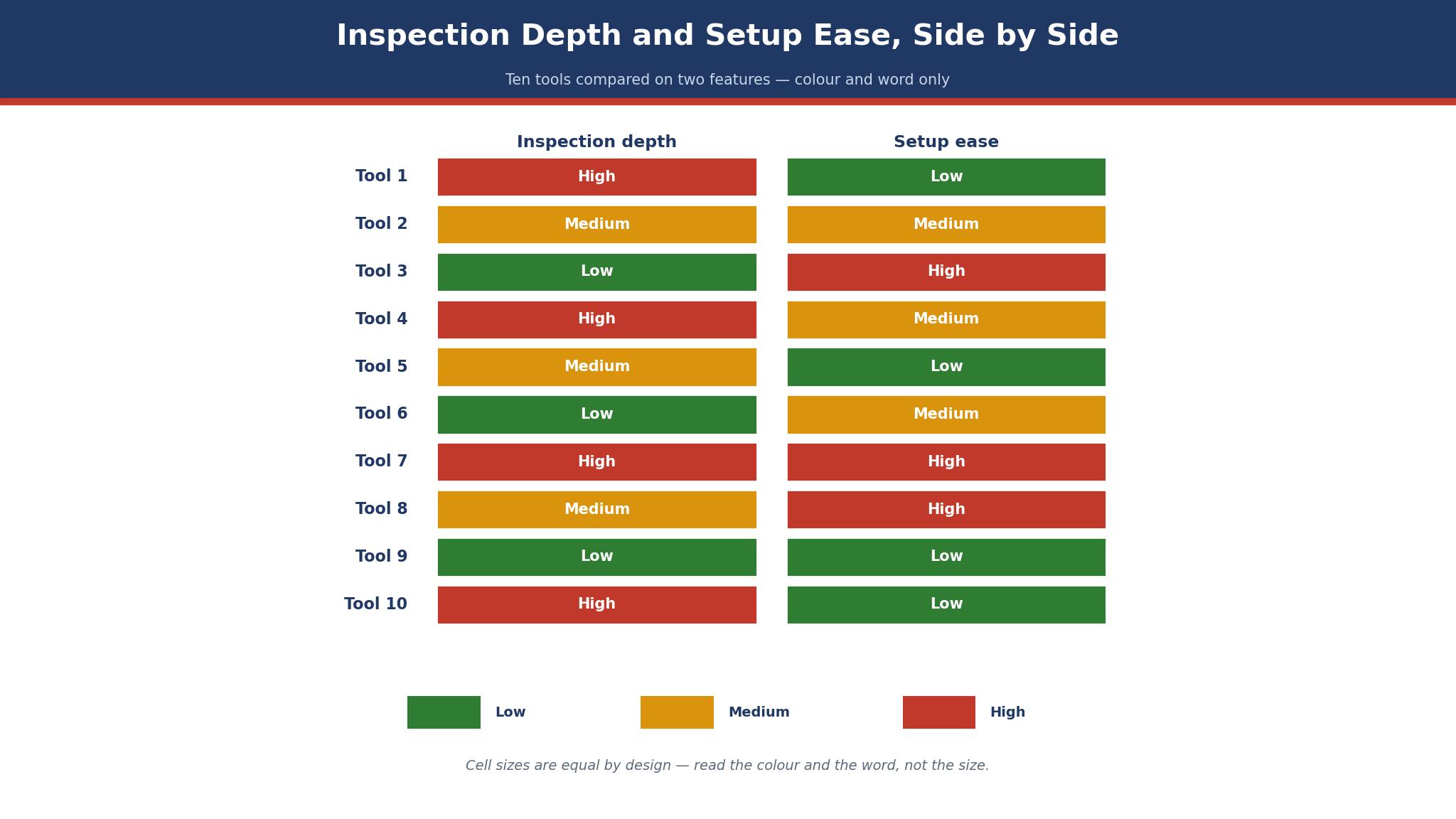
The 10 Tools at a Glance
| Tool | Main job | Best for | Starting price |
|---|---|---|---|
| Landing AI | Visual inspection with few images | Broad visual inspection | Quote, reported 30,000 to 300,000 dollars a year |
| Instrumental | Electronics manufacturing QA | PCB and electronics assembly | Quote only |
| Cognex VisionPro | Deep learning machine vision | Factories with machine vision | System reported 10,000 to 100,000 dollars |
| Neurala VIA | Lightweight offline inspection | SMEs that need offline QC | Subscription, price on request |
| Elementary | AI inspection for assembly | Assembly lines with varied parts | Quote only |
| Google Cloud Visual Inspection | Pre-trained defect detection | Scalable factories on Google Cloud | Pay-as-you-go |
| Augury | Predictive maintenance plus QC | Plants that predict failures | Reported 2,000 to 8,000 dollars a month |
| Sight Machine | Production optimisation and OEE | Plants that maximise OEE | Quote only |
| Tulip | Frontline operations and QC | Plants that digitise workflows | Quote only |
| Plex QMS | Quality management with ERP | Large enterprises on Rockwell | Enterprise pricing |
Best Pick by Job
| Job type | First pick | Second tool | Why this pair works |
|---|---|---|---|
| Broad visual inspection | Landing AI | Cognex VisionPro | Landing AI leads on few-shot training and Cognex adds deep learning depth |
| Electronics assembly | Instrumental | Landing AI | Instrumental leads on electronics and Landing AI adds broad inspection |
| Offline inspection, small factory | Neurala VIA | Elementary | Neurala leads offline and Elementary adds assembly depth |
| Predict failures before they happen | Augury | Sight Machine | Augury leads on prediction and Sight Machine adds OEE optimisation |
| Full quality management system | Plex QMS | Tulip | Plex leads on ERP quality and Tulip adds frontline workflows |
A visual inspection factory and a predictive maintenance plant ask for different things from the same tool. The inspection factory needs cameras, models and defect detection at line speed, while the predictive plant needs sensors, failure prediction and maintenance scheduling, so buying for the wrong job means paying for a camera system that never predicts a failure. The best ai tools for quality control in manufacturing are judged here on the job they serve, not on a single headline feature.
Size decides the second cut. A single line pilot costs 500 to 2,000 dollars a month, while a plant-wide implementation costs 5,000 to 25,000 dollars a month and an enterprise multi-site deployment can exceed 50,000 dollars a month. Pick the price shape that fits the line count today, and check the point where the pilot tool runs out of scale, because that limit arrives when the second line needs the same system.
Which AI inspection tool catches defects a human inspector misses?
Landing AI catches defects a human inspector misses because LandingLens trains from 50 to 100 images and then inspects at production speed, catching surface defects, dimensional variations, colour inconsistencies and assembly errors in real time. A human inspector tires, blinks and misses a defect on the hundredth part, while a camera checks every part the same way. The best ai tools for quality control in manufacturing for inspection are the ones that check every part, and Landing AI does that best.
Instrumental is the second pick for electronics, because its Discovery anomaly detection and failure analysis tools are built for PCB assembly and consumer electronics, where microscopic solder defects have outsized consequences. Cognex VisionPro is the pick for a factory that already runs machine vision, because its deep learning tools extend the existing cameras rather than replacing them. A factory that buys a tool without line-speed inspection will feel the gap on the first fast line.
The practical test is a single line. Run the tool on one line for a month, count the defects it catches that the human inspectors missed and count the false alarms it raises, then compare both with the month before. A tool that catches twenty missed defects with five false alarms has proved itself, while a tool that catches five with fifty false alarms has not. Keep the counts and run the same test on the next line, because the defect count is the real review.
How to Choose the Best AI Tools For Quality Control In Manufacturing
Start with the defect type, because that one answer removes half the list. A factory with surface defects needs visual inspection from Landing AI or Cognex. A factory with electronics defects needs Instrumental. A factory with equipment failures needs Augury. A factory with process variation needs Sight Machine or Plex QMS. A tool that covers the wrong defect wastes money on every line.
Next, count the images available. Landing AI trains from 50 to 100 images, which suits a factory with a small defect sample, while a tool that needs a thousand images will take months to collect them. A factory that has only twenty examples of a rare defect should pick a few-shot tool, while a factory with thousands of examples can pick any tool. The image count is the number that matters, not the headline accuracy.
Then check the deployment. Landing AI and Cognex run on edge hardware at the line, Neurala VIA runs offline for SMEs, and Google Cloud Visual Inspection runs in the cloud with pay-as-you-go pricing. A factory with no reliable internet needs an edge or offline tool, while a factory on Google Cloud can use the cloud tool. Confirm the deployment by name before signing, because a cloud tool on a disconnected line is a tool that never inspects.
Finally, test the model for one month. A tool that trains in a week, inspects at line speed and explains its decisions earns its keep. A tool that needs a data science team, slows the line or flags every part will be switched off. Run one real line through the pilot and count the defects caught, because that count is the real return.
The 10 Tools in Detail
1. Landing AI
Landing AI is the visual inspection platform for factories that want accurate defect detection without a data science team. Its LandingLens platform trains a computer vision model from 50 to 100 images, uses a no-code interface and runs on edge hardware at the line, and it is used by more than 500 companies including Foxconn, Tesla and Stanley Black & Decker. Pricing is reported at 30,000 to 300,000 dollars a year, with hardware separate, and edge hardware costs 3,000 to 8,000 dollars per inspection station if starting from scratch.
The weak point is the price for a small factory. A reported 30,000 dollar annual starting point is a large sum for a single line, and the hardware adds to the first year cost, so a small factory should start with a pilot on one line and prove the defect count before scaling. A large factory will not feel the limit, while a small one will.
Landing AI suits factories that want broad visual inspection with few images. It fits a plant with varied parts, a line that inspects by hand today and a team that wants a no-code model. Run a pilot on one line for a month, count the defects caught that humans missed, and scale only after the count proves the value.
2. Instrumental
Instrumental is the electronics quality platform for manufacturers that build PCBs, consumer devices and precision assemblies. The platform combines AI-powered defect detection with failure analysis, issue monitoring and production-quality testing in one system, and its Discovery anomaly detection finds defects that a rule-based system misses. Pricing is enterprise and quote only, with implementation costs reported in the 80,000 to 300,000 dollar a year band for quality inspection.
The weak point is the narrow focus. Instrumental owns the electronics niche, but it is less applicable to other industries, so a factory that makes metal parts or food products should pick Landing AI or Cognex instead. An electronics manufacturer will not feel the limit, while a general factory will.
Instrumental suits electronics manufacturers and EMS providers. It fits a PCB assembly line, a consumer electronics plant and a team that needs root cause analysis beside defect detection. Ask for a quote with the line count in writing, and run a pilot on one line before committing to a plant-wide deal.
3. Cognex VisionPro
Cognex VisionPro is the deep learning machine vision platform for factories that already run machine vision. The platform adds deep learning defect detection to Cognex cameras and systems, with tools for classification, segmentation and optical character recognition, and it runs on the factory floor at line speed. Pricing is reported at 10,000 to 100,000 dollars for a system including hardware and software, plus annual maintenance.
The weak point is the setup. Cognex is a machine vision system first, and its deep learning tools need a vision engineer to configure, so a factory without vision expertise will need help to set it up. A factory that already runs Cognex cameras will not feel the limit, while a factory starting from scratch will.
Cognex VisionPro suits factories with existing machine vision. It fits a plant that already owns Cognex cameras, a line that needs deep learning added to an existing system and a team with vision expertise. Ask for a quote with the camera count in writing, and run a pilot on one existing camera before buying more.
4. Neurala VIA
Neurala VIA is the lightweight offline inspection tool for SMEs that need quality control without the cloud. The platform trains vision models that run on edge devices offline, with a subscription price and a focus on small factories that cannot rely on internet connectivity. The offline model suits a factory in a remote location or a line that cannot stop for a network outage.
The weak point is the scale. Neurala VIA covers a single line or a small plant well, but its enterprise features and integrations are thinner than Landing AI and Plex QMS, so a large plant that needs plant-wide reporting should pick a bigger tool instead. A small factory will not feel the limit, while a large one will.
Neurala VIA suits SMEs that need offline inspection. It fits a small factory, a remote plant and a team that wants a subscription rather than an enterprise contract. Try the subscription on one line, count the defects caught, and scale only after the count proves the value.
5. Elementary
Elementary is the AI inspection platform for assembly lines with varied parts. The platform uses computer vision to inspect assemblies, catch missing parts and verify the build, with tools for lines that change products often and cannot stop for a long setup. Pricing is quote only, scoped by line count and inspection points.
The weak point is the opacity. No published price means the factory cannot budget before a sales call, and the quote can vary by line count. The platform is also focused on assembly, so a factory that needs surface defect detection on a single part type should pick Landing AI instead.
Elementary suits assembly lines that change products often. It fits a plant with varied assemblies, a line that verifies the build and a team that wants fast setup between products. Ask for a quote with the line count in writing, and run a pilot on one assembly before signing.
6. Google Cloud Visual Inspection
Google Cloud Visual Inspection is the pre-trained defect detection service for scalable factories on Google Cloud. The platform offers pre-trained models for defect detection, runs in the cloud or on the edge and charges pay-as-you-go, so a factory pays for the inspections it runs rather than for a fixed licence. The model suits a factory that already runs on Google Cloud and wants to scale inspection without a large upfront cost.
The weak point is the customisation. A pre-trained model covers common defects well, but a factory with a rare defect type will need to train a custom model, and the cloud dependency means a disconnected line cannot inspect. A factory on Google Cloud will not feel the limit, while a factory off the cloud will.
Google Cloud Visual Inspection suits scalable factories on Google Cloud. It fits a plant that already uses Google Cloud, a team that wants pay-as-you-go pricing and a line that needs pre-trained detection fast. Run the pre-trained model on a real defect sample, and pay only after the detection rate proves useful.
7. Augury
Augury is the predictive maintenance platform for plants that want to predict equipment failures before they happen. The platform monitors equipment health in real time, predicts failures with 70 to 90 percent accuracy 7 to 30 days in advance and helps the plant schedule maintenance before a breakdown. Pricing is reported at 2,000 to 8,000 dollars a month, with a 30 day trial and REST API and MQTT integrations.
The weak point is the scope. Augury predicts failures well, but its visual defect detection is thinner than Landing AI, so a factory that needs inspection should pair it with a vision tool rather than relying on it alone. A plant that suffers breakdowns will not feel the limit, while a plant that suffers defect escapes will.
Augury suits plants that lose money to unplanned downtime. It fits a factory with expensive machines, a team that schedules maintenance and a plant that wants a 30 day warning before a failure. Try the 30 day trial on the most failure-prone machine, and pay only after the prediction proves accurate.
8. Sight Machine
Sight Machine is the production optimisation platform for plants that want to maximise OEE. The platform collects data from across the plant, analyses production in real time and shows where quality, speed and availability lose value, with tools for continuous improvement. Pricing is quote only, scoped by plant size and data sources.
The weak point is the opacity and the setup. No published price means the plant cannot budget before a sales call, and the platform needs data integration across many sources before it delivers value, so a factory with poor data will spend months on integration. A plant with clean data will not feel the limit, while a plant with messy data will.
Sight Machine suits plants that optimise OEE across the whole factory. It fits a large plant, a team that runs continuous improvement and a factory that already collects machine data. Ask for a quote with the data sources listed, and run a pilot on one line before committing plant-wide.
9. Tulip
Tulip is the frontline operations platform for plants that digitise workflows and quality checks. The platform builds apps for operators, digitises paper checklists, tracks quality at each station and connects the frontline to the wider system, with a no-code app builder that a plant team can use without developers. Pricing is quote only, scoped by user count and apps.
The weak point is the inspection depth. Tulip digitises workflows well, but its AI visual inspection is thinner than Landing AI, so a factory that needs camera inspection should pair it with a vision tool rather than relying on it alone. A plant that digitises paper will not feel the limit, while a plant that needs defect detection will.
Tulip suits plants that digitise frontline work. It fits a factory with paper checklists, a team that wants operator apps and a plant that tracks quality at each station. Ask for a quote with the user count in writing, and build one app for one station before scaling.
10. Plex QMS
Plex QMS is the quality management system for large enterprises on Rockwell Automation. The platform covers quality management, nonconformance tracking, corrective actions and audit trails, with ERP integration that ties quality to production, inventory and finance. Pricing is enterprise, scoped by plant count and users.
The weak point is the price and the scale. Plex QMS is an enterprise system, and a small factory that buys it pays for ERP integration and audit depth it will not use. A large enterprise will not feel the limit, while a small plant will.
Plex QMS suits large enterprises that need a full quality system. It fits a multi-site manufacturer, a team that runs audits and a plant that needs quality tied to ERP. Ask for a quote with the plant count in writing, and run a pilot on one plant before committing enterprise-wide.
Landing AI vs Instrumental: Broad Visual Inspection or Electronics Depth?
Landing AI and Instrumental solve the same problem from opposite ends. Landing AI starts broad, with a few-shot model that inspects any part from 50 to 100 images, while Instrumental starts deep, with anomaly detection and failure analysis built for electronics assembly. A factory that makes varied parts gets more from Landing AI, while a factory that makes PCBs gets more from Instrumental.
The price gap is wide at the enterprise end. LandingLens is reported at 30,000 to 300,000 dollars a year, while Instrumental quality inspection is reported in the 80,000 to 300,000 dollar a year band, so the two overlap at the top and split at the bottom, where Landing AI offers a smaller pilot. A factory that needs a pilot on one line gets a cheaper start from Landing AI, while a factory that needs electronics depth gets more from Instrumental.
Pick Landing AI when the parts vary, the defect sample is small and the factory needs a no-code model. Pick Instrumental when the parts are electronics, the defects are microscopic and the factory needs root cause analysis beside detection. The best ai tools for quality control in manufacturing for a factory that must pick one are the ones that match the defect type, and this pair proves it, because the right tool changes with the part.
What does AI quality control cost per production line?
AI quality control costs from 500 to 25,000 dollars a month per line, and that spread is the honest way to compare tools. Single line pilots typically run 500 to 2,000 dollars a month, plant-wide implementations run 5,000 to 25,000 dollars a month and enterprise multi-site deployments can exceed 50,000 dollars a month. Augury is reported at 2,000 to 8,000 dollars a month, while LandingLens is reported at 30,000 to 300,000 dollars a year, which is 2,500 to 25,000 dollars a month.
The per line cost also includes the hardware. Camera-based inspection systems add hardware costs of 2,000 to 10,000 dollars per station, and edge hardware for Landing AI costs 3,000 to 8,000 dollars per inspection station if starting from scratch. A tool that quotes 2,500 dollars a month and needs 8,000 dollars of hardware costs far more in year one than a tool that quotes the same monthly figure and needs no hardware, so the hardware line must be in the comparison.
The trap is the tool that charges per line and then counts every inspection point as a line. A factory with one line and five inspection points pays for five units on a per point price, and the total multiplies against the budget. Count the lines, count the inspection points and divide the annual total by both, because the per line cost with every point is the number that decides the purchase.
Is Cognex VisionPro enough for a factory that already runs machine vision?
Cognex VisionPro is enough for a factory that already runs machine vision and wants deep learning added to the existing cameras. Its deep learning tools extend the Cognex system with classification, segmentation and optical character recognition, and the factory keeps the cameras, the lighting and the expertise it already owns. A factory in that band gets the full benefit without replacing the vision system, and the reported system price of 10,000 to 100,000 dollars covers the upgrade rather than a new install.
The limit arrives when the factory needs a no-code model or a few-shot start. Cognex needs a vision engineer to configure, while Landing AI trains from 50 to 100 images with a no-code interface, so a factory without vision expertise will find Landing AI faster. The sign is a model that takes weeks to configure, and the fix is Landing AI for the new line plus Cognex for the existing cameras rather than a bigger Cognex tier.
The test is one line. Run Cognex VisionPro on one existing camera for a month, count the defects it catches that the old system missed and count the setup hours, then compare both with the month before. A factory that sees defects caught and setup hours low has enough tool, while a factory that sees setup drag has outgrown it. The best ai tools for quality control in manufacturing for a vision factory are the ones that still catch defects at the end of the month.
The Pilot Line Checklist That Proves AI Inspection Before a Plant Rollout
Run this checklist on a pilot line before rolling out plant-wide, and keep the sheet with the pilot file, because the best ai tools for quality control in manufacturing only pay when the pilot proves the catch rate. First, pick one line with a known defect rate, and record the human inspection catch rate for a month, because the pilot needs a baseline to beat. Second, collect 50 to 100 images of each defect type, and train the model on those images, because a model trained on clean parts only will miss the defects that matter.
Third, run the model at line speed for a month, and count the defects caught, the defects missed and the false alarms, because those three numbers decide the pilot.
Fourth, compare the AI catch rate with the human baseline, and mark whether the AI caught more defects with fewer false alarms, because a tool that catches more but alarms constantly will be switched off. Fifth, calculate the cost per defect caught, by dividing the pilot cost by the defects caught, and compare it with the cost of a defect escape, because a tool that costs more per defect than the escape is a tool that loses money. A pilot that passes all five checks is safe to roll out, while a pilot that fails any one of them needs a retrain before scaling.
The checklist also catches the pattern that costs the most money, which is the pilot that works on one line and fails on the next. A model trained on one product will not inspect a different product, and the pilot sheet shows whether the model was trained on the right parts. Keep the sheet, read it at the next line and use it to judge the inspection tool, because a checklist is also a record of which lines were proven.
Frequently Asked Questions
Which AI quality tool is best for visual inspection?
Landing AI is the best pick for visual inspection because LandingLens trains from 50 to 100 images, needs no data science team and inspects at production speed. Cognex VisionPro is the second pick for a factory that already runs machine vision. A factory should run a pilot on one line for a month and count the defects caught before committing plant-wide.
How much does Landing AI cost per year?
Landing AI LandingLens is reported at 30,000 to 300,000 dollars a year, with hardware separate, and edge hardware costs 3,000 to 8,000 dollars per inspection station if starting from scratch. Single line pilots typically run 500 to 2,000 dollars a month, while plant-wide implementations run 5,000 to 25,000 dollars a month. A factory should ask for a quote with the line count in writing.
Can AI inspection work offline?
Yes, Neurala VIA runs vision models on edge devices offline, which suits a factory in a remote location or a line that cannot stop for a network outage. Landing AI and Cognex also run on edge hardware at the line, while Google Cloud Visual Inspection needs a cloud connection. A factory with no reliable internet should pick an edge or offline tool.
Does AI quality control replace human inspectors?
AI quality control replaces the routine checking, and that routine work is most of what inspection needs, because a camera checks every part the same way without tiring. Human inspectors still add value on complex judgement, on new defect types and on the final sign-off, so most factories keep a human in the loop. A factory that removes humans entirely risks missing a defect type the model was never trained on.
What is the difference between Landing AI and Instrumental?
Landing AI offers broad visual inspection with few-shot training from 50 to 100 images, while Instrumental offers deep electronics quality with anomaly detection and failure analysis for PCB assembly. Landing AI suits factories with varied parts, while Instrumental suits electronics manufacturers. A factory should pick the tool that matches its defect type, not the tool with the highest headline accuracy.
How many images does AI inspection need to train?
Landing AI trains from 50 to 100 images, which suits a factory with a small defect sample, while other tools may need hundreds or thousands of images. A factory with only twenty examples of a rare defect should pick a few-shot tool, while a factory with thousands of examples can pick any tool. The image count is the number that decides the setup time.
The Final Assessment on AI Quality Control
Landing AI wins for most factories among the best ai tools for quality control in manufacturing because few-shot training, a no-code interface and line-speed inspection cover the widest set of needs without a data science team. Instrumental wins for electronics because its anomaly detection and failure analysis cover the defects that matter there, and Cognex VisionPro wins for factories that already run machine vision. Augury wins for plants that predict failures, and Plex QMS wins for enterprises that need a full quality system.
The decision is a defect and line test, not a feature contest. Count the images, run a pilot on one line and compare the AI catch rate with the human baseline.