

How accurate is it, really, and who pays when it gets a case wrong. Those are the two questions a firm should ask before it trusts AI research, because an AI that invents a citation can get a lawyer sanctioned. CoCounsel is the pick for most firms, because it pairs AI drafting and research with Westlaw, the most complete United States case law database, at a reported 225 to 500 dollars per user a month. This guide to the best ai tools for legal research prices every tool per lawyer, names the database behind each one, and shows the verification step no firm can skip.
Picture a five lawyer firm on a Friday afternoon. A junior has drafted a brief with AI help, the senior partner is about to sign it, and one citation in the middle of page four looks right but has never been opened in Westlaw. That single unchecked citation is the whole risk in this category, and it is why the database matters more than the demo. A tool that searches real cases and links every claim to a source a lawyer can check is a research tool. A tool that cannot show the source is a risk dressed up as software.
Most firms overpay in one of two ways. They buy an enterprise platform for a solo practice that needs one research tool, or they buy a cheap AI wrapper with no legal database and trust the answers it invents. Harvey is the pick for large firms that want an enterprise AI platform, and Paxton AI is the pick for solos who want transparent pricing, but most firms sit between those two poles, and that is where CoCounsel wins. The sections below are built as questions, the ones a managing partner actually asks before signing a contract.
How Accurate Is It, Really?
Accuracy in legal research means one thing, and it is not how fluent the answer sounds. It means every citation exists, says what the AI claims it says, and is still good law. CoCounsel is the most accurate pick for United States research, because it searches Westlaw, the most complete case law database, and links every answer to the source. The AI does not invent the case, it retrieves it, which is the difference that matters when a brief goes to court.
Harvey is the better pick for large firms that need deep reasoning across research, drafting and contract analysis in one platform, and Lexis+ AI is the better pick for firms that already run on Lexis, because the AI searches the Lexis database the firm already pays for. The wrong pick is a generic AI with no legal database, because it will invent citations with confidence, and confidence is exactly what makes an invented citation dangerous. No vendor in this guide publishes the accuracy numbers that would prove an AI answer is safe to file without checking, so every tool here needs the same human check.
Here is how a firm should test accuracy before it pays, on its own matters rather than a vendor demo. Pick ten closed matters, ask the AI the research question from each one, open every case it cites in Westlaw or Lexis, and check that each one exists, says what the AI claims, and is still good law. A tool whose citations check out on ten real matters will save hours, while one that invents cases will cost the firm a sanction, and the test takes an afternoon.
Keep a verification log for the first month, with every AI claim, the source checked and the result, because a log that shows ten verified claims and two failed ones will teach the firm where the tool is strong and where it is weak.
What Does It Cite, and Can You Check It?
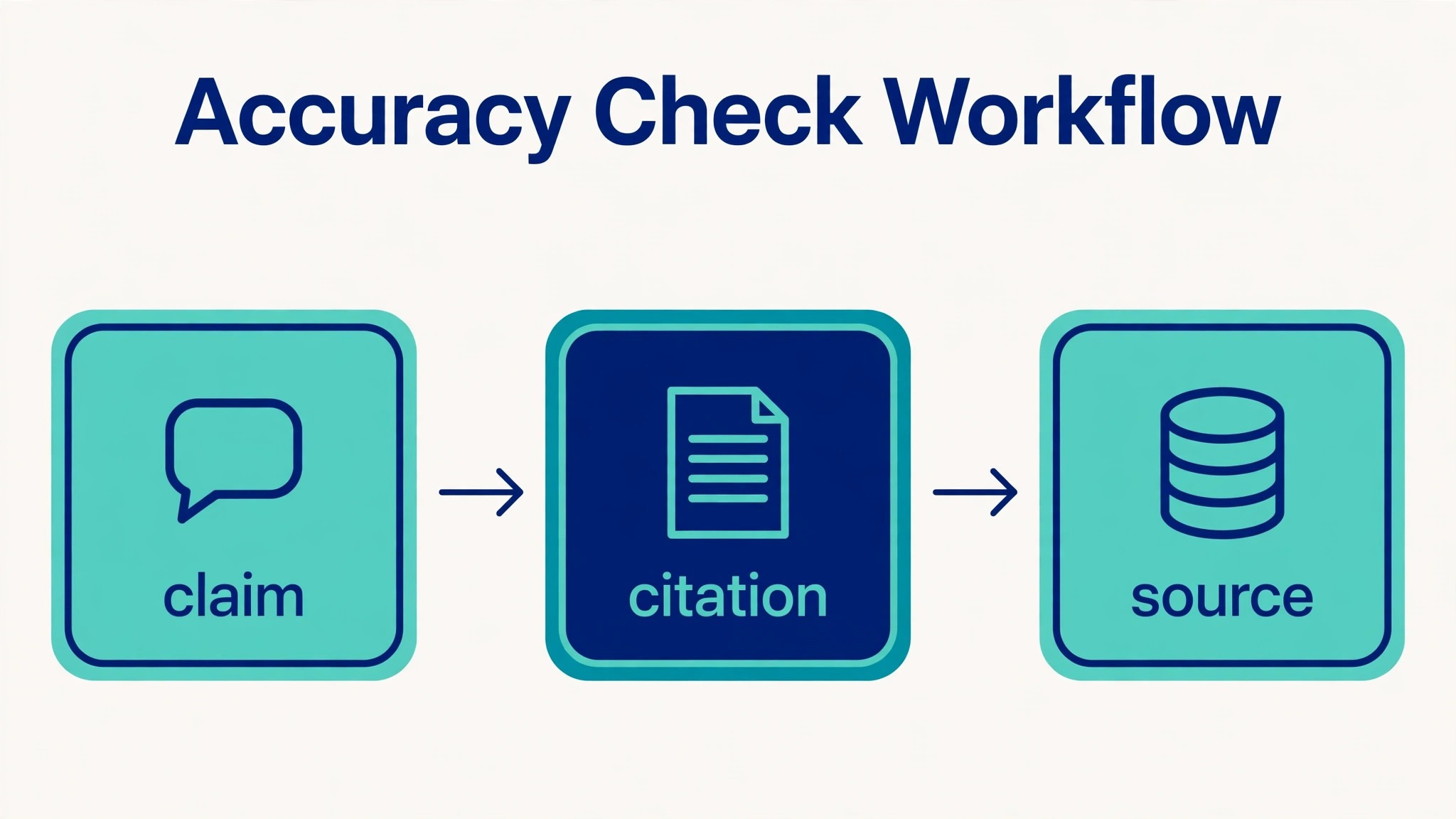
Start with the citation, not the answer. Open every case the AI cites in Westlaw or Lexis, and check that it exists, that it says what the AI claims, and that it is still good law. A citation that fails any of those three checks does not go into the brief, and a lawyer who files on a summary alone is trusting the machine with the argument. That check is the heart of the best ai tools for legal research decision, and it comes before price. The summary can miss the distinction that decides the case, and the distinction is the part the senior partner will be asked about in court.
Next, check the jurisdiction and the court, because a case from the wrong state or the wrong level of court will not help the argument. The AI may return a strong case from California for a New York filing, and a lawyer who does not check will waste the motion. Ask the same question with a jurisdiction filter on, and check that every case comes from the right state and the right court, because a filter that works will keep the research relevant, and one that does not will return pretty answers that cannot be used.
How to Choose the Best AI Tools for Legal Research for Your Firm?
Start with the database, then check the price, then check the verification workflow. A tool that searches Westlaw or Lexis is worth more than a tool that searches the open web, because the case law is the product, and the best ai tools for legal research are the ones that make verification easy, not the ones that hide the sources. Confirm the AI searches a real legal database, test the citation links on a live matter, and confirm the security, since client data must stay inside the firm.
Next, price the total bill, not the AI line. CoCounsel and Lexis+ AI work best inside Westlaw and Lexis, and the subscription can cost more than the AI itself, so a firm that buys CoCounsel without Westlaw will not get the full value. A five lawyer firm on CoCounsel at a reported 300 dollars per user a month pays 1,500 dollars a month, or 18,000 dollars a year, while the same firm on Paxton AI at a reported 159 dollars per user a month pays 795 dollars a month, or 9,540 dollars a year. That gap is real money for a small firm, and it is the number to put in front of the partners.
Then ask how the tool handles jurisdiction, because a case from the wrong state is useless, and ask who checks the work. Set the rule in week one, that every AI output gets a senior review before it leaves the firm, and do not let a junior lawyer file an AI drafted brief without a senior review in the first month. The risk is not the AI, it is the unchecked citation, and one bad filing costs more than a year of the tool.
| Tool | Main job | Best for | Starting price |
|---|---|---|---|
| CoCounsel | AI research and drafting | Most firms | 225 dollars per user a month |
| Harvey | Enterprise legal AI | Large firms | Quote only |
| Lexis+ AI | AI research on Lexis | Lexis firms | 250 dollars per user a month |
| Westlaw Precision AI | AI research on Westlaw | Litigation research | Quote only |
| vLex Vincent AI | Global legal research | Global research | Quote only |
| Paxton AI | AI research, transparent price | Solos and small firms | 159 dollars per user a month |
| Spellbook | AI contract drafting | Contract work | 89 dollars per user a month |
| Eve | AI legal assistant | Plaintiff firms | Quote only |
| DraftWise | AI drafting and search | Big firm drafting | Quote only |
| Briefpoint | AI discovery drafting | Discovery responses | Quote only |
Harvey vs CoCounsel: Enterprise Platform Against Westlaw AI
Harvey and CoCounsel are the two names a large firm hears first, and the choice is platform against database. Harvey gives the firm an enterprise AI platform across research, drafting and contracts, while CoCounsel gives the firm AI research backed by Westlaw, the most complete case law database. A firm that wants one platform should pick Harvey, and a firm that wants the best case law should pick CoCounsel, and that split is the cleanest way to read the best ai tools for legal research when the choice narrows to two.
On price both are quote only, with Harvey reported from about 399 dollars per lawyer a month and CoCounsel reported from about 225 dollars. A ten lawyer firm pays about 4,000 dollars a month on Harvey at the low end of its reported range, and about 2,250 dollars on CoCounsel at its reported low end, which is a real gap of 1,750 dollars a month, or 21,000 dollars a year. The reported top end widens the gap further, because Harvey is reported up to about 1,200 dollars per lawyer a month, while CoCounsel is reported up to about 500 dollars per user a month.
The deciding factor is the citation. CoCounsel has the edge for United States litigation, because every answer is linked to Westlaw and the KeyCite system behind it, while Harvey wins when the firm wants one platform for research, drafting, contract analysis and regulatory work, and is willing to pay the enterprise price and meet the seat minimum. That is the trade off, stated plainly. Harvey is broader, but you lose the Westlaw depth and pay at least 174 dollars more per lawyer a month at the reported low ends. CoCounsel is narrower, but you gain the deepest case law in the country for less money.
Who Is Responsible When It Is Wrong?
The lawyer is, and no tool in this guide changes that. AI legal research can find cases, draft memos and summarise documents, but it cannot exercise judgment, advise a client or take responsibility for a filing. No tool in the best ai tools for legal research list takes that responsibility off the lawyer. Lawyers have been sanctioned for filing AI invented citations without checking them, and the sanction lands on the lawyer who signed the brief, not on the vendor who sold the tool. That is the first thing to tell every lawyer in the firm, before the first login.
The right use is as a research assistant that does the first pass, not as a replacement. A lawyer who uses AI to find the cases and then reads them will work faster, while a lawyer who files what the AI wrote without reading it is taking a risk. Set the senior review rule for every AI drafted brief, with no exceptions in the first month, and write the firm policy in week one, covering verification, security and client data. A firm that adopts AI without a written policy will have every lawyer using it differently, and the first mistake will be a firm problem, not a personal one.
What Does It Cost per Lawyer?
The per lawyer price is the whole story in this category, because the tools charge per seat and the firm buys one for every lawyer. The table below prices the same five lawyer firm on three honest tiers, so the comparison is real, and the numbers come from the reported prices in this guide.
| Volume | Cheapest option | Monthly bill | What changes at this size |
|---|---|---|---|
| 5 lawyers | Paxton AI | 795 dollars a month | 159 dollars per lawyer, transparent pricing |
| 5 lawyers | CoCounsel | 1,500 dollars a month | 300 dollars per lawyer, reported mid range |
| 5 lawyers | Harvey | 2,000 dollars a month | 400 dollars per lawyer, reported low end |
What would I do if this were my firm. If I ran a five lawyer firm, I would buy Paxton AI first, because the reported 159 dollars a month is transparent, the seven day trial lets me test it on live matters, and the saving against CoCounsel is 705 dollars a month, which is 8,460 dollars a year.
If I ran a mid size firm on Westlaw, I would buy CoCounsel, because the Westlaw database is the product and the reported 225 dollars a month buys the deepest case law in the country. If I ran a large firm, I would take Harvey, because one platform across research, drafting and contracts is worth the enterprise price when the firm is big enough to use all of it.

Best Pick by Job
| Job type | First pick | Second tool | Why this pair works |
|---|---|---|---|
| Solo or small firm | Paxton AI | Spellbook | Paxton is transparent at 159 dollars, Spellbook fits contract work |
| Mid size firm | CoCounsel | Lexis+ AI | CoCounsel fits Westlaw firms, Lexis+ AI fits Lexis firms |
| Large firm | Harvey | CoCounsel | Harvey is the enterprise platform, CoCounsel is the Westlaw AI |
| Litigation research | Westlaw Precision AI | vLex Vincent AI | Westlaw has the deepest case law, Vincent adds global research |
A five lawyer firm on CoCounsel at a reported 300 dollars per user a month pays 1,500 dollars a month, or 18,000 dollars a year, while the same firm on Paxton AI at a reported 159 dollars per user a month pays 795 dollars a month, or 9,540 dollars a year.
Buy CoCounsel when the firm runs on Westlaw and wants AI research backed by the best case law database, buy Harvey when the firm is large and wants one enterprise AI platform across research, drafting and contracts, and buy Paxton AI when the firm is small and the priority is a clear price with a real trial. The best ai tools for legal research are the ones that cite real cases from a real database, and that test decides the pick more than any feature list.
The 10 Tools in Detail
The ten tools below are grouped by the question they answer, because a firm does not buy a list, it buys an answer to a job. Research tools come first, because that is what most firms need. Drafting tools come next, because contracts and discovery are where the hours go. Specialist tools come last, because they serve one practice well and no other. Each one is judged on the database behind it, the price per lawyer, and the verification step it makes easy.
Research, the citation is the product
1. CoCounsel
CoCounsel is the AI assistant from Thomson Reuters, built on Casetext and paired with Westlaw for case law research. Its strength is the Westlaw database, with the most complete United States case law and linked citations in every answer. Pricing is reported from about 225 dollars per user a month, with higher tiers adding more features and Westlaw access, and the reported range runs to about 500 dollars per user a month.
The document review and deposition prep features are a real win, because they cut hours from the litigation workflow, and the AI does not invent the case, it retrieves it, which is the difference that matters when a brief goes to court. The limit is the price for a solo, and the full value needs a Westlaw subscription beside it, so price the total bill before you sign. Pick CoCounsel when the firm runs on Westlaw and wants AI research backed by the best case law database in the country.
Here is the worked maths that settles the pick for most firms. A five lawyer firm at a reported 300 dollars per user a month pays 1,500 dollars a month, and a ten lawyer firm at the reported low end of 225 dollars pays 2,250 dollars a month. Harvey at its reported low end of 399 dollars costs a ten lawyer firm about 4,000 dollars a month, which is 1,750 dollars more a month for a platform most mid size firms will not use in full. That gap is why CoCounsel leads this list, and why Harvey stays the pick for large firms only.
2. Harvey
Harvey is an enterprise AI platform for law firms, built on advanced language models with deep legal training. Its strength is the breadth, with research, drafting, contract analysis and regulatory work in one platform, and that breadth is real, because a large firm can run its whole AI workflow in one place. Pricing is quote only, with reported ranges from about 399 to 1,200 dollars per lawyer a month and a seat minimum.
The limit is the price and the enterprise minimum, which puts it out of reach for a solo or small firm, and a solo who buys it will pay enterprise money for features that sit unused. Pick Harvey when the firm is large and the goal is one AI platform across research, drafting and contracts, and get a written quote at your real lawyer count before you budget.
3. Lexis+ AI
Lexis+ AI is the AI layer on the Lexis legal database, with research, drafting and summarisation in one tool. Its strength is the Lexis database, with cases, statutes and secondary sources that Lexis firms already trust, and the conversational research is strong, because a lawyer can ask a question in plain language and get a cited answer. Pricing is reported from about 250 dollars per user a month, with the full value inside a Lexis subscription.
The limit is the price and the Lexis lock in, since the tool works best for firms already on Lexis. Pick Lexis+ AI when the firm already pays for Lexis and wants AI research on the same database, and do not buy it as a first database, because the subscription is the real cost.
4. Westlaw Precision AI
Westlaw Precision AI is the AI research layer on Westlaw, with generative answers linked to the Westlaw case law database. Its strength is the case law depth, with the most complete United States database and the KeyCite verification system, so a lawyer sees at once whether a case is still good law. Pricing is quote only, set per firm, and it is positioned for firms that already run on Westlaw.
The limit is the price and the Westlaw subscription, which makes the total cost high for a small firm. Pick Westlaw Precision AI when the firm needs the deepest case law with AI answers that cite real cases, and ask for a written quote at your real lawyer count before you decide between it and CoCounsel.
5. vLex Vincent AI
Vincent AI is the AI research tool from vLex, with a global legal database covering many jurisdictions. Its strength is the global coverage, with case law and legislation from many countries in one search, and the translation and the multi jurisdiction search help a firm that handles international matters. Pricing is quote only, set per firm, and it is positioned for firms with cross border work.
The limit is the thinner United States depth compared with Westlaw, and the price needs a quote call. Pick Vincent AI when the practice crosses borders and needs research in more than one jurisdiction, and check the United States depth on your own matters before you pay, because a case from the wrong jurisdiction is useless.
6. Paxton AI
Paxton AI is a legal AI platform for solos and small firms, with research, drafting and document review at a published price. Its strength is the transparency, with a reported 159 to 199 dollars per user a month and a seven day trial, and the tool searches a legal database and drafts memos, contracts and letters with linked citations.
The limit is the smaller database compared with Westlaw, and the firm must still verify every citation. Pick Paxton AI when the firm is small and the priority is a clear price with a real trial. The seven day trial is a real advantage, because a solo can test the research on live matters before paying, and the saving against CoCounsel is 705 dollars a month for a five lawyer firm at the reported mid range.
Drafting and discovery, where the hours go
7. Spellbook
Spellbook is an AI contract tool that drafts, reviews and redlines contracts inside Microsoft Word. Its strength is the Word integration, with AI suggestions inside the document the lawyer already uses, and the clause library is a quiet win, because a solo can draft from proven language instead of starting blank. Pricing is reported from 89 dollars per user a month, with higher tiers adding more features and team controls.
The limit is the contract focus, since it is not a research tool and cannot search case law. Pick Spellbook when the daily work is contracts and the lawyer wants AI inside Word, and pair it with a research tool rather than buying it as one. A five lawyer firm pays 445 dollars a month at the reported starting price, which is the cheapest seat in this list, but it buys drafting, not research.
8. Eve
Eve is an AI legal assistant built for plaintiff firms, with intake, case assessment and document drafting. Its strength is the plaintiff workflow, with intake to demand letter in one system that fits personal injury and mass tort, and the intake automation is strong, because it qualifies a case before a lawyer spends an hour on it. Pricing is quote only, set per firm, and it is positioned for plaintiff practices with real volume.
The limit is the narrow focus, since it is built for plaintiff work and not for general research. Pick Eve when the firm is a plaintiff practice and the intake and case work need one AI system, and test the intake on real enquiries before you pay, because the workflow is the product.
9. DraftWise
DraftWise is an AI drafting platform for large firms, with clause search, drafting and document intelligence. Its strength is the precedent search, with the firm finding its own best language across past deals, and the document intelligence is a real win, because a lawyer can see how a clause was used across fifty deals. Pricing is quote only, set per firm, and it is positioned for large firms with a deep document history.
The limit is the price and the enterprise focus, which puts it out of reach for a small firm. Pick DraftWise when the firm has a large precedent library and the drafting must reuse the best past language, and do not buy it for research, because that is not its job.
Would I buy it for a five lawyer firm. No, because the precedent library is too thin to justify an enterprise price. Would I buy it for a firm with fifty deals a month. Yes, because the clause search alone would save a senior lawyer an hour a week, and that hour is worth more than the seat.
10. Briefpoint
Briefpoint is an AI tool that drafts discovery responses, with interrogatories and document requests handled in minutes. Its strength is the discovery focus, with responses drafted from the case file and ready for lawyer review, and the time saved on a single case can cover the cost, because discovery drafting is the most repetitive litigation work. Pricing is quote only, set per firm, and it is positioned for litigation practices with heavy discovery.
The limit is the narrow focus, since it drafts discovery and does not do general legal research. Pick Briefpoint when the litigation team spends too many hours on discovery responses, and keep the senior review rule in place, because a drafted response still needs a lawyer to read it before it leaves the firm.
Frequently Asked Questions
Can AI invent fake case citations?
Yes. AI tools have invented case citations that looked real, and lawyers have been sanctioned for filing them. Every AI citation must be verified against a real legal database before it goes into a filing, and no tool in this guide removes that step.
How much does Harvey AI cost?
Harvey does not publish pricing. Reported ranges run from about 399 to 1,200 dollars per lawyer a month, with a seat minimum and an annual contract. Large firms should get a quote at their real lawyer count, because the seat minimum is the number that decides the bill.
Is CoCounsel the same as Casetext?
Casetext was acquired by Thomson Reuters in 2023, and its AI technology became CoCounsel. The standalone Casetext product was folded into CoCounsel and the wider Westlaw system, which is why CoCounsel carries the Westlaw database behind it.
What is the best AI tool for legal research?
CoCounsel is the best pick for most firms, with AI research backed by Westlaw at a reported 225 to 500 dollars per user a month. Harvey is the best pick for large firms that want an enterprise platform, and Paxton AI is the best pick for solos who want transparent pricing. That is the short answer for the best ai tools for legal research, and the table above has the full comparison.
What is the cheapest AI legal research tool?
Paxton AI is the cheapest transparent pick, with a reported 159 to 199 dollars per user a month and a seven day trial. Spellbook is cheaper at a reported 89 dollars, but it drafts contracts and does not search case law, so the two prices buy different jobs.
Do I need Westlaw to use CoCounsel?
CoCounsel works best with Westlaw, because the AI searches the Westlaw case law database. The full value needs a Westlaw subscription beside it, which is why the total bill matters more than the AI line, and a firm that buys the AI without the database will not get the full value.
The Three Questions to Ask on a Demo
Ask these three questions before you pay for any tool in this list, and do not sign until all three have a clear answer. First, show me a citation from a live matter, open it in Westlaw or Lexis, and prove it exists, says what the AI claims, and is still good law. Second, what does it cost per lawyer at my real headcount, including the Westlaw or Lexis subscription, and what is the seat minimum. Third, who is responsible when it gets a case wrong, and what does your firm policy need to say about verification and senior review.
A tool that answers all three clearly is a tool you can bring into a firm. CoCounsel answers them with Westlaw behind every citation and a reported price from 225 dollars per user a month. Harvey answers them with one enterprise platform for a large firm, and Paxton AI answers them with a transparent price and a seven day trial. The rest of the list is useful in the right job, but these three are the ones that pass the test without a footnote.
Buy the database before you buy the demo, verify every citation against the real case, set the firm policy in week one, and never file an AI drafted brief without a human reading it first. That is how a firm uses AI without risking a sanction, and it is the only honest way to choose among the best ai tools for legal research.