
Consider a manager with 120 units. Each month that portfolio produces roughly 120 rent payments, dozens of maintenance requests, a handful of move ins and move outs, several lease renewals, and a steady stream of owner questions about income and costs. Handled by hand, that workload fills every week with chasing, copying, and reconciling. Handled with the right systems, the same portfolio runs on routines: rent collected online, maintenance triaged by priority, leases renewed on schedule, and owners reading a clear monthly report without calling the office. The best AI tools for property managers do not change the nature of the work. They remove the repetitive middle of it, so managers can spend time on leasing, retention, and owner relationships, which are the parts that actually grow a portfolio.
Property management differs from short term hosting and from general field service. Tenancies last months or years. Rent arrears, legal notices, security deposits, and owner accounting all carry real consequences when handled badly. Maintenance ranges from a dripping tap to a failed boiler, and the difference between those two jobs must be clear in the system. A good tool therefore needs strong leasing, rent collection, maintenance workflows, tenant communication, and owner reporting in one place. A tool that only does rent collection will leave maintenance chaos untouched. A tool that only does maintenance will leave leasing and arrears to spreadsheets.
This guide compares eleven tools for portfolios of different sizes, from a landlord with ten units to a firm managing hundreds. Pricing notes point you to check the current price at checkout, since property software often prices per unit or per portfolio size.
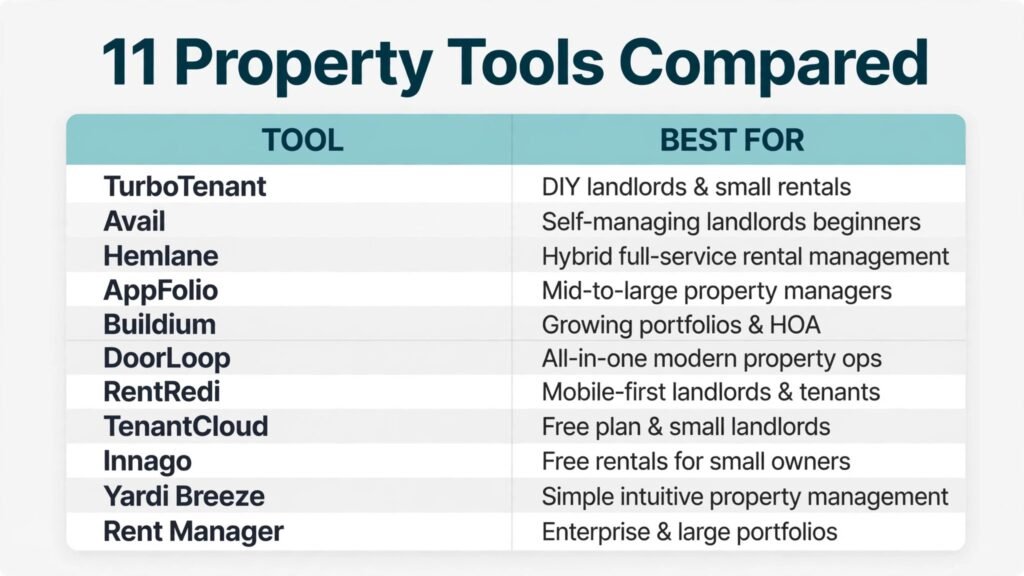
How the best AI tools for property managers compare at a glance
| Tool | Best for | Standout strength | Watch first |
|---|---|---|---|
| AppFolio | Mid size to large firms | Full leasing, accounting and reporting | Price and setup |
| Buildium | Growing management firms | Leasing, accounting and owner portal | Per unit cost as portfolio grows |
| DoorLoop | Firms that want modern design | Fast setup and clean tenant portal | Check accounting depth |
| RentRedi | Small landlords and managers | Low cost rent and tenant tools | Fewer enterprise reports |
| TenantCloud | Budget conscious managers | Free tier and landlord basics | Limits at larger scale |
| Innago | Small portfolios | Simple rent and maintenance | Thinner owner reporting |
| Avail | Self managing landlords | Leasing and rent for owners | Not a full firm platform |
| Hemlane | Owners who want management help | Leasing plus local manager network | Service model varies by city |
| Yardi Breeze | Larger firms on Yardi | Accounting and portfolio control | Learning curve |
| Rent Manager | Large and complex portfolios | Deep accounting and customisation | Setup and training time |
| TurboTenant | Small landlords, fast leasing | Leasing, screening and rent | Limited full firm features |
Tools grouped by the job they do best
Leasing, screening and tenant onboarding
Vacancy is the most expensive problem in property management. Every empty week is lost rent that cannot be recovered. These tools shorten vacancy and make screening consistent.
1. TurboTenant
TurboTenant helps landlords and small managers list a property, collect applications, screen tenants, and create a lease. Syndicated listings put a vacancy in front of many renters at once, and online applications keep the process organised. For a small portfolio, that speed matters: a vacancy filled a week earlier is a week of rent saved.
Pricing is subscription based with some free features for landlords. Check the current plan and screening fees at checkout, since screening charges can be paid by the applicant or the landlord depending on the setup.
Watch out for: follow local screening rules carefully. Screening criteria must be consistent and lawful, and every applicant should receive the same process and the same communication.
2. Avail
Avail is built for self managing landlords. It covers listings, applications, screening, leases, rent collection, and maintenance requests. An owner with ten to thirty units can run most of the business from one account without hiring a full management firm.
Avail suits owners who want control and a lower cost than a traditional manager. Pricing is subscription based per unit or per landlord. Check the current per unit price at checkout.
Watch out for: Avail is an owner tool, not a full firm platform. A management firm with staff, owners, and complex accounting will outgrow it and should trial a firm platform instead.
3. Hemlane
Hemlane combines software with a local manager network. Owners can list, lease, and collect rent through the platform, and in supported cities a local manager can handle showings, inspections, and repairs. That hybrid model suits owners who live far from their properties or who want help without a traditional full service contract.
Pricing combines a subscription with service fees in some cities. Check the exact model for your city at checkout, because coverage and fees vary by location.
Watch out for: confirm exactly what the local manager covers and what stays with the owner. A clear division of duties prevents a maintenance job falling between two people.
4. AppFolio leasing strength
AppFolio is a full property management platform, and leasing is one of its strengths. It supports online listings, applications, screening, and lease generation, alongside accounting and maintenance. For a firm with staff handling many vacancies at once, that integration means a leased unit flows into rent collection and maintenance without retyping tenant details.
Pricing is quoted per portfolio size. Ask for a written quote and check the contract terms at checkout.
Watch out for: AppFolio rewards firms that use it fully. A firm that only uses leasing and ignores accounting and reporting will pay for depth it does not use.

Rent collection and accounting
Rent collected late, or recorded badly, creates arrears arguments and owner distrust. These tools make rent collection routine and accounting clear.
5. Buildium
Buildium is a widely used platform for management firms, covering leasing, rent collection, accounting, maintenance, and owner and tenant portals. Tenants can pay online and submit maintenance requests. Owners can see statements and reports. The office can track arrears and follow up from one view.
Buildium suits growing firms that need a firm system without the complexity of the largest enterprise platforms. Pricing is subscription based by unit count. Check the per unit total at checkout as the portfolio grows.
Watch out for: accounting setup needs care. Chart of accounts, owner fees, and trust accounting rules should be reviewed with an accountant during setup, not after the first month end.
6. DoorLoop
DoorLoop is a modern property management platform with leasing, rent collection, maintenance, accounting, and portals. Managers praise its clean design and fast setup, which helps a firm move from spreadsheets without a long migration project.
DoorLoop suits firms that want a current interface and a quick start. Pricing is subscription based by unit count. Check the plan limits at checkout, including accounting features and user seats.
Watch out for: test accounting reports against your current reports during the trial. If an owner statement format changes, owners will ask questions, so prepare a short explanation before the switch.
7. RentRedi
RentRedi offers rent collection, tenant screening, leasing, and maintenance tools at a lower price point than many firm platforms. Tenants can pay by bank or card, and managers can track payments and send reminders. For a small manager or landlord, that combination covers the core monthly cycle well.
Pricing is subscription based. Check the per unit or per landlord price at checkout, including payment processing fees.
Watch out for: enterprise reporting is thinner than in larger platforms. If owners expect detailed custom reports, confirm those reports exist before committing a large portfolio.

Maintenance, tenants and owners
Maintenance is where tenant satisfaction is decided. A fast, clear response to a real problem builds retention. A slow, confused response builds a vacancy.
8. TenantCloud
TenantCloud provides landlord tools for rent, maintenance, leases, and communication, with a free tier for smaller use. Tenants can pay online and submit maintenance requests with photos. Landlords can track payments and send messages from one place.
TenantCloud suits budget conscious managers and landlords who need the basics done well. Pricing is subscription based with a free tier. Check the free tier limits at checkout, since larger portfolios will need a paid plan.
Watch out for: as the portfolio grows, check whether owner portals, accounting depth, and reporting keep pace. If not, plan an upgrade before owners start asking for reports the tool cannot produce.

9. Innago
Innago is a simple platform for small landlords and managers, covering applications, leases, rent collection, and maintenance requests. Its strength is simplicity: a landlord can set up a property, invite a tenant, and start collecting rent without a long learning process.
Pricing is subscription based with a free tier for landlords in some plans. Check the current terms at checkout.
Watch out for: owner reporting is thinner than in firm platforms. If you manage for other owners, confirm that statements and owner views meet their expectations.
10. Yardi Breeze
Yardi Breeze is the small to mid size offering from Yardi, a long standing property software firm. It covers leasing, rent, maintenance, accounting, and reporting, with the accounting depth that larger firms expect. For a firm that plans to grow into Yardi Voyager later, Breeze offers a path within the same family.
Pricing is subscription based by unit count. Check the plan and any implementation fees at checkout.
Watch out for: the learning curve is real. Give accounting and leasing staff proper training, and do not go live at month end if you can avoid it.
11. Rent Manager
Rent Manager is a deep platform for large and complex portfolios. It offers strong accounting, custom reporting, maintenance workflows, and integrations. Firms with mixed portfolios, commercial units, and multiple owners use it to handle complexity that simpler tools cannot.
Pricing is quoted per business. Ask for a written quote and check implementation and training costs at checkout.
Watch out for: Rent Manager rewards investment in setup. A firm that rushes setup will get a powerful tool configured badly. Assign an internal owner and budget real training time.
Best pick by job
| If you need | Start with |
|---|---|
| Full firm platform, mid to large | AppFolio |
| Growing firm, all round system | Buildium |
| Modern setup, clean portals | DoorLoop |
| Low cost rent and tenant tools | RentRedi |
| Budget landlord basics | TenantCloud |
| Simple small portfolio | Innago |
| Self managing owner | Avail |
| Owner plus local manager help | Hemlane |
| Yardi accounting path | Yardi Breeze |
| Large complex portfolio | Rent Manager |
| Fast leasing for small landlords | TurboTenant |
How to choose without disrupting tenants
Start with your portfolio shape. Count units, owners, staff, and property types. A firm with 20 single family homes has a different problem from a firm with 300 apartment units. The first needs leasing speed and simple owner reports. The second needs arrears workflows, maintenance triage, and accounting depth. Write those numbers down before any demo, and judge every tool against them.
Next, test the tenant experience. Apply for a unit, pay rent, and submit a maintenance request as a tenant would. If any step is confusing, tenants will call the office instead, and the tool will add work rather than remove it. Pay special attention to maintenance photos: a tenant who can upload a clear photo of a leak saves the manager a visit and a phone call.
Then test the owner experience. Generate a monthly statement, an arrears report, and a maintenance summary. Show them to one trusted owner and ask what is unclear. Owners who understand their statement call less and stay longer. Owners who cannot follow the numbers will ask the office to explain every line.
Also check compliance and money handling for your area. Trust accounting, security deposits, late fees, and notice rules vary by location. Ask the vendor to show how the tool handles those items, and confirm the approach with a local accountant or attorney where needed. Software cannot replace legal advice, but it should not make compliance harder.
Finally, compare the full cost per unit. Add subscription, per unit fees, payment processing, screening charges, and implementation costs. A low headline price per unit can grow quickly once every feature and every owner portal is counted. Get the full monthly figure in writing and check it at checkout.
Managers who also handle short term rentals often compare short term rental turnover tools for guest messaging ideas that also work for tenant communication. Firms that work with trades may read best AI tools for contractors for maintenance scheduling, and those handling client money review best AI tools for accountants for reporting practices.
Mistakes to avoid
The first mistake is migrating at the wrong time. Avoid switching systems at month end, during a large move in period, or in the middle of an arrears process. Choose a quiet week, migrate one portfolio segment first, and keep the old system readable until the new one has completed a full rent cycle.
The second mistake is skipping tenant communication about the switch. Tenants need a clear message before the change: how to pay, where to submit maintenance, and who to call if something fails. A switch with no tenant message creates a month of confused payments.
The third mistake is letting maintenance requests sit untriaged. Every request needs a priority, an owner, and a next step within one business day, even if the step is only a message saying a vendor has been booked. Silence is what turns a small repair into a complaint and a vacancy.
The fourth mistake is inconsistent screening and leasing rules. Apply the same criteria, the same documents, and the same timelines to every applicant. Consistency protects the firm and keeps leasing fair.
The fifth mistake is sending owners raw data instead of a clear report. An owner wants to know income, costs, arrears, vacancy, and upcoming work in one short summary. A long export with no narrative forces the owner to call for an explanation, which defeats the purpose of the portal.
Frequently asked questions
What is the best tool for a landlord with ten units?
Avail, Innago, and RentRedi are strong starting points because they cover leasing, rent, and maintenance at a low cost. Choose the one whose tenant payment and maintenance flow you find clearest.
When should a manager move from a landlord tool to a firm platform?
Move when owner reporting, accounting, or staff workflows become painful, usually around 50 to 100 units or when managing for several owners. Buildium, DoorLoop, and AppFolio are common next steps.
How long does it take to switch property management software?
A small portfolio can switch in four to six weeks. A larger firm should plan eight to twelve weeks, including data cleanup, accounting setup, staff training, and a pilot with one portfolio segment.
Can these tools handle trust accounting?
Larger platforms include trust accounting features, but rules vary by location. Confirm the setup with an accountant who knows local rules, and test owner statements and arrears reports during the trial.
Should maintenance requests go through the tenant portal only?
The portal should be the main channel, because it creates a record with photos and timestamps. Keep a phone option for emergencies, and log every phone request into the system the same day so nothing is lost.
How do managers reduce vacancy with software?
List quickly across channels, respond to inquiries the same day, offer online applications and screening, and keep a waiting list for popular properties. Software speeds each step, but the manager still needs to follow up promptly.
What reports do owners value most?
Owners value a short monthly statement with income, costs, arrears, vacancy, and upcoming maintenance. A clear summary plus a detailed breakdown beats a long export with no explanation.
A decision checklist to close with
Instead of a single winner, use this checklist to choose. If you manage under 30 units for yourself, start with Avail, Innago, or RentRedi and keep the system simple. If you manage for owners and expect to pass 100 units, trial Buildium and DoorLoop first, and put AppFolio through the same trial if accounting depth matters most. If you already run a large, complex portfolio, compare Yardi Breeze and Rent Manager on accounting and reporting, not on interface alone.
Before you sign, confirm five things: the full per unit cost at checkout, the tenant payment and maintenance flow, the owner statement format, the data export option, and the support response time during a rent week. If all five pass on real data, not demo data, you have found the right tool. That careful check, applied to the best AI tools for property managers, protects tenants, owners, and your own team from a rushed choice.
A month in a well run portfolio
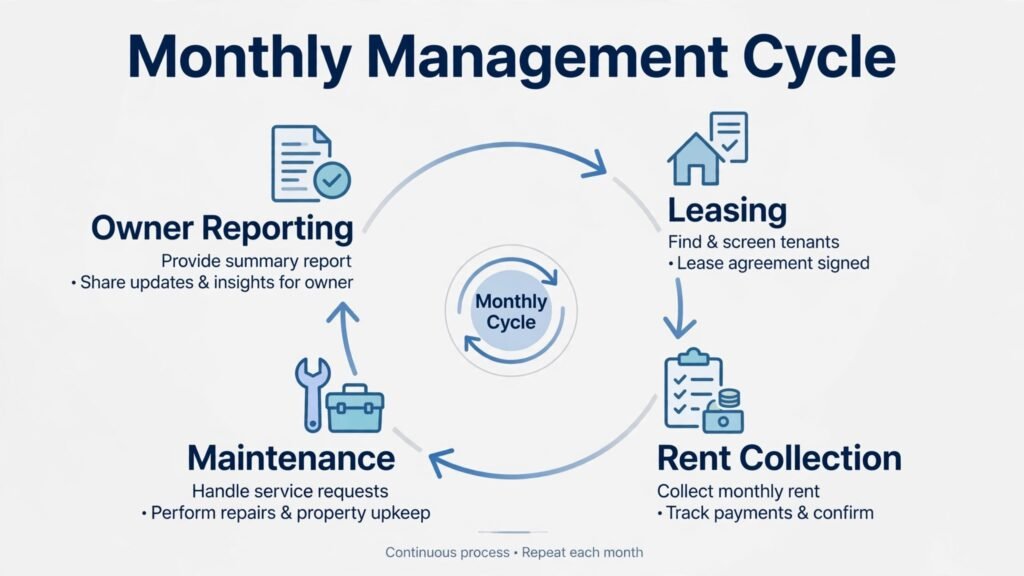
A good way to judge property software is to walk through a month in a well run portfolio. On the first of the month, rent is due. Tenants who pay online are receipted automatically. Tenants who have not paid by the third day receive a polite reminder from the system, not a stressed phone call from the office. By the fifth day, the manager sees a short arrears list: who is late, by how much, and what the next step is for each case. That list, reviewed daily, prevents a small delay from becoming a large arrears problem.

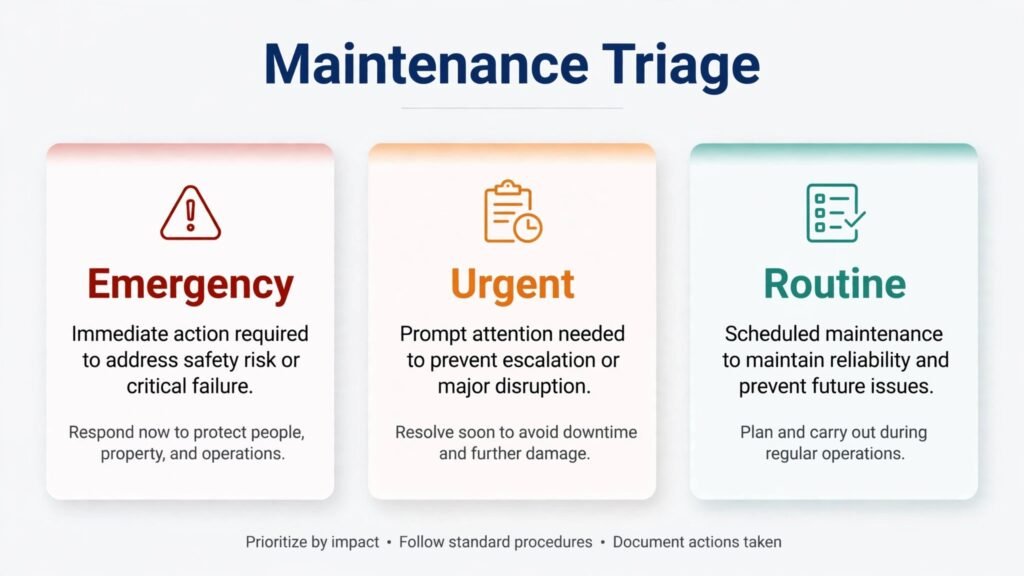
During the month, maintenance requests arrive through the tenant portal with photos. The manager triages each one the same day: emergency, urgent, or routine. An emergency such as a leak or a heating failure in winter gets a vendor the same day. A routine job such as a dripping tap gets scheduled within the week. Each job carries a status the tenant can see, so the tenant does not call to ask what is happening. When the vendor completes the work, the tenant confirms, the invoice is matched to the job, and the owner sees the cost in the monthly statement with a clear description. Nothing in that chain relies on memory.
Mid month, the manager reviews leases expiring in the next ninety days. Renewal offers go out with a clear rent figure and a deadline. Tenants who renew save the firm a vacancy, a clean, and a relet. Tenants who plan to leave trigger a listing plan early, so the vacancy is marketed before the keys are returned, not after. That ninety day habit is one of the highest value routines in property management, and it only happens reliably when the system surfaces expiring leases without being asked.
At month end, owner statements go out on schedule. Each statement shows income, costs, arrears, vacancy, and upcoming work in a short summary, followed by detail for owners who want it. Owners who understand their statement call less, trust more, and stay longer. A manager who sends statements late, or sends a raw export with no summary, will spend the first week of every month answering questions that a clear statement would have prevented.
Owner reporting also needs a human note. Add two or three lines to each statement about anything unusual: a repair that cost more than expected and why, a renewal that was agreed, or a vacancy that is being marketed. That short note turns a system report into a relationship. Owners stay with managers who explain the numbers, not only with managers who produce them. Software makes the numbers easy. The note makes the manager trusted.
Growing from 30 units to 300 units
Growth breaks property systems in predictable ways. At 30 units, one manager can know every tenant and every owner by name. At 100 units, that memory fails, and the system must carry the knowledge instead. At 300 units, the firm needs roles, not heroes: one person owns leasing, one owns maintenance, one owns accounting, and the system routes work to the right role. A tool bought for 30 units that cannot assign work by role will become a bottleneck at 100 units, even if it felt perfect at the start.
Arrears handling shows the same pattern. At small scale, a manager can call each late tenant personally. At larger scale, arrears need a written workflow: reminder on day three, formal notice when local rules allow, a payment plan offer where appropriate, and escalation steps that are followed the same way every time. The system should surface the arrears list daily, track every contact, and show the owner what action was taken. Owners trust a firm that follows a clear arrears process. They worry about a firm that handles arrears by memory and mood.
Hiring also changes with scale. New staff need training materials, role permissions, and a clear process for each job type. A tool with role based permissions lets a leasing agent see leasing work without seeing owner accounting, and lets a maintenance coordinator see jobs without changing rent records. That separation protects data and makes training faster, because each new hire learns one role well instead of the whole system badly. When trialling software, ask how permissions work and how long it takes to train a new hire on one role. The answer tells you more about scale readiness than any feature list.
Vendor management is the last growth test. At small scale, one trusted plumber and one electrician may cover everything. At larger scale, the firm needs several vendors per trade, with response times, prices, and quality tracked. The maintenance system should record which vendor attended each job, how fast they responded, and whether the tenant was satisfied. Over a year, that record shows which vendors to keep and which to replace, without relying on opinion. A firm that tracks vendor performance keeps maintenance costs down and tenant satisfaction up, which is exactly what retains owners.
Inspections that prevent disputes
Inspections are often treated as an extra task, but they prevent the disputes that cost the most time. A move in inspection with dated photos protects both tenant and manager. A mid tenancy inspection, with proper notice, catches small problems before they become large repairs, such as a slow leak under a sink or a blocked vent. A move out inspection, compared with the move in record, makes deposit decisions fair and explainable. Store every inspection with the tenancy record, including photos and notes, so the answer to any later question is a document, not a memory. Managers who inspect consistently spend less time arguing about deposits and more time keeping good tenants, which is a better use of every hour.
Tenant communication during inspections also matters. Tell the tenant what the inspection covers, how long it takes, and what happens next. Share a short summary afterwards, including any actions for the tenant and any actions for the manager. That transparency builds trust, especially with long term tenants who may worry that an inspection is a pretext for a rent rise. When inspections are routine, documented, and fair, tenants accept them as part of a well run home, not as an intrusion.
Renewals deserve the same care as new lettings. A tenant who renews saves marketing costs, void periods, cleaning, and relet administration, and keeps a property occupied without a gap. Start renewal conversations ninety days before expiry, with a clear rent figure, a simple renewal process, and a response deadline. Tenants who feel rushed or surprised by a late renewal offer are more likely to leave, even when they like the property. A system that surfaces expiring leases automatically makes that ninety day habit easy to keep, month after month, across the whole portfolio.