
A double booked RV on a holiday weekend is the problem that decides this purchase, and the best booking software for RV rental businesses is the one that stops it while keeping the full rental rate on repeat guests. That means one master calendar, signed handover records, and a clear split between marketplace demand and direct bookings, not just a pretty booking page.
RV rental is harder than ordinary booking. A rental spans days, not hours, and the asset is worth tens of thousands of dollars, handed to a stranger who may never have driven a large vehicle. Between rentals, the unit needs cleaning, inspection, restocking, and sometimes repair, and that preparation time must be blocked or the next renter arrives to a dirty or damaged vehicle. Mileage, generator hours, fuel, deposits, insurance, and damage claims all sit on top of the booking itself.
This guide compares eleven tools across that full job. Marketplaces bring demand but take commission. Direct booking tools keep the rate but bring no strangers. Fleet platforms manage operations but cost more. The right answer for most businesses is a mix, with one system as the master record, and this guide shows which mix fits a single RV, a small fleet, and a dealer operation.
How the Best booking software for RV rental businesses Compares at a Glance
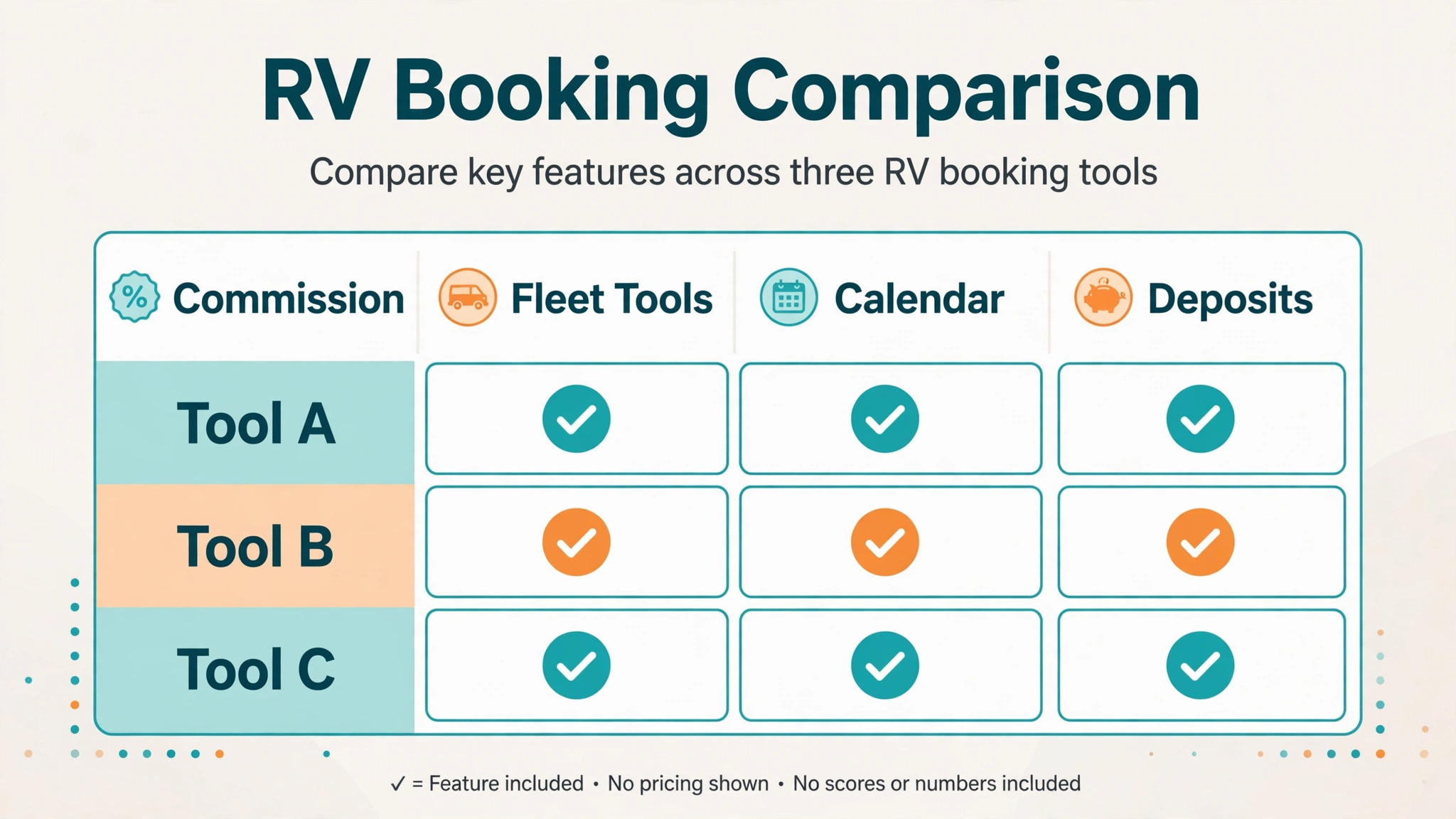
Use this table to narrow the field before reading the full reviews of the best booking software for RV rental businesses. Pricing notes are a starting point only, since vendors change plans often, so check the vendor’s current pricing page before you budget.
| Tool | Best for | Pricing note | Standout strength |
|---|---|---|---|
| Wheelbase Pro | Growing fleets | Check vendor page | RV native fleet and operations |
| Outdoorsy | Marketplace demand | 20 to 25 percent commission reported | Largest marketplace audience |
| RVshare | US marketplace demand | Around 25 percent commission reported | Largest US domestic audience |
| RVezy | US and Canada owners | 20 to 25 percent commission reported | North American marketplace cover |
| Easy Vibe Outdoors | Single camper direct bookings | Flat monthly, no commission | Keep the full rental rate |
| Booqable | Rental store and inventory | From 29 dollars per month | Rental orders, contracts, and website |
| Checkfront | Mixed rentals plus tours or lodging | Check vendor page | Mixed product booking in one sale |
| Rezdy | Direct plus reseller sales | From 49 to 249 dollars per month reported | Low fee direct bookings |
| Bókun | Viator distribution | From 49 dollars per month plus fees | Low fees and Viator reach |
| FareHarbor | Low volume start | Around 6 percent commission reported | No monthly fee to start |
| Peek Pro | Experience led booking | Quote based | Polished booking flow |
The Tools in Detail

Wheelbase Pro
Best for growing fleets that want bookings, insurance, and operations in one RV native platform.
Wheelbase Pro is built for RV businesses rather than adapted from tour booking, and that shows in how it handles multi day rentals, mixed fleets of trailers, vans, and motorhomes, and seasonal demand. Fleet views show which units are ready, which are in maintenance, and which are out, while pricing rules, minimum stays, and add on packages can vary by unit type. Automated pre trip content and walkthrough videos also cut support calls from first time renters.
Insurance, e signatures, toll capture, trip insurance, and roadside assistance sit alongside booking, which matters because an RV rental is a high value asset handed to a stranger for days at a time. The trade off is scope. A single RV owner may pay for fleet depth they do not yet need, so ask for pricing on a small fleet and confirm what changes as units are added before committing.
Outdoorsy
Best for owners that want immediate demand from a large marketplace.
Outdoorsy is the largest peer to peer RV marketplace in this comparison, with listings across RV classes and, unlike its main US rivals, a footprint in Europe as well. For a new rental business, that demand is the product. Listings, payment processing, protection plans underwritten through Roamly, and 24 hour roadside assistance come together, and third party comparisons put liability cover at up to 1 million dollars per trip. Check the vendor’s current terms before relying on any cover figure.
The cost is commission. Third party comparisons put Outdoorsy owner commission in the 20 to 25 percent range, with renter service fees also reported in a similar band, so repeat guests booked through the marketplace keep costing you on every trip. Use Outdoorsy to fill calendars and win first reviews, then move repeat guests to direct booking where you keep the full rental rate.
Best for US based owners that want the largest domestic marketplace audience.
RVshare is the other major US marketplace, with coverage across all 50 states and particular strength historically in towable units such as travel trailers and fifth wheels. It offers liability cover reported at up to 1 million dollars, physical damage cover through a third party insurer, and a worry free rental guarantee, plus cancellation policies that vary by listing. For a US fleet, the audience size alone can justify a listing even when direct booking is the long term goal.
Commission is again the trade off, with third party comparisons putting RVshare at around 25 percent, and owners reported to keep roughly 75 to 80 percent of the rental rate. Read the final checkout total carefully in a test booking, since some renters report fees surfacing late. Treat RVshare as a demand channel, not as your system of record, and keep your own calendar as the master copy.
RVezy
Best for owners operating in the US and Canada who want a North American marketplace alternative.
RVezy is a large North American marketplace with 24 hour roadside assistance and insurance on each rental, and third party comparisons put its commission in the 20 to 25 percent range with liability cover reported up to 2 million dollars in some listings. For Canadian operators especially, a marketplace with real cross border coverage avoids the awkward fit of a US only platform. Listings, reviews, and messaging work much like the other marketplaces, so the learning curve is low.
As with any marketplace, you do not own the customer relationship in the same way as with direct booking, and commission applies on trips you could have won directly. RVezy suits owners who want a second demand channel alongside Outdoorsy or RVshare, or a primary channel in Canada. Compare net payout after commission and fees, not headline rental rates, before choosing a primary marketplace.
Easy Vibe Outdoors
Best for single camper owners that want direct bookings with no commission.
Easy Vibe Outdoors is not a marketplace. It gives a camper owner a booking page, calendar, online checkout, automatic security deposit holds, and e signed rental agreements for one flat monthly price, with no commission on bookings. Payments run through Stripe directly to the owner’s bank account, and marketplace calendars can be synced by iCal so a booking on Outdoorsy or RVshare blocks dates on the direct page. A 30 day free trial with no card required makes testing low risk.
The limit is demand. Easy Vibe brings no strangers to your page, so it only pays when you already bring renters through referrals, social media, or repeat guests. That makes it a complement to a marketplace, not a replacement for one, at least until direct demand grows. For a single camper with steady repeat business, keeping every dollar of the rental rate can beat a marketplace within a few trips.
Booqable
Best for rental businesses that want a rental store, inventory, and contracts in one tool.
Booqable is rental software for businesses of all sizes, with order and inventory management, quotes, contracts, invoices, real time availability, and a website builder or hosted booking page. Its published pricing starts at 29 dollars per month for the Start plan on monthly billing, with higher Grow and Scale plans adding features, and a 14 day free trial. Seasonal, tiered, and weekend pricing fits RV rental well, since rates vary sharply by season and by day of the week.
Booqable is general rental software, not RV native, so it will not include RV specific insurance, driver checks, or mileage rules out of the box. You will need to build those into contracts and checklists yourself. It fits best when the rental operation is the core business and you want one system for bookings, inventory, and payments across unit types, rather than a marketplace listing alone.
Checkfront
Best for operators that mix rentals with tours, lodging, or activities in one booking system.
Checkfront is a booking platform used by tour and activity operators worldwide, with live inventory, dynamic pricing, customer notifications, and channel distribution. Its inventory model handles mixed products well, so a business that rents RVs and also sells tours or cabin nights can take all of them in one transaction. Third party comparisons put Checkfront pricing in a monthly subscription band with no commission on some plans, so check the vendor’s current pricing page for the current figure.
The entry price can be high for a very small operator, and setup takes more care than a simple marketplace listing, since you configure products, pricing, and availability yourself. Checkfront fits when your business is broader than RVs alone and you want one booking system for everything. For a pure single RV operation, a simpler direct booking tool may cost less and launch faster.
Rezdy
Best for operators that want strong direct booking and distribution to travel sellers.
Rezdy is a booking platform used by tour operators in dozens of countries, with real time online sales through your own website and distribution through resellers. Third party pricing comparisons put Rezdy plans from 49 to 249 dollars per month, with no booking fee on direct bookings on some plans and a smaller fee on reseller bookings. That structure rewards businesses that drive their own traffic, since direct bookings keep more of the rental rate.
Rezdy is tour first in its design, so RV specific workflows such as handover inspections, mileage allowances, and damage deposits need to be built into products, forms, and contracts. It also overlaps with Checkfront, since the two merged in 2018, so compare current feature lists rather than old reviews. Rezdy fits fleets that already sell through travel channels and want direct booking to grow alongside them.
Bókun
Best for operators that want low booking fees and Viator distribution.
Bókun is a tour and activity booking system with published plans from 49 dollars per month, booking fees reported at 1 to 1.5 percent on online bookings, and no Bókun booking fee on Viator reservations. That fee structure is attractive for operators that sell through Viator or TripAdvisor, and it also offers channel sales, capacity management, and customer messaging. For an RV business that also runs tours or experiences, Bókun can cover both sides in one system.
As a tour platform, Bókun needs configuration for RV specifics such as multi day blocks, vehicle prep time between rentals, and handover checklists. It is not a fleet management tool, so maintenance scheduling and unit level readiness will need a separate process or integration. Choose Bókun when distribution and low fees matter most, and accept that RV operations will need custom setup.
FareHarbor
Best for walk up heavy operators that want to start with no monthly fee.
FareHarbor is a booking system with no monthly or setup fee on its standard model, with payment processing bundled into a commission reported at around 6 percent on bookings. That model suits a new or seasonal operator that wants to start without fixed costs, and it covers online booking, point of sale, and reporting in one place. For an RV business with a physical lot and walk up traffic, the point of sale side matters as much as the website.
The trade off is total cost at volume. At high booking volumes, a 6 percent commission on every booking can exceed a flat monthly subscription quickly, so model the fee on your real annual bookings before choosing. FareHarbor is also tour first, so RV handover, mileage, and damage workflows need custom work. It fits best at low to moderate volume, or as a first system before moving to a flat fee platform.
Peek Pro
Best for experience led rental businesses that want polished online booking and marketing tools.
Peek Pro is a booking platform for tours and activities with online booking, inventory management, and marketing features, and it is often chosen for its clean customer facing booking flow. For an RV business that sells the trip as an experience, with add ons, packages, and guided options, that polish can lift conversion. Check the vendor’s current pricing page, since Peek Pro pricing is typically quote based and varies with volume and features.
Peek Pro is not RV native, so fleet readiness, maintenance, handover inspections, and mileage tracking will sit outside the booking flow unless you build them in. It also makes most sense when online conversion is the bottleneck. If your bottleneck is fleet operations rather than bookings, a fleet focused tool such as Wheelbase Pro will solve more of the daily pain.
Best Pick by Job
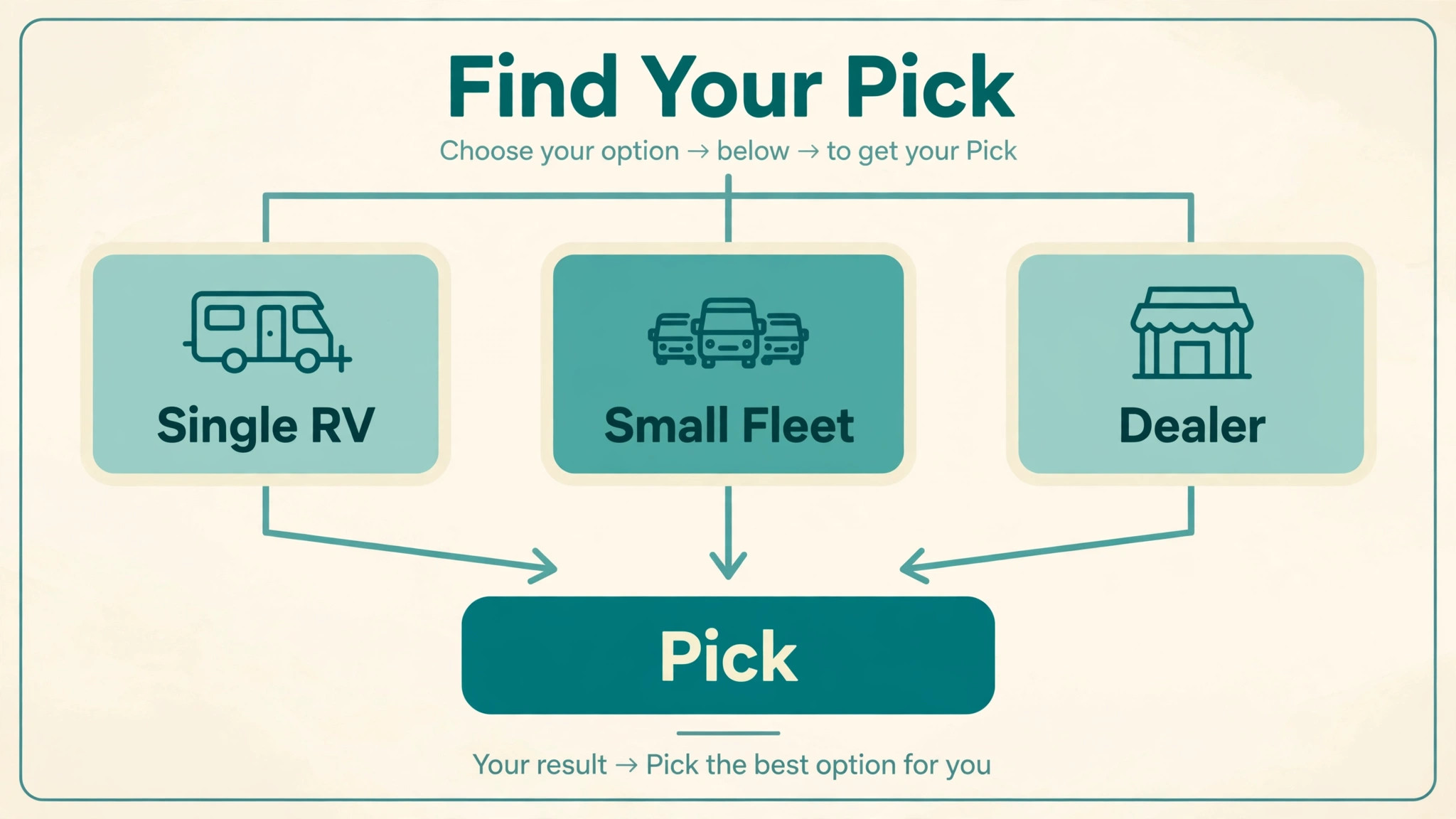
When you compare the best booking software for RV rental businesses, match the pick to the job, not to the largest feature list. A single RV needs cheap direct booking. A small fleet needs readiness and pricing control. A dealer needs demand plus operations, which usually means two tools working together.
| Your situation | Best pick | Why it fits |
|---|---|---|
| Single RV | Easy Vibe Outdoors | No commission on repeat and referral bookings, with deposits and signed agreements included |
| Small fleet | Wheelbase Pro | Fleet readiness, pricing rules, and insurance sit in one RV native system |
| Dealer rentals | Outdoorsy plus Wheelbase Pro | Marketplace demand fills calendars while your own system stays the master record |
How to Choose
Start with your channel mix. Decide what share of bookings should come from marketplaces, what share should come direct, and what share should come from referrals, then choose tools that support that mix rather than fighting it. Next, test the calendar under real conditions. Book the same unit on two channels within minutes, add a preparation block, and move a booking by a day, and watch whether every view updates correctly. Finally, test the handover flow end to end, from signed agreement to photo checklist to deposit release, since that flow is where disputes are won or lost.
Cost needs the same care. Model marketplace commission on your real annual bookings, add subscription fees for direct and fleet tools, and compare the total. A flat monthly tool looks expensive at low volume and cheap at high volume, while a commission tool looks cheap at low volume and expensive at scale. Run both models on last season numbers before you choose, and revisit the model each season as volume changes. That model is the financial core of choosing the best booking software for RV rental businesses.
Mistakes to Avoid
Treating a marketplace as your system of record is the most common mistake, because marketplace calendars, customer records, and damage evidence do not transfer cleanly when you leave. Relying on memory for handover condition is another costly error, since damage claims without photos rarely succeed.
A third mistake is pricing by copying a neighbour listing without accounting for cleaning, maintenance, insurance, and preparation time, which turns a busy calendar into thin profit. Finally, do not set a preparation buffer of zero to maximise bookings, since a rushed turnaround creates the damage and cleaning disputes that cost far more than one lost night. Avoiding those mistakes is part of what makes the best booking software for RV rental businesses worth paying for.

Growing Direct Bookings Without Losing Marketplace Demand
Direct bookings grow from repeat guests, referrals, and local partnerships, not from a booking page alone. After every good trip, ask for a review on the marketplace and send a simple direct booking offer for the next trip, such as a returning guest rate or a free add on. Keep the offer modest, since a large discount trains guests to wait for discounts, while a small thank you keeps the relationship warm without cutting margin.
Local partnerships also bring direct demand that marketplaces cannot copy. Campgrounds, outdoor retailers, event organisers, and local attractions can refer guests who already trust them, and a simple referral page or code makes that traffic trackable. Track where each direct booking came from, even with a simple source field at checkout, so you can see which partnerships earn their effort and which ones only sound good.
Do not leave marketplaces in anger once direct bookings grow. Marketplaces still fill gaps, reach first time renters, and cover slow weeks, and a sudden exit can leave calendars empty while direct demand is still building. The healthiest mix for the best booking software for RV rental businesses is usually a steady marketplace share for new guests plus a growing direct share for repeat guests, with one master calendar keeping both honest.
Seasonal Pricing and Fleet Readiness
RV demand is seasonal, and pricing should follow it rather than staying flat all year. Peak weekends, holidays, and local events can support higher rates, while shoulder season needs lower rates or longer minimum stays to keep calendars full. Set seasonal rules by unit type, since a large motorhome and a small camper van do not peak in the same way, and review last season occupancy before setting this season rates. A booking tool that only supports one flat rate will force manual price changes every week.
Fleet readiness is the operational side of the same problem. A unit that looks available in the calendar but is waiting on a repair is not available, and promising it creates a cancelled trip and a bad review. Keep a simple readiness status for each unit, with cleaning, inspection, and repair as separate steps, and block the unit until all three are complete. That discipline costs a little revenue in blocked days and saves far more in avoided cancellations and damage disputes.
Finally, track utilisation by unit, not just by fleet. One popular unit can hide two weak ones, and weak units may need better photos, a lower rate, or a different listing title. Review utilisation monthly in season and quarterly out of season, and retire or reposition units that consistently underperform. The booking system should make that review easy, with occupancy and revenue by unit in one report, rather than forcing a manual count from bookings.
Checklist Before You Buy
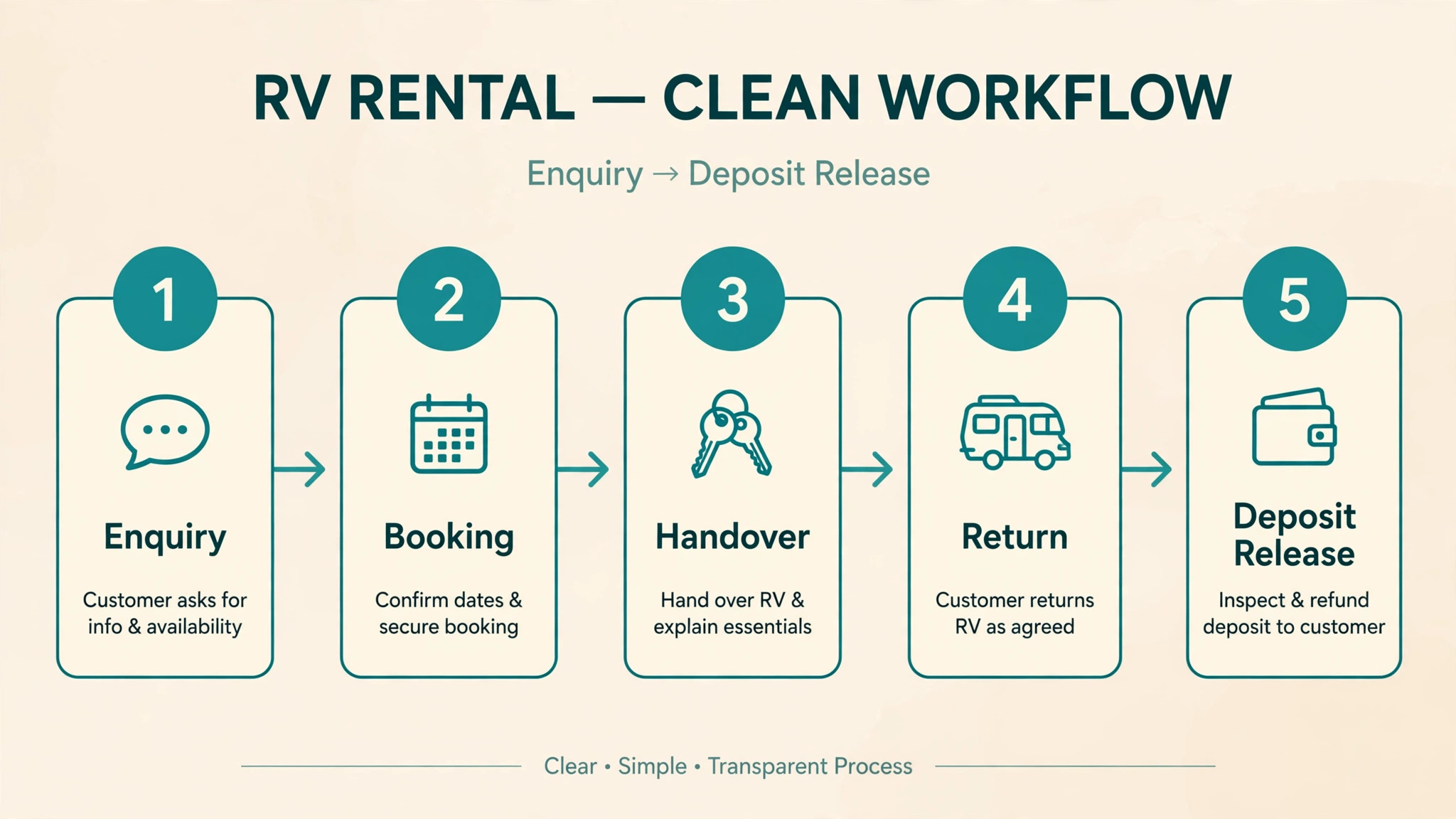
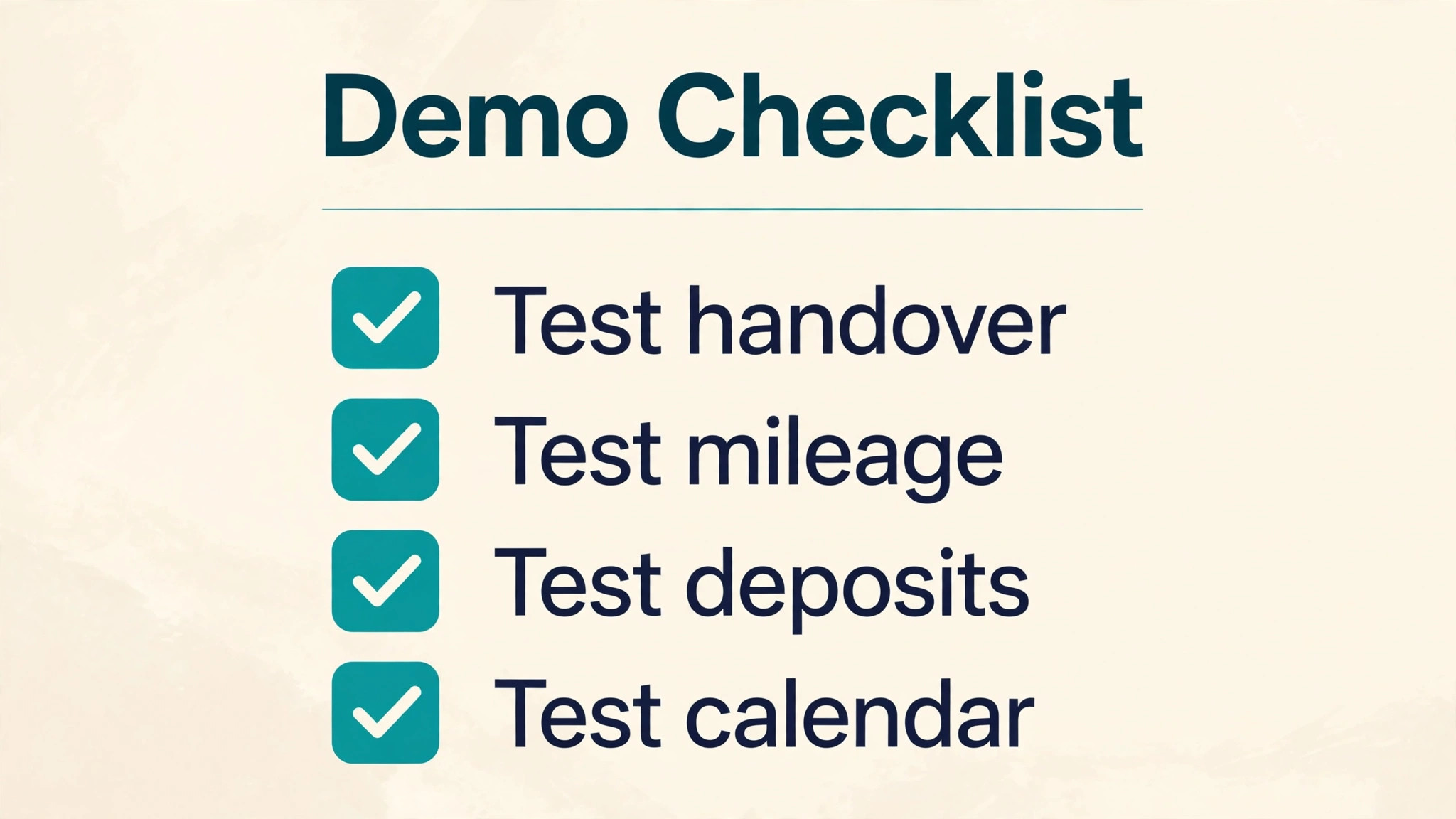
Before you sign, run one real rental through the system from enquiry to deposit release. List the unit with clear mileage, generator, and cleaning terms. Take a booking, collect a deposit hold, and send the rental agreement for e signature. Complete a photo handover at pickup and again at return. Record a minor damage item and release the deposit. If any step needs a separate spreadsheet, a paper form, or a message thread, that gap is part of the system you are buying, and you should price it honestly.
– Confirm the master calendar and how often each channel syncs to it – Test a same unit booking on two channels within minutes – Record a photo and video handover at pickup and return – Collect a security deposit hold and a signed rental agreement at booking – State mileage allowance, overage rate, and generator limits in writing – Block preparation time between rentals that cannot be booked over – Check insurance cover, deductible, and who pays it for direct bookings – Confirm how damage claims are filed and what evidence is required
Frequently Asked Questions
Should I list on a marketplace, build direct booking, or do both?
Do both, with a clear rule for which channel owns the customer. Marketplaces win first bookings and fill gaps, while direct booking keeps the full rate on repeat guests. Use calendar sync so a marketplace booking always blocks your direct calendar, and move repeat guests to direct booking with a simple incentive such as a returning guest discount.
What commission should I expect on a marketplace?
Third party comparisons put the main RV marketplaces in the 20 to 25 percent range, with RVshare reported around 25 percent. Always compare net payout after commission, service fees, and processing, not the headline rental rate. A higher rental rate on a high commission marketplace can pay less than a lower rate booked directly.
How do I avoid double bookings across channels?
Keep one master calendar and sync every other channel to it. Marketplace iCal syncs typically refresh on a schedule, such as every 15 minutes on some tools, rather than instantly, so confirm the sync interval and block preparation time between rentals. A double booking of the same RV on the same weekend damages reviews far more than a lost booking.
What should a handover checklist include?
Record exterior and interior condition with photos and video, fuel or battery level, mileage, generator hours, tire condition, and the working state of appliances. Have the renter sign the same checklist at pickup and return, so damage claims rest on evidence rather than memory. Store the signed checklist with the booking record, not in a separate photo folder.
How do mileage and generator limits work in booking software?
Most general booking tools do not enforce mileage automatically, so you must state the allowance, the overage rate, and the generator hour limit in the rental agreement and in the booking confirmation. Fleet focused tools handle this more naturally, while marketplace listings need the limits written clearly in the listing and in the signed contract.
Do I need separate insurance for each rental?
Insurance depends on the channel and the policy. Marketplaces typically include protection plans during the rental period, while direct bookings need your own commercial or episodic cover. Confirm who is covered, what the deductible is, and whether the renter or the owner pays it, and get those answers in writing before the first direct rental.
How much preparation time should I block between rentals?
Block enough time for cleaning, inspection, restocking, and minor repairs, and longer after a long trip or a first time renter return. Many operators block a full day between rentals, which costs a night of revenue but prevents a rushed handover and a missed damage claim. Set the buffer in the booking system so it cannot be booked over by accident.
What is the cheapest way to start an RV rental business?
Start with one marketplace listing to test demand, plus a simple direct booking page for repeat guests, rather than buying a full fleet system on day one. Keep fixed costs low until you know your season, your average trip length, and your real cleaning and maintenance time. Add fleet software when manual calendars start causing errors.
Verdict
Wheelbase Pro leads for fleets that want RV native operations in one place. Easy Vibe Outdoors leads for a single RV owner focused on direct bookings with no commission. Outdoorsy and RVshare lead for demand, and most serious businesses will use one of them alongside a direct tool rather than instead of one. Booqable, Checkfront, Rezdy, Bókun, FareHarbor, and Peek Pro each fit a specific mix of rentals, tours, and distribution, so choose on channel mix and total cost, not on feature count alone. That mix is the honest answer for the best booking software for RV rental businesses.
Pick one master calendar this week, list on one marketplace for demand, and set up direct booking for repeat guests. Run the handover checklist on every rental from the first trip, since the records you build now are what protect the fleet later. The system that keeps calendars, agreements, photos, and deposits together is the system that lets an RV business grow without double bookings or disputed damage.

More Reading on Stratilyze
These related guides cover nearby buying decisions and may help you compare costs and workflows before you commit.
– Best Booking Software for Outdoor Rental Businesses – Best Booking Software for Boat Rentals – Best Membership Software for Dance Studios – Best Donation Software for Schools – Best Online Ordering Software for Restaurants