
A chair that does not fit the room will hurt, even if it is comfortable in a showroom. That sentence sounds obvious until you measure a small room properly, because showroom comfort hides the two numbers that decide the best chair for home office small spaces, which are footprint and recline clearance. A chair with a wide base, long seat, and deep recline needs more floor than a small room offers, and it will hit walls, block doors, or force a desk position that ruins posture. A chair chosen for size first, and comfort second, will serve a small room for years, while a chair chosen for comfort alone will be returned, resold, or endured with daily frustration.
If you are looking for the best chair for home office small spaces, measure the room before you shortlist a chair, because the room, not the review score, decides which chairs are even eligible.
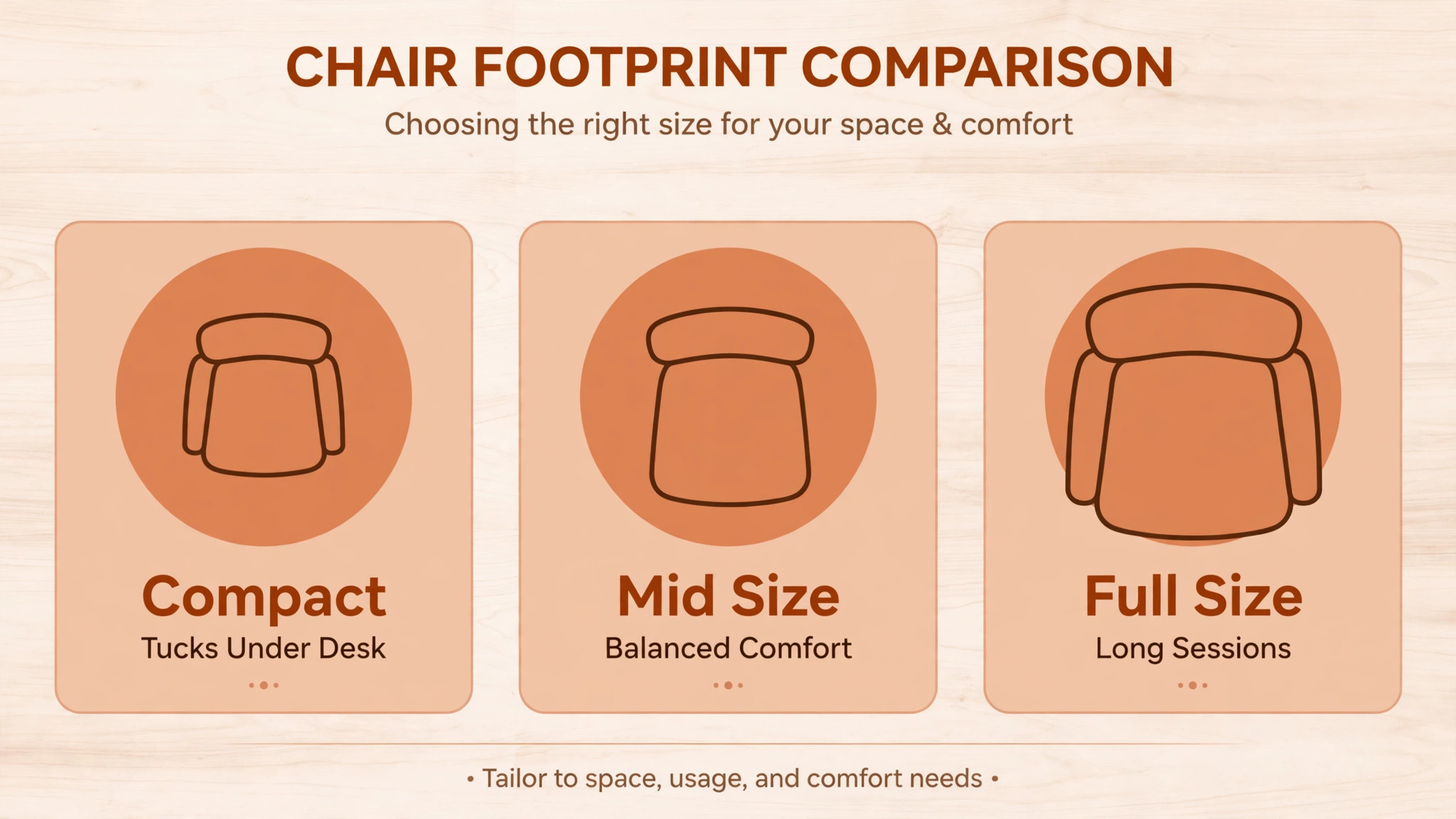
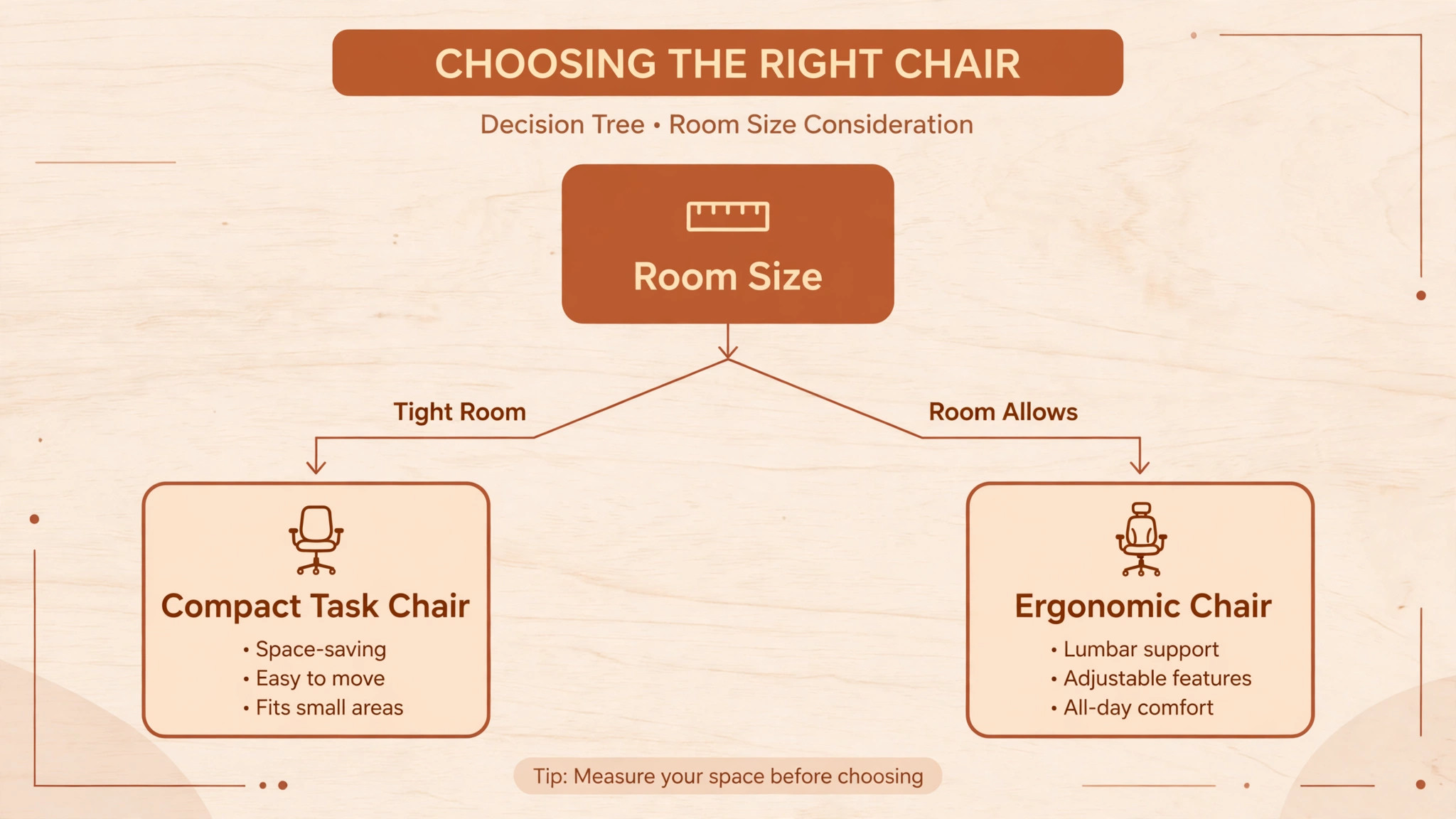
Small room chair buying differs from general chair buying in three ways. First, footprint matters more than feature count, since a chair that is 30 inches wide will dominate a 90 square foot room, while a chair that is 24 inches wide will leave space for movement, storage, and a door swing. Second, armrests matter differently, since fixed wide arms add width, block sliding under a desk, and catch on desk edges, while adjustable or armless designs tuck away cleanly. Third, seat depth and height adjustability matter more, since a small room often forces a fixed desk height and a fixed viewing distance, so the chair must adapt to the desk rather than the desk adapting to the chair.
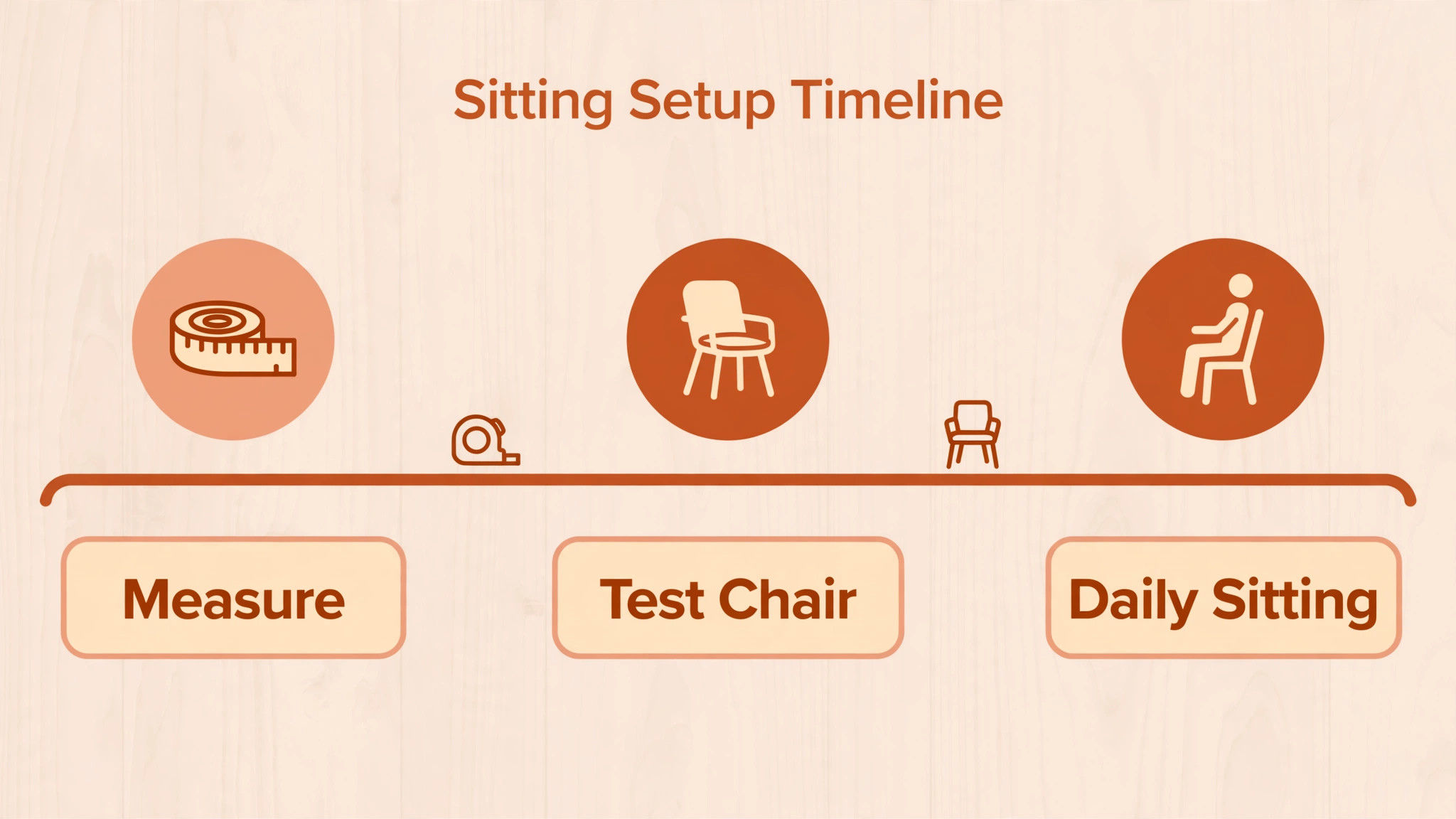
This guide compares six chairs with real dimensions and prices from published listings, plus a space checklist that turns room measurements into a chair shortlist, so you can buy once and sit well.
How to Measure a Small Room for a Chair
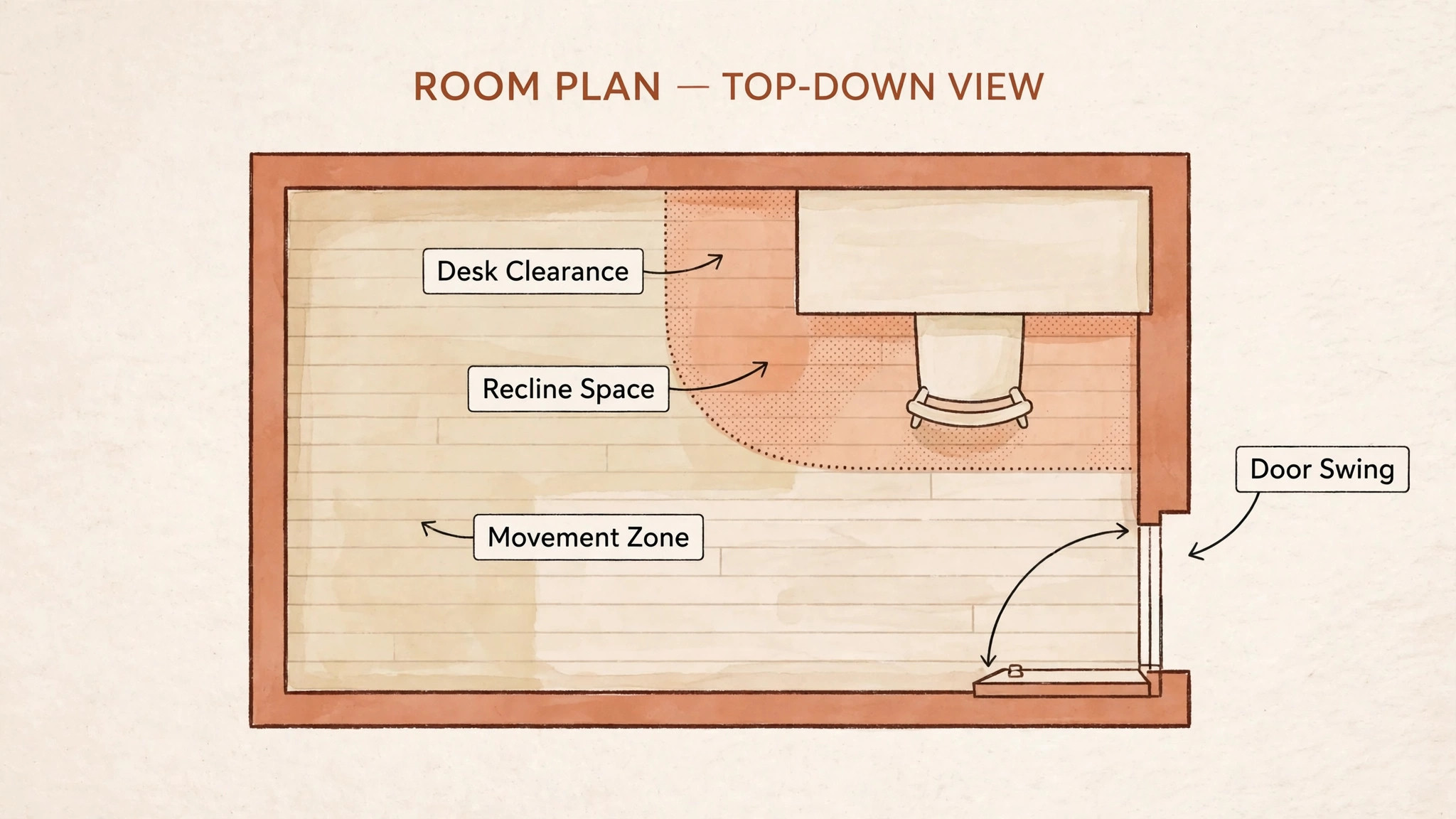
Measure three numbers before shortlisting any chair. First, measure desk clearance, which is the width under the desk where the chair slides, including leg and cable tray obstructions, since a chair wider than that clearance cannot tuck under the desk and will protrude into the room permanently. Second, measure recline clearance, which is the distance from the chair back to the nearest wall, door swing, or furniture behind it, since a chair that reclines needs 2 to 3 feet behind it for full movement, and a chair without that clearance will either hit the wall or force you to sit upright always.
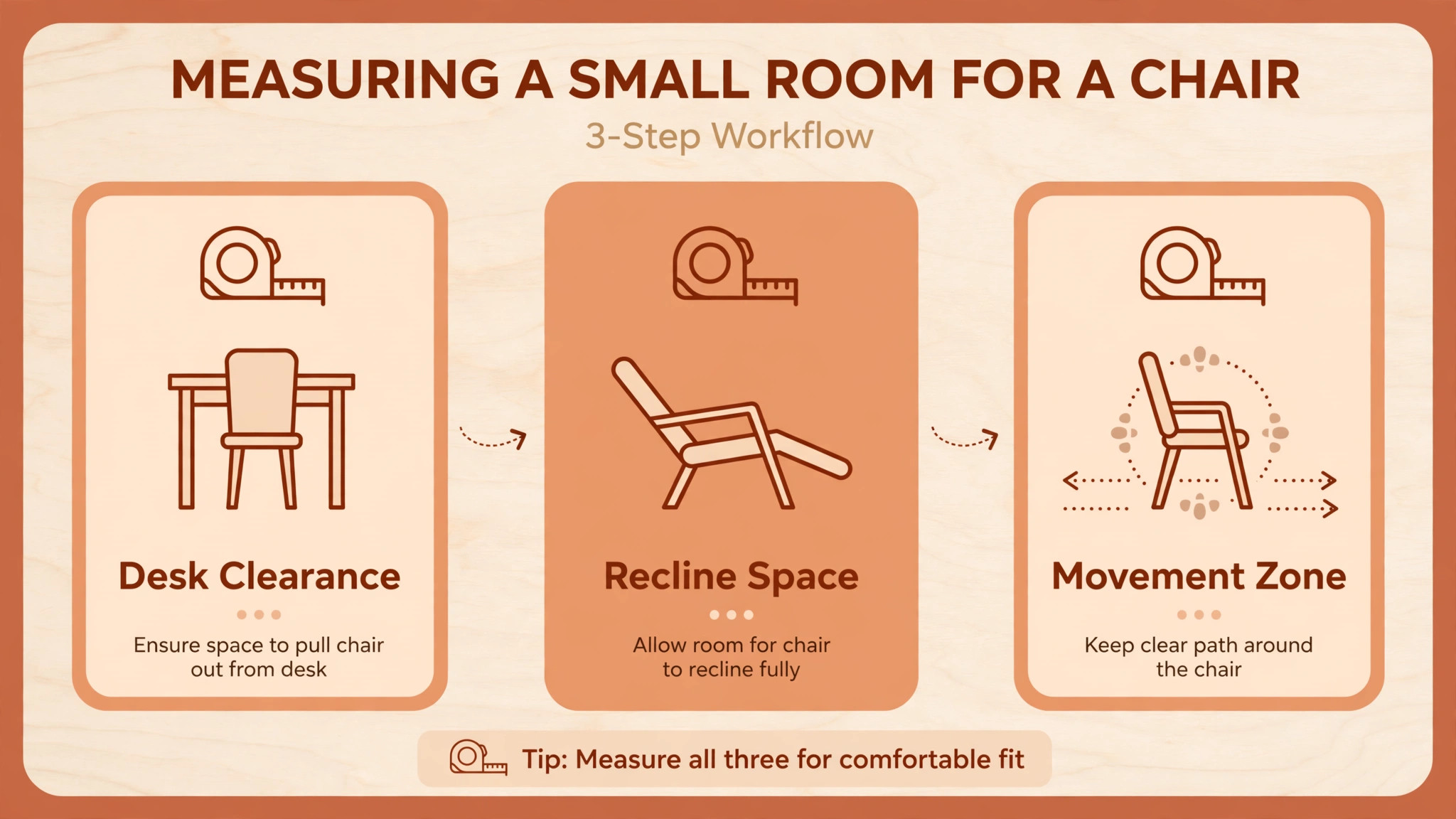
Third, measure the movement zone, which is the floor space needed to push back, stand, and walk around the chair without squeezing past furniture, since a chair that fits when seated but blocks movement when standing will frustrate daily.
Seat height, seat depth, and back height are the chair numbers that translate room measurements into comfort. Those three numbers are the core fit test for the best chair for home office small spaces, since a chair that misses on any one of them will strain legs, back, or shoulders daily. Seat height should let feet rest flat on the floor with knees near 90 degrees, with a minimum seat height that suits shorter sitters, since a chair that cannot go low enough forces feet to dangle and strains legs. Seat depth should leave 2 to 3 inches between the seat edge and the back of the knees, with adjustable depth helping shorter and taller sitters alike.
Back height matters for small rooms because a high back chair visually dominates a small room and needs more recline clearance, while a mid back chair fits tighter spaces and still supports the lower and mid back for most desk work. A headrest adds comfort for reclining and calls, but it also adds height and visual bulk, so choose it only if recline clearance and room height allow.
Armrests, casters, and base size complete the small room checklist. Armrests should adjust in height and, ideally, width and depth, so they slide under the desk or tuck beside it without catching, and armless chairs, while saving width, suit only short sessions for most sitters, since arms support shoulders during long days. Casters should suit the floor, with soft casters for hard floors to avoid scratches and hard casters for carpet to avoid sinking, and a five star base should be compact rather than sprawling, since base diameter decides how much floor the chair actually occupies when it swivels.
Weight capacity and warranty matter for longevity, but they should not override size, since a durable chair that does not fit is still a wrong chair.
Best Chair for Home Office Small Spaces Compared in Six Models
| Chair | Footprint width by depth | Seat height and depth | Price noted | Best for |
|---|---|---|---|---|
| Herman Miller Sayl | 62.2 cm wide by 50.2 cm deep | Seat depth 16 to 18 inches | About 735 to 775 dollars | Premium compact design, frameless back |
| Steelcase Series 1 | 23.5 to 27 inches wide by 21 to 23.75 inches deep | Seat depth 15.5 to 17.75 inches | About 499 dollars | Professional mid range, 4D arms, long warranty |
| HON Ignition 2.0 | Compact mid size footprint | Minimum seat height 16.75 inches | About 481 dollars | Adjustable mid range, office standard |
| Sidiz T25 | Compact task footprint | Minimum seat height 15.7 inches | About 355 dollars | Low seat height, value ergonomics |
| Branch Ergonomic Chair | 25 inches wide by 24 inches deep | Seat height 17 to 21 inches | About 369 dollars | Balanced home office, eight adjustments |
| Amazon Basics Low Back Task Chair | 22.5 inches wide by 21.25 inches deep | Seat depth 17 inches, no arms | Budget task price, confirm current listing | Ultra compact, armless, tightest rooms |
Prices are published listing snapshots and move with sales and configuration, so confirm the current price and exact configuration before ordering. Dimensions vary by configuration, especially arm width and seat depth settings, so use the range in the table as a guide and check the exact model specification for the configuration you plan to buy. A chair that fits on paper at minimum width may exceed desk clearance at maximum arm width, so measure against the widest setting you will actually use.
The Herman Miller Sayl, at about 735 to 775 dollars new, is the premium compact pick, with a frameless back that visually lightens a small room, a footprint of 62.2 centimetres wide by 50.2 centimetres deep, and a seat depth range of 16 to 18 inches that suits a wide range of sitters. Its frameless suspension back, inspired by suspension bridge design, flexes with the sitter and provides support without a bulky frame, which makes the chair look smaller than its dimensions suggest and helps a small room feel less crowded. Visual lightness is a real advantage when hunting for the best chair for home office small spaces, since a chair that looks smaller makes the whole room feel larger.
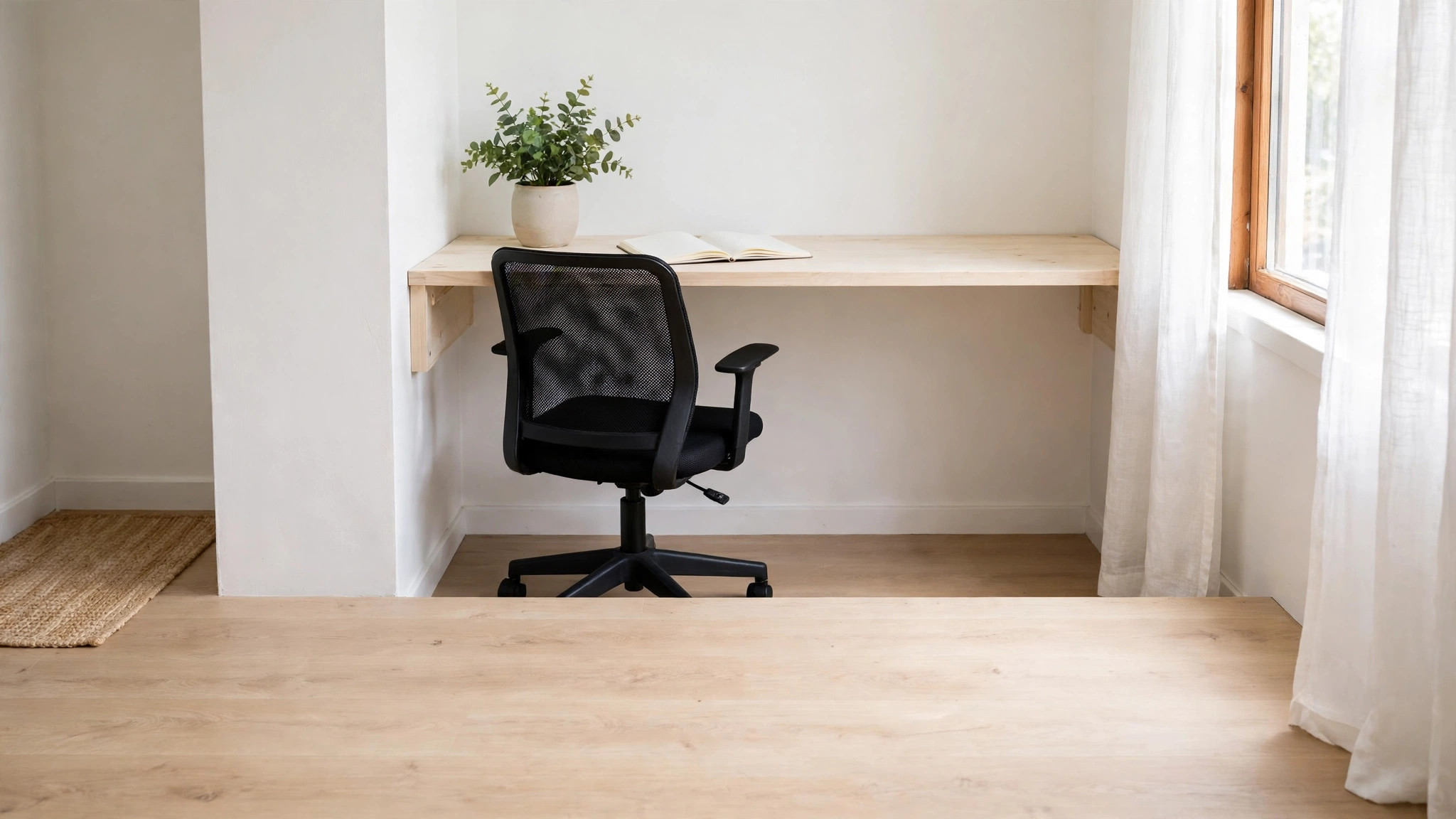
Its build quality, materials, and warranty reflect Herman Miller standards, and it is a chair that will last a decade of daily use in a home office.
Skip it if budget is tight, since at over 700 dollars it costs twice most chairs in this guide for design and build refinement rather than a transformation in basic ergonomics, and skip it if you need a headrest, since the Sayl back design does not offer one in the standard configuration. Also skip it if you need extensive arm adjustability beyond its standard arms, and check seat depth and height settings for your body, since premium price does not guarantee fit for every sitter. Buy the Sayl when design, visual lightness, and long term build quality matter, when the room must feel uncluttered, and when budget allows a premium compact chair that will not be replaced for years.
Steelcase Series 1, the Professional Mid Range Pick
The Steelcase Series 1, at about 499 dollars, is the professional mid range pick, with a footprint from 23.5 to 27 inches wide by 21 to 23.75 inches deep, a seat depth range of 15.5 to 17.75 inches, optional 4D arms, no tools assembly, and a 12 year warranty that reflects Steelcase durability standards. Its adjustable lumbar, seat depth, and arm options let it fit a wide range of sitters, while its compact footprint, for a professional chair, keeps it viable in small rooms that cannot accept larger Steelcase models.
Its no tools assembly is a genuine small room advantage, since assembling a large chair in a tiny room is itself a space challenge, and a chair that assembles quickly without tools reduces that friction.
Skip it if budget is tight, since at 499 dollars it sits at the top of the mid range, and skip it if your desk clearance is very narrow, since its maximum width near 27 inches with arms wide may exceed a tight under desk space. Also check arm configuration, since 4D arms add cost and width, and a fixed arm configuration may suit a small room better. Buy the Series 1 when professional durability, a long warranty, and adjustable ergonomics matter, and when the room can accept a mid size professional chair with proper recline clearance.
HON Ignition 2.0, the Office Standard Pick
The HON Ignition 2.0, at about 481 dollars, is the office standard pick, with a minimum seat height of 16.75 inches, adjustable seat depth, lumbar, and arms, and a design that appears in countless offices because it balances comfort, adjustability, and durability at a mid range price. Its adjustments cover the core ergonomic needs, including seat height, seat depth, back angle, and arm height, without exotic features that add bulk or cost. For a home office that wants a proven office chair, rather than a design statement or a budget compromise, the Ignition 2.0 is a safe, well supported choice with wide dealer and parts availability.
Skip it if your room is very tight, since its mid size footprint, while not large, exceeds the ultra compact armless task chair, and skip it if you need a very low seat height for a shorter sitter, since its minimum of 16.75 inches suits average height sitters better than petite sitters. Also skip it if you want a distinctive design, since the Ignition 2.0 prioritises office practicality over visual lightness. Buy it when a proven office standard, with full adjustments and dealer support, matters more than compact design or lowest price, and when the room accepts a mid size chair comfortably.
Sidiz T25, the Low Seat Value Pick
The Sidiz T25, at about 355 dollars, is the low seat value pick, with a minimum seat height of 15.7 inches that suits shorter sitters better than most mid range chairs, a compact task footprint, and ergonomic adjustments that punch above its price. Its low minimum height is a genuine differentiator, since many chairs cannot go low enough for sitters under 5 feet 5 inches, forcing feet to dangle and legs to strain.
For a small room with a shorter sitter, or a low desk height that demands a low chair, the T25 solves a fit problem that more expensive chairs ignore, and it does so at a value price that leaves budget for a desk lamp, a monitor arm, or other room improvements.
Skip it if you are tall, since its compact size and lower height range may feel small for taller sitters, and skip it if you need a headrest or premium materials, since the T25 prioritises fit and value over luxury features. Also check seat depth and back height for your body, since compact chairs trade some back support for size, and a tall sitter may prefer a mid back or high back chair with more support. Buy the T25 when low seat height, compact size, and value matter, and when a shorter sitter needs a chair that actually fits rather than a chair that merely claims adjustability.
Branch Ergonomic Chair, the Balanced Home Office Pick
The Branch Ergonomic Chair, at about 369 dollars for black and 389 dollars for other colours, is the balanced home office pick, with a footprint of 25 inches wide by 24 inches deep, a seat height range of 17 to 21 inches, a seat depth range of 18 to 21 inches, eight points of adjustment, a 275 pound weight capacity, and a seven year warranty with a 30 day return policy. Its adjustments include armrest height and depth, seat height and depth, tilt and tilt tension, and adjustable lumbar support, which together let it fit a wide range of sitters and desk heights.
Its design is clean and modern for a home office, without the bulky corporate look of some office chairs, which helps a small room feel like a home rather than an office cubicle. That home friendly look is part of its case as the best chair for home office small spaces for buyers who share the room with living space.
Skip it if you are a shorter sitter, since its minimum seat height of 17 inches suits sitters around 5 feet 5 inches and above, and shorter sitters may need a footrest to rest feet flat, which adds cost and clutter in a small room. Also skip it if you need a very compact footprint, since its 25 by 24 inch footprint, while reasonable, exceeds the ultra compact task chair below. Buy the Branch when balanced adjustments, modern design, and a seven year warranty matter, when the sitter is average height or taller, and when the room accepts a mid size chair with proper recline clearance.
Amazon Basics Low Back Task Chair, the Ultra Compact Pick
The Amazon Basics low back task chair, with a footprint of 22.5 inches wide by 21.25 inches deep, a seat depth of 17 inches, and no arms, is the ultra compact pick for the tightest rooms, where every inch matters and a chair must tuck fully under a desk. Its armless design saves width, eliminates arm desk collisions, and lets the chair slide under desks that wider chairs cannot enter, which is decisive in rooms under 80 square feet, in alcoves, and in shared rooms where the chair must disappear after work.
Its low back design, while less supportive for long reclining sessions, suits focused desk work and short to medium sessions, and its budget price leaves room in the budget for other small room improvements.
Skip it if you work eight hour days in the chair, since its low back and lack of arm support will fatigue shoulders and back over long sessions, and skip it if you need lumbar adjustment, seat depth adjustment, or a headrest, since this is a simple task chair, not an ergonomic flagship. Also skip it if you need arms for shoulder support, since armless chairs suit only sitters who do not rely on arms during work. Buy it when space is the absolute constraint, when sessions are short to medium, or when it serves as a second chair for a shared desk, a guest desk, or a room that must double as living space after work hours.
Rejection Reasons and Space First Buying
Each chair has a clear skip reason, and those reasons protect small room buyers from the most common chair regret, which is buying for showroom comfort while ignoring room fit. Skip the Sayl if budget or a headrest matters more than design lightness. Skip the Series 1 if budget or very narrow desk clearance matters more than professional durability. Skip the Ignition 2.0 if very tight space or very low seat height matters more than office standard reliability. Skip the T25 if you are tall or need a headrest. Skip the Branch if you are a shorter sitter or need ultra compact size. Skip the Amazon Basics task chair if you work eight hour days and need full ergonomic support.
A chair bought against its skip reason will disappoint, even if reviewers praised it for a larger room and a different sitter.
Room layout for a small home office follows a simple rule, which is to place the desk against a wall with the chair facing into the room, leaving movement space behind the chair, rather than placing the desk in the centre of the room where the chair blocks circulation. A desk against a wall uses wall space efficiently, lets the chair recline into the room rather than into a wall, and keeps cables and power access simple. If a wall desk is impossible, place the desk perpendicular to a wall, with the chair back to open space, and accept a smaller chair to preserve movement.
Avoid placing a chair with its back to a door swing, since door movement will collide with the chair and force constant repositioning, and avoid placing a chair under a low shelf or sloped ceiling that limits headroom when standing.
Space Checklist, Desk Pairing, and Mistakes
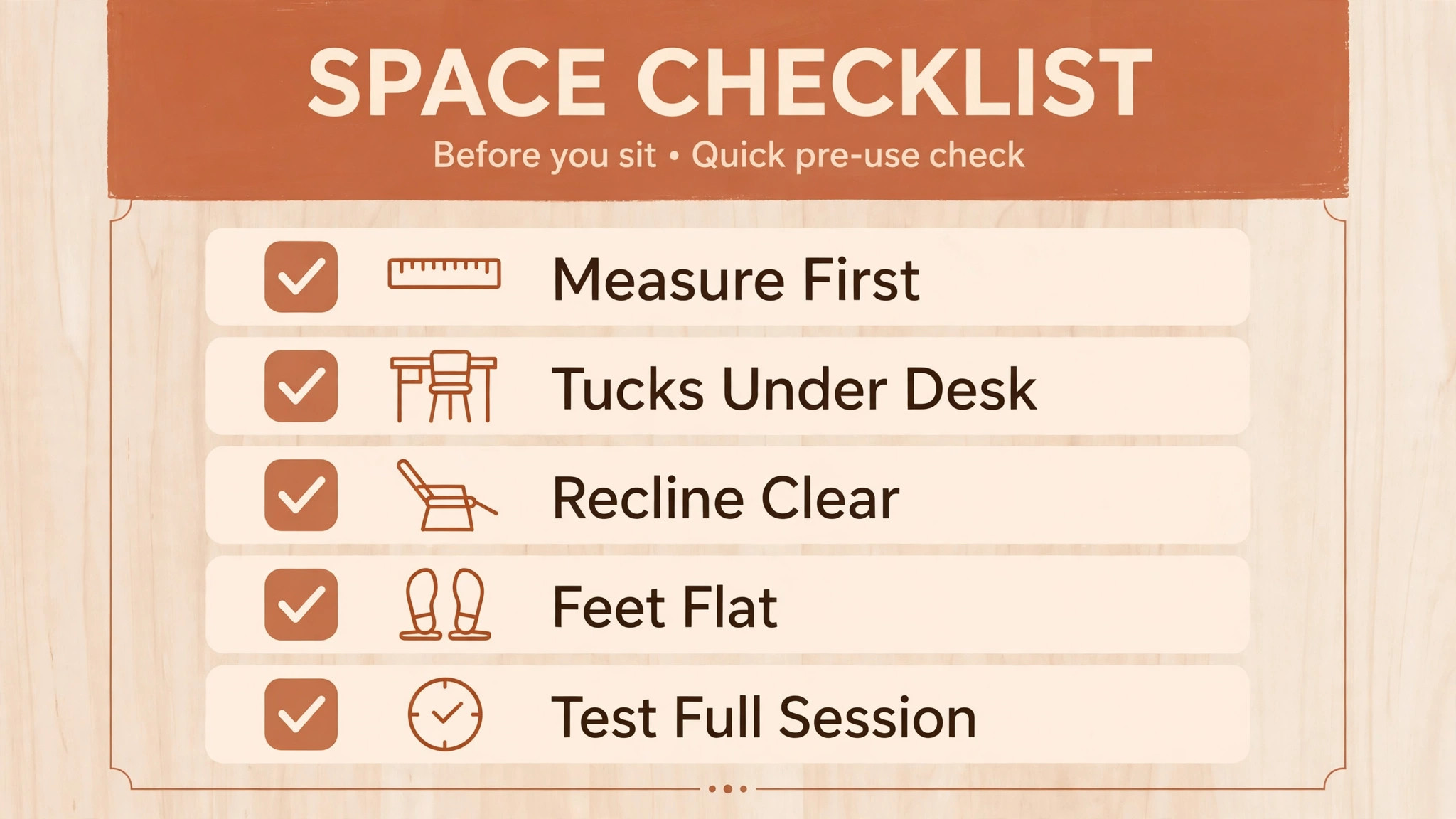
- Measure desk clearance width, recline clearance behind the chair, and the movement zone around the chair before shortlisting.
- Choose a chair footprint at least 2 inches narrower than desk clearance, so it tucks under the desk without catching.
- Allow 2 to 3 feet behind the chair for recline and standing, or choose a chair with limited recline for tighter rooms.
- Match seat height to desk height, so feet rest flat and knees sit near 90 degrees, with a footrest if the chair cannot go low enough.
- Choose adjustable arms that slide under the desk, or an armless chair for the tightest rooms, and test arm desk clearance before buying.
- Choose casters for your floor, soft for hard floors and hard for carpet, and check base diameter against room space.
- Test the chair for a full work session, not just a showroom sit, and check back, shoulder, and leg comfort after an hour.
- Keep the room layout simple, with the desk against a wall and movement space behind the chair, rather than a centre room desk that blocks circulation.
Desk pairing matters as much as chair choice in a small room. A desk that is too high forces a chair to rise, which forces feet off the floor, while a desk that is too low forces a chair to drop, which forces knees upward and strains hips. Standard desk height near 29 to 30 inches suits most chairs in this guide at mid seat height, but a fixed desk at a nonstandard height demands a chair with a wider seat height range. A monitor arm, rather than a monitor stand, reclaims desk depth and lets the chair sit closer to the desk without the screen feeling too close, which is a genuine small room advantage.
A compact keyboard and mouse, rather than a full size keyboard with a number pad, also reclaims desk width and lets the chair centre correctly, which improves posture in tight spaces.
Mistakes small room chair buyers make follow a pattern. The first mistake is buying a chair without measuring, then discovering it cannot tuck under the desk or recline without hitting a wall. Measure first, shortlist second, and buy third. The second mistake is choosing a high back chair with a headrest for a tiny room, where visual bulk and recline clearance overwhelm the space, when a mid back chair would have served desk work better. The third mistake is ignoring arm width, buying a chair whose arms exceed desk clearance, and living with a chair that protrudes permanently into the room.
The fourth mistake is buying a cheap armless chair for eight hour days, then suffering back and shoulder fatigue that a mid range ergonomic chair would have prevented. Match chair to room, to session length, and to sitter height together, rather than to any single factor alone.
More Reading for Small Home Office Gear
If a chair choice is clearer now, the wider home office guides on Stratilyze cover the rest of the tiny room. The guide to a desk lamp for eye strain helps you light a small desk without glare, the guide to a chair for long study sessions covers seating for long days in larger rooms, the guide to a webcam for online tutoring helps you look good on calls from a small room, and the guide to a tablet for digital art beginners helps visual creators in the same space. Read the desk lamp guide next if lighting or glare affects a small desk, since lamp placement and chair position together decide comfort in a tiny room.
Frequently Asked Questions
What is the best chair for home office small spaces overall?
For most small rooms, a mid size ergonomic chair with adjustable seat depth, height, and arms, such as the Branch Ergonomic Chair at about 369 dollars or the Steelcase Series 1 at about 499 dollars, offers the best balance of comfort and footprint, provided desk clearance and recline clearance allow it. For the tightest rooms, the Amazon Basics low back task chair, at 22.5 inches wide by 21.25 inches deep with no arms, is the most compact option, while the best chair for home office small spaces for premium design is the Herman Miller Sayl at about 735 to 775 dollars. Choose by room measurements, using the space checklist, rather than by a single best label.
How much space do I need behind an office chair?
Allow 2 to 3 feet behind the chair for full recline, pushing back, and standing, since a chair that reclines needs that clearance to move freely. If the room cannot provide 2 to 3 feet, choose a chair with limited recline, a mid back design, or a task chair that does not recline deeply, and place the desk against a wall so the chair reclines into open room space rather than into a wall. Measure recline clearance from the chair back at full recline, not from the chair back upright, since upright measurements underestimate the space a reclining chair actually needs.
Can a small room chair be comfortable for eight hour days?
Yes, provided the chair offers adjustable seat height, seat depth, lumbar support, and arms, and provided it fits the room and desk height correctly. Fit plus adjustability is what separates a good pick for the best chair for home office small spaces from a chair that merely looks small. Mid size ergonomic chairs such as the Series 1, Ignition 2.0, and Branch suit eight hour days well, while ultra compact armless task chairs suit short to medium sessions better and will fatigue shoulders and back over a full day.
Comfort for long days depends on fit and adjustability together, so test a chair for a full session, check leg, back, and shoulder comfort after an hour, and adjust seat depth and lumbar before judging.
Should I choose arms or no arms for a small room?
Choose adjustable arms that slide under the desk for long sessions, since arms support shoulders and reduce fatigue over a working day, and choose armless only for the tightest rooms or for short sessions where arm support matters less. Adjustable arms that move in height, width, and depth can tuck beside a desk or under it without catching, while fixed wide arms add width and block tucking. Test arm desk clearance before buying, by measuring desk clearance against arm width at the widest setting you will use, so the chair tucks cleanly.
What seat height do I need for a small room desk?
Seat height should let feet rest flat on the floor with knees near 90 degrees at your desk height, which for a standard desk near 29 to 30 inches usually means a mid seat height setting. Height matching is a non negotiable test for the best chair for home office small spaces, since a fixed desk height leaves the chair as the only adjustment. Shorter sitters need a lower minimum seat height, such as the Sidiz T25 at 15.7 inches, while taller sitters need a higher maximum. If the chair cannot go low enough for your height, use a footrest to support feet flat, since dangling feet strain legs and back over a day.
Measure your ideal seat height by sitting at the desk and checking knee angle and foot contact before buying.
How do I make a small home office feel less cramped with a chair?
Choose a chair with a compact footprint and a visually light back, such as a mesh or frameless back, which lets light and sightlines pass through the room rather than blocking them. Place the desk against a wall, keep movement space behind the chair, use a monitor arm to reclaim desk depth, and choose a compact keyboard to centre the chair correctly. A light coloured chair, a tidy background, and a chair that tucks fully under the desk after work will make a small room feel larger, since the chair disappears when not in use rather than dominating the room permanently.
Small Room, Right Chair
A small room does not force a bad chair, it forces a precise chair. The Sayl proves that premium design can lighten a small room, the Series 1 proves that professional durability fits a mid size footprint, the Ignition 2.0 proves that an office standard can serve a home office reliably, the T25 proves that low seat height solves a real fit problem at value price, the Branch proves that balanced adjustments suit most home offices, and the Amazon Basics task chair proves that ultra compact size has a place for the tightest rooms and shortest sessions.
When you judge the best chair for home office small spaces by room measurements first, and comfort second, you buy a chair that fits the room, fits the sitter, and fits the working day together.
Measure the desk, measure the recline space, match seat height to desk height, and let the chair tuck away when work ends. That disappearing act, a chair that fits so well you forget the room is small, is the real test of a small space chair, and the chairs in this guide pass it for different rooms, sitters, and budgets.