

Most cases of this problem turn out to have an ordinary cause, and the cases that drag on usually drag because the early checks were skipped. Anyone planning building a Shopify store for a small business should start by separating the headline price from the total monthly reality, because the gap between those two numbers is where budgets fail. This guide breaks down cost of building a Shopify store small business by scope and by volume, so you can see which tier fits your actual workload and which extras are worth paying for.
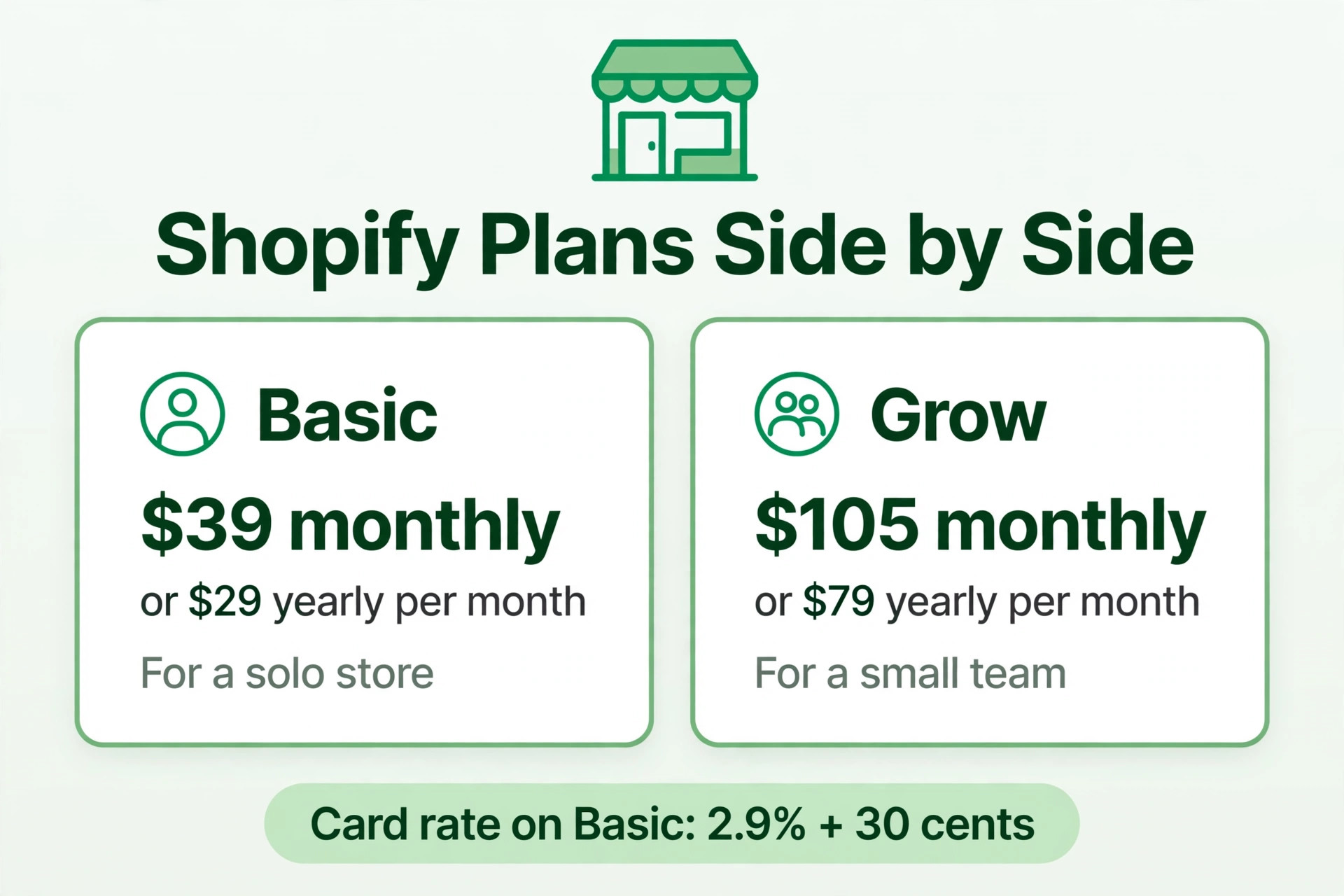
Shopify Basic costs 39 dollars a month billed monthly or 29 dollars a month billed yearly, with online card rates of 2.9 percent plus 30 cents on Basic, so the subscription is only the first line of the real monthly total, and apps, theme and payment fees follow it.
Before the numbers, it helps to know that building a Shopify store for a small business is priced by scope and volume, and the table below separates the tiers by the workload they actually cover, so you can start at the row that matches your situation rather than at a headline price.
Read the whole guide once before changing anything, because the order matters, and a step skipped early often returns as a larger problem later. Where a price or a feature is given, check it on the vendor page before you commit, since pricing and features change, and the right choice depends on your volume, your location and your existing setup.
What the Price Actually Covers
| Scope or volume | What it typically includes | Who it suits |
|---|---|---|
| Starter setup, Basic plan only | A new store with few apps | Subscription plus payment fees |
| Standard setup, Basic plus a few apps | A store with reviews, email and search apps | Subscription plus apps plus fees |
| Growing setup, Grow plan | A small team needing reports and staff accounts | Higher subscription plus more apps |
| Custom setup, paid theme and development | A store needing custom design work | Theme and development as one off costs |
| Payment fees on every order | Card fees on top of the subscription | Budget as a percentage of sales |
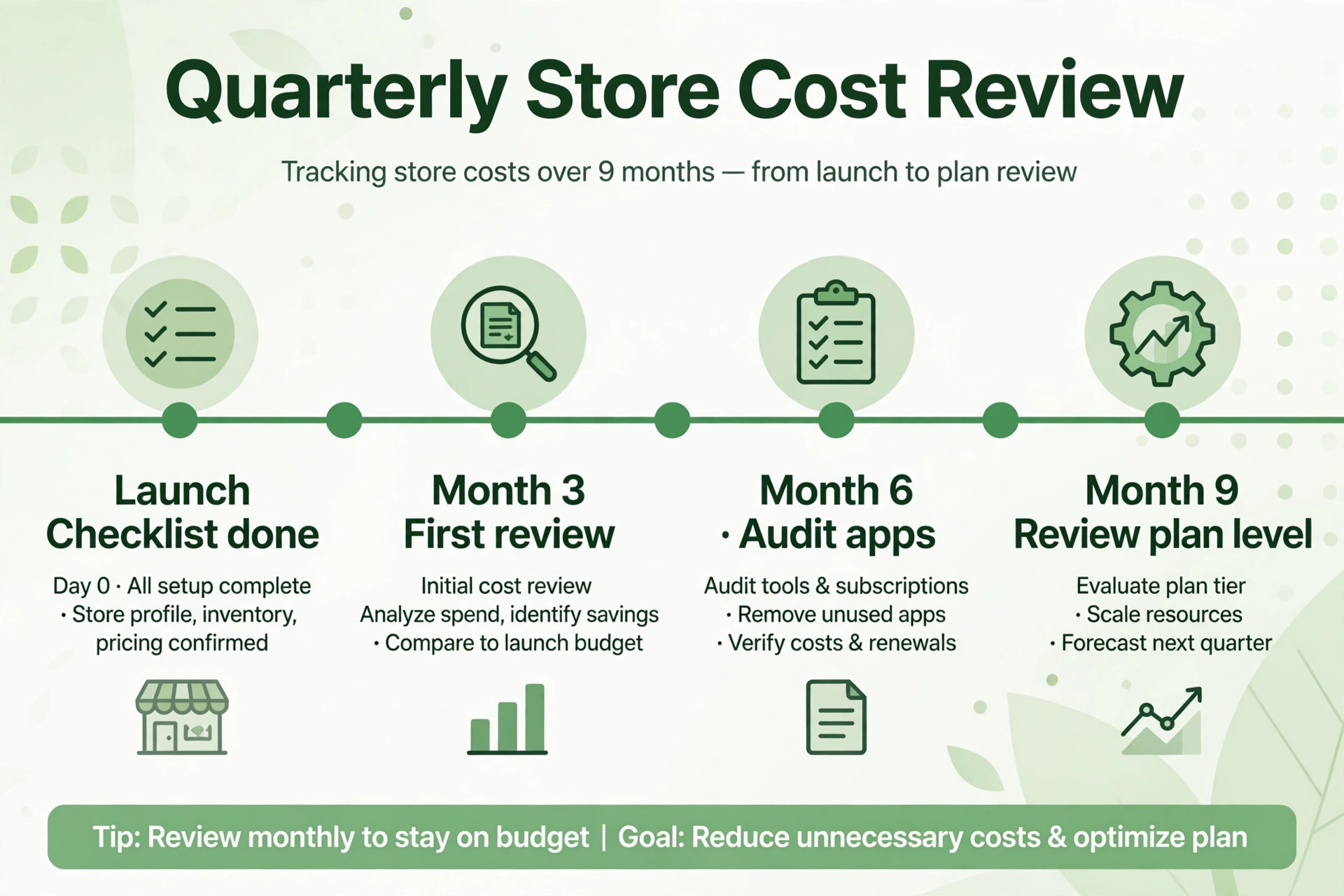
| Ongoing costs after launch | Domain, email, apps and maintenance | Review quarterly |
Understanding building a Shopify store for a small business starts with accepting that the symptom and the cause are rarely the same thing, and a symptom that looks dramatic can have a dull cause, while a quiet symptom can hide a serious one. That is why this guide treats diagnosis as a separate job from repair, and why it asks you to note what changed before the problem began, what still works, and what has already been tried.
A short note on those three points, written before you start, turns a frustrating afternoon into a short sequence of tests, and it also makes any later conversation with support far shorter, because you can describe what you have ruled out instead of repeating the symptom.
One detail that changes the outcome with building a Shopify store for a small business is timing, because faults that appear after an update, after a move, after a new accessory, or after a long period without use each point in a different direction. An update fault suggests software, a move suggests signal or power, a new accessory suggests interference, and a long idle period suggests a battery or a stale setting. Asking what changed, and when, is therefore not small talk, it is the fastest diagnostic tool available, and it costs nothing, which is why it belongs at the start of every attempt rather than at the end.
Breaking Down cost of building a Shopify store small business by Scope
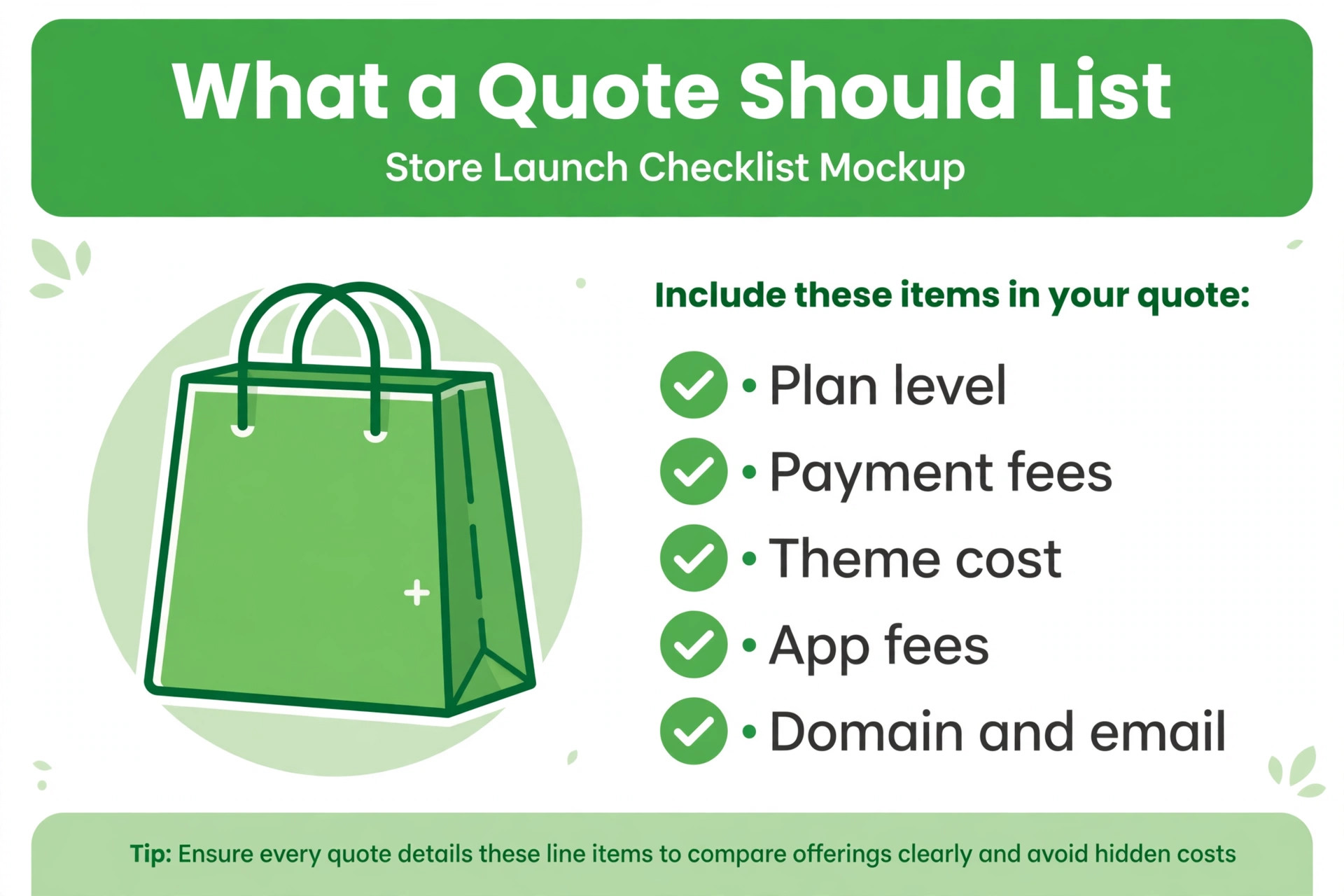
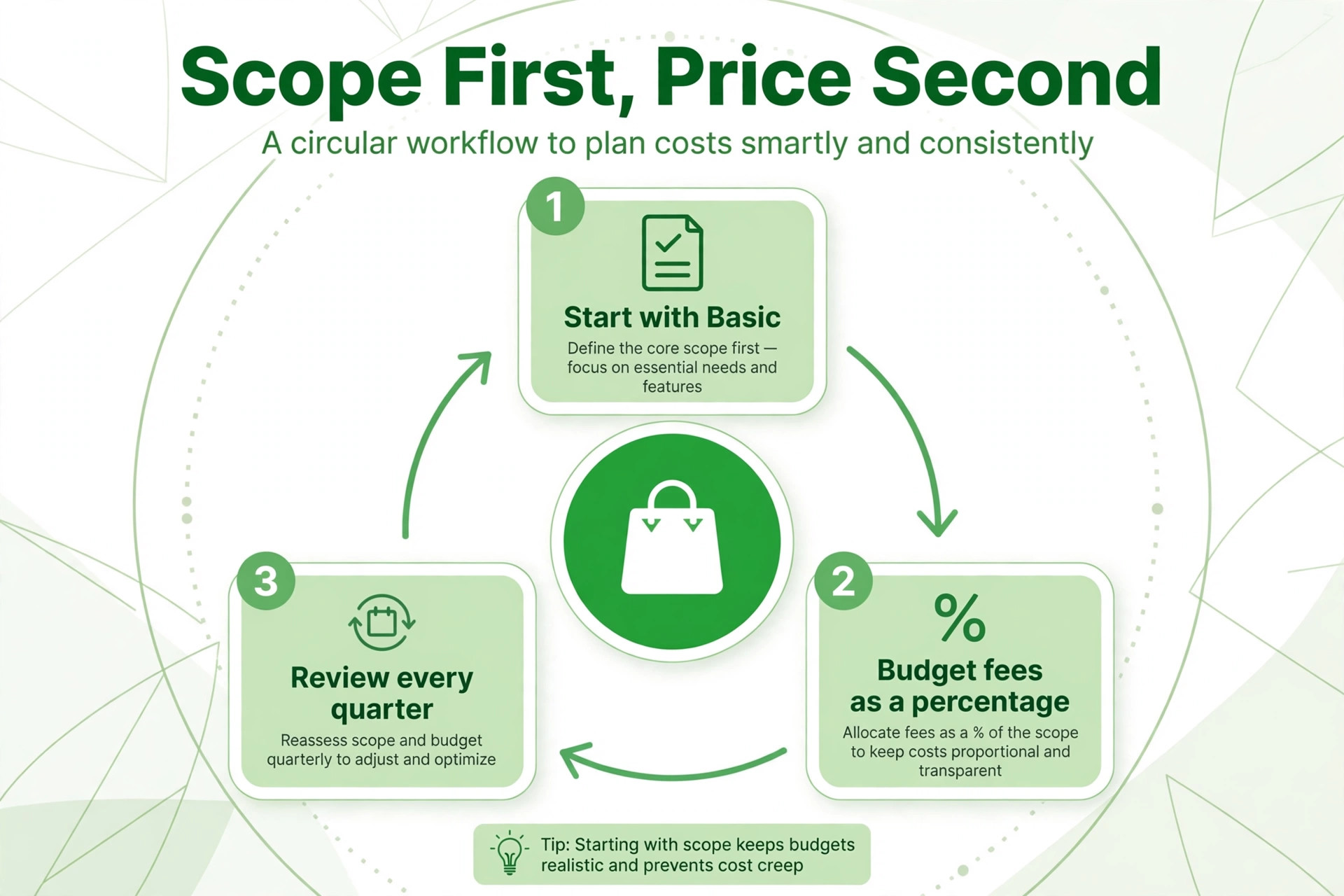
Planning cost of building a Shopify store small business in this order keeps the scope decision before the price decision, so a quote is judged against the workload it covers rather than against another quote that covers something different, and each item below ends with what to confirm before paying.
- Start with the Basic plan unless you need staff accounts. Start here, because choose Basic for a solo store, because Grow mainly adds staff accounts and better reports, and upgrading later is easier than paying for features a solo founder never uses. A success at this step means you stop here and note what worked, because continuing past a working fix only adds risk.
- Budget payment fees as a percentage of sales. Next, consider apply the card rate to expected monthly sales, because a store doing two thousand dollars a month pays roughly sixty dollars in card fees on Basic before any app costs. A success at this step means you stop here and note what worked, because continuing past a working fix only adds risk.
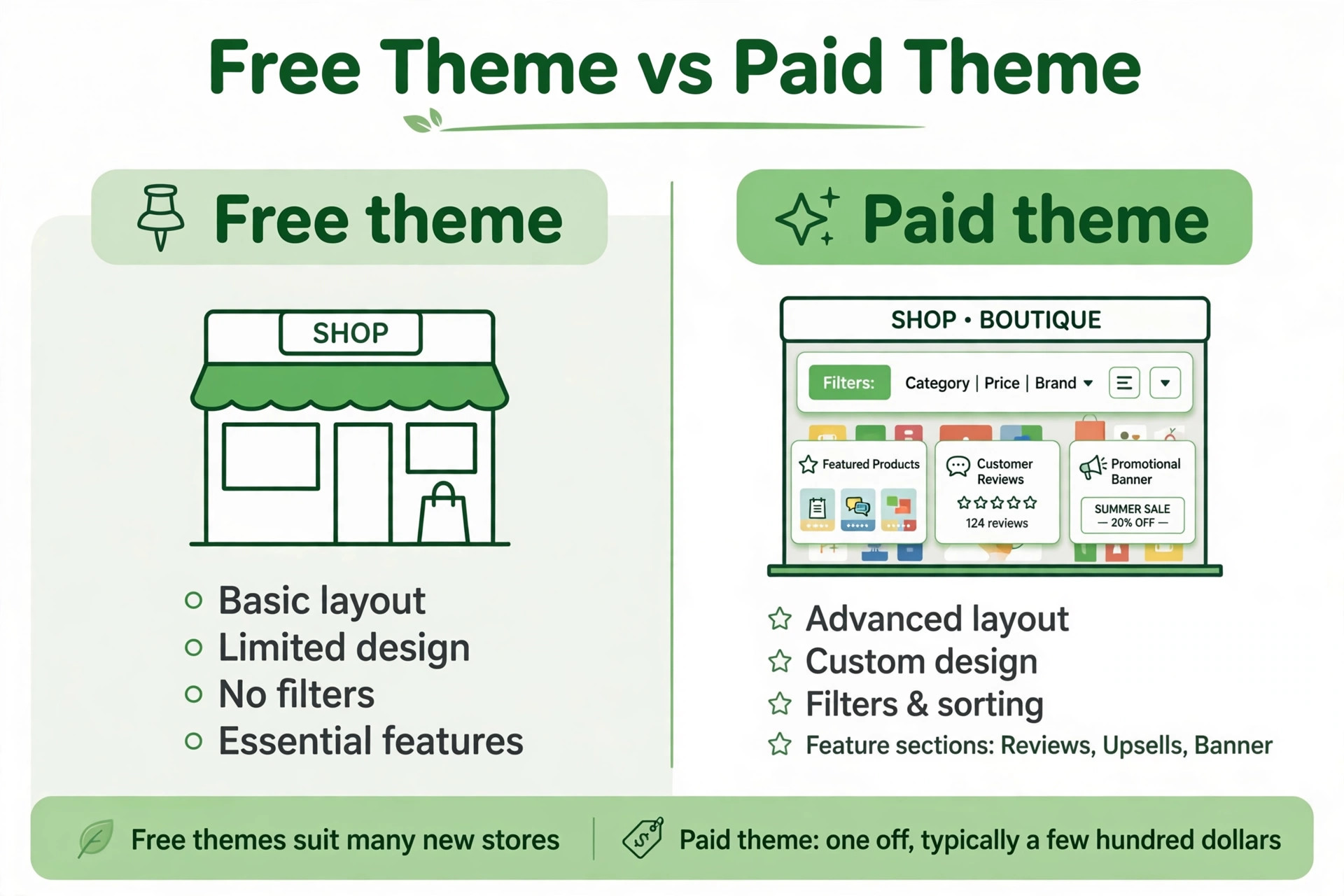
- Choose a theme with total cost in mind. Then move to compare free themes with paid themes that typically cost a few hundred dollars once, and judge a paid theme on conversion features, not on looks alone. A success at this step means you stop here and note what worked, because continuing past a working fix only adds risk.
- Limit apps to those that earn their fee. After that, check list every app, its monthly fee, and the sale or hour it saves, and remove any app that cannot justify itself, because app sprawl is the quietest way a Shopify bill doubles. A success at this step means you stop here and note what worked, because continuing past a working fix only adds risk.
- Add domain and email costs. Now test budget for a domain and for email hosting, because neither is included in the headline subscription, and both are needed before launch. A success at this step means you stop here and note what worked, because continuing past a working fix only adds risk.
- Allow for product photography and copy. Following that, review budget for photography, product descriptions and initial content, because a store with weak product pages converts poorly no matter how good the platform is. A success at this step means you stop here and note what worked, because continuing past a working fix only adds risk.
- Plan shipping and tax settings early. Before spending money, try set shipping rates and tax settings before launch, because fixing them after orders arrive means refunds, reshipments and support messages. A success at this step means you stop here and note what worked, because continuing past a working fix only adds risk.
- Set a launch checklist and a quarterly review. Finally, decide on work through a launch checklist covering payments, shipping, taxes, policies and testing, then review apps and plan level every quarter, because a store that never reviews its stack pays for last year needs. A success at this step means you stop here and note what worked, because continuing past a working fix only adds risk.
Testing each change properly with building a Shopify store for a small business means changing one thing, testing, and noting the result before moving on, because changing three things at once and seeing an improvement leaves you unsure which change helped, and the fault returns when the unhelpful changes are undone. Keep a simple log, even a few lines on paper, with the change, the test and the result, because that log is what turns a lucky fix into a repeatable one, and it is what support will ask for if the problem needs outside help.
The Details People Miss in a Quote
| Item | Typical range or rate | Note |
|---|---|---|
| Basic plan | 39 dollars monthly or 29 dollars yearly per month | Check the vendor page before committing |
| Grow plan | 105 dollars monthly or 79 dollars yearly per month | For small teams |
| Paid theme | One off, typically a few hundred dollars | Free themes suit many new stores |
| Apps | Varies widely per app per month | Audit every quarter |
| Payment fees | 2.9 percent plus 30 cents on Basic online | Plus third party fees if not using Shopify Payments |
One reason people struggle with cost of building a Shopify store small business is that they compare headline prices without comparing what is included, while the table above shows why two totals that look similar can describe very different services, and a cheaper total that excludes a needed item is not cheaper once that item is added back.
Choosing well for building a Shopify store for a small business means matching the solution to the actual workload, not to the largest workload imaginable, because overbuying wastes money every month while underbuying wastes time every week. Write down the typical week, the busy week and the quiet week, and choose for the typical week with room for the busy one, because a choice built for an imagined peak will feel expensive long before that peak ever arrives, and a choice built for the quiet week will fail on the first busy day.
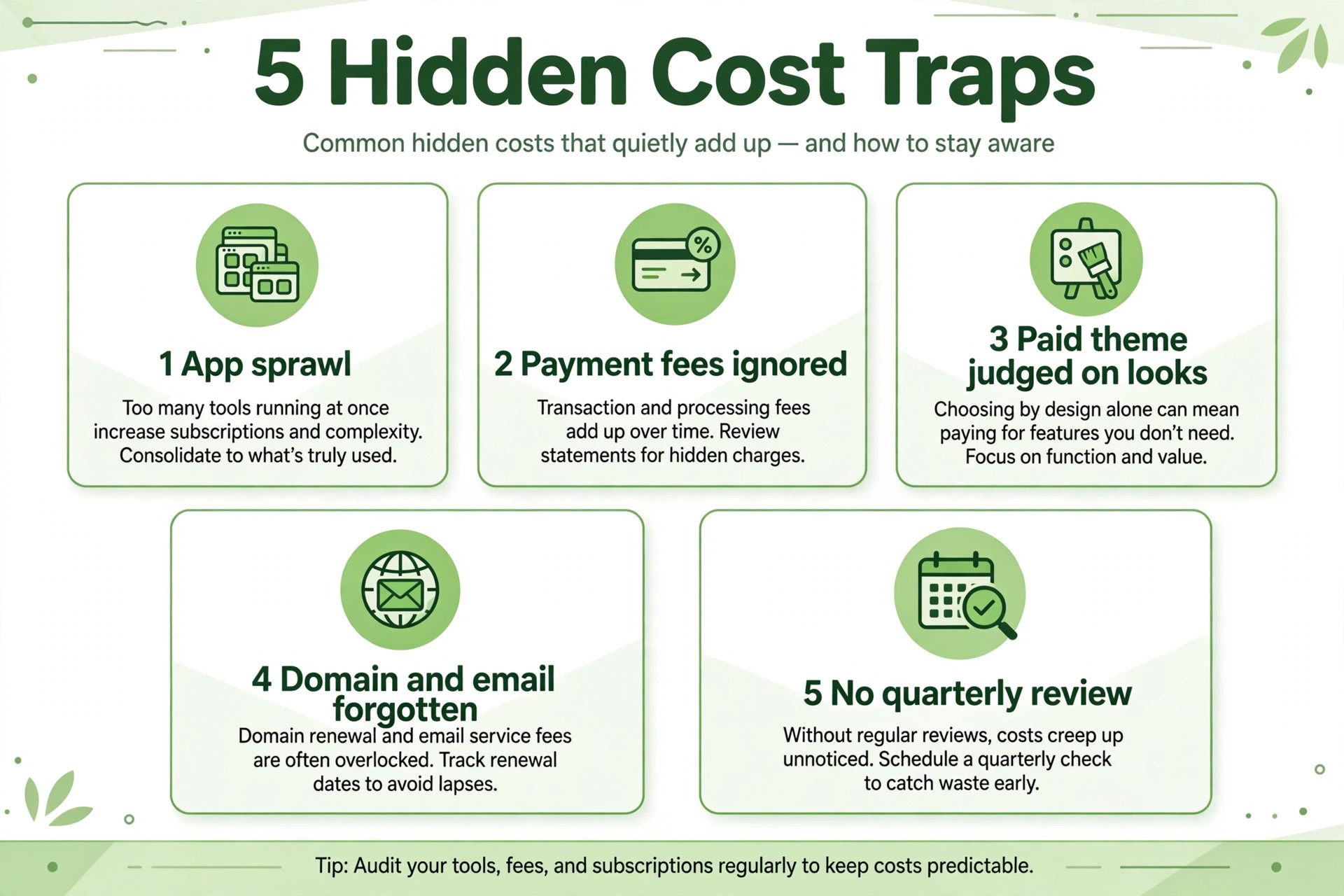
When budgeting for cost of building a Shopify store small business, the mistakes below are common because each one feels reasonable at the time, and naming them in advance makes them easier to avoid than a vague warning to be careful.
- Comparing headline prices without comparing scope, which makes a fuller service look expensive and a thinner service look cheap.
- Forgetting the small recurring costs, because packaging, software, licensing or fees repeated monthly outweigh a single large cost.
- Budgeting for hope rather than for typical volume, which leaves fees and workload underestimated in the first busy month.
- Leaving revision, turnaround or filing rules unwritten, which turns every exception into an extra charge argument.
- Never reviewing the total, so a budget set in a quiet month keeps running through a busy one without adjustment.
One detail that changes the outcome with building a Shopify store for a small business is timing, because faults that appear after an update, after a move, after a new accessory, or after a long period without use each point in a different direction. An update fault suggests software, a move suggests signal or power, a new accessory suggests interference, and a long idle period suggests a battery or a stale setting. Asking what changed, and when, is therefore not small talk, it is the fastest diagnostic tool available, and it costs nothing, which is why it belongs at the start of every attempt rather than at the end.
When a Quote Should Make You Pause
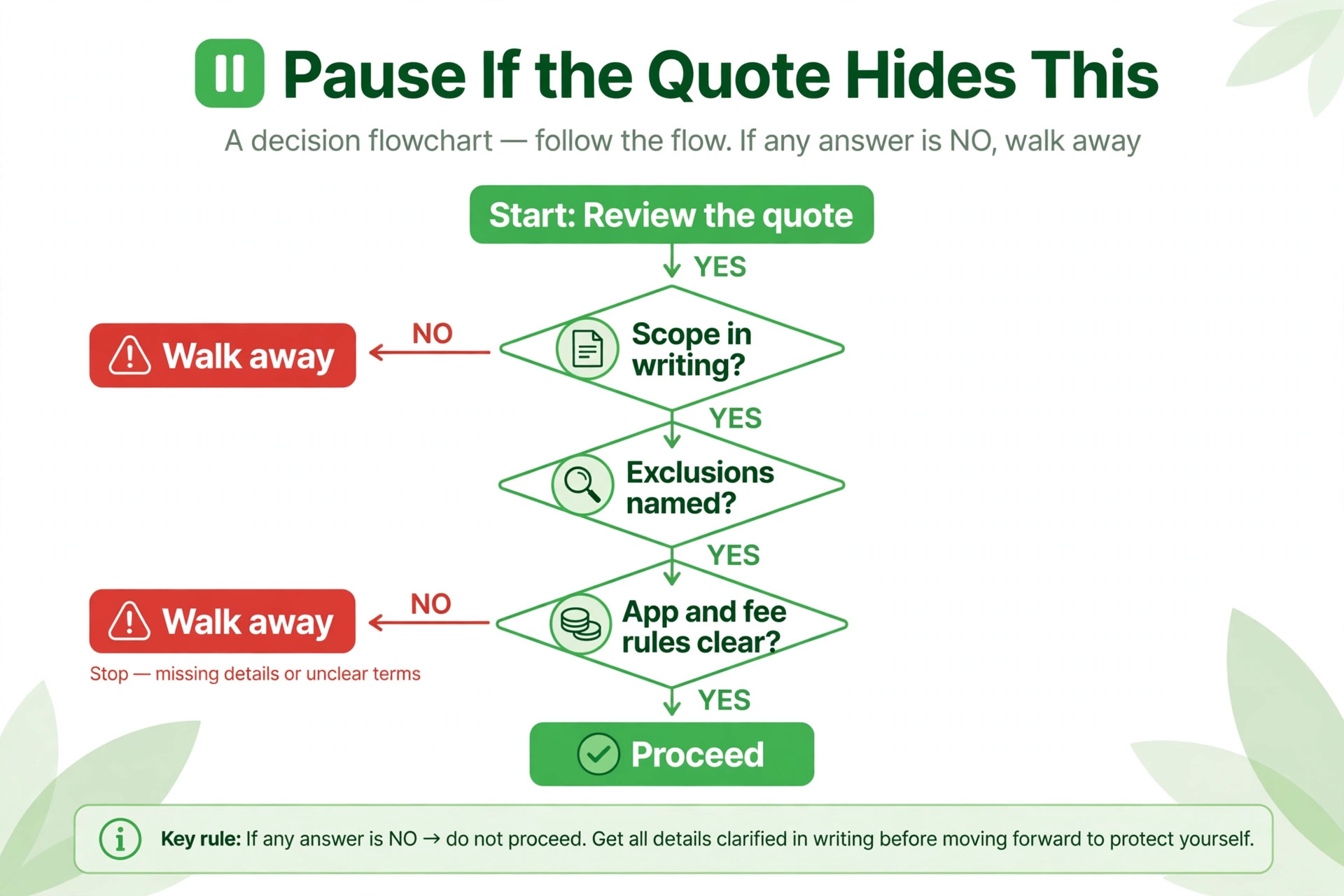
Knowing when to pause a quote for cost of building a Shopify store small business matters as much as knowing how to compare one, because a quote that will not state its scope, its revision rules, its turnaround, or what happens when volume changes is not a bargain, it is an argument waiting for a busy month, and walking away from it is progress, not indecision.
Pause and ask for the scope in writing if the price changes with every question, if essential items appear only as extras, or if the provider cannot name what is excluded, because a clear written scope protects both sides and makes the monthly total predictable.
Preventing a repeat with building a Shopify store for a small business is mostly a matter of keeping the simple things in good order, because updates, free space, clean contacts and a known good cable or adapter prevent a large share of repeat faults. A monthly check that takes ten minutes, looking at updates, storage and the condition of cables and connectors, catches most problems while they are still small, and it also builds a baseline, so a future change stands out immediately instead of blending into a slow decline that nobody notices until it fails.
Planning the Budget So It Holds
Once cost of building a Shopify store small business is settled, a short routine keeps the budget honest, because scope drifts as volume grows, and a quarterly review comparing actual totals with the budget catches that drift while it is still small.
Choosing well for building a Shopify store for a small business means matching the solution to the actual workload, not to the largest workload imaginable, because overbuying wastes money every month while underbuying wastes time every week. Write down the typical week, the busy week and the quiet week, and choose for the typical week with room for the busy one, because a choice built for an imagined peak will feel expensive long before that peak ever arrives, and a choice built for the quiet week will fail on the first busy day.
Testing each change properly with building a Shopify store for a small business means changing one thing, testing, and noting the result before moving on, because changing three things at once and seeing an improvement leaves you unsure which change helped, and the fault returns when the unhelpful changes are undone. Keep a simple log, even a few lines on paper, with the change, the test and the result, because that log is what turns a lucky fix into a repeatable one, and it is what support will ask for if the problem needs outside help.
More Reading for This Kind of Problem
For the systems around this one, Stratilyze also covers Shopify monthly cost guide Etsy seller tools guide Read the guide that matches your next bottleneck first, because fixing the biggest bottleneck next gives a larger gain than polishing a part of the setup that already works well.
Understanding building a Shopify store for a small business starts with accepting that the symptom and the cause are rarely the same thing, and a symptom that looks dramatic can have a dull cause, while a quiet symptom can hide a serious one. That is why this guide treats diagnosis as a separate job from repair, and why it asks you to note what changed before the problem began, what still works, and what has already been tried.
A short note on those three points, written before you start, turns a frustrating afternoon into a short sequence of tests, and it also makes any later conversation with support far shorter, because you can describe what you have ruled out instead of repeating the symptom.
One detail that changes the outcome with building a Shopify store for a small business is timing, because faults that appear after an update, after a move, after a new accessory, or after a long period without use each point in a different direction. An update fault suggests software, a move suggests signal or power, a new accessory suggests interference, and a long idle period suggests a battery or a stale setting. Asking what changed, and when, is therefore not small talk, it is the fastest diagnostic tool available, and it costs nothing, which is why it belongs at the start of every attempt rather than at the end.
Preventing a repeat with building a Shopify store for a small business is mostly a matter of keeping the simple things in good order, because updates, free space, clean contacts and a known good cable or adapter prevent a large share of repeat faults. A monthly check that takes ten minutes, looking at updates, storage and the condition of cables and connectors, catches most problems while they are still small, and it also builds a baseline, so a future change stands out immediately instead of blending into a slow decline that nobody notices until it fails.
Choosing well for building a Shopify store for a small business means matching the solution to the actual workload, not to the largest workload imaginable, because overbuying wastes money every month while underbuying wastes time every week. Write down the typical week, the busy week and the quiet week, and choose for the typical week with room for the busy one, because a choice built for an imagined peak will feel expensive long before that peak ever arrives, and a choice built for the quiet week will fail on the first busy day.
Testing each change properly with building a Shopify store for a small business means changing one thing, testing, and noting the result before moving on, because changing three things at once and seeing an improvement leaves you unsure which change helped, and the fault returns when the unhelpful changes are undone. Keep a simple log, even a few lines on paper, with the change, the test and the result, because that log is what turns a lucky fix into a repeatable one, and it is what support will ask for if the problem needs outside help.
Understanding building a Shopify store for a small business starts with accepting that the symptom and the cause are rarely the same thing, and a symptom that looks dramatic can have a dull cause, while a quiet symptom can hide a serious one. That is why this guide treats diagnosis as a separate job from repair, and why it asks you to note what changed before the problem began, what still works, and what has already been tried.
A short note on those three points, written before you start, turns a frustrating afternoon into a short sequence of tests, and it also makes any later conversation with support far shorter, because you can describe what you have ruled out instead of repeating the symptom.
Checking Your Work Before You Finish
Return to start with the basic plan unless you need staff accounts and confirm it properly before moving on, because a step that was rushed the first time often looks like a failure when it was really an incomplete test. Give it the full time it needs, watch for the result described in the main sequence, and only then move to budget payment fees as a percentage of sales. This habit of retesting the early steps, rather than jumping to the later and more disruptive ones, saves most of the time that troubleshooting or budgeting usually wastes, and it also builds confidence that the final result rests on a test that actually passed.
The opening table listed Scope or volume alongside —, and those two rows deserve a second look once the main steps are done, because a cause that seemed unlikely at the start can become the leading explanation once the obvious ones are ruled out. Compare what you observed with the sign described for each row, and if your observation matches a row you dismissed earlier, work that row again with fresh attention. Diagnosis improves when the table is treated as a checklist to revisit, not as an introduction to skip.
If the result is still unclear after the main sequence, work backwards from the last state that definitely worked, and change one variable at a time from there. The step choose a theme with total cost in mind is a useful checkpoint for this, because it sits far enough into the sequence to have ruled out the simple faults, yet early enough that reversing from it is still cheap. Write down each reversal and its result, because a backwards walk without notes repeats the same tests and reaches the same confusion.
Frequently Asked Questions
What drives the monthly total most?
Scope and volume drive it most, because hours, orders, videos or sessions set the base, while extras such as payroll, ads, licensing or apps add on top. Count your typical month honestly before comparing quotes, because a quote built on a guessed volume will be revised after the first real month.
Should I choose hourly or fixed monthly pricing?
Hourly suits months that swing, fixed monthly suits steady months, and the wrong choice costs either in unpredictability or in paying for unused hours. Look at three past months, not one, and choose the model that fits the pattern across all three.
What is usually missing from a low quote?
Software, fees, licensing, revisions, turnaround or filings are the items most often left out, and each one appears later as an extra. Ask for a written list of what is included and what is excluded, because a low total that excludes a needed item is not a low total.
How often should I review the budget?
Review it every quarter, because volume, prices and scope all move, and the guide for cost of building a Shopify store small business is built around that rhythm, with a three month check after any new arrangement and a quarterly check after that, so drift is caught while it is still small.
Can I start small and upgrade later?
Yes, in most cases, and starting small is often wiser, because a small scope that works teaches you what the larger scope should actually include. Agree the upgrade path in advance, so growing does not mean renegotiating everything from scratch.
What should be agreed in writing before paying?
Scope, price, revision or filing rules, turnaround, what is excluded, and how changes are charged, because those five points cover almost every dispute that arises later. A short written agreement protects both sides and makes the monthly total predictable.
The Verdict
Set the scope first, price it second, and review it quarterly, because that discipline turns cost of building a Shopify store small business from a guessing game into a predictable monthly line, and it also means growth is planned rather than discovered in a surprising bill.
Preventing a repeat with building a Shopify store for a small business is mostly a matter of keeping the simple things in good order, because updates, free space, clean contacts and a known good cable or adapter prevent a large share of repeat faults. A monthly check that takes ten minutes, looking at updates, storage and the condition of cables and connectors, catches most problems while they are still small, and it also builds a baseline, so a future change stands out immediately instead of blending into a slow decline that nobody notices until it fails.
Start with the first step today, test one change at a time, and let the result of each test decide the next move, because a calm ordered approach beats a fast random one, and the time saved by not repeating failed steps is time you get back for the work itself.