
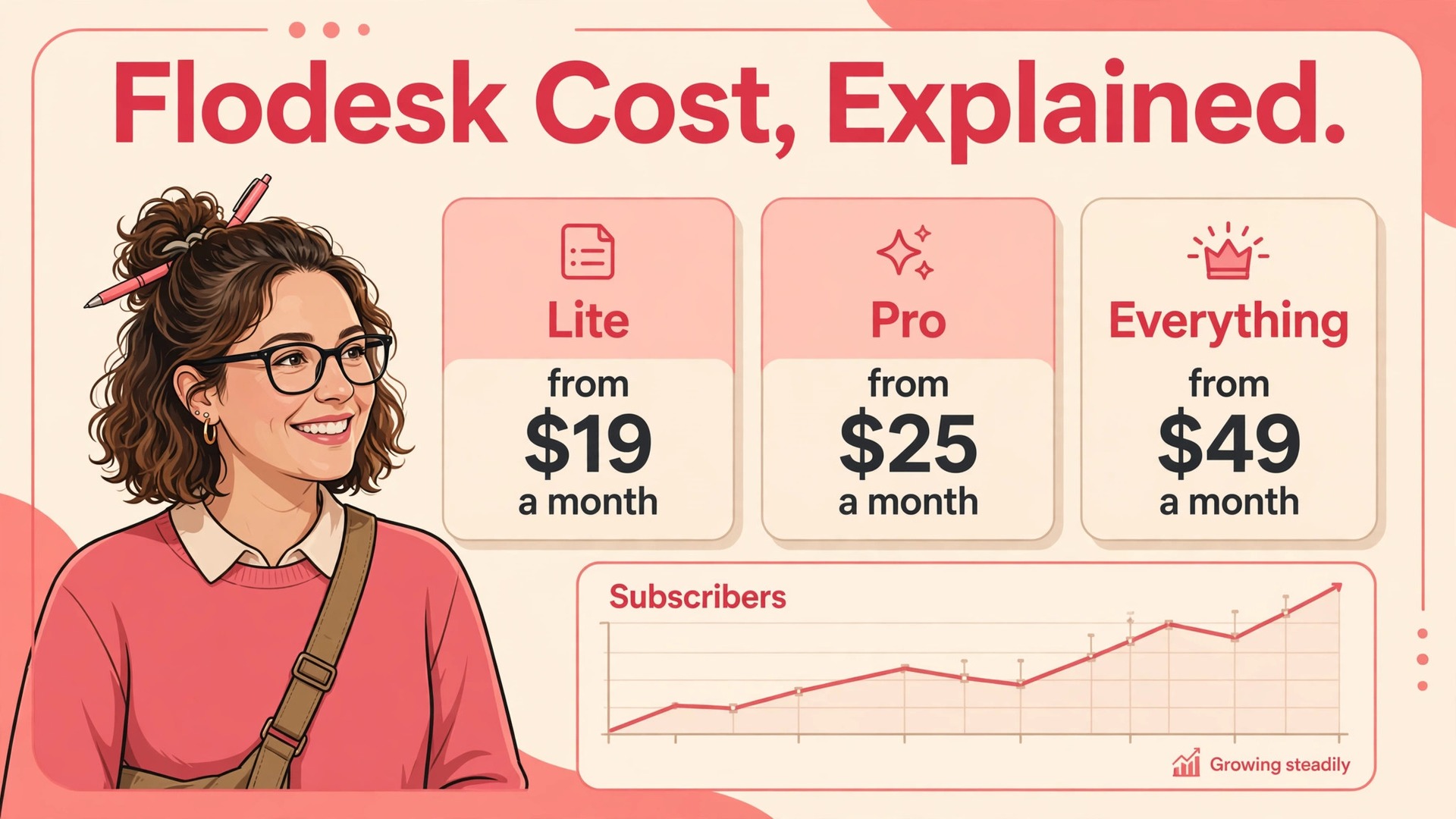
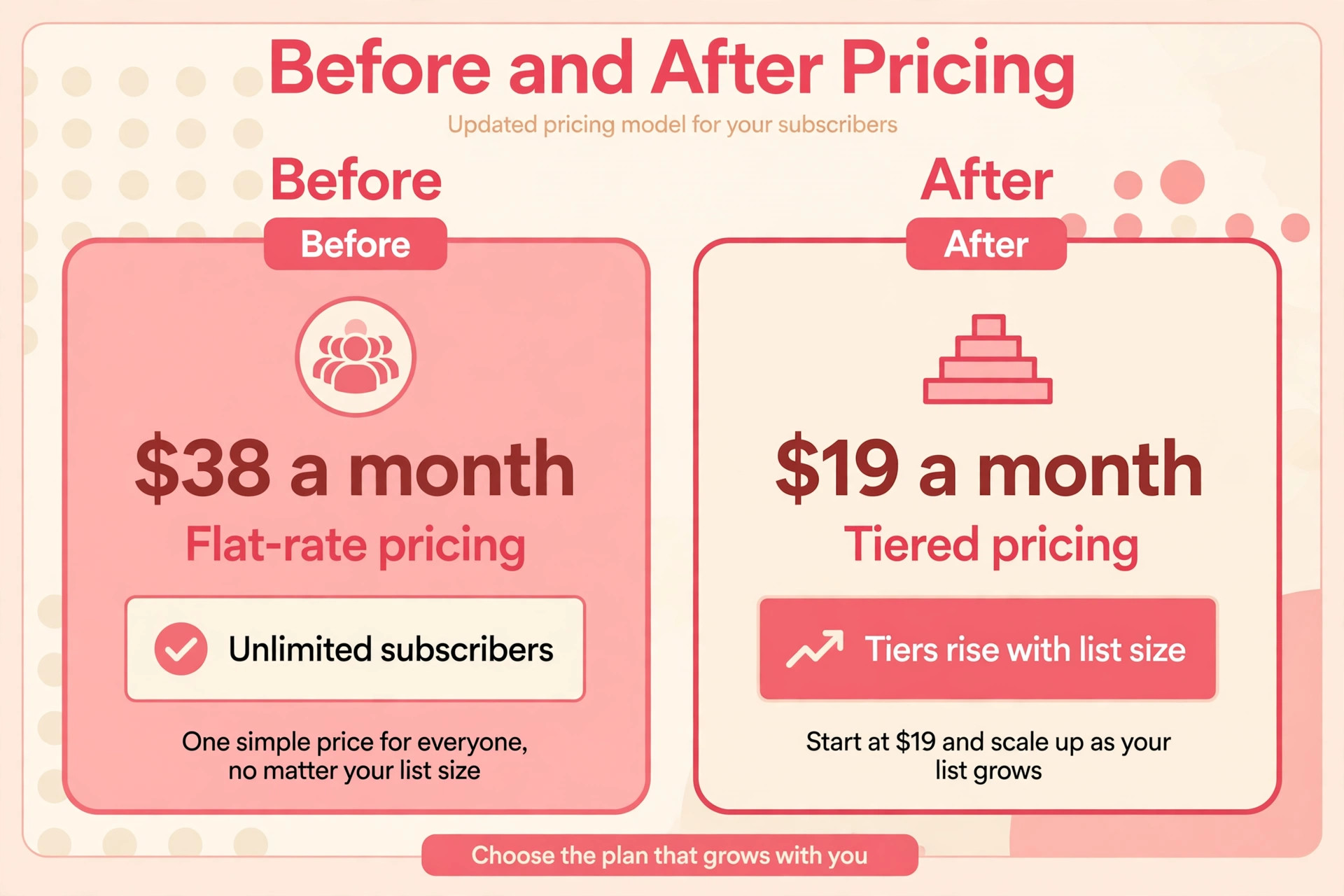
In December 2025, Flodesk ended the flat rate pricing that had made it famous, and moved new users to tiered plans priced by subscriber count. That change matters for any small business budgeting email, because the old story of one price for an unlimited list no longer applies. The cost of Flodesk for small business monthly now rises as the list grows, and this guide works out what that means at 500, 2,000 and 10,000 subscribers.
The change also explains why older articles disagree with newer ones. A review written before December 2025 will quote $38 a month for unlimited subscribers, while a review written in 2026 will quote tiered plans starting near $19 a month and rising with list size. Both figures were correct at their time, but only the tiered figures help a new buyer budget today, so this guide uses the 2026 tiered structure and flags every figure as a starting point to confirm on the vendor page.
This guide covers the three current plans, Lite, Pro and Everything, what each plan includes, worked monthly totals at three list sizes, checkout and card processing costs, and how Flodesk compares with contact count rivals at a large list size. Prices are starting points from recent comparisons checked at writing time, so confirm the current price on the vendor page before you buy, because tier thresholds and starting prices can change.
What the cost of Flodesk for small business monthly Covers in 2026
Flodesk in 2026 is an email design tool first, with landing pages, forms, workflows and, on the top plan, checkout pages for selling digital products. Its strength has always been beautiful emails built fast, with templates that look professional without a designer. A small business that values design and simplicity will feel that strength in the first week, because the builder stays calm even for a non designer.
The three plans share the same design led builder, but they differ on automation depth and selling tools. Lite suits a business starting a list, with forms and one workflow in recent comparisons. Pro suits most small businesses, with unlimited automation, full templates and analytics. Everything adds checkout pages, payment plans, abandoned cart recovery and upsells for a business selling digital products directly from email.
There is no free plan, only a trial period in recent comparisons, so a new business should use the trial to build a real email, a real form and a real workflow before paying. The trial is also the right time to test deliverability to a small real audience, because a beautiful email that lands in spam helps nobody, whatever the monthly fee.
Automation is the main reason to choose Pro over Lite. A business that only sends a monthly newsletter may never notice the Lite limit, but a business that runs a welcome series, a nurture sequence and a re-engagement flow will hit one workflow quickly. Paying for Pro from the start can be cheaper than rebuilding sequences after a Lite limit forces an upgrade mid campaign.
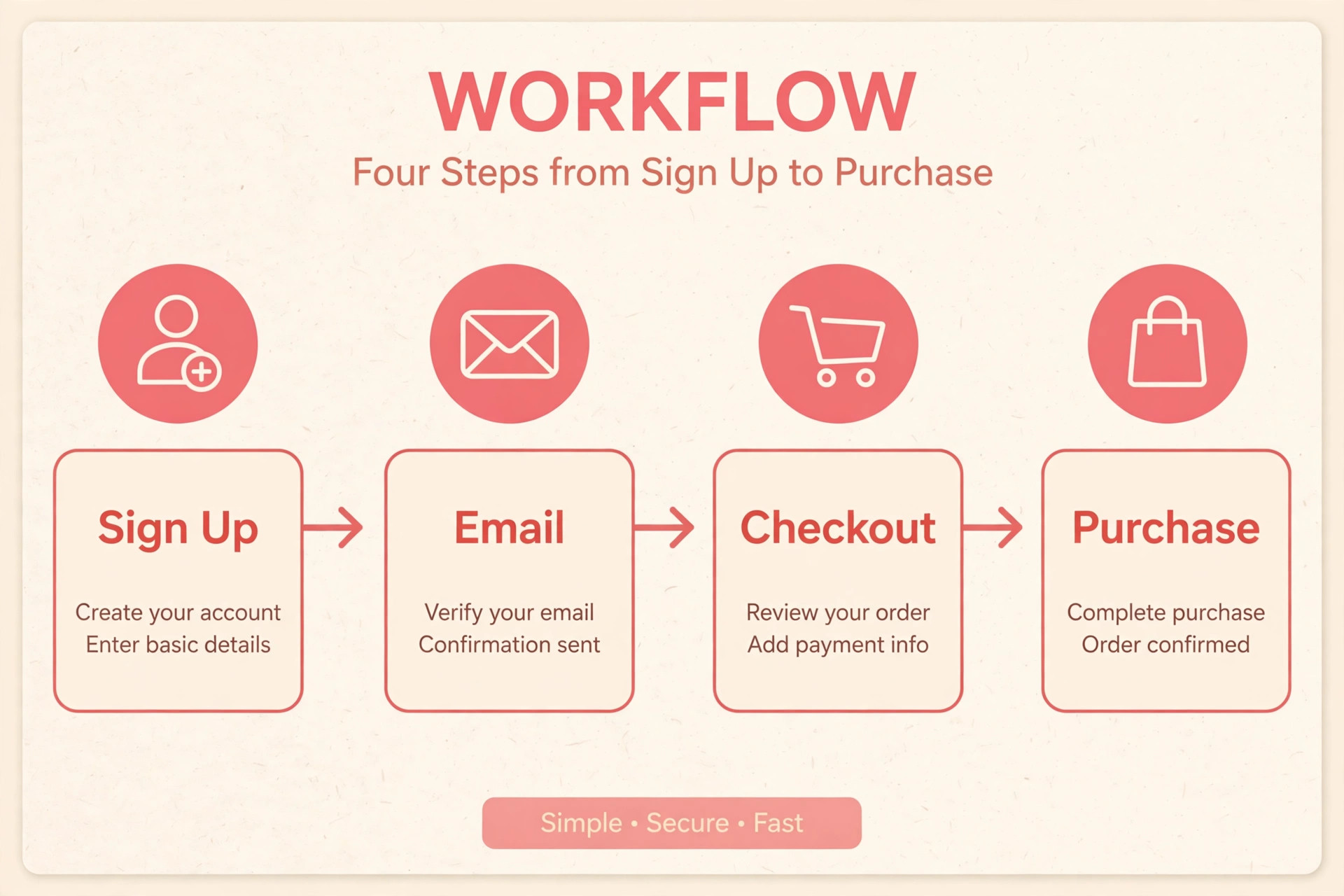
The Three Flodesk Plans Compared
Read the table as a starting point, not as a final quote. Starting prices differ between sources because some quote annual billing and some quote monthly billing, and tier thresholds move the price as the list grows. The vendor page is the final word on the price at your exact list size.
| Plan | Starting point | Best for |
|---|---|---|
| Lite | From $19 a month | New lists, one workflow, simple sends |
| Pro | From $25 a month | Most small businesses, unlimited automation |
| Everything | From $49 a month | Selling digital products with checkout |
Lite is the entry point for a business testing email, with unlimited sends, forms and one workflow in recent comparisons. It suits a business with a small list and a simple rhythm, such as a monthly update plus one welcome email. A business that plans multiple sequences should budget for Pro rather than trying to squeeze every flow into one workflow.
Pro is the plan most small businesses should price first, because unlimited automation, full templates and analytics cover welcome, nurture, sales and re-engagement flows without artificial limits. The step from Lite to Pro is small at a small list size in recent comparisons, and the extra automation depth often pays for itself in saved manual follow up within a month.
Everything is the plan for a business that sells from email, because checkout pages, payment plans, abandoned cart recovery and upsells replace a separate checkout tool. A business already paying for a checkout platform should compare the combined bill, because one Everything subscription plus card processing may be cheaper than an email tool plus a checkout tool plus the time to connect them.
Worked Monthly Totals at 500, 2,000 and 10,000 Subscribers
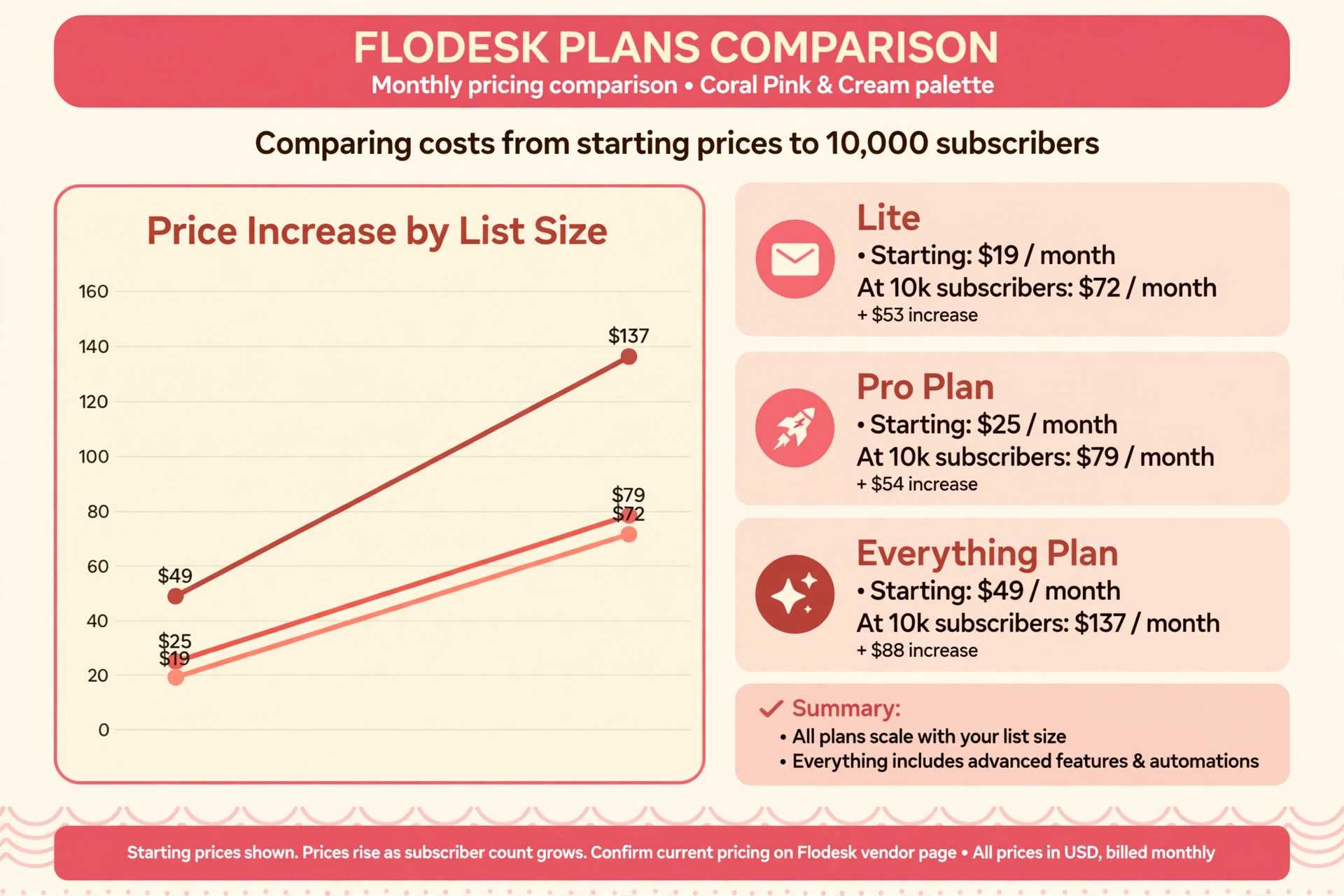
The table below gives worked monthly totals at three list sizes, using published tier figures from recent comparisons. The 500 subscriber figures are starting prices, because a 500 subscriber list sits in the entry tier. The 10,000 subscriber figures are published tier prices from a 2026 pricing comparison. The 2,000 subscriber figures sit between published tiers, so they are shown as a between tier estimate, and the vendor page should be checked for the exact price at 2,000 subscribers.
| Subscribers | Lite | Pro | Everything |
|---|---|---|---|
| 500 | $19 to $25 a month | $25 to $28 a month | $49 to $54 a month |
| 2,000 | Between $25 and $52 a month, estimate | Between $28 and $59 a month, estimate | Between $54 and $107 a month, estimate |
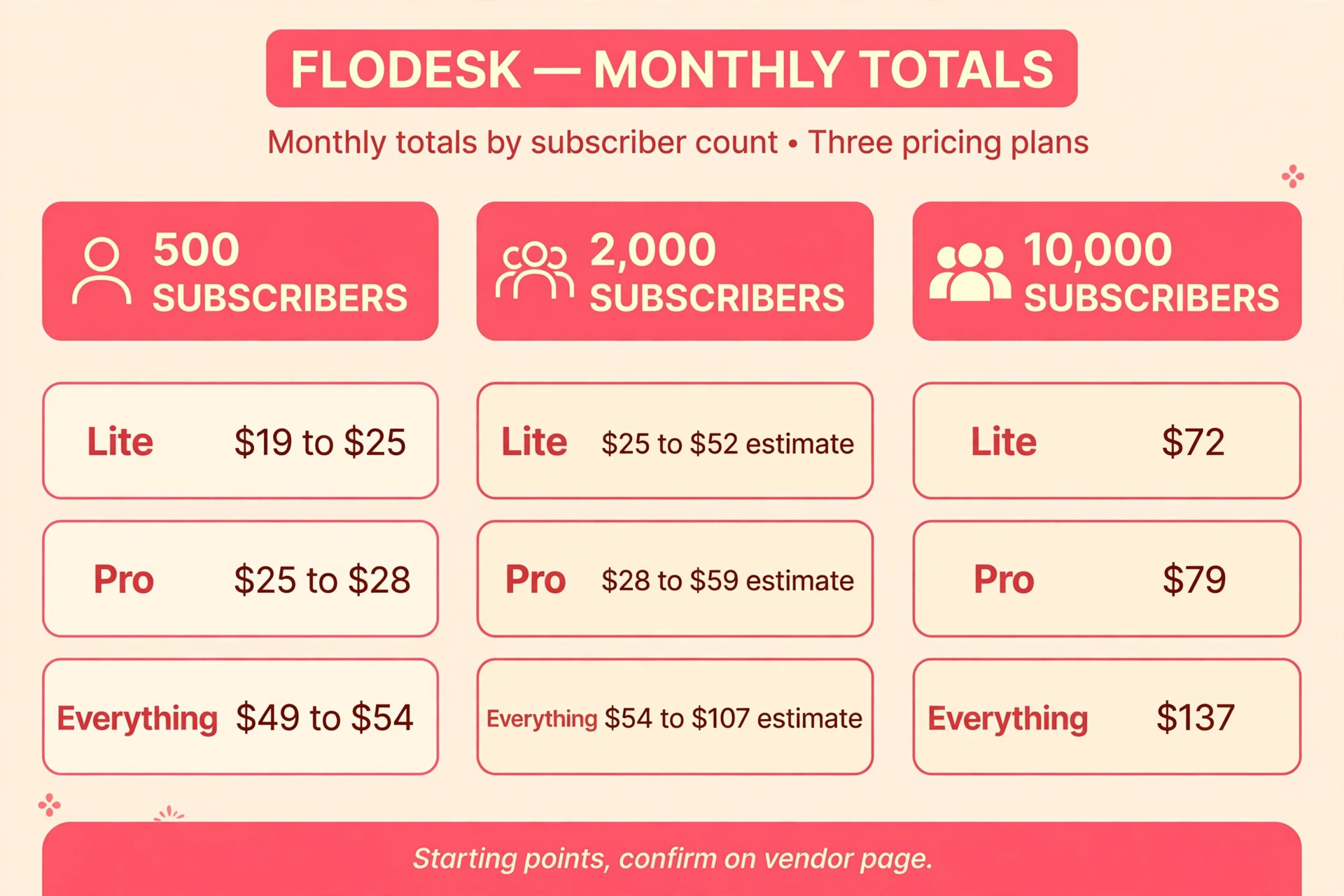
| 10,000 | $72 a month | $79 a month | $137 a month |
At 500 subscribers, the annual cost on starting prices is roughly $228 to $300 for Lite, $300 to $336 for Pro, and $588 to $648 for Everything, before card processing on sales. Those annual figures are simple multiplications of the monthly starting range by twelve, and they assume no price change during the year, so treat them as a budgeting range rather than a quoted annual bill.
At 10,000 subscribers, the annual cost on published monthly figures is $864 for Lite, $948 for Pro, and $1,644 for Everything, before card processing on sales. That jump from the entry tier shows why list growth must be budgeted, because a list that doubles twice can more than double the email bill even when send frequency stays the same. Set a budget ceiling for the year and review the price at each tier threshold.
At 2,000 subscribers, the honest answer is that the exact bill depends on the tier threshold the list falls into on the vendor pricing page at signup. A business budgeting for 2,000 subscribers should allow for the upper part of the between tier range in the table, because a list that grows past a threshold mid month can move to the next tier sooner than expected. Check the vendor page, note the threshold, and revisit the budget quarterly.
The Flat Rate Story, and Why It Ended
For years, Flodesk charged one flat monthly rate for unlimited subscribers and unlimited sends, which made budgeting simple and made the tool very attractive to large lists. A business that doubled its list in a few months paid the same price, while rivals priced by contact count would have doubled the bill. That certainty was a genuine advantage, and it built a loyal audience of creators and small businesses.
In late 2025, Flodesk moved new users to tiered pricing, with Lite, Pro and Everything plans scaling by subscriber count. Existing users on the old flat rate in some reports kept their legacy price, but new users cannot buy the flat rate today. A small business reading an older review should therefore ignore the flat rate figure for budgeting, however attractive it looks, and price from the tiered table in this guide instead.
The tiered model is not necessarily worse for a small business. At a small list size, the entry price is lower than the old flat rate, so a new business pays less to start. The model only becomes more expensive than the old flat rate at a large list size, where the tiered price climbs past the former flat figure. A business with 500 subscribers today is better off on tiers, while a business with 50,000 subscribers would have been better off on the old flat rate.
Checkout and Card Processing Costs
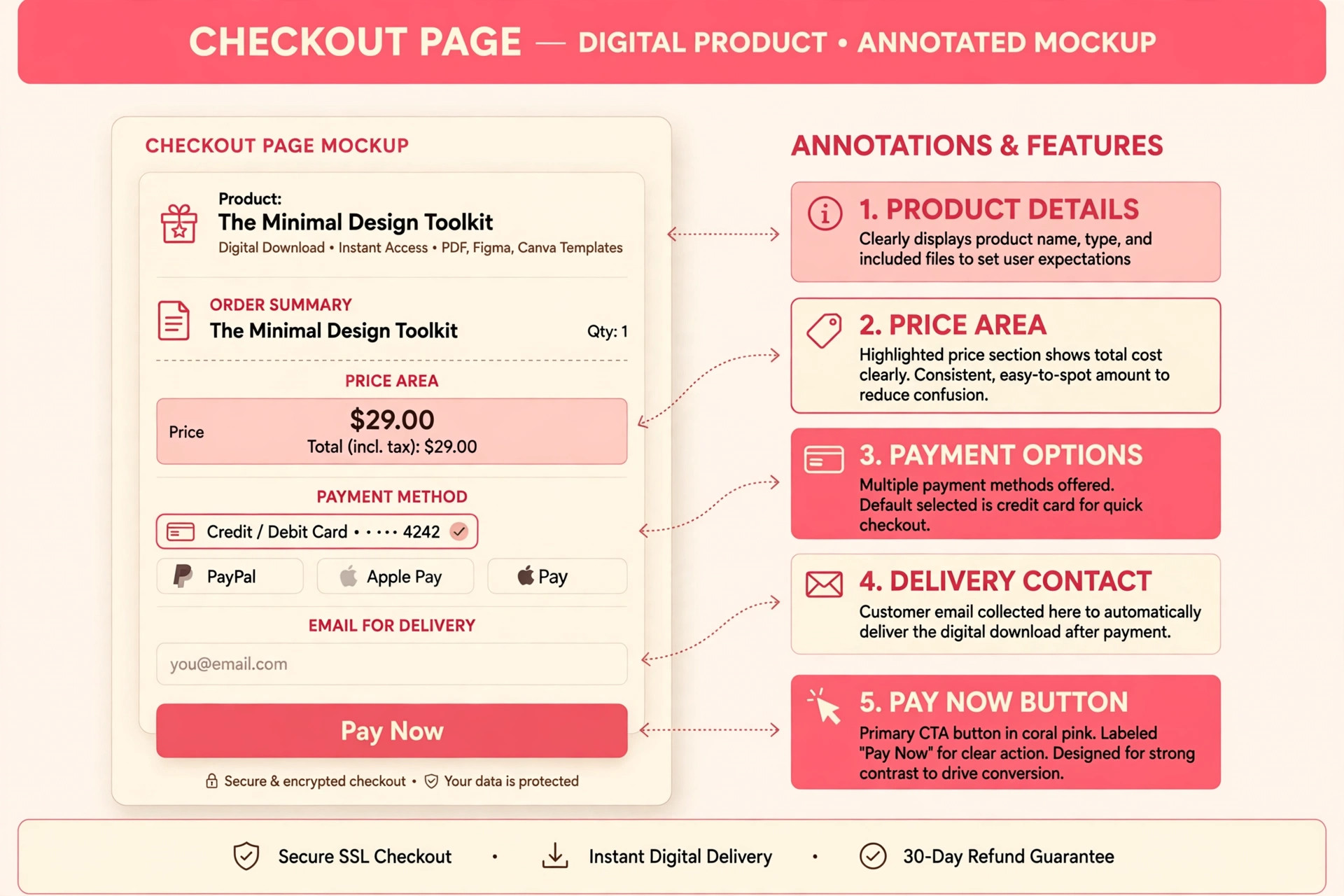
Everything plan checkout pages do not remove card processing fees, because the payment processor still charges for moving money. Flodesk Checkout in recent comparisons uses a payment processor for card payments, and the processor fee is charged on top of the Flodesk subscription. Check the vendor page for the current processing rate, because it can differ by country, card type and processor terms, and it applies to every sale through checkout.
A worked example helps. A business selling a $50 digital guide through Flodesk Checkout on Everything at 10,000 subscribers pays $137 a month for the plan, plus a processing fee on each $50 sale. If the business sells 100 guides in a month, the subscription is $137 and the processing fees are a separate line on top of the $5,000 in sales. A business that forgets processing fees will understate the true cost of selling by a meaningful margin each month.
Payment plans and upsells on Everything can lift average order value, which helps offset those fees, but only if the business actually uses them. A payment plan that splits a $200 course into four payments can increase conversions, and an upsell at checkout can add revenue without a second marketing effort. Price those features by the extra sales they produce, not by the feature list alone, and test them on a small audience first.
How Flodesk Compares at a Large List Size
At 10,000 subscribers, Flodesk Pro at $79 a month in the published comparison sits below many contact count rivals, which can charge well over $100 a month at the same list size in recent comparisons. That advantage is real but narrow, because rivals at that price often include deeper automation, CRM features or analytics that Flodesk does not. A business should compare the full feature set at 10,000 subscribers, not the monthly fee alone.
At a small list size, the comparison flips. A free tier on another platform can beat Flodesk Lite for a business with 500 subscribers and a simple sending rhythm, because free is cheaper than $19 a month however the features compare. Flodesk wins at a small size on design and simplicity, not on price alone, so a business that only sends plain text updates may be better served by a free or cheaper tool.
The fairest comparison is at your own list size, send frequency and automation needs, using the vendor pricing page for each finalist on the same day. Note the price at 500, 2,000 and 10,000 subscribers for each tool, add card processing where sales are involved, and add the cost of any second tool needed for checkout or automation. That total, not the headline entry price, is the figure to compare.
Who Should Buy Flodesk, and Who Should Not
Flodesk suits a design led small business that sends regular emails, values beautiful templates, and wants a calm builder that a non designer can use well. It suits a creator, a coach, a boutique shop or a service business whose emails are part of the brand, because the design quality shows in every send and subscribers notice the difference.
Flodesk does not suit a business that needs complex branching automation, a built in CRM, deep revenue analytics or SMS marketing, because those features are basic or absent in recent comparisons. A business that lives on behaviour based multi path workflows, lead scoring or detailed attribution should trial ActiveCampaign or a similar automation platform alongside Flodesk, and judge the automation gap honestly.
Flodesk also does not suit a business that only sends plain, infrequent updates and cares little about design. That business will pay for templates it never uses, while a free tier elsewhere covers the same sends at no cost. Design is the reason to pay for Flodesk, so a business that does not value design should not pay the design premium.
How to Keep the Flodesk Bill Down
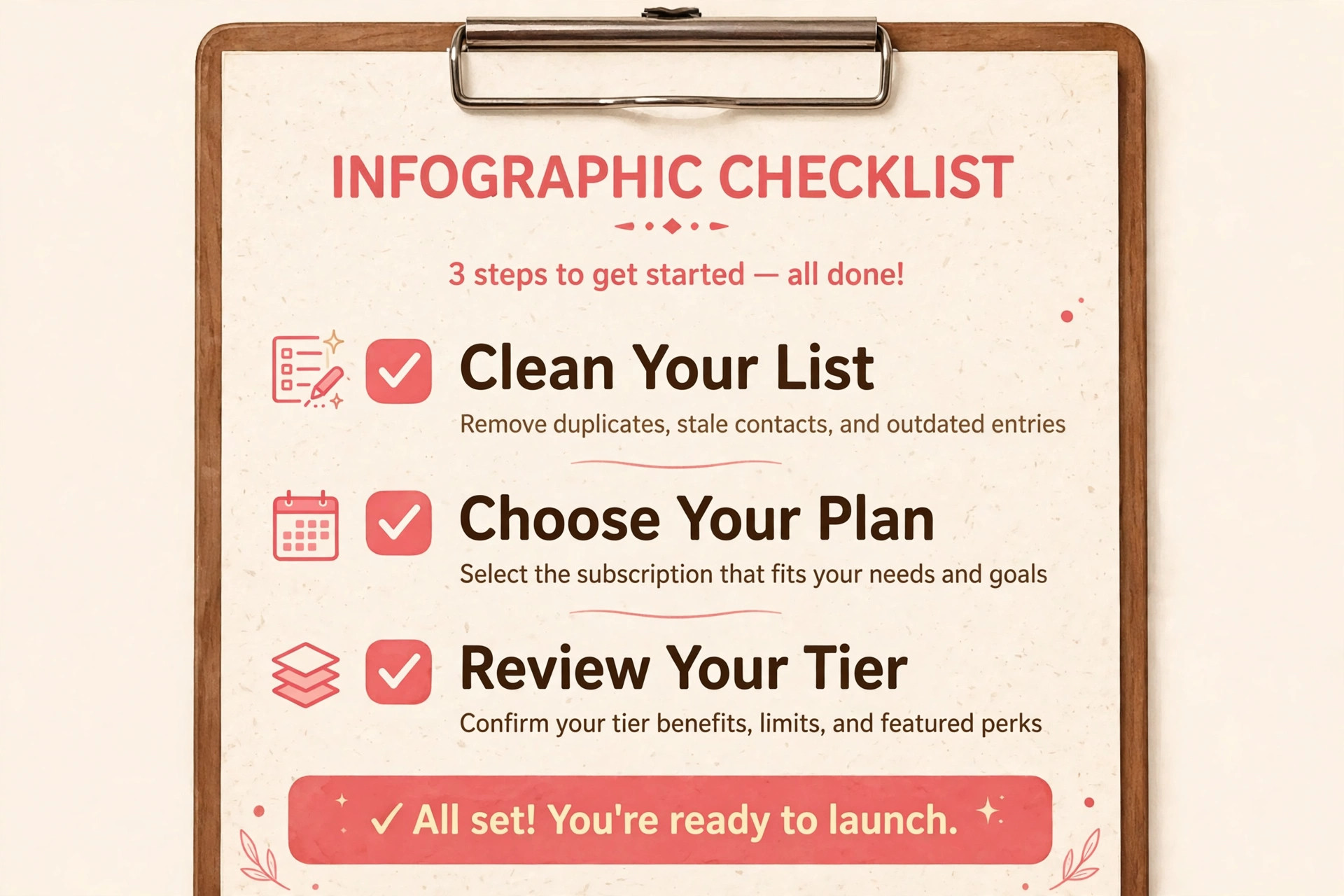
Clean the list every quarter, because inactive subscribers still count toward tier thresholds even when they never open an email. Remove hard bounces immediately, send one re-engagement email to long term non openers, and remove those who ignore it. A smaller, engaged list costs less and delivers better, because sender reputation improves when only interested people receive mail.
Choose the plan by automation need, not by list size alone. A business with a large list but a simple sending rhythm may do well on Lite, while a business with a small list but many sequences needs Pro. Paying for Everything when no product is sold through checkout wastes the checkout premium, and paying for Lite when sequences matter wastes staff time on workarounds.
Review the tier before every growth push, because a campaign that adds thousands of subscribers can move the list into the next tier in the same month. Budget for that move in the campaign plan, so a successful list building effort does not produce a surprise bill. A quarterly pricing review, tied to list size, keeps the bill predictable across the year.
Annual Billing, Monthly Billing and the Real Choice
Annual billing usually lowers the monthly figure in recent comparisons, because the vendor rewards a twelve month commitment with a discount. That discount is only a saving if the business will still use the tool in twelve months, so a new business should start monthly, prove the tool fits, and switch to annual billing once the fit is clear. A discount on a tool that is abandoned after three months is not a saving.
Monthly billing costs more per month but keeps flexibility, which matters for a seasonal business or a business testing email for the first time. A seasonal shop that mails heavily in two quarters and lightly in two others may prefer monthly billing, because it can downgrade or pause with less friction than an annual contract allows. Check the downgrade and cancellation terms before choosing either billing cycle.
The real choice is not annual versus monthly in isolation, but annual versus monthly at the right plan and the right tier. A business on the wrong plan, billed annually, locks in the wrong features for a year, while a business on the right plan, billed monthly, can adjust as the list grows. Get the plan right first, then choose the billing cycle that matches confidence in that choice.
Mistakes That Inflate a Flodesk Bill
The most common mistake is budgeting from an old flat rate article. A business that budgets $38 a month for an unlimited list, then signs up in 2026, will face tiered pricing at its real list size and a bill that does not match the budget. Always check the date of a pricing article, and always confirm the current price on the vendor page before committing to a budget.
The second mistake is keeping a stale list. Inactive subscribers, duplicate contacts and old trial signups all count toward tier thresholds, so a list that looks large on screen may be mostly inactive in reality. Clean the list quarterly, and the bill will follow the engaged audience rather than the historical total.
The third mistake is buying Everything for checkout that is never used. A business that sells nothing through Flodesk Checkout pays the checkout premium every month for a feature that stays closed. Start on Pro, prove that email sales work, and upgrade to Everything when checkout volume justifies the step, rather than buying the top plan on day one.
Switching to Flodesk Without Losing Subscribers
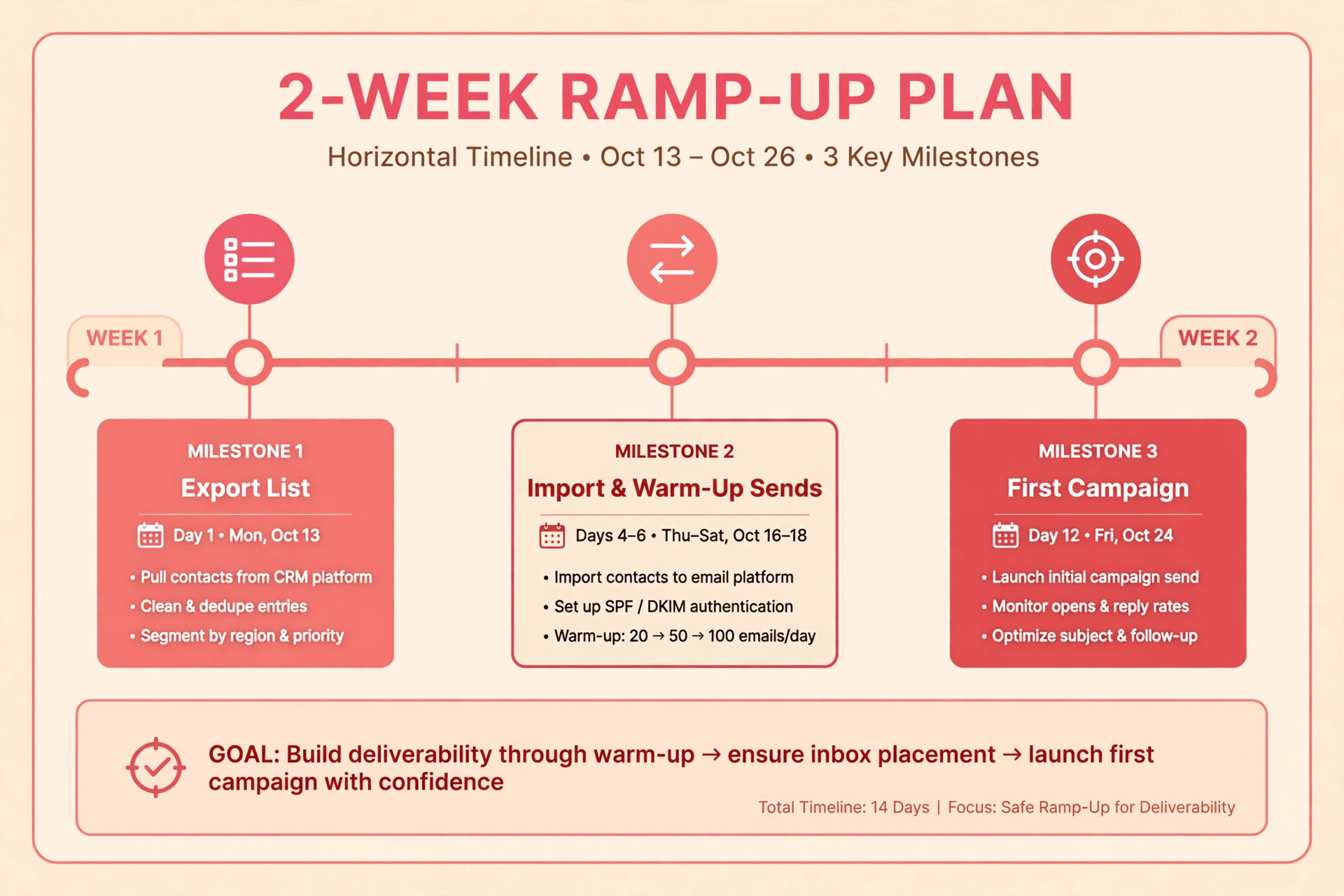
Export the old list with tags, segments and consent records intact, and import it into Flodesk in small batches, checking each batch before importing the next. A big bang import on a Friday creates a Monday of duplicate contacts, lost tags and confused segments, while small batches protect the data that makes future sends relevant.
Rebuild the welcome sequence first, before any campaign send, because new subscribers will arrive during the switch and the welcome flow is the first impression of the new system. Test the sequence with colleagues, check mobile rendering, and confirm that forms, landing pages and checkout links all work on a phone before the first live send.
Warm up sending gradually, starting with the most engaged segment and expanding to the full list over two weeks. A sudden blast to a full imported list can harm sender reputation, especially if the old list contains inactive addresses. Gradual sending, list cleaning and reply prompts in the first sends will protect deliverability through the switch.
Choosing the cost of Flodesk for small business monthly Without an Old Price Surprise
The first rule of budgeting Flodesk in 2026 is to check the date of any pricing article you read, because an article written before December 2025 will quote a flat rate that no longer exists for new users. The cost of Flodesk for small business monthly today is tiered by subscriber count, with Lite, Pro and Everything plans, and a budget built on the old flat rate will not match the bill at signup. Always confirm the current price on the vendor page, on the same day you budget.
The second rule is to budget at the list size you will have in three months, not at today’s size, because a successful campaign, a viral post or a launch can add thousands of subscribers in a week. The cost of Flodesk for small business monthly can move to the next tier in the same month as that growth, so a budget that only covers today’s tier will produce a surprise bill in the month the business most needs cash for fulfilment. Allow for the next tier in every growth plan.
List hygiene is the cheapest way to control the bill, because inactive subscribers still count toward tier thresholds even when they never open an email. The cost of Flodesk for small business monthly follows the total subscriber count, not the engaged count, so a list that is cleaned quarterly will cost less and deliver better than a list that only grows. Remove hard bounces immediately, re-engage long term non openers once, and remove those who ignore that attempt.
Plan choice should follow automation need, not list size alone, because a large list with a simple sending rhythm may do well on Lite, while a small list with many sequences needs Pro. The cost of Flodesk for small business monthly is only good value when the plan’s automation depth matches the sending rhythm, and paying for Everything when no product is sold through checkout wastes the checkout premium every month. Start on the plan that matches today’s sequences, and upgrade when sequences or sales justify it.
Checkout economics need a separate line in the budget, because the subscription fee is not the full cost of selling through Flodesk Checkout. The cost of Flodesk for small business monthly on Everything is $137 a month at 10,000 subscribers in recent comparisons, plus a card processing fee on every sale, and a business that forgets processing fees will understate the true cost of selling. Model subscription plus processing together, for a realistic month of sales, before judging whether Everything pays for itself.
Annual billing should only be chosen once the plan is proven, because a discount on a tool that is abandoned after three months is not a saving. The cost of Flodesk for small business monthly on annual billing may look lower than on monthly billing in recent comparisons, but that lower figure locks the business into a plan and a tier for twelve months. Start monthly, prove the fit with real sends, and switch to annual billing when confidence in the plan is high.
Comparison with rivals should happen at the same list size, on the same day, with the same features in view, because a rival that looks cheaper at 500 subscribers may be dearer at 10,000, and a rival that looks dearer may include automation or analytics that Flodesk lacks. The cost of Flodesk for small business monthly at 10,000 subscribers, $79 a month for Pro in a 2026 comparison, should be weighed against the full feature set at that size, not against a headline entry price from a different list size.
A trial should test the three things that actually matter, namely a beautiful email built fast, a workflow that runs without manual follow up, and a form that captures subscribers cleanly on a phone. The cost of Flodesk for small business monthly is justified when those three flows save staff time every week and produce replies, bookings or sales that a plain text tool would not. If the trial shows no time saved and no reply lift, a cheaper or free tool may be the honest choice.
Finally, set a quarterly pricing review tied to list size, because a list that grows steadily will cross tier thresholds several times in a year, and each crossing should be a planned budget step rather than a surprise. The cost of Flodesk for small business monthly will stay predictable when the owner knows the next threshold, the price at that threshold, and the date the list is likely to reach it. That simple review turns a rising bill from a shock into a plan.
More Reading on Stratilyze
– Best Email Marketing Software for Gyms – Best Website Builder for Real Estate Agents – Best CRM for Home Builders at a Small Business
Frequently Asked Questions
Is Flodesk still flat rate in 2026?
No, for new users Flodesk moved to tiered pricing in late 2025, with Lite, Pro and Everything plans scaling by subscriber count. Older articles quoting a flat $38 a month for unlimited subscribers describe the former model, not the current pricing for a new signup, so budget from the tiered table in this guide.
What does Flodesk cost at 10,000 subscribers?
In a 2026 pricing comparison, Flodesk at 10,000 subscribers costs $72 a month for Lite, $79 a month for Pro, and $137 a month for Everything, before card processing on sales. Those figures are starting points from recent comparisons, so confirm the current price on the vendor page for your exact list size.
Do I need Everything to sell a digital product?
Everything is the plan that includes checkout pages, payment plans and upsells for selling directly from email, so a business selling digital products from email should price Everything first. A business selling through a separate store or checkout tool may do well on Pro, because the checkout premium is only worth paying when Flodesk Checkout itself is used.
Does Flodesk have a free plan?
No, Flodesk has no permanently free plan in recent comparisons, only a trial period. A business wanting a free start should trial a platform with a free tier, such as MailerLite or Brevo, and compare design and automation against Flodesk during the trial period before paying.
How many workflows does Lite include?
Lite includes one workflow in recent comparisons, which suits a simple welcome email plus a monthly update. A business running multiple sequences, such as welcome, nurture, sales and re-engagement flows, should budget for Pro, because squeezing every flow into one workflow quickly becomes a limitation.
Can I keep my old flat rate price?
Some existing users on the old flat rate in reports kept their legacy price, but new users cannot buy the flat rate today. An existing user should check the account billing page and any vendor notice about legacy pricing, rather than assuming the old price continues unchanged after a plan change.
A Small Business Shortlist for Flodesk Pricing
For most small businesses, Pro is the sensible first price to budget, because unlimited automation covers the sequences a growing list actually needs, while Lite suits a new list with a simple rhythm and Everything suits a business selling from checkout. At 500 subscribers, budget from the starting range in this guide. At 10,000 subscribers, budget $79 a month for Pro as a starting point, plus card processing on sales.
Whichever plan you shortlist, confirm the price at your exact list size on the vendor page, clean the list before signup, and test one real email, one real form and one real workflow during the trial. The best plan is the one whose automation depth matches your sending rhythm and whose tier price still makes sense at the list size you expect in twelve months. That test, run properly, will settle the budget for you.