

The short answer is that Kajabi is expensive for a small business, and it is worth it only when one platform genuinely replaces several other tools. The cost of Kajabi for small business monthly starts at 179 dollars a month on monthly billing, or 143 dollars a month when paid for a full year, and that is before payment processing on every sale. A creator who only needs to host a single course can buy the same result for far less elsewhere. A creator who would otherwise pay separately for a website, email marketing, funnels, a community and a checkout can find that Kajabi costs less than the stack it replaces.
That distinction is the whole buying decision. Kajabi is not a cheap course host with extra features bolted on. It is an all in one business platform for selling knowledge, and its price only makes sense when the business uses most of what it includes. This guide breaks down every tier, the payment fees that sit on top of the plan price, and worked monthly totals for a starter creator and a scaling creator, so you can see where your own numbers land.
Prices in this guide are United States list prices reported in October 2026, before tax. Kajabi changed its pricing in January 2026, and older articles still show the old prices, so treat every figure here as a starting point and check the vendor page at checkout. Where sources disagree, this guide says so plainly rather than quietly picking the lower number.
Kajabi Plans at a Glance After the January 2026 Change
| Plan | Monthly billing | Annual billing per month | Year cost on annual billing | Products | Contacts |
|---|---|---|---|---|---|
| Basic | $179 | $143 | $1,716 | 5 | 2,500 |
| Growth | $249 | $199 | $2,388 | 50 | 25,000 |
| Pro | $499 | $399 | $4,788 | Unlimited | 100,000 |
The January 2026 restructure is the first thing to understand, because it changed the entry price. Kajabi removed its Kickstarter plan from the public pricing page and raised every remaining tier. Basic moved from 119 dollars a month on annual billing to 143 dollars, Growth moved from 159 dollars to 199 dollars, and Pro moved from 319 dollars to 399 dollars. Several older guides still list Basic at 149 dollars a month, or 119 dollars on annual billing, and those figures are now out of date.
The old Kickstarter plan cost 89 dollars a month and allowed one product, one community and 250 contacts. Some sources report that it still exists through a direct signup link even though it no longer appears on the main pricing page. That is plausible for existing accounts, but a new buyer should not budget around a plan they cannot see at checkout. If the pricing page shows Basic as the cheapest tier, Basic is the entry price, and that price is 179 dollars a month, or 143 dollars on annual billing.
Annual billing saves about 20 percent on every tier. The saving is 432 dollars a year on Basic, 600 dollars on Growth and 1,200 dollars on Pro. That is real money, but it is only a saving if the business stays on Kajabi for the full year. Anyone comparing the cost of Kajabi for small business monthly with a cheaper host should compare the annual figure, not the monthly billing figure, because the gap between the two is large. A creator who is still testing whether an audience will buy should weigh the monthly premium against the risk of prepaying a year for a platform that may not fit.
There is no free plan. Kajabi offers a trial, commonly reported as 14 days, which is enough time to build a test product and run a test purchase, but not enough time to validate a whole business. Use the trial to test the course player, the checkout and the email tools with real content, not with placeholder text, because placeholder testing hides the problems that only appear with a real product.
What the Cost of Kajabi for Small Business Monthly Really Buys
Basic is the entry tier, and it is already a full business platform rather than a starter toy. It includes a website, up to 5 products, 2,500 contacts, one website and one custom domain, core email marketing and funnels, and room for 2 admin users according to recent plan tables. A coach or consultant selling one flagship course plus a small workshop or ebook fits here comfortably, provided the contact list stays under the limit and the product count stays small.
Growth is the tier most working creators land on, and it is also the tier where the price jump needs justification. It raises the limits to 50 products and 25,000 contacts, adds affiliate management, advanced automations and 24 hour support, and allows 11 admin users. The step from Basic to Growth is 70 dollars a month on monthly billing, or 56 dollars a month on annual billing. That step buys headroom and automation, not a different product, so it pays only when the business is actually bumping into Basic limits or losing sales for lack of automation.
Pro is aimed at a business operating at real scale. It allows unlimited products and up to 100,000 contacts, three websites with separate domains, 26 admin users, a branded mobile app option and API access. The step from Growth to Pro is 250 dollars a month on monthly billing, or 200 dollars on annual billing. Most small businesses should treat Pro as a later destination, not a starting point, because 499 dollars a month buys a great deal of advertising or content help that a young creator needs more.

Kajabi Basic, Growth and Pro Limits That Force Upgrades
Contact limits are the quiet upgrade trigger on Kajabi. A contact is anyone on the email list, including free subscribers, not only paying customers, so a list built through a free lead magnet can hit the Basic ceiling of 2,500 contacts while paying customers number only in the dozens. When that happens the choice is to clean the list, pay for the next tier, or move some subscribers elsewhere, and none of those options is free in time or money.
Product limits work the same way. A creator who counts each course, coaching package, membership and download as a separate product can reach 5 products faster than expected, especially when old products are kept live for past buyers. Growth allows 50 products, which removes this pressure for most small businesses, but it is worth counting products honestly before choosing Basic, including the freebies and the retired offers that still need hosting.
Admin users matter once a business hires help. Basic allows 2 admin users, which covers an owner plus one assistant or contractor. Growth allows 11, which covers a small team with separate roles for content, support and marketing. A business that plans to hire a virtual assistant, a video editor and a community manager within the year should factor the admin limit into the tier choice from the start.
The Kajabi Fee Breakdown, Platform Fee Versus Processor Fee
The most misunderstood part of Kajabi pricing is the difference between the platform fee and the processor fee. Kajabi charges a 0 percent transaction fee on every plan, which means Kajabi itself takes no percentage cut of each sale. That is a genuine advantage over platforms that charge a transaction fee on lower tiers, and it is one of the main reasons creators accept the higher monthly plan price.
The processor fee is separate, and it applies on every sale no matter which plan is chosen. When a customer pays through Kajabi Payments, recent pricing analyses report rates of 2.9 percent plus 30 cents per transaction on Basic, 2.8 percent plus 30 cents on Growth, and 2.7 percent plus 30 cents on Pro. Those rates resemble standard card processing rates, and the small discount on higher tiers is one of the few ways a higher plan directly lowers the cost of each sale.
Sources disagree on two details, and both deserve a plain statement. Some analyses report extra surcharges on subscription transactions, international cards and third party gateways, while others quote only the headline rates. Separately, Kajabi introduced a processing fee for sellers using a payment provider other than Kajabi Payments in markets where Kajabi Payments is available. The safe reading is that the headline rates are a floor, not a ceiling, and a creator with many international buyers or subscription sales should confirm the exact fee line in the checkout and payout reports before forecasting profit.
Worked processor fees make the point concrete. A 100 dollar course sale on Basic costs about 3.20 dollars in processor fees at 2.9 percent plus 30 cents, leaving 96.80 dollars before the plan price is counted. The same sale on Growth costs about 3.10 dollars, and on Pro about 3.00 dollars. The tier discount is worth 10 to 20 cents per 100 dollar sale, which means a creator needs very large volume before the discount alone justifies an upgrade. That is why the cost of Kajabi for small business monthly should always be quoted as plan plus processor fees, never as the plan price alone.
Kajabi Worked Totals for a Starter Creator
A starter creator selling one course at 99 dollars, with 20 sales a month, brings in 1,980 dollars a month. On Basic with annual billing, the plan costs 143 dollars a month. Processor fees at 2.9 percent plus 30 cents on 20 sales run about 63.40 dollars. The platform related monthly total is therefore about 206 dollars, or roughly 10 percent of revenue, before tax, refunds, advertising and content costs.
The same starter on monthly billing pays 179 dollars for the plan plus the same 63 dollars in processor fees, for a total near 242 dollars a month. That 36 dollar monthly difference is the price of flexibility, and it is worth paying while the creator is still proving that 20 sales a month is repeatable. Once sales hold steady for a quarter, switching to annual billing saves 432 dollars a year without changing anything else.
A starter with smaller sales shows why the entry price bites. Ten sales a month at 99 dollars brings in 990 dollars, and the same 143 dollar plan plus about 32 dollars in processor fees totals about 175 dollars, or nearly 18 percent of revenue. At that level Kajabi is affordable only if it replaces other subscriptions worth a similar amount, or if the creator expects sales to grow quickly. A creator selling a handful of low priced products a month will usually do better on a cheaper host until volume justifies Kajabi.
Kajabi Worked Totals for a Scaling Creator
A scaling creator selling 5,000 dollars a month in mixed products, with an average order of 125 dollars, makes about 40 sales a month. On Growth with annual billing, the plan costs 199 dollars a month. Processor fees at 2.8 percent plus 30 cents on 40 sales run about 152 dollars. The platform related monthly total is therefore about 351 dollars, or about 7 percent of revenue, which is a healthier share than the starter case.
At 15,000 dollars a month, with an average order of 150 dollars, the creator makes about 100 sales a month. On Growth with annual billing, the plan still costs 199 dollars, and processor fees at 2.8 percent plus 30 cents run about 450 dollars, for a total near 649 dollars a month, or just over 4 percent of revenue. At this level the plan price has become a small share of the bill, and the processor fees dominate, which is the normal pattern for any successful selling platform.
The upgrade question at scale is whether Pro earns its extra 200 dollars a month on annual billing. The processor saving from 2.8 percent to 2.7 percent on 15,000 dollars of sales is only 15 dollars a month, plus the same 30 cents per sale, so the rate saving alone never justifies Pro. Pro justifies itself through multiple websites, the branded app, higher contact limits and API access, and a creator who does not need those should stay on Growth even at strong volume.
A custom domain is the first small cost to price honestly. Kajabi allows a custom domain on paid plans, but the domain itself is bought and renewed through a registrar, commonly around 12 to 20 dollars a year for a standard domain. That adds only a dollar or two a month, but it belongs in the budget because a business without its own domain looks unfinished, and the domain is not included in the Kajabi plan price.
Video hosting is included in the plan, which is a genuine saving compared with paying a separate video host, but video production is not. A creator who pays for editing, captions, thumbnails or a teleprompter app will spend money outside Kajabi every month, and that spend grows with output. Kajabi removes the hosting bill, not the production bill, and a budget that confuses the two will understate the real cost of publishing regularly.
Email volume is a subtler limit. Basic includes email marketing, but the contact cap effectively caps the list, and a creator who grows past 2,500 contacts must upgrade or prune. Pruning sounds free, but deleting subscribers who might buy later has a real opportunity cost, and re-engagement campaigns take time. Growth at 25,000 contacts removes this pressure for most small businesses, which is one of its strongest practical arguments.
Third party tools are the largest hidden cost for many creators. Kajabi covers a website, email, funnels, checkout and community, but many creators still pay for a scheduling tool, a design tool, a social media scheduler or an accounting tool. Each one adds a monthly line, and three or four small subscriptions can add 50 to 100 dollars a month on top of Kajabi. Audit the stack quarterly and cancel anything Kajabi already covers, because paying twice for email or landing pages is the most common waste in a Kajabi budget.
Taxes also belong in the budget. Kajabi lists prices before tax, and the card charge will be higher than the monthly equivalent shown on the pricing page depending on billing location. The difference is modest on Basic and larger on Pro, but it applies every month, and a business budgeting to the dollar should keep the first invoice and compare it with the pricing page. The invoice total is the true cost of Kajabi for small business monthly for that business, and it is the number to use in every forecast.

Who Each Kajabi Tier Actually Fits
Basic fits a coach, consultant or educator with a focused offer and a modest list. A business selling one flagship course, a small membership or a coaching package, with under 2,500 contacts and under 5 products, fits here. The risk is growth, because a successful free lead magnet can push the contact count past the limit faster than sales grow, and the upgrade then arrives as a forced move rather than a planned one.
Growth fits a creator with several products, a growing list and a need for automation. A business selling a course, a membership and a workshop, running affiliate partners or automated email sequences, and employing a small team fits here. The affiliate tools alone can justify Growth for a creator whose partners drive a meaningful share of sales, because managing affiliates by hand outside the platform is slow and error prone.
Pro fits a business operating multiple brands or a large audience. A company running three websites, a large membership with tens of thousands of contacts, or a team of more than a dozen admins fits here. A single creator with one brand and a few thousand contacts does not need Pro, however successful the flagship course, because the extra websites and API access will sit unused.
The decision table below sums up the fit by job, which is a clearer guide than the feature list alone.
| Job to be done | Best tier | Why it fits |
|---|---|---|
| Test one course idea | Basic on monthly billing | Lowest entry cost with room to walk away |
| Sell a flagship course and a membership | Basic on annual billing | Covers the products and list at the lowest steady price |
| Run several products with affiliates | Growth | Affiliate tools and automation pay for the step up |
| Manage a team and a large list | Growth | Admin seats and 25,000 contacts cover a small team |
| Run multiple brands or a large audience | Pro | Extra websites, app option and 100,000 contacts |

Kajabi Mistakes That Waste Money
The most expensive mistake is buying Kajabi before having an audience. A creator with no list and no proven offer pays 143 dollars a month on annual billing while building content that may never sell, and the platform cannot create demand by itself. A cheaper host or even a simple payment link is the right test bed until the first sales prove that buyers exist, at which point Kajabi becomes a scaling tool rather than a gamble.
The second mistake is paying for annual billing too early. Annual billing saves 20 percent, but it locks in a year of payments for a business that may change direction in three months. Start on monthly billing, prove the sales pattern for a quarter, then switch to annual billing once the business is stable. The monthly premium is tuition for certainty, and it is cheaper than a year of an unused platform. Judging the cost of Kajabi for small business monthly on the monthly billing rate during the test period gives the honest trial figure, and the annual rate becomes the budget figure only after the test succeeds.
The third mistake is keeping retired products live forever. Every old workshop, bundle and freebie counts toward the product limit, and a cluttered catalogue confuses buyers as well as consuming capacity. Archive or unpublish products that no longer sell, and keep the catalogue to offers that earn their place. A clean catalogue also makes the tier decision easier, because the product count reflects the real business rather than its history.
The fourth mistake is ignoring the contact limit until it bites. A list that grows through giveaways and free challenges can cross 2,500 contacts while revenue stays flat, and the upgrade then feels like a penalty for successful marketing. Clean inactive subscribers regularly, separate buyers from free subscribers in the mind if not in the tool, and forecast the list size six months ahead when choosing a tier.
Kajabi Versus Cheaper Course Platforms
Teachable and Thinkific are the usual comparisons, and the price gap is large. Teachable starts far below Kajabi, but it charges a transaction fee on its cheapest tier, which narrows the gap as sales grow. Thinkific follows a similar pattern, with a lower entry price and fewer built in marketing tools. A creator who only needs course hosting and a checkout will usually save money on either one, and the saving is real.
Kajabi earns its premium when it replaces other tools. A creator paying separately for a website builder, an email marketing tool, a funnel builder and a community platform can easily spend more than the Kajabi plan price across four subscriptions, plus the time spent connecting them. Kajabi replaces that stack with one login, one support team and one set of reports, and that consolidation is the product, not the course player alone.
The honest test is to add up the current stack before buying. List every tool the business pays for that Kajabi would replace, total the monthly cost, and compare it with the Kajabi tier that fits. If the stack costs less than Kajabi, stay with the stack. If the stack costs more, or if the time spent stitching tools together is costing sales, Kajabi is the better buy. Do the sum with real invoices, not with remembered prices, because remembered prices are almost always lower than the real ones.
Switching away from Kajabi also has a cost worth naming. Courses, pages and email sequences do not export cleanly to another platform in the way a document exports, so a move usually means rebuilding pages, re-uploading videos and recreating automations. Content can be carried across with effort, but the structure is largely rebuilt by hand. That switching cost is a reason to choose carefully at the start, not a reason to stay on a platform that no longer fits.
Kajabi Verdict for a Small Business Budget
For a starter creator with a proven offer and a small list, Basic on annual billing at 143 dollars a month is the sensible default, once monthly billing has proved the sales pattern for a quarter. Add processor fees of roughly 2.9 percent plus 30 cents per sale, a domain renewal, and any outside tools that Kajabi does not replace, and the true monthly total lands near 200 to 250 dollars for a creator selling around 2,000 dollars a month.
For a scaling creator with several products, affiliates or a team, Growth on annual billing at 199 dollars a month is the better value, because the automation, affiliate tools and higher limits cost only 56 dollars more than Basic and can pay for themselves through recovered sales and saved admin time. Pro at 399 dollars a month on annual billing suits a multi brand business or a large audience, and it should wait until the extra websites, app option and contact headroom are genuinely needed.
The cost of Kajabi for small business monthly is high, and pretending otherwise would mislead a buyer. It is justified when the business uses the website, email, funnels, community and checkout together, when the audience is growing, and when the alternative is a stack of separate subscriptions that costs as much or more. It is not justified for a single course with a handful of sales, and in that case a cheaper host is the honest recommendation.
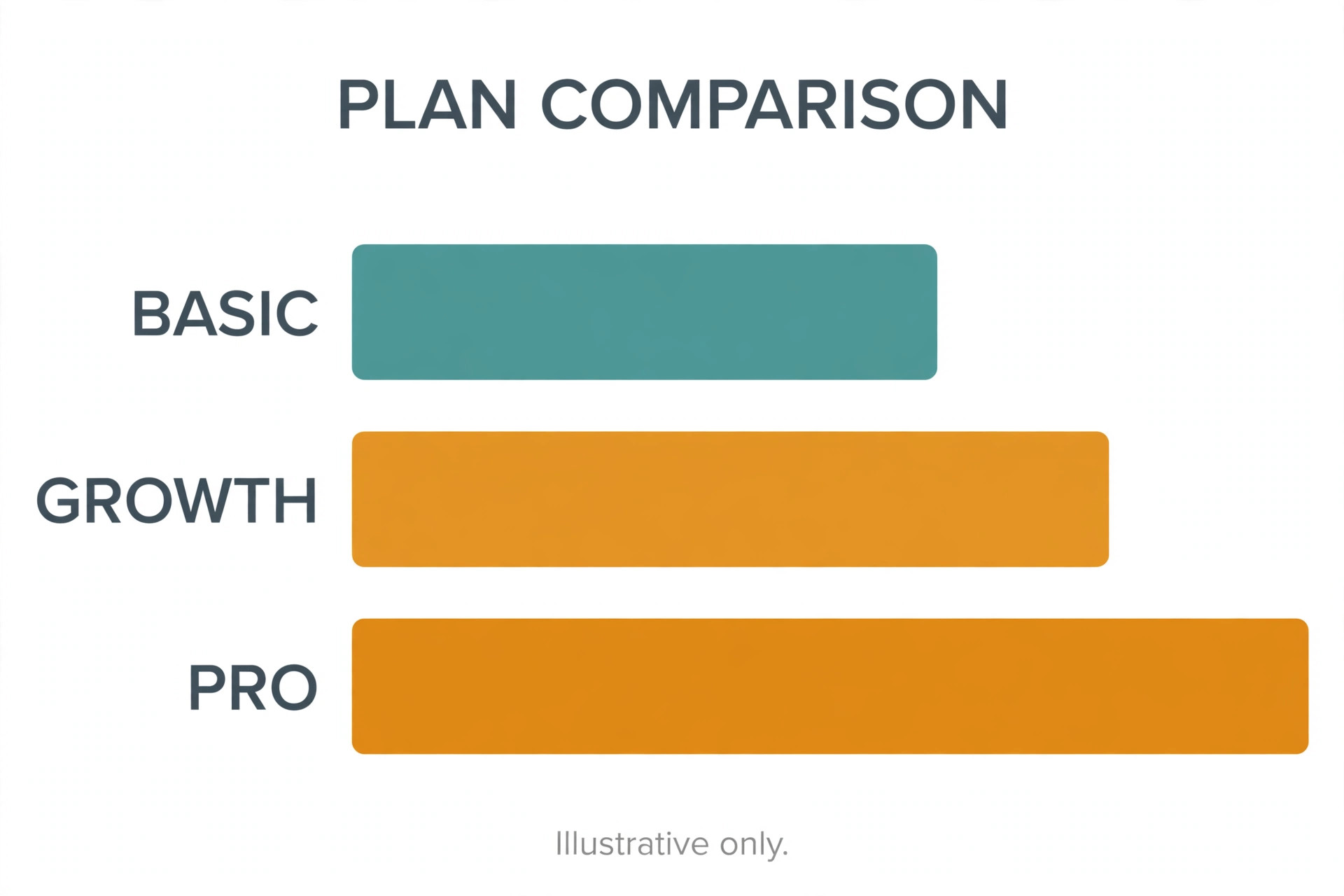
How the Cost of Kajabi for Small Business Monthly Changes in Year Two
Year two is usually kinder than year one, because the building work is done and the list is larger, but the bill does not always fall. A creator who started on Basic and grew past 2,500 contacts will face the Growth step in year two, adding 56 dollars a month on annual billing. A creator who stayed within Basic limits will pay the same plan price, plus any price rise Kajabi announces, plus processor fees that grow in step with sales.
The cost of Kajabi for small business monthly therefore behaves differently from a fixed subscription. The plan price is fixed for the billing period, but the total moves with sales, because processor fees rise with revenue, and it moves with audience size, because contact limits push tier upgrades. A budget that holds the plan price flat while forecasting sales growth will understate year two, and a budget that holds processor fees flat while forecasting audience growth will miss the upgrade.
Review the tier every quarter against three numbers, meaning paying customers, total contacts and products live. If two of the three are close to a limit, plan the upgrade for a quiet month rather than waiting for the limit to force it mid launch. If none of the three is close, stay put, because an upgrade bought early is money spent for headroom the business does not yet need.
Frequently Asked Questions
How much does Kajabi cost per month for a small business?
A small business pays 179 dollars a month for Basic, 249 dollars for Growth or 499 dollars for Pro on monthly billing, or 143 dollars, 199 dollars and 399 dollars on annual billing, before tax and payment processing. The cheapest tier a new buyer can see at checkout is Basic, since Kickstarter no longer appears on the public pricing page.
Does Kajabi charge a transaction fee on sales?
Kajabi charges a 0 percent transaction fee on every plan, which means Kajabi itself takes no percentage cut of each sale. Payment processor fees still apply, reported at 2.9 percent plus 30 cents on Basic, 2.8 percent plus 30 cents on Growth and 2.7 percent plus 30 cents on Pro through Kajabi Payments, with possible extra surcharges for international cards and subscriptions.
What happened to the Kajabi Kickstarter plan?
Kajabi removed Kickstarter from its public pricing page in January 2026, when it raised every remaining tier. Kickstarter previously cost 89 dollars a month for one product, one community and 250 contacts. Some sources report it still exists through a direct signup link, but a new buyer should budget from the published tiers, starting with Basic.
Is annual billing worth it on Kajabi?
Annual billing saves about 20 percent, which is 432 dollars a year on Basic, 600 dollars on Growth and 1,200 dollars on Pro. It is worth it for a business with steady sales that will stay on Kajabi for a full year. Monthly billing is worth the premium while the business is still testing, because it avoids prepaying a year for a platform that may not fit.
How many products and contacts does each Kajabi plan allow?
Basic allows 5 products and 2,500 contacts, Growth allows 50 products and 25,000 contacts, and Pro allows unlimited products and 100,000 contacts. Contacts include free subscribers as well as paying customers, so a list built through free lead magnets can hit the Basic limit before sales justify an upgrade.
When should a creator upgrade from Basic to Growth?
Upgrade when the business hits the Basic product or contact limits, when affiliate management becomes a real need, or when advanced automations would recover sales that are currently lost. The step costs 56 dollars a month on annual billing, and it pays when affiliates, automation or headroom generate more than that in sales or saved time.
More Reading on Stratilyze
– Best Online Course Platform for Coaches – Cost of Teachable for Small Business Monthly – Best Payment Software for Service Businesses – Cost of Wix for Small Business Monthly – Best CRM Software for Consultants