
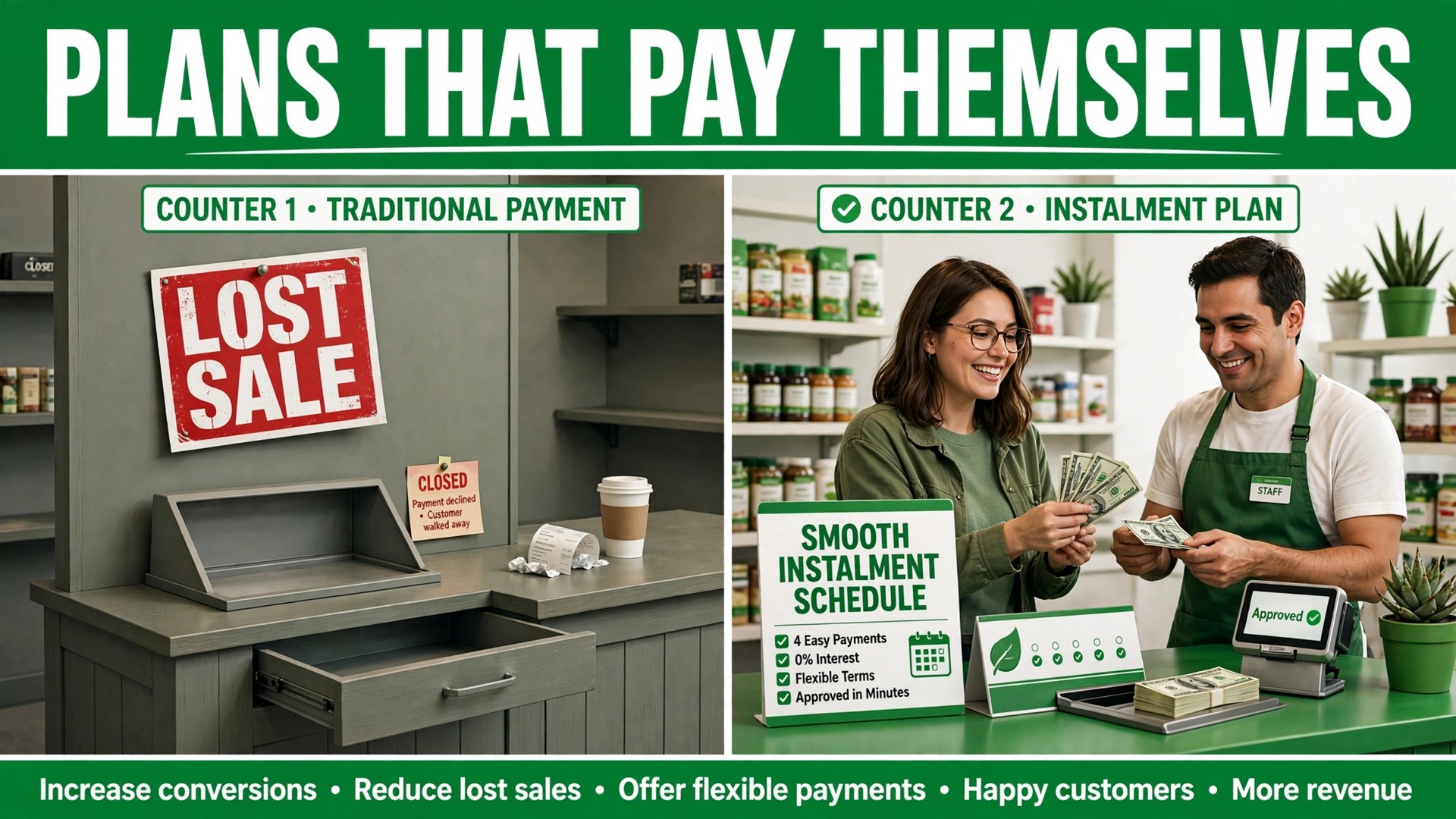
Compare two businesses selling the same 2,400 dollar service. The first asks for full payment up front, loses the sale to a cheaper competitor, and spends the month chasing the next lead. The second offers four monthly payments, wins the sale, and watches the money arrive on schedule without a single chasing call. The difference is not generosity. It is design. Learning how to offer payment plans small business owners can run safely means building a plan with a deposit, a signed agreement, autopay, and clear rules for missed payments, so the plan collects itself instead of turning you into a lender with a filing cabinet of IOUs.
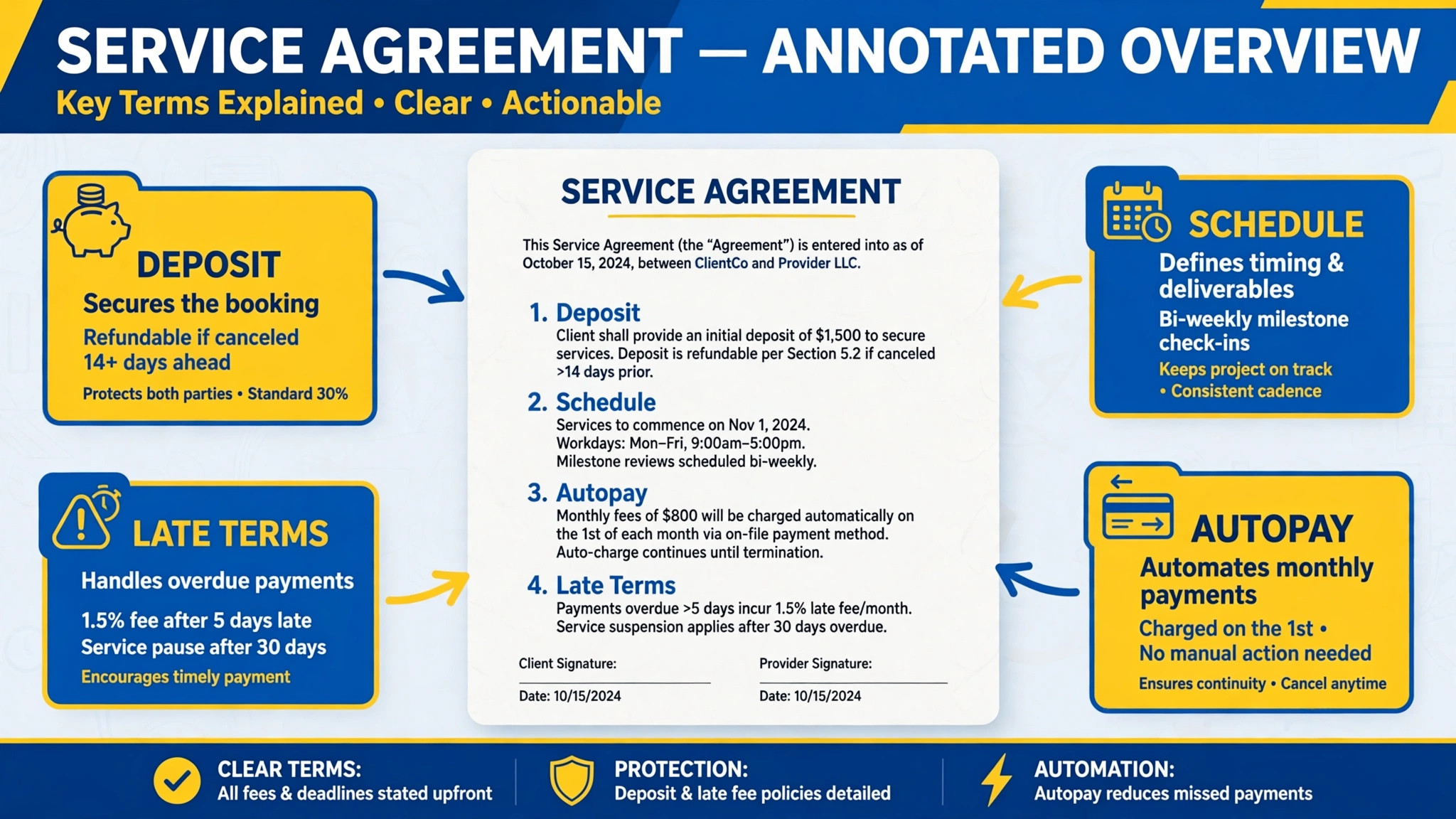
The demand for plans is real, and the risk of ignoring it is measurable. QuickBooks research has found that 56 percent of small business invoices are paid late, with 47 percent more than 30 days past due. A plan does not remove that reality, but it replaces one large, easy to delay invoice with smaller, scheduled, automatic charges that are harder to forget. Industry guides also report that around three quarters of businesses offering plans say the option helped them stay competitive, which fits what owners see in practice. When the choice is between a plan and losing the sale, the plan usually wins, provided the terms protect your cash flow.
The failures tell the other half of the story. Ask an owner who stopped offering plans why, and the story is almost always the same. A customer paid the first two instalments, then stopped answering. Nothing was signed. The card on file had expired. The balance sat in receivables for a year before being written off. Every one of those failures is a design failure, and each has a specific fix. A deposit gives the customer a stake. Autopay removes memory from the process. A signed agreement states what happens on default. A term that ends with the service stops the plan outliving the value. This guide builds each fix in order.
Why a Plan Helps Cash Flow Instead of Hurting It
The obvious objection to plans is cash flow. Spreading a payment over months slows the money coming in while your expenses stay constant, and for a small firm that timing gap can hurt. That objection is valid for a badly designed plan, and it is the reason deposits matter so much. A deposit sized to cover your hard costs means the plan never leaves you out of pocket on materials or subcontractors, even if a later instalment fails. The plan then spreads profit over time rather than spreading cost, which is a very different position to be in.
Plans also change buyer behaviour in your favour. A large single price triggers delay, comparison shopping, and requests for discounts. The same price split into monthly amounts feels affordable, and affordability closes sales that would otherwise stall. That is why plans work best on jobs where the customer receives value over time, such as a website with ongoing support, a multi week project, or a seasonal service package. The customer pays while the value is fresh, which keeps the plan feeling fair rather than feeling like a debt.
There is a second, quieter benefit. A plan creates regular contact with the customer. Each receipt is a small reminder of the relationship, and each successful payment builds a payment history that makes the next sale easier. Customers who complete a plan are proven payers, and proven payers are the easiest repeat buyers a firm has. A plan run well is therefore not just a financing tool. It is a loyalty tool, and firms that treat it that way, with clear receipts and polite communication, find plan customers returning at higher rates than one off buyers.
How to Offer Payment Plans Small Business Owners Can Run Safely
Here is the method in full. Step one, set a deposit that covers your hard costs, collected before work starts. Step two, choose a plan length that ends no later than the service itself, and keep it to twelve months at most without a deliberate decision. Step three, put the whole arrangement in a signed agreement that states the schedule, the amounts, the autopay authorisation, the late terms, and what happens on default. Step four, set up autopay on a stored card or bank account, so no instalment depends on the customer remembering to pay. Step five, send a receipt after every payment and a reminder before each charge, so the customer is never surprised.
The simplest safe design, and the one to start with, is a deposit plus up to four instalments, with no interest and no plan fee, a late fee stated in the agreement and within any state cap that applies, autopay on a stored payment method, and a term that ends with the service. That design stays on the simple side of the line for most small firms. Anything longer, larger, or interest bearing deserves a lawyer’s review or a licensed finance partner, because at that point you are closer to lending than to selling, and lending carries rules that vary by state and by country.
Keep the plan offer consistent. If plans are available, they should be available to every customer on the same terms, with the same deposit and the same schedule for the same job size. Inconsistent offers, where one customer gets six months and another gets two, create resentment when customers compare notes, and they create risk when a disputed plan has no standard terms behind it. Publish the plan tiers, as the next section sets out, and let the tier decide the terms. The tier is the policy, and the policy protects you from accusations of favouritism as well as from your own generosity in a negotiation.
Plan Tiers by Job Size. A Template You Can Copy
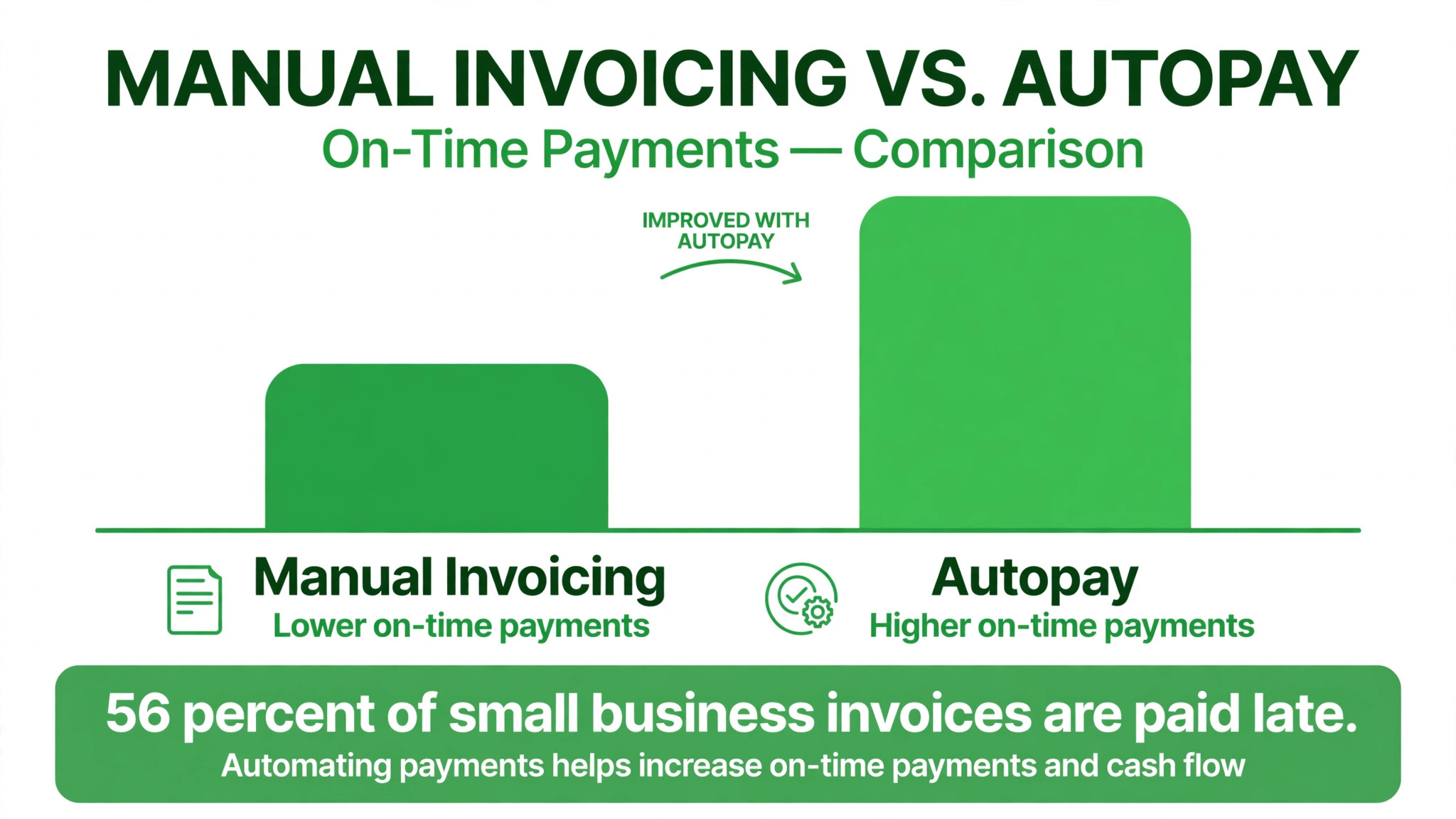
Tiered plans keep decisions simple for you and for the customer. The customer sees the tier that matches their job size, and the terms are already decided. Copy this template and adjust the numbers to your margins, keeping the deposit large enough to cover hard costs in every tier.
| Job size | Deposit | Instalments | Term | Autopay |
|---|---|---|---|---|
| Under 500 dollars | Full payment or 50 percent | Balance in one payment | 30 days | Card on file |
| 500 to 2,000 dollars | 30 to 50 percent | Two to three monthly | Up to 3 months | Required |
| 2,000 to 5,000 dollars | 30 to 50 percent | Three to four monthly | Up to 4 months | Required |
| Over 5,000 dollars | 40 to 50 percent | Up to six monthly | Up to 6 months | Required, plus signed agreement review |
For the smallest tier, a plan often adds more administration than it is worth. Full payment, or a 50 percent deposit with the balance on completion, is usually cleaner than a multi month plan for a few hundred dollars. The middle tiers are where plans earn their keep, turning a sale that would stall on price into a sale that closes. For the largest tier, add one extra control. Review the agreement yourself before it goes out, and consider a bank account payment method rather than a card, since cards expire and have limits that large instalments can hit.
A practical rule for every tier is that the plan should never outlive the value. A customer paying for a seasonal service should finish paying when the season ends, not months later, because a plan that continues after the value stops feels like a debt and defaults rise. If a job genuinely needs a longer term, split it into phases, with each phase paid as it is delivered, rather than stretching one plan across a year. Phased billing keeps the customer’s payments tied to visible progress, which is the strongest protection against disputes.
Guides to how to offer payment plans small business owners run without bad debts almost always return to this tier table, because it removes negotiation from every sale. The customer chooses a tier by job size, not by bargaining power, and the terms follow automatically.
The Agreement. What Must Be in Writing Before Work Starts
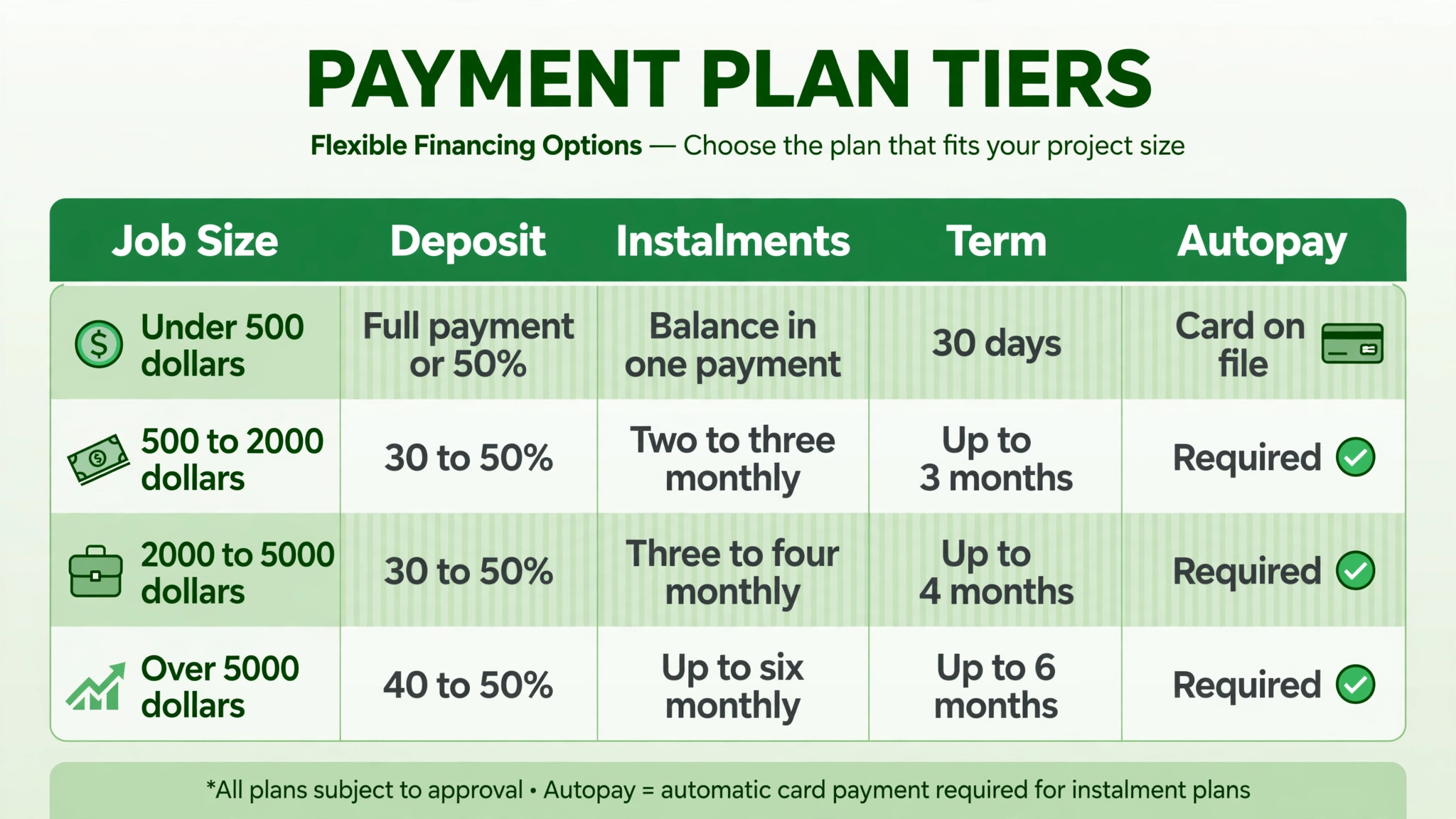
No work starts before the agreement is signed. That rule is absolute, because an unsigned plan is a hope, not a contract. The agreement does not need to be long, but it needs eight elements. The total price. The deposit amount and date. The instalment schedule with exact dates and amounts. The payment method and the autopay authorisation. The late fee, if any, stated plainly. What happens on a missed payment, including retry attempts and when service pauses. What happens on default, including whether remaining work stops. And the customer’s signature, electronic or physical, with the date.
Use electronic signing where possible. It is faster, it creates a timestamped record, and it removes the excuse that a paper form was never returned. Most invoicing and payment tools now include e-signatures, and a signed PDF stored in the customer file is enough for most small plans. Keep a copy the customer can access, because a customer who can check their own agreement rarely disputes it. Send the signed copy with the first receipt, so the terms are in the customer’s inbox from day one.
Be careful with language around interest and fees. If you charge no interest and no plan fee, say so, because that simplicity is a selling point and it keeps you clear of lending rules that apply to interest bearing credit.
If you charge a late fee, check the cap that applies in your state or country, state the fee in the agreement, and apply it consistently. A late fee that appears only when you are annoyed is a dispute waiting to happen. A late fee stated in advance, applied every time, is a term of the deal. This guide is general information, not legal advice, and for plans over a year, for interest bearing plans, or for large balances, get a local lawyer to review your agreement before you use it.
Set Up Autopay So the Plan Collects Itself
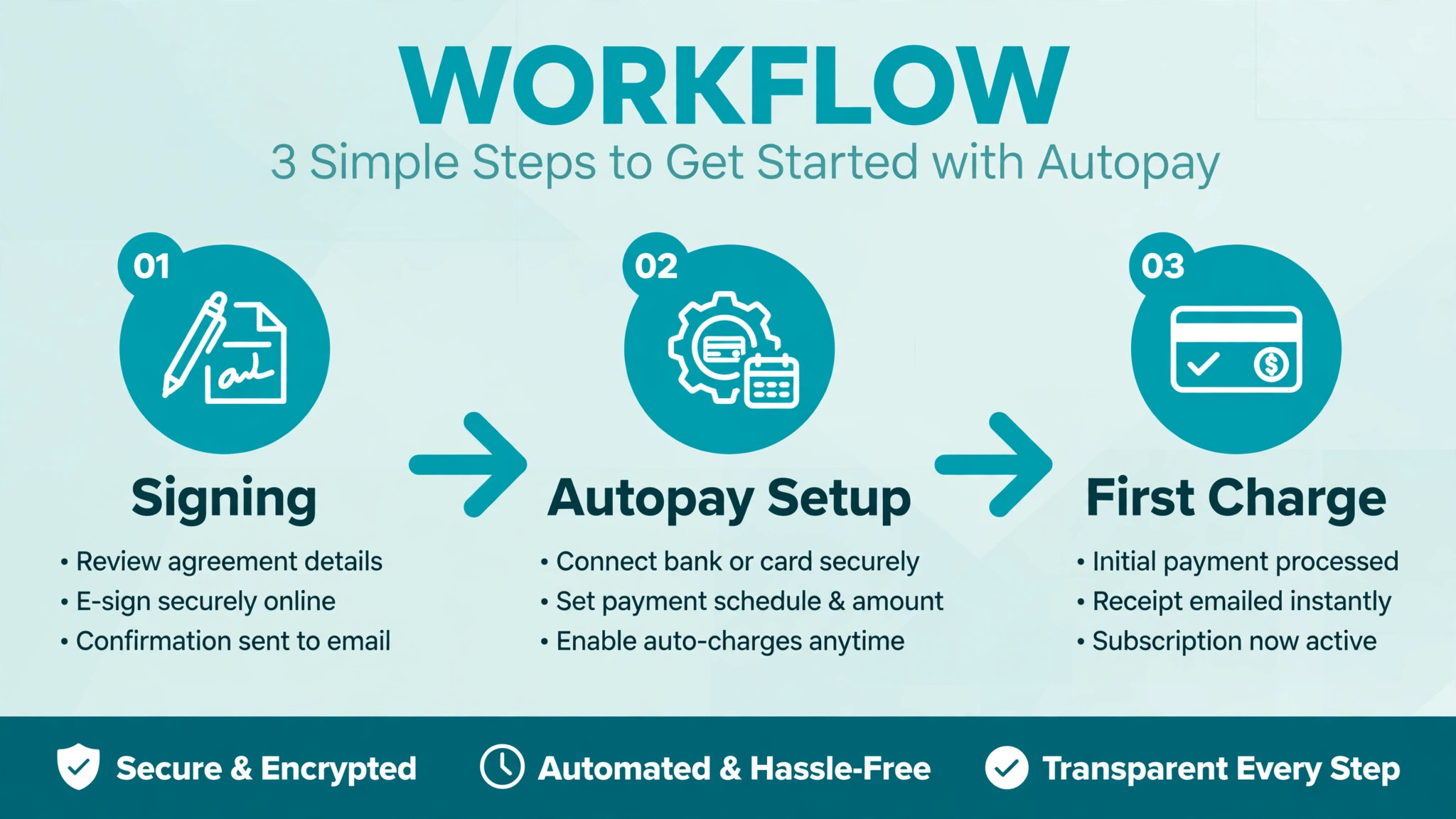
Autopay is the single change that most improves plan performance. A customer who has to remember to pay will forget, and a forgotten payment becomes a chasing call, which becomes an awkward conversation, which becomes a delayed payment. A stored card or bank account charged on the agreed schedule removes memory from the process entirely. After the initial setup, the customer does nothing and you get paid on time, every time the payment method works. That is the design that lets a plan collect itself.
Set it up in this order. First, collect the payment method at signing, not later, while the customer’s attention is on the agreement. Second, use a PCI compliant payment platform, so card details are stored by the platform and never touch your own systems, which protects the customer and removes a security burden from you.
Third, offer a choice of card or bank account, because bank payments avoid card expiry and card limits, while cards suit customers who prefer them. Fourth, send a reminder before each charge, stating the date and amount, so the charge is never a surprise. Fifth, give the customer a simple way to update a card, such as a secure portal link, because expired cards are the most common cause of failed plan payments.
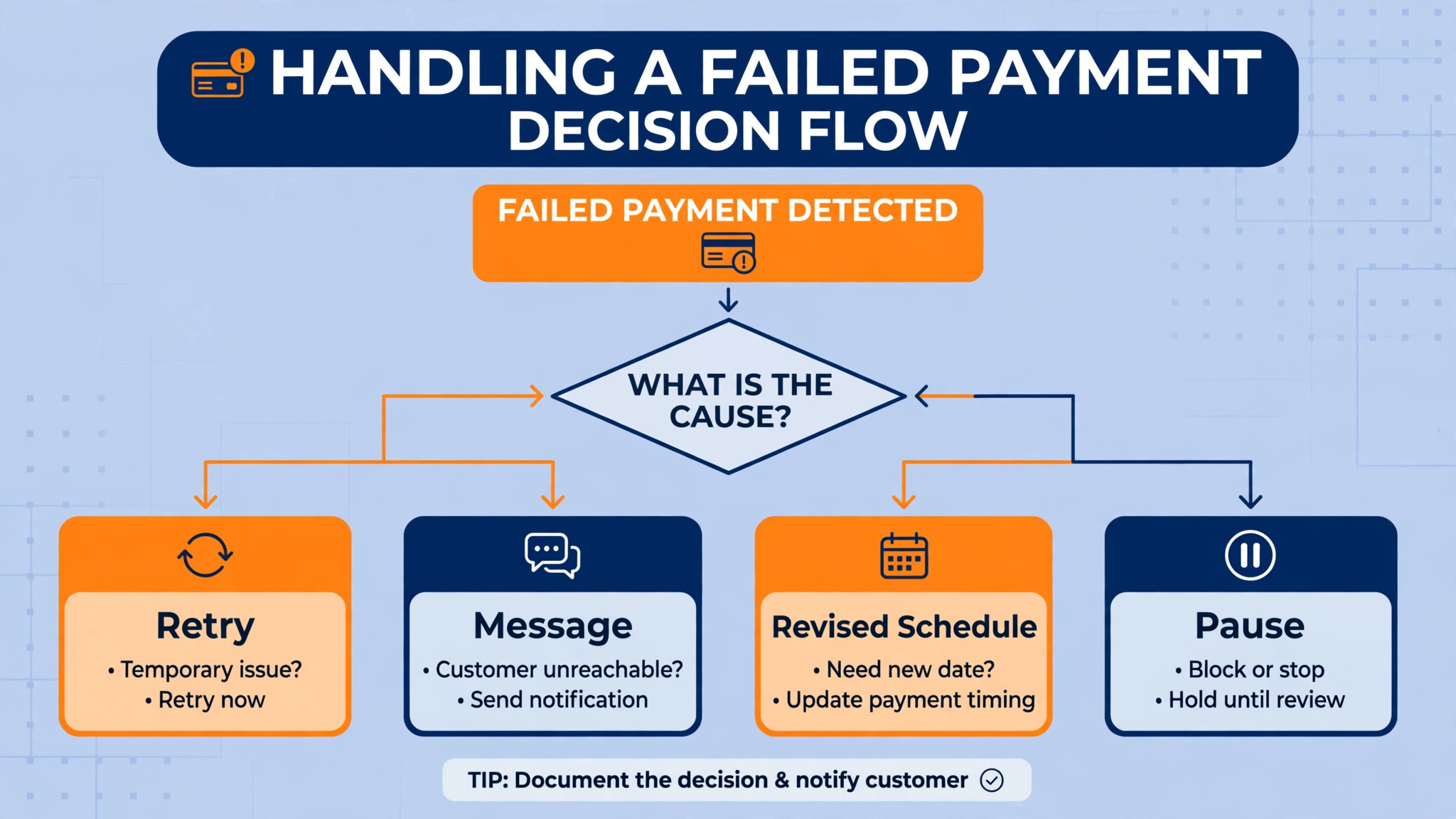
Failed payments will still happen, and the system should handle the first failure without you. Set automatic retries, typically a second attempt a few days after the first, and an immediate message asking the customer to update their payment method. Network tokens and account updater services, offered by most major payment platforms, can refresh expired card details automatically, which prevents a large share of failures before they reach you. The goal is a system where a failed payment triggers a process, not a phone call, and a person steps in only when the process has run its course.
A note on method choice for larger plans. Cards can be declined for large amounts, and card fees, typically a percentage of each payment, add up across a plan. Bank transfers usually cost less per payment and do not expire, which makes them attractive for plans over a few thousand dollars. Offer both, let the customer choose, and record the choice in the agreement, so a later switch of method is a documented change rather than a casual request.
That process first design is the practical meaning of how to offer payment plans small business owners run without chasing calls.
When a Payment Fails. Missed Payment Rules and the Late Fee Script
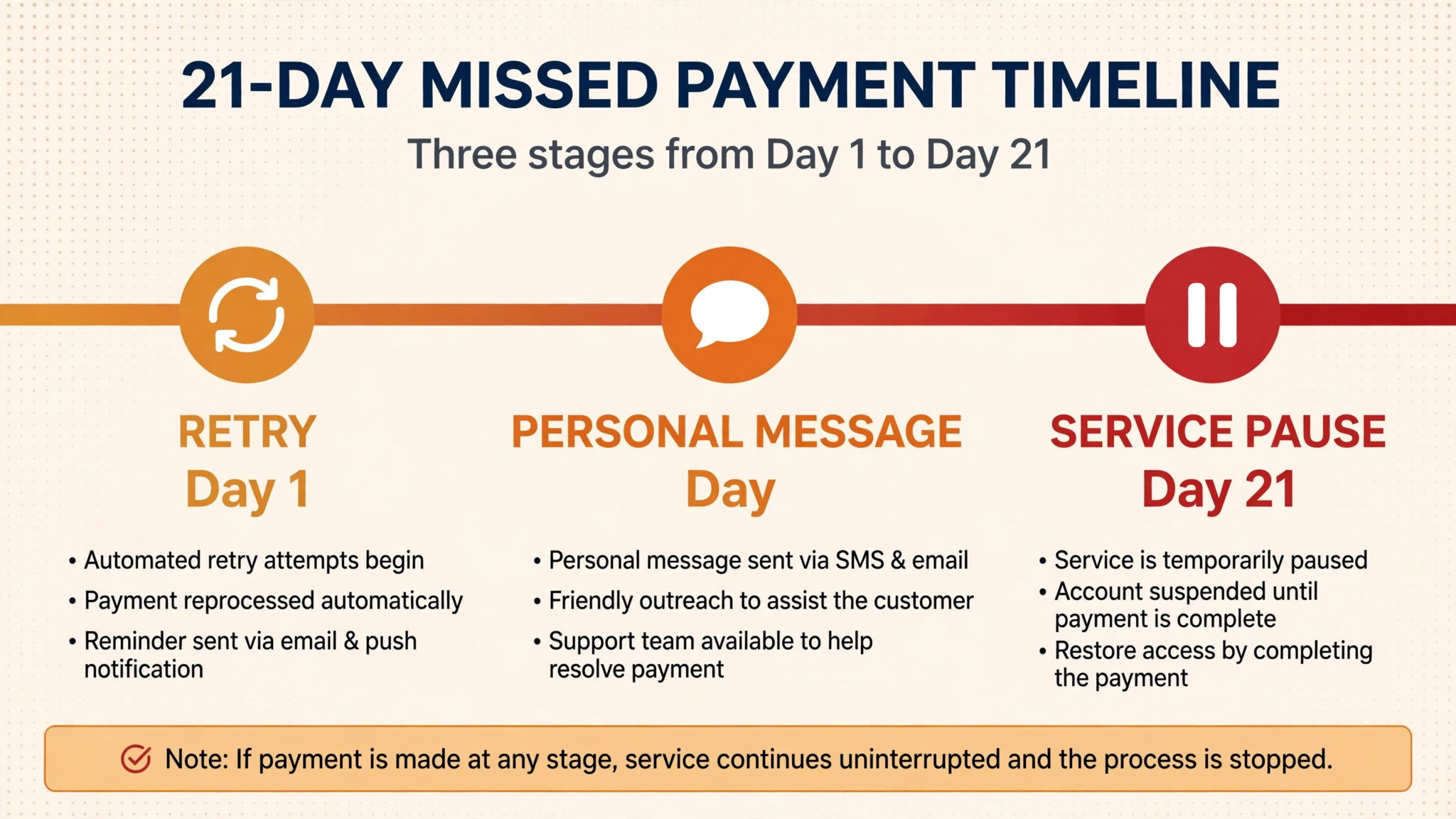
Write the missed payment rules before you need them, and put them in the agreement, because rules invented during a dispute read as punishment. A workable sequence runs like this. Day zero, the payment fails and the system retries automatically within a few days, while an immediate message asks the customer to update their payment method. Day seven, if the retry has also failed, a polite personal message goes out, stating the amount, the date it was due, and a link to update payment details.
Day fourteen, a second message states the late fee, if one applies, and the date by which payment must arrive to avoid a pause in service. Day twenty one, service pauses until payment resumes, where the agreement allows it and where pausing is lawful for your kind of service.
That sequence matters because it separates forgetfulness from unwillingness. Most missed payments are forgetfulness, an expired card, or a temporary shortfall, and a polite, automated first response solves them without damaging the relationship. The later steps exist for the smaller number of customers who are not responding, and they escalate in writing, which creates a record if the matter ever goes further.
Never threaten, never use abusive language, and never contact a customer at unreasonable hours about a missed payment. Several states extend debt collection rules to businesses collecting their own debts, so tone and timing are legal matters as well as good manners.
Use a late fee script close to this, adapted to your own voice. I noticed the payment due on a set date did not go through, which sometimes happens when a card expires. I have sent a link to update your payment details, and the system will retry in a few days. A late fee of a set amount applies under our agreement if payment is more than fourteen days late, and I wanted you to hear that from me first. If cash flow is tight this month, reply and we can discuss a short revised schedule.
That script does four jobs. It assumes a benign cause, it gives an easy fix, it states the fee before it applies, and it opens a conversation about hardship, which often recovers a payment that a demand would have lost.
If a customer tells you they cannot pay, listen before you act. A short revised schedule, with the remaining balance split over a longer period and service continuing, often recovers more money than a hard line that produces nothing. Accept partial payments and record them against the balance, because partial payment is progress, not failure. Reserve the hard line, pausing service or referring the balance for collection, for customers who stop communicating entirely. A customer who talks is a customer who usually pays, given a workable schedule.
A sequence like this is the backbone of how to offer payment plans small business owners defend, because every step was written before the dispute existed.
Receipts, Records, and the End of the Plan
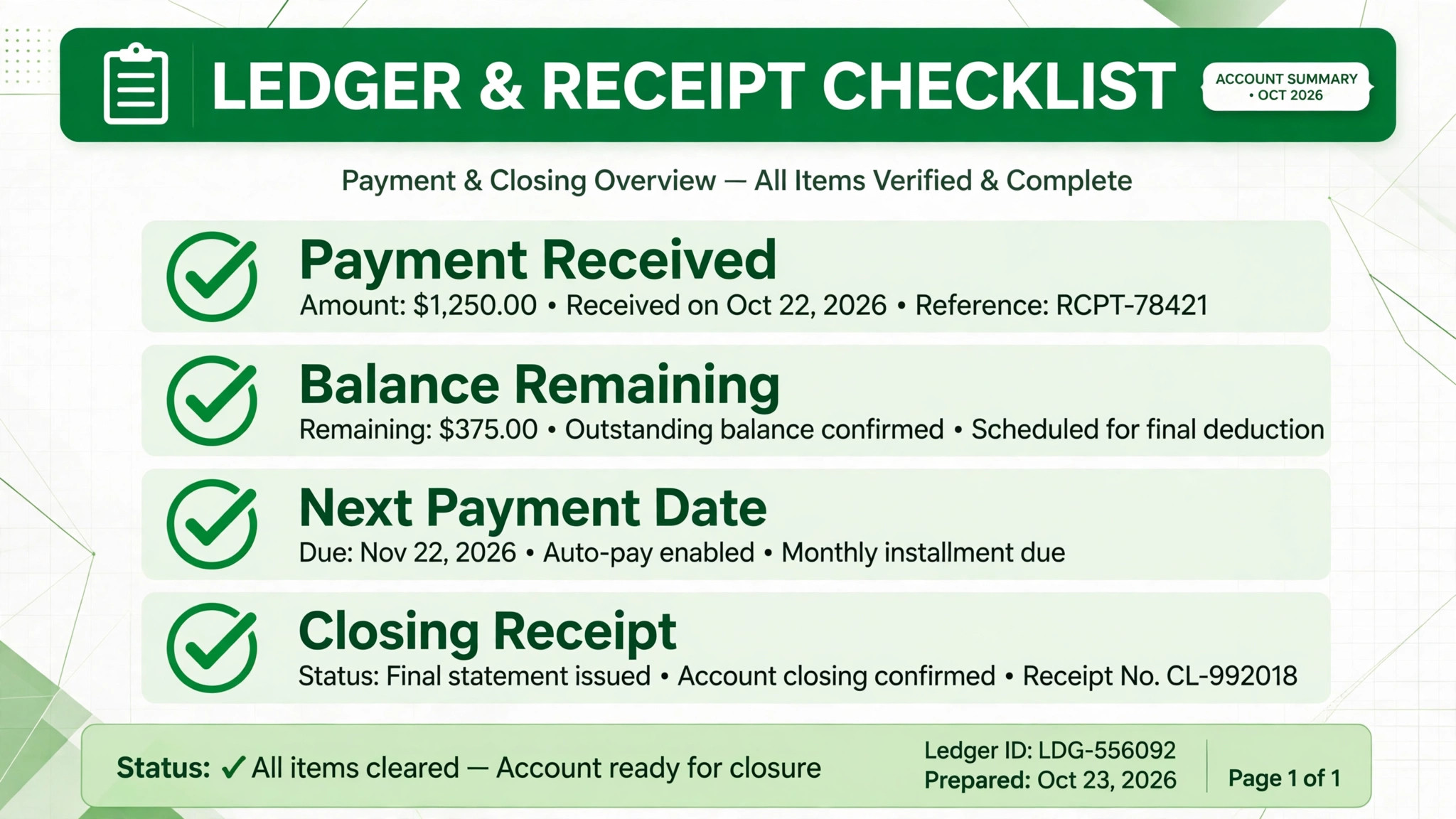
Every payment on a plan deserves a receipt, sent promptly, showing the amount paid, the date, the remaining balance, and the next payment date. Receipts do three jobs at once. They reassure the customer that the plan is on track. They create a running record that prevents balance disputes. And they keep your business in regular, positive contact with the customer. A customer who receives a clear receipt after every payment rarely asks where they stand, because the answer arrived with the last payment.
Keep a simple plan ledger for each customer, whether in your invoicing tool or a spreadsheet. One line per scheduled payment, with the due date, the amount, the status, and the receipt sent. Review the ledger weekly, not monthly, because a missed payment noticed in week one is a small fix, while a missed payment noticed in month two is a problem. The weekly review takes minutes when plans are on autopay, because most lines will show as paid. Its value is in catching the exceptions early, while they are still easy to resolve.
End the plan cleanly. When the final payment clears, send a closing receipt that states the balance is zero and the plan is complete, and thank the customer. That closing receipt matters more than it seems. It removes any doubt about further charges, it gives the customer a document to file, and it creates a natural moment to ask for a review or a referral, when the customer feels good about a completed commitment. If the plan included ongoing service, state clearly what continues after the plan ends and what, if anything, moves to a new arrangement, so the end of payments never becomes the accidental end of service.
That closing moment is a small part of how to offer payment plans small business owners finish well, and finished well is what brings the customer back.
Choose the Right Tool for Running Plans
You do not need a specialised lending platform to run simple plans. Most small firms run them inside tools they already use, such as an invoicing tool with recurring billing, a payment processor with stored payment methods, or an accounting tool with scheduled invoices. What matters is not the brand but the feature list. Stored payment methods, scheduled charges, automatic retries, pre charge reminders, receipts, and a ledger you can review weekly are the six features that decide whether the tool helps or hinders. If your current tool lacks two or more of them, the plan will depend on your memory, and that is the failure mode this guide exists to remove.
Compare tools on total cost, not on headline rates alone. Card fees are charged per payment, so a plan with four instalments pays the fee four times, and that total belongs in your margin maths. Bank transfer options often cost less per payment, which is another reason to offer them on larger plans. Confirm current fees on the vendor page before you commit, since rates change and this guide cannot track them for you. Also confirm that the tool supports the payment methods your customers actually use, including cards, bank transfer, and common digital wallets, because a plan that forces one method will lose customers who prefer another.
Test the whole plan before you offer it to a real customer. Run a small test plan through the tool with your own card, and check each step. The agreement sends. The deposit charges. The reminder arrives before the next charge. The receipt shows the remaining balance. A failed payment triggers a retry and a message. That thirty minute test catches the gaps that would otherwise surface in front of a customer, and it is the cheapest quality control a plan will ever get. A tool that passes the test, paired with the tiers and agreement in this guide, is everything a small firm needs to offer plans with confidence.
Guides to how to offer payment plans small business owners scale usually end at this point, because the tool, the tiers, and the agreement together form the system. Once they are in place, offering a plan becomes a sentence at quoting time rather than a project in itself.
Guides to how to offer payment plans small business owners sustain over years stress this closing step, because a plan that fades out without confirmation leaves the customer unsure whether more charges will follow, and uncertainty is what turns a satisfied customer into a cautious one.
Mistakes That Turn a Plan Into a Bad Debt
The first mistake is starting work before the deposit clears. A deposit that has not cleared is not a deposit, and work started on its promise is work at risk. Wait for cleared funds, even when the customer is eager to start, because eagerness is not payment. The second mistake is a plan longer than the service. A customer paying months after the value ended has little reason to keep paying, and defaults cluster at the tail of overlong plans. Keep the term inside the service period, or split the work into phases.
The third mistake is manual collection. A plan that depends on you remembering to invoice, and the customer remembering to pay, will fail at the first busy week. Autopay, reminders, and retries are not extras. They are the plan. The fourth mistake is inconsistent terms, where one customer gets a waived late fee and another does not, which creates disputes and accusations of unfairness. Apply the written terms every time, and if you make an exception, record why, so the exception does not become the new rule.
The fifth mistake is offering plans on jobs too small to justify them. A three month plan for a two hundred dollar job costs more in administration and attention than the sale is worth. Set a minimum job size for plans, and keep small jobs on full payment or a simple deposit plus balance. The sixth mistake is silence after a failure. A failed payment that nobody notices for a month is a month of lost room to recover the money and a customer who has moved on mentally. The weekly ledger review exists to prevent exactly that.
Frequently Asked Questions
How do I offer payment plans small business customers will actually accept?
Keep the offer simple and standard. A deposit plus a small number of monthly instalments, on autopay, with no interest and no plan fee, is the easiest offer for a customer to accept. Present the plan at quoting time, not as a rescue when the customer hesitates, because a plan offered early reads as a normal way to buy, while a plan offered late reads as a discount negotiation. Publish the tiers so the terms are the same for everyone.
What deposit should I ask for on a payment plan?
Ask for enough to cover your hard costs, which for most service firms means 30 to 50 percent of the job. On small jobs, 50 percent plus the balance on completion is often cleaner than a multi month plan. On larger jobs, 40 to 50 percent protects you while keeping the monthly amounts affordable. Never start work before the deposit has cleared, and state the deposit terms in the signed agreement.
Should I charge interest or a fee for a payment plan?
For most small firms, no. A deposit plus up to four instalments with no interest and no plan fee is simple to sell, simple to administer, and stays clear of lending rules that apply to interest bearing credit. A late fee stated in the agreement and within any applicable cap is a reasonable protection. For longer terms, larger balances, or interest bearing plans, get a local lawyer to review the agreement first, since this guide is general information rather than legal advice.
What happens if a customer stops paying halfway through a plan?
Follow the written sequence. Automatic retry, an immediate update your payment method message, a polite personal message at seven days, a late fee notice at fourteen days, and a pause in service at twenty one days where the agreement allows it. If the customer communicates hardship, a revised schedule often recovers more than a hard line. Reserve collection referral for customers who stop communicating entirely, and keep every message polite and documented.
Are payment plans worth it for small jobs?
Usually not below a minimum threshold. A multi month plan for a few hundred dollars costs more in administration and attention than the sale justifies. Set a minimum job size for plans, such as 500 dollars, and keep smaller jobs on full payment or a deposit plus balance on completion. Plans earn their keep on mid sized and larger jobs, where the price would otherwise stall the sale.
How do I handle payment plans small business tax and bookkeeping rules require?
Record each instalment as it is received, keep the signed agreement and every receipt in the customer file, and reconcile the plan ledger weekly against your payment platform. How you recognise revenue depends on your accounting method and local rules, so confirm the treatment with your accountant, particularly for plans that cross a tax year end. Clean records also make any dispute far easier to resolve, because the paper trail answers most questions before they are asked.
More Reading on Stratilyze
– Best Payment Software for Service Businesses – Cost of Stripe Payment Processing for a Small Business – How to Collect Deposits Before Work as a Small Business – How to Charge Late Fees as a Small Business