
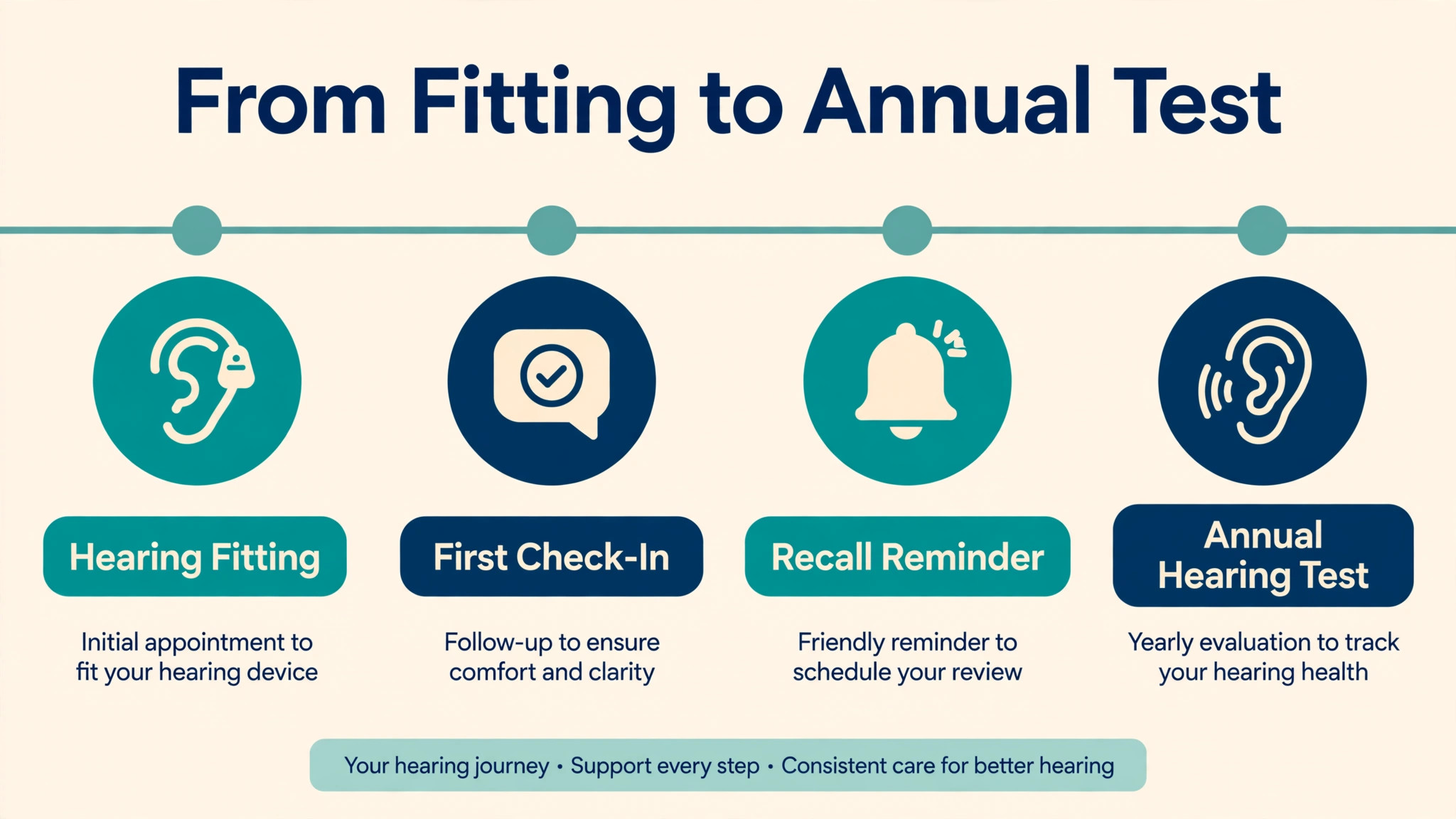
Hearing care does not end at the fitting, and that is exactly where most clinics lose patients. A patient who leaves with new hearing aids needs a check-in within days, a follow-up call in the weeks after fitting, and a recall when the next hearing test or device check falls due, yet busy clinics often rely on memory or a spreadsheet nobody owns. One hospital audiology guide puts the telephone follow-up for new hearing aids at eight to 10 weeks after fitting, by which time the patient should be building toward six hours of daily wear. If you want to use AI for audiology clinic recall reminders, start from that gap between fitting and follow-up.
That gap is where patients quietly drift to another provider or stop wearing their aids altogether.
The stakes are clinical as well as commercial. A patient who struggles with comfort, wax build-up or a setting in noisy rooms will often simply stop wearing the aids rather than call to complain, and the clinic only learns about it when the patient fails to return. Good recall practice catches those patients early, with a courtesy call a few days after fitting, a fuller check one to two weeks after an evaluation, and a structured recall for hearing aid checks and hearing tests.
AI helps by keeping those dates visible, drafting the messages from the real patient record, and flagging the patient who has gone overdue, while clinicians keep control of every clinical decision and every message that carries health information.
This guide sets out a recall workflow that respects both care and privacy. You will learn how to sort patients into recall groups, what each message should and should not say, how to handle text, email, phone and post for patients with hearing loss, and a copyable recall sequence template you can adapt to your own clinic. The goal is not more messages. It is fewer missed recalls, fewer abandoned aids, and a schedule that stays full with patients who already trust you.
Why patients stop wearing aids instead of calling for help
Most clinics still run this work by memory, inbox and a spreadsheet that one person understands. That works until the busy season, a staff holiday or a simple sick day breaks the chain, and then the patients who needed a reply hears nothing. The cost is invisible at first, because nobody complains about a message they never expected, yet the empty seat, the missed visit or the lost booking shows up in the numbers weeks later. Reading a guide like appointment software for audiology clinics shows the same pattern in a neighbouring niche, where the system, not the effort, decides who gets served on time.
The reason to use AI for audiology clinic recall reminders is not fashion. It is that the repetitive parts of this work, namely drafting, reminding, ranking and tracking, are exactly the parts a machine handles well, while the judgement parts, namely pricing, clinical or safety calls and personal conversations, must stay human. A workflow that respects that split will feel helpful to patients and to staff. A workflow that ignores it will feel cold, and patients will notice within a week.
Start with the record, not the tool. If the underlying list of patients, dates and promises is messy, automation will only send messy messages faster. Clean the list, write the rules, and then add one automation at a time, checking each one for a full cycle before adding the next. That discipline is what separates a clinic that uses AI well from one that merely owns AI tools, as any reader of client retention offers for nail salons will recognise from their own booking work.
Before the workflow, here is the decision shortcut for the whole guide. When you know which situation a patient is in, you know what to send, and use AI for audiology clinic recall reminders becomes a set of small decisions rather than a large project. Keep this table near the weekly routine until the habit is automatic.
| Situation | Best first move | What to avoid |
|---|---|---|
| Patients is ready but has not replied | Short personal message with one clear next step | Another generic message with no detail |
| Patients is overdue or drifting | Personal contact that names the real reason to act | A discount offered before the reason is known |
| Patients just completed a visit or booking | Thank you plus the next date or step, booked now | Silence until the next cycle, when it is too late |
Every step that follows supports one row of that table. If a proposed automation does not help a row, leave it out, because extra messages cost attention, and attention is the scarcest resource a small business owns.
The tools that handle recalls without risking privacy
Three tools carry this workflow, and each one fits a different clinic size. use AI for audiology clinic recall reminders works best when each tool owns one job and the record stays in one place, so resist the urge to buy a new tool for every small gap. Fix the gap with a rule first, and buy only when the rule proves the need.
Auditdata Manage
Auditdata Manage is built for hearing care, with automated reminders that prompt patients to book and keep appointments and to care for their aids. Its recall value is the link between the patient record and the reminder, so a hearing aid check, a cleaning reminder and a test recall can each run on their own clock. For a clinic that already tracks fittings and tests in one place, that link removes the spreadsheet that usually owns the recall list.
Solutionreach
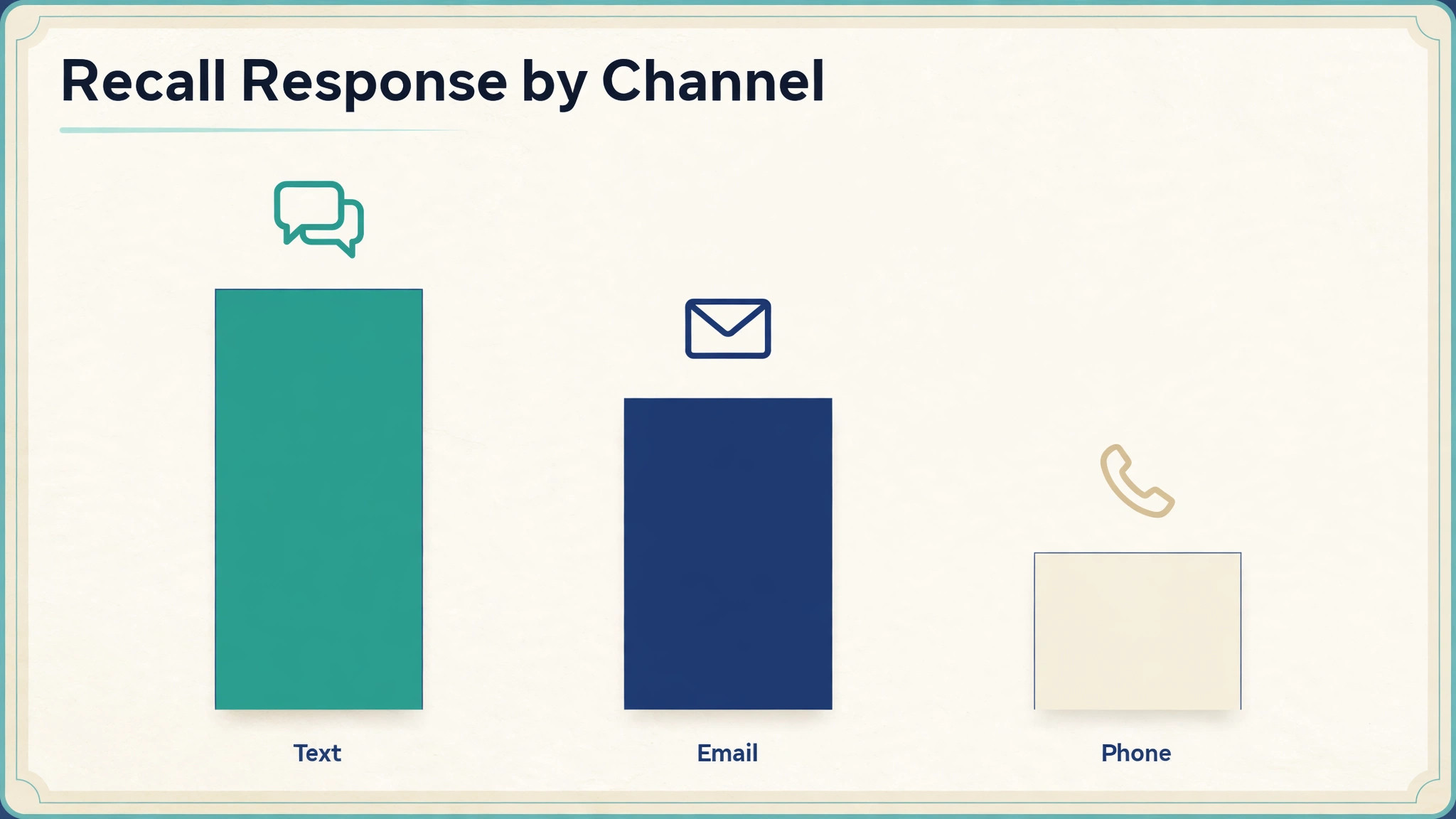
Solutionreach fits clinics that need patient recall and reminder messaging across text, email and phone, with templates that staff can adapt. The practical win is channel choice. Older patients may prefer a phone call or a letter, while working patients may prefer a text with a booking link, and a recall system that forces one channel will miss one group. Keep the message short, neutral and free of clinical detail in open channels, and move detail to a secure portal or a call.
General AI drafting assistant
A general AI assistant drafts recall messages from the patient record and your approved templates, under strict rules about what may appear in each channel. It must never invent a test result, a device setting or a diagnosis, and it must never place sensitive detail in a text message. A staff member reviews every draft that goes to a patient in the first months, and clinicians review anything that touches care advice.
Your practice management system
The practice management system remains the source of truth, holding appointments, fitting dates, test dates and contact preferences. AI and messaging tools should read from it, never replace it, so that a recall date changed by a clinician flows everywhere at once. If two systems hold different recall dates, staff will trust neither, and the recall list will quietly stop being used.
How to use AI for audiology clinic recall reminders without risking patient privacy
The workflow below is written in the order work actually happens, not in the order tools are sold. Read it as a weekly routine, and note where a human must approve before anything reaches a patient. use AI for audiology clinic recall reminders succeeds when the routine runs even in a busy week, so keep each step small enough to survive one.
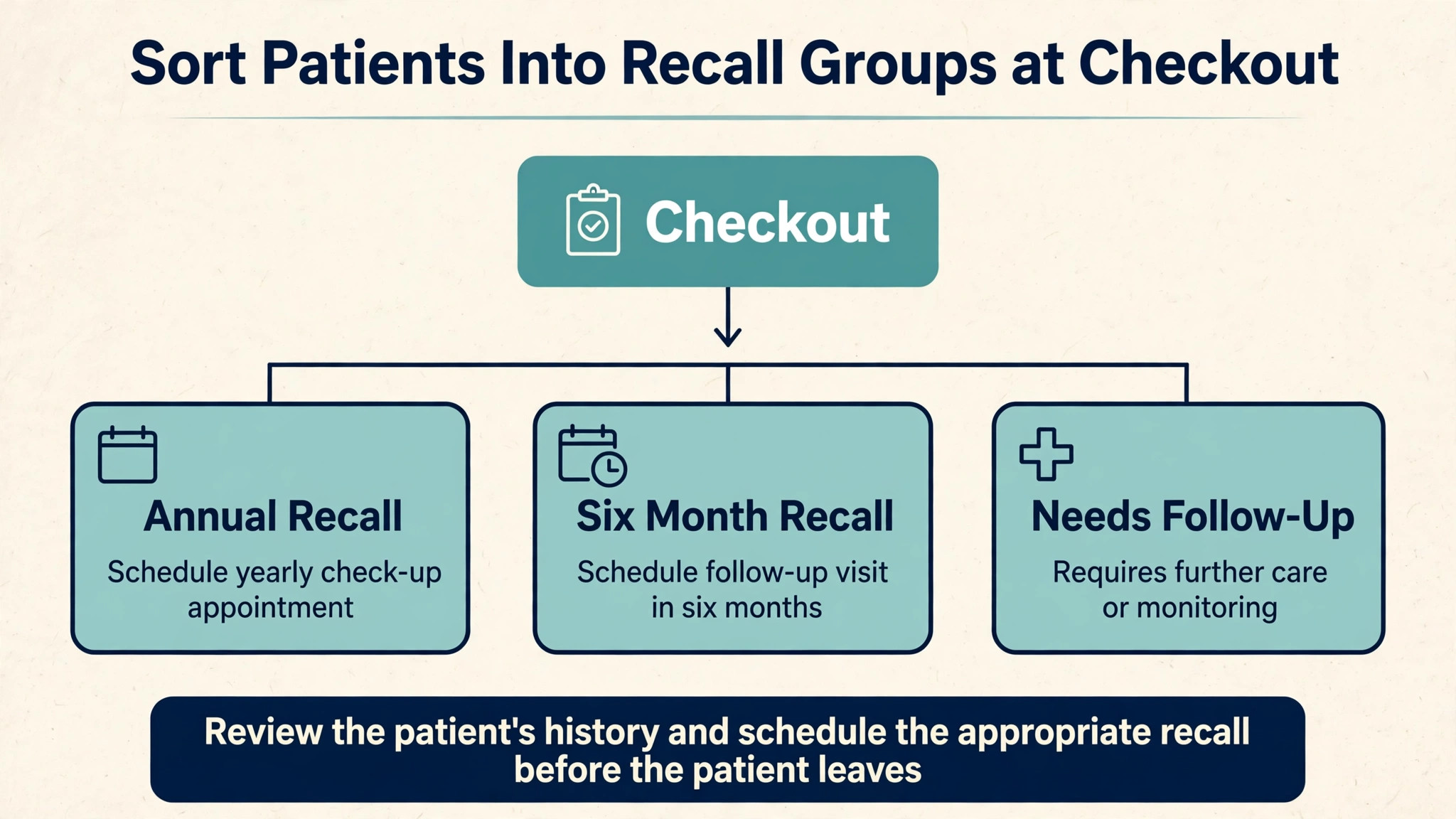
Step 1. Sort patients into recall groups at checkout
At checkout, place each patient into a recall group, namely new fitting, post-evaluation, annual hearing test, hearing aid check, or device maintenance. Record the recall date, the preferred channel and any access need, such as a captioned phone service or a family contact who helps with calls. A patient who needs a phone call rather than a text must never be moved to text by an automated rule, because a reminder the patient cannot hear is not a reminder.
Step 2. Send the post-fitting courtesy contact within days
Within a few days of a first fitting, make a courtesy contact to check comfort, handling and early questions, and to offer troubleshooting by phone or a short visit. Keep it warm and short, and invite the patient to bring the aids and their questions to the next appointment. AI can draft the message from the fitting notes, but a clinician or a trained staff member should make or approve the contact, because early problems with fit or sound need a human ear.
Step 3. Run the fuller follow-up in the weeks after fitting
Schedule the fuller follow-up call in the window your clinic uses, such as eight to 10 weeks after a new fitting in one hospital guide, and use it to ask about use in real situations, comfort, handling and satisfaction. Record the answers against the patient record, because they decide whether the next recall is routine or urgent. AI can summarise the call notes into a short structured record, but the clinician owns the clinical judgement in it.
Step 4. Set the recall date before the patient leaves
Before the patient leaves any appointment, agree the next recall date and enter it in the system, whether it is a hearing test, a device check or a maintenance visit. Hand the patient a written card or a portal message with that date, so the recall does not depend on a letter arriving months later. Clinics that set the date at checkout miss far fewer recalls than clinics that promise to write later.
Step 5. Send the recall sequence in the right order
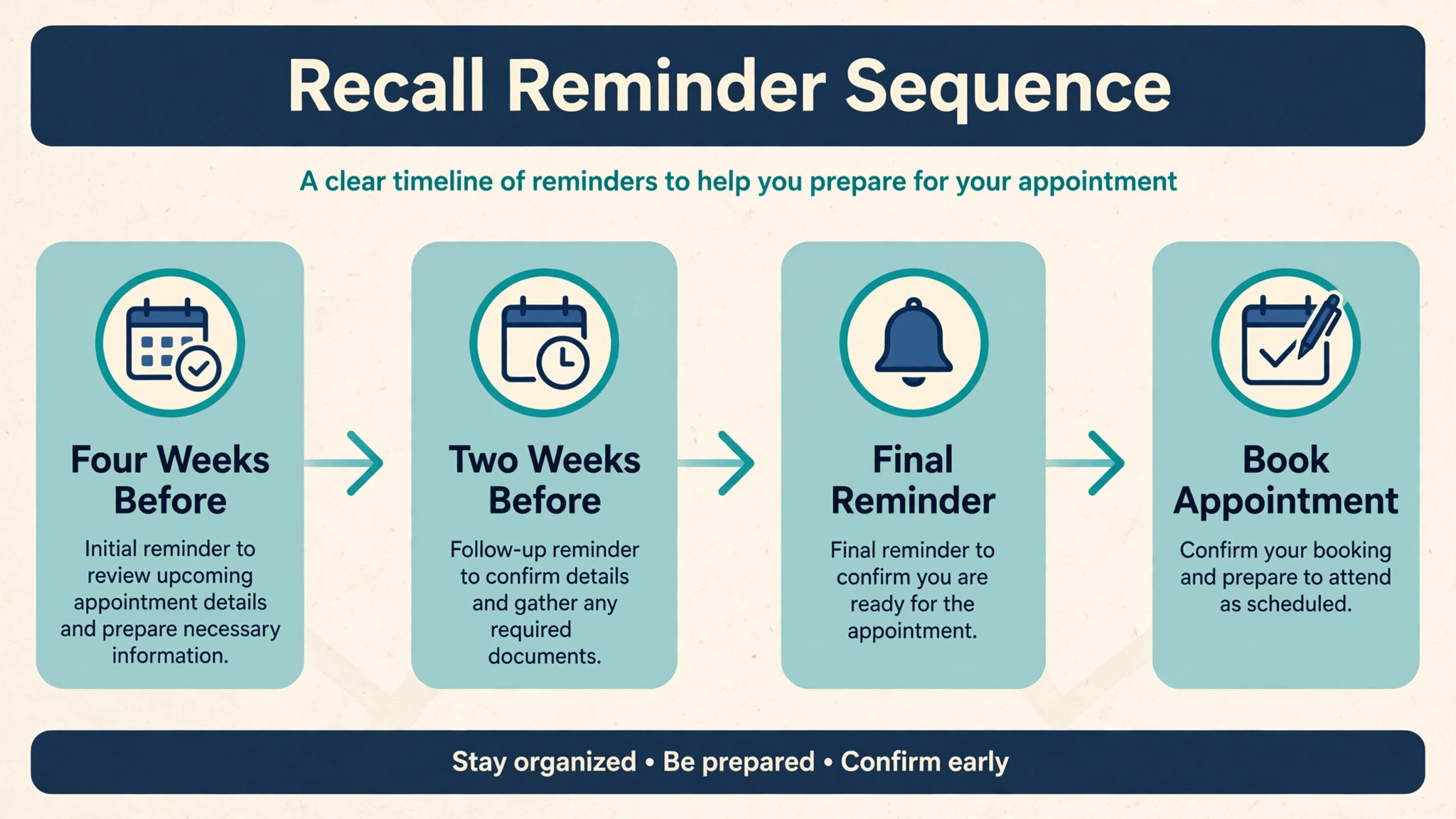
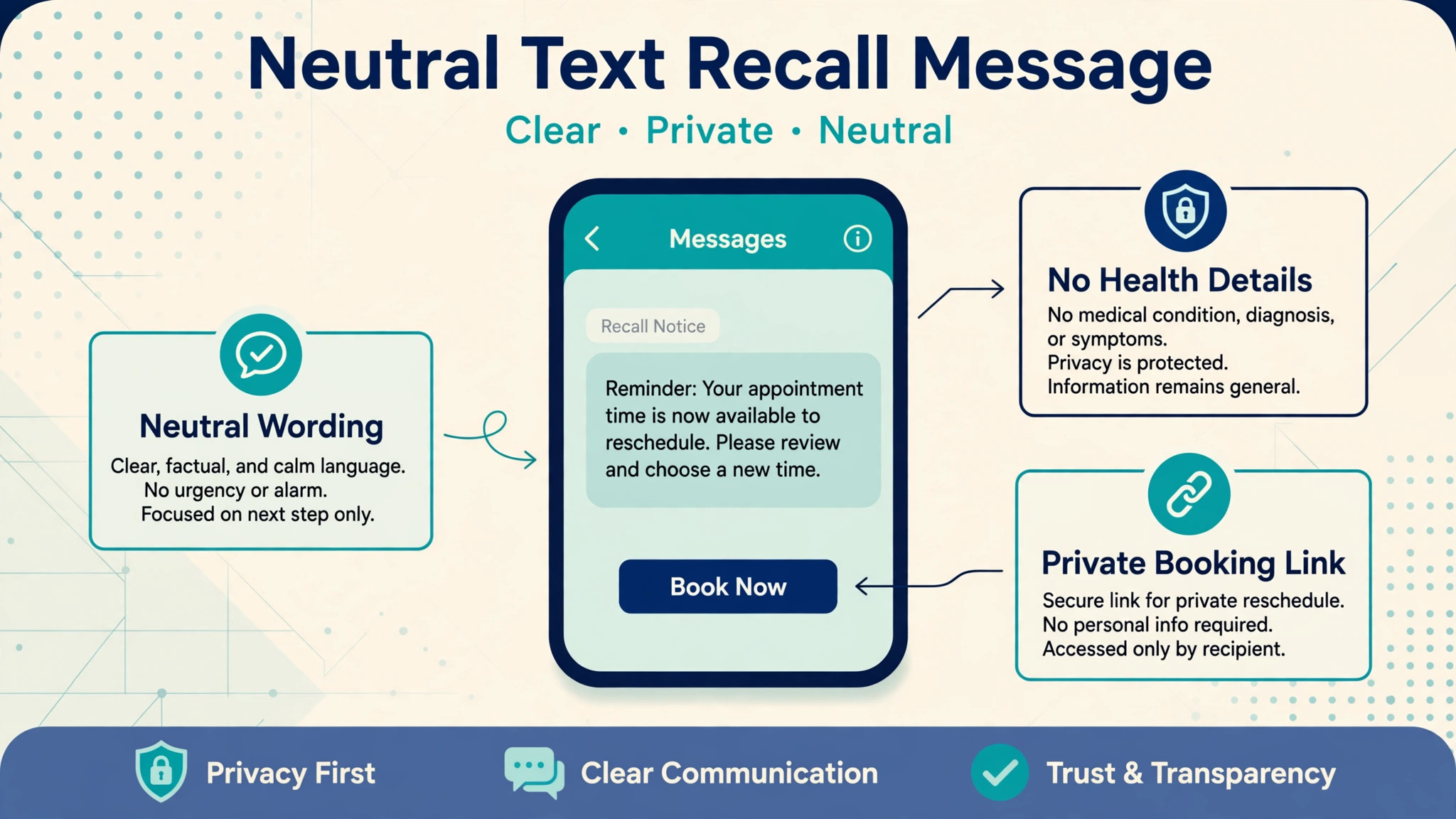
Send a first recall four weeks before the due date, a second recall two weeks before, and a final reminder a few days before, each naming the appointment type and offering two booking routes, namely a reply and a phone number. Keep text messages neutral, such as a reminder that a hearing check is due and an invitation to book, with no test result or device detail. Move any clinical detail to a call or a secure portal message, and never put it in a text.
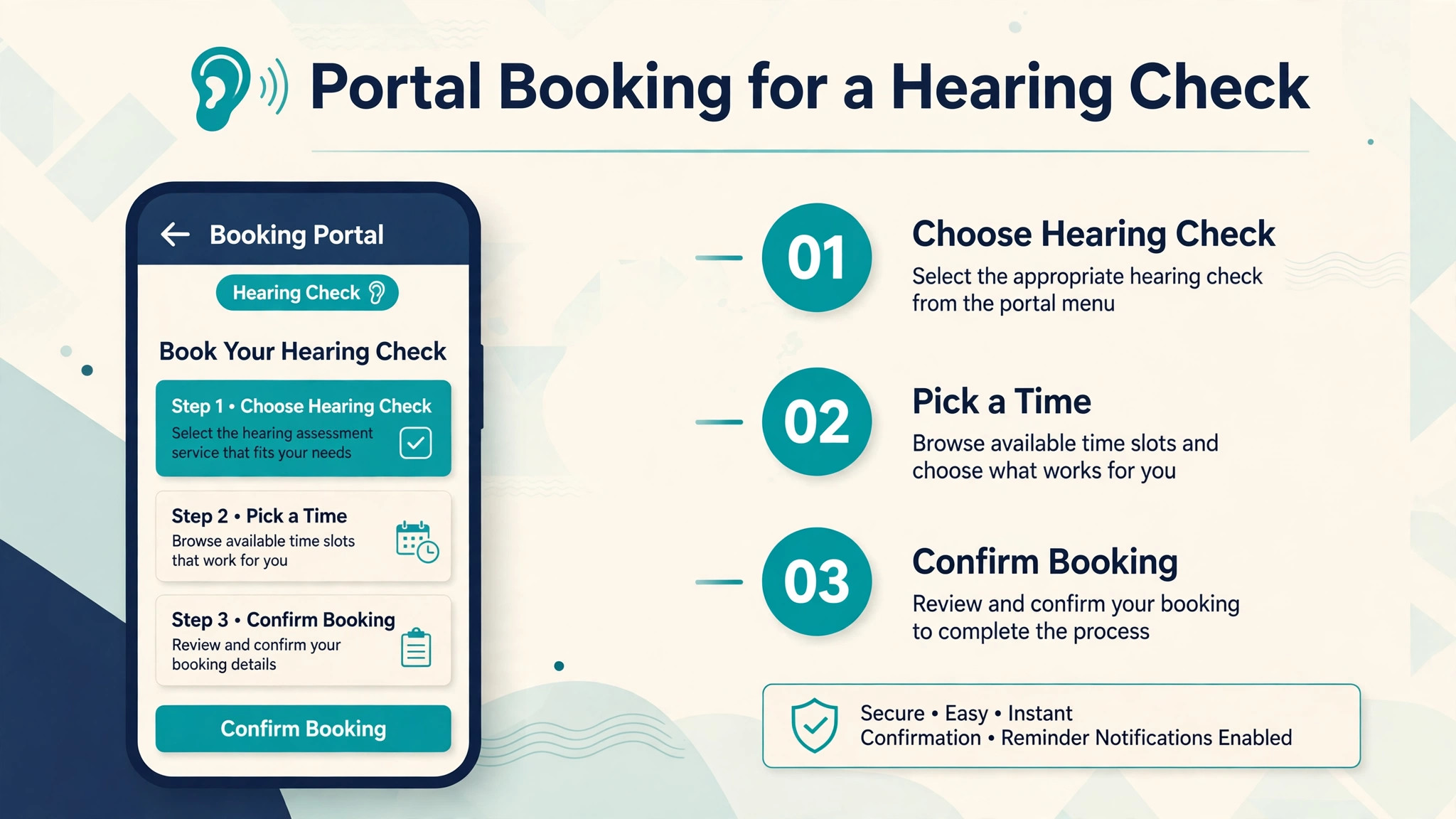
Step 6. Offer easy booking and easy rescheduling
Every recall message should let the patient book, confirm or reschedule in one step, with a phone option that does not require hearing a long automated menu. For patients with hearing loss, offer a captioned call, an email route, or a family contact route where the patient has agreed to it. A recall system that is hard to answer will lose exactly the patients who need it most.
Step 7. Follow up the no-reply patient personally
When a patient does not reply to the sequence, do not simply repeat the same message. After the due date passes, make a personal call, check whether the contact details are still correct, and ask whether access, transport, cost or a concern about the aids is the barrier. Record the reason honestly. AI can draft the call notes and the next message, but the call itself should come from someone the patient recognises.
Step 8. Review overdue recalls every week
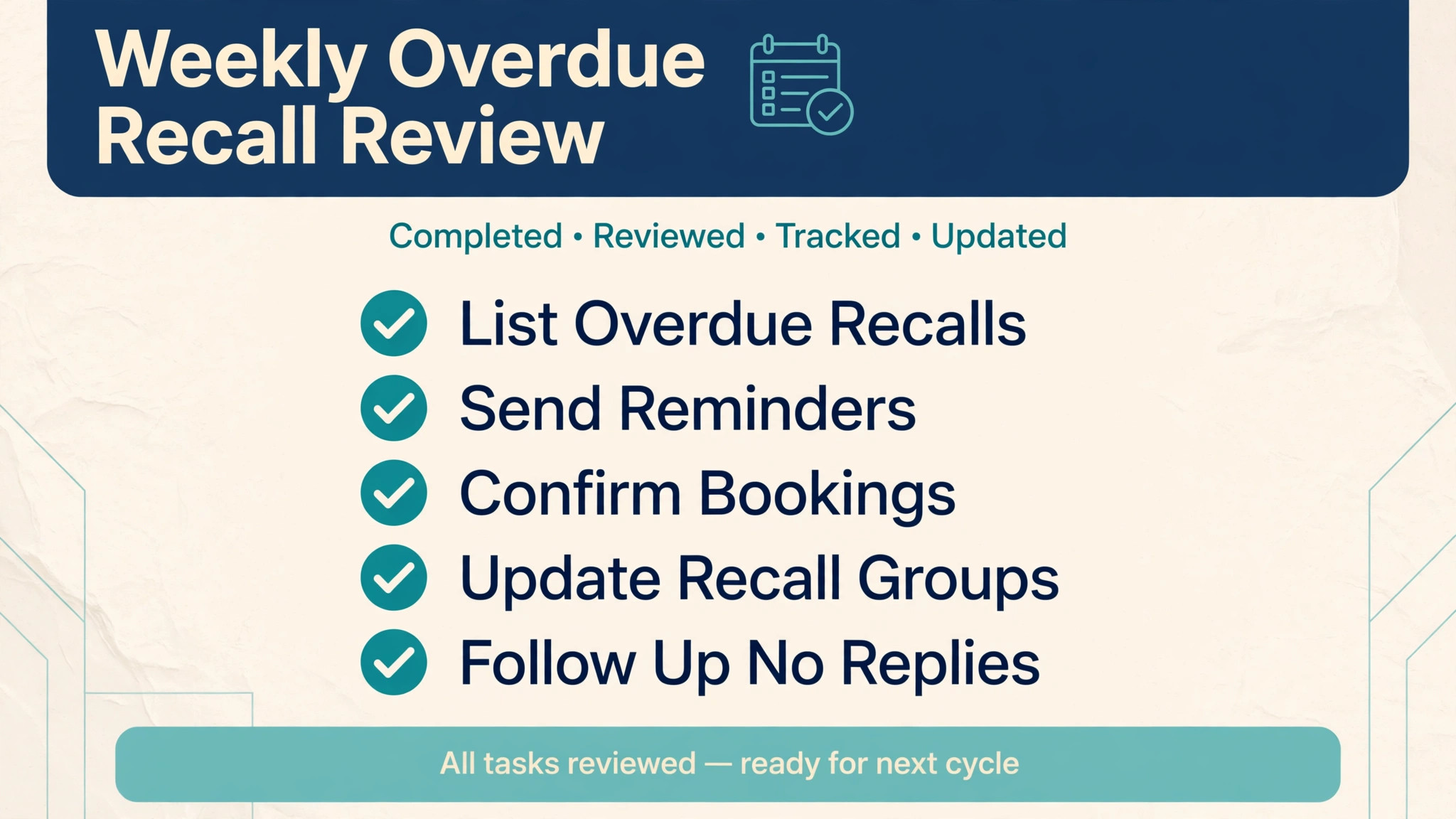
Each week, review patients whose recall date has passed without a booking, ranked by clinical priority and by time overdue. New fitting patients with unresolved problems come first, then annual test recalls, then routine maintenance. Escalate long overdue patients to a clinician review, not just another message, because a patient who has been overdue for a year may need a different conversation entirely.
The copyable recall sequence template
Run this checklist in full the first time, then run it as a weekly habit. use AI for audiology clinic recall reminders is only as strong as its weakest step, and a checklist is how a busy team keeps the weak step visible instead of forgotten.
- RECALL GROUP SET – Recall group set at checkout, with the recall date, preferred channel and access needs recorded.
- POST-FITTING CONTACT – Post-fitting courtesy contact made within a few days, with comfort and handling checked.
- FULL FOLLOW-UP BOOKED – Fuller follow-up booked in the weeks after fitting, with real situation questions prepared.
- RECALL DATE AGREED – Next recall date agreed before the patient leaves, and given in writing or through the portal.
- FOUR WEEK RECALL – First recall sent four weeks before the due date, with two booking routes offered.
- TWO WEEK RECALL – Second recall sent two weeks before the due date, with a phone option that avoids a long menu.
- FINAL REMINDER – Final reminder sent a few days before the due date, kept neutral in text and email.
- NO-REPLY CALL – Personal call made after the due date passes, with the barrier recorded honestly.
- WEEKLY OVERDUE REVIEW – Overdue recall list reviewed weekly, ranked by clinical priority and time overdue.
- PRIVACY CHECK – Every template checked for minimum necessary detail, with sensitive content kept off text messages.
Copy this list into your task system, assign one owner per item, and review it together each week. A checklist nobody owns is a poster, not a workflow, and the difference shows up in the first month.
What to say at each step of the recall
The messages below are starting points, not scripts to copy blindly. Adapt each one with a real detail from the record, a real date and a real name, and keep the tone close to how your team actually speaks. A message that sounds like your team will be answered. A message that sounds like a system will be ignored.
The first message should confirm, not sell. Name the person, name the booking or visit, and give one clear next step with a reply route that works. Keep it under four short sentences, because a long message on a phone screen is a message that gets saved for later and then forgotten.
The second message should add value from the real record. Mention the last visit, the last class or the last conversation, and add one useful detail the recipient did not have, such as a date, a preparation note or a choice between two options. Value is what earns the next reply, and a message with no new information earns nothing.
The third message should make deciding easy. Restate the choice plainly, name the deadline honestly, and offer help with the decision rather than pressure to decide. If the recipient has a concern, this is the message that surfaces it, so end with a question that is easy to answer in one line.
The final message should close the loop with respect. Thank the person, state what happens next, and leave the door open with a real route back. A respectful close-out protects the relationship for the next cycle, and many lost bookings return months later to the business that closed gracefully.
What a missed recall costs in care and in bookings
Measure four numbers weekly, namely response rate, conversion or completion rate, overdue rate and time from first contact to decision. use AI for audiology clinic recall reminders should move at least two of those four within a month, or the workflow needs a timing change before it needs a tool change. Do not measure message volume, because sending more messages is easy and means nothing on its own.
Compare the new numbers with the same period before the workflow, not with another business, because seasons, prices and local competition differ too much for outside comparison to help. A guide such as booking software for nail salons makes the same point for its own niche, where the honest baseline is your own past performance, measured the same way every week.
| Measure | What good looks like | What to change first |
|---|---|---|
| Response rate | Rising week on week | Message timing and first line |
| Overdue rate | Falling toward zero | The record step, not the message step |
| Decision time | Shorter, without more chasing | The clarity of the next step |
What the first recall quarter teaches a clinic
Device care reminders deserve their own place in the sequence, because many recalls fail for a simple reason, namely wax, moisture or a dead receiver, rather than a clinical problem. A short care message between recalls, reminding the patient to clean the aids, change wax guards and store them safely, prevents the visit where the clinician discovers a blocked aid that the patient thought was broken. Keep care messages practical and short, and link them to a drop-in hour where the clinic offers one, because a patient who can walk in for a quick clean is a patient who stays engaged.
Family involvement is often the difference between a kept recall and a missed one, especially for older patients. Where the patient agrees, copy a family member on scheduling messages, offer a joint appointment note, and record the family contact as a scheduling helper rather than a clinical contact. AI drafts must respect that boundary, using the family contact only for booking and never for clinical detail. A clinic that handles this well gains a second pair of eyes on the recall, and a patient who feels supported rather than managed.
Seasonal patterns also affect recall response. Winter illness, summer travel and holiday weeks all move response rates, and a recall sent into a holiday week will often sit unread. AI can suggest better send windows from past response data, but the clinic should avoid sending recalls on days when the phone lines are closed or the diary is full. A recall that invites booking must land when booking is actually possible, or the patient will try once, fail, and not try again.
Finally, measure recall as a care metric, not just a booking metric. Track recall response rate, time from due date to booking, no-show rate for recalled appointments, and the share of recalled patients whose aids needed adjustment. Share those numbers in the team meeting each month, and let them drive one change, such as a new send time, a clearer message, or a new drop-in hour. A clinic that treats recall as care will keep patients longer than a clinic that treats it as marketing.
Getting recalls running in the first two weeks
Week one starts with an audit, not a purchase. List every active patients, every open date and every promise that is currently tracked only in someone’s head or inbox, then move that list into one shared record with one owner. Write the rules for timing, channel and escalation on a single page, and get the whole team to agree them before any message goes out. An audit like this usually takes a day, and it prevents the most common failure, which is automating a messy list and then blaming the tool for messy results.
In the second half of week one, draft the templates and test them on real records. Pick five past cases that cover the normal range, from the easy win to the awkward exception, and draft every message for those cases by hand first. Then let the AI draft the same messages and compare the two sets side by side, keeping whatever is clearer and discarding whatever sounds generic. This comparison teaches the team what good input looks like, and it builds trust that the AI drafts will be checked rather than sent blind.
Week two is a pilot with a small group, not a launch to the whole list. Choose one segment, such as one class, one route, one month of renewals or one recall group, and run the full workflow for that segment only. Watch reply rates, watch complaints, and watch the time staff spend on review, because a workflow that saves an hour of drafting but costs two hours of fixing has not saved anything. Meet at the end of the pilot week and decide one change, not ten, so the effect of that change can actually be seen.
The most common pilot fixes are timing, channel and record gaps. A message sent at the wrong hour gets ignored, a message sent on the wrong channel never arrives, and a message built from a missing record field looks careless. Fix those three before you touch wording, because wording rarely causes a failed pilot. Also check the edge cases the pilot revealed, such as a duplicate record, a family with two contacts, or a customer who opted out on one channel but not another, and write a rule for each one.
Week three is the full rollout, and it should feel boring rather than exciting. Move the remaining segments onto the workflow one at a time, keep the weekly review meeting, and publish a one page monthly report showing response rate, overdue rate and decision time. Boring is the goal, because a workflow that only works when someone is excited about it will stop working in the first busy month. A workflow that runs quietly, with a named owner and a weekly review, will still be running next year.
Keep one rule above all others through the rollout. No message goes out without a named human approving it, no record stays in a private inbox, and no overdue item waits for the month-end meeting. Those three habits cost minutes a week, and they are what keep the workflow honest when the team is busy and the season is at its peak.
Frequently Asked Questions
How often should hearing aid patients be recalled?
It depends on the patient and the clinic protocol, but a common pattern is a courtesy contact within days of fitting, a fuller follow-up in the weeks after fitting, and then recalls for hearing tests and device checks at the intervals your clinicians set. The recall date should be agreed at checkout and entered in the system, not left to memory.
Is it safe to send recall reminders by text?
Yes, if the text stays neutral and carries no sensitive health detail. A text can say a hearing check is due and invite the patient to book, while results, settings and diagnoses stay on a call or a secure portal. Always use only channels the patient has approved, and offer an opt-out that actually works.
What should a recall message never contain?
It should never contain a diagnosis, a test result, a device setting or a full identifier in an open channel such as text or voicemail. Use generic phrasing, verify identity before sharing detail on a call, and route anything sensitive through an authenticated portal. When in doubt, say less in the message and more on the call.
How do you reach patients who struggle on the phone?
Offer a captioned phone service, an email booking route, a portal message, or a family contact route where the patient has agreed to it. Train schedulers to speak clearly, to confirm understanding, and to offer to send the details in writing after the call. A recall system that only works by phone will miss the patients it is meant to help.
What if a patient does not respond to any recall?
Make a personal call, check the contact details, and ask about the real barrier, whether access, transport, cost or a concern about the aids. Record the answer and adjust the recall plan, rather than repeating the same message. If the patient asks to pause recalls, record that preference and respect it.
Can AI write recall messages without risking privacy?
Yes, with strict template rules and human review. AI drafts from the patient record and approved templates, staff review drafts before sending, and sensitive content is blocked from open channels by rule, not by hope. Treat the AI draft as a first draft, and keep clinicians in charge of anything that touches care.
The verdict for audiology clinics
The verdict is simple. A clinic that contacts patients within days of fitting, follows up in the weeks after, sets the next recall before the patient leaves, and reviews overdue recalls weekly will keep more patients wearing their aids and returning for care. AI makes that rhythm affordable by drafting messages and ranking overdue lists, while clinicians keep control of care and privacy. use AI for audiology clinic recall reminders is a discipline before it is a technology, and the discipline is a clean record, a clear rule and a message approved by a human.
Start with the sequence template in this guide and run it for one quarter. Track response rate and overdue numbers weekly, and fix the channel or the timing before you add more automation. Patients do not leave because they got one message too few. They leave because nobody noticed when they went quiet, and this workflow is how you notice. For a neighbouring view on keeping customers close, see management software for funeral homes and service planning for funeral homes, which cover the same habit of noticing drift early and acting on it personally.