
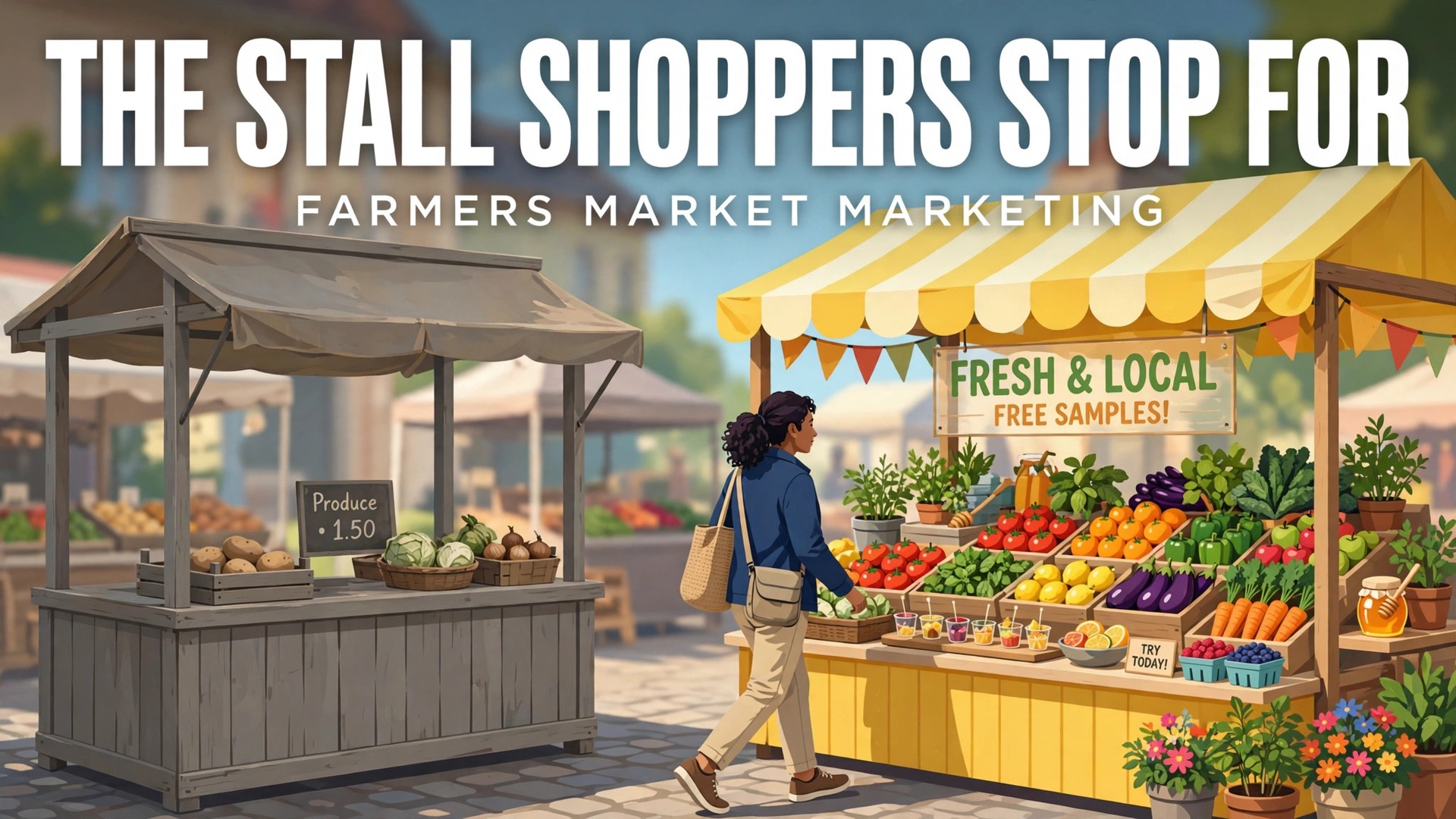
Two stalls sell similar tomatoes on the same market row. One has a plain table, a handwritten price card, and a vendor waiting quietly behind the produce. The other has a clear sign naming the farm, a tasting sample, a chalkboard with three recipe ideas, and a short queue of shoppers who stopped because something caught their eye. The produce is not the difference. The presentation and the invitation are. If you want to use AI for farmers market stall marketing, the goal is to become the second stall every week, without spending your evenings on design work.
A farmers market stall is a small shop with about six hours to earn a week’s income. Shoppers walk past dozens of stalls, make fast decisions, and remember only a few vendors by name. Most stall marketing advice ignores that reality and suggests a generic social media plan. A stall does not need a generic plan. It needs a sign shoppers can read from ten steps away, a reason to stop, a reason to taste, and a reason to come back next Saturday.
Artificial intelligence tools can help with the repetitive parts of that job, such as drafting signs, planning posts, and turning a harvest list into a market day story. They cannot grow better produce or replace a friendly vendor, and any plan that pretends otherwise will fail. Used in the right places, though, they free up the vendor’s time for the work that actually sells, which is talking to shoppers, offering tastes, and remembering regulars by name.
What Shoppers Actually Notice in the First Ten Seconds
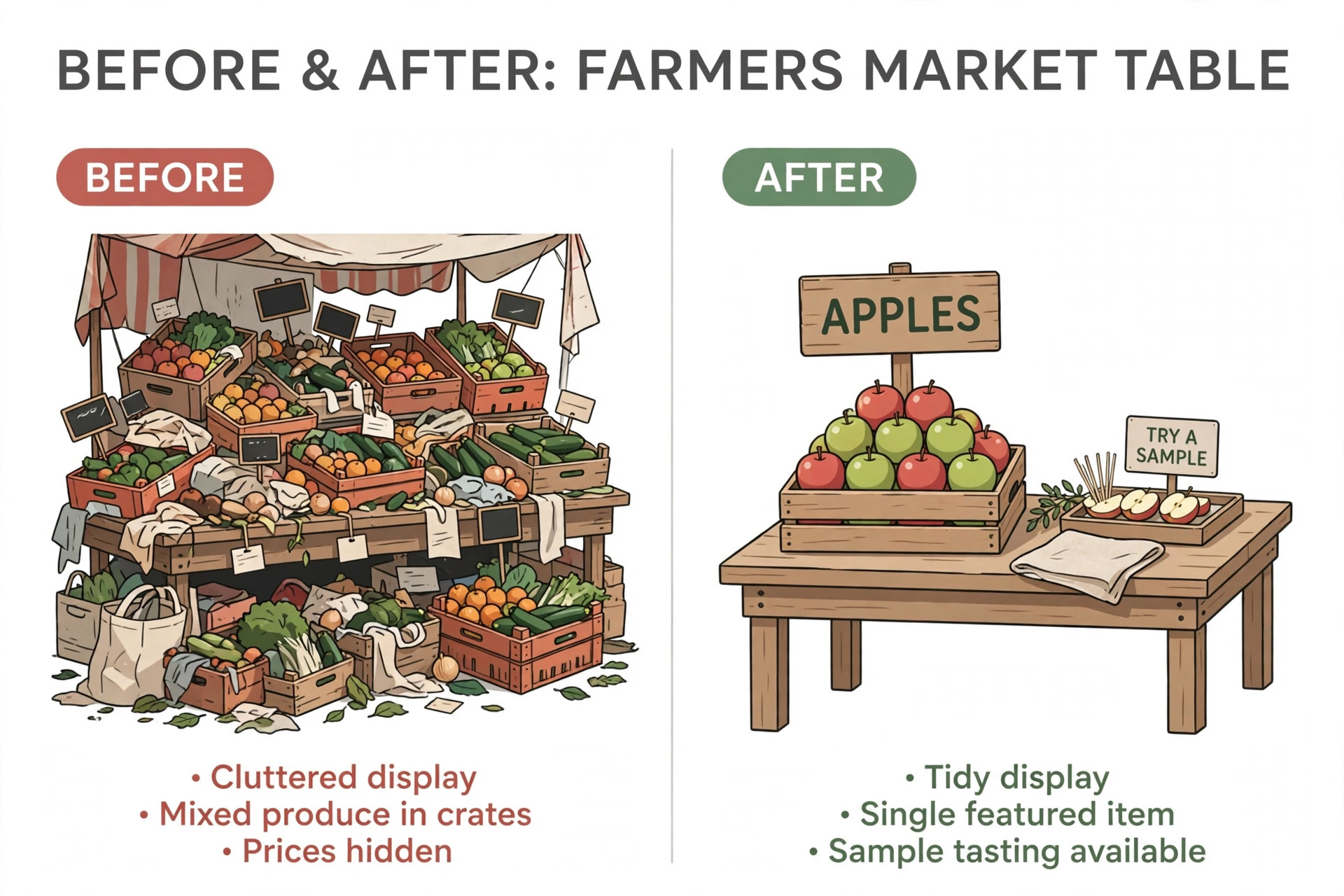
Shoppers decide with their eyes before they decide with their wallets. A stall sign that names the farm, the town, and one specialty beats a sign that only says fresh produce, because shoppers buy from people and places they can remember. A price that is large, clear, and placed beside the product beats a price hidden behind a crate, because shoppers dislike asking about price in front of a queue. Colour also matters, with ripe produce grouped by colour drawing the eye far better than mixed crates that look like storage.
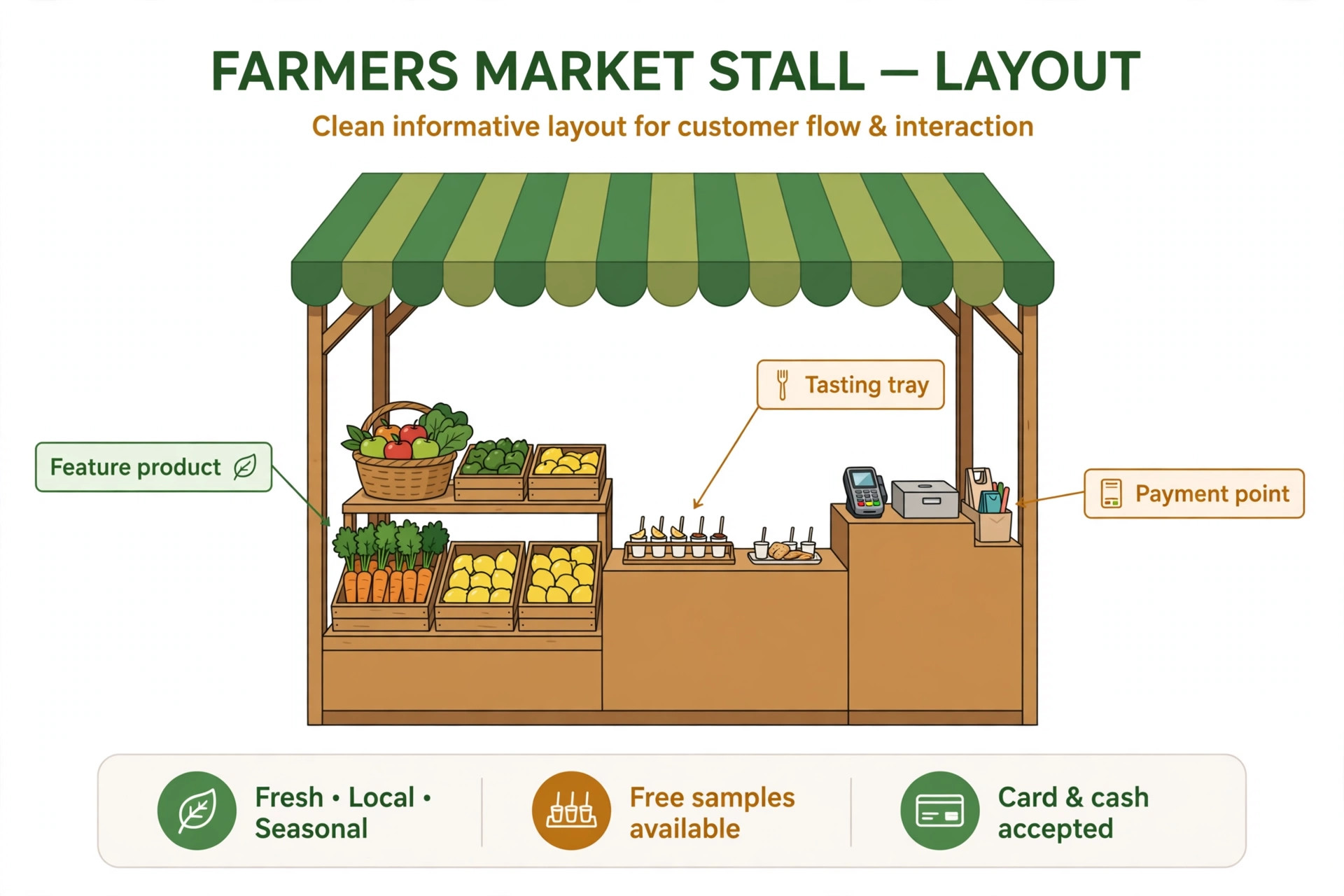
Tasting is the second decision point. A shopper who tastes a peach, a cheese, or a jam is already imagining it at home, and the vendor has a natural opening to explain what makes it different. A small tasting tray with a clean spoon or toothpick setup, plus a short story about the variety, turns a passer by into a buyer more reliably than any flyer. Keep tasting simple and hygienic, and never let the tasting station block the path through the stall.
The third decision point is the vendor. Shoppers return to vendors who remember them, ask about last week’s purchase, and offer honest advice about ripeness and storage. A vendor buried in a phone behind the table loses that advantage, while a vendor standing at the front of the stall, greeting people, and offering a taste wins it. Marketing tools should support that human front, not replace it with a screen.
How to use AI for farmers market stall marketing Across a Full Season
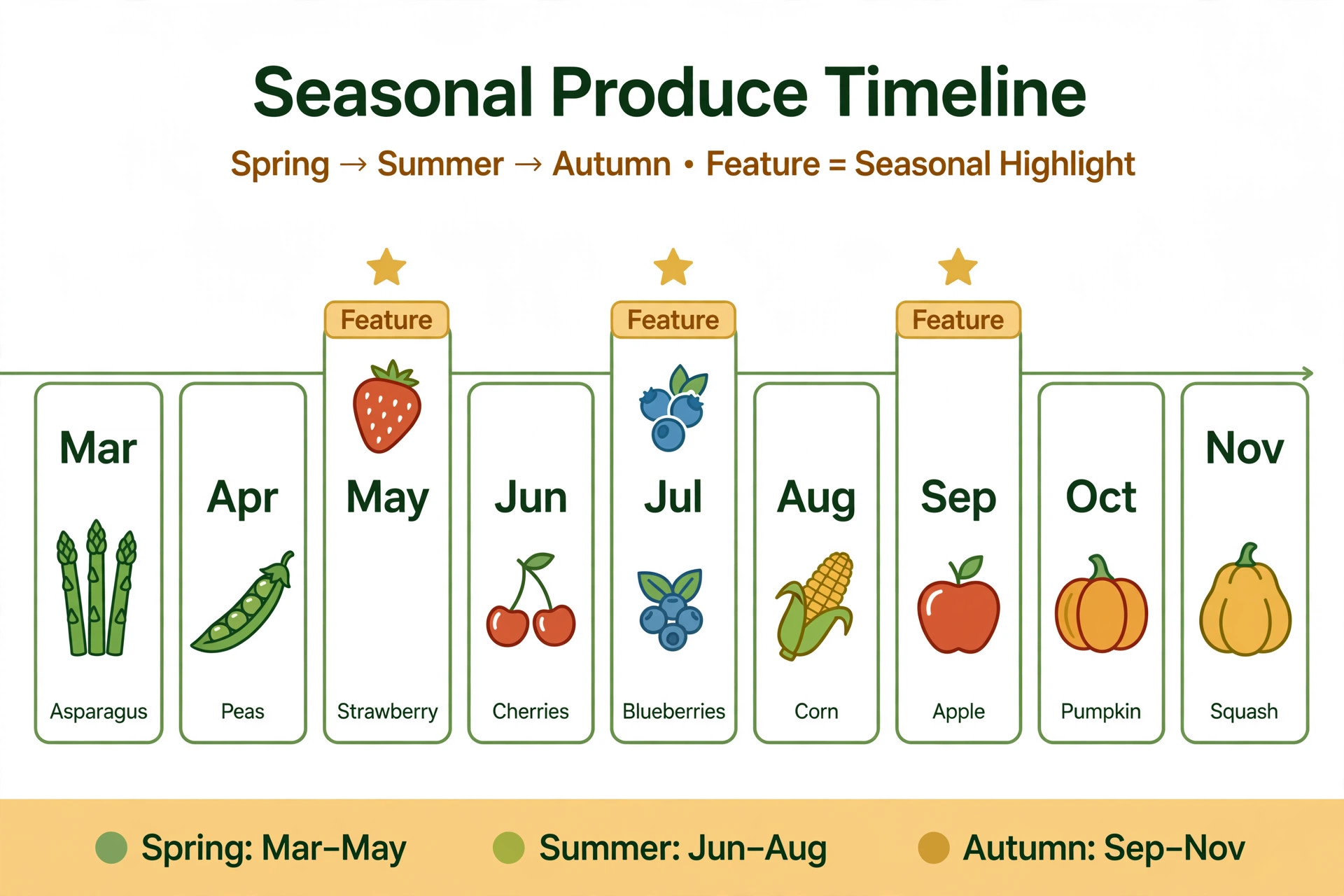
A season plan beats a weekly scramble. Before the first market, list the crops and products available each month, the events on the market calendar, and the stories only your farm can tell, such as a variety you grow that supermarkets do not stock. That list becomes the raw material for signs, posts, and tasting ideas all season, and it prevents the weekly panic of wondering what to post on Friday night.
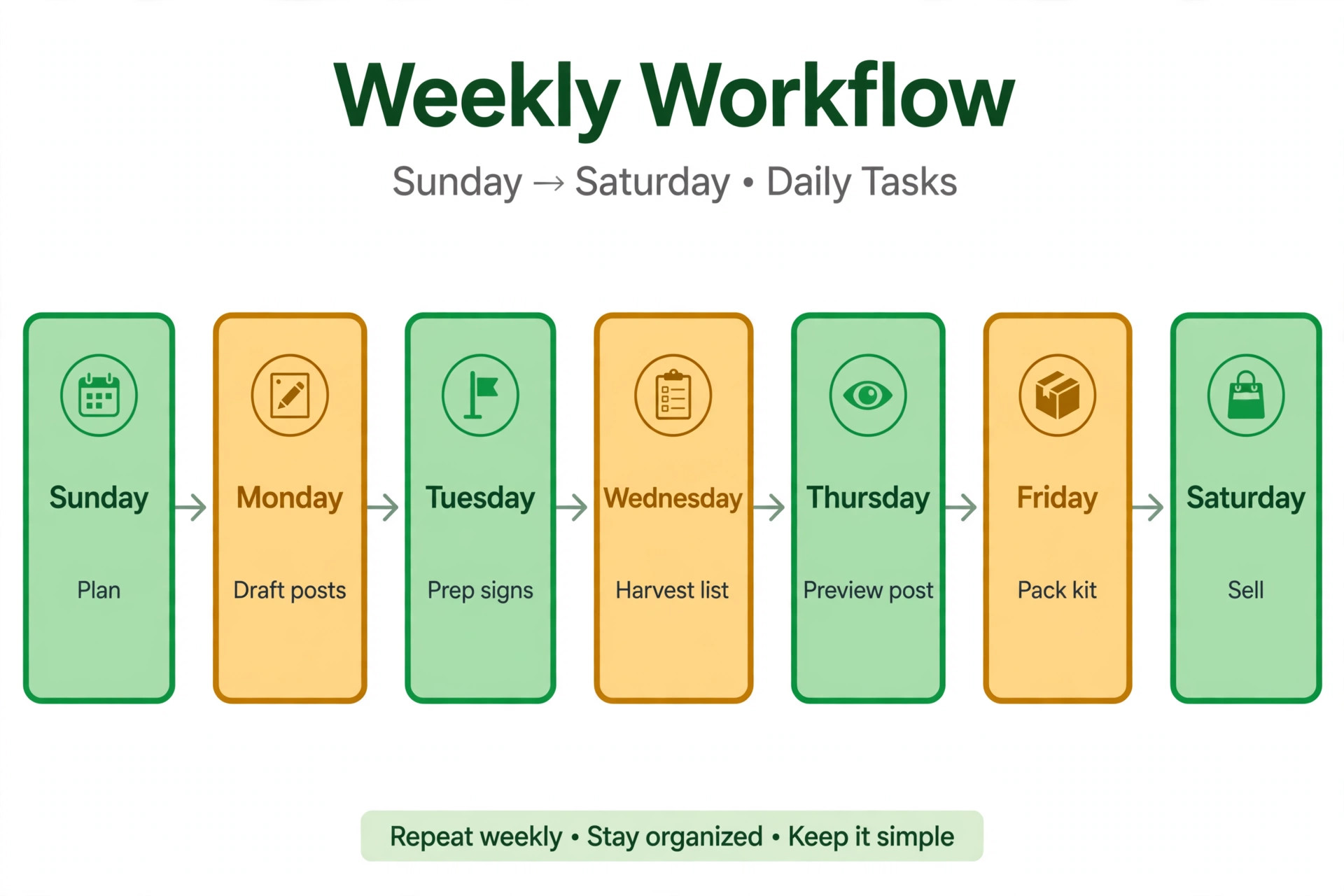
Work in a weekly rhythm rather than a daily one. On Sunday, review what sold and what did not. On Monday, plan the next market’s feature product and sign. On Wednesday, draft the posts and the market day checklist. On Friday, print signs, prep tasting supplies, and pack the stall kit. A rhythm like this takes about two hours a week once it is habit, and it replaces the scattered effort that leaves signs unwritten and posts unposted.
Keep every draft honest. If a product is available in limited quantity, say so. If a variety is best eaten within two days, say that too, because honest advice builds the trust that brings shoppers back. A drafting tool can suggest wording, but the vendor must check every claim about origin, ingredients, and quantity before it reaches a sign or a post. A single wrong claim about allergens or ingredients can do more damage than a quiet week ever could.
Canva for Signs Shoppers Can Read From the Aisle
Canva suits stall vendors because it offers ready sign layouts that can be edited on a phone and printed at home or at a copy shop. Build one master sign template with the farm name, a large price area, and a small line for the product story, then reuse it every week with new prices and products. Consistent signs make the stall recognisable, and recognisable stalls get remembered.
Keep sign text short. A sign needs a product name, a price, and at most one short benefit line, such as a taste note or a storage tip. Signs crowded with paragraphs go unread in a busy market aisle. Print a test copy, tape it to a table, and step back ten paces. If the price is not readable from there, increase the size and cut the words until it is.
ChatGPT Drafts for Posts, Signs, and Market Stories
ChatGPT and similar drafting tools can turn a harvest list into a week’s worth of short posts, sign lines, and tasting scripts. Give the tool the real facts, meaning the product names, the quantities, the market day, and the stall location, and ask for short drafts in plain language. Then edit every draft for accuracy and for your own voice, keeping only lines that sound like something you would actually say to a shopper.
Drafting works best for repetitive formats. A weekly market preview post, a sold out update, a recipe idea for the feature product, and a thank you post to regulars all follow a pattern, and a draft supplies that pattern fast. It works worst for anything that needs a judgement call, such as whether a crop is ready or whether a price should change. Those decisions stay with the vendor, because shoppers trust the vendor’s judgement, not a generated guess.
Phone Photos and Short Video for Proof
A phone photo of the morning harvest, a short clip of the stall being set up, or a fifteen second tasting reaction tells shoppers more than a polished graphic. Shoppers at a farmers market value freshness and honesty, and a slightly imperfect real photo signals both. Take photos in natural light, keep the stall tidy in the background, and show hands, crates, and produce rather than empty tables.
Short video needs no editing skill to work. Film the vendor naming the feature product, showing how to pick a ripe one, and inviting shoppers to taste it at the market. Post it the evening before market day, when shoppers plan their visit, and repeat the invitation on market morning. One real video per week beats five generic graphics, because shoppers remember a face and a voice.
A weekly workflow also protects a vendor who wants to use AI for farmers market stall marketing from the most common trap, which is creating content that has nothing to do with what is actually on the table. When the feature product is chosen from real harvest notes on Monday, every draft written on Wednesday describes stock that will truly be at the market on Saturday. That match between words and stock is what turns a social media follower into a satisfied buyer rather than a disappointed visitor who finds the featured item sold out or missing.
The Stall Marketing Workflow From Sunday Review to Saturday Sales
A workflow turns marketing from a chore into a routine. The steps below run in order through the week, and each step uses the output of the last. Sunday tells you what sold, Monday picks the feature, Wednesday drafts the words, and Friday prepares the physical stall. A vendor who follows the sequence spends less time deciding and more time selling, which is the entire point of the system.
Step 1. Review Last Market in Fifteen Minutes
Write down the three best sellers, the three slowest items, any product shoppers asked for that you did not have, and any sign or price question that came up twice. Those notes decide next week’s feature product and next week’s sign changes. A vendor who guesses from memory will repeat the same slow sellers, while a vendor with four weeks of notes can see a pattern forming.
Step 2. Pick One Feature Product for Next Market
Choose a single product to feature, ideally one with a good margin, enough stock for the day, and a story worth telling. A feature product focuses the sign, the tasting, the posts, and the vendor’s opening line, so shoppers hear one clear message instead of five competing ones. Rotate the feature weekly so regulars always have a reason to stop and see what is new.
Step 3. Draft the Sign, the Tasting Line, and the Posts
Draft one sign for the feature product, one tasting line the vendor can say in ten seconds, and two short posts, one preview and one market morning reminder. Keep the same feature and the same words across the sign and the posts, so a shopper who saw the post recognises the stall instantly. Consistency across sign and screen is what turns a social media follower into a market visitor.
Step 4. Prep the Stall Kit on Friday
Pack signs, price cards, tasting supplies, bags, a card reader, a float, and a small notebook for shopper requests. Check that the card reader is charged and that the price cards match the prices in the posts, because a mismatch between a post price and a stall price creates an argument at the busiest moment of the day. A packed kit on Friday night means a calm setup on Saturday morning.
Step 5. Sell With Tasting, Stories, and a Next Week Hook
On market day, lead with tasting and a short story, not a sales pitch. Tell shoppers how to pick a ripe one, how to store it, and what to cook with it, and end with a hook for next week, such as the crop that will be ready then. A next week hook gives a first time buyer a reason to return, and returning buyers are the foundation of a stable stall income.
Step 6. Capture Regulars Before They Leave
Ask happy buyers if they want a reminder about next week’s feature, and collect that permission in whatever way the market allows, such as a simple signup sheet or a social media follow. A regulars list is the most valuable marketing asset a stall can own, because it reaches people who already buy. Treat it with care, message it sparingly, and never share it.
Signs, Displays, and Prices That Sell Without a Hard Sell
Display is marketing that works while the vendor talks to someone else. Place the feature product at the front of the stall at eye level, with the sign beside it and the tasting tray within reach. Place everyday staples behind it, so shoppers walk past the feature to reach what they came for, and place small extras near the payment point, where a shopper waiting to pay can add a jar or a bunch without a decision.
Prices should be visible on every product, not just the feature. Shoppers who cannot see a price often walk away rather than ask, especially when a queue has formed. Use large numbers, round prices where possible, and bundle slow sellers with popular ones, such as a recipe bundle that pairs a featured vegetable with herbs and a sauce ingredient. Bundles move slow stock without discounting the main product.
A vendor who wants to use AI for farmers market stall marketing for displays can draft several sign versions and pick the clearest, but the final test is always physical. Tape the sign to the table, step back, and read it from the aisle. If a shopper cannot grasp the product and the price in three seconds, the sign needs fewer words and larger type. No drafting tool can pass that test for you, because the test happens in the market aisle, not on a screen.
Payment options are part of display too. A visible card reader, a clear sign stating cards are accepted, and a simple change float remove the friction that loses sales at the last step. Shoppers who planned to pay by card and find only cash accepted may leave without buying, and that lost sale is invisible in the day’s notes unless the vendor records it. Note every lost sale reason for a month, and fix the most common one first.
Repeat buyers also respond to small, honest details that a vendor who plans to use AI for farmers market stall marketing can build into every post and sign. Naming the variety, the harvest day, and the best way to store the product gives shoppers useful knowledge they can repeat to friends, and that word of mouth is more persuasive than any advertisement. A shopper who can say where the tomatoes came from and how long they keep will bring a friend next week, and that friend arrives already trusting the stall.
Turning Market Visitors Into Repeat Buyers
A first sale is worth less than a returning buyer, because a returning buyer needs no convincing. The path from visitor to regular runs through memory, so give shoppers something to remember. A farm name they can pronounce, a product story they can repeat, and a vendor face they recognise all help. A small card with the farm name, market days, and the next feature product costs little and travels home in a shopping bag.
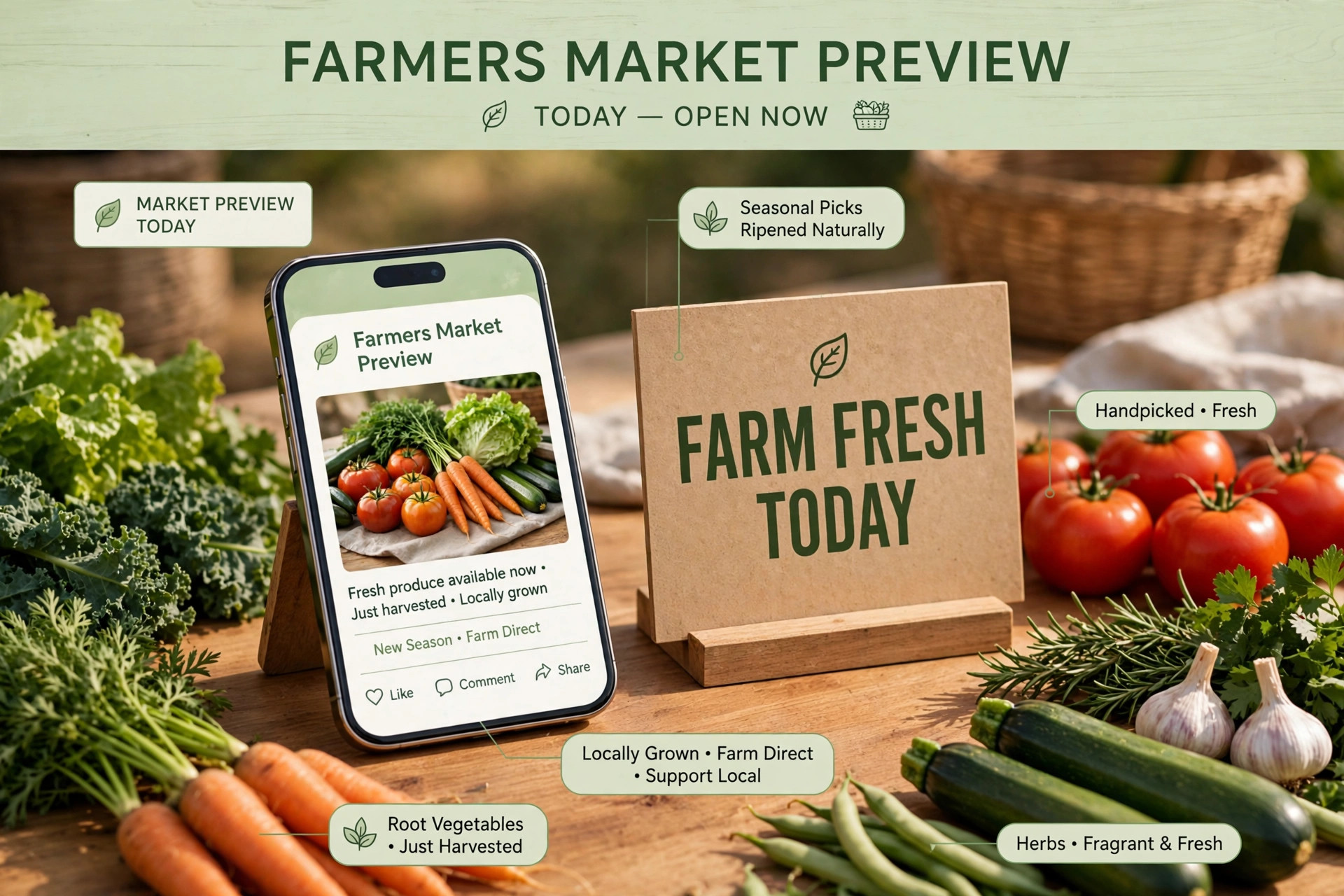
Social media supports that memory if it stays specific. A post that names the market, the day, the feature product, and the stall location helps a shopper plan a visit. A post that only says fresh produce available helps nobody plan anything. Vendors who post the same specific preview every week build a habit among followers, who start checking for the preview as part of their market routine.
Vendors comparing stall systems can borrow ideas from other market sellers, such as a guide to point of sale systems for farmers market vendors, which covers card readers, pricing, and sales tracking at the stall. Seasonal planning ideas from a plant nursery seasonal marketing guide transfer well to crop calendars, and a kayak rental booking guide shows how a weekly rhythm keeps bookings steady across a season.
Market Day Checklist for a Stall That Sells Out Cleanly
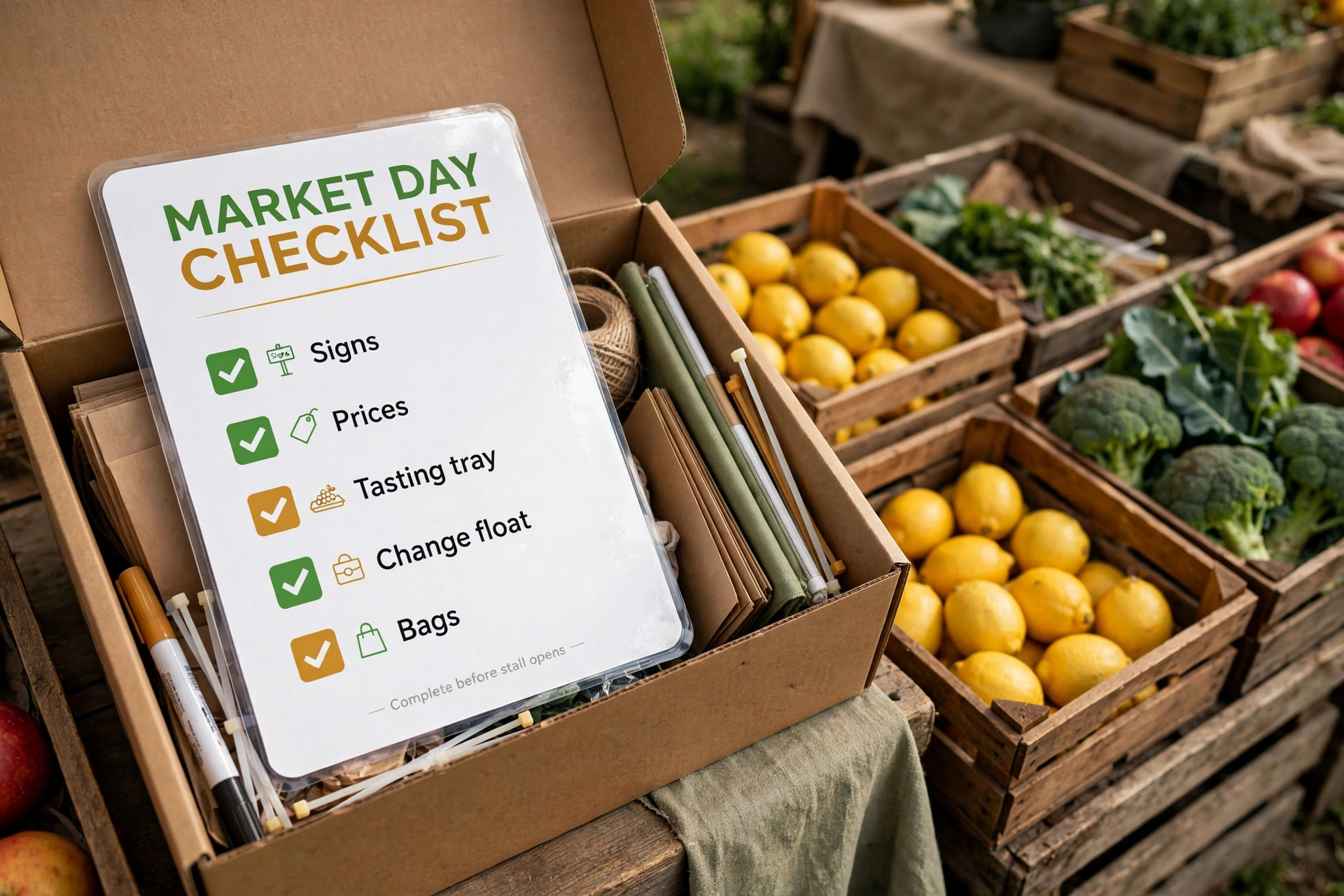
This checklist is the copyable core of the market day system. Run it on Friday night and again before the market opens, and keep it in the stall kit so any helper can follow it. It covers the items that most often go wrong on market morning, which are signs, tasting, payment, and the feature product setup.
Feature product sign printed, priced, and readable from the aisle.
Tasting tray, clean utensils, and a short tasting line rehearsed.
All products priced visibly, with bundle prices beside slow sellers.
Card reader charged, float counted, and bags packed.
Stall layout set with feature at front and staples behind.
Regulars signup sheet or follow prompt ready at payment point.
Next week hook prepared, naming the crop ready next market.
Harvest quantities checked against the feature stock needed.
Price cards matched to post prices and sign prices.
Phone charged for market morning photos and sold out update.
Cooler, ice, and shade cover checked for heat sensitive products.
End of day notes sheet ready for best sellers and shopper requests.
A checklist that lives in the stall kit gets used, while a checklist saved on a computer at home does not. Laminate it if the market is outdoors, and review it once a season to remove items that never catch a problem. The goal is a list short enough to finish under market morning pressure, because a long list abandoned at setup helps nobody.
Mistakes That Leave a Good Stall Quiet
The most common mistake is marketing every product equally. A stall that shouts about twenty products says nothing memorable about any of them, while a stall that features one product gives shoppers a single reason to stop. Feature rotation solves this without ignoring the rest of the range, because every product gets its feature week across the season, and the stall always has one clear message.
The second mistake is posting only on market day. By Saturday morning, shoppers have already planned their route, and a post at opening time reaches them too late. Preview posts on the evening before market day, when shoppers plan, and a morning reminder that repeats the same feature, work far better. A vendor who learns to use AI for farmers market stall marketing for previews can draft both posts on Wednesday and schedule them, removing the Friday night scramble entirely.
The third mistake is a stall that looks like storage. Crates stacked behind the table, a cluttered payment area, and signs hidden behind produce all signal a vendor who is not ready. Spend the first ten minutes of setup on appearance, with the tablecloth straight, the feature forward, and the payment point clear. Shoppers judge readiness instantly, and a tidy stall earns trust before a word is spoken.
The fourth mistake is forgetting to ask for the return visit. A happy buyer who leaves without knowing next week’s feature has no reason to prioritise your stall next Saturday. End every sale with one line about next week, such as the crop coming into season or the product returning after a gap. That single line is the cheapest marketing a stall owns, and vendors who skip it pay for the omission in quiet weeks. Short video skills help here too, since a guide to CapCut for TikTok product demos shows how a fifteen second clip can carry a feature product story, and outdoor sellers in a booking guide for outdoor rental businesses face the same seasonal rhythm problem.
One measurement that many vendors overlook is the request list, and a vendor who continues to use AI for farmers market stall marketing should treat requests as the cheapest product research available. If five shoppers in one month ask for the same item you do not grow, that request may justify a new crop, a new supplier, or a partnership with a neighbouring stall. Requests recorded on the end of day sheet turn casual comments into decisions, and decisions based on real requests beat guesses about what might sell.
Measuring What Worked Without a Spreadsheet Habit
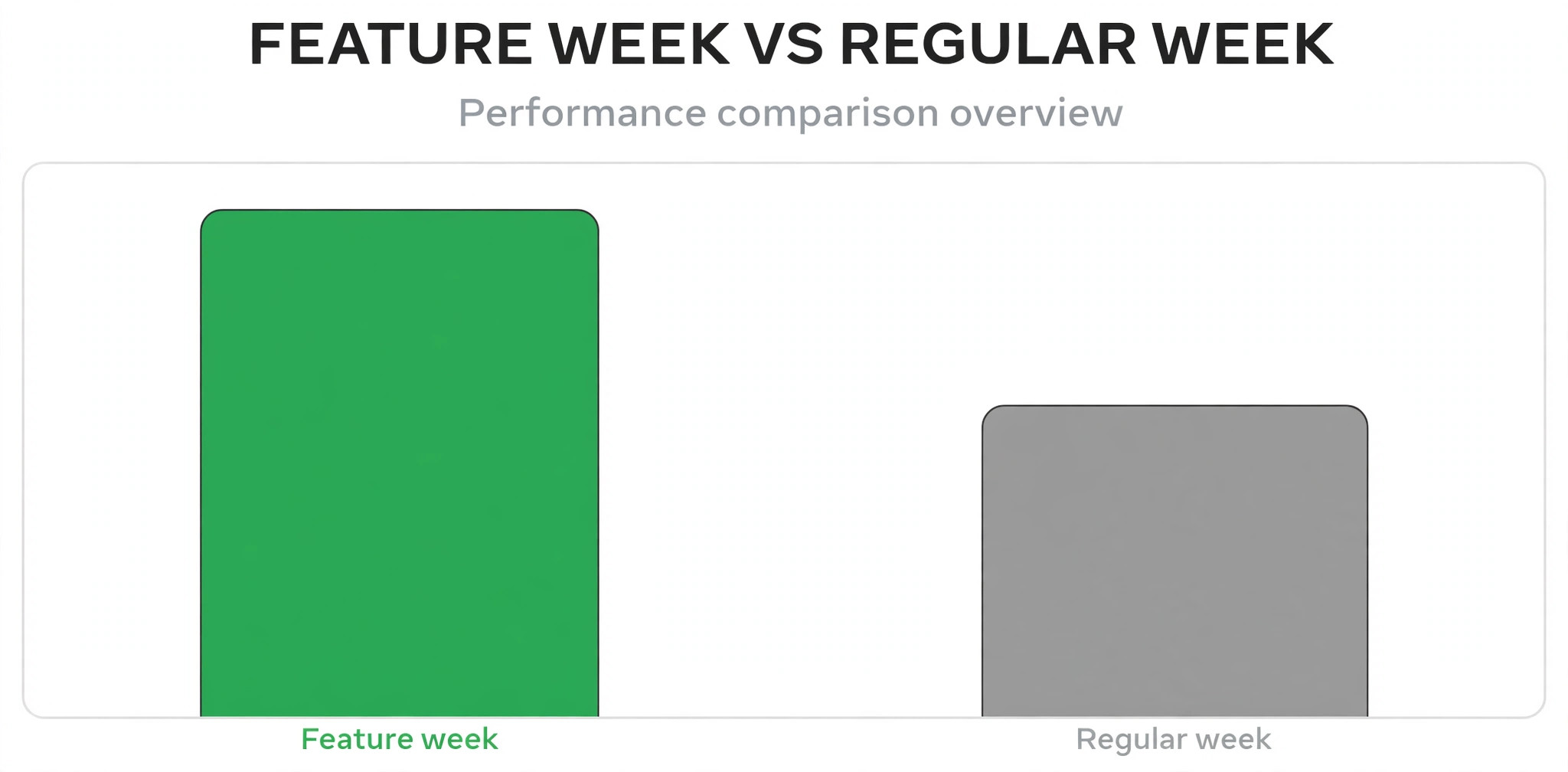
Measurement for a stall can stay simple. Record daily takings, the feature product sales, the number of tasting conversions you noticed, and any shopper requests. After four markets, compare feature weeks against non feature weeks, and compare tasting days against days without tasting. The pattern will usually be obvious without any calculation, because a feature that works sells out and a feature that does not leaves stock behind.
Track the regulars list growth too. A list that grows by five names a week is a healthy stall, while a list that never grows signals a problem with the invitation, not the produce. Ask buyers directly what would make them return, and listen for answers about variety, price, or market day timing. Those answers are market research that costs nothing and beats any generic advice.
A vendor who wants to use AI for farmers market stall marketing for measurement can draft a simple end of day notes template, but the notes must still be written by hand at the stall, while the day is fresh. A template nobody fills in is decoration. A short note written in two minutes at pack down time, covering best sellers and requests, is the record next week’s plan depends on.
Frequently Asked Questions
How many posts should a market stall publish each week?
Two posts are enough for most stalls, one preview on the evening before market day and one reminder on market morning. Add a sold out or thank you post only when it is true and timely. Regularity matters more than volume, because followers learn to expect the preview and plan around it.
What should a stall sign say?
A stall sign needs the farm name, the product name, the price, and at most one short line about taste, origin, or use. Shoppers read signs from a distance while walking, so large type and few words beat detailed descriptions. Test every sign from ten paces before market day.
Is tasting worth the cost for a small stall?
Yes, when tasting is kept small and focused on the feature product. A tasting that converts one in three tasters into buyers usually pays for itself, because the cost per taste is tiny against the price of a sale. Keep portions small, keep the station clean, and track conversions roughly for a few weeks to confirm it for your own stall.
How can a small vendor find time for marketing during harvest season?
Use a weekly rhythm and draft in batches. Two hours a week, split across Sunday review, Wednesday drafting, and Friday packing, covers the full system. A vendor who decides to use AI for farmers market stall marketing for drafting can cut the Wednesday session to under an hour, provided every draft is checked for accuracy before use.
Should a stall offer discounts to attract shoppers?
Discounts should be used sparingly, for slow stock or end of day clearance, not as the main attraction. A stall known for discounts trains shoppers to wait for them, while a stall known for a feature product and good advice trains shoppers to come for quality. Bundles are usually a better tool than price cuts, because they move slow stock while protecting the main product price.
What if the market itself is quiet?
A quiet market calls for more outreach, not less. Message the regulars list with the feature product, post the preview earlier in the week, and consider a small tasting event or a recipe bundle that gives shoppers a reason to visit. Also review whether the stall location inside the market, the sign visibility, or the feature choice contributed, because those factors are within the vendor’s control even when foot traffic is not.
The last piece of advice for a vendor starting out is to keep the system small enough to survive a bad week, because a vendor who keeps trying to use AI for farmers market stall marketing through harvest pressure, bad weather, and a quiet market needs a routine that still works when energy is low. One feature, one sign, one preview post, and one checklist will carry a stall through a hard week, while an ambitious plan with ten tasks will collapse at the first busy harvest and stay collapsed for the rest of the season.
The Stall Shoppers Remember
A memorable stall is not the loudest stall or the most decorated stall. It is the stall with a clear sign, a feature worth tasting, a vendor who remembers regulars, and a reason to return next week. Those four things can be built in one season with a weekly rhythm, a short checklist, and honest drafts that sound like the vendor. The tools help with the repetitive work, but the vendor remains the marketing, standing at the front of the stall with a taste and a story.
Start next week with one feature product, one clear sign, and one preview post, and keep that pattern for a month before judging it. By the fourth market, the pattern will feel natural, regulars will start asking about the next feature, and the stall will have a rhythm that survives busy harvest weeks. A vendor who builds that rhythm and keeps using AI for farmers market stall marketing only where it saves real time will end the season with more regulars, less waste, and a stall shoppers seek out rather than pass by.