
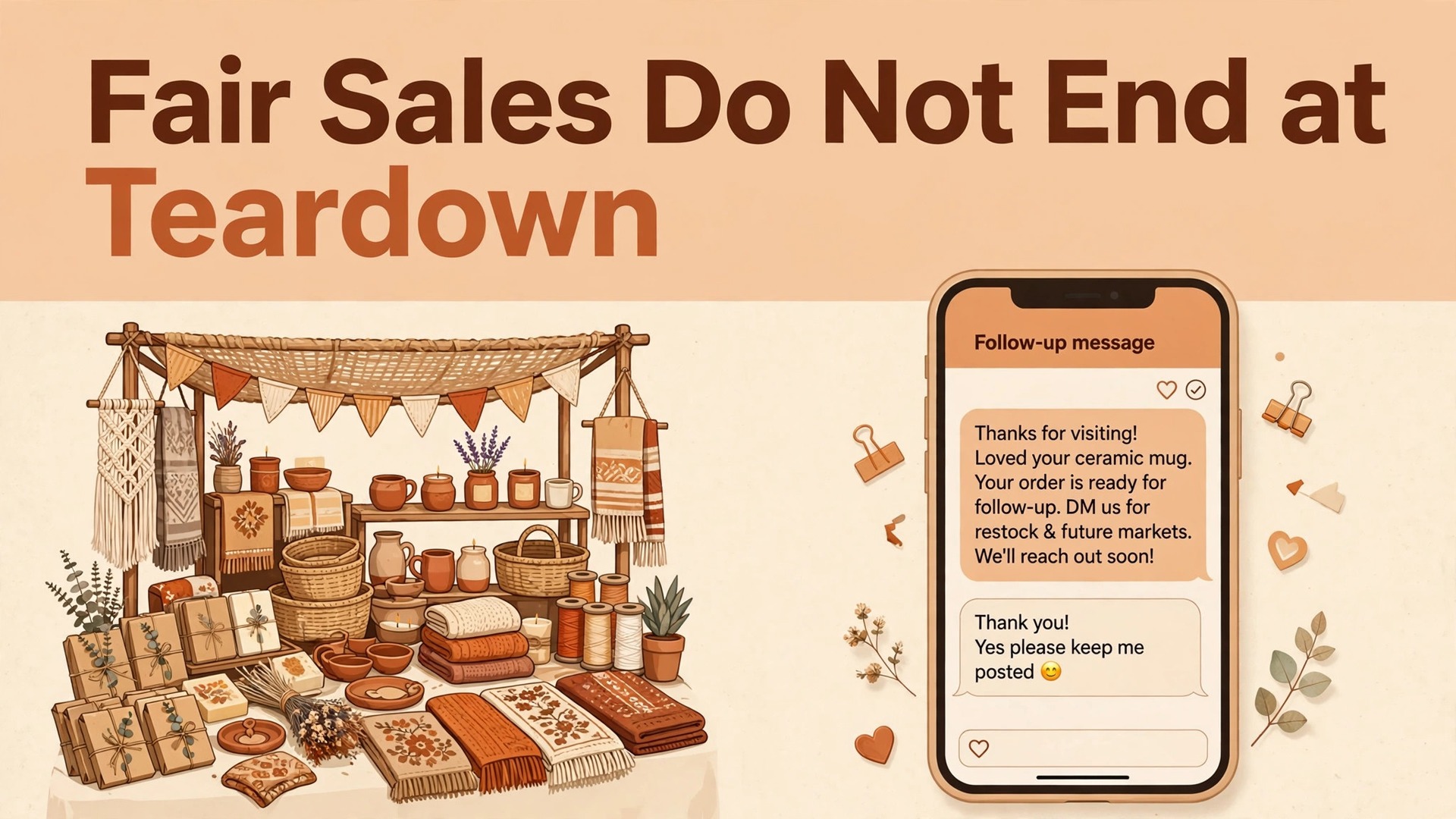
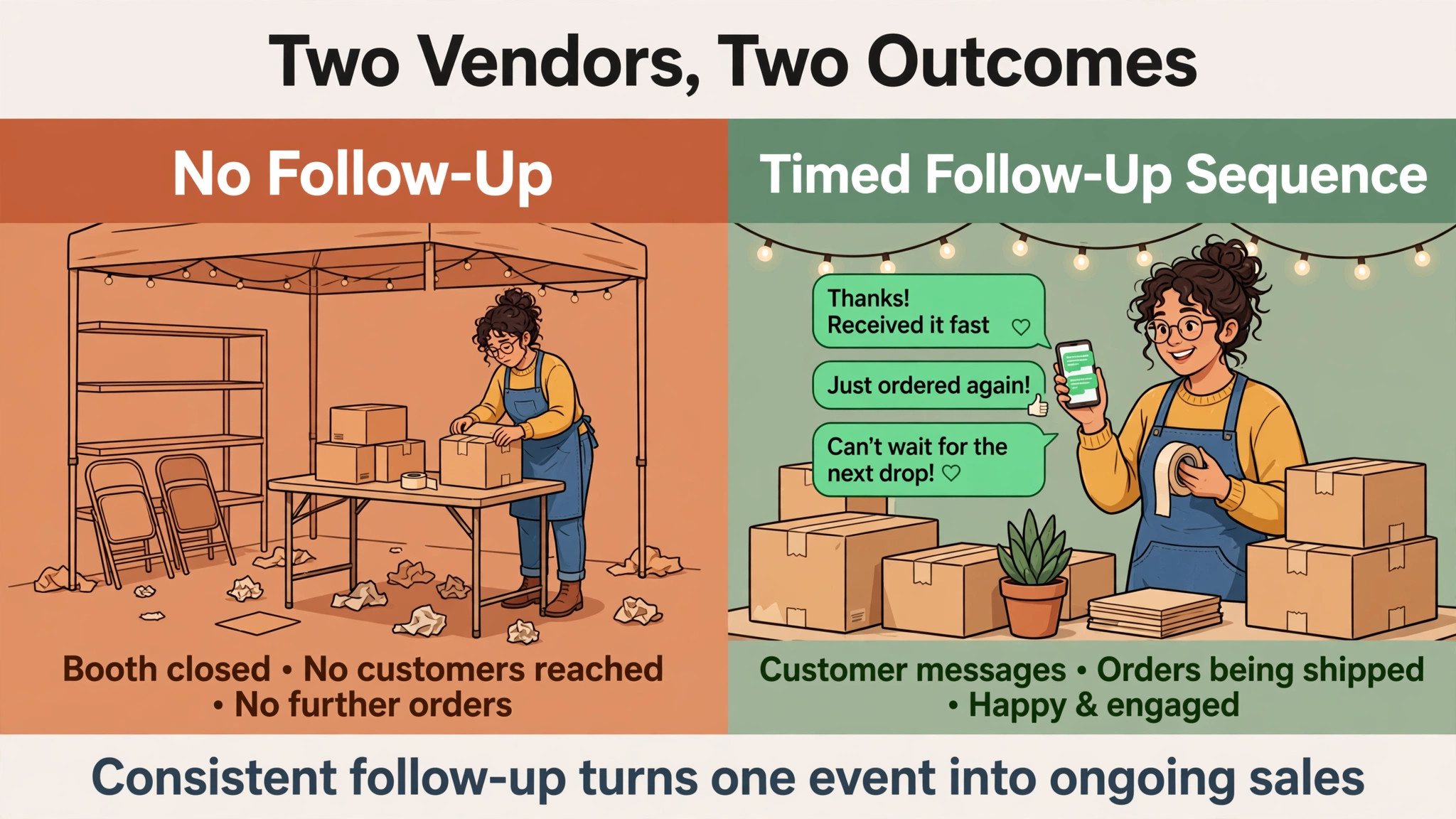
Two vendors leave the same fair with the same number of booth chats. One sends a thank you that night, a photo of the exact item discussed the next day, and a short restock note a week later. The other sends nothing for ten days, then one generic blast to everyone who signed up. Three weeks later, the first vendor has repeat orders and a waiting list. The second vendor has a signup list and no sales. The difference is not the product. It is the follow-up system. If you want to use AI for craft fair vendor sales follow up well, copy the first vendor. Speed, specificity, and a short sequence beat one late blast every time.
How to use AI for craft fair vendor sales follow up without sounding like a blast
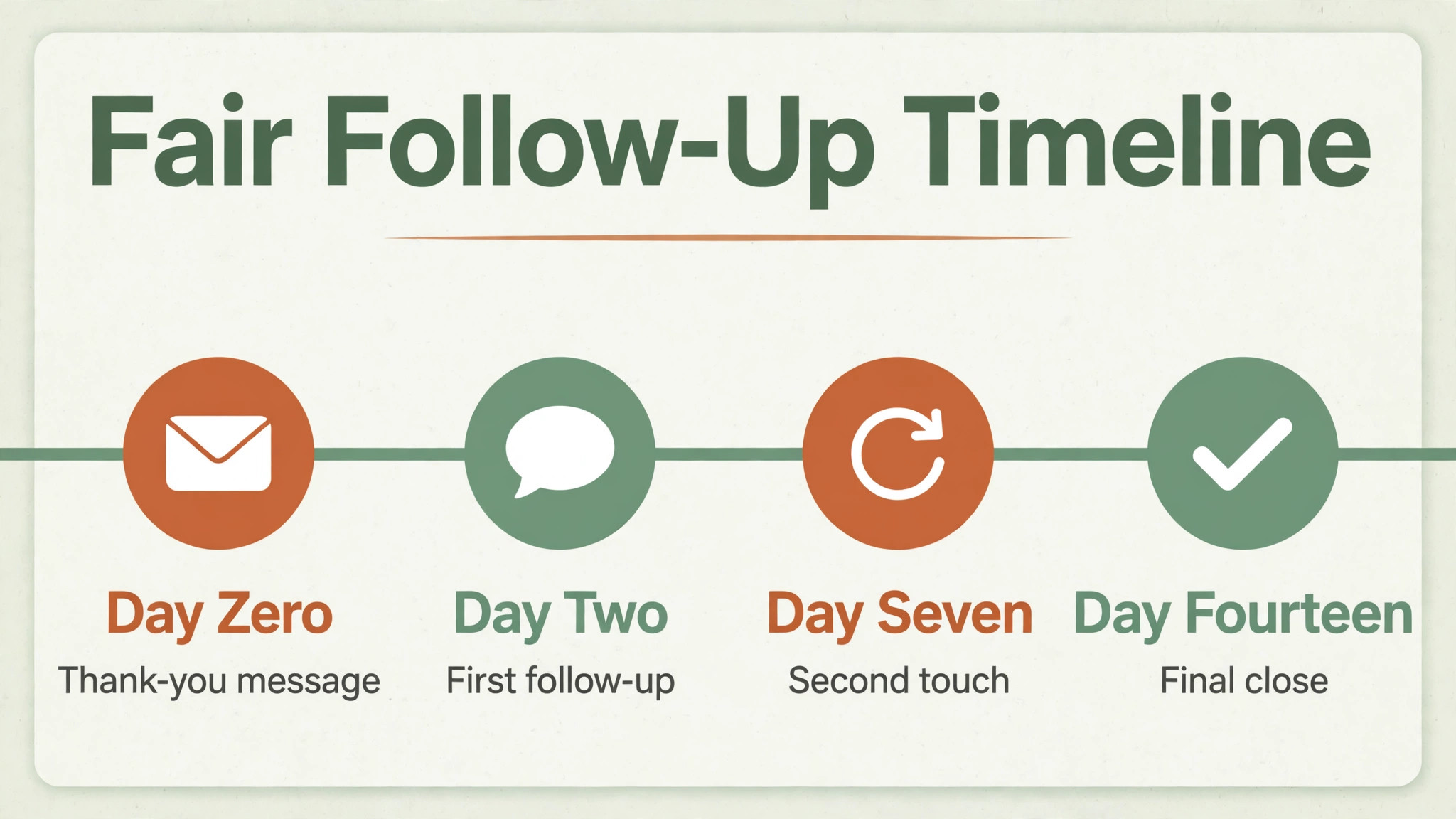
A craft fair vendor cannot spend a week writing personal emails to two hundred people, but a generic blast will not sell handmade work either. The answer is a segmented sequence with AI doing the sorting and drafting, while the vendor adds the one personal detail that proves the message is real. The system in this guide runs on four touches in fourteen days, three lead groups, and one rule. Every message references something real from the fair, such as the item discussed, the colour chosen, or the question asked. A message with no real detail is a blast, however nicely it is written, and buyers can tell the difference at once.
Two vendors, two outcomes
The comparison above is not theory. It matches how post-event follow-up works across markets and trade shows. Square advises market vendors to take notes one day after the event, follow up with buyers two days after, and build for the next event from one week onward. Trade show guides give the same advice more sharply. Leads contacted within 24 to 48 hours convert far better than leads contacted after a week, and hot leads, people who asked about price or a custom order, should hear back the same day. The vendor who waits ten days is not being patient. That vendor hands the sale to the faster competitor, because buyers buy from whoever replies first with something specific.
| Vendor habit | First vendor result | Second vendor result |
|---|---|---|
| First message timing | Same night or next day | Ten days later |
| Message content | Exact item discussed | Generic fair thank you |
| Lead handling | Hot, warm, and cold groups | One list, one blast |
| Second touch | Photo or restock note in a week | Nothing, or another blast |
| Outcome in three weeks | Repeat orders, waiting list | Signup list, no sales |
The table above is the decision shortcut for the whole workflow. Every step that follows supports the left column. Keep it in mind when you are tired after teardown, because teardown night is when the temptation to delay is strongest. The vendors who win the next three weeks are the ones who spend one focused hour on follow-up before they unpack the booth. AI makes that hour enough, by sorting the list and drafting the messages while the conversations are still fresh.
Why fair sales leak after the show
Fair sales leak for three reasons, and none of them is product quality. The first leak is memory. Buyers meet dozens of vendors in one day, and by the next morning they remember faces, not booth names. A follow-up without a photo, an item name, or a conversation detail does not jog memory, so it gets deleted. The second leak is delay. Every day without a message lowers the chance of a reply, because the buyer moves on to other purchases and other makers.
The third leak is sameness. A message that could have come from any vendor at the fair, with no reference to what the buyer touched, asked, or bought, reads as a mailing list signup, not a relationship. Handmade buying is personal, and follow-up that ignores that fact will not convert.
When you use AI for craft fair vendor sales follow up, the biggest help is memory. A vendor can photograph the booth, bestseller display, and signup sheet before teardown, then feed AI the day notes. AI can sort buyers by what they bought, asked about, or only browsed, and draft a message per group referencing the right item. The vendor then checks each draft for accuracy and adds one personal line. That check matters. A message naming the wrong item, or claiming a conversation that never happened, damages trust faster than no message at all. The goal is a system that remembers accurately, drafts quickly, and never sends a guess dressed up as a fact.
The sales follow-up workflow, step by step
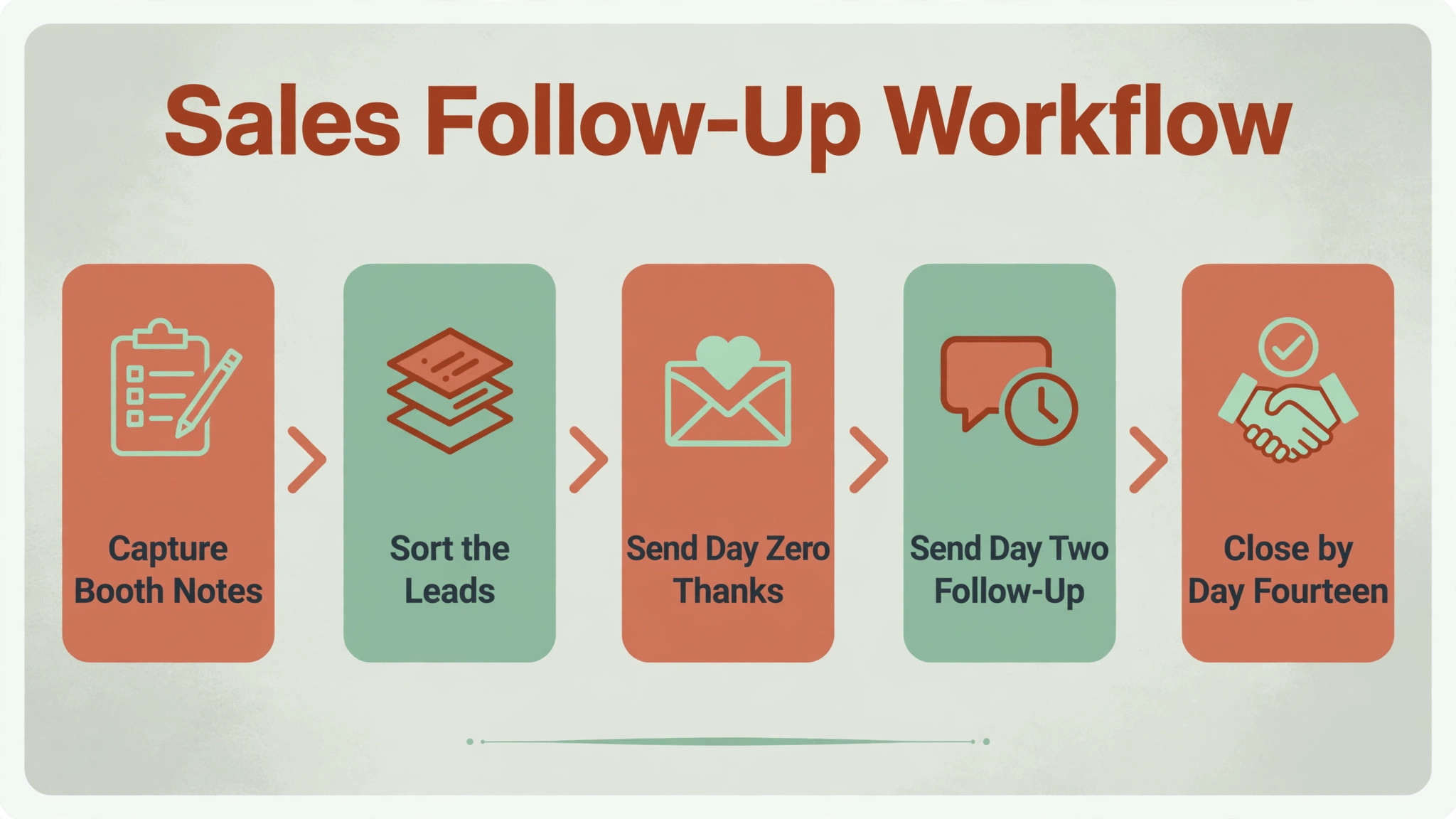
This workflow starts before the fair ends, not after you get home. The most important step happens at the booth, when notes are still accurate. The rest runs over fourteen days in four touches. AI sorts the list, drafts the messages, and tracks replies. The vendor handles the personal detail, the custom order conversation, and the final send. Nothing in this section requires new software to start. A signup sheet, a phone camera, a spreadsheet, and an email tool you already use will run the first fair cycle.
Step 1. Capture notes at the booth, not from memory
Before teardown, photograph your signup sheet, your bestseller display, and any custom order notes. Write one line per hot lead while the conversation is fresh, such as the item discussed, the colour requested, or the gift occasion mentioned. A note written at the booth takes ten seconds. The same note reconstructed three days later takes ten minutes and is often wrong. AI can later turn these notes into sorted lead groups and draft openers, but it cannot invent a conversation detail you failed to record. The booth note is the raw material for everything that follows. Vendors who skip this step spend the whole follow-up sequence guessing, and buyers notice the guessing at once.
Step 2. Sort buyers into hot, warm, and cold the same night
On fair night, or the next morning, sort every contact into three groups. Hot buyers asked about price, a custom order, or wholesale, or bought and asked about matching pieces. Warm buyers had a real conversation, tried something on, or asked about materials. Cold contacts only signed up, scanned a code, or took a card. AI can sort from your notes and purchase records, and flag buyers who bought a bestseller for a follow-up about matching items. When you use AI for craft fair vendor sales follow up at this stage, the sorting is the value, because the three groups need different messages, different timing, and different offers. One message for all three groups serves none of them well.
Step 3. Send the hot lead message the same day
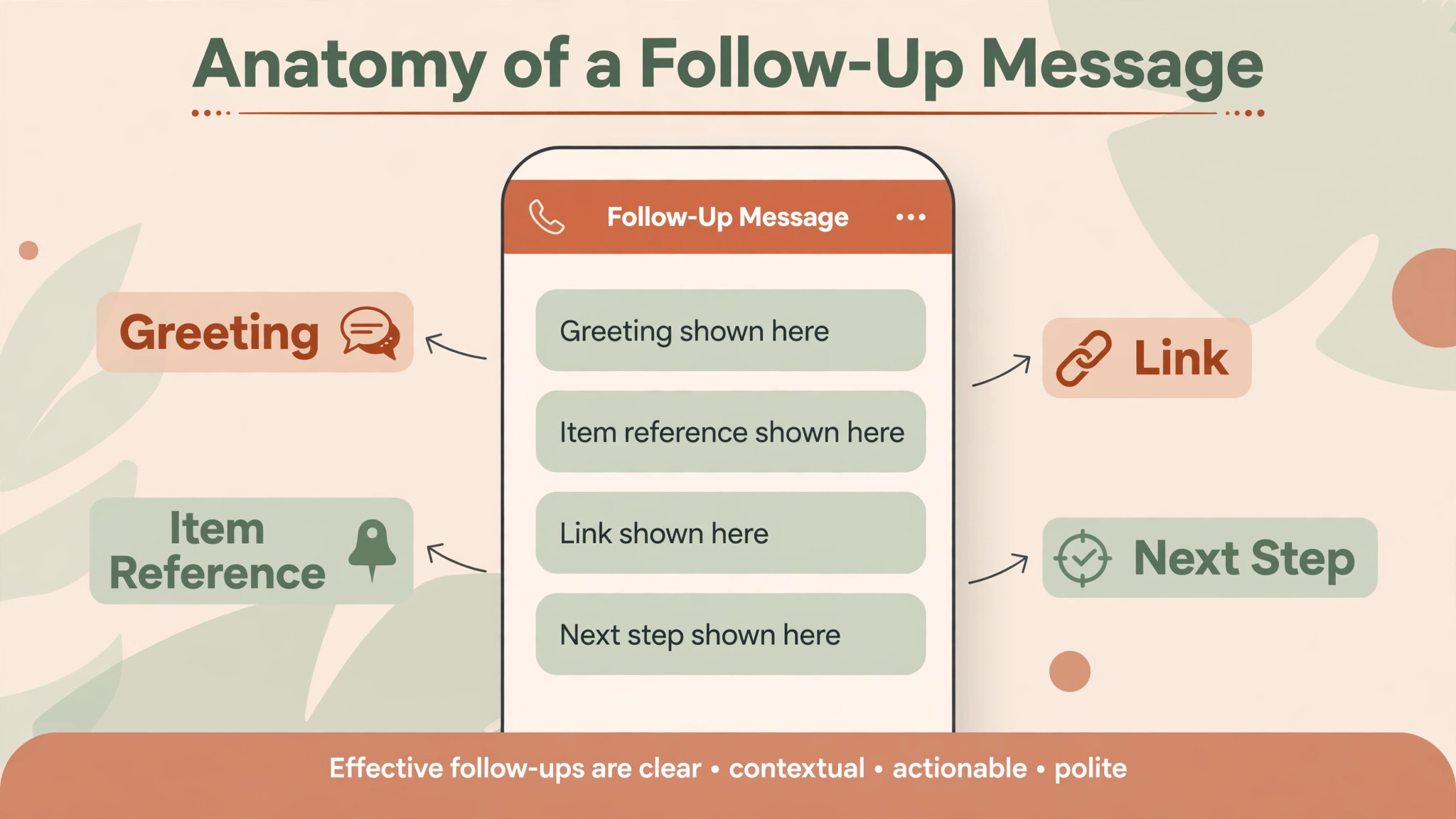
Hot leads hear back the same day, or the next morning. The message thanks them, names the exact item or custom order discussed, and gives one clear next step, such as a link to the item, a reply to confirm the order, or a short call. Keep it under 80 words. A hot lead message is not a newsletter or a catalogue. It continues a conversation that started at the booth, and should read that way. AI can draft it from your booth note, but the vendor must verify the item name, price, and custom detail before sending. A wrong price in a hot lead message kills the sale and trust together.
Step 4. Send the warm lead message within two days
Warm leads hear back within two days, while the fair is still fresh in memory. The message thanks them, references the conversation or the item they tried, and offers one useful thing, such as a photo of the item in another colour, care instructions, or your next market date. Include a link to your shop, but make the link secondary to the personal reference. The personal reference is what earns the click. A warm lead who receives a generic thank you will not click. One who reads about the exact piece they held often will. AI can draft the reference from your notes, and the vendor adds one line proving they remember the person, not only the sale.
Step 5. Send the value touch on day seven
On day seven, send a value touch to warm and cold groups, and a restock note to buyers. The value touch is not a discount. It is a photo of new work, a short story about how a piece is made, or your next market date. Its job is to keep you in mind without asking for a sale. Buyers at the fair get a different day seven message, thanking them and showing matching pieces or care tips for what they bought. When you use AI for craft fair vendor sales follow up across fourteen days, the day seven touch is where repeat sales begin, reaching buyers after fair excitement fades but before they forget you entirely.
Step 6. Send the close touch on day fourteen
On day fourteen, send one closing message to warm leads who have not replied, and a next market invitation to everyone who engaged. The closing message is short and honest. It says you enjoyed meeting them, the item they asked about is still available or has a waitlist, and you will not keep messaging unless they reply. This honest close often earns replies that three sales messages would not, because it respects the buyer’s inbox. Cold contacts who never engaged move to a monthly newsletter list, not a weekly sales sequence. A cold contact messaged weekly becomes a spam complaint. A cold contact messaged monthly with real news stays a future buyer.
Step 7. Record what sold, what did not, and what to change
After fourteen days, record four numbers. How many hot leads ordered, how many warm leads ordered, how many buyers returned, and how many cold contacts joined the newsletter. Also record the bestseller and the best performing message. Use AI for craft fair vendor sales follow up to group these results into themes, such as one product line driving most follow-up sales or one message type earning most replies. Use those themes to plan the next fair, from inventory to booth layout to signup design. A fair without a recorded result is a fair you will repeat by guesswork. A fair with recorded results gets better every time, because each cycle teaches the next one.
The post-fair checklist
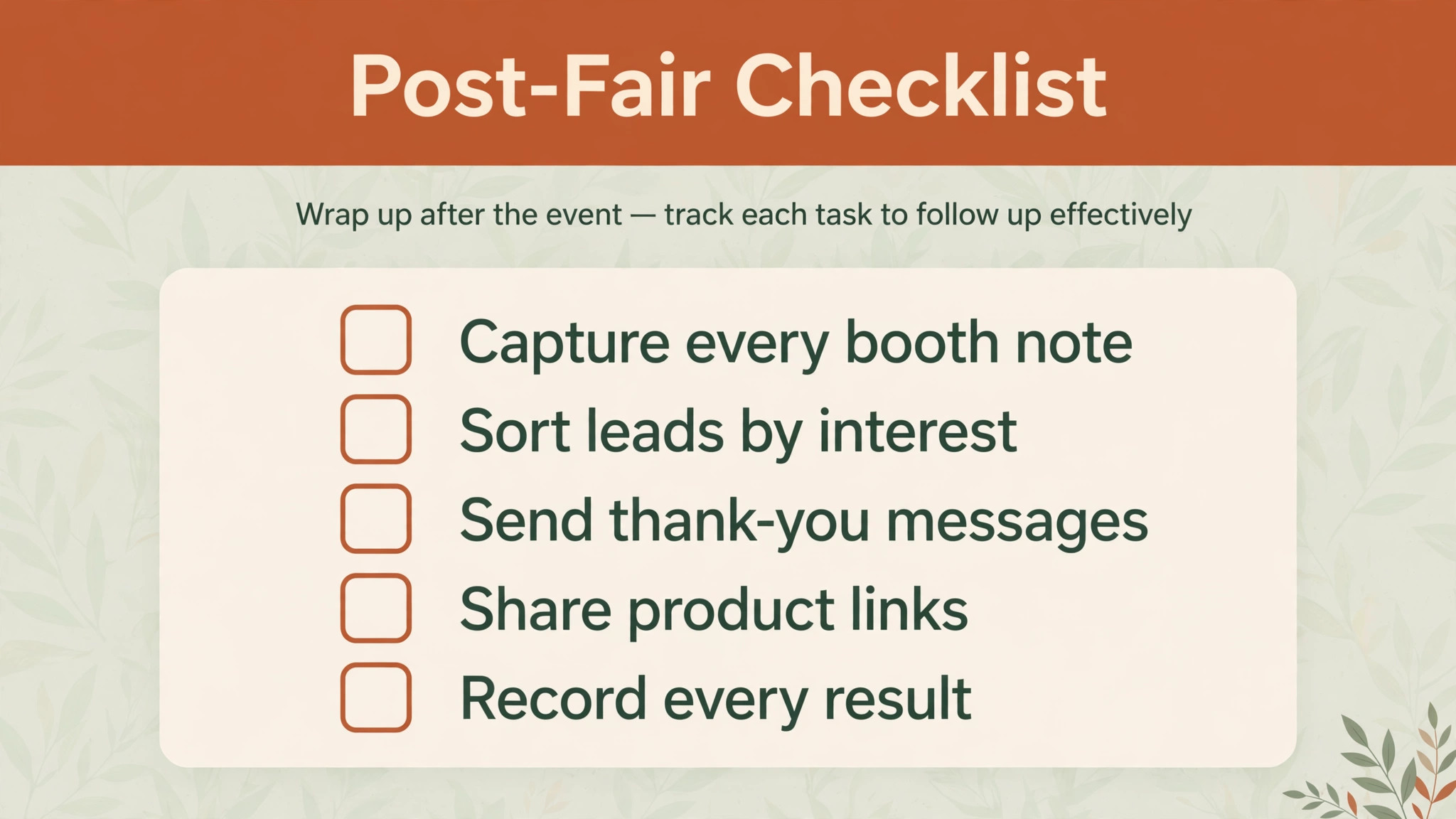
Use this checklist after every fair, and run it in full before you unpack the booth. It is the copyable core of this guide. Print it, keep it in your fair kit, and check each line as it is done. A checklist that lives only in your head will be skipped on teardown night, when you are tired and tempted to delay. A checklist on paper gets done even when you are exhausted, and teardown night is exactly when follow-up matters most.
Photograph the signup sheet, bestseller display, and custom order notes.
Write one line per hot lead while conversations are fresh.
Sort contacts into hot, warm, and cold the same night.
Send hot lead messages the same day or next morning.
Send warm lead messages within two days with a personal reference.
Send the day seven value touch to warm and cold groups.
Send buyers a day seven thank you with matching pieces or care tips.
Send the day fourteen closing message to unreplied warm leads.
Move unengaged cold contacts to a monthly newsletter list only.
Record hot, warm, buyer, and newsletter results after fourteen days.
Note the bestseller and the best performing message for the next fair.
Update inventory, booth layout, and signup sheet from what you learned.
The checklist works because it forces the unglamorous steps, note capture and result recording, to happen alongside the visible steps, message sending. Most fair follow-up fails on the unglamorous steps. Notes never get written, lists never get sorted, and results never get recorded, so the next fair repeats the same mistakes. A completed checklist is proof the system ran. An incomplete one tells you exactly where it broke, which is the information you need to fix it before the next fair.
Tools that run this workflow
The best tool is the one that already holds your buyer records, because follow-up groups, purchase history, and message history must live in one place. A familiar system with clean data beats a new system with messy records. Vendors who sell at farmers markets should also compare options in a guide to POS systems for farmers market vendors, because the same checkout record that captures a sale at the booth can power the follow-up sequence after the fair. When you use AI for craft fair vendor sales follow up, the checkout record is the starting point, not an afterthought.
Square sales records and buyer follow-up
Square is a point of sale platform widely used by market and pop-up vendors, and its customer directory captures buyer emails at checkout, which makes the post-fair list far more complete than a paper signup sheet alone. Square also shows bestsellers, peak selling times, and repeat buyers in its dashboard, which gives the vendor the exact facts the follow-up messages need. Its marketing tool can send the follow-up emails on schedule. Use AI to draft those emails from the sales data and booth notes, but verify every item name and price before sending. The value of Square here is the record. A vendor who knows what sold, to whom, and when can follow up with specifics instead of guesses.
Shopify shop and post-fair orders
Shopify is an online store platform with point of sale tools for in person selling, and suits vendors who sell at fairs and online from one inventory. Its strength for follow-up is the single shop link. Every follow-up message, from the hot lead reply to the day fourteen close, can point to one store, where the buyer finds the exact item discussed, matching pieces, and the next market date. Use AI to draft the message linking to the right product, and check the link before sending, because a broken or wrong link wastes the moment the buyer was ready to buy. Keep fair stock and online stock in sync, so a follow-up promise never meets a sold out page.
Mailchimp email sequences for makers
Mailchimp is an email platform with audience segments and automated sequences, and it suits vendors who want the fourteen day sequence to run on schedule without manual sending. Its strength is segmentation. Hot, warm, and cold groups can receive different messages on different days from one audience list, with replies tracked per group. Use AI to draft the sequence messages in the vendor voice, then edit them by hand and add the personal reference per group. The risk with email automation is sameness, so vary the message type across touches. A thank you, a photo, a making story, and a market invitation read as a relationship. Four discount messages read as a sales funnel, and handmade buyers resist funnels.
Etsy shop as the second sales channel
Etsy is a marketplace where many craft vendors already sell, and it suits vendors whose buyers prefer to purchase through a marketplace they trust. Its strength for follow-up is familiarity. A buyer who hesitates to buy from an unknown website will often buy the same item on Etsy without a second thought. Include the Etsy link as an option in follow-up messages, especially for warm leads who need one more reason to trust the purchase. Use AI to draft the message, but keep shop policies, shipping times, and custom order terms accurate and human checked. A marketplace link helps only when the listing matches the item discussed at the booth, so check the listing before you link it.
Timing by lead group
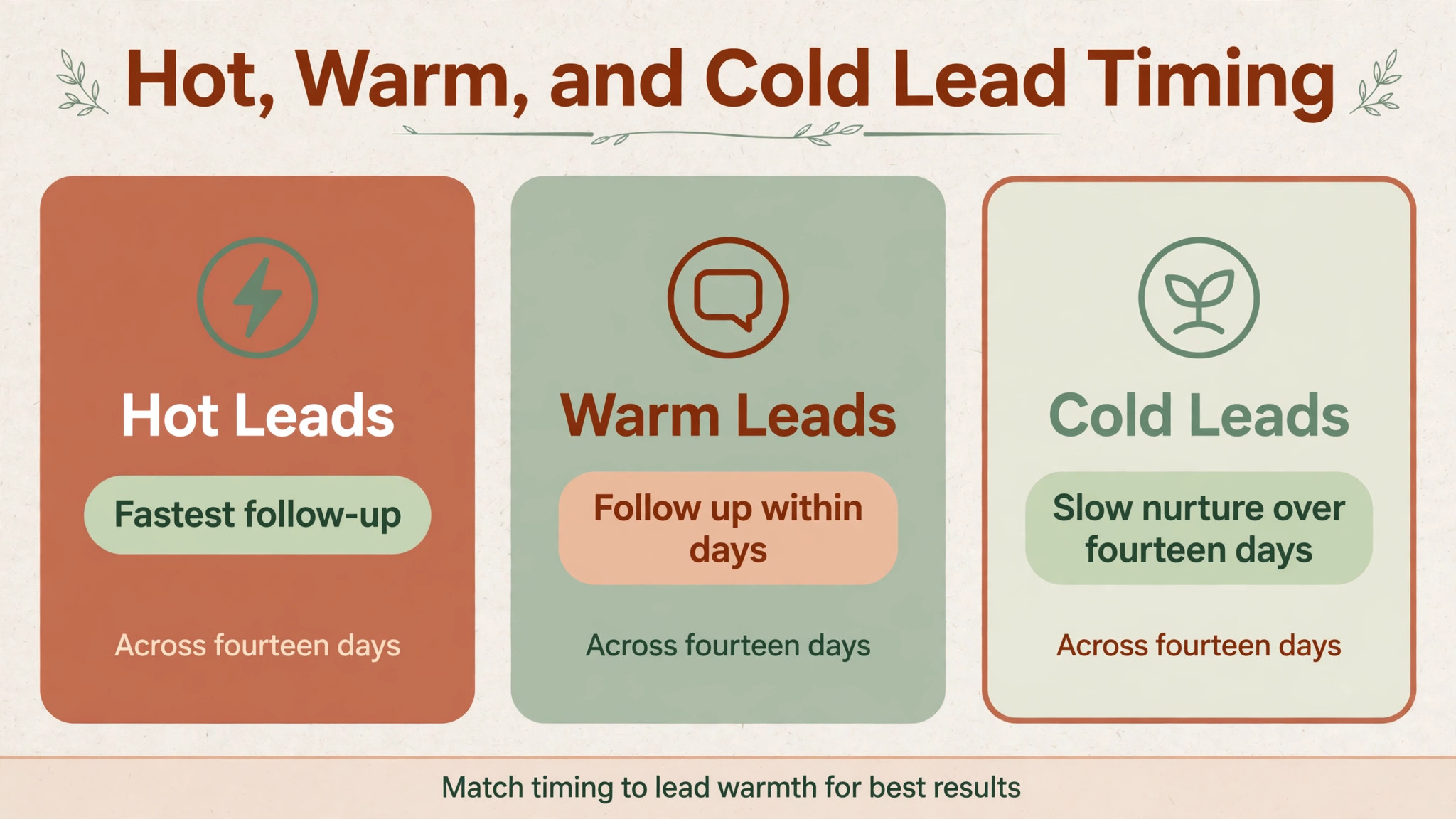
The table below is the quick reference for the whole workflow. Use it to train any helper who works your booth, because it shows what to send, when, and to whom. Hot leads get speed and specificity. Warm leads get a personal reference within two days. Cold contacts get value, not pressure, and a monthly rhythm after day fourteen. Buyers get thanks and matching pieces, not another sales pitch for what they already bought. The table also sets the stop rule in plain sight. A buyer who replies stop, or who asks not to be messaged, leaves the sequence at once.
| Lead group | First message | Second message | Stop rule |
|---|---|---|---|
| Hot, price or custom asked | Same day, exact item plus next step | Day seven, restock or matching note | Stop on reply stop or order completed |
| Warm, real conversation | Within two days, personal reference | Day seven, value touch, day fourteen close | Stop on reply stop or no reply after close |
| Cold, signup only | Day seven, value touch | Monthly newsletter only | Stop on reply stop or unsubscribe |
| Buyer at the fair | Same day or next day thank you | Day seven, matching pieces or care tips | Stop on reply stop, never pitch the same item |
The timing table works because it removes decision fatigue on teardown night. A tired vendor does not need to decide who gets what. The table decides. The vendor only needs to sort the list and send the messages the table prescribes. Keep the table in your fair kit with the checklist, review it after each fair, and adjust the timing only when your own results argue for a change. If your hot leads reply best on day two rather than day one, shift hot leads to day two. Let your numbers, not habit, set the timing.
How to measure fair return
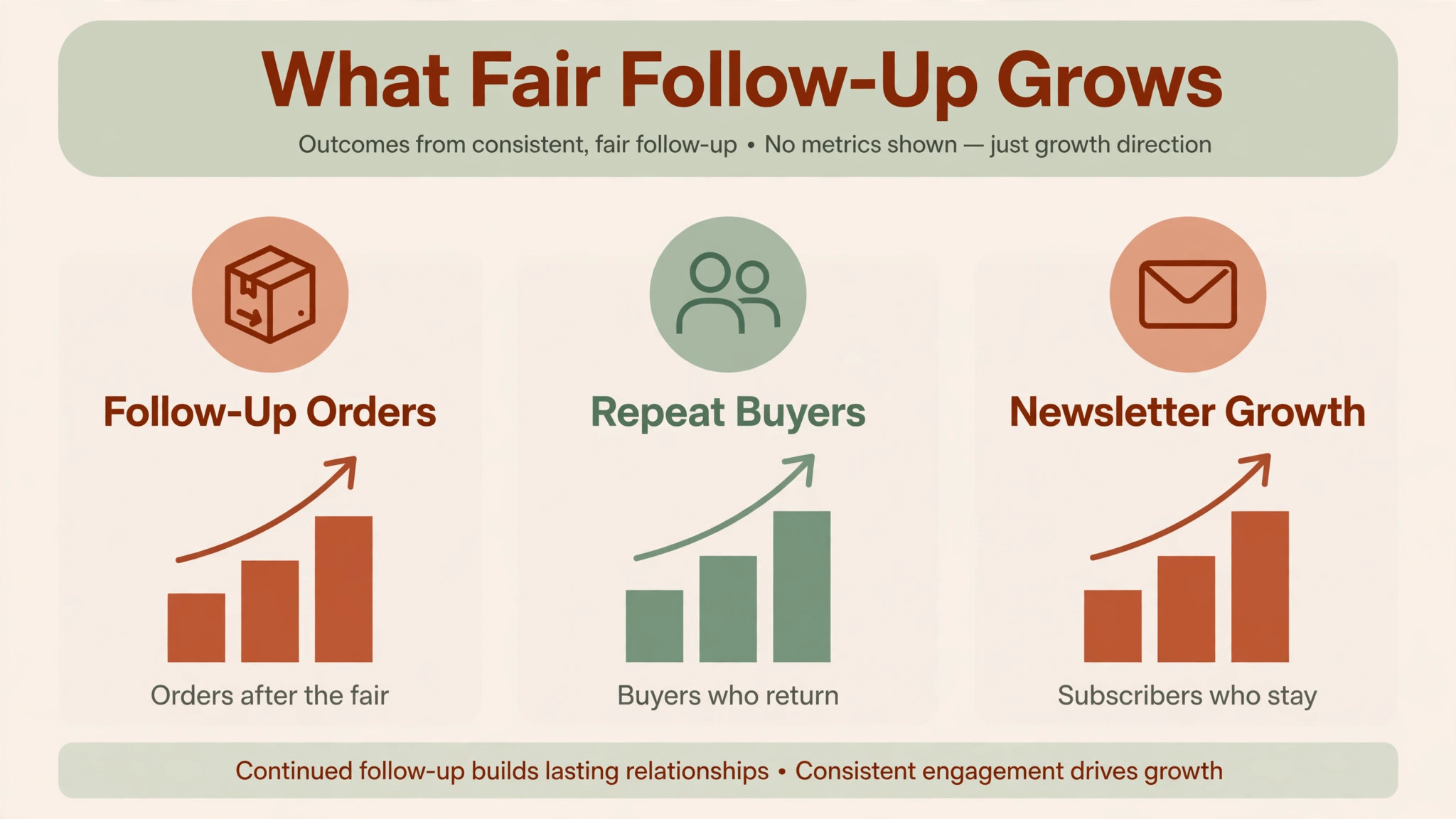
Measure four numbers after every fair and judge on all four together. Follow-up orders are placed within fourteen days by someone met at the fair. Repeat buyer rate is the share of fair buyers who buy again within ninety days. Newsletter growth is cold contacts who joined and stayed on the monthly list. Cost per fair sale is total fair cost, including booth fee, travel, and materials, divided by total fair driven sales with follow-up orders. A fair that looks weak on booth sales alone may be strong once follow-up orders are counted. A fair strong on booth sales but with no follow-up orders is a one day win with no tail, and the tail is where craft businesses grow.
Compare each fair with the same fair last year, not only with your last fair, because craft demand is seasonal and different fairs draw different crowds. Seasonal sellers can borrow timing ideas from a guide to plant nursery seasonal marketing, where demand also peaks around events and seasons.
Also track the message reply rate per group separately. If hot lead replies fall, the problem is speed or specificity, not the product. If warm lead replies fall, the problem is the personal reference, because warm leads reply to memory, not to offers. AI can group reply rates by message type and by product line, and can show which combination earns the most orders. Use that grouping to plan the next fair, from which items to feature at the booth to which story to tell in the day seven message.
Mistakes that cost fair sales
The most common mistake is waiting. A vendor who waits ten days to follow up has lost the memory advantage entirely, and no discount can buy it back. Send hot leads the same day, warm leads within two days, and never let a fair sit for a week untouched.
The second mistake is sending one blast to everyone. A blast ignores the difference between a buyer, a hot lead, and a signup, and trains all three to ignore future messages. Segment before you send, every time, even when you are tired. The third mistake is leading with a discount. A discount offered before value is established teaches buyers to wait for the next one, and cuts margin on handmade work that already carries thin margins. Lead with the item, the story, or the matching piece, and save discounts for genuine occasions.
The fourth mistake is letting AI send without a human check. When you use AI for craft fair vendor sales follow up, drafts can misstate a price, name the wrong item, or use a tone that does not fit a handmade brand. Every message needs a vendor eye before it goes out, especially in the first fair cycle.
The fifth mistake is forgetting buyers. A buyer who bought at the fair and hears nothing afterwards feels like a transaction, not a customer. Thank buyers, show matching pieces, and invite them to the next market. The sixth mistake is measuring only booth sales. A fair judged on booth sales alone will look like a failure whenever weather or foot traffic is weak, even when follow-up orders would have made it profitable. Measure the fourteen day tail, not only the fair day, and judge each fair on the full result.
Frequently Asked Questions
How soon should a craft fair vendor follow up after a fair?
Send hot lead messages the same day or the next morning, warm lead messages within two days, and a value touch on day seven. That cadence matches post-event practice across markets and trade shows, where leads contacted within 24 to 48 hours convert far better than leads contacted after a week. The same night sort matters as much as the send, because a list sorted while conversations are fresh produces specific messages, while a list sorted a week later produces guesses. If you can do only one thing on teardown night, sort the list and write the booth notes. The messages can go out the next morning, but the notes cannot be reconstructed later with the same accuracy.
What should a vendor write to someone who only browsed?
Write a short value touch, not a sales pitch. Thank them for stopping by and mention something real from the fair, such as the piece they looked at or the technique they asked about, and offer one useful thing, such as a photo of new work or your next market date. Do not offer a discount in the first message to a browser, because they have not yet decided they want the work, and a discount reads as pressure. Move browsers to a monthly newsletter after day fourteen, not weekly sales. A browser messaged monthly with real news stays a future buyer. A browser messaged weekly becomes a spam complaint, costing more than the browser was ever worth.
Can AI write follow-up messages that still sound handmade?
AI can draft the structure and wording, but the handmade feel comes from real details and vendor editing. Feed AI the booth note, item name, and conversation detail, and set a short word limit. Then edit by hand, fix any guessed detail, cut extra praise, and add one sentence only you could write, such as how the piece was made or why that colour was chosen. Read the result aloud. If it sounds like a generic store email, rewrite the first line. AI drafting plus vendor editing keeps messages fast and personal, and it is the approach recommended throughout this guide. Never send an AI draft without a vendor check.
Should craft vendors offer a discount in follow-up messages?
Offer a discount only for a genuine occasion, such as a returning buyer reward, a market only bundle, or a last piece clearance. A discount in the first follow-up message trains buyers to wait for the next one, and cuts margin on work that already carries thin margins. Lead with the item, the story, or the matching piece instead. If a warm lead replies asking about price flexibility, then a small, time limited offer is reasonable, because the buyer raised price themselves. Record which offers produce orders, by lead group, so future offers use evidence rather than habit. A discount that produces a repeat buyer is worth it. A discount that produces a one time bargain hunter is not.
How do vendors handle custom orders from a fair?
Reply to custom order enquiries the same day, confirm the exact detail, price range, and timeline in writing, and ask for a deposit before starting work. A custom order agreed verbally at a busy booth is easily misremembered, so written confirmation protects vendor and buyer alike. AI can draft the confirmation from your booth note, but verify every detail, especially size, colour, material, and delivery date, before sending. If the timeline changes, tell the buyer at once, with a new date, not a vague delay. Custom order buyers who are kept informed become repeat buyers and referrers. Custom order buyers left in silence become disputes costing more than the order was worth.
Which tools work best for craft fair follow-up?
The best tool is the one that already holds your buyer and sales records, because follow-up groups and message history must live in one place. Square suits vendors who sell at markets and need checkout records plus buyer emails. Shopify suits vendors who sell at fairs and online from one inventory. Mailchimp suits vendors who want the fourteen day sequence to run on schedule. Etsy suits vendors whose buyers prefer a trusted marketplace.
For context, compare market selling options in a guide to POS systems for vintage and antique shops, and read how inventory planning supports follow-up in a guide to antique shop inventory listings. Vendors who also sell plants should read a guide to plant nursery inventory software for stock planning that keeps promises honest.
Final verdict
Here is what to do on Monday morning after your next fair. Sort the list before you unpack. Send hot leads that day. Send warm leads within two days. Send value on day seven and a close on day fourteen. Record the results and let them plan the next fair. That is the whole system, and it fits in one focused hour on teardown night plus four short sends across two weeks.
Use AI for craft fair vendor sales follow up for the sorting and drafting. You do the remembering, the personal line, and the final check. Start with your next fair, run the checklist exactly as written, and compare its fourteen day orders with your last fair. If follow-up orders rise, keep the system and refine it. If they do not, check the sort first, because a system that sent one blast to everyone was never this system at all.