
A client asks for three qualified warehouse associates by Friday, and by Wednesday the agency inbox holds 240 resumes, half of them for other roles, a dozen duplicates, and a handful of strong candidates who will accept another offer if nobody calls them today. That inbox is the everyday problem at the heart of this guide, because when you use AI for staffing agency candidate screening the aim is not to read faster but to reach the right candidates first, with a fair and defensible process behind every shortlist. Speed without fairness loses clients, and fairness without speed loses candidates.
Staffing screening differs from in house hiring in one important way. The agency must satisfy two customers at once, namely the candidate who wants a fast, respectful process and the client who wants a shortlist of people who can actually do the job and start on time. A screening system that only ranks resumes will fail the client on availability, pay, location, and work authorisation. A system that only checks logistics will fail the candidate on skill fit and career fit. The workflow below handles both sides in order, from intake to placement packet.
This guide follows a candidate from application to placement. You will see how resume triage should work, how skill matching should be scored, how interview scheduling can run without endless email, how reference checks should be structured, and what belongs in a placement packet the client can trust. It also covers tool choices, costs, fairness and compliance risks, mistakes, and the numbers that show whether screening is actually improving.
How to Use AI for Staffing Agency Candidate Screening From Inbox to Shortlist
A staffing shortlist answers six questions in order. Does the candidate meet the non negotiable requirements for this role. Does their skill and experience fit the work, not just the keywords. Are pay, location, shift, and start date aligned. Have they been interviewed in a structured way that allows comparison. Have references and required checks been completed. And can the client see why these candidates were chosen, in a packet that answers questions before they are asked. Tools slot into each question, but they do not replace the whole chain at once, and trying to automate everything on day one is the fastest way to create shortlists that look tidy and still miss the best people.
Most staffing agencies start from one of three places. Some still screen from email inboxes and spreadsheets. Some use an applicant tracking system but screen manually inside it. Some already run a modern applicant tracking system or agency platform and want screening, matching, and scheduling help layered on top. The workflow in this guide works for all three, because the steps stay the same even when the software changes. What changes is how much retyping a recruiter has to do at each step, and how much of the candidate history is saved for the next similar role.
Think of the system as three helpers rather than one brain. The first helper parses and sorts, which covers resume parsing, knockout checks, and triage tiers. The second helper compares and schedules, which covers skill matching, scorecards, and interview booking. The third helper verifies and presents, which covers reference checks, compliance documents, and the placement packet. When you test a tool, ask which helper it actually delivers well, because a demo that shows all three may only do one of them reliably in daily use.
Resume Triage That Clears the Queue Without Missing Good People
Resume triage fails when it is either too slow or too blunt. Manual review of every resume for a high volume role takes days, while a keyword filter that rejects anyone missing one phrase will discard strong candidates who described the same skill in different words. A good triage system therefore uses two layers, namely knockout checks for true non negotiables, and a ranked review for everyone who passes. Knockout checks should be few, explicit, and agreed with the client in advance, such as work authorisation, required licence or certification, location or shift availability, and a stated start window.
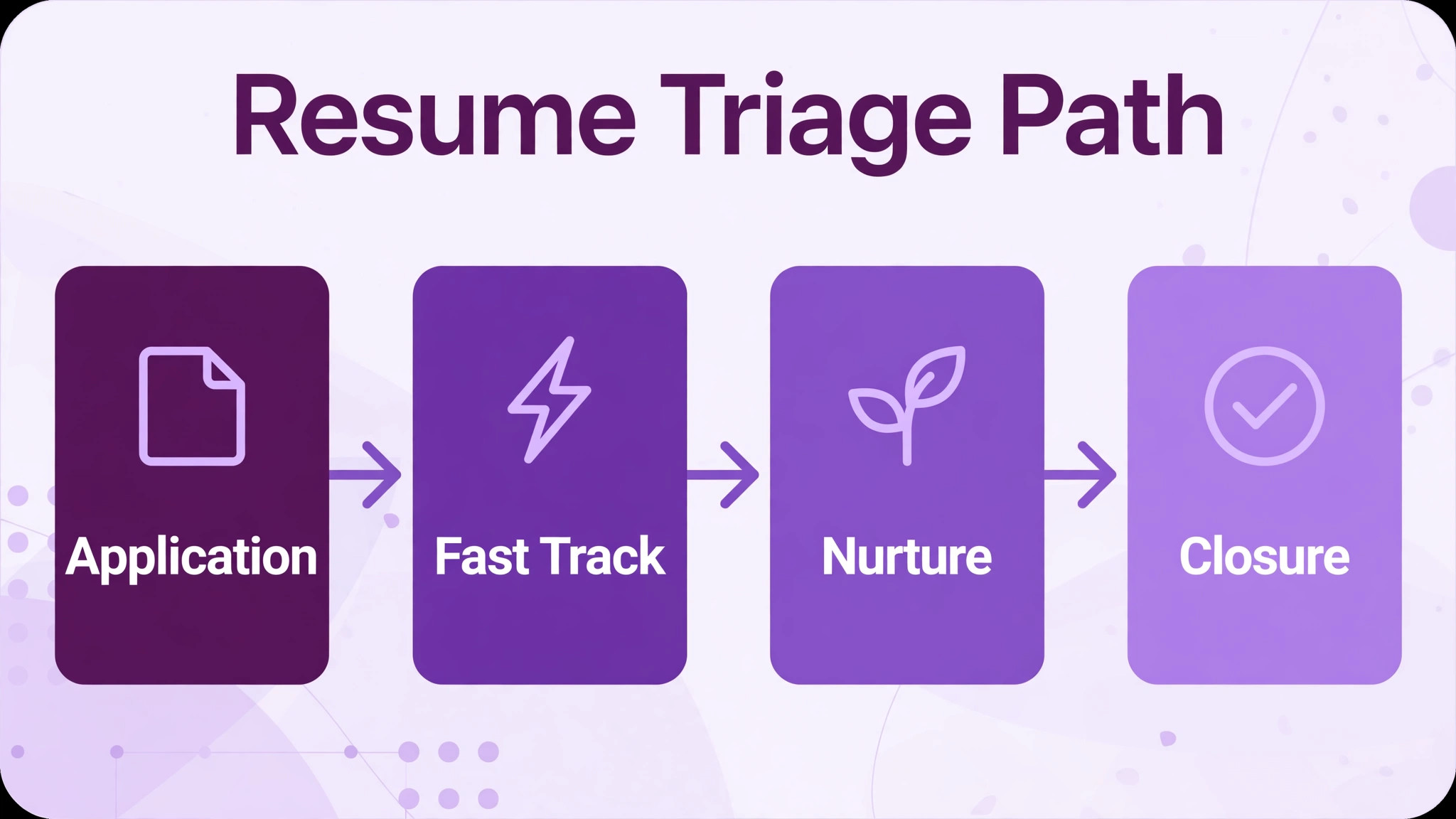
When you use AI for staffing agency candidate screening, resume parsing turns a document into searchable structured fields, such as roles, employers, dates, skills, certifications, and location. That structure lets the system route candidates into tiers rather than a single yes or no pile. A fast track tier holds candidates who meet the core requirements and are available soon. A nurture tier holds promising candidates who miss one immediate requirement but fit future roles. A polite closure tier holds candidates who do not fit this role, and those candidates should receive a respectful message promptly rather than silence. That prompt closure protects the agency brand, because candidates who are ignored today will not apply again tomorrow.
Parsing quality matters more than parsing speed, because a parser that misreads a two column resume, drops a certification, or confuses job dates will create a shortlist built on errors. Test any tool with your own messy resumes, including PDFs with tables, resumes with employment gaps, and resumes where the same skill appears under different job titles. Review a sample of parsed records every week in the early months, fix the recurring parsing errors, and keep a person reviewing the top tier before any candidate is contacted. A triage system that nobody audits will drift, and drift in screening becomes unfairness before anyone notices it.
Skill Matching Scored on Evidence, Not Keywords Alone
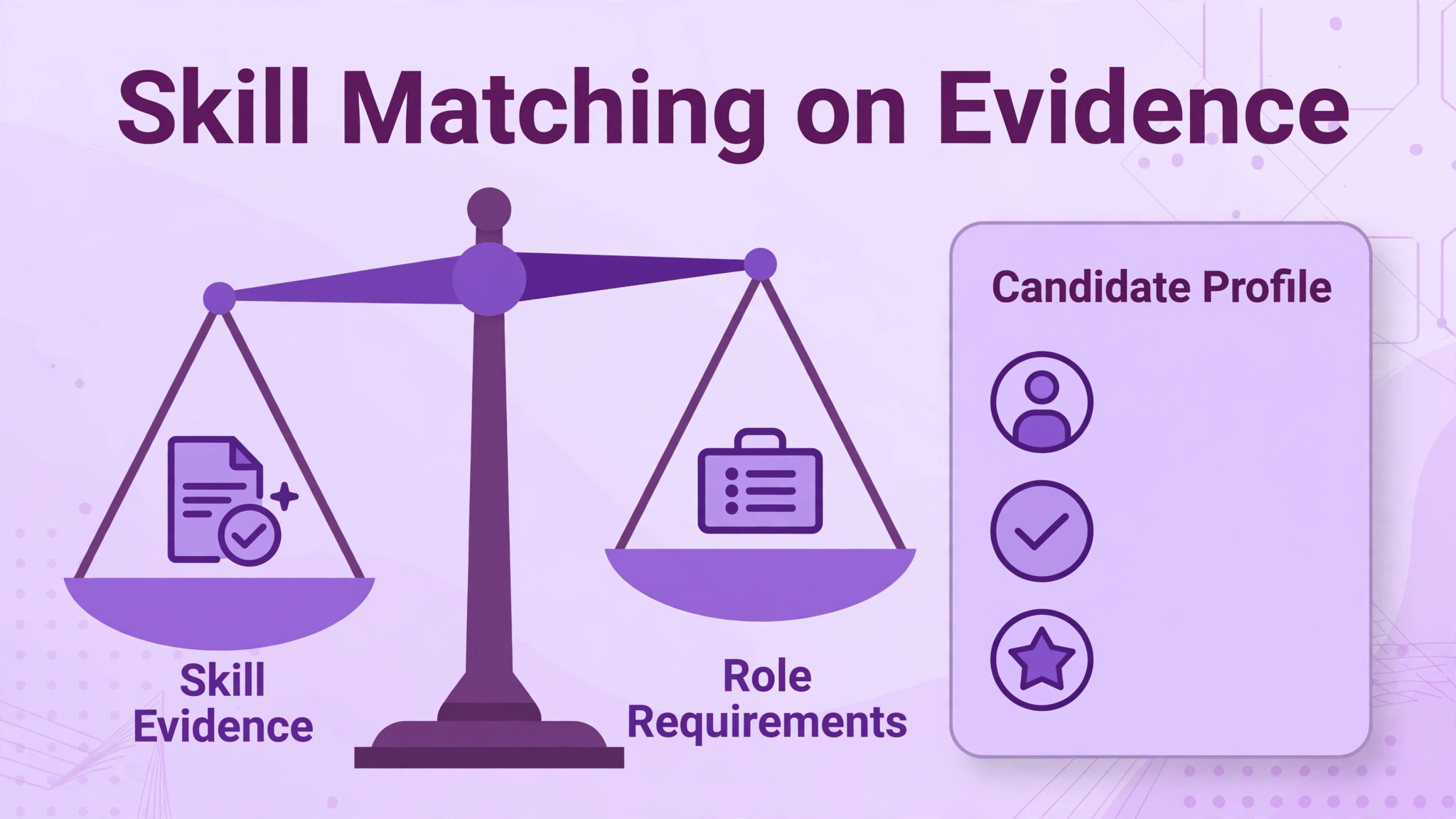
Skill matching is where staffing screening earns its fee, because a client does not pay for a list of resumes but for judgment about who can do the work. Keyword matching alone is a weak form of that judgment, since it rewards candidates who stuff a resume with terms and penalises candidates who did the work under a different title. A stronger match scores evidence, such as years in a similar role, tools or systems actually used, certifications held, shift patterns worked, and outcomes described in plain terms. That evidence should be weighted, with non negotiable skills counted heavily and nice to have skills counted lightly.
Published applicant tracking guidance describes screening and matching as ranking or filtering applicants against requirements, with a low scored profile still available for human review. That last point matters, because a score should be a sorting aid, not a final verdict. Recruiters should regularly review a sample of lower scored candidates, especially for roles where titles vary widely, to check whether the scoring rules are missing a valid path into the role. If strong candidates keep appearing in the lower tier, the rules need rewriting, not more trust in the score. That audit also protects fairness, because a rule that quietly favours one background over another will repeat that bias at scale.
When you use AI for staffing agency candidate screening, skill matching should also draw on the agency’s own history, not just the current resume. A candidate who placed well before, who completed an assignment reliably, or who holds a verified skill assessment should carry that history into the new match, with the recruiter able to see why. At the same time, history must not become a closed door, because a new candidate with strong evidence should be able to reach the top tier without a prior placement. Show the match reasons to the recruiter, with the skills, experience, and availability facts that produced the score, so the recruiter can explain the shortlist to the client without hiding behind a number.
Interview Scheduling Without the Email Chain
Interview scheduling is where good candidates are lost, because a strong candidate who waits three days for a time slot may accept another offer in the meantime. The fix is a scheduling flow that offers real times, respects time zones, and confirms in one step. For a recruiter screen, offer a booking link with live availability, so the candidate picks a time without an email chain. For a client interview, offer a small set of panel times that already account for interviewer calendars, rather than asking the client to propose times and then checking each one. That panel first approach saves days on roles with three interviewers in different locations.
When you use AI for staffing agency candidate screening, scheduling help can draft invitations, send reminders, and reschedule with one tap, but the recruiter should still set the interview structure. A structured interview uses the same core questions and the same scorecard for every candidate for a role, so comparisons are fair and the client can see why one candidate ranked above another. Record feedback on the scorecard promptly, with evidence from answers rather than general impressions, because feedback written a week later is memory, not assessment. A scorecard that captures structured notes also protects the agency if a client asks why a candidate was or was not shortlisted.
Candidate experience during scheduling deserves the same care as client experience, because staffing candidates talk to each other and to future applicants. Send a confirmation that names the interviewer, the format, the length, and what to prepare. Send a reminder a day before, with a simple way to reschedule, because a candidate who cannot attend and cannot reschedule easily will simply not show up. After the interview, send a short status update even when the news is a wait, because silence after an interview damages trust more than a polite delay message. That communication sequence costs little, yet it is often the difference between a candidate who stays engaged and one who accepts elsewhere.
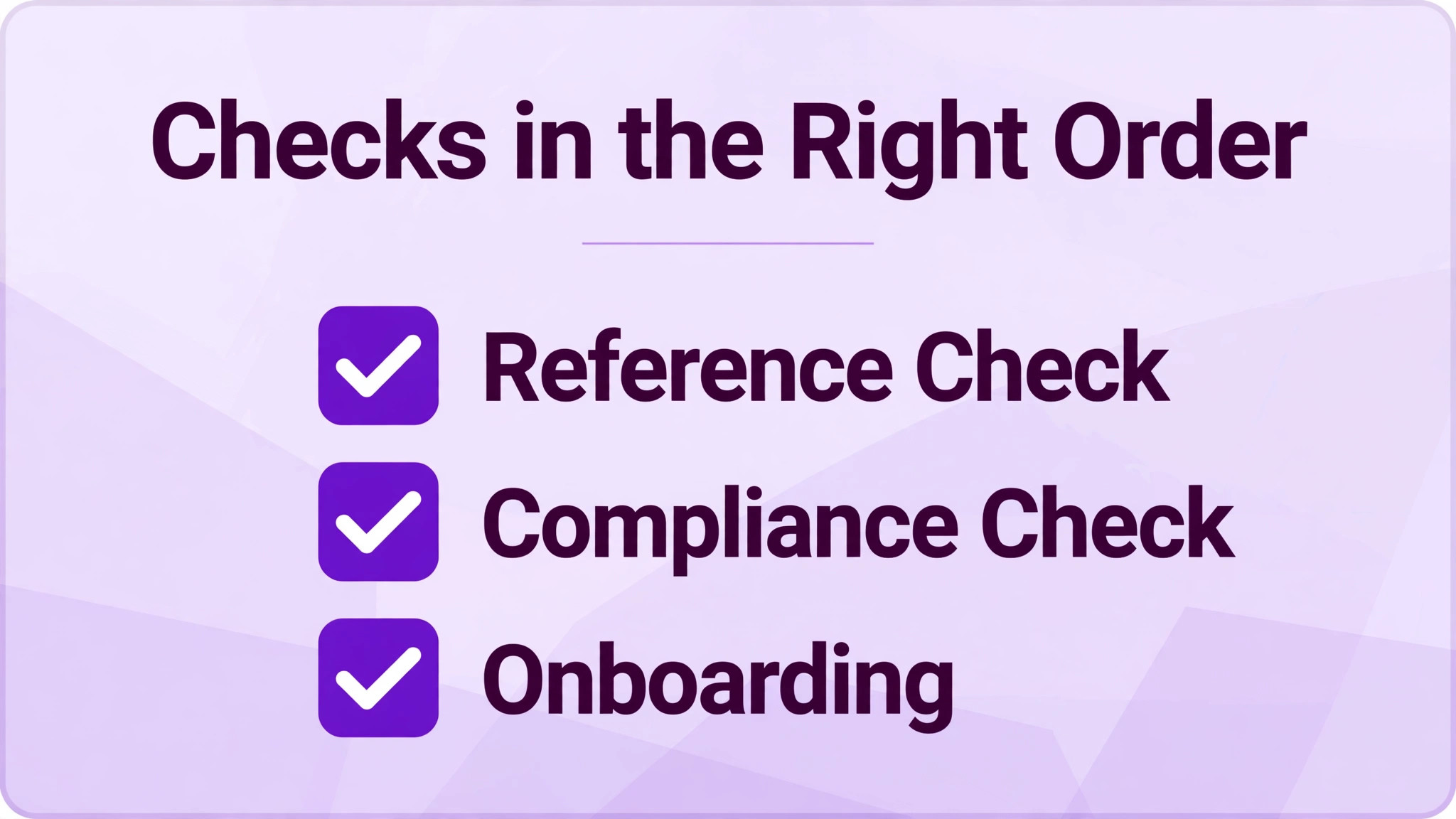
Reference Checks and Required Checks Done in the Right Order
Reference checks are often left to the end, which is exactly when they cause delays, because a placement that waits on a referee who is on leave will miss its start date. Start reference collection early for shortlisted candidates, in parallel with client interviews where the client allows it, rather than treating references as a final hurdle after an offer is agreed. Ask referees structured questions tied to the role, such as reliability, relevant skills, teamwork, and any attendance or safety record that matters for the work, rather than a single open question that invites vague praise.
When you use AI for staffing agency candidate screening, reference and compliance tracking can be automated, with requests sent, reminders chased, and documents collected in one candidate record. That tracking helps, but it does not replace judgment about what a reference actually says. A recruiter should read the full reference, note any reservation, and decide how to present that reservation honestly to the client, rather than forwarding only the positive lines. A shortlist that hides a reservation will lose the client when the problem appears in week one.
Required checks vary by role, client, and jurisdiction, so the workflow must be set from client requirements and local rules rather than from a generic list. Common agency steps include identity and work authorisation checks, background checks where the client requires them, licence or certification verification, and payroll and onboarding documents for temporary workers. Check the current requirements for each client and role before promising a start date, because a check that takes days will move the start if it is started late. Keep a compliance checklist per role in the candidate record, with each item marked, dated, and owned by a named person, so nothing is assumed complete because an email was sent.
The Placement Packet Clients Trust
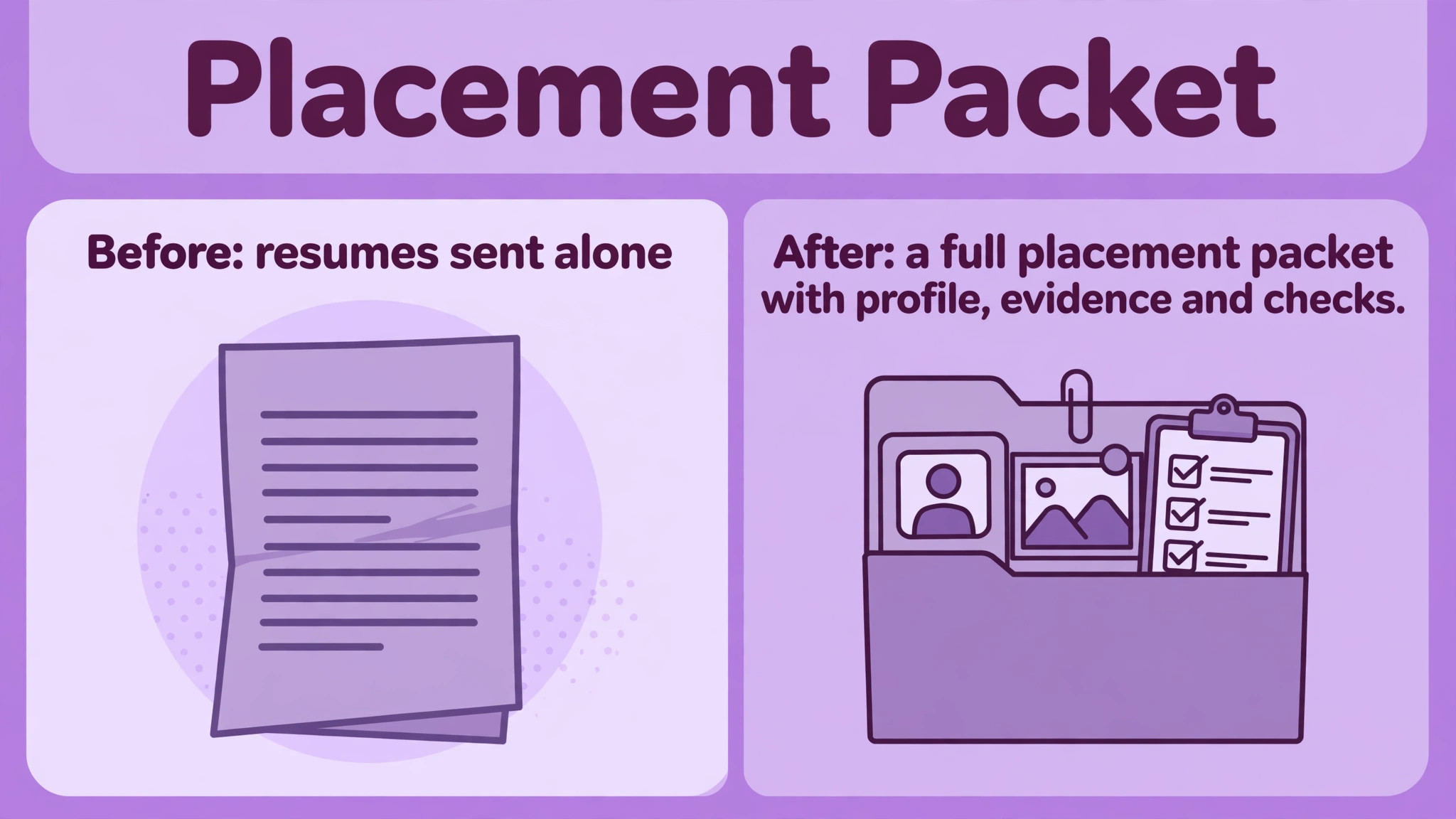
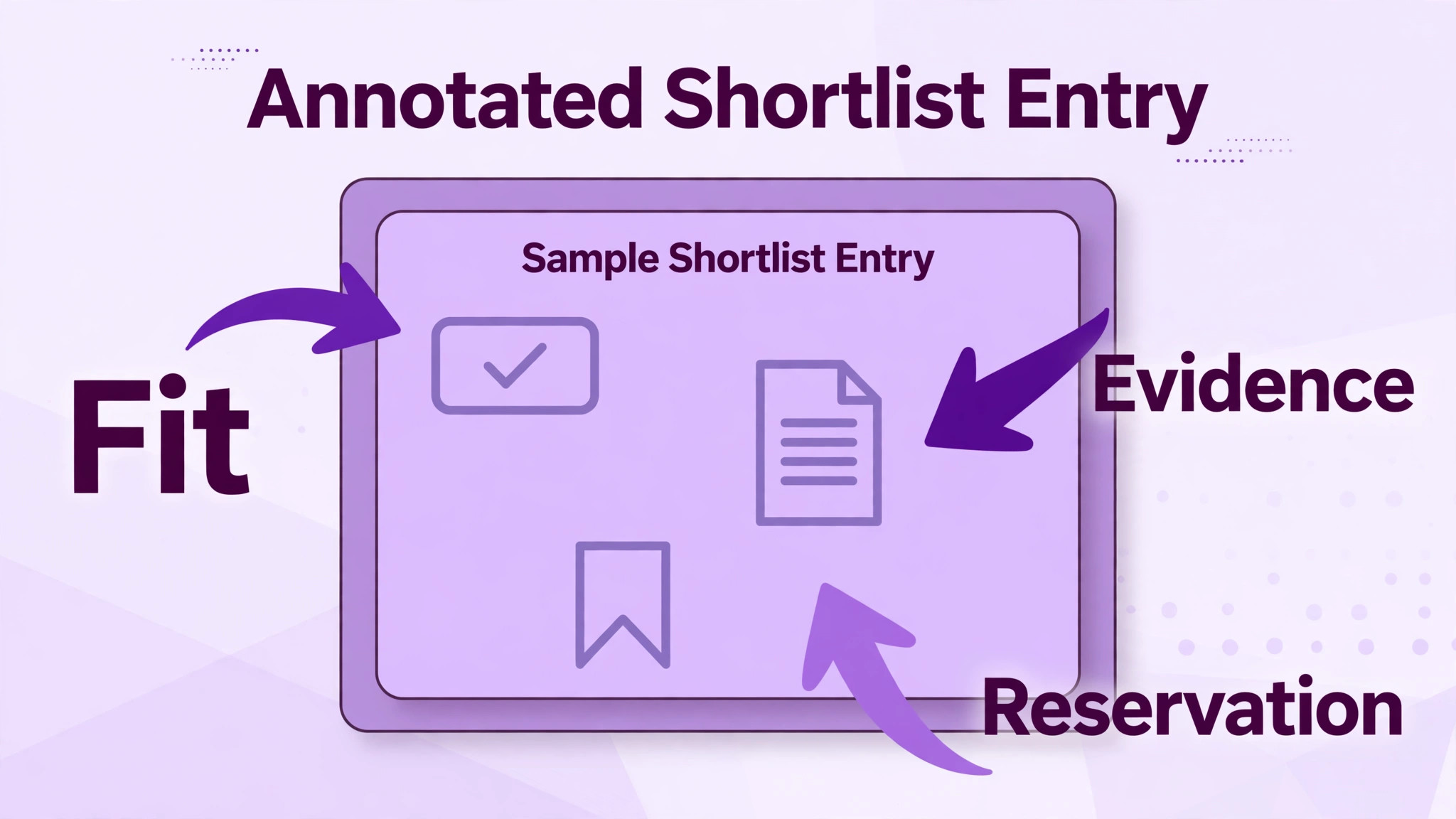
A placement packet is the product the client actually buys, and agencies that send only resumes leave the client to do the screening the agency was paid to do. A strong packet opens with a short summary for each candidate, stating the role fit, the key evidence, availability, pay alignment, and any reservation, in plain words. It then includes the resume, the interview scorecard summary, reference outcomes, and the compliance status, so the client can verify the summary without chasing the recruiter for documents. Each candidate entry should be short enough to read on a phone, because hiring managers often review shortlists between meetings.
The packet should also state the next step clearly, with interview times, a decision deadline, and a single contact for questions. Clients decide faster when the packet tells them what to do next and by when, rather than leaving the decision open ended while candidates wait. If a candidate is also being considered for another role, say so honestly where appropriate, because a client who learns late that a top candidate accepted elsewhere will blame the agency for slow communication. Transparency about candidate availability is part of the service, not a weakness in it.
When you use AI for staffing agency candidate screening, packet building can pull resume data, scorecard summaries, and compliance status into a consistent format automatically, which saves recruiter time and removes formatting errors. That automation should still leave the recruiter’s judgment visible, because a packet that reads like a system output will not convince a hiring manager who has seen many such packets. Add a short recruiter note per candidate, stating why this person fits this client and this team, with one reservation where relevant. That note is the human value in the packet, and it is what separates an agency shortlist from a software export.
Best Pick by Job for Staffing Screening Tools
No single tool fits every staffing agency, because a small agency and a high volume firm buy different things even when the feature list looks similar. The table below sorts the main approaches by the agency shape they suit, based on how vendors position their products and how reviewers describe their fit in daily use.
| Agency shape | Best fit approach | Why it fits |
|---|---|---|
| Small agency, few roles | Tracking system plus scheduling links | Low cost, simple pipeline, fast setup |
| High volume agency | Screening platform with matching | Triage tiers, ranked review, faster shortlists |
| Multi client agency | Agency platform with client pipelines | Separate pipelines, client packets, clear reporting |
| Enterprise staffing firm | Full platform with assessments | Scorecards, compliance tracking, deep reporting |
Read that table as a starting point, not a verdict. A small agency that plans to grow into high volume work may be better starting on the platform the larger firm will need, even if it feels heavy at first, because moving candidate history mid growth is painful. A high volume firm that values speed over depth may prefer the simpler tool and accept manual workarounds. Demo each option with your own messy roles, including a role with varied job titles, a candidate with a two column resume, and a three person interview panel across time zones, and judge the tool on those cases.
Pricing also separates these tools in ways a feature list hides. Some screening tools charge per role, some per user, and some quote only after a demo, which makes direct comparison hard. Published examples reviewed for this guide show screening and assessment tools from a free plan or under sixty dollars per role per month to several hundred dollars a month for a full tracking platform, so treat any third party price as a starting point and get a written quote for your exact volume and seat count. Check the vendor page for current pricing before you commit, because plans and included features change during the year.
Costs, Fairness, and Compliance Trade Offs
The cost of screening software is not one subscription. It is the tracking or screening platform, any assessment or scheduling add on, the time to build knockout rules, scorecards, and packet templates, and the recruiter hours spent auditing scores in the early months. Agencies already paying for a tracking system may add screening features for a smaller increment. Agencies moving from email screening pay for the whole platform at once, plus training, and should budget for a slower first month while the team learns the new routine.
Fairness is the trade off that deserves the most attention, because screening software scales whatever rules it is given. A rule that favours a particular university, a particular job title history, or a particular employment pattern will repeat that preference across hundreds of candidates. Audit scores regularly, review lower tier samples, and check shortlist outcomes by source and role to spot patterns that need explanation. Keep a person in control of final shortlist decisions, and keep the reasons for each decision visible in the candidate record. That audit trail protects candidates, clients, and the agency if a decision is ever questioned.
Compliance adds a second trade off, because automation that collects personal data must handle that data carefully. Collect only the information needed for the role, store it securely, limit who can see sensitive checks, and delete or archive data according to the agency’s retention rules and local requirements. Automated messages should be respectful and accurate, especially closure messages, because a candidate who receives a wrong or confusing automated rejection will associate that experience with the agency and the client. None of these trade offs is a reason to avoid the tools. Each is a reason to set rules, audit outcomes, and keep people in control of decisions that affect livelihoods.
Common Mistakes in Staffing Screening
The most common mistake is letting a keyword filter decide the shortlist, because that filter rewards resume wording rather than work evidence. Fix matching first, with weighted evidence, knockout rules agreed with the client, and regular review of lower scored candidates. Software scales whatever you feed it, good or bad, and a fast shortlist from a blunt filter is still a blunt shortlist that will miss strong people and disappoint the client.
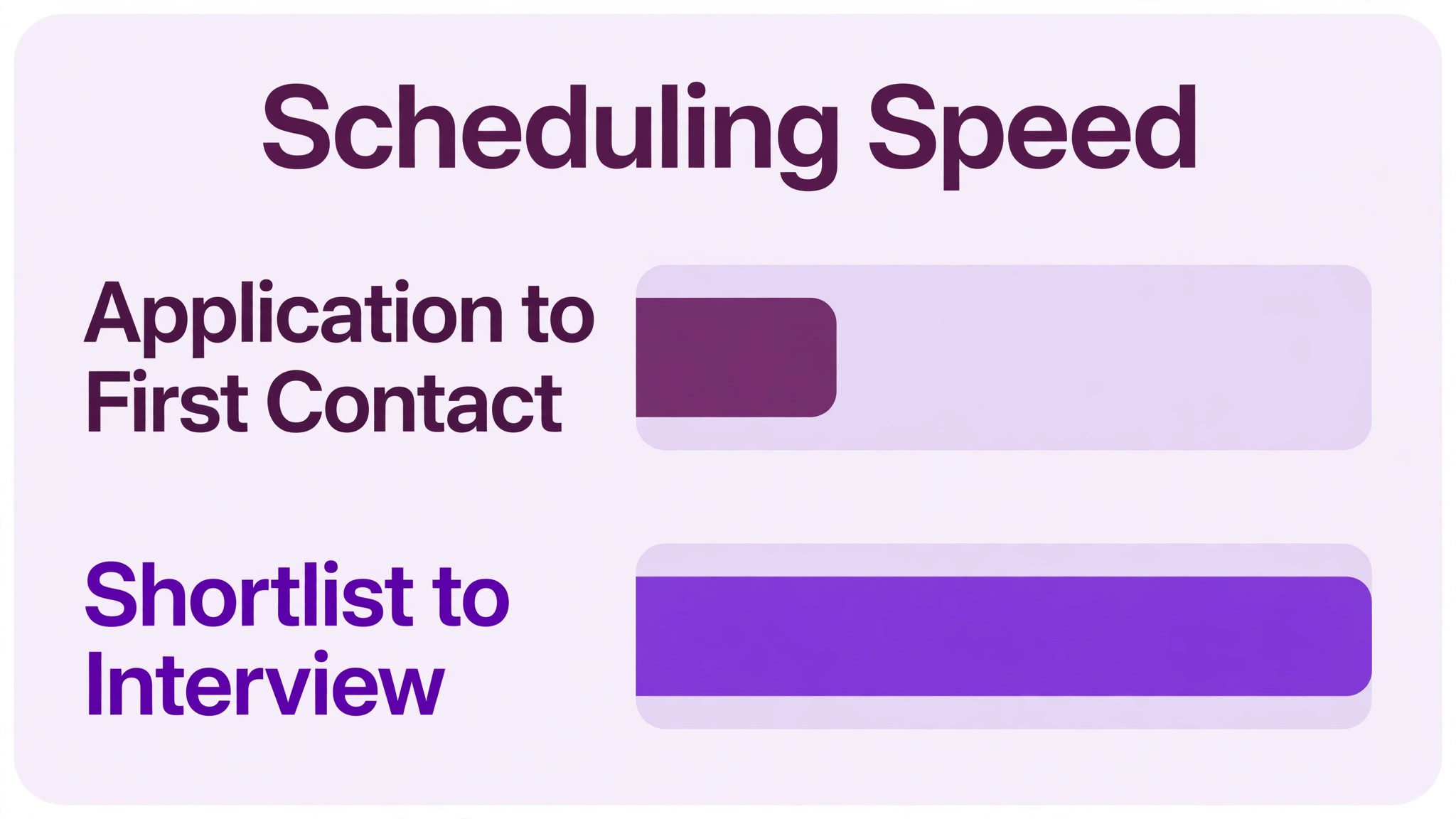
The second mistake is scheduling slowly, because strong candidates accept other offers while an agency waits for panel times. Offer recruiter screens by booking link, offer client panels as a small set of times that already account for calendars, and send confirmations and reminders without delay. Each day saved in scheduling is a day the candidate stays engaged, and for temporary and contract roles that day often decides whether the placement happens at all. Track time from application to first contact and time from shortlist to client interview, because those two gaps show where candidates are being lost.
The third mistake is leaving reference and compliance checks to the end, which turns a ready placement into a delayed start. Start reference collection for shortlisted candidates early, track each check in the candidate record, and do not promise a start date until the checks that could move it are underway. A start date promised before checks are started will be broken more often than kept, and a broken start date damages the client relationship more than a start date that was honest from the beginning.
The fourth mistake is sending resumes without a packet, because that approach hands the screening work back to the client. Build a packet with a summary, evidence, scorecard outcomes, reference results, compliance status, and a clear next step for every shortlist. That packet takes time to build the first time, and then template reuse pays that time back on every later role. A client who receives a clear packet will decide faster, ask fewer repeat questions, and return with the next role, which is the real return on screening investment.
Staffing Screening Checklist for the First Thirty Days
Use this checklist to roll out a screening workflow without breaking the week.
- Write knockout rules for each common role family, agreed with clients, and test them on real applications for two weeks.
- Build triage tiers for fast track, nurture, and polite closure, with messages for each tier.
- Set weighted skill matching rules based on evidence, not keywords alone, with lower tier audits.
- Create structured interview scorecards per role family, with the same core questions for every candidate.
- Set a scheduling flow with booking links for recruiter screens and panel times for client interviews.
- Start reference and compliance tracking early for shortlisted candidates, with named owners per check.
- Build a placement packet template with summary, evidence, scorecard, references, and next step.
- Review shortlist speed, acceptance, and placement quality weekly, and fix the top recurring cause.
That checklist is deliberately short. A longer rollout plan looks impressive and gets ignored. Eight steps, done properly, change screening more than a fifty page manual that nobody reads.
How to Measure Staffing Screening Results
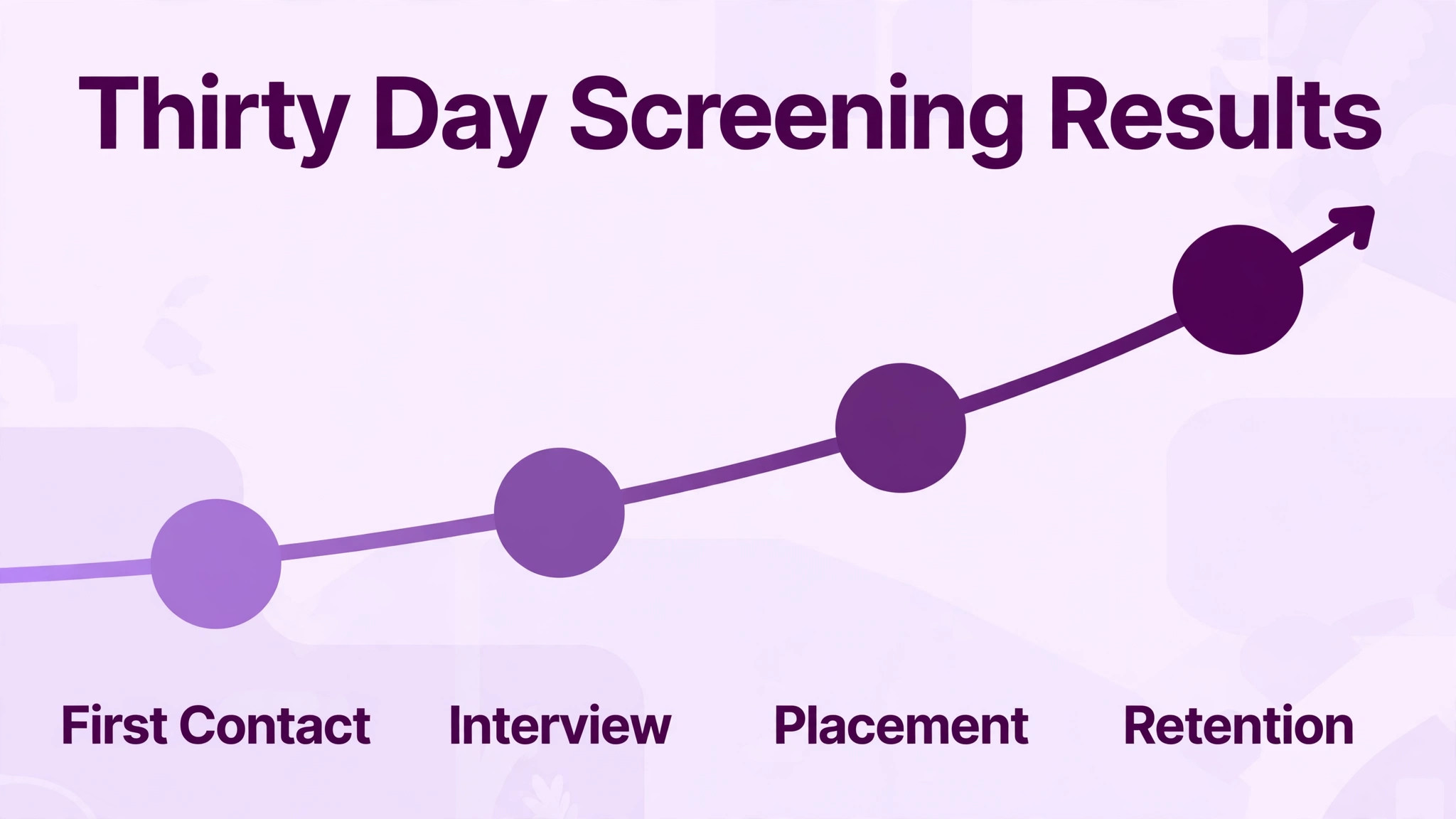
Measurement should start before the new workflow, so the improvement is visible rather than claimed. Record five numbers for four weeks on the old method. First, the time from application to first recruiter contact. Second, the time from shortlist to client interview. Third, the share of shortlisted candidates who accept an interview. Fourth, the share of placements still in role after the first month, where the client shares that outcome. Fifth, the share of candidates who receive a closure message when they are not shortlisted. Those five numbers describe speed, engagement, placement quality, and candidate respect in one view.
After rollout, track the same five numbers weekly, plus two more. Track how often a recruiter changed the system ranking before shortlisting, because a falling change rate shows growing trust in sound rules, while a rising rate shows rules that need fixing. Track the share of placements that came from the nurture tier on later roles, because a nurture tier that never produces placements is a holding pen, not a talent pool. A business that only tracks applications received will miss the quality change, since more applications screened badly is not progress.
Set targets that fit the starting point. An agency with slow first contact should aim to cut that time first, because speed is the easiest win and candidates notice it immediately. An agency with good speed but low interview acceptance should focus on candidate communication and scheduling ease. An agency with strong acceptance but weak first month retention should focus on skill evidence, reference depth, and client fit. One priority at a time beats five targets chased at once, because the team can see which change caused which result.
Review the numbers with recruiters and clients, not just in the office. A shortlist that looks efficient on a screen may ignore shift reality, team fit, or client culture that recruiters know from experience. When a number improves, say which workflow change likely caused it, so the team keeps doing that thing. When a number worsens, treat it as a rule to fix, not a person to blame, because screening improvement is a system problem before it is a people problem.
The Staffing Screening Verdict for Agencies Ready to Change
Staffing screening rewards the agency that reaches the right candidates first, scores evidence fairly, schedules without delay, and presents a packet the client can trust. Software helps most when it removes parsing, sorting, and scheduling drudgery, while recruiters keep control of judgment, fairness, and the final shortlist. That split is the whole point, because a shortlist is a recommendation about a person’s livelihood, and recommendations need a person behind them even when software drafts the ranking.
Start with triage tiers and knockout rules, then add weighted matching and structured scorecards, then add scheduling and packet automation once the shortlist is worth presenting quickly. Choose the platform that fits the agency you have, with room to grow, and judge it on varied titles, messy resumes, and multi person panels rather than on tidy demo data. Measure first contact speed, shortlist to interview time, interview acceptance, retention, and closure rates, and fix the worst number first. Done that way, screening becomes a steady source of placements rather than a weekly race through an inbox.
Frequently Asked Questions
How many knockout questions should a staffing application include?
Three to five knockout questions work well for most roles, covering only true non negotiables such as work authorisation, a required licence or certification, location or shift availability, and a start window. More than five knockouts will discard strong candidates over minor points, while fewer than three will leave the queue full of candidates who cannot take the role. Agree the knockouts with the client in advance, and review them when a role keeps producing too few or too many fast track candidates.
Can software fairly rank candidates for a staffing role?
Software can sort fairly when the rules are built on job evidence, weighted transparently, and audited regularly, but it cannot guarantee fairness on its own. Review lower scored samples, check shortlist outcomes by source and role, and keep a person in control of final decisions. A score should be a sorting aid with visible reasons, not a hidden verdict, because a rule that quietly favours one background will repeat that preference across hundreds of candidates if nobody checks it.
How fast should a staffing agency contact a new applicant?
As fast as the role allows, and ideally within one working day for high volume and temporary roles, because strong candidates accept other offers quickly. A booking link for a recruiter screen, a prompt triage tier message, and a clear next step will keep candidates engaged far better than silence followed by a late call. Track time from application to first contact as a core screening number, and fix the step that causes the longest wait first.
What should a staffing placement packet include?
A placement packet should include a short summary per candidate with role fit, key evidence, availability, pay alignment, and any reservation, plus the resume, interview scorecard summary, reference outcomes, and compliance status. It should also state the next step clearly, with interview times, a decision deadline, and a single contact for questions. A packet that answers questions before they are asked helps the client decide faster and shows the screening work the agency was paid to do.
Should reference checks happen before or after client interviews?
Start reference collection early for shortlisted candidates, in parallel with client interviews where the client allows it, rather than waiting until after an offer is agreed. Early collection prevents a placement delay when a referee is unavailable, and it lets the recruiter present reference outcomes honestly in the packet. The final reference judgment should still be read by a person, with reservations stated plainly to the client rather than hidden behind positive lines.
How do I handle candidates who fit future roles but not this one?
Place them in a nurture tier with a respectful message that states the reason honestly and asks permission to keep their record for future roles. Send occasional relevant role updates, not generic blasts, and recheck their availability and pay alignment when a matching role appears. A nurture tier that is actually used for later placements becomes a talent pool, while a nurture tier that is never revisited is simply a polite way of ignoring candidates.
More Reading on Stratilyze
– Use AI for Plumbing Company Dispatch – Use AI for Roofing Company Estimates – Best Quote Software for Trades Businesses – Best Estimating Software for Contractors – Automate Small Business with AI