

Language learners often study grammar and vocabulary for months, yet still struggle to understand real speech, because classroom audio is slower, clearer, and more predictable than everyday conversation. When you use wireless earbuds for language practice, listening becomes a daily habit that fits into walks, commutes, and chores, with real voices, natural speed, and repeated exposure to the same sounds. That daily, real world listening is what turns studied knowledge into usable understanding, because the ear learns patterns that textbooks cannot teach alone.
This guide builds a listening and speaking routine around wireless earbuds. You will choose earbuds for speech clarity, set up listening sources, practise shadowing and repetition, build vocabulary from what you hear, and review progress weekly. Earbud models, battery life, and prices vary widely, so confirm current specifications and prices on official brand pages before buying, and prioritise speech clarity and comfort over bass or noise cancelling features that matter less for language study.
Why This Approach Works
Listening practice works when it is frequent, varied, and slightly challenging, which is exactly what earbuds make possible. A learner who listens for twenty minutes daily, to news, conversations, stories, and songs in the target language, will hear far more natural speech in a month than a learner who listens for two hours once a week in a classroom. Wireless earbuds remove the friction that stops daily practice, because they are small, portable, and always available, turning otherwise dead time into study time without requiring a desk, a book, or a quiet room. That habit, more than any single app or course, is what builds listening comprehension over time.
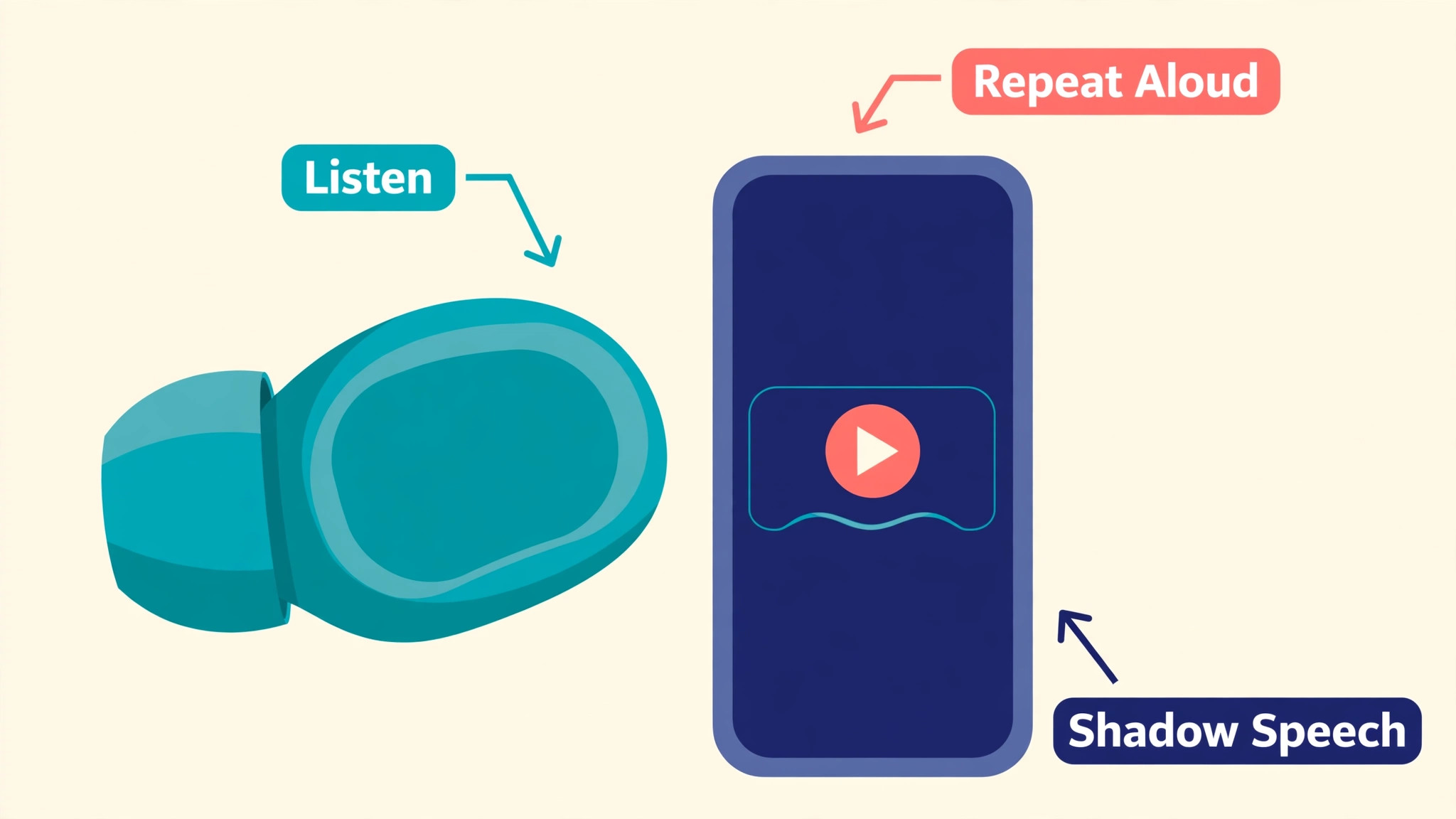
Earbuds also support speaking practice, through shadowing, which is repeating what you hear immediately afterwards, mimicking rhythm, intonation, and pronunciation. Shadowing with earbuds lets learners practise aloud in private, during walks or chores, without needing a conversation partner for every session. Combined with vocabulary review from heard material, shadowing turns passive listening into active practice, which improves both understanding and speaking. A routine that combines listening, shadowing, and vocabulary review will progress faster than listening alone, because each skill reinforces the others.
How to use wireless earbuds for language practice Step by Step
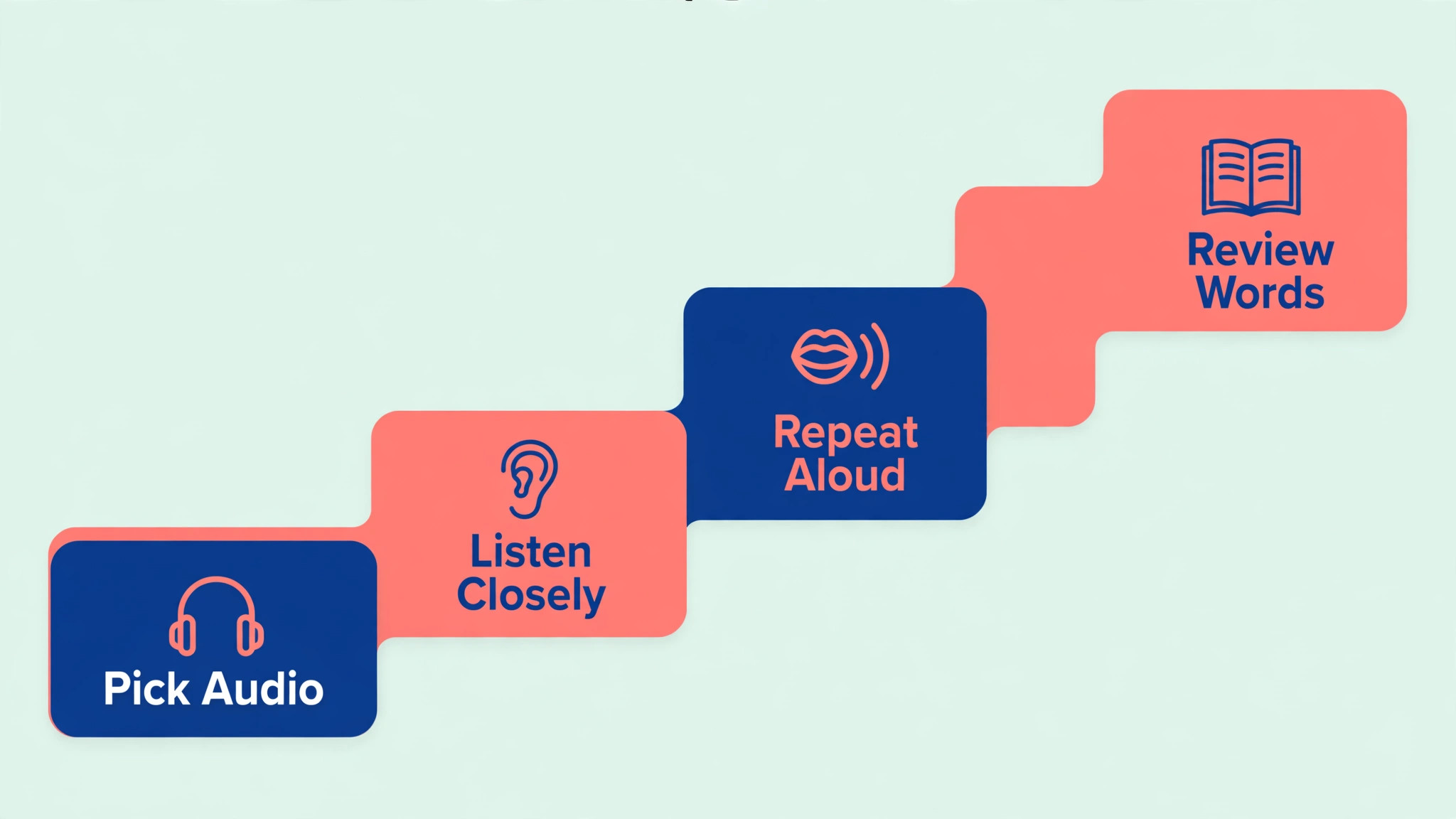
Build the routine in the order below, starting with earbud choice and listening sources, not with study goals. When you use wireless earbuds for language practice, a comfortable, clear sounding earbud pair and a ready list of listening sources prevent the most common failure, which is a practice plan that never starts because setup takes too long each day.
- **Choose earbuds for speech clarity and comfort.** Choose wireless earbuds that fit comfortably for at least thirty minutes, reproduce speech clearly without muffled highs, and hold a stable Bluetooth connection during movement. Test speech clarity with a news clip or podcast in your target language, not only with music, because music tuning can hide speech problems. Comfort matters as much as sound, because earbuds that hurt will not be worn for daily practice, no matter how good they sound.
- **Build a listening source list by level.** Collect listening sources at your level, such as slow news, learner podcasts, graded stories, and everyday conversations, plus one slightly challenging source to stretch comprehension. Organise sources by topic and difficulty in a playlist or app folder, so each practice session starts in seconds rather than with a search. A ready source list removes the daily decision that stops many learners from starting.
- **Set a daily listening routine.** Set a fixed daily listening time, such as twenty to thirty minutes during a walk, commute, or household task, and protect it as a habit rather than as optional study. Listen actively for part of the session, noting unfamiliar words and phrases, and listen passively for the remainder, letting rhythm and intonation sink in without trying to understand every word. A fixed routine, tied to an existing daily activity, survives busy days far better than a routine that requires free time to be found.
- **Practise shadowing in short bursts.** Shadow short phrases, of five to ten seconds, by repeating immediately after the speaker, mimicking rhythm, stress, and intonation, rather than translating word by word. Start with slow, clear material, then move to natural speed as shadowing becomes easier, and record yourself occasionally to compare with the original. Shadowing in short bursts, for five to ten minutes per session, improves pronunciation and listening together, because producing sounds trains the ear to recognise them.
- **Collect vocabulary from what you hear.** Note unfamiliar words and phrases heard during listening, with the sentence they appeared in, and review them later in a flashcard app or notebook, rather than memorising isolated word lists. Words learned in context, from real speech you actually heard, are easier to recall and use correctly than words learned from a list alone. Review new vocabulary the same day, then after a few days, using spaced review where possible, so heard words become usable words.
- **Use transcripts and subtitles strategically.** Use transcripts or subtitles to check understanding after listening, not during the first listen, so the ear is trained before the eye confirms. Read the transcript for sections that were unclear, note new vocabulary, then listen again without text to confirm improved understanding. Strategic transcript use turns a difficult listening into a learning opportunity, while constant subtitle reliance prevents the ear from learning to cope with unclear speech.
- **Practise speaking with prompts and partners.** Use listening material as speaking prompts, by summarising a short clip aloud, answering a question about it, or retelling a story in your own words, even when alone. Where possible, add a weekly conversation partner, tutor, or language exchange, using topics from recent listening as discussion material. Speaking from listening material connects comprehension to production, which is the step that turns passive understanding into usable language skill.
- **Review progress weekly and adjust level.** Each week, review listening time, new vocabulary collected, shadowing comfort, and comprehension of a test clip at your level, and adjust source difficulty accordingly. If a source becomes easy to understand fully, move to a slightly harder source, while keeping one easy source for confidence and enjoyment. Weekly review keeps practice challenging without becoming frustrating, which is the balance that sustains long term learning.
After the first month, review the whole routine, including earbud comfort, source list, daily time, and vocabulary system, and adjust one element based on what actually happened, not on what was planned. A routine that is adjusted to real life, such as a different listening time or a new source type, will last longer than a perfect plan that does not fit daily reality. Learning a language is a long habit, and the routine must serve the learner for months, not just for the first enthusiastic week.
Options Compared
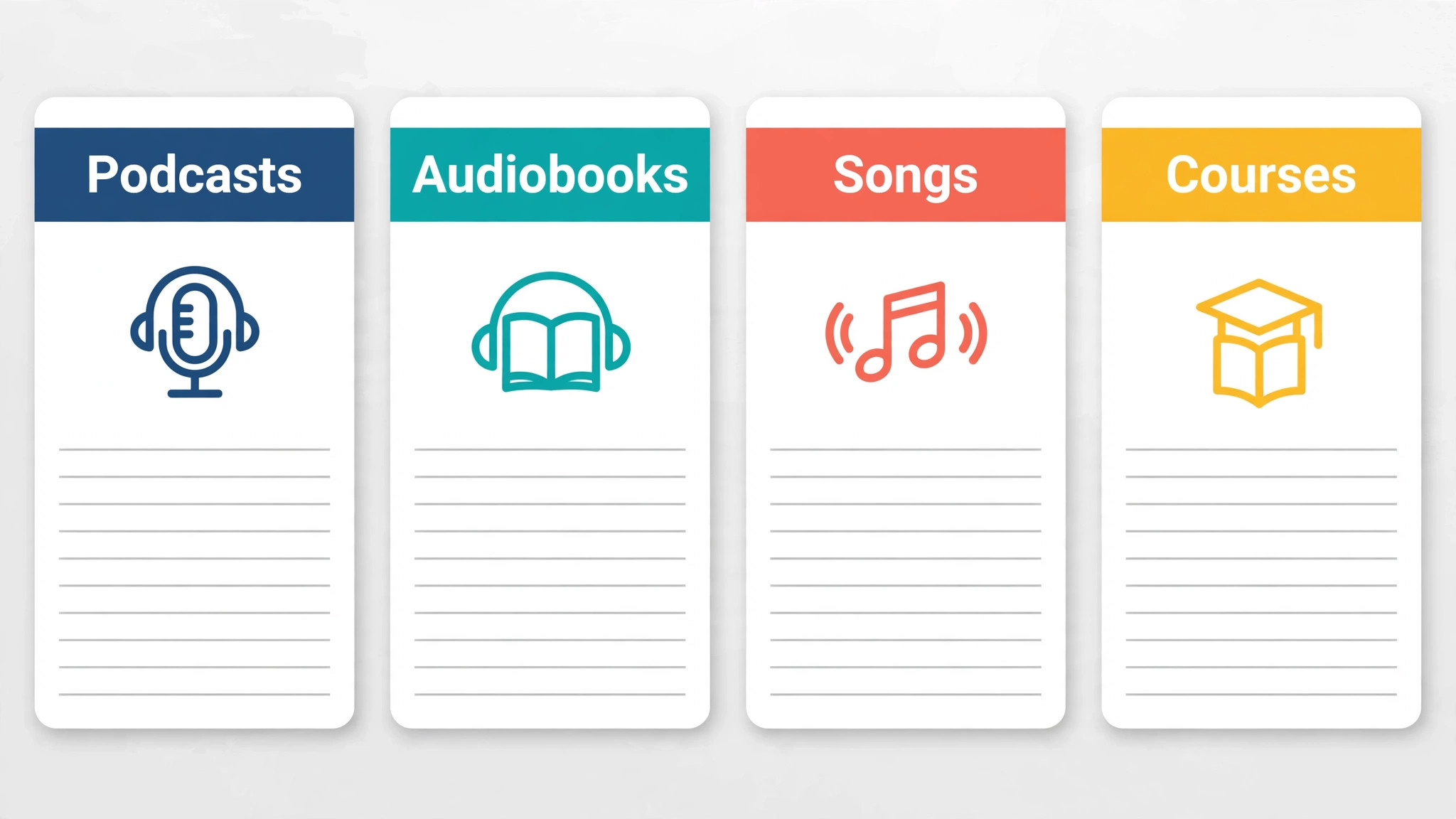
Listening sources suit different levels and goals, and the right mix depends on current comprehension and interests. When you use wireless earbuds for language practice, the table below compares the main source types, so practice includes both easy, confidence building material and challenging material that stretches understanding.
| Listening source | Best for | Watch out for |
|---|---|---|
| Learner podcasts | Clear speech, structured topics | Too slow for advanced learners |
| Slow news | Current topics, clear diction | Limited vocabulary range |
| Native conversations | Natural speed and slang | Frustrating if too advanced |
| Audiobooks and stories | Long listening, narrative flow | Needs sustained concentration |
| Songs and shows | Enjoyment, culture, rhythm | Slang and unclear diction |
Mix sources weekly, with most time on material that is challenging but understandable, some time on easy material for confidence, and a small amount on native material for exposure, even if full understanding is not yet possible. A mix prevents both boredom from too easy material and frustration from too hard material, and it exposes the ear to different voices, accents, and topics. Adjust the mix monthly based on comprehension progress, moving gradually toward more native material as understanding improves.
Costs and Tools to Budget For
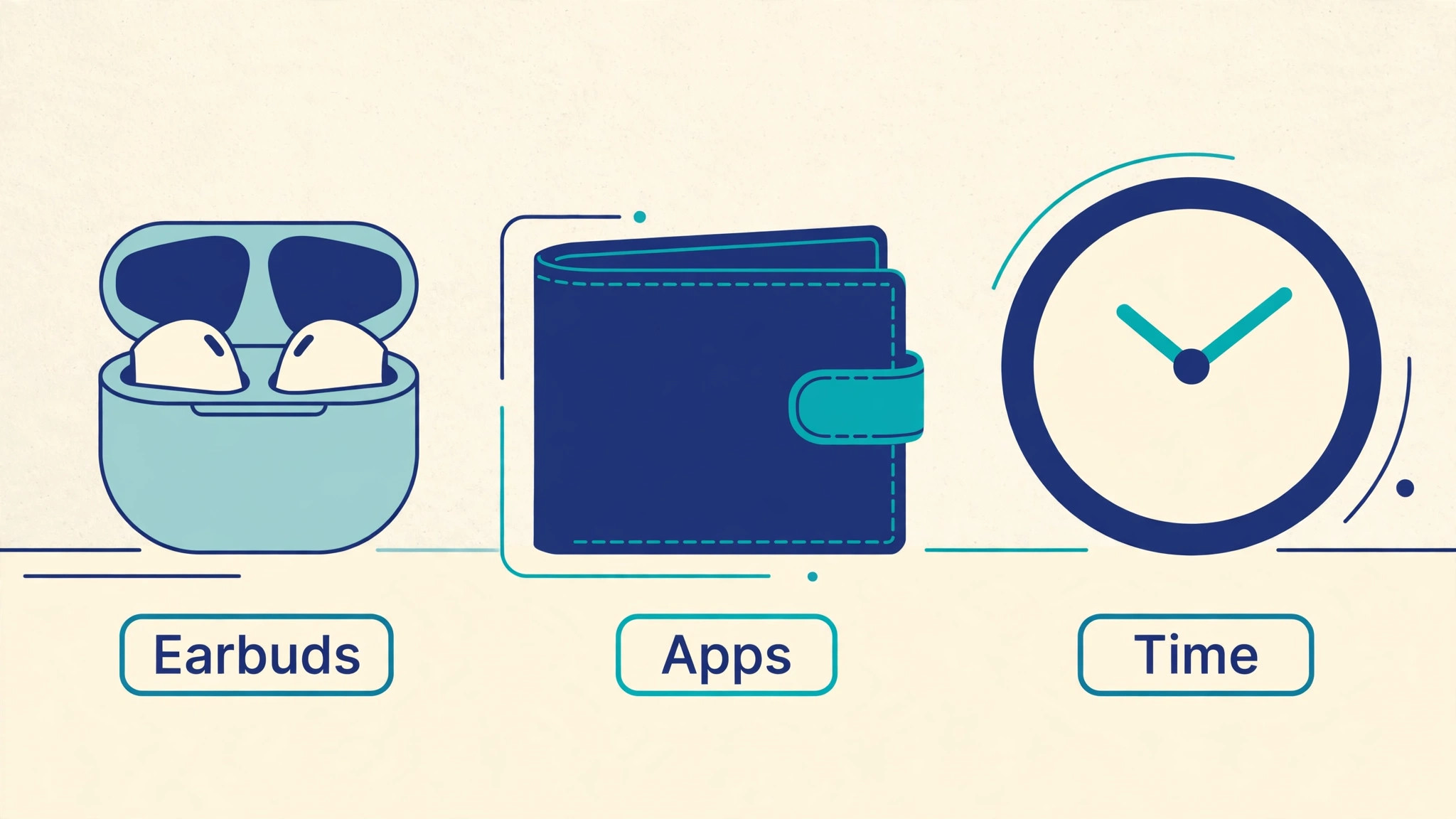
Budget for language practice in earbuds, apps, and time, with earbuds as the main purchase. Wireless earbud prices range from budget models suitable for speech to premium models with advanced noise cancelling, so prioritise fit, speech clarity, and battery life for daily practice over premium features that matter less for study. Many listening sources, such as public radio, learner podcasts, and free audiobooks, cost nothing, while some courses and apps add subscription costs that should be judged by actual use, not by feature lists. Confirm current earbud prices on official brand pages before buying.
Time budgeting should protect a daily listening slot of twenty to thirty minutes, tied to an existing activity such as walking or commuting, rather than requiring additional free time. That habit, maintained daily, will produce more listening hours in a month than occasional long study sessions, and it will fit into a busy life without competing with work or study. Track listening time simply, such as minutes per day in a note or app, so progress is visible and the habit can be maintained honestly.
Template and Checklist
Run this checklist after setup and again monthly. When you use wireless earbuds for language practice, the checklist is the gate that confirms practice is daily, varied, and progressing, rather than occasional listening that feels productive but teaches little.
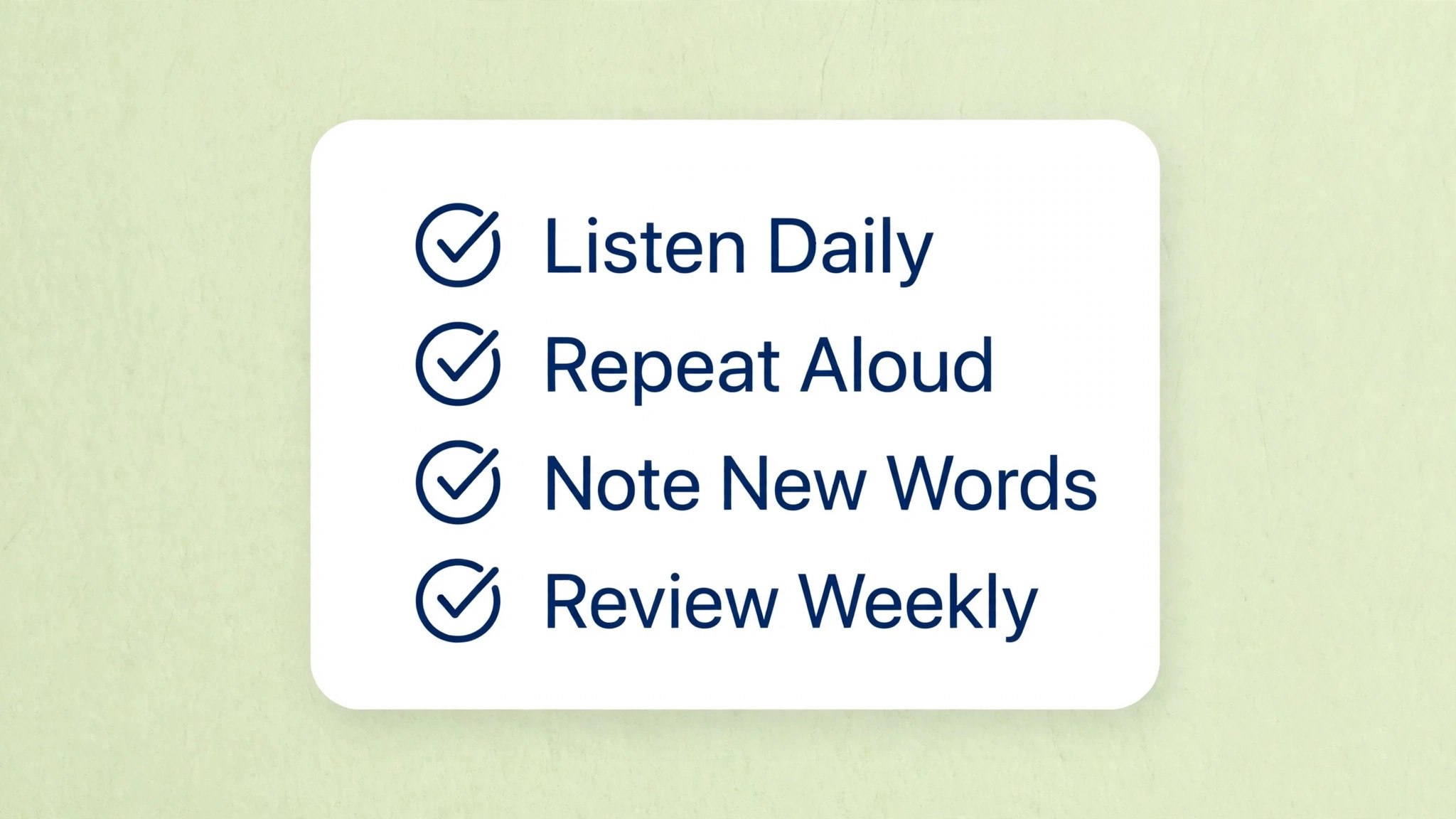
- Earbuds fit comfortably for thirty minutes and reproduce speech clearly.
- A listening source list exists, organised by level and topic, ready to play.
- A daily listening time is fixed, tied to an existing activity such as walking.
- Shadowing is practised in short bursts, with rhythm and intonation mimicked.
- Vocabulary is collected from heard material, with example sentences noted.
- Transcripts are used after listening to check, not during first listens.
- Speaking practice uses listening material as prompts, summaries, or retellings.
- A weekly conversation or tutor session uses recent listening topics where possible.
- Progress is reviewed weekly, with source difficulty adjusted accordingly.
- Battery and charging routine keeps earbuds ready for daily practice.
- A vocabulary review system exists, with spaced review for new words.
- A monthly routine review is scheduled, to adjust sources and timing.
Keep the completed checklist with your source list and vocabulary system, so a break in practice can be restarted quickly without rebuilding the setup. When practice lapses, the checklist shows exactly what to resume, starting with easy sources and short sessions, rather than restarting from scratch with hard material that frustrates. A documented routine survives breaks, while an undocumented routine must be reinvented after every interruption.
Mistakes to Avoid
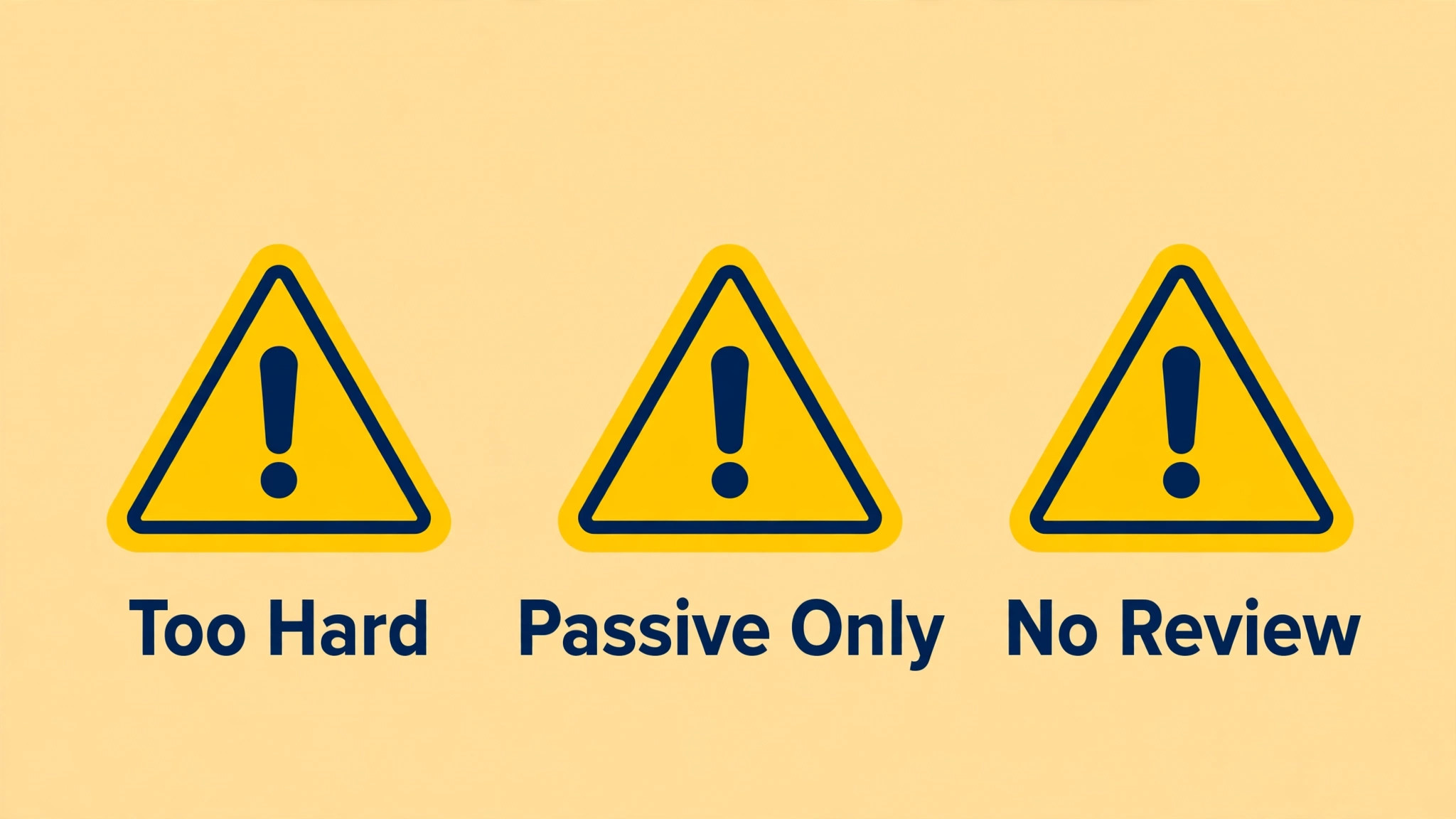
Language practice with earbuds fails in predictable ways, usually because listening is passive or too difficult. When you use wireless earbuds for language practice, watch for these five mistakes, because each one wastes listening time while feeling like study.
- **Listening passively all the time.** Passive listening alone, without noting vocabulary, shadowing, or checking understanding, improves familiarity slowly but builds little usable skill. Mix passive listening for rhythm with active listening for vocabulary and comprehension, and add shadowing and speaking practice regularly. Active practice turns heard language into learned language, while passive listening alone often stays as background noise.
- **Choosing material that is too hard.** Material that is mostly incomprehensible frustrates learners and teaches little, because the ear cannot extract patterns from noise. Choose material where most words are understandable, with some challenge, and use transcripts to bridge gaps. Gradually increase difficulty as comprehension improves, rather than jumping to native speed material too early.
- **Relying on subtitles constantly.** Constant subtitle use trains reading, not listening, because the eye provides understanding that the ear never learns to achieve alone. Listen first without text, check with transcripts afterwards, then listen again without text. That sequence trains the ear, while subtitle first listening trains only the eye.
- **Collecting vocabulary without review.** Noting new words without reviewing them wastes the effort of listening, because unreviewed words fade within days. Review new vocabulary the same day, then after a few days, using flashcards or a notebook with example sentences from heard material. Vocabulary that is reviewed becomes usable, while vocabulary that is only noted is soon forgotten.
- **Practising irregularly in long bursts.** Long, infrequent practice sessions feel productive but build less durable listening skill than short, daily sessions, because the ear needs regular exposure to retain patterns. Protect a daily twenty to thirty minute slot, tied to an existing activity, rather than waiting for free afternoons that rarely arrive. Daily habit beats occasional intensity for language learning.
If progress stalls, check source difficulty and active practice first, before buying new earbuds or apps. Most stalls come from material that is too easy, too hard, or listened to passively, rather than from equipment. Adjust difficulty, add shadowing and speaking practice, and review vocabulary more consistently, and progress usually resumes within a few weeks. Equipment upgrades help only after the routine itself is sound.
A Worked Example
A learner who walks to work each morning can build the whole routine around that walk without finding extra free time. Before the first week, a listening source list is prepared by level and topic, with a learner podcast and a slow news source for clear speech, a graded story for longer listening, and one slightly challenging native conversation for stretching comprehension, all filed in a playlist or app folder so each session starts in seconds. Earbuds are chosen for a comfortable fit over at least thirty minutes and for speech clarity tested with a news clip in the target language, not with music alone, because music tuning can hide muffled highs that matter for speech.
On the first walk, twenty to thirty minutes of listening is split deliberately, with part of the session spent listening actively, noting unfamiliar words and phrases, and the remainder spent listening passively, letting rhythm and intonation sink in without trying to understand every word.
Midway through the walk, shadowing takes over for a short burst. A phrase of five to ten seconds is repeated immediately after the speaker, mimicking rhythm, stress and intonation rather than translating word by word, and after five to ten minutes the learner stops shadowing and returns to listening, because short bursts sustain pronunciation practice better than a long, tiring stretch. At the end of the walk, unfamiliar words are noted with the sentence each one appeared in, ready for review the same day in a flashcard app or notebook, and the transcript is opened only afterwards, to check the sections that were unclear, before listening to those sections again without text.
One short clip is then summarised aloud, retelling its main points in the learner’s own words, which turns comprehension into speaking practice without needing a partner. At the end of the week, a test clip at the same level is played, listening time and new vocabulary are counted, and shadowing comfort is noted honestly. If the test clip feels easy, the challenging source moves up a level, while one easy source stays for confidence, and if the walk itself was the problem, the listening time moves to a different daily activity rather than being abandoned.
A routine that survives a real week, with its walking route, its battery routine and its vocabulary notes all included, is a routine that can survive for months.

Advanced Tips Worth Trying
Once daily listening is steady, progress speeds up when the source list is managed as carefully as the listening itself. Sources can be rotated by voice and accent across the week, so the ear meets different speakers, different topics and different speeds rather than growing comfortable with a single podcast voice that flatters comprehension. A weekly mix that keeps most time on material that is challenging but understandable, some time on easy material for confidence, and a small amount on native material for exposure, prevents both boredom and frustration, and the mix can be adjusted monthly as the test clip shows improvement.
Keeping one easy source permanently in the list matters, because it gives the learner a place to restart after a break without facing hard material on the first day back, and a short, easy session after a lapse rebuilds the habit faster than a long, difficult one.
Vocabulary work can be deepened by reviewing new words the same day and again after a few days, using the example sentence from heard material rather than an isolated word, and by carrying difficult words into the weekly speaking practice, whether that is a summary, a retelling or a conversation with a tutor or exchange partner on topics from recent listening. Recording oneself shadowing occasionally, and comparing that recording with the original, reveals pronunciation habits that silent listening never exposes, such as stress placed on the wrong syllable or a rhythm that rushes through unstressed words.
Battery and charging deserve a place in the routine too, with earbuds charged as part of an existing evening habit, so a dead battery never becomes the reason a morning walk passes in silence. A learner who rotates voices, protects an easy source, reviews vocabulary on a spaced pattern, records shadowing now and then, and keeps earbuds charged will find that the same twenty to thirty minutes each day yields more new words, clearer pronunciation and steadier comprehension than a larger but unmanaged listening habit.
How to Measure Success
Language progress with earbuds can be tracked through listening time, vocabulary, shadowing and comprehension, and each measure should come from the practice itself rather than from a general feeling of improvement. Listening time can be recorded each day as minutes listened, taken from the app or from a simple note, and totalled each week, so a falling total on particular days points to a timing problem, such as a walk that was skipped, rather than to a lack of motivation.
Vocabulary can be measured with two counts, the number of new words and phrases collected from heard material in the week, and the number of those words that were reviewed the same day and again after a few days, with the second count divided by the first giving a review rate that shows whether collecting is turning into learning or merely into notes. Shadowing can be recorded as a short self note after each session, describing whether five to ten second phrases could be repeated with matching rhythm and intonation, and whether the session lasted the intended five to ten minutes without strain.
Comprehension can be tested with a fresh clip at the learner’s level each week, played first without text, then checked against the transcript afterwards, with the learner writing the main points heard before looking at the text and counting how many of those points match the transcript. Review listening minutes, vocabulary review rate, shadowing notes and test clip counts together each week, and change only one element at a time, such as source difficulty, listening time or the balance between active and passive listening, so any change in comprehension or vocabulary can be linked to that adjustment.
Measures that are counted weekly, from the listening itself, will show whether the ear is genuinely learning or whether practice has drifted into comfortable background sound.
Review and Next Steps
The weekly review should open the practice note and read it as a record, not as a diary of good intentions. Start with listening minutes for the week, and look for the days where the total fell, because a pattern, such as a missed walk on the same weekday each week, usually points to a timing problem that can be fixed by moving the listening slot to a different daily activity, rather than to a failure of discipline.
Next, count new vocabulary collected against vocabulary reviewed, because a week with many collected words and few reviews is a week where listening effort is leaking away, and the fix is a shorter collection habit with same day review rather than a longer listening session. Then check the shadowing note, asking whether five to ten second phrases could be repeated with matching rhythm and intonation, and whether the intended five to ten minutes was actually completed, because shadowing that was skipped for several days will show up in pronunciation before it shows up anywhere else.
Finally, play the weekly test clip, write its main points before checking the transcript, and compare the result with the previous week, so source difficulty can be adjusted on evidence.
If the test clip is now understood fully, the next step is to move the challenging source up a level while keeping one easy source for confidence and enjoyment, because a routine that stays at one level will feel comfortable long after it has stopped teaching. The monthly review widens the lens beyond the week, covering earbud comfort over thirty minutes, the balance of voices and accents in the source list, the battery and charging routine, and whether a weekly conversation partner or tutor session is actually using topics from recent listening, because a tutor session that ignores recent listening wastes the best discussion material the learner already has.
When you use wireless earbuds for language practice on a regular review cycle, that monthly note becomes a map of the learner’s ear, showing which voices are now easy, which topics still resist, and which vocabulary keeps returning for review.
After a break, the restart should be deliberately gentle, beginning with the easy source, a short session, and vocabulary that was already collected, rather than with hard native material that punishes the return. The next step for a learner whose test clips, vocabulary review rate and shadowing notes are all improving is to add a speaking task that uses listening directly, such as summarising a longer clip aloud, retelling a story in the learner’s own words, or preparing three discussion points from a news item for a tutor session, because speaking from listening is the step that turns passive understanding into usable language.
A practice that is reviewed weekly, adjusted monthly, restarted gently after breaks, and extended into speaking as comprehension grows will keep moving for the months that language learning actually requires, and it will do so on the same twenty to thirty minutes a day that started it, sustained by a routine that fits real life rather than by enthusiasm that fades after the first week.
For related reading on Stratilyze, the guide to language vocabulary with Anki shows flashcard review for words collected from listening, and the guide to wireless earbuds for work calls covers earbud setup for calls. Read the Anki guide first if vocabulary review needs a system, because heard words become usable faster with spaced review, and the method here for use wireless earbuds for language practice pairs well with that review routine.
Frequently Asked Questions
How much listening practice do I need daily?
Twenty to thirty minutes daily, tied to an existing activity such as walking or commuting, is a realistic and effective target for most learners. Daily practice builds listening skill far better than occasional long sessions, because regular exposure helps the ear retain patterns. Increase time gradually as the habit strengthens, rather than starting with an unsustainable long session.
Should I use subtitles when practising listening?
Use subtitles or transcripts after listening to check understanding, not during the first listen, so the ear is trained before the eye confirms. Read transcripts for unclear sections, note new vocabulary, then listen again without text. Constant subtitle use trains reading rather than listening, and should be avoided as a primary method.
What is shadowing and does it help?
Shadowing is repeating what you hear immediately afterwards, mimicking rhythm, stress, and intonation, in short bursts of five to ten seconds. It helps both listening and speaking, because producing sounds trains the ear to recognise them, and it improves pronunciation and fluency. Practise shadowing for five to ten minutes per session, starting with slow, clear material.
Which earbuds are best for language practice?
Choose earbuds that fit comfortably for thirty minutes, reproduce speech clearly, and hold a stable connection during movement, prioritising those qualities over bass or premium noise cancelling. Test speech clarity with a news clip or podcast in your target language before buying, because music tuning can hide speech problems. Comfort and clarity matter more than brand or price alone.
How do I build vocabulary from listening?
Note unfamiliar words with the sentence they appeared in, review them the same day and again after a few days, using flashcards or a notebook. Words learned in context from real speech are easier to recall and use correctly than isolated word lists. Review consistently, because noted words without review fade quickly.
How do I use wireless earbuds for language practice for a language with few learner resources?
Use native material at a slower pace where available, such as news, children’s stories, or simple conversations, and supplement with transcripts, dictionaries, and tutor support. Break native material into short clips for shadowing and vocabulary work, rather than listening to long, incomprehensible passages. A small amount of well studied native material teaches more than hours of passive exposure to material far above your level.
Small Daily Practice That Adds Up
Language listening improves through daily, active practice, with comfortable earbuds, a ready source list, shadowing in short bursts, vocabulary collected from heard material, and weekly review of progress. Listen first without text, check with transcripts afterwards, and speak from what you hear, so comprehension becomes production. When you use wireless earbuds for language practice in that disciplined way, twenty minutes a day, sustained for months, will transform understanding of real speech far more than occasional intensive study ever could.