
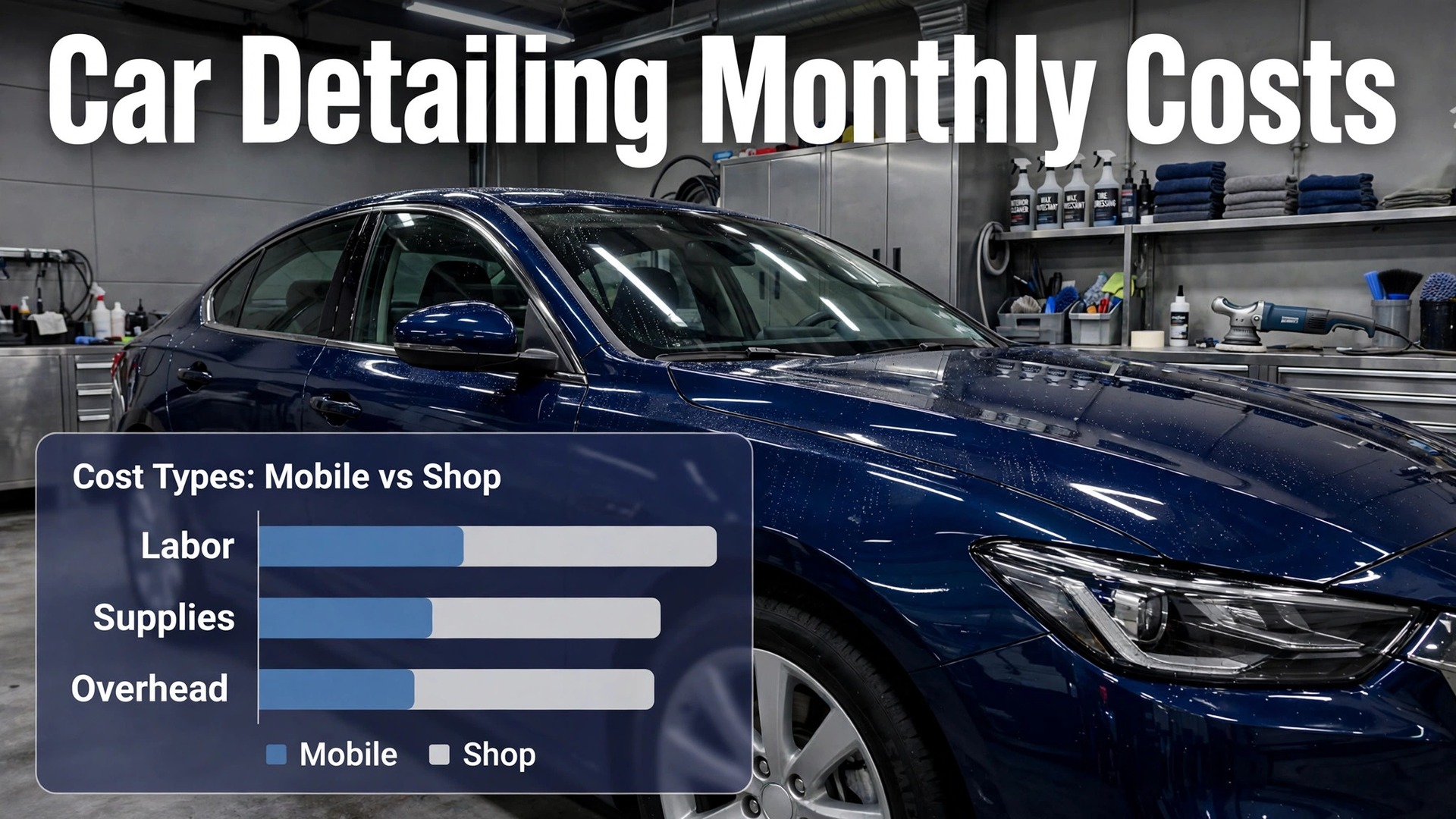
A mobile detailer working from a car and a shop detailer paying rent for bays can both charge 150 dollars for a detail, yet keep very different amounts at month end. The difference is not skill or effort. It is the cost of running a car detailing business monthly that sits behind each job. A mobile operator may spend 440 dollars to 1,525 dollars a month, while a shop operator may spend 1,950 dollars to 7,700 dollars a month, according to a published monthly table for detailing businesses. That gap explains why pricing, service menus and growth plans must fit the model you actually run, not the model you admire online.
The cost of running a car detailing business monthly is therefore a comparison first and a budget second. Compare mobile and shop costs honestly, price each job from its real supply and time cost, and build a first month budget that survives slow bookings.
What the cost of running a car detailing business monthly Looks Like in Practice
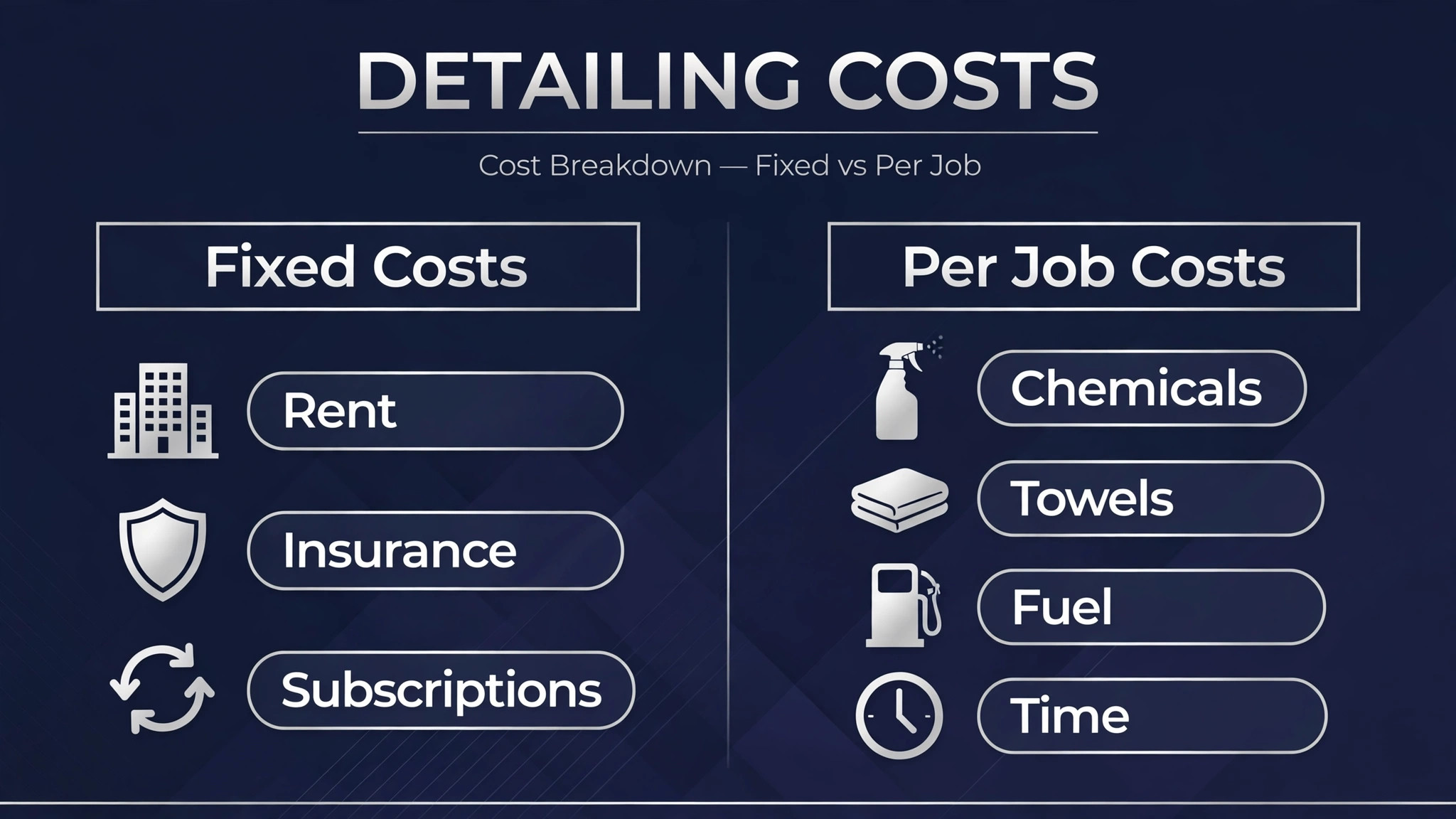
Monthly costs fall into fixed lines and job linked lines. Fixed lines include rent for a shop, insurance, software, phone, loan payments and a base marketing budget. They are due whether you detail two cars or twenty cars in a week. Job linked lines include chemicals, towels, water, fuel for a mobile operator, and wear on pads, brushes and vacuum filters. They rise with bookings, which is good, because revenue rises too, but they still need to be tracked per job.
A detailer who only watches the bank balance will miss the slow rise in chemical cost per car, the extra fuel cost of distant jobs, or the marketing spend that brings bookings that are too far away to be profitable.
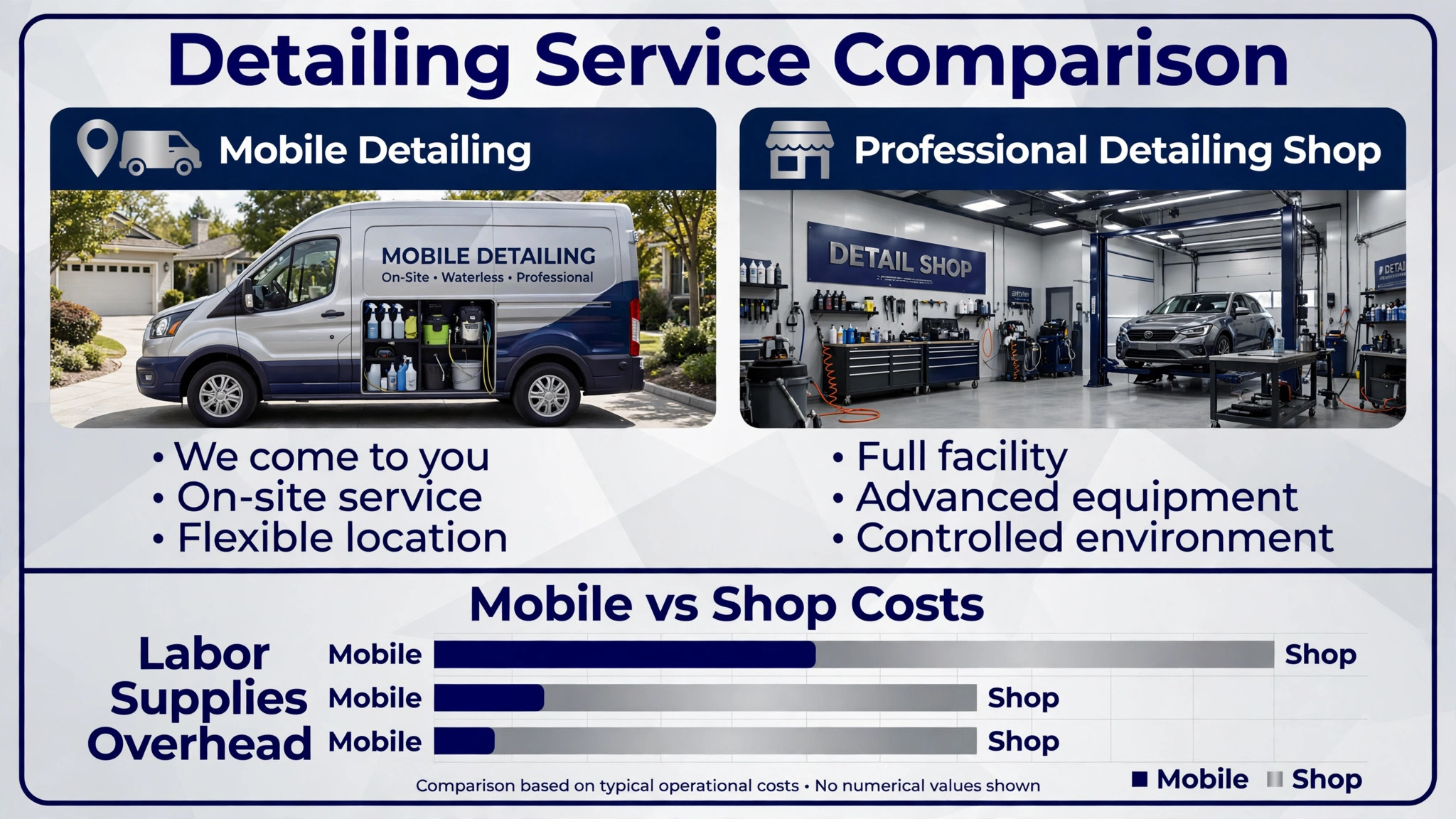
Mobile detailing is the lower cost start for most beginners. Startup costs range from 2,000 dollars to 10,000 dollars when you already own a reliable vehicle, and from 1,500 dollars to 3,000 dollars for a basic part time setup, according to published startup guides. Monthly overhead for a mobile operator often stays around 500 dollars, covering supplies, fuel, insurance and software, before loan payments and owner pay. A shop, by contrast, needs 15,000 dollars to 55,000 dollars or more to start, and monthly rent alone can run 1,000 dollars to 5,000 dollars, plus utilities of 200 dollars to 600 dollars.
A shop can handle more cars per day, offer services that need fixed equipment, and look more established to fleet clients, but it must fill bays consistently to cover that rent. A mobile operator can survive a slow week more easily, but must manage driving time, weather, water access and power access at each client site.
Break even maths makes the comparison concrete. With monthly expenses around 800 dollars to 1,200 dollars, a mobile detailer needs about 15 to 20 details a month at 150 dollars per service to break even, before owner pay, according to a published break even example. A shop with 3,000 dollars in monthly fixed costs needs twice as many jobs at the same price, or higher prices, or add on services such as ceramic coating and paint correction. That is why shop owners often focus on packages, memberships and fleet contracts, while mobile owners often focus on repeat local clients and efficient routing. Neither approach is wrong.
The mistake is copying a shop price list into a mobile business, or a mobile schedule into a shop, without adjusting for the cost base underneath.
Fixed Monthly Costs Compared
The table below compares a solo mobile operator with a small shop. Use it as a planning range, and replace each line with local quotes for rent, insurance and utilities as soon as you can.
| Fixed and regular monthly cost | Mobile operator | Small shop | What to check |
|---|---|---|---|
| Rent or lease | 0 dollars | 1000 dollars to 5000 dollars | Lease length, utilities included, bay count |
| Utilities | 0 dollars to 50 dollars | 200 dollars to 600 dollars | Water, power, heating, drainage |
| Insurance monthly share | 40 dollars to 125 dollars | 150 dollars to 400 dollars | Liability, garage keeper cover, vehicle cover |
| Software and booking | 0 dollars to 100 dollars | 50 dollars to 200 dollars | Scheduling, payments, customer records |
| Marketing and ads | 50 dollars to 300 dollars | 200 dollars to 500 dollars | Local search, referrals, fleet outreach |
| Vehicle maintenance share | 50 dollars to 150 dollars | 0 dollars to 50 dollars | Tires, servicing, van or trailer upkeep |
| Phone and internet | 30 dollars to 80 dollars | 50 dollars to 120 dollars | Booking calls, photos, payment terminal |
| Loan or equipment reserve | 50 dollars to 200 dollars | 200 dollars to 800 dollars | Polisher, extractor, pressure washer replacement |
| Total regular monthly | 220 dollars to 1005 dollars | 1850 dollars to 7670 dollars | Excludes supplies, fuel and owner pay |
Insurance deserves attention because it protects both the business and the client cars in your care. General liability cover and garage keeper cover are commonly discussed for detailing, with monthly insurance for a mobile operator often in the 40 dollar to 125 dollar range and for a shop in the 150 dollar to 400 dollar range in published tables. Another source puts business liability and garage keeper insurance at 150 dollars to 400 dollars a month for a shop based operation. Check what is covered when a car is in your possession, when you drive a client car, and when a chemical damages paint or trim.
A cheaper policy that excludes the main risk of the job is not a saving. Ask for the exclusions in writing, and keep the certificate where clients and landlords can see it if asked.
Software costs look small, but they affect bookings and no shows. A booking system with reminders, deposits for long jobs, and a simple customer record can reduce wasted travel and empty slots. For a mobile operator, a missed appointment is not just lost revenue. It is fuel, driving time and a slot that could have gone to another client. A deposit policy for ceramic coating, paint correction or full day jobs protects against that loss, while a friendly reminder the day before protects against simple forgetfulness. Choose software that clients can use on a phone, because most detailing bookings now start on a phone, not on a desktop computer.
Per Job Costs That Decide Your Price
Per job costs are smaller than rent, but they decide whether a price is profitable. Chemicals for a standard interior and exterior detail, including wash soap, all purpose cleaner, degreaser, glass cleaner, dressing and wax or sealant, commonly fall in the range of 10 dollars to 25 dollars per car for a mobile operator using professional concentrates correctly diluted. Add microfiber towels, which must be washed and replaced, pads and brushes that wear, vacuum bags or filters, and water cost where applicable, and a realistic consumable cost per standard job is often 15 dollars to 35 dollars.
Paint correction and ceramic coating jobs cost far more in product, pads and time, and must be priced as separate services, not as an extension of a standard detail at a small add on price.
Time is the other per job cost, and it is often undervalued. A maintenance wash may take one hour, a full interior and exterior detail may take three to four hours, and a paint correction with coating may take a full day or more. If you charge 150 dollars for a four hour detail, the gross revenue per hour is 37 dollars and 50 cents before chemicals, fuel, insurance share, travel and tax. If travel adds an hour, the rate falls to 30 dollars an hour before costs. That maths is why routing matters for mobile detailers.
Two jobs in the same neighborhood, booked back to back, can be far more profitable than two jobs at opposite ends of a city, even at the same price per car. Charge a travel fee for distant jobs, set a minimum service area, or group distant bookings on one day so travel is shared across several jobs.
Use the per job table below to price from evidence, not from habit. Track actual chemical use for ten jobs, divide total spend by jobs completed, and update the table with your own figures.
| Per job cost item | Standard detail | Full detail with protection | Paint correction and coating |
|---|---|---|---|
| Chemicals and consumables | 15 dollars to 35 dollars | 25 dollars to 60 dollars | 80 dollars to 250 dollars |
| Towels, pads and wear | 3 dollars to 8 dollars | 5 dollars to 15 dollars | 20 dollars to 60 dollars |
| Fuel and travel for mobile | 5 dollars to 20 dollars | 5 dollars to 20 dollars | 10 dollars to 30 dollars |
| Water and power share | 2 dollars to 8 dollars | 2 dollars to 10 dollars | 5 dollars to 15 dollars |
| Payment fees at 3 percent | 4 dollars to 8 dollars | 6 dollars to 12 dollars | 15 dollars to 40 dollars |
| Total direct cost per job | 29 dollars to 79 dollars | 43 dollars to 117 dollars | 130 dollars to 395 dollars |
A standard detail priced at 150 dollars, with direct costs of 50 dollars, leaves 100 dollars toward fixed monthly costs, tax and owner pay before travel time is counted. A coating job priced at 800 dollars, with direct costs of 250 dollars, leaves 550 dollars toward fixed costs, but may take a full day and carry higher risk if the result is not perfect. Both can be profitable. The danger is a service that takes a full day, costs 200 dollars in product, and is priced at 300 dollars because a competitor charges that amount.
Always calculate direct cost, time, fixed cost share and a margin for rework before you publish a price, and revisit prices when chemical or fuel prices rise.
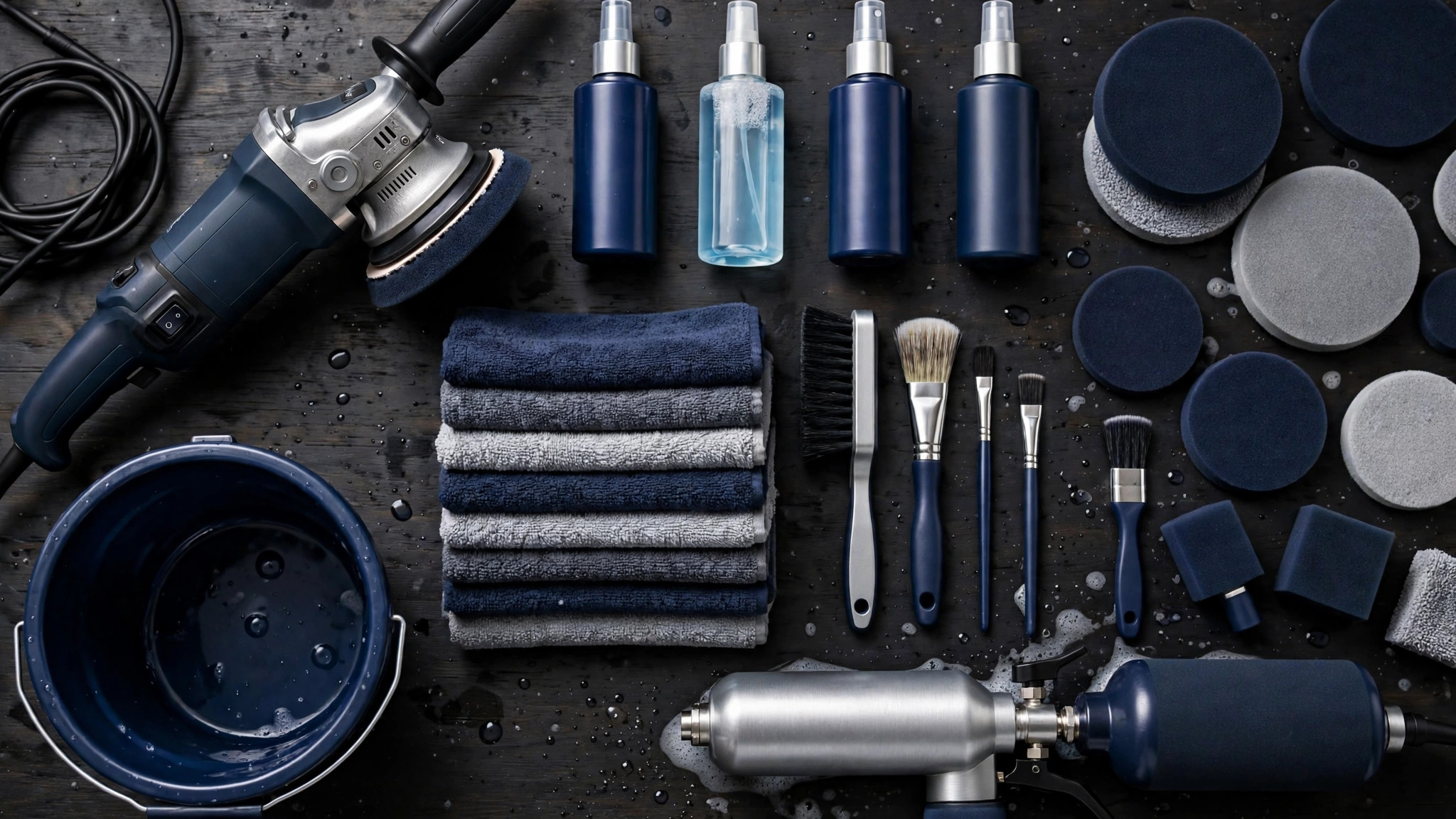
Do not overbuy chemicals in the early months. New detailers often buy every product they see recommended online, before knowing which services clients actually request. Start with a core kit that covers wash, interior cleaning, glass, dressing, a sealant and a basic polish, plus towels and brushes. Add specialty products only when a paying client requests that service, or when you have trained for it and priced it. Record usage, note expiry dates, and store chemicals safely away from heat and client areas. A shelf full of half used bottles is cash that could have paid for marketing, insurance or a better polisher.
A First Month Budget You Can Actually Follow
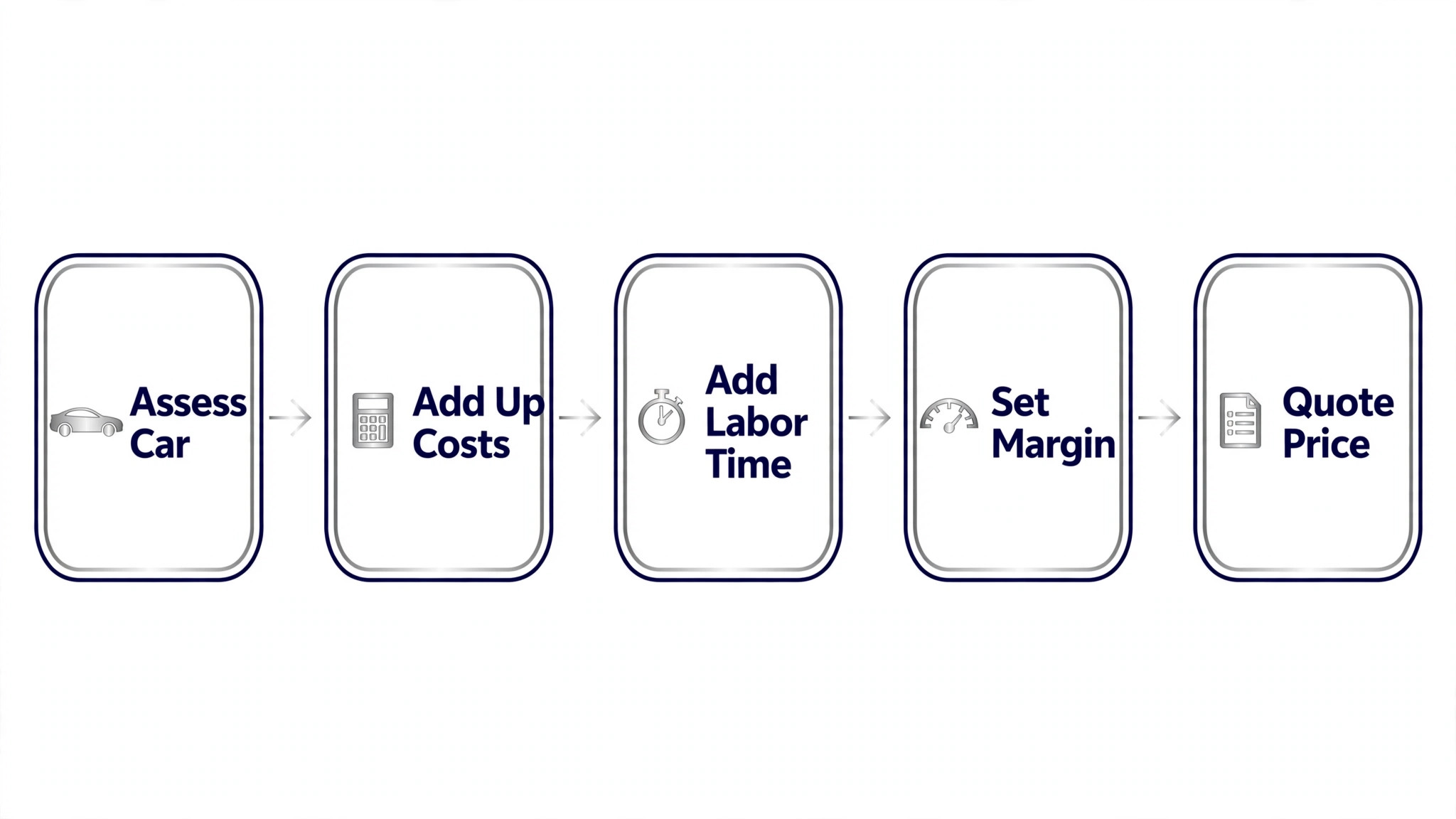
A first month budget should include startup items you still need, one month of fixed costs, stock for expected jobs, and a buffer for slow bookings. The example below assumes a solo mobile operator with an existing vehicle, aiming for 20 standard details in the first month at an average of 150 dollars each, for 3,000 dollars in revenue. Adjust the job count and price to your area, and keep the structure even if the numbers change.
| First month budget item | Planning figure | Notes |
|---|---|---|
| Pressure washer, vacuum, polisher balance | 300 dollars to 800 dollars | If not already owned, spread over equipment life |
| Chemicals and towels top up | 300 dollars to 600 dollars | Core kit plus consumables for 20 jobs |
| Fuel for jobs and estimates | 200 dollars to 500 dollars | Depends on service area and routing |
| Insurance monthly share | 40 dollars to 125 dollars | Pay annually if a discount is offered |
| Booking software and phone | 30 dollars to 100 dollars | Reminders reduce no shows |
| Marketing for launch | 100 dollars to 300 dollars | Local search, flyers, referral offer |
| Vehicle maintenance reserve | 50 dollars to 150 dollars | Tires, servicing, cleaning |
| Contingency for slow weeks | 300 dollars to 500 dollars | Covers a quiet first two weeks |
| Total first month cash need | 1320 dollars to 3075 dollars | Excludes owner living costs |
The cost of running a car detailing business monthly in that first month is not the total above alone. It also includes the time spent on estimates, photos, messages and travel that are not billed separately. If you spend ten hours a week on admin and estimates, that is time that could have been spent on paid jobs, and it should be reduced as systems improve. Use templates for quotes, a standard photo checklist before and after each job, and a simple rebooking prompt at the end of every detail.
A client who books the next maintenance detail before you leave is cheaper to keep than a new client found through advertising, and repeat clients also reduce estimate time because you already know their car, their preferences and their location.
For a shop, the first month budget is larger because rent, utilities and a larger stock order come due before bookings are proven. Add a rent deposit and first month rent, a utilities deposit where required, and a larger marketing budget to fill bays. Consider opening with limited hours or a limited service menu, then expanding hours when bookings justify it. A shop that opens seven days a week with a full team before demand is proven will burn cash quickly. A shop that opens five days a week, with a core menu and a clear booking system, can add hours and staff from evidence rather than hope.
Mobile or Shop, Which Model Fits Your Costs
Choose mobile if you want low fixed costs, flexible hours, and a business that can start with a vehicle you already own. Mobile suits suburban areas, repeat residential clients, office parks where you can detail several cars in one visit, and detailers who enjoy working outdoors and managing their own schedule. The trade offs are weather, water and power access, driving time, and the physical work of loading and unloading equipment for every job. A mobile detailer also needs a professional appearance at client homes, including clean equipment, tidy branding and a clear setup that does not damage driveways or lawns.
Clients judge a mobile service by how it looks on arrival, not just by how the car looks at the end.
Choose a shop if you want controlled lighting, shelter from weather, fixed water and power, room for paint correction and coating work, and a base that fleet clients and dealerships can visit. A shop suits detailers who plan to employ staff, handle multiple cars per day, or offer services that need a clean, controlled space. The trade offs are rent, utilities, longer hours to cover fixed costs, and the need for a steady flow of bookings. A shop also needs waiting space, a payment area, and a system for keys, vehicle checks and customer belongings. Those systems cost time to build, but they protect against disputes about damage, missing items or unfinished work.
A hybrid path works for many detailers. Start mobile, build a client list, learn which services sell and what prices the local market supports, and then move to a shop when bookings regularly exceed what one mobile operator can handle. That path avoids paying shop rent before demand is proven, and it gives you a client base to fill bays from day one in the shop. Another hybrid is a small unit used for coating and correction work, while routine details remain mobile. That keeps rent lower than a full retail shop, while giving controlled space for the highest value jobs.
Whichever path you choose, review the decision every six months against bookings, costs and health, because a model that was right at launch may not be right after a year of growth.
Pricing, Packages and Repeat Income
Packages help clients understand what they are buying, and help you predict revenue. A maintenance package for regular clients, a full detail package for occasional clients, and a protection package for clients who want coating or sealant give three clear choices without a long list of confusing add ons. Price each package from direct cost, time and fixed cost share, and make the difference between packages clear in time, products used and result expected. A maintenance wash that is priced too close to a full detail will cannibalize the higher value service. A protection package that is priced too low will attract coating work that loses money on product and time.
Repeat income is the most valuable line in a detailing business, because it reduces marketing cost and estimate time. Offer a rebooking discount only if it still leaves a healthy margin, and prefer a simple loyalty benefit such as a free interior refresh after a set number of paid details, rather than a permanent percentage discount. Send a polite reminder when a maintenance interval is due, share before and after photos with permission, and ask for a review after a job well done. Reviews on local search help new clients trust a mobile operator they have never met, and they cost nothing except a short request at the right moment.
Fleet and dealership work can fill quiet weekdays, but price it carefully. Fleet clients often want volume discounts, regular schedules and invoicing, which are all manageable, but they may also want lower prices than retail clients. Calculate the value of predictable weekday work, lower marketing cost and efficient routing, and set a fleet price that still covers direct cost, travel and a share of fixed costs. A fleet contract that fills your week at a loss is worse than a quiet week spent on marketing and training, because it leaves no time to find profitable retail work.
Put fleet terms in writing, including vehicle count, service level, payment terms and what happens when a vehicle is not available at the scheduled time.
Common Cost Traps for New Detailers
The first trap is underpricing to win work. A low price fills the diary, but it also sets an expectation that is hard to raise, and it leaves no margin for fuel increases, chemical price rises or a slow month. Raise prices in small steps, explain the service clearly, and let clients who only want the cheapest wash go elsewhere. The second trap is buying premium equipment before bookings justify it. A top end polisher, extractor and steam cleaner are useful, but they do not create clients. Start with reliable core equipment, and upgrade from profit, not from debt, when a service that needs the upgrade is already selling.
The third trap is ignoring vehicle and equipment maintenance. A pressure washer that fails on a job, a vacuum that loses suction, or a van that breaks down on the way to a client costs more in lost bookings and reputation than regular servicing ever will. Keep a maintenance log, replace worn pads and brushes before they damage paint, and hold a small equipment reserve each month. The fourth trap is working without a clear cancellation policy. A no show for a mobile job wastes travel and a full slot, so require a deposit for long jobs, send reminders, and charge a fair cancellation fee that clients see before they book.
Enforce it politely and consistently, because a policy that is never enforced trains clients to ignore it.
Seasonality is the final trap. Detailing demand often rises in spring and summer, dips in winter in colder areas, and changes with rain, pollen and road salt. Plan cash for slow months during strong months, rather than spending every surplus as it arrives. Use quiet periods for training, equipment maintenance, website and local search updates, and outreach to fleet clients who book year round. A business that plans for seasonality will survive a quiet winter. A business that assumes every month will match its best month will run short of cash at the worst time.
Keeping Monthly Costs Down Without Cutting Quality
The cheapest way to cut costs is to reduce waste, not quality. Dilute concentrates correctly, because using double the recommended product does not clean twice as well and doubles chemical cost. Wash and reuse microfiber towels properly, and retire towels that are worn before they scratch paint or leave lint. Group jobs by area, confirm bookings the day before, and keep a standard kit packed so setup time does not eat into paid work. A monthly review of the cost of running a car detailing business monthly will show whether fuel, chemicals or marketing caused a rise, and that clarity lets you fix the right line instead of cutting a service clients value.
Review supplier prices twice a year, but do not switch to a cheaper chemical that damages trim or leaves residue, because rework costs more than the saving. The cost of running a car detailing business monthly should improve as routing improves and repeat clients reduce marketing spend, and if it does not, check whether distant jobs, no shows or overstocking are the real cause. Keep a simple monthly sheet, compare it with the previous month, and act on one cost line at a time, because a cost of running a car detailing business monthly that is reviewed regularly stays under control, while one that is ignored tends to grow quietly until it threatens the business.
More Reading on Stratilyze
Detailing costs sit beside the other vehicle and service-pricing guides owners compare, so readers planning a detailing business usually check the neighbouring guides next. The guide to the best AI tools for car detailing businesses shows the software side of running the same trade, the guide to using AI for car wash booking management covers the booking workflow that fills the diary, and the guide to home cleaning service pricing packages explains the package pricing that keeps a mobile service profitable.
Frequently Asked Questions
How much does it cost to run a mobile detailing business each month
A solo mobile operator often spends 440 dollars to 1,525 dollars a month in published tables, covering supplies, fuel, insurance, software and marketing, before loan payments and owner pay. A cost of running a car detailing business monthly that includes your time will be higher, so track hours as well as cash.
Is a shop or mobile detailing cheaper to run
Mobile is usually cheaper, because it avoids shop rent and high utilities, but it adds fuel and travel time. A shop is more expensive each month, yet it can handle more cars per day and offer controlled space for coating work, so the right choice depends on booking volume and service mix.
How much should I charge for a standard detail
Prices commonly range from 75 dollars to over 250 dollars depending on service level, vehicle size and local market. Price from direct cost, time, travel and a share of fixed monthly costs, rather than copying a competitor price that may reflect a different cost base.
What is the biggest monthly cost for a detailing shop
Rent is usually the largest fixed cost, followed by payroll where staff are employed, then utilities, insurance and supplies. A shop must fill bays consistently, so packages, memberships and fleet work matter more than for a mobile operator.
How many details do I need each month to break even
With monthly expenses of 800 dollars to 1,200 dollars, about 15 to 20 details at 150 dollars each can cover costs before owner pay, according to published break even examples. Higher fixed costs, lower prices or longer travel times all raise the number of jobs needed.
Should I buy all my equipment before my first job
No. Start with a reliable core kit that covers wash, interior cleaning, glass, dressing and basic protection, and add specialty equipment when a paying service requires it. Overbuying before demand is proven ties up cash that could pay for marketing, insurance or a repair reserve.
A Budget That Fits the Business You Actually Run
Build your budget around your model, your service area and your real job count, not around an online example from another city. Track fixed costs, per job costs and hours every month, price packages from those numbers, and review the route or shop schedule before adding staff, space or equipment. The cost of running a car detailing business monthly is a tool, not a verdict. Used monthly, it shows which jobs earn money, which locations waste fuel, and which months need a cash buffer. The cost of running a car detailing business monthly also shows when growth is justified, because a shop, a second van or a new employee should follow proven bookings, not precede them.
Start lean, keep records simple, protect quality on every car, and let the numbers guide the next step, because the cost of running a car detailing business monthly, reviewed honestly, is what turns a busy diary into a business that can last.