
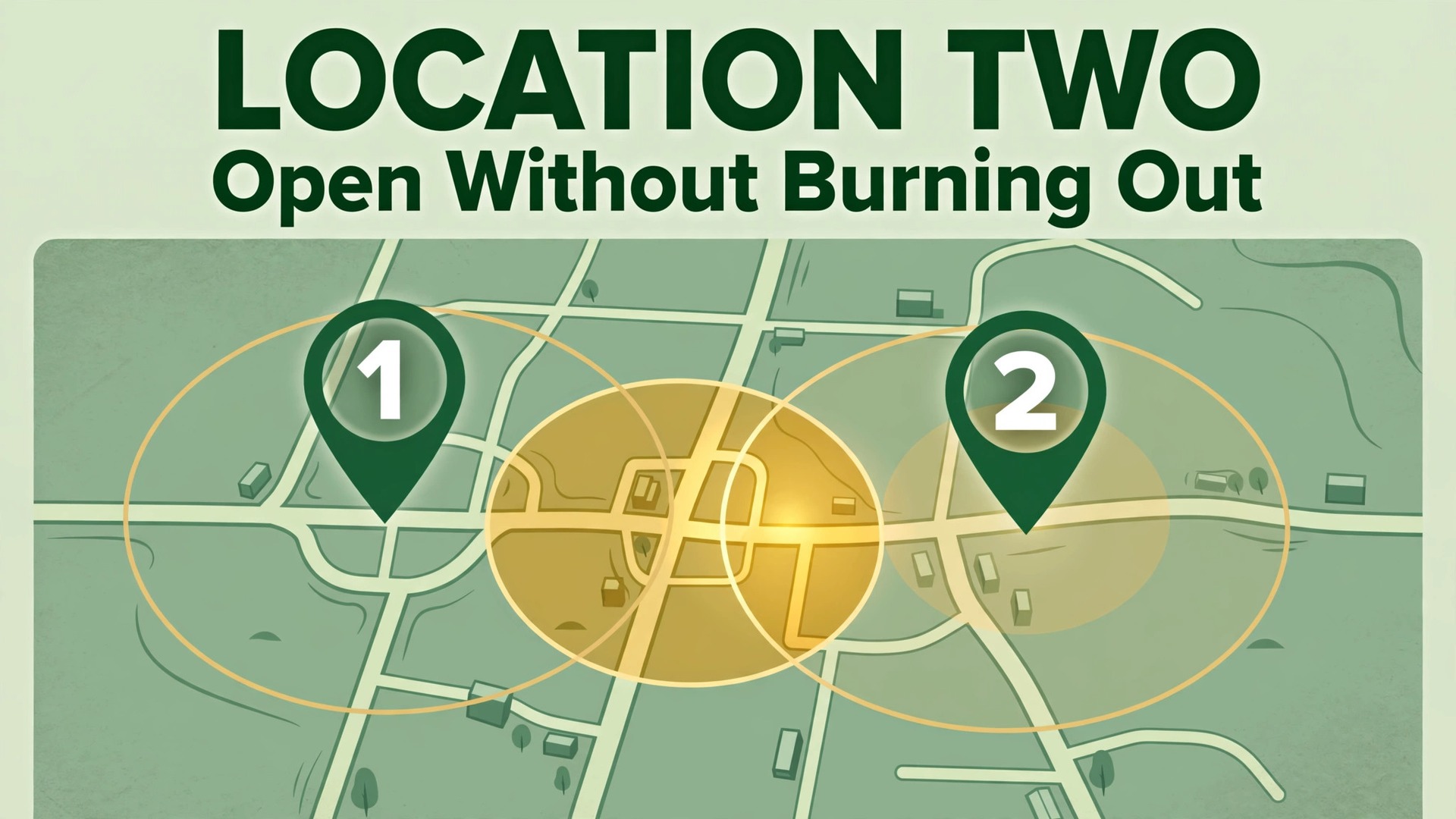
Your first location is turning customers away, the waitlist is growing, and a landlord in the next neighbourhood is offering a good unit. The problem is that a second location doubles your rent, your payroll, and your management load on day one, while revenue takes months to catch up. Many owners open that second site on the strength of a busy first site, then discover that the first site was busy because the owner was in it every day. This guide explains how to open a second location small business owners can sustain, starting with the readiness test that protects the first location while the second one ramps up.
A second location is not a reward for success. It is a new business that happens to share your brand, your systems, and your reputation. Treat it as a separate investment with its own budget, its own break even point, and its own manager, and you give it a fair chance. Treat it as an extension of the first site that will somehow run itself, and you put both locations at risk. The checklist and templates in this guide keep the decision disciplined, from location scoring and cash reserve tiers to staffing and the launch sequence.
Timing matters more than enthusiasm. The right time is when the first location is profitable for several consecutive quarters, when demand exceeds capacity in a measurable way, and when operations are documented well enough that a manager can run a site without you. If any of those three conditions is missing, the honest move is to fix the first location first, because a second site multiplies whatever the first site already is, including its weaknesses.
How to Open a Second Location Small Business Owners Can Run Without Burning Out
Start with a readiness test that uses numbers, not feelings. Your first location should be at or above break even for at least six to twelve consecutive months, with positive cash flow that survives a slow month. You should be able to show where customers come from, what an average order is worth, and how often customers return. You should have a manager or a lead who already runs the first site for days at a time without quality dropping. If you cannot step away from the first site for two weeks and return to stable trading, you are not ready to run two sites.
Next, test whether the demand is real and transferable. Turning customers away because the first site is full is a strong signal, but only if those customers live near the proposed second site or will travel to it. Survey the waitlist, check the postcodes on your customer records, and ask customers directly where a second site would help them. Demand that exists only around the first site does not justify a second site across town. Demand that clusters in a second neighbourhood, with limited direct competition there, is the signal worth funding.
Then confirm the money. Build a separate budget for the second site covering lease costs, build out, equipment, initial inventory, staffing, licences, insurance, professional fees, and grand opening marketing. Add a contingency buffer of 10 to 20 percent of the total project cost, since build out and permitting overruns are common. Fund the site from retained earnings, a loan, or a mix of both, but never fund it by starving the first site of working capital. The first site pays the bills while the second site learns to walk, so protecting it is part of the expansion plan.

Score the Location Before You Fall for the Unit
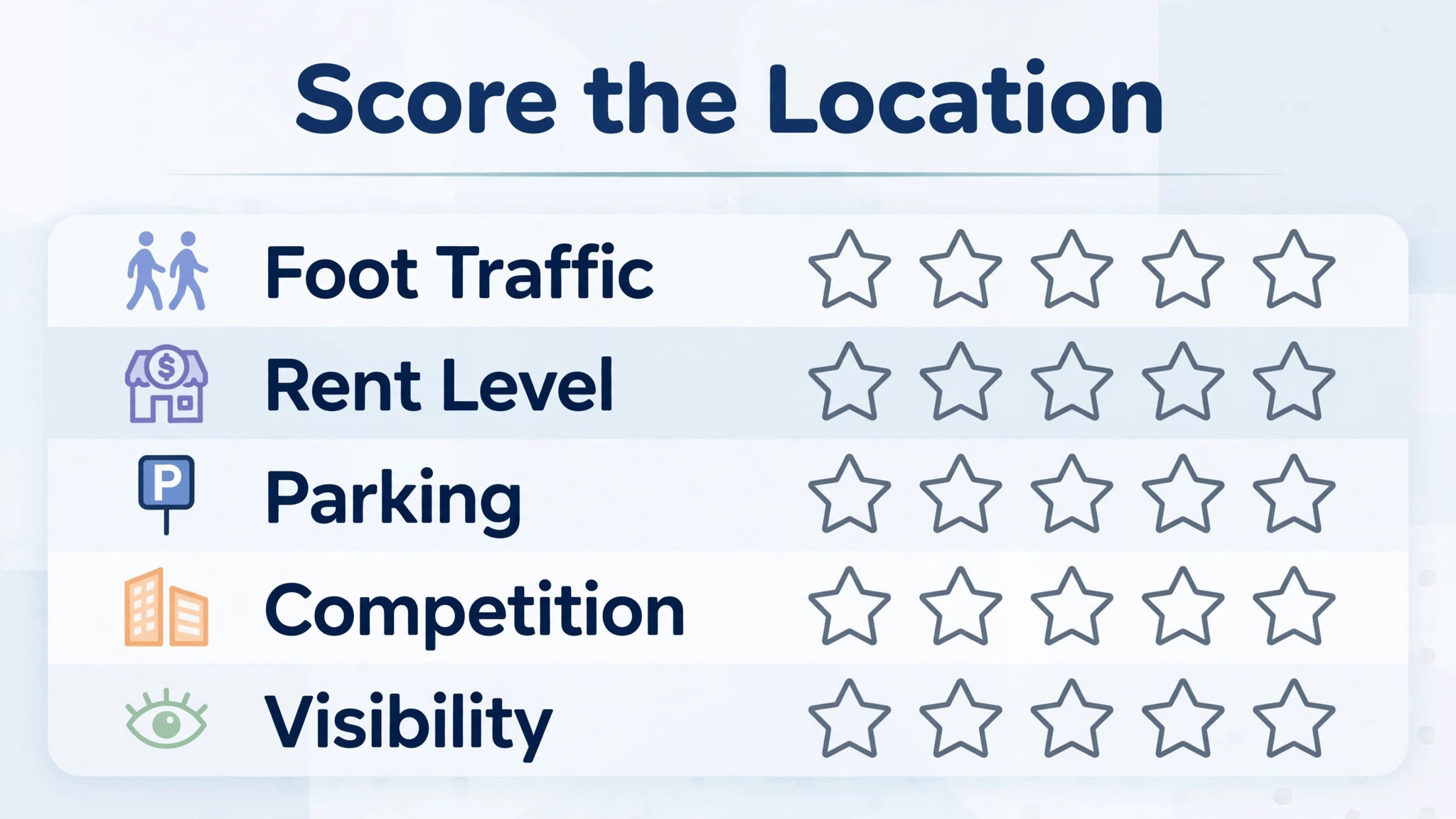
A good looking unit in the wrong place is still the wrong place. Score every candidate site on the same criteria, so a charming unit with poor parking does not beat a plain unit with strong foot traffic on charm alone. Build a simple scorecard with five factors, weight them by what matters in your trade, and score each site out of ten. The discipline of scoring prevents the most common location mistake, which is choosing the site you liked first and justifying it afterwards.
The five factors cover demand, access, competition, cost, and fit. Demand means drive time population, daytime workers, household income, and seasonality in the area. Access means visibility from the road, parking, public transport, and ease of entry for your customer type. Competition means density, pricing, and what you offer that local competitors do not. Cost means rent as a share of expected sales, lease length and break options, and build out requirements. Fit means zoning, permitted use, and whether the premises suit your layout, storage, and staffing needs.
| Scorecard factor | What to measure | Strong signal |
|---|---|---|
| Demand | Population, income, daytime workers in a 15 minute drive | Matches your current customer profile |
| Access | Visibility, parking, transport, entry ease | Customers can find and reach you easily |
| Competition | Competitor count, pricing, differentiation | Limited direct competition, clear edge |
| Cost | Rent share, lease terms, build out cost | Rent sustainable at forecast sales |
| Fit | Zoning, layout, storage, staffing pool | Premises suit the operation without major works |
Visit each shortlisted site at different times of day and on different days of the week. A street that looks busy at lunchtime on a Saturday may be quiet on a weekday morning when your core customers actually come. Talk to neighbouring businesses about foot traffic, parking problems, and seasonal patterns, since they know the street better than any listing. Check the local labour pool too, because a site you cannot staff reliably is a site you cannot open, however good the rent looks.
Negotiate the lease with the same care you gave to scoring. Seek a term that matches your ramp up expectations, with break options or renewal rights that protect you if trading is slower than forecast. Confirm permitted use, signage rights, and who pays for repairs, maintenance, and service charges. Ask a lawyer to review the lease before you sign, especially on assignment, subletting, and early exit, since those clauses decide your options if the second site underperforms. Lease discipline like this is a core part of how to open a second location small business owners can exit cleanly if the site does not work.
The Cannibalisation Check That Protects Location One
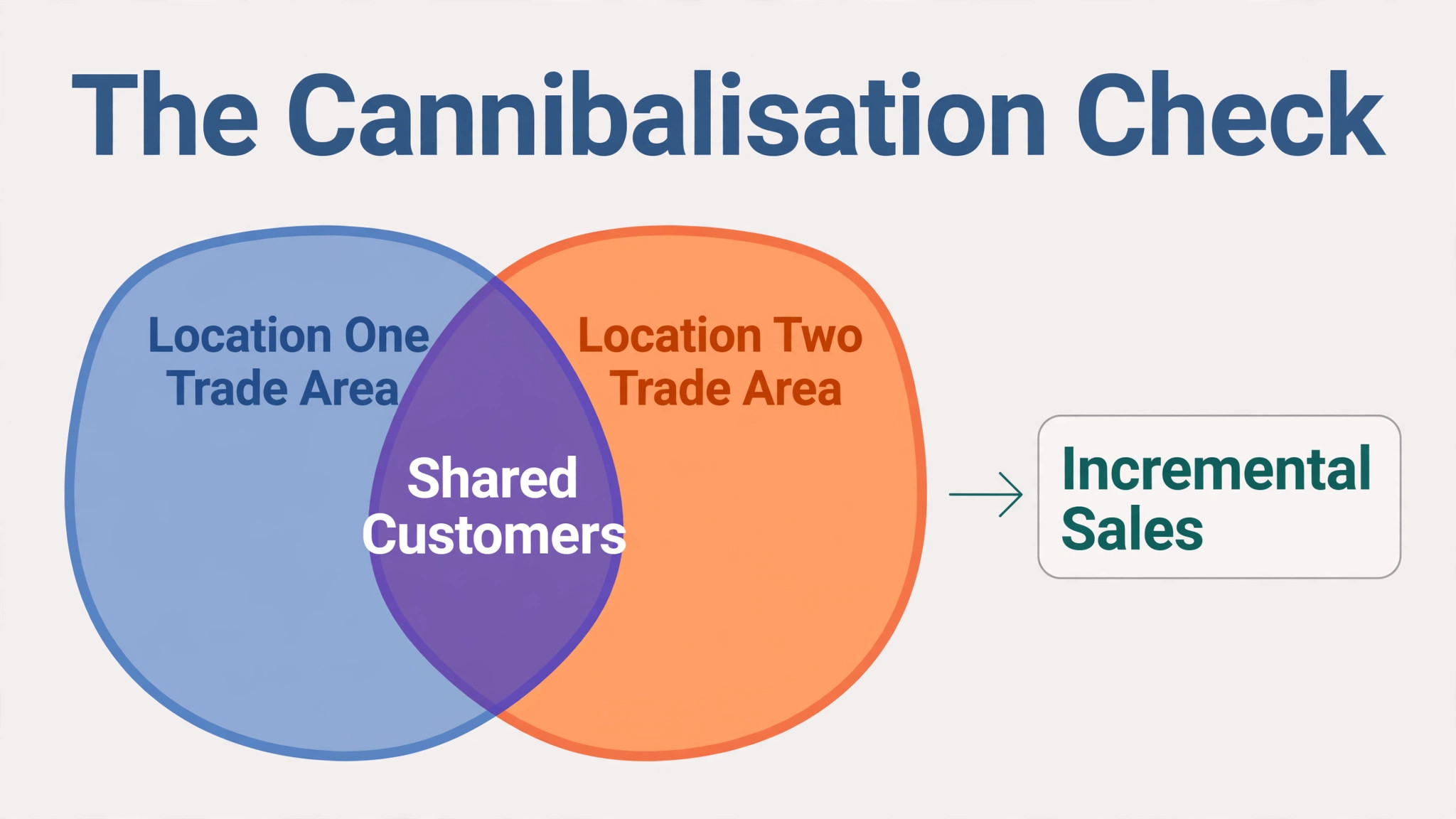
Cannibalisation is the quiet risk in any expansion, and it means the second site takes sales from the first site instead of creating new sales. That outcome doubles your costs while total revenue barely moves, which is the worst possible result. The check is simple in principle. Estimate how much of the second site forecast comes from customers who would otherwise have visited the first site, and how much comes from genuinely new customers. Aim for at least 70 percent incremental sales, meaning new revenue rather than shifted revenue, before you commit.
Map the trade areas to run the check properly. Draw the drive time catchment for the first site, draw the same for the proposed site, and measure the overlap. A large overlap warns that the same customers will simply choose the nearer site, splitting your existing base across two cost bases. A small overlap with a strong population in the new catchment suggests real incremental demand. Customer postcode data from the first site makes this exercise concrete rather than speculative, so use actual records instead of guesses about where customers live.
Consider the product and service mix as a second defence. If the two sites will offer identical services to the same customers, overlap risk is highest. If the second site can specialise, for example by offering a service line the first site does not, or by serving a different daypart or customer segment, the sites complement rather than compete. Some owners deliberately differentiate the second site, with a narrower menu, a different layout, or extended hours, so each site has its own reason to exist.
Set a monitoring rule before opening. Track sales at both sites weekly for the first six months, and compare total sales across both sites with the first site baseline from the previous year. If total sales grow by less than the second site cost base requires, while first site sales fall, you have a cannibalisation problem to address, not a marketing problem. Responses include differentiating the offer, adjusting hours, or targeting new customer segments around the second site, rather than discounting, which damages both sites at once. Monitoring in this way is how to open a second location small business owners protect the original site while growing, since the numbers reveal a problem months before the bank balance does.
Cash Reserve Tiers, Priced Before You Sign
Cash is where second location plans most often fail, because owners budget for opening costs and forget the ramp up period. A new site rarely trades at full strength in month one. Staff need training, customers need time to discover the site, and suppliers, rent, and payroll arrive on schedule whether sales do or not. The reserve must therefore cover both the one off opening costs and several months of operating shortfall, with a buffer for the surprises that always appear.
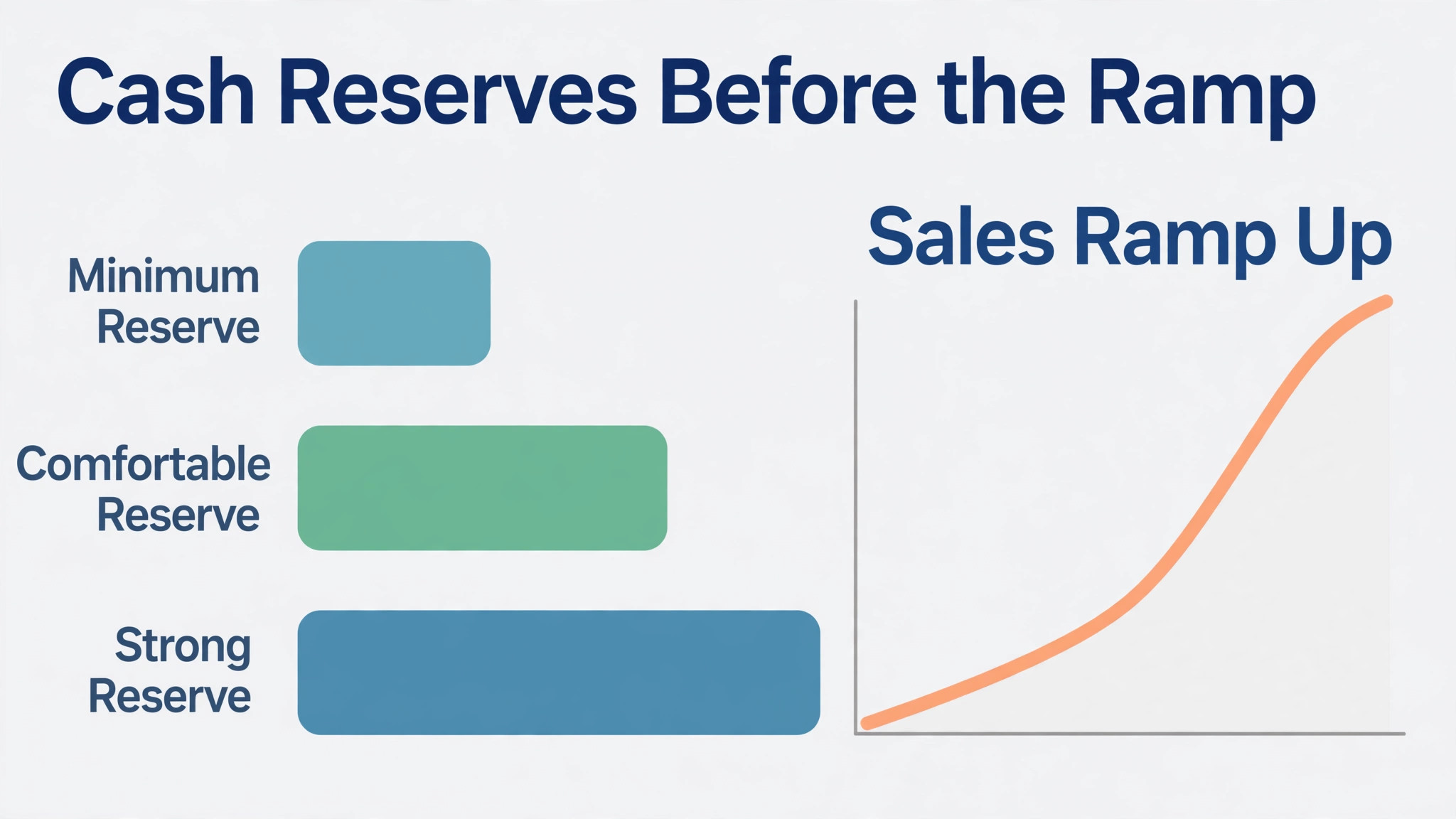
Use tiers to size the reserve honestly. Tier one covers the build out, equipment, and opening inventory, which are the costs you can quote most accurately. Tier two covers six months of operating expenses at forecast, including rent, payroll, utilities, and marketing, assuming revenue ramps slowly. Tier three is a contingency of 10 to 20 percent of the combined total, held untouched for overruns, delays, or a slower ramp. Adding the tiers gives a total capital requirement that should be in place, or firmly committed through financing, before you sign a lease.
| Reserve tier | What it covers | Planning rule |
|---|---|---|
| Tier one, opening costs | Build out, equipment, inventory, licences | Quote based, fixed before signing |
| Tier two, ramp up cover | Six months of operating expenses | Assume slow revenue in months one to three |
| Tier three, contingency | Overruns, delays, slower trading | Hold 10 to 20 percent of tiers one and two |
Test the reserve against a downside case, not only against the forecast. Ask what happens if opening is delayed by two months, if first quarter sales reach only half the forecast, or if a key hire leaves during training. If any of those scenarios exhausts the reserve and forces you to borrow from the first site, the plan is underfunded. Either raise more capital, choose a cheaper site, or delay opening until the reserve is real. A delayed opening costs opportunity. An underfunded opening costs both sites.
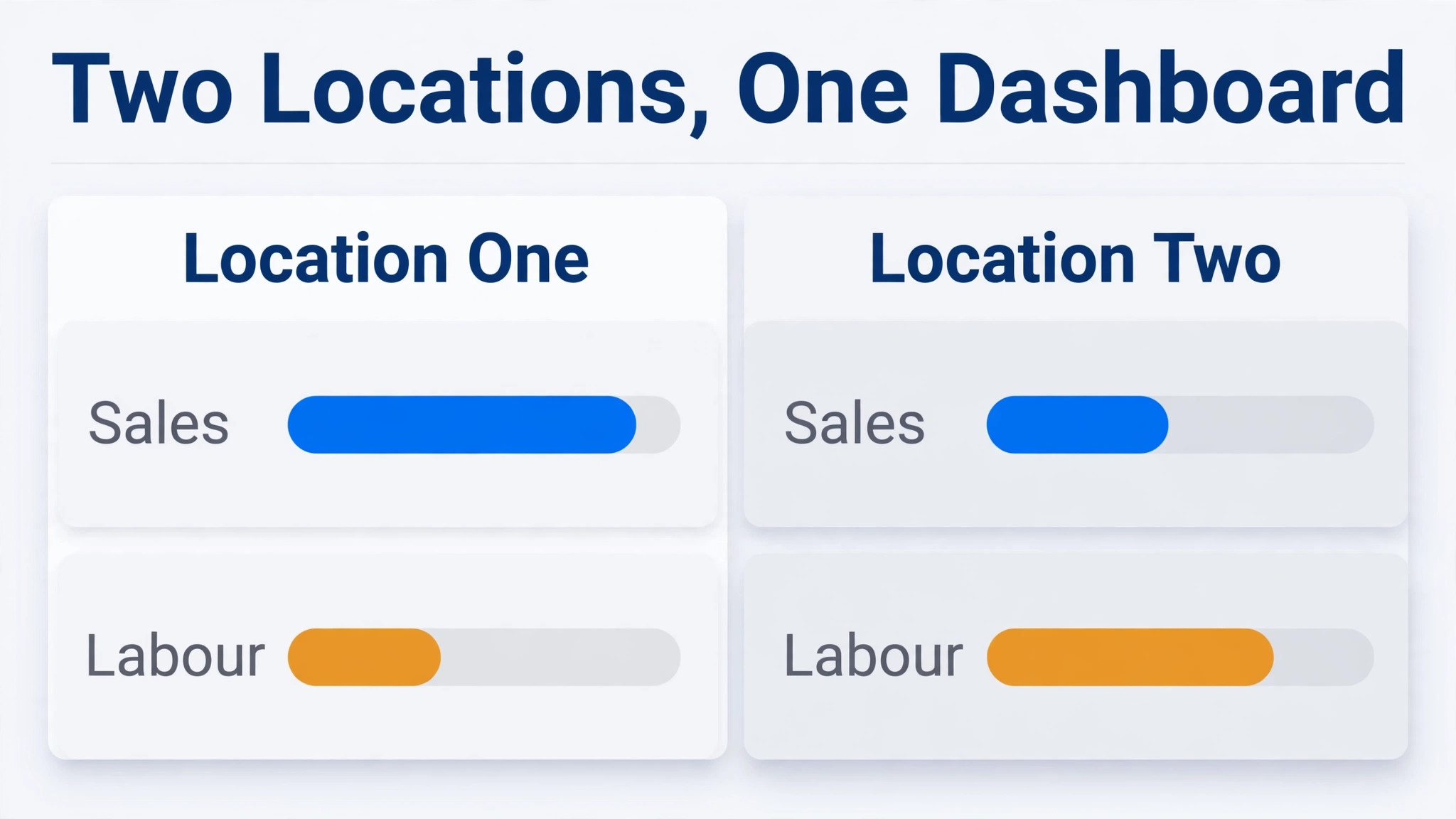
Keep the two sites financially separate from day one. Use location level reporting in your accounting system, track sales, labour cost, and gross margin per site, and review the second site against forecast monthly. Separate reporting turns a vague feeling that the new site is struggling into a specific diagnosis, such as labour running high, average order value running low, or a particular cost line exceeding budget. That specificity is what lets you fix the problem while it is still small. Separate reporting is also what makes guidance on how to open a second location small business owners can manage from a distance actually workable, since you cannot manage what you cannot see per site.
Staff the Second Site Before You Need Them
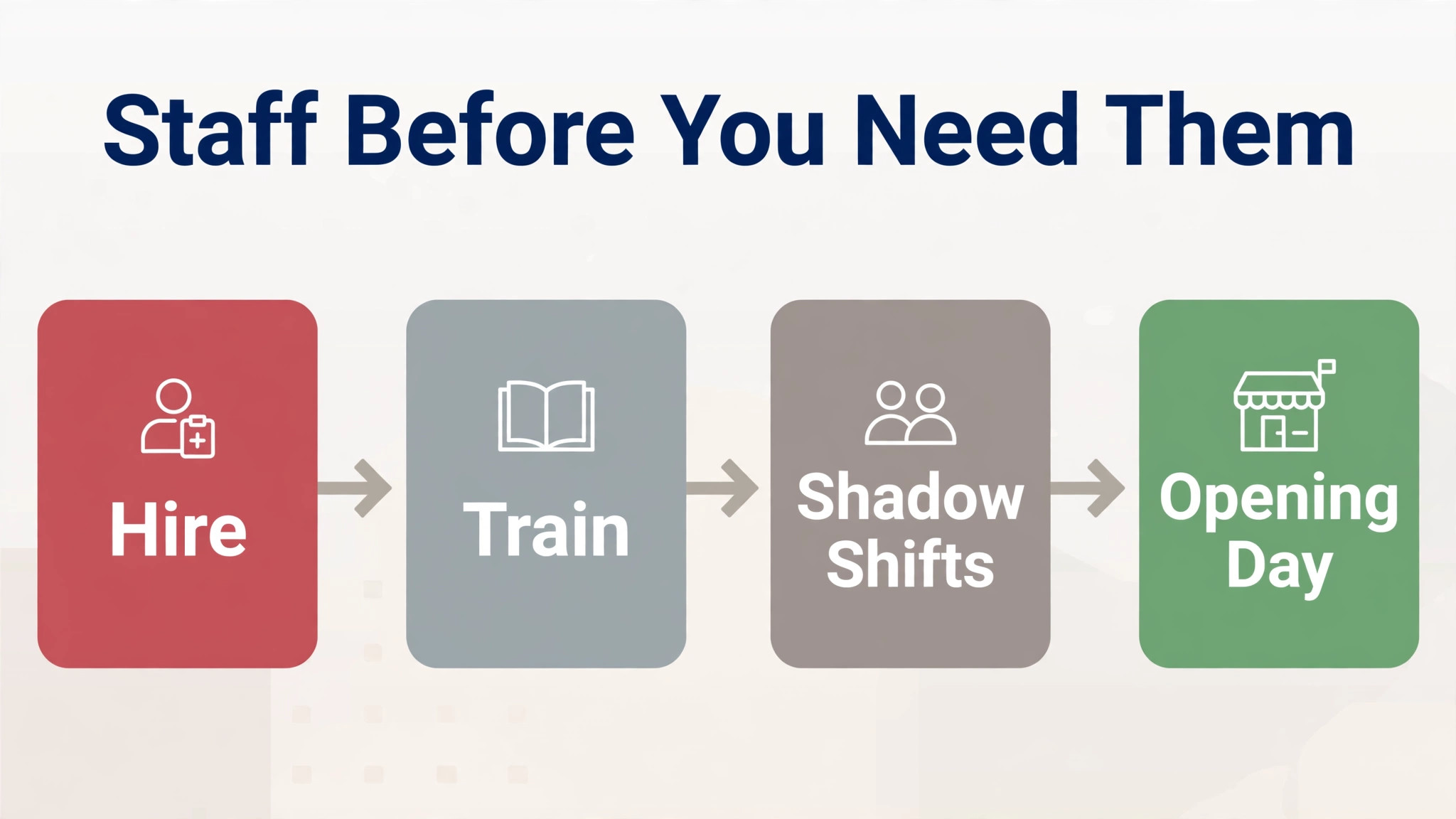
Staffing is the second most common failure point after cash, and it fails for a predictable reason. Owners hire for the second site at the last minute, train under pressure, and open with a team that has never worked together. The fix is to hire early, train in the first site, and open with a team that already knows your standards. A second site team trained in the first site carries your culture with them, while a team hired cold must learn it while customers are watching.
Appoint the manager first, and appoint someone you trust to run a site without you. The ideal manager is often a proven team member from the first site, promoted with a pay rise and clear authority over scheduling, ordering, and customer handling. Promoting internally preserves standards and gives the first site team a reason to stay. Hiring externally can work, but allow a longer training period and a probationary structure with clear performance measures, since an external manager must learn your systems and earn team trust at the same time.
Plan the team shape explicitly. List every role the second site needs, the hours each role covers, the pay rate, and the training each role requires before opening. Include cover for sickness and holidays, because a small team with no cover collapses at the first absence. Decide which roles will transfer from the first site temporarily during launch, and which roles will be hired locally, so the first site is not stripped of its best people at the moment it must fund the expansion.
Train to a checklist, not to a feeling. Each new hire should complete the same induction, shadow the same tasks in the first site, and pass the same quality checks before opening day. Document who trained whom, what was covered, and what still needs practice, so gaps are visible before customers find them. Pay particular attention to the tasks that define your reputation, such as greeting, quoting, fulfilment, and complaint handling, since those are the tasks a new team gets judged on first. Checklist training is an underrated part of how to open a second location small business customers experience as one brand, not as two different businesses sharing a name.
Build Out, Legal Setup and Systems, Done in Order
Build out overruns are a classic expansion cost, because owners underestimate permitting time, contractor availability, and the cost of bringing an older unit up to standard. Get a written scope, a fixed price where possible, and a realistic timetable that includes inspection and sign off. Visit the site weekly during works, and hold a contingency in the budget for the discoveries that older buildings always hide, such as wiring, plumbing, or access issues that only appear once work starts.
Handle legal and tax setup before hiring or trading in the new location. Register for payroll tax accounts where you hire, register for sales tax where you sell, and confirm local licences, permits, and zoning for the new address. Insurance needs review too, since a second premises, more staff, and higher stock levels change your general liability, property, and workers compensation position. Get a fresh quote rather than assuming the existing policy stretches to cover the new site automatically.
Systems should be identical across sites from day one. Use the same point of sale, booking, scheduling, inventory, and accounting setup, with location level reporting switched on. Staff who move between sites should find the same screens, the same procedures, and the same price lists, so cover shifts do not create errors. Centralise purchasing where it helps, but give the second site manager authority over local ordering within agreed limits, so the site can respond to local demand without waiting for head office approval on every item.
The Launch Sequence, Week by Week
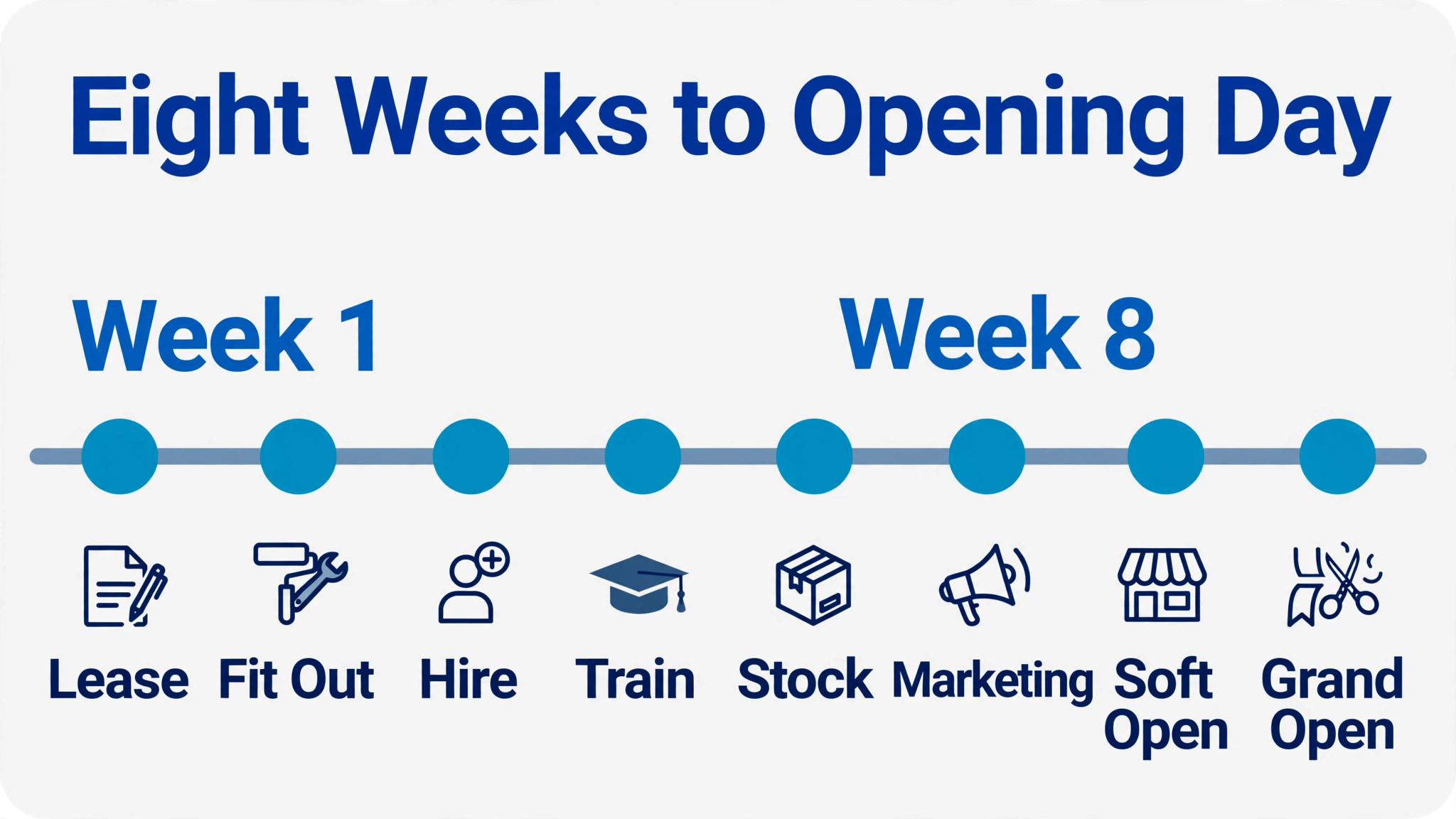
A structured launch sequence prevents the chaos of an opening week where everything happens at once. Work backwards from opening day, and assign an owner and a deadline to every task. The sequence below covers eight weeks, which suits a straightforward fit out, and it should be stretched where permitting or construction takes longer. The point is not the exact week count. It is that every task has a place in the order, so nothing critical is discovered the week it is needed.
1. Confirm the lease, financing, and reserve tiers, and appoint the second site manager. 2. Complete legal registrations, tax accounts, licences, and insurance for the new address. 3. Finalise build out scope and contractor timetable, and order long lead equipment. 4. Hire the core team and start training in the first site. 5. Install systems and test reporting by location. 6. Stock the site, run a trial day, and fix what it reveals. 7. Run local marketing that attracts new customers rather than discounting existing ones. 8. Open with the manager in charge and a daily review for the first month.
That final point deserves emphasis. Opening week is the manager test, not the owner showcase. If the owner runs the second site all week, the team learns to wait for the owner, and the first site suffers from absence at the same time. Be present, be supportive, and let the manager make decisions within the authority you agreed. Correct privately, praise publicly, and review the week together each evening so lessons are captured while they are fresh. Letting the manager lead opening week is the clearest signal of how to open a second location small business owners run as a group, rather than as one person stretched across two sites.
The First 90 Days, Measured Properly
The first 90 days decide whether the second site becomes a durable asset or an expensive lesson. Measure the right things weekly, and review them with the manager in a short structured meeting. Track daily sales by location, average order value, foot traffic or bookings, labour as a percentage of sales, gross margin, customer satisfaction from reviews and repeat visits, and cash flow against forecast. Those seven measures together show whether the problem, if there is one, is demand, pricing, staffing, or cost control.
Compare the second site with a fair benchmark, not with the mature first site at its peak. A new site in month two should be compared with its own forecast and with the first site at a similar age, not with a first site that has had years to build a customer base. Set milestones for month one, month two, and month three, covering sales, staffing stability, and customer feedback, and agree in advance what action follows a missed milestone. Early action on a missed milestone, such as extra local marketing or a staffing change, is cheaper than waiting for a quarterly review to confirm a problem everyone already suspected.
Watch the first site just as closely during this period. A second site launch can quietly damage the first site through manager absence, staff transfers, and owner distraction. Review first site sales, staffing, and customer feedback on the same weekly cycle, and protect its standards explicitly. If the first site dips while the second site ramps, you have a management capacity problem, and the answer is usually more management support, not more marketing spend on the new site.
Hold a short joint review at the end of the 90 days with both site managers. Compare forecast against actual for each site, agree which launch lessons become permanent procedures, and set the next quarter targets from evidence rather than from opening week excitement.
Mistakes That Sink Second Locations
The first mistake is opening to solve a first site problem. A second site does not fix weak systems, thin margins, or owner dependence. It multiplies them across two rent bills. Fix the first site until it runs profitably without you for weeks at a time, then expand from strength. Expansion from weakness is the most expensive way to learn that the model was not ready.
The second mistake is underestimating the management load. Two sites need two sets of decisions every day, from staffing cover to supplier deliveries to customer complaints. Owners who try to be the manager of both sites burn out, and both sites suffer from delayed decisions. Appoint a real manager with real authority, and accept that your job changes from running a site to running a small group, with reporting, review, and support as your main tools. That change of job is the hardest personal adjustment in how to open a second location small business owners navigate successfully, and it deserves as much planning as the lease or the fit out.
The third mistake is choosing the site on rent alone. The cheapest unit is often cheap because foot traffic is weak, parking is poor, or the catchment does not match your customers. A low rent that produces low sales is not a saving. Score every site on demand, access, competition, cost, and fit, and let the total score, not the rent figure, decide. A slightly higher rent in the right catchment usually outperforms a bargain in the wrong one.
The fourth mistake is opening without a kill switch. Agree before signing what performance would trigger a change of plan, whether that is renegotiating the lease, changing the offer, or closing. A pre agreed trigger removes emotion from a hard decision later, when sunk costs and pride push owners to keep funding a site that will not recover. Hope is not a strategy for a site that misses its milestones for two consecutive quarters.
Frequently Asked Questions
How do I know if my first location is ready?
Your first location is ready when it trades profitably for six to twelve consecutive months, when you can document demand, average order value, and repeat rates, and when a manager or lead already runs it for days without quality dropping. The practical test is a two week absence. If trading stays stable while you are away, the systems and team are ready to support a second site. If trading depends on your daily presence, fix that first.
How much cash should I hold before opening a second site?
Hold the full opening costs, plus six months of operating expenses at forecast, plus a contingency of 10 to 20 percent of the combined total. That reserve should be in place or firmly committed before you sign a lease, and it should not come from starving the first site. Test the reserve against a downside case, such as a two month delay or half forecast sales in the first quarter, and delay opening if the reserve does not survive that test.
How far away should the second location be?
Far enough that trade areas overlap only slightly, and close enough that you can support it, supply it, and visit it regularly. Use customer postcode data to map the first site catchment, then choose a second catchment with strong demand, limited direct competition, and a small overlap. Owners who study how to open a second location small business advisers recommend usually aim for at least 70 percent incremental sales, which is the practical test behind the distance decision.
Should I promote from within or hire a new manager?
Promoting a proven team member usually preserves standards and morale, and it gives the first site team a visible career path. The promoted manager needs a pay rise, clear authority, and training in scheduling, ordering, and people management, not only in the trade skills they already hold. Hiring externally can bring fresh experience, but allow longer training and set clear probationary measures, since the new manager must learn your systems while earning team trust.
What should I track weekly after opening?
Track daily sales by location, average order value, bookings or foot traffic, labour as a percentage of sales, gross margin, customer satisfaction, and cash flow against forecast. Review those measures with the manager weekly for the first 90 days, and agree actions for any missed milestone in advance. Location level reporting in your accounting system makes this review fast and specific, turning a vague worry into a fixable cause.
When should I close a second location that is struggling?
Close or restructure when the site misses its agreed milestones for two consecutive quarters despite corrective action, when it drains cash from a healthy first site, or when the lease position allows an exit without endangering the whole business. Decide the trigger before opening, while the decision is unemotional, and review it with your accountant and lawyer when the trigger is reached. A disciplined exit protects the first site, which remains the foundation of the business.
More Reading on Stratilyze
– How to Handle Seasonal Slow Months as a Small Business – How to Hire Your First Virtual Assistant as a Small Business – How to Write a One-Page Business Plan as a Small Business