
For most escape rooms, FareHarbor is the safe first trial, and for venues that already drive most bookings themselves, a flat subscription such as Bookeo or Checkfront will usually cost less at scale. The best booking software for escape rooms is the one that fills rooms without leaking money on fees, losing groups at the waiver step, or double booking a room on a busy Saturday, and the verdict depends on how the venue actually sells.
Escape room booking is not hotel booking. Groups book by room and time slot, sizes change at the last minute, waivers must be signed before arrival, and corporate groups need invoices and private hire options. A generic scheduler that handles single appointments will strain under all four at once, while a venue system built for timed experiences handles them as standard work.
This guide compares twelve systems on the same questions. Can the tool cap group size per room, collect waivers before arrival, handle walk ups and online bookings in one calendar, and what does the full cost become once commission and processing are counted at real booking volume. Prices are starting points in recent comparisons, so confirm the current price and fee terms on the vendor page before you buy.
Twelve Escape Room Booking Tools Side by Side
Read the table as a shortlist, not as a ranking. A cheaper option suits a smaller operation with a simple workflow, while a fuller platform suits an operation whose income already depends on the system. Pick three finalists, then read their full sections before signing a contract.
| Tool | Starting price | Best for |
|---|---|---|
| FareHarbor | no monthly fee with a commission of about 6 percent per booking in recent comparisons | venues that want no monthly fee and simple setup |
| Peek Pro | no monthly fee on the free plan with about 6 percent per online booking, or Pro from $199 a month in recent comparisons | US venues that want marketing automation and dynamic pricing |
| Bookeo | from $40 to $110 a month with no commission in recent comparisons | small, mostly direct venues that want predictable pricing |
| Xola | no subscription with transaction fees in recent comparisons, typically about 6 percent per online booking | venues that want pure per transaction pricing with no subscription |
| Rezdy | from $49 to $249 a month with no commission on direct bookings in recent comparisons | venues that live on resellers and multi-channel sales |
| Checkfront | from $99 a month in recent comparisons, with higher tiers to about $295 a month | flexible small venues that want tours, rentals, and rooms in one system |
| Bókun | from $49 a month plus about 1.5 percent on direct bookings in recent comparisons | venues that want marketplace distribution beside direct sales |
| SimplyBook.me | from about $10 a month in recent comparisons, with higher tiers for more features | small venues that want simple slot booking at a low price |
| Regiondo | priced by subscription plus a transaction fee in recent comparisons, confirm on the vendor page | venues that want channel management across Europe and beyond |
| TicketingHub | priced by subscription and fees in recent comparisons, confirm on the vendor page | venues that want ticketing plus booking in one flow |
| TrekkSoft | priced by quote in recent comparisons, confirm on the vendor page | venues that want a full tour and activity platform |
| Ventrata | priced by subscription and fees in recent comparisons, confirm on the vendor page | venues that want API led booking and reseller connections |
Why the best booking software for escape rooms Beats a Phone Booking Sheet
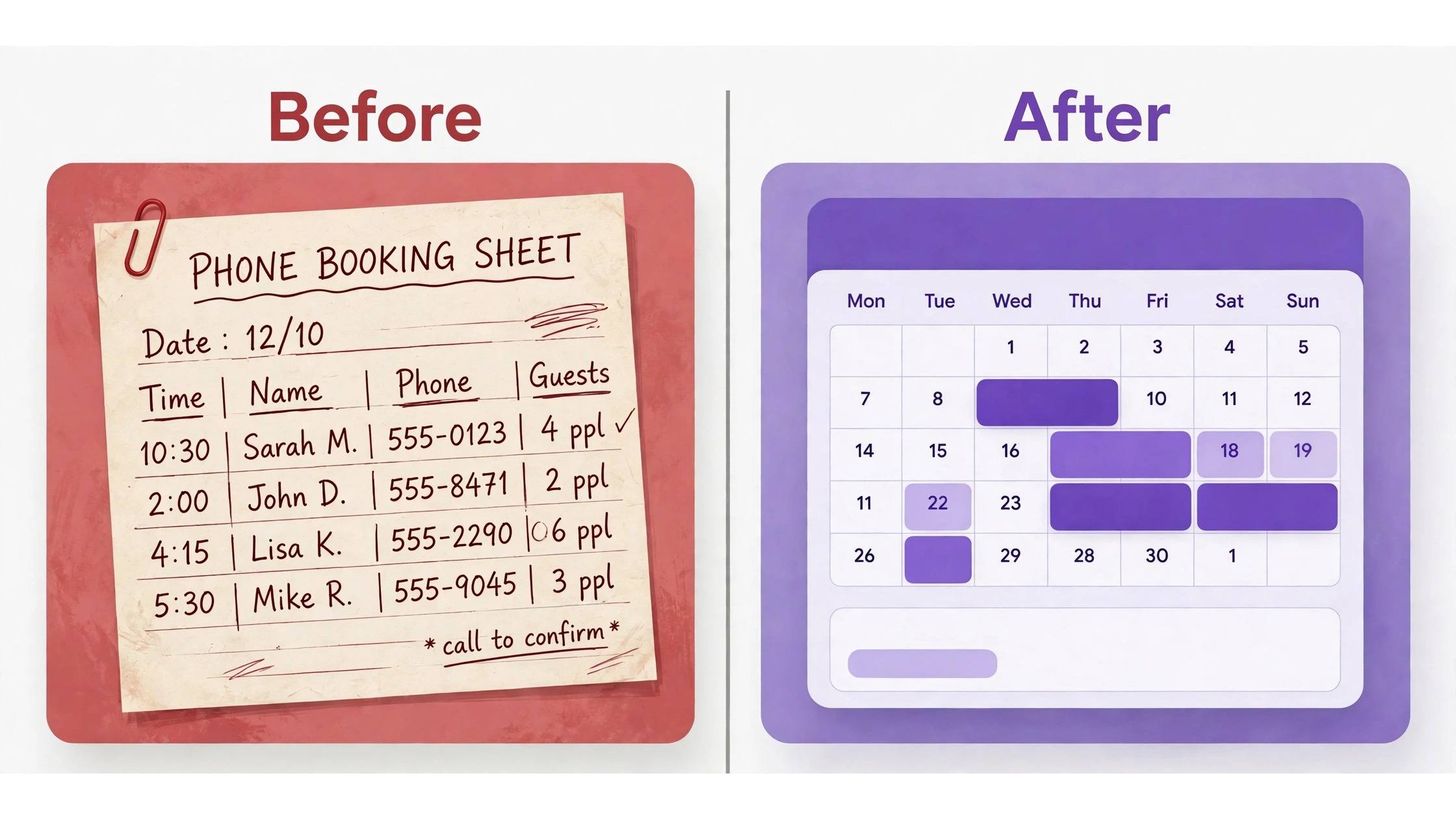
A phone booking sheet records who called. A working venue system fills rooms, and the difference shows in the online checkout, the waiver link, and the group size cap. A system that treats those three as core features will outperform a prettier calendar that leaves staff chasing waivers and counting heads at the door.
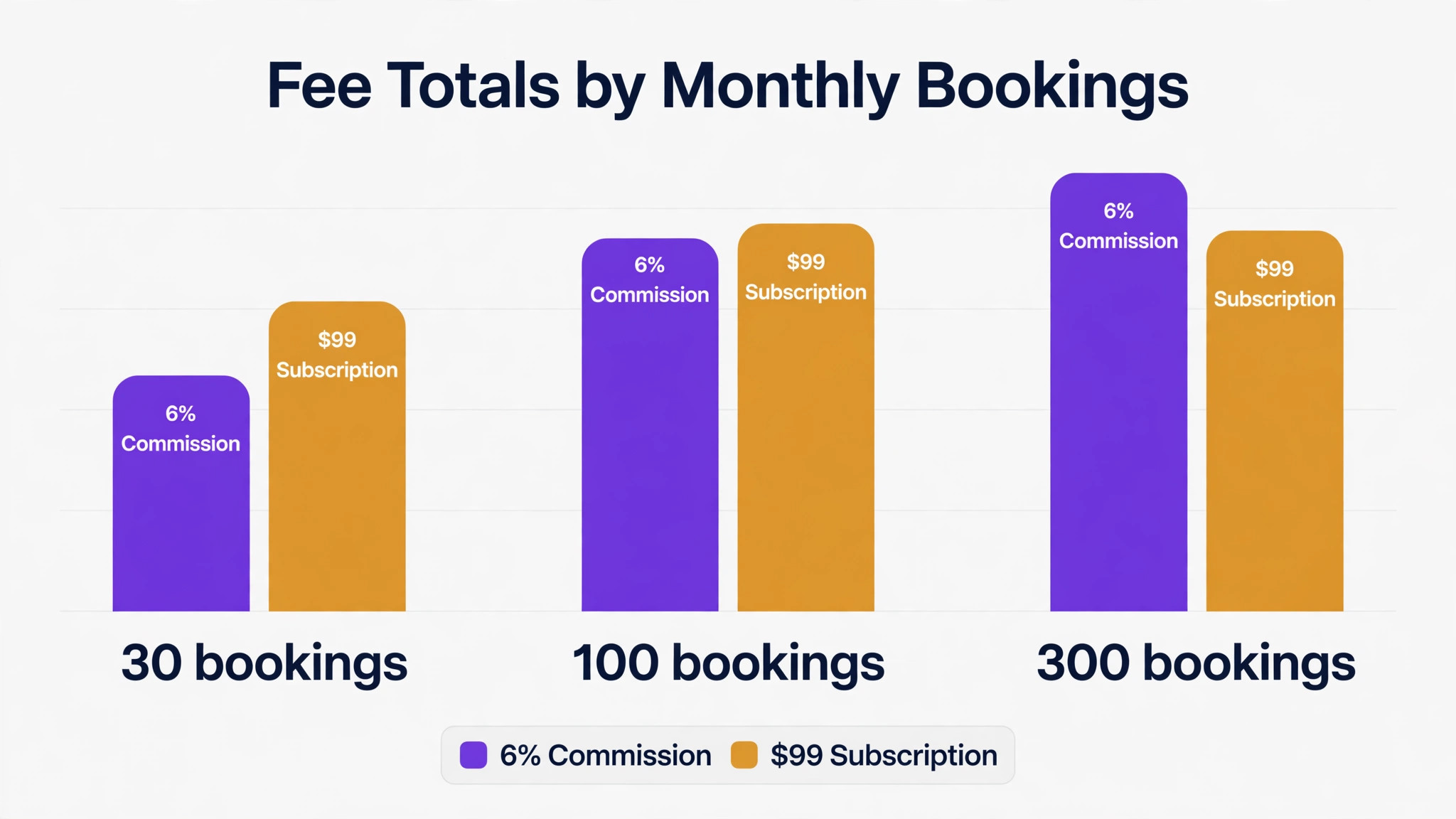
Fees are the second test, and they decide the real cost. A commission model with no monthly fee looks free at low volume, while a subscription with no commission looks expensive at low volume, and the crossover point depends on ticket price and monthly bookings. Work out the cost at 100 and 300 bookings a month before comparing tools.
Group handling is the third test, and it is where generic tools fail first. A room that holds eight cannot accept a booking for ten, a private booking must block the whole slot, and a corporate group of forty needs several rooms at once. The right system enforces those rules at booking time, not at the door.
Twelve Systems, Reviewed One by One
FareHarbor
FareHarbor fits venues that want booking live with no monthly fee and a full system behind it. Online checkout, real time availability, guest manifests, waivers, payments, and distribution sit in one platform, which suits a venue starting out or testing online sales. The starting point is no monthly fee with a commission of about 6 percent per booking in recent comparisons, so confirm the live price on the vendor page before you budget.
The limit is that commission applies to every booking in recent comparisons, including bookings the venue already earned itself. At high volume, a subscription with no commission may cost less, so model the bill at real monthly bookings before judging the zero monthly fee.
Peek Pro
Peek Pro fits US venues that want a polished booking flow with marketing automation built in. Dynamic pricing, upsells, abandoned booking follow ups, and waivers help a venue fill quiet slots and sell extras without extra tools. The starting point is no monthly fee on the free plan with about 6 percent per online booking, or Pro from $199 a month in recent comparisons, so confirm the live price on the vendor page before you budget.
Pricing is partly quote based in recent comparisons, so confirm the full terms, including what the Pro plan adds and what commission applies at each tier. A venue that mainly needs simple room booking may pay for marketing depth it never uses.
Bookeo
Bookeo is the predictable price pick for small, mostly direct venues. A monthly subscription with no commission means the bill stays flat as bookings grow, and its booking rules handle time slots, capacity, and group sizes well for a single venue. The starting point is from $40 to $110 a month with no commission in recent comparisons, so confirm the live price on the vendor page before you budget.
Distribution and advanced marketing tools are lighter than on larger platforms, so a venue that relies on resellers or marketplaces should check channel coverage before building. Test the exact room and slot setup during the trial.
Xola
Xola fits venues that want pure per transaction pricing and a clean booking flow. Online bookings, marketing automations, and reporting cover the essentials without a monthly subscription, which suits a venue with seasonal or uneven bookings. The starting point is no subscription with transaction fees in recent comparisons, typically about 6 percent per online booking, so confirm the live price on the vendor page before you budget.
The trade off is the same as any commission model, because the fee grows with revenue. A venue with steady high volume should compare the annual commission total with a flat subscription before committing to a fee per booking.
Rezdy
Rezdy fits venues that live on resellers and multi-channel sales, with channel management and business to business tools beside direct booking. A venue selling through agents, marketplaces, and its own site can manage all channels in one calendar. The starting point is from $49 to $249 a month with no commission on direct bookings in recent comparisons, so confirm the live price on the vendor page before you budget.
The plan range is wide, so confirm which tier carries the features the venue needs, such as waivers, manifests, and reporting. Price the tier that runs the real setup, not the entry tier that only demos it.
Checkfront
Checkfront fits flexible small venues that want a subscription with no commission and strong booking rules. It handles time slots, capacity, add ons, and waivers, and suits a venue that also sells other experiences or rentals beside escape rooms. The starting point is from $99 a month in recent comparisons, with higher tiers to about $295 a month, so confirm the live price on the vendor page before you budget.
The monthly fee starts higher than some rivals, so a very small venue with few bookings should model the break even point. At low volume, a commission model may still cost less in total, even though the subscription feels more predictable.
Bókun
Bókun fits venues that want marketplace distribution beside direct sales, with native marketplace connections and a free tier limited to marketplace and offline management in recent comparisons. A venue that gains bookings from travel marketplaces will value that distribution. The starting point is from $49 a month plus about 1.5 percent on direct bookings in recent comparisons, so confirm the live price on the vendor page before you budget.
The fee structure has several parts, including a subscription and a per booking percentage, so read the terms for each channel carefully. Model direct, marketplace, and walk up bookings separately, because each channel may carry a different fee.
SimplyBook.me
SimplyBook.me fits small venues that want simple slot booking at a low price. Its booking pages, capacity rules, and add ons cover a single room or a small venue well, and the low entry price suits a venue testing online booking for the first time. The starting point is from about $10 a month in recent comparisons, with higher tiers for more features, so confirm the live price on the vendor page before you budget.
Escape room depth is thinner than on a venue platform, so waivers, manifests, and multi-room corporate bookings may need workarounds. Test the full group journey, including waiver signing, before choosing it for a busy venue.
Regiondo
Regiondo fits venues that want channel management across many sales channels, with booking, distribution, and reporting in one system. A venue selling through several marketplaces and its own site can keep availability in sync across all of them. The starting point is priced by subscription plus a transaction fee in recent comparisons, confirm on the vendor page, so confirm the live price on the vendor page before you budget.
Pricing is tiered and partly quote based, so ask for the full cost at the venue’s real booking volume and channel mix. A venue that sells mainly direct may pay for distribution depth it never uses.
TicketingHub
TicketingHub fits venues that want ticketing and booking in one flow, with timed entry, capacity control, and online sales. A venue that also runs events or sells timed tickets beside escape rooms can manage both in the same system. The starting point is priced by subscription and fees in recent comparisons, confirm on the vendor page, so confirm the live price on the vendor page before you budget.
Escape room specific features should be tested directly, because a ticketing system and a venue system are not identical. Check waiver handling, private hire blocking, and multi-room group booking during the trial, not after launch.
TrekkSoft
TrekkSoft fits venues that want a full tour and activity platform, with booking, point of sale, and channel tools in one system. A larger venue or a group with several attractions can manage bookings across sites from one dashboard. The starting point is priced by quote in recent comparisons, confirm on the vendor page, so confirm the live price on the vendor page before you budget.
Quote based pricing means a small single room venue should ask early whether the cost fits its volume. A venue that only needs room booking may find a simpler subscription cheaper for the same result.
Ventrata
Ventrata fits venues that want API led booking and reseller connections, with a modern checkout and distribution tools. A venue with a custom website or several sales partners can connect booking through integrations rather than rebuilding its site. The starting point is priced by subscription and fees in recent comparisons, confirm on the vendor page, so confirm the live price on the vendor page before you budget.
The limit is setup complexity. A small venue without technical help may find an API led system slower to launch than a ready made booking page, so check what support and onboarding the subscription actually includes.
Escape Room Picks Matched to the Venue
The right pick changes with the job that pays the bills. One job may need speed, another may need depth, and a third may need room to grow. Use this table to match the pick to the job, then confirm the fit by running one real workflow in a trial.
| Job | Best pick | Why it wins |
|---|---|---|
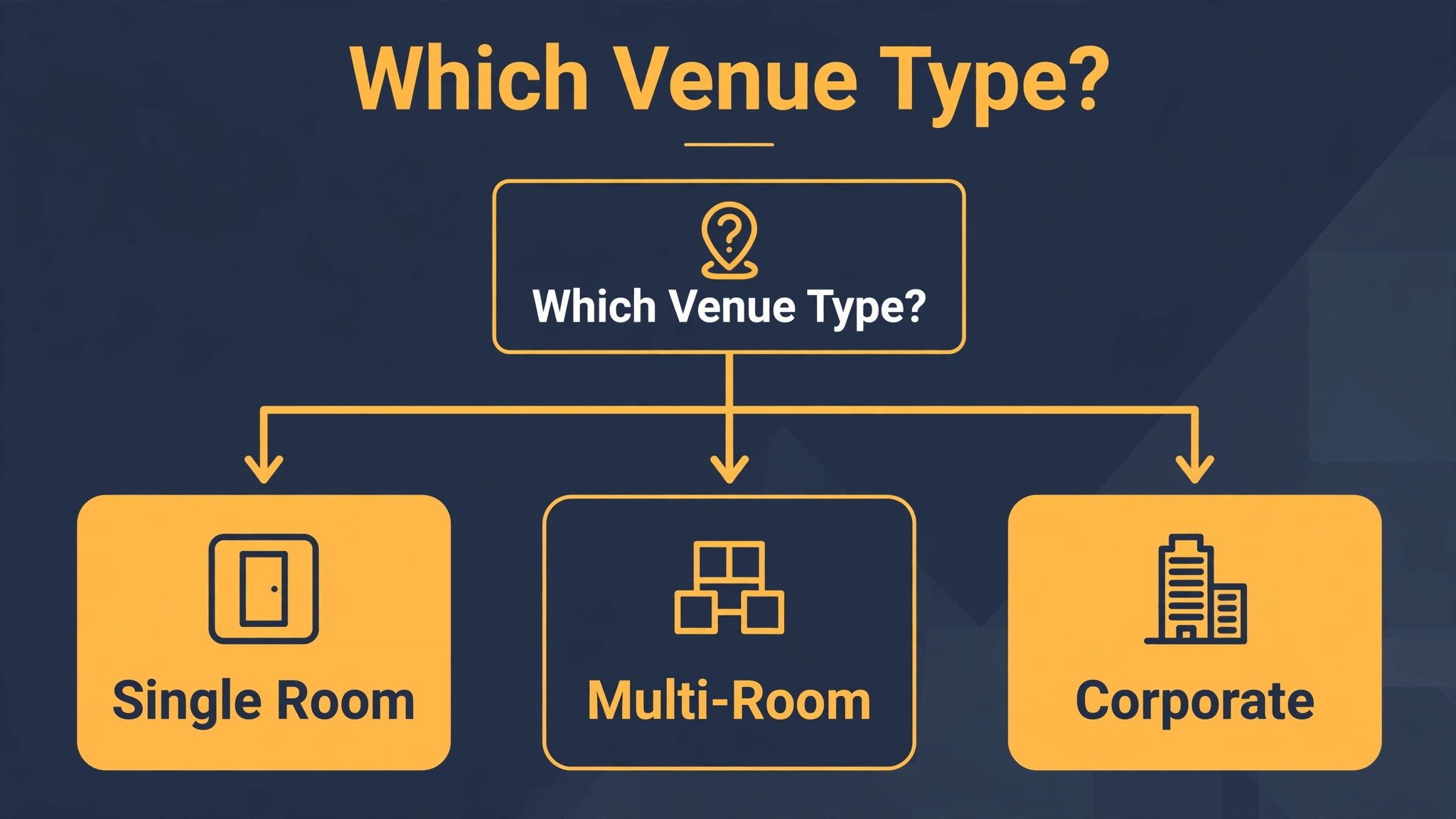
| Single room | Bookeo | Predictable subscription, no commission, and clean slot and capacity rules |
| Multi-room venue | FareHarbor | Full venue system with waivers, manifests, and distribution in one platform |
| Corporate bookings | Peek Pro | Group handling, dynamic pricing, and marketing automation for larger groups |
The Waiver and Group Size Checklist Before Launch
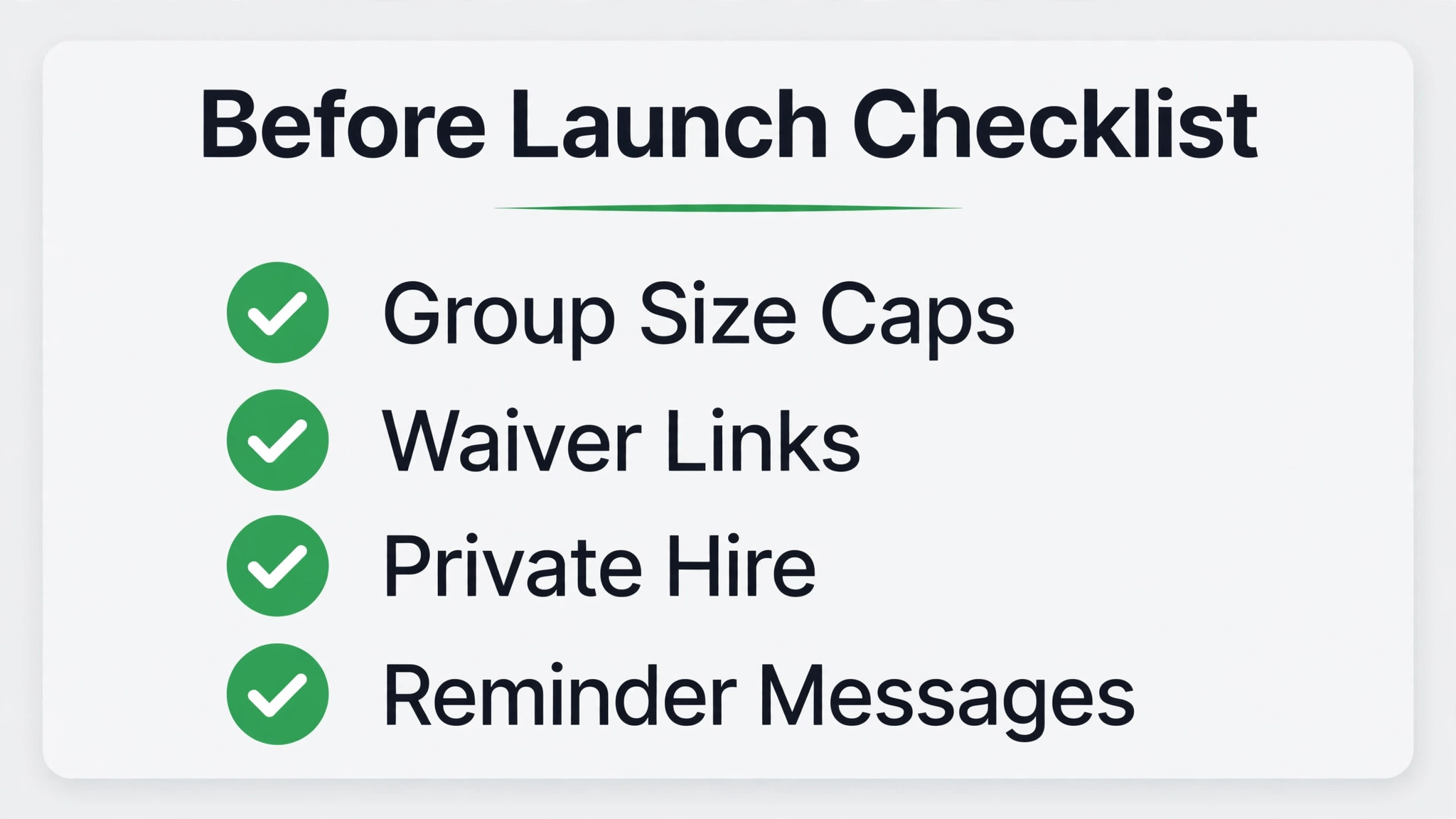
A waiver and group system only works when every player is covered before the game starts, without staff chasing signatures at the door. Run through this checklist with a real group booking before you launch, and fix every gap in the trial rather than on a busy Saturday.
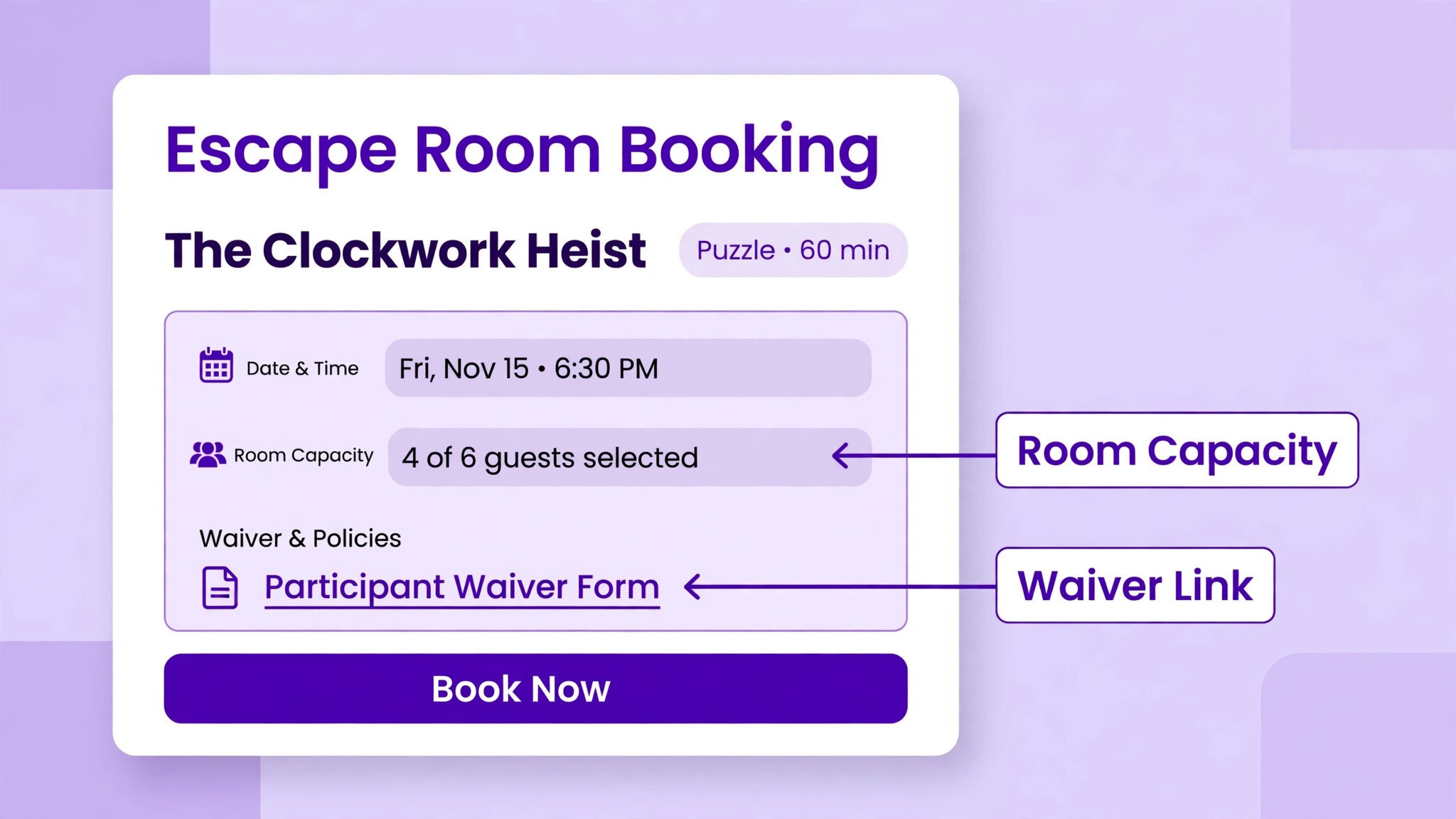
- Set a maximum group size per room, and block bookings above that size at checkout, not at arrival.
- Send a waiver link with every confirmation, and let each player sign individually before arrival.
- Show remaining spaces per slot clearly, so a group cannot book a slot that is already full.
- Allow private hire to block a whole room, and public booking to fill remaining spaces in that room.
- Collect a group leader contact and a player count, and confirm both again in the reminder message.
- Handle late changes, such as extra players or a smaller group, with a clear price and capacity rule.
- Test the full journey on a phone, including waiver signing, payment, and the reminder message.
What Escape Room Booking Really Costs Each Month
The headline price hides the real decision, because commission, processing, and subscription are three different bills. A venue on a 6 percent commission model with 200 bookings a month at $85 a ticket pays far more in fees than a venue on a $99 subscription with no commission, while at 30 bookings a month the commission model may cost less. Work out the total at the venue’s real volume before comparing tools.
Card processing deserves its own line in the budget. Many subscription platforms pass on processing near 2.9 percent plus 30 cents per transaction in recent comparisons, while commission models often bundle processing into the commission. Compare the all in cost per booking, not the subscription alone, because the cheaper headline can carry the higher per booking total.
Time is the second hidden cost. A system that needs staff to chase waivers, count heads, and fix double bookings costs more than its subscription suggests, while a system that enforces capacity and waivers at booking time saves staff hours every weekend. Count the hours for one busy weekend of manual fixes, and price that time honestly.
Mistakes That Cost Escape Rooms Bookings
The most common mistake is choosing on monthly fee alone. A zero monthly fee with 6 percent commission is not free, and a $99 subscription with no commission is not expensive, because the answer depends on ticket price and monthly bookings. Model the annual fee total at real volume before signing, because the venue will live with that total all year.
The second mistake is launching online booking without testing waivers. A group that arrives without signed waivers delays the game, frustrates the next group, and creates a queue at the door. Test waiver signing for every player in a group, not just the group leader, before the first public booking.
The third mistake is letting capacity rules stay manual. A room that holds eight cannot accept a booking for ten, and a private booking must block the whole slot, yet many venues discover those rules only when a group arrives. Set capacity, private hire, and multi-room rules in the system, and test each one with a real booking.
A Two Week Trial That Actually Decides Anything
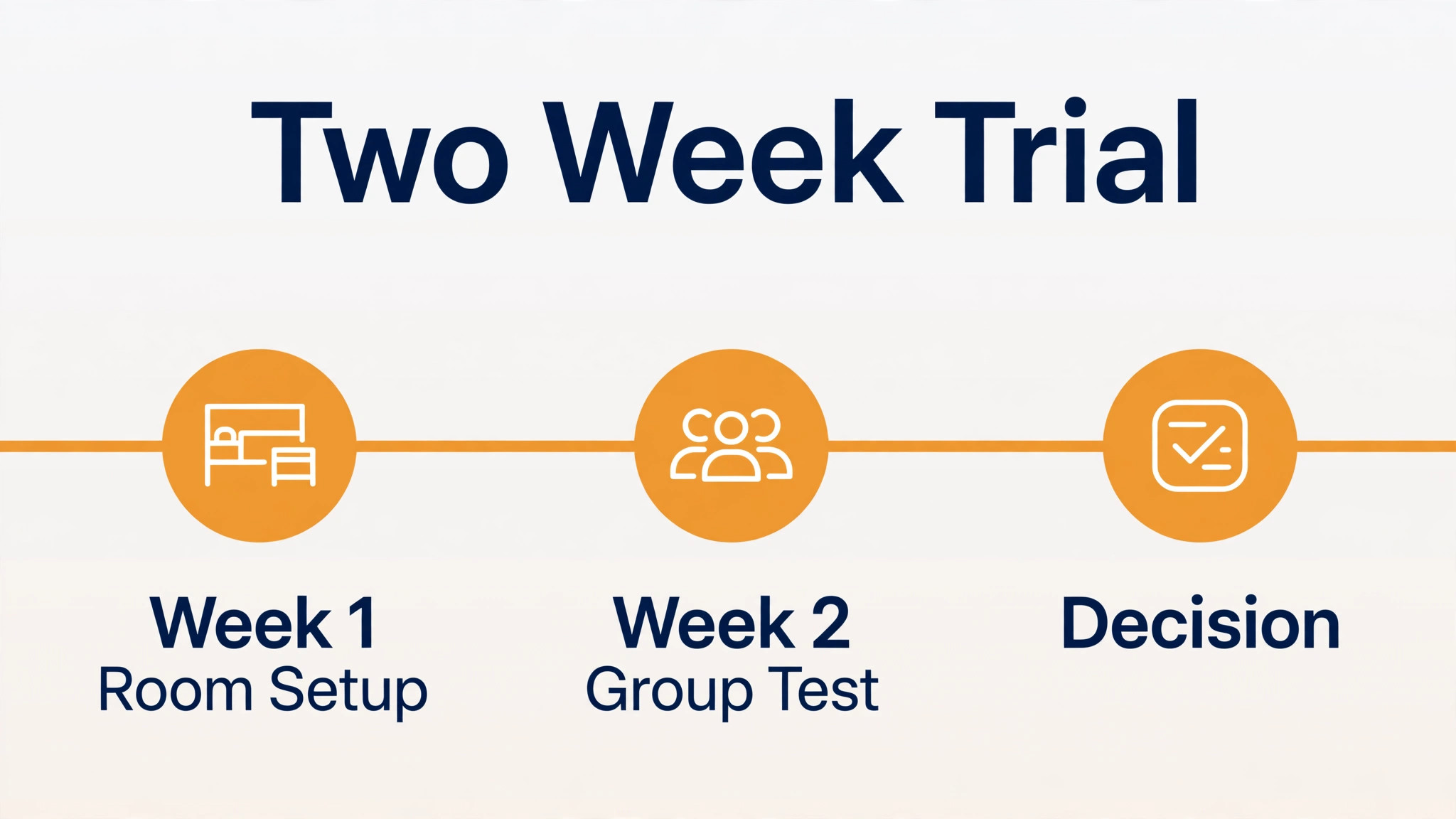
Week one should build the real venue, not a demo. Create every room, set capacity and slot times, connect waivers and payments, and run test bookings for a single group, a full room, and a private hire. If any step needs a workaround in week one, it will need that workaround every weekend after launch.
Week two should fill a real slot, even if the players are friends testing the flow. Send the booking page to a small real audience, watch where groups hesitate at checkout or waiver signing, and ask two people who did not book why they stopped. Their answers will tell you more than any feature list.
Rollout Notes for an Escape Room Venue
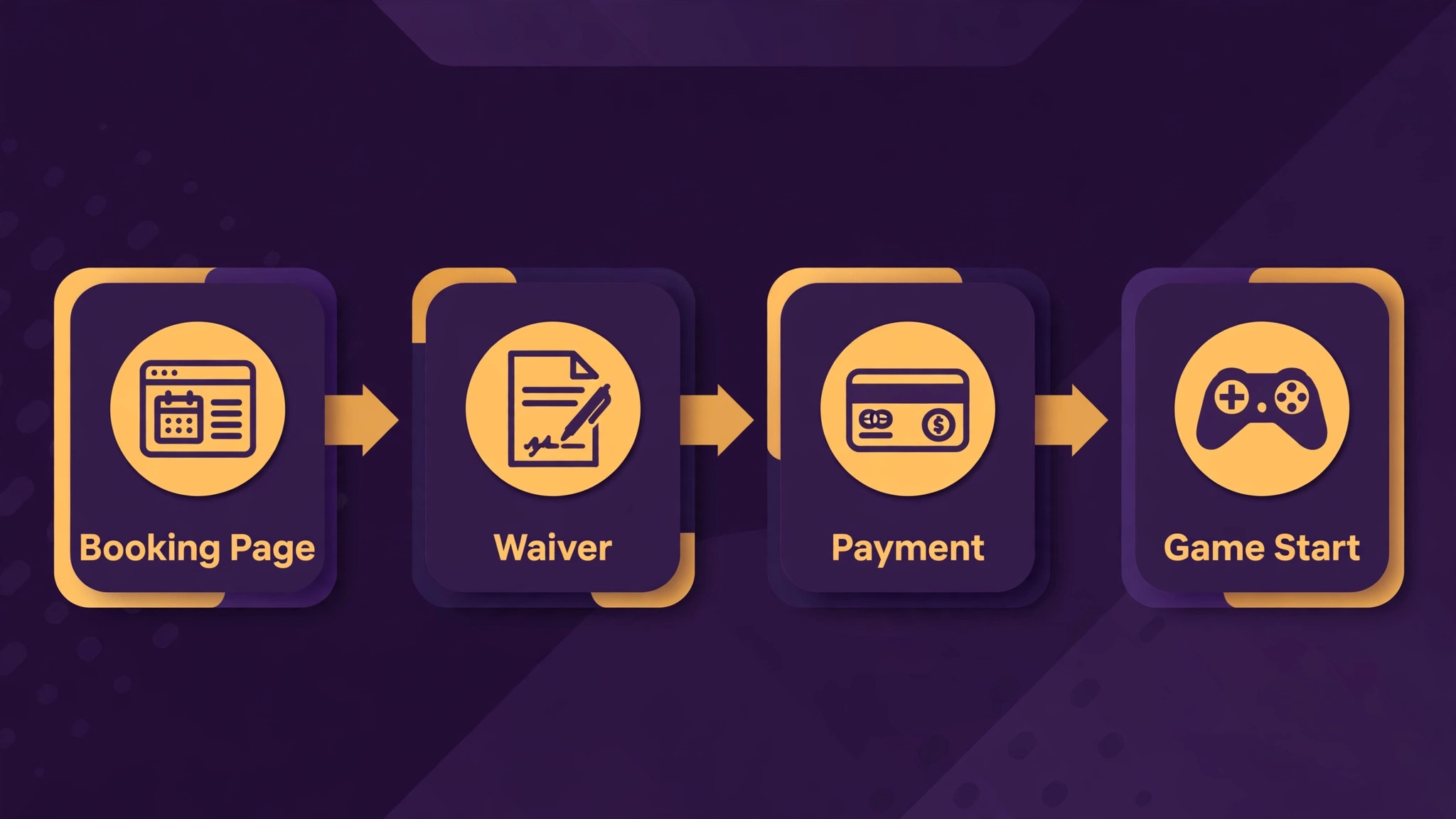
Map the booking journey on paper before building pages, from search result to waiver signed to game start, and note every place a group could stall. A journey map exposes missing information, such as age limits or arrival time, before design work hides it.
Write room pages for one experience each, rather than one long page covering every room. A group choosing a horror room and a group choosing a family room need different information, and one page cannot serve both well.
Set pricing rules early, including peak and off peak slots, private hire premiums, and group discounts. A clear price structure prevents the manual discounts that appear at the desk, when staff feel pressure to fill a slot.
Plan the corporate offer as a separate product, with invoices, multi-room booking, and a dedicated contact. A corporate group of forty needs different handling from a birthday group of six, and a system that treats both the same will frustrate both.
Set a review date three months after launch and judge the system against rooms filled, waivers signed before arrival, and fee cost per booking, not against how much you enjoyed building pages. If numbers have not moved, fix the offer or the traffic first, and only change systems when the system itself is the bottleneck.
Check who can run bookings when the manager is away. The right system is one any team member can operate on a busy Saturday, because bookings happen at weekends, and a system that only one person understands is a risk on the busiest day.
Choosing the best booking software for escape rooms Without Overpaying
A venue does not need the most expensive system, only the system whose fee model matches the bookings that already exist. For a new venue, a commission model with no monthly fee is often the right start, because a new venue has more need for bookings than for predictable billing. Start with one room, a clear waiver flow, and a simple checkout, and move to a subscription only when booking volume makes the subscription cheaper.
Price the system at the booking volume you will reach in six months, not at the volume you have today, because a fee model that fits 30 bookings a month may strain at 300. The right system should still feel affordable when rooms fill every weekend, and it should not punish success with fees that grow faster than revenue. Check the fee terms now, and note what triggers higher costs, whether that trigger is bookings, ticket value, users, or channels.
Separate the platform fee from the tools that often hide beside it. Waiver handling, marketing automation, point of sale, and distribution can each add a charge, and a system that looks cheap can become expensive once those four are added. Write down the full cost for each finalist, including the waiver tool you will actually use, before comparing headline prices.
A trial should prove filled rooms, not just good design. The right system will let a group book a room, sign waivers, and pay without confusion, and those flows should be tested with real groups during the trial. Ask two test groups where they hesitated, and fix the hesitation before launch, because a hesitation in a trial becomes a lost booking after launch.
Capacity rules are where a venue system earns its keep over time, because correct rules prevent the door problems that ruin a Saturday. The right system therefore needs capacity caps that work, private hire blocking that works, and multi-room booking that works, without manual checks. A system that makes capacity a manual job will slowly create the very chaos it was bought to prevent.
Do not buy a platform for a venue size that does not exist yet. For a venue with a proven single room, a simple subscription is the right purchase, while for a venue with several rooms and corporate sales, a full venue platform may fit better, and those are different purchases. Buy for the venue that already exists, and upgrade when the next room proves itself with real bookings.
Finally, judge fee transparency as a feature, not as paperwork. Ask whether commission applies to walk ups, whether processing is bundled or separate, and what happens to fees on a refund or a reschedule. A system that answers those questions clearly earns trust before a group ever books, and that trust is part of the experience itself.
Compare the best booking software for escape rooms on the booking or giving flow first, and treat design and reporting as second order questions.
The best booking software for escape rooms that wins is the one staff reach for without thinking, because a tool that needs constant reminders will be abandoned.
Model the best booking software for escape rooms cost at low, normal, and peak volume, and choose the model that stays fair across all three.
End every trial of the best booking software for escape rooms with a written note on what worked, what failed, and what the next tier would add.
Check the best booking software for escape rooms for role based access, so sensitive records stay visible only to the people who need them.
A sound best booking software for escape rooms decision leaves room for one more service or room, because growth should not require a rebuild.
More Reading on Stratilyze
- Best Booking Software for Yoga Studios
- Best Booking Software for Tattoo Studios
- Best Booking Software for Fitness Studios
Frequently Asked Questions
Is a commission model or a subscription cheaper for an escape room?
It depends on ticket price and monthly bookings. At low volume, a commission model with no monthly fee usually costs less in total, while at high volume a subscription with no commission usually wins. Model the annual total at 100 and 300 bookings a month before choosing, because the crossover point arrives sooner than most venues expect.
Do I need waivers built into the booking system?
Yes, for most venues, because waivers signed before arrival save time at the door and reduce delays between games. A system that sends a waiver link with every confirmation and tracks who has signed is far better than a paper form at reception, especially for groups where every player must sign.
Can a booking system handle corporate groups across several rooms?
A venue system can, if multi-room booking and private hire blocking are set up correctly. Test a corporate booking of forty players across several rooms during the trial, including invoicing and a single group contact, because a system that only handles single room bookings will fail that test.
Should a new escape room pay for a Pro plan straight away?
Usually not, unless marketing automation already drives bookings. A new venue should start on a free or entry plan, prove that rooms fill and waivers arrive on time, and move to a Pro plan when dynamic pricing or automation will actually change revenue.
Can I move bookings later if I choose wrong?
Future bookings and customer records can usually move, but room setups, waiver templates, and pricing rules often need rebuilding. Keep copies of all room descriptions, pricing, and customer lists outside the platform from day one, and check export terms before signing.
What should an escape room booking page show first?
It should show available rooms, next available slots, group size limits, and price in one short view. A group that cannot tell within seconds whether its size fits and when it can play will leave, however good the rooms are. Put the waiver and arrival information close to checkout, not hidden after payment.
An Escape Room Shortlist to Take Into Your Trial
For most venues starting out, FareHarbor is the sensible first trial for a full system with no monthly fee, and Bookeo is the sensible first trial for predictable subscription pricing. Venues that already drive most bookings themselves should trial Checkfront first, and venues focused on corporate and marketing depth should trial Peek Pro beside it. That shortlist is a practical way to choose without paying for a system you will not use.
Whichever system you shortlist, build every room, set every capacity rule, and run one real group booking with waivers before you pay for a year. The right system is the one a group can book through without confusion, sign waivers through before arrival, and trust enough to recommend. That test, run properly, will choose the system for you.