
A veterinary clinic loses time in four places, and they are rarely the places a software demo shows first. A radiograph waits for a read while the patient is still in the building. A record sits half finished at the end of a long surgery day. A phone rings unanswered during a procedure, and a client books elsewhere. A drug sits on a shelf past its use, or a bill goes unpaid because the payment option was too rigid. This guide compares the best AI tools for veterinarians in 2026 by those four leaks, not by vendor size or by how many features a homepage lists. Each tool below was chosen because it does one clinic job well enough to pay for itself in saved hours, fewer missed appointments, or cleaner records.
The twelve tools fall into four groups of three. Imaging and prediction tools help with the diagnosis itself. Practice systems and note tools handle the record that follows. Booking and communication tools protect the front desk. Stock, payment and finance tools protect margin. Prices are October 2026 figures in US dollars. Where a vendor does not publish a price, or where pricing depends on clinic size and volume, the guide says check checkout rather than inventing a figure that would be wrong for most readers.
The 12 best AI tools for veterinarians at a glance
| Tool | Clinic job | Free option | Paid from |
|---|---|---|---|
| SignalPET | AI radiograph reading | No | Check checkout |
| Vetology | AI radiology screening and teleradiology | No | Check checkout |
| ImpriMed | AI cancer drug response prediction | No | Check checkout |
| Digitail | All in one practice system with AI workflows | Demo | Check checkout |
| Shepherd | Cloud practice system with SOAP records | Free trial | Check checkout |
| ScribbleVet | AI scribe for exam notes | Free trial | Check checkout |
| PetDesk | Client reminders, texting and booking | No | Check checkout |
| Vetstoria | Real time online booking | No | Check checkout |
| AllyDVM | Retention, reminders and client app | No | Check checkout |
| Vetcove | Supplier price comparison and ordering | Free for independent practices | Free |
| Weave | Phones, texting and payments | No | Check checkout |
| Scratchpay | Client payment plans | No | Check checkout |

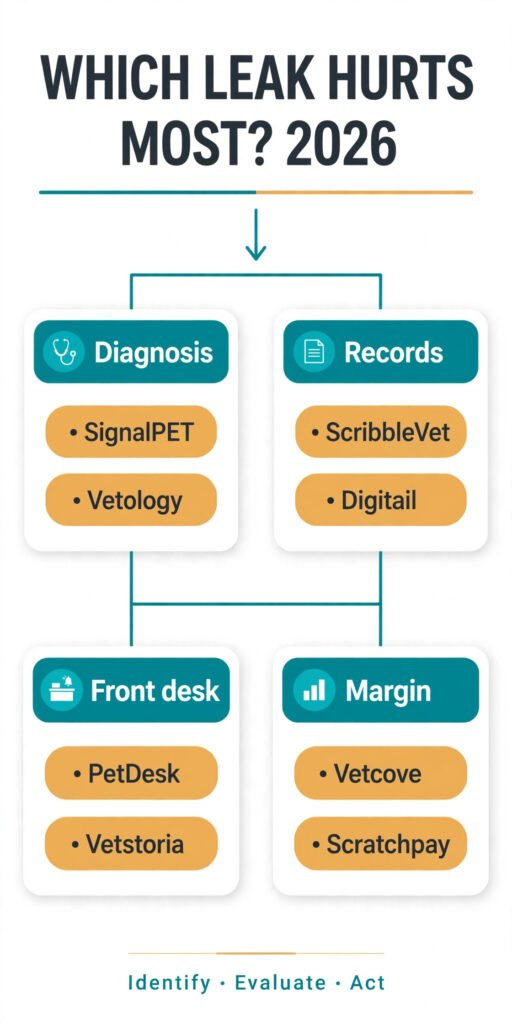
Pick by the leak you need to fix first
| Your biggest leak | Start with | If that fails, try |
|---|---|---|
| Radiographs waiting for a read | SignalPET | Vetology |
| Cancer treatment choices with no clear winner | ImpriMed | Vetology |
| Records finished late or not at all | ScribbleVet | Digitail |
| A practice system that fights the team | Digitail | Shepherd |
| Phones and reminders eating the front desk | PetDesk | AllyDVM |
| Empty slots that should have been booked online | Vetstoria | PetDesk |
| Clients drifting away between visits | AllyDVM | PetDesk |
| Drug spend with no clear comparison | Vetcove | Digitail |
| Calls, texts and payments in three places | Weave | PetDesk |
| Clients declining care over cost | Scratchpay | Weave |
| A record system for a small team | Shepherd | Digitail |
| Specialist input on a hard image | Vetology | SignalPET |
Where diagnosis slows down: imaging and prediction
Radiology is the clearest case for AI in a vet clinic, because the work is visual, time sensitive, and often done while the owner waits. These three tools do not replace a radiologist. They shorten the wait for a first read, flag what needs a human eye sooner, and give the vet something concrete to discuss with the owner before the patient leaves.
1. SignalPET
SignalPET reads routine canine and feline radiographs and returns an AI report in minutes, with an option to escalate to a board certified radiologist when a case is complex or urgent. The point is not a longer report. It is a faster first answer on common findings, so a vet can act, order the next test, or call the specialist while the patient is still in the clinic rather than the next day.
Pricing: Check checkout. SignalPET prices by volume and plan, so a small clinic and a busy emergency hospital will not pay the same rate.
Best for: General and emergency practices that take many routine radiographs and want a fast first read with a human radiologist available for escalation.
Watch out for: AI findings are decision support, not a diagnosis on their own. A clinic still needs a clear rule for which cases go straight to a radiologist, or the fast tool can create false confidence on hard cases.
Try it at: signalpet.com

2. Vetology
Vetology offers AI screening reports for canine and feline thoracic, abdominal and musculoskeletal imaging, plus on demand teleradiology from board certified radiologists, cardiologists and a dentist. Its distinguishing habit is public validation data: sensitivity and specificity published per classifier, with case counts, so a vet can see where a given model is strong and where it is weaker.
Pricing: Check checkout. Pricing depends on case volume and on whether the clinic uses AI screening, teleradiology, or both.
Best for: Clinics that want to check AI performance before trusting it, and practices that need specialist reads in the same workflow as the AI screen.
Watch out for: Reading validation tables takes time, and a busy vet may skip it. Assign one clinician to review which classifiers the clinic actually relies on, and revisit that list when new classifiers are added.
Try it at: vetology.net
3. ImpriMed
ImpriMed uses AI to predict how a specific patient’s cancer is likely to respond to different drugs, based on lab testing of the patient’s own cancer cells combined with a predictive model. For lymphoma and other cancers where several treatment paths exist, that prediction gives the vet and the owner a clearer basis for choosing a protocol, rather than starting with the most common option and adjusting only after it fails.
Pricing: Check checkout. ImpriMed pricing is per case and depends on the cancer type and test panel, so a single list price would mislead.
Best for: Oncology cases and referral level practices where drug choice is the main decision, and where owners want evidence behind a costly treatment plan.
Watch out for: Prediction is not a guarantee, and turnaround time matters. A clinic should set owner expectations clearly, including what happens if results arrive after treatment has already started.
Try it at: imprimed.com
Where records pile up: the practice system and the note
A practice system is the hardest tool to change, so it should be judged on the worst day, not the demo day. Does a SOAP note get finished before the vet leaves? Does an invoice capture what was actually done? Does a new hire find a patient record without asking a colleague? The three tools here answer those questions differently. One is a full system with AI built in. One is a simpler cloud system built around SOAP records. One is a scribe that sits beside whatever system a clinic already uses.
4. Digitail
Digitail is an all in one cloud practice system with a suite of AI workflows called Tails AI, covering dictation, medical summaries, voice to invoice capture, scheduling, client communication and practice analytics. The argument for Digitail is that AI works better inside the record than as a separate app, because it can use patient history, appointments and invoices as context.
Pricing: Check checkout. Digitail uses tiered plans for mobile, single site and multi site practices, and AI features sit in the higher tiers.
Best for: Growing clinics and multi site groups that want one system, and practices that are willing to move their whole workflow to get AI inside the record.
Watch out for: A full system move is a project, not a purchase. Budget time for data migration, template rebuilding and staff training, and do not judge it in the first week, when old habits still fight the new layout.
Try it at: digitail.com
5. Shepherd
Shepherd is a cloud practice system built around SOAP based medical records, with scheduling, billing, inventory and client communication in the same place. It suits teams that want a record that follows the clinical conversation, rather than a long list of forms. The SOAP structure keeps notes consistent when several vets share a caseload.
Pricing: Check checkout. Shepherd prices by clinic and user count, so a solo practice and a ten vet hospital should not expect the same quote.
Best for: Small and mid sized practices that want a clean SOAP record, a modern cloud system, and a shorter learning curve than a large legacy platform.
Watch out for: Simplicity has a cost. A specialty hospital with complex workflows, boarding, or heavy reporting needs should test those exact workflows in a trial, not assume they are covered.
Try it at: shepherd.vet
6. ScribbleVet
ScribbleVet is an AI scribe for veterinary exams. It listens to the exam conversation, drafts a SOAP note, and lets the vet review and edit before the note is saved. For a clinic that already likes its practice system, this is the lowest disruption way to fix the record backlog, because it does not require a system change. The vet stays in the room with the patient and the owner, instead of typing through the visit or finishing notes after hours. For the wider picture on clinic scribes, see our AI scribe tools for clinics guide.
Pricing: Check checkout. ScribbleVet offers a free trial, with paid plans by user and volume.
Best for: Any practice where notes are the bottleneck, especially clinics that do not want to change their practice system to get AI help.
Watch out for: A scribe still needs a reviewer. If no one checks the draft, small errors in dose, laterality or owner instructions can enter the record. Make review part of the visit, not an end of day chore.
Try it at: scribblevet.com
Where the front desk loses patients: booking, phones and follow up
Front desk work is interrupt driven: a phone call breaks a check in, and a reminder list waits while a walk in needs attention. Online booking and automated reminders move routine work out of phone hours. These three tools cover different slices of that problem, so pick the slice that hurts most first.
7. PetDesk
PetDesk is a client engagement platform for vet clinics, covering automated reminders, two way texting, a pet parent app, online booking and, in its communications product, AI call summaries. Its strength is breadth and compatibility: it connects to many practice systems, so a clinic can keep its existing record system and still give owners a modern way to book, confirm and message.
Pricing: Check checkout. PetDesk prices by clinic and product bundle, and third party listings vary, so the vendor quote is the reliable figure.
Best for: Clinics that want one client facing layer across reminders, texting, booking and the owner app, without changing their practice system.
Watch out for: Breadth can mean paying for modules the clinic never uses. Start with reminders and texting, measure no show and rebooking rates for a month, and add booking or loyalty only if the numbers justify it.
Try it at: petdesk.com
8. Vetstoria
Vetstoria is a booking specialist. It connects to the live practice schedule, applies clinic rules for appointment types and durations, and lets owners book real slots online at any hour, with changes syncing back to the practice system. Vetstoria is narrower than PetDesk, and for a clinic whose main problem is empty slots and phone booking, narrower is better.
Pricing: Check checkout. Vetstoria prices by clinic and region, with tiered plans for single and multi site practices.
Best for: Clinics with a busy phone line, a high share of routine bookings, and a practice system that supports live calendar sync.
Watch out for: Online booking needs clear rules. If appointment types, triage questions and emergency handling are not set up first, owners will book the wrong slot and the front desk will spend its saved time fixing bookings.
Try it at: vetstoria.com

9. AllyDVM
AllyDVM is a retention platform for vet clinics, with automated reminders, a client app called PetPage, and a retention calendar that surfaces patients who are due or overdue for care. Where PetDesk covers the whole client conversation, AllyDVM focuses on the gap between visits: the patient who has not been seen in fourteen months, the vaccine that is due, the dental check that was recommended and never booked.
Pricing: Check checkout. AllyDVM prices by tier and clinic size, so a single site quote and a group quote will differ.
Best for: Established clinics with a large inactive patient list, and practices that want to grow by bringing existing clients back for preventive care.
Watch out for: Retention messages only work if the underlying record is accurate. Clean up duplicate patients and outdated contact details first, or reminders will go to the wrong owner and damage trust.
Try it at: allydvm.com
Where margin leaks: stock, payments and client finance
Margin is lost quietly: a drug ordered from the dearest supplier, a payment chased for days, a plan declined because the full cost was due at once. These three tools address those leaks separately, and none requires a new practice system.
10. Vetcove
Vetcove is a purchasing platform that searches across major veterinary distributors and manufacturers, shows the price a specific clinic qualifies for, checks stock, and lets the team order from several suppliers in one place. It does not buy or hold stock itself. It sits on top of the supplier accounts a clinic already holds, so negotiated pricing and group discounts carry over.
Pricing: Free for independent practices and nonprofits. Paid tools exist for suppliers and multi site groups, but the clinic side is free to use.
Best for: Any clinic that buys from more than one distributor, and inventory managers who want price and stock comparison without changing suppliers.
Watch out for: Vetcove only helps if items are matched to the practice system correctly. Spend the setup time linking products once, or ordering will be fast and inventory counts will still be wrong.
Try it at: vetcove.com

11. Weave
Weave combines a phone system, two way texting, online scheduling and payments for service businesses, including vet clinics. Its value for a clinic is that a client can text a question, book, and pay from the same thread, and the front desk can see the full conversation instead of hunting through phone notes.
Pricing: Check checkout. Weave prices by location, with setup fees in some plans, so a multi site clinic should get a group quote.
Best for: Clinics that want to replace an old phone system and add texting and payments in the same move, especially practices with high call volume.
Watch out for: Weave was built for service businesses broadly, not only for vets, so its practice system integrations vary. Check the integration with the clinic’s specific system before signing, not just the feature list.
Try it at: getweave.com
12. Scratchpay
Scratchpay offers payment plans for pet care, letting owners split a bill over time instead of declining treatment or putting the full cost on a credit card at the desk. The clinic is paid, the owner gets a plan they can manage, and the conversation shifts from cost to care.
Pricing: Check checkout. Scratchpay terms depend on the owner, the plan and the clinic agreement, and interest or fees vary by plan, so the clinic should present the exact terms for each case.
Best for: Clinics that see clients decline recommended care over cost, and emergency or specialty practices with larger average bills.
Watch out for: A payment plan is still debt for the owner. Staff should present it as one option, with total cost and term stated plainly, and never as a way to push a client into treatment they cannot afford.
Try it at: scratchpay.com
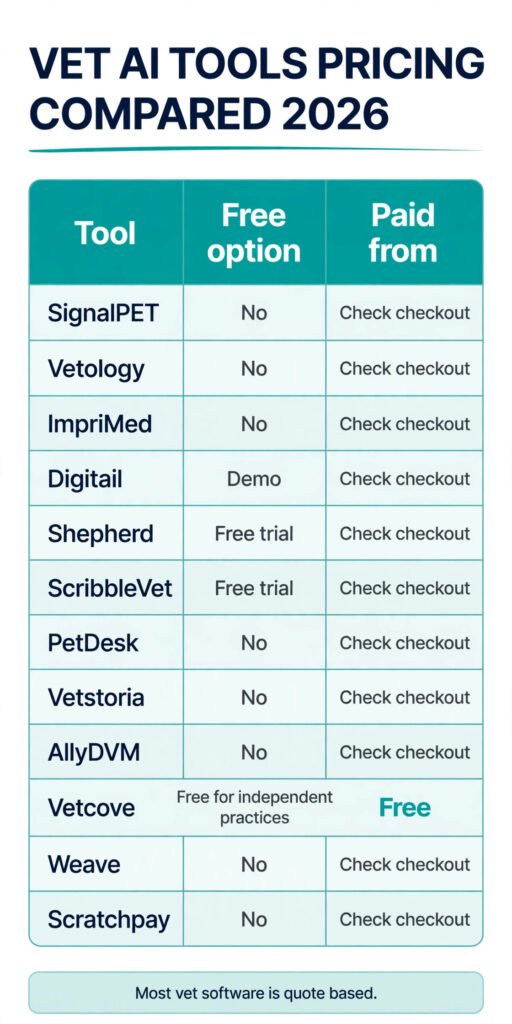
What it costs to run a vet AI stack in 2026
| Tool | Free option | Paid from | Pricing note |
|---|---|---|---|
| SignalPET | No | Check checkout | By volume and plan |
| Vetology | No | Check checkout | By case volume |
| ImpriMed | No | Check checkout | Per case, by panel |
| Digitail | Demo | Check checkout | Tiered by practice type |
| Shepherd | Free trial | Check checkout | By clinic and users |
| ScribbleVet | Free trial | Check checkout | By user and volume |
| PetDesk | No | Check checkout | By clinic and bundle |
| Vetstoria | No | Check checkout | By clinic and region |
| AllyDVM | No | Check checkout | By tier and clinic size |
| Vetcove | Free for independent practices | Free | Paid tools for suppliers and groups |
| Weave | No | Check checkout | By location, plus setup in some plans |
| Scratchpay | No | Check checkout | Terms vary by owner and plan |
A realistic starting stack is not all twelve tools. A small clinic can start with Vetcove for free, add a scribe and one booking tool, and measure the saving for a month. A larger clinic adding imaging AI, a full system and a phone platform will pay more, and should expect return from throughput and recovered appointments. Get a written quote for your size, volume and location first, because most vet software here is quote based.
How to choose without buying a second full system
Start with the leak, not the list. Rank the four leaks for your clinic over the last month: radiographs waiting overnight, notes unfinished at closing, calls unanswered, and stock or billing unresolved. The leak at the top is the first purchase.
Next, check integration before features. An imaging tool must work with your X ray and record system, a booking tool must sync live with the schedule, and a scribe must save cleanly into the existing record. Trial on real cases for at least a week and measure one number per tool: radiology turnaround, notes finished by closing, calls answered, or slots filled. If that number does not move, the tool is not working for that clinic.
Finally, name one owner per tool after purchase, for accuracy checks, record cleaning, or reminder review. That ownership is part of the cost, and it keeps tools useful after the first month. For staffing questions, see our AI tools for HR teams guide.
The five mistakes that turn vet AI into shelfware
Buying the full system first is the most common mistake. A clinic replaces its practice system to get AI, then spends months on migration while the original problem, such as booking or notes, stays unsolved. Fix the single leak first, then decide whether a system change is still needed.
Letting AI notes go unchecked is the second mistake. A scribe draft, an AI radiology screen, or a client message summary all need a clinician review step. Without it, small errors enter the record and trust in the tool falls, often permanently.
Skipping triage rules for online booking is the third mistake. Online slots without clear appointment types and emergency handling create wrong bookings, and the front desk spends its saved time correcting them.
Ordering faster without matching inventory is the fourth mistake. A purchasing tool only improves stock control if products are linked to the practice system once, and counts are checked. Otherwise ordering is quicker and stock data is still wrong.
Presenting payment plans badly is the fifth mistake. A plan offered without total cost, term and alternatives can push an owner into debt they cannot manage. Present the plan plainly, alongside the treatment options, and let the owner decide with full information.
Questions clinics actually ask before signing
Does AI radiology replace a radiologist?
No. They provide screening and first reads, with radiologist escalation available. The vet remains responsible for the diagnosis, and complex cases should still go to a specialist.
Can a small clinic afford vet AI tools?
Yes, if it starts narrowly. Vetcove is free for independent practices, scribes offer trials, and one booking tool costs less than a full system move. Start with one leak, measure for a month, and add a second tool only if the first paid for itself.
Will a scribe work with our existing practice system?
It depends on the scribe and the system. Test the exact save path into your own system during a trial, including edits, templates and invoice items, before committing.
How do we handle owner consent for AI notes and calls?
Tell owners plainly what is recorded, what it is used for, and how they can opt out. Keep the policy short, in the waiting room and booking flow. If a tool records calls or exams, check local consent rules first.
What if the AI tool and the vet disagree?
The vet decides, and that rule should be written down. For imaging, disagreement should trigger a radiologist read or repeat image. For notes, the reviewed version is the record.
Which tool should most clinics try first?
A scribe, if notes are unfinished at closing. A booking tool, if the phone line is the bottleneck. An imaging tool, if radiographs wait overnight. There is no single first tool, because it should match the clinic’s own biggest leak.
The short verdict for a busy practice
The best AI tools for veterinarians are not the ones with the longest feature lists. They fix a named leak in a real clinic week: a radiograph read before the owner leaves, a note finished before the vet leaves, a slot booked without a phone call, a drug ordered at the better price, a bill paid without a chase. Start with one leak, trial on real cases, measure one number, and keep the tool only if that number moves.