Compare two Saturdays at the same mini golf course. At the first, a parent calls three times, leaves a voicemail, sends a direct message, and finally gets a reply two days later asking for a headcount they do not yet have. At the second, the parent answers five questions on a phone, sees a package that fits the group size and budget, picks add-ons with prices shown upfront, pays a deposit, and gets a confirmation with a party timeline before they put the phone down. That difference is why venues use AI for mini golf birthday party bookings.
Both courses have the same holes, the same party room, and the same pizza. Only the booking experience is different, and it is the booking experience that decides which course gets the party. When you use AI for mini golf birthday party bookings, you are building the second Saturday on purpose, with a system that answers fast, prices clearly, and keeps the day organised.
Birthday parties are high stakes bookings for a small entertainment venue. A parent is planning around a child’s expectations, a guest list that keeps changing, dietary notes, a cake arrival, and a budget set by another adult who may not be in the room. If booking feels hard, the parent does not usually complain. They simply book somewhere easier. That is why party revenue is lost quietly, in unanswered messages and abandoned forms, rather than in dramatic cancellations. When you use AI for mini golf birthday party bookings, an AI assisted booking flow helps because it removes the waiting, the repeated questions, and the uncertainty about what is included.
Artificial intelligence fits this job in a narrow way. It can answer common questions at any hour, guide a parent through package choices, suggest add-ons that fit the age group and group size, draft confirmation and reminder messages, and build a day-of run sheet for staff. It cannot host the party, supervise children, or make a safety call. This guide gives you a full party booking workflow, package and add-on guidance, day-of coordination, and a checklist you can hand to staff. Prices in this guide are examples from real venue pages, and they vary widely by town, so check your own market before copying any number.
Why Party Bookings Leak, Even at Busy Courses
A busy course can still lose parties, because foot traffic and party bookings are different businesses. A walk-in player needs a putter and a scorecard. A party parent needs a room, a start time, a host, food, and a plan for twenty children arriving at once. When the same phone number and the same inbox handle both jobs, party enquiries get buried under general questions, and replies arrive after the parent has already booked elsewhere. The leak is worst on weekends, which is exactly when party demand is highest and staff are busiest on the floor.
Guest count uncertainty makes the leak worse. Parents often book before every reply is in, then need to add guests, change the room size, or switch a package.
A booking system that treats every change as a new enquiry, with a fresh round of messages, frustrates parents and creates double bookings. When you use AI for mini golf birthday party bookings, a good system treats the booking as a living record. The parent updates the count, the system recalculates the price, and staff see one current version, not five email threads. AI helps here by drafting the update message, checking the new count against room capacity, and flagging changes that need a human decision, such as a group that has outgrown its room.
Deposit and payment friction is another quiet leak. Venues commonly ask for a deposit to hold a date, and some published examples ask for a non-refundable deposit that counts toward the package total. If the deposit step is unclear, or if it requires a phone call during business hours, parents delay, and delayed bookings become lost bookings. A clear deposit rule, stated on the booking page with the amount, the deadline for final payment, and the cancellation terms, removes that friction. AI can answer deposit questions instantly, but the policy itself must be written by the venue, in plain language, before automation goes live.
Packages That Parents Can Compare Without a Phone Call
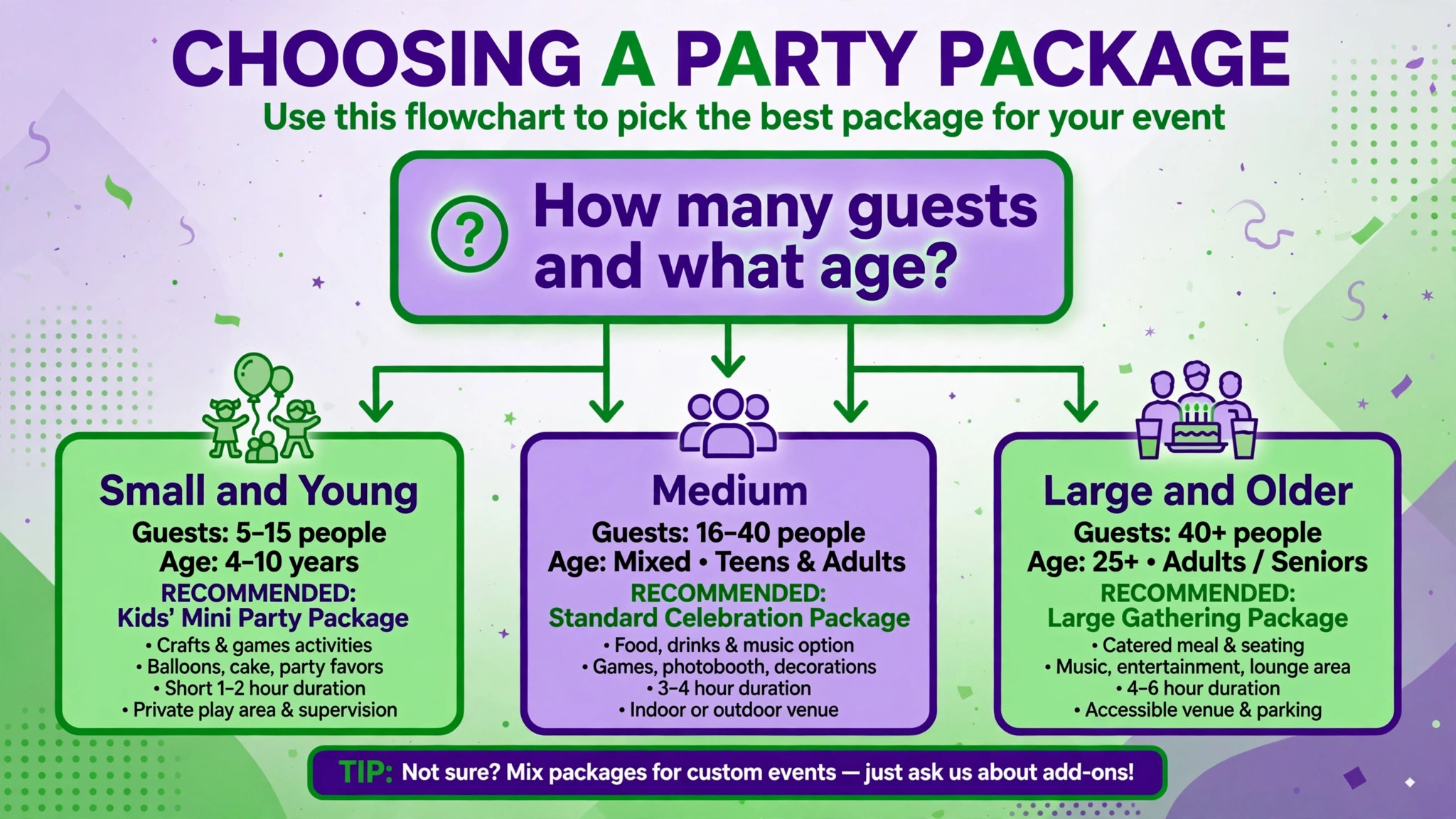
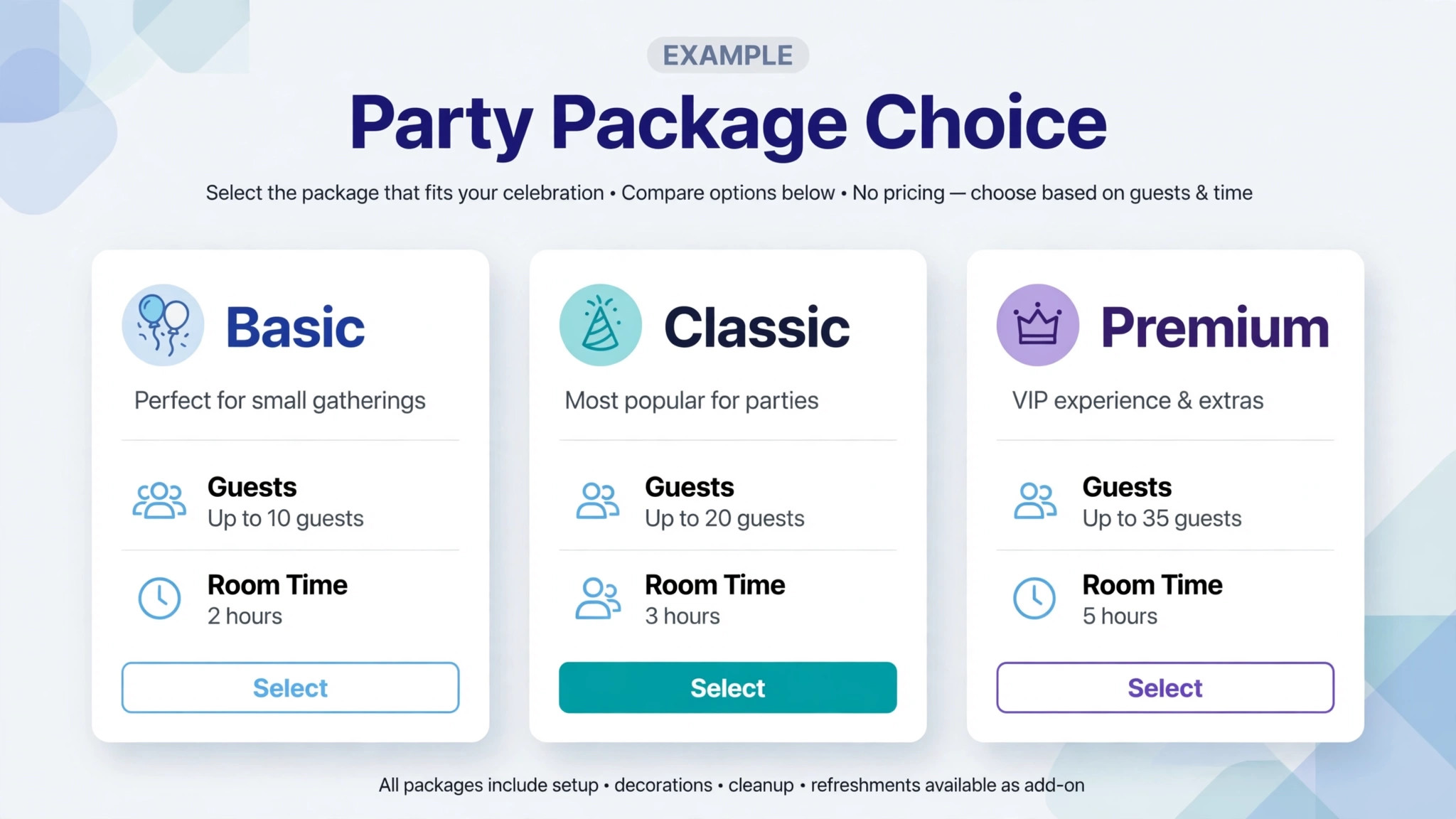
Parents compare packages by three things, which are group size, time, and what is included. A package page that hides any of those three forces a phone call, and every forced phone call is a chance to lose the booking. Published mini golf party packages show how varied the market is. Some venues build a party around ten guests, a private room for ninety minutes, one round of golf, and arcade credit, while others build around twelve or fifteen guests, two hours in a room, and pizza included.
The exact numbers matter less than the clarity. Each package should state the guest count included, the room time, the golf included, the food and drinks included, and the price for extra guests.
Tiered packages work well for mini golf because families have different budgets and different appetites for hosting help. A simple tier might include a room and golf only,
a middle tier might add a host, pizza, and arcade credit, and a top tier might add a longer room time, a dedicated concierge, and return passes. When you use AI for mini golf birthday party bookings, AI can guide a parent to the right tier by asking about age group, group size, and whether food is wanted, then showing only the tiers that fit. That guidance is useful only if the tiers are genuinely different. Three packages that differ only in arcade credit will confuse parents, while three packages that differ in room time, hosting, and food will help them choose.
Age guidance belongs on the package page too. Younger children often need shorter golf rounds, more host help, and simpler food, while older children may want a longer session, arcade time, and a competitive format. Published packages sometimes recommend a simpler party for ages seven and under and a longer, activity heavy party for ages eight and up, which is a sensible split to borrow. AI can ask the birthday child’s age and suggest the matching tier, but staff should still confirm the choice with the parent, because a group of mixed ages may need a blend of both.
| Package element | What to state clearly | Why parents ask |
|---|---|---|
| Guest count | Included guests, extra guest price | Guest lists change after booking |
| Room time | Private room minutes, setup and cleanup | Parents need to plan arrival and cake |
| Golf included | Rounds, holes, and time on course | Younger groups play slower |
| Food and drink | Pizzas, pitchers, dietary options | Allergies and budgets drive choice |
| Host help | Host, concierge, or self hosted | Parents want to enjoy the party |
| Deposit | Amount, deadline, refund terms | Parents need certainty before paying |
How to Use AI for Mini Golf Birthday Party Bookings, From First Question to Confirmed Party
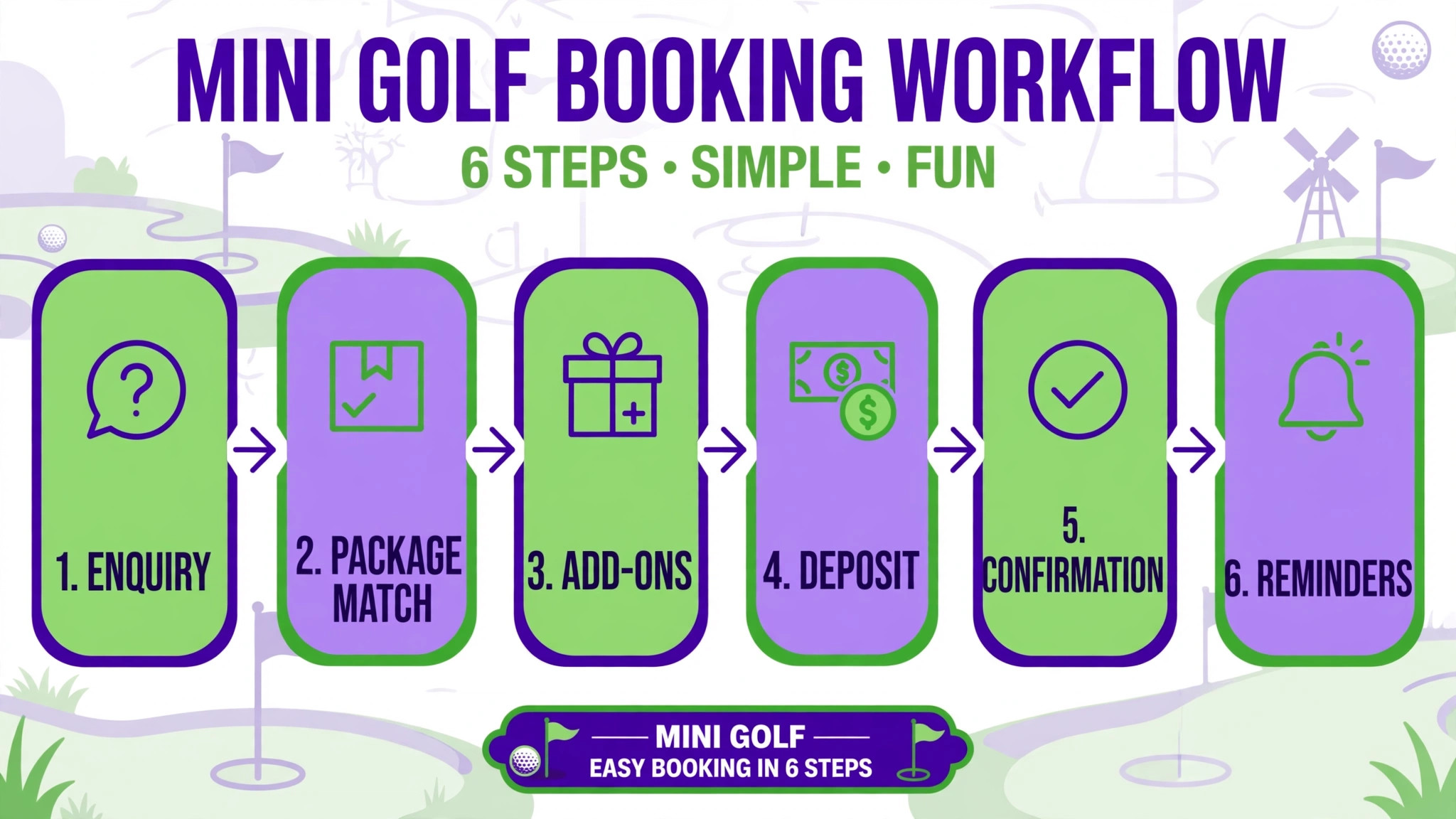
A booking workflow that parents trust has six stages, which are enquiry, package match, add-ons, deposit, confirmation, and reminders. AI can speed up every stage, but a person should handle the exceptions, such as a group larger than any room, a request for a date that is already held, or a parent who needs an accessibility arrangement. Keep the workflow in order, because skipping the package match to rush a deposit creates the most common party problem, which is a family that paid for the wrong package.
Step 1, answer the enquiry in minutes, not days
The first reply should arrive quickly, even outside business hours. An AI assistant can answer whether a date is free, what packages fit a group size, and what the deposit is, using the live calendar and the published price list. It should also know when to hand over to a person, such as when a date is already booked, when the group is very large, or when the parent asks about accessibility, allergies, or a special need. A fast answer that is wrong about availability is worse than a slower answer that is right, so the assistant must read the real calendar, not guess from a general schedule.
Step 2, match the package to the group, not the other way round
Ask five questions and no more. The date and preferred start time, the birthday child’s age, the expected guest count, whether food is wanted, and whether a private room is needed. From those answers, show one recommended package and one alternative, with the full inclusions and the extra guest price for each. Showing every package at once overwhelms parents, while showing one recommendation with a clear alternative helps them decide. If the group is close to a tier boundary, say so plainly, and explain what happens if two more guests join, so the parent is not surprised by a later charge.
Step 3, offer add-ons at the moment they make sense
Add-ons sell best when they solve a problem the parent already has. Extra pizza solves a larger than expected guest list. Extra arcade credit solves a wait between golf and cake. A photo package solves the problem of the parent who wants to watch the party instead of photographing it.
Goodie bags solve the end of party scramble. Published venue pages list add-ons such as extra guests, extra pizza, tableware, extended room time, premium prizes, custom decorations, and photo packages, and each of those maps to a real party moment. When you use AI for mini golf birthday party bookings, AI can suggest add-ons based on group size and age, but it should never push an add-on the parent has already declined, and it should show the running total after every addition, so there is no surprise at checkout.
Step 4, take the deposit and lock the details
Once the package and add-ons are chosen, the deposit step should be short. Show the deposit amount, the balance due, the final payment deadline, and the cancellation terms on one screen, and let the parent pay without a phone call. Send a confirmation immediately, with the date, start time, room, package, guest count, add-ons, deposit paid, and balance due. A confirmation that omits the balance due creates a later dispute, so include it even if the parent has not asked. If a parent cannot pay online, offer a phone payment option with a named contact and a time window, and hold the date only for the period stated in the policy.
Step 5, confirm the final details a week before
A week before the party, the system should ask for the final guest count, dietary notes, cake details, and arrival plan. AI can draft that message and chase a missing reply once, but a person should call if the final count is still missing three days before, because room setup, food ordering, and staffing depend on it. Final food orders often have a deadline, and some published venues ask for pizza orders days in advance, so state that deadline in the confirmation and again in the final details message. A parent who learns about a food deadline on the day of the party has been let down by the booking system, not by their own planning.
Step 6, build the day-of run sheet automatically
On the day, staff need one run sheet, not a chain of messages. The run sheet should list the party name, start and room time, guest count, package, add-ons, food order, cake arrival, host name, and any dietary or accessibility notes. When you use AI for mini golf birthday party bookings, AI can build that sheet from the booking record and print or display it for the host. The host should still check the sheet against the room before guests arrive, because a booking record cannot see that a table is missing or that a room was not reset after the previous party. The run sheet is a tool for the host, not a replacement for the host.
Day-of Coordination That Keeps Parents Relaxed
Day-of coordination is where a good booking system earns repeat parties and word of mouth. The parent should be able to arrive, hand over the cake, and enjoy the party, while the host handles timing, golf groups, food, and cleanup.
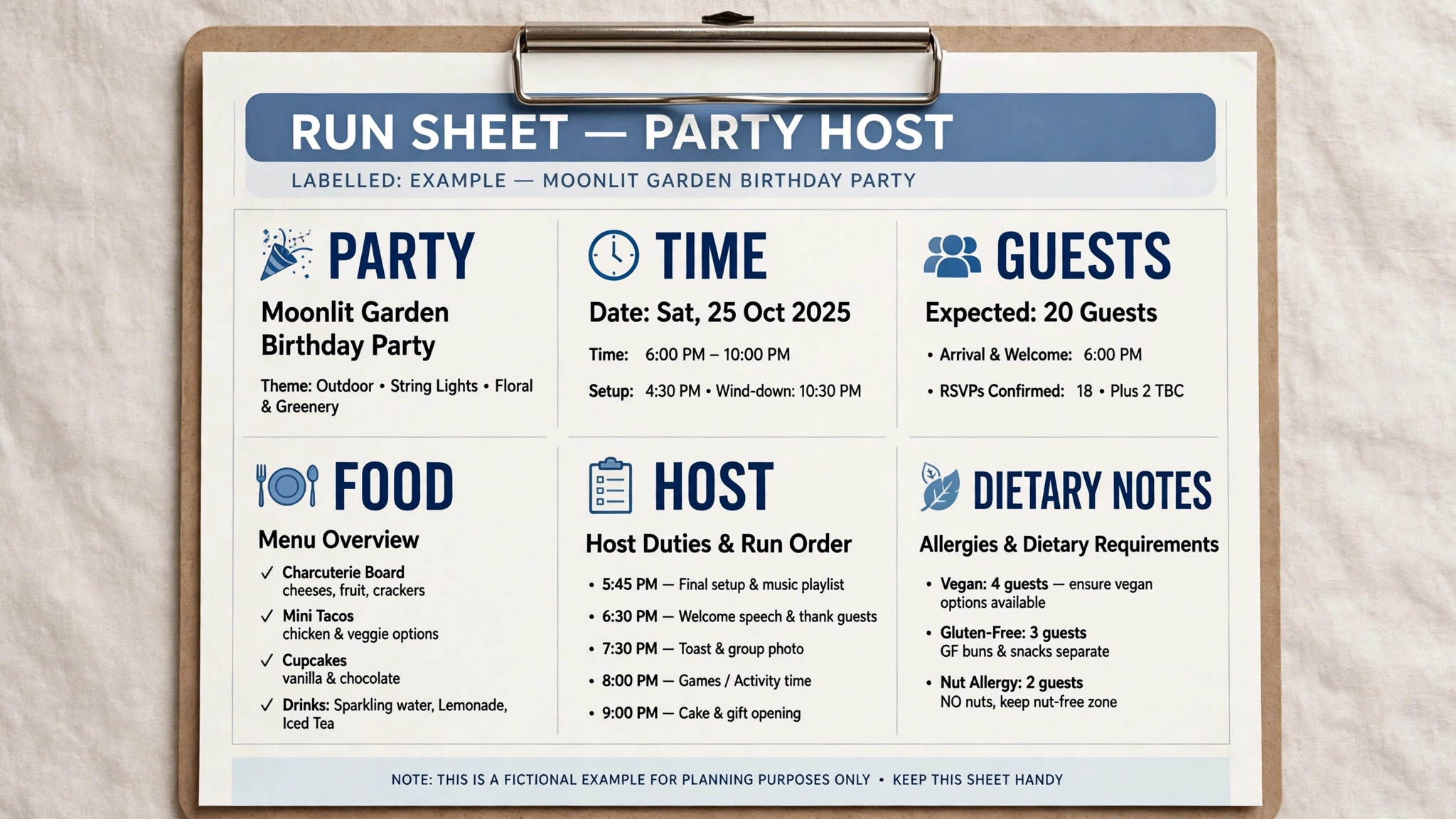
That only works if the host has a clear timeline. A typical two hour party might run as arrival and room setup for fifteen minutes, golf in small groups for forty five minutes, room time for cake and food for thirty minutes, and arcade or free play for the remaining time, with cleanup after guests leave. Timings vary by venue and package, so publish your own timeline in the confirmation, and let the host adjust it on the day if golf runs long.
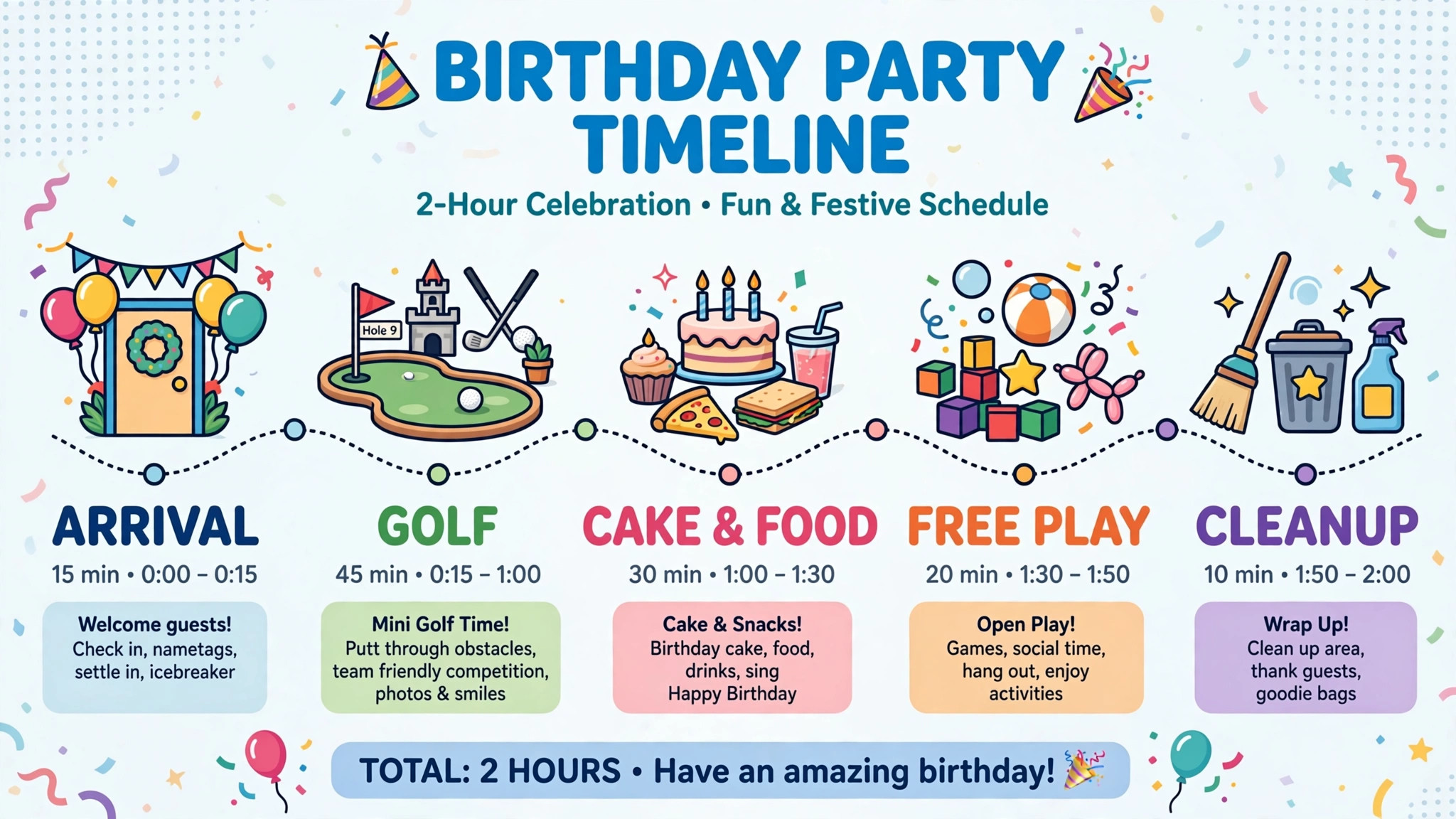
Golf grouping is a practical detail that AI can help plan and staff must execute. Groups of three or four players move faster and enjoy the course more than one large group of fifteen waiting at each hole.
Published party guidance suggests starting golf about fifteen minutes after the party start, with groups formed as guests arrive, and a total golf time of around forty five minutes for a standard round. AI can draft the group list from the guest count and ages, but the host should finalise it on arrival, because the actual children who turn up are rarely exactly the list the parent sent. Keep spare putters and scorecards ready, because a missing putter at the first hole delays every group behind it.
Food timing deserves the same care. Pizza ordered too early goes cold while children are still on the course. Pizza ordered too late leaves a hungry room waiting after cake. The host should confirm the food order time with the kitchen or supplier when the party starts, and adjust it if golf is running late. Dietary notes must travel with the food order, not stay in the booking inbox. A child with an allergy should never depend on a parent remembering to tell the host at the door. Put dietary notes on the run sheet in bold, and check them when food is served, not when it is ordered.
Add-on Upsells That Help the Party, Not Just the Bill
Upsells work when they remove a worry. A parent who is worried about running out of food will welcome extra pizza. A parent who is worried about what guests do while waiting will welcome arcade credit. A parent who is worried about remembering the day will welcome a photo package. Upsells fail when they feel like a sales pitch, especially when they arrive after the deposit has been paid and the parent thought the price was final. The rule is simple. Show the full price, including add-ons, before the deposit, and never add a charge after confirmation without the parent approving it.
Timing matters for upsells too. The best moment to offer extra guests is when the parent updates the guest count, because the need is real at that moment. The best moment to offer extended room time is at booking, when the parent is choosing between a ninety minute and a two hour party, not at the end of a party when the room is needed for the next group.
The best moment to offer goodie bags is a week before, when the parent is thinking about what guests take home. AI can time those offers from the booking stage, but a person should make the offer when the parent is on the phone or at the counter, because a sensitive upsell, such as a premium prize for the birthday child, lands better as a suggestion than as an automated prompt.
Price add-ons per unit, not as vague extras. Extra guests should show a per guest price. Extra pizza should show a per pizza price. Extended time should show a per hour price. Published examples range widely, from a modest per guest addition to a larger per guest price for premium packages, and from a small tableware fee to a larger photo or decoration package, so set your own prices from your costs and your market, and publish them. A parent who can calculate the total for twenty guests without a phone call is a parent who is more likely to book, and less likely to dispute the final bill.
Handling Changes, Cancellations, and Rain
Changes are normal in party bookings, and the system should treat them as normal, not as a problem. A guest count change should update the price and the room setup in one step. A date change should check the new date against the calendar and show any price difference before confirming. A package upgrade should show the difference due, not restart the booking. AI can draft the change confirmation and update the run sheet, but a person should approve any change that affects room capacity, staffing, or food already ordered, because those changes have costs that a model cannot see.
Cancellations need a policy that is clear before the deposit, and kind in practice. State the deposit terms, the final payment deadline, and what happens if the party cancels or reschedules, in the confirmation and on the booking page. When a cancellation does happen, the system should free the room and the host time immediately, so the slot can be resold, and it should send a polite closing message with an offer to rebook. A cancelled party that is handled well often returns as a future booking. A cancelled party that is handled with a cold automated message, or with a dispute over a deposit the parent did not understand, rarely does.
Weather and course conditions need a plan for outdoor venues. Indoor glow courses avoid most weather risk, but outdoor courses need a rain policy stated at booking, including whether the party moves indoors, reschedules, or receives a credit. AI can send a weather check message the day before, and can offer rescheduling options if a forecast looks poor, but the final call about closing a course should be made by staff on the day, based on actual conditions. Never let an automated message promise a course will be open when staff have not yet checked it.
The Party Booking Checklist
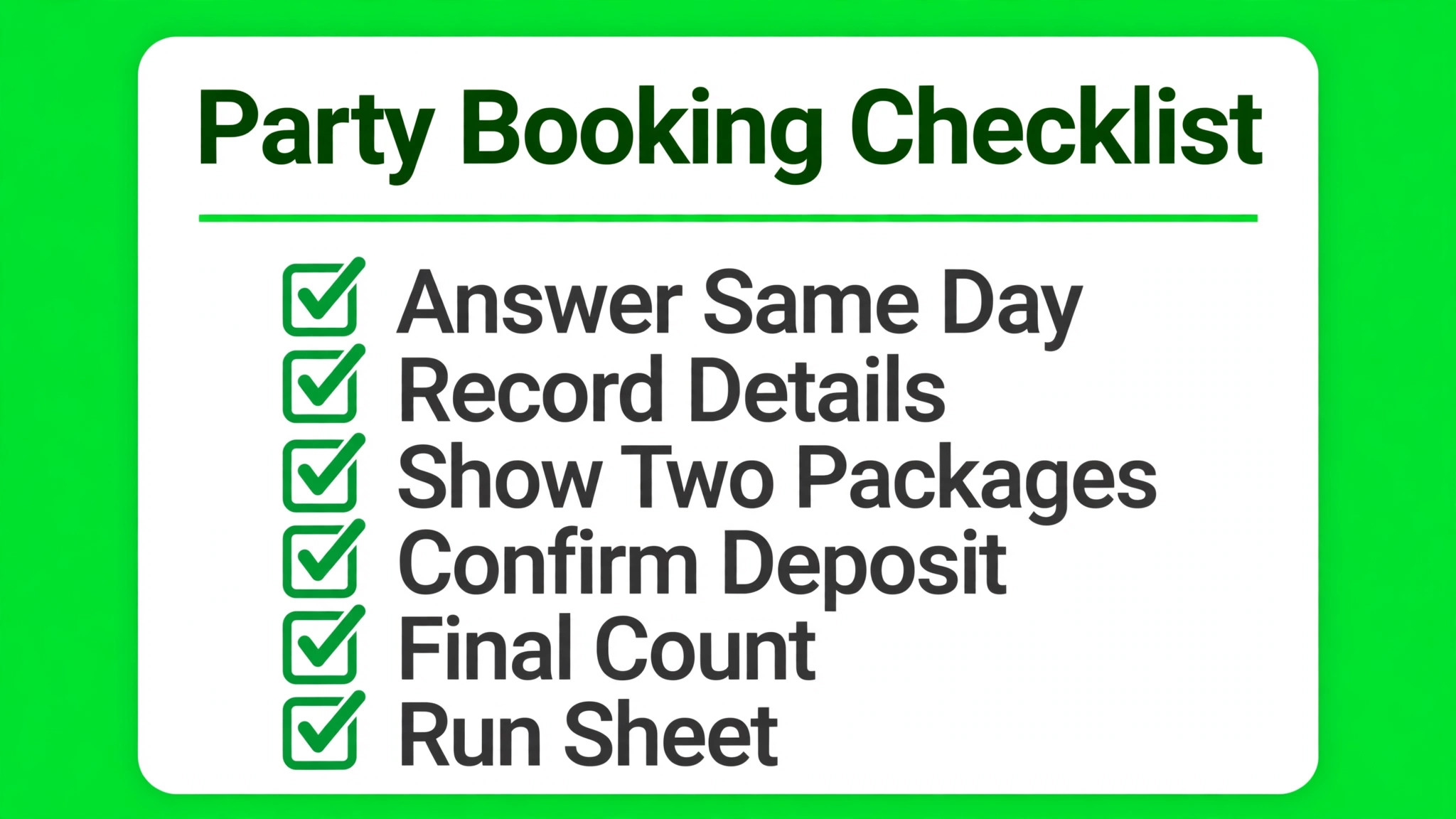
Use this checklist for every party, and review it weekly with the booking and hosting teams. It turns the workflow in this guide into a routine that survives a busy Saturday.
– Answer every party enquiry the same day, with date availability and a package match, not a request for more information. – Record the date, start time, birthday child’s age, guest count, food choice, and room need in one booking record. – Show one recommended package and one alternative, with included guests and extra guest price stated. – Offer add-ons at the right stage, with per unit prices and a running total before deposit. – Take the deposit, state the balance due and final payment deadline, and send a full confirmation at once. – Ask for the final guest count, dietary notes, cake details, and arrival plan one week before. – Chase a missing final count by phone three days before, and confirm food orders against the food deadline. – Build a day-of run sheet with party name, times, counts, package, add-ons, food, host, and dietary notes. – Group golf in threes or fours, confirm food timing when golf starts, and check dietary notes at serving. – Free the room, host time, and calendar slot immediately on cancellation, and send a polite rebooking offer. – Log booking source, package chosen, add-ons sold, and change reasons, and review them monthly.
Mistakes That Cost Parties
The first mistake is a booking form that asks for everything and explains nothing. A form with twenty fields, no prices, and no package descriptions will be abandoned, and AI cannot rescue a form that parents do not finish. Keep the first booking step to five questions, show prices early, and let parents add detail later. The second mistake is answering party enquiries from a personal inbox with no calendar access. Replies arrive late, dates get double booked, and nobody can tell which enquiry is current. Move party enquiries to one shared inbox or booking tool, with calendar access for whoever answers.
The third mistake is treating the host as an afterthought. A party without a named host, or with a host who first sees the booking on the day, will feel disorganised even if the booking was smooth.
Assign the host at confirmation, share the run sheet a day before, and give the host authority to adjust golf groups and food timing on the day. The fourth mistake is forgetting the parent after the party. A thank-you message, a return pass offer, and a simple request for a review, sent the next day, turn one party into repeat visits. AI can draft that follow-up, but the offer inside it, such as a return visit discount, must be a real offer approved by the venue.
Measuring Party Booking Performance
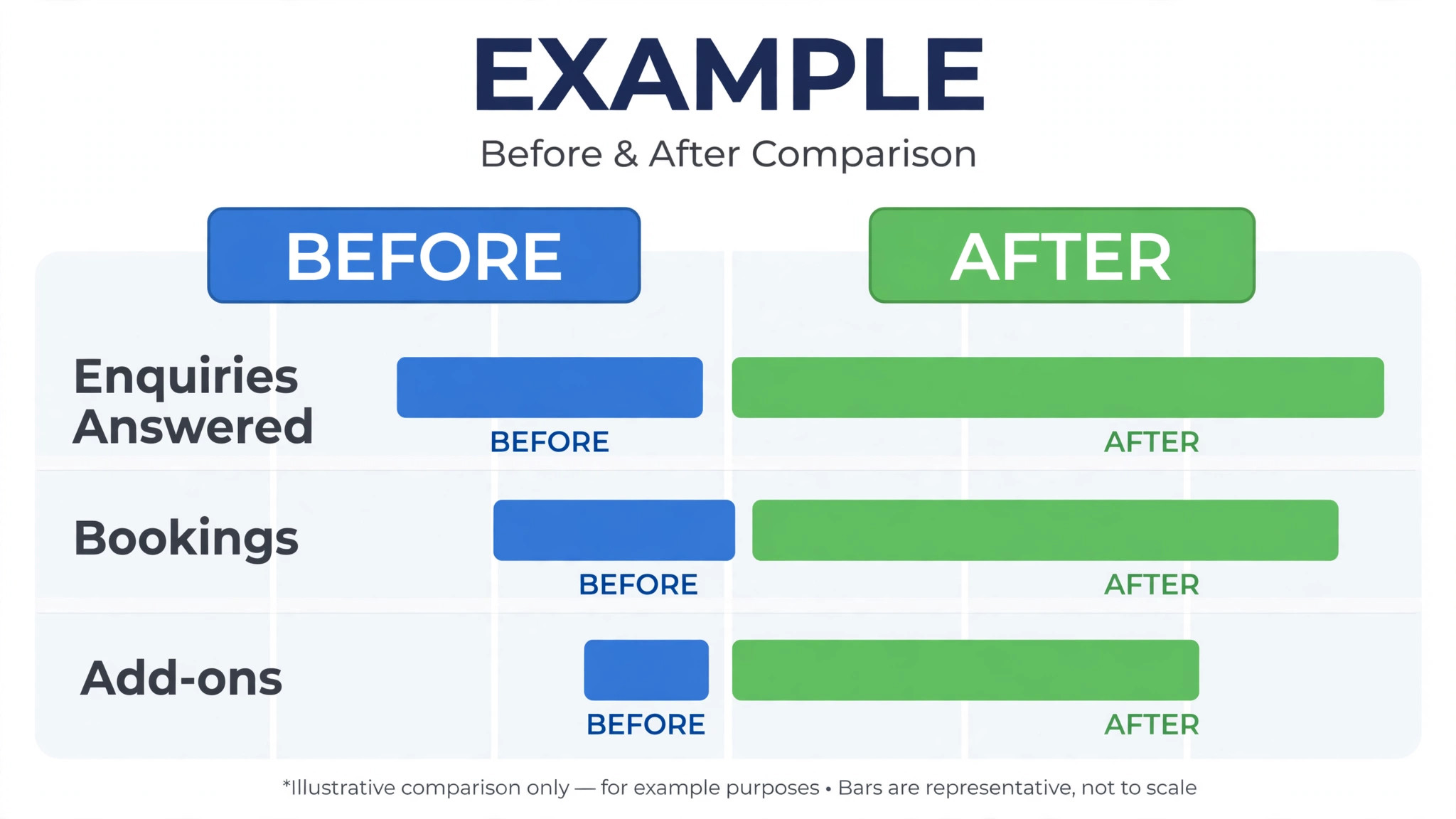
After one month, measure enquiries received, enquiries answered within one business day, bookings confirmed, deposit conversion rate, average party size, average revenue per party including add-ons, and cancellation rate. Compare those numbers with the same period before the new workflow, using the same definitions. If enquiries rise but bookings do not, the package page or deposit step is likely the problem. If bookings rise but add-on revenue does not, the add-on timing or pricing is likely the problem. If cancellations rise, check whether the deposit policy was clear at booking, or whether final count chasing started too late.
After three months, add parent experience measures. Reviews mentioning the party, repeat party bookings, return visits by party guests, and complaints about timing, food, or room setup. For a venue that wants to use AI for mini golf birthday party bookings, a party business lives on word of mouth, and a parent who had a relaxed party will recommend the venue without being asked. Report the numbers to the team in plain language, with one action for the next month, such as fixing the most common change reason, or rewriting the package page for the tier parents find confusing. That discipline turns a booking tool into a party business that grows.
For related reading, see how to set up a waitlist for a small service business, how to set up a client feedback loop for a small business, how to plan a service business holiday schedule, how to write a cancellation policy for a small business and local SEO strategy for a small service business. Those posts cover nearby queueing, feedback, scheduling, and cancellation problems, and the same lesson applies when you use AI for mini golf birthday party bookings. Answer fast, price clearly, keep one current booking record, and let the host run the day.
Frequently Asked Questions
How fast should a mini golf party enquiry be answered?
Aim for the same day, and within minutes during opening hours where possible, because parents often enquire at several venues at once and book the first clear answer they receive. An AI assistant can give an instant first answer about availability and packages, with a human follow-up for complex requests. If same day answering is not possible, set an auto reply that states when a person will reply, and keep that promise, because a silent inbox loses parties without anyone noticing.
What should a mini golf birthday package include?
At minimum, state the included guest count, room time, golf included, food and drinks, host help, and extra guest price. Most published packages add arcade credit, a gift or surprise for the birthday child, tableware, and a return pass, and many offer pizza and drinks as part of a middle or top tier. The exact inclusions matter less than clarity, because a parent who cannot compare packages without a phone call is a parent who may book elsewhere.
When should add-ons be offered?
Offer add-ons when they solve a problem the parent has at that stage. Offer extended room time and food at booking, extra guests when the count changes, goodie bags and photo packages a week before, and extra arcade credit when guests are waiting between golf and cake. Show the running total after every addition, and never add a charge after confirmation without parent approval, because a surprise charge damages trust more than a missed upsell costs revenue.
How do you handle a guest count that keeps changing?
Keep one booking record that the parent can update, recalculate the price on each change, and state what happens at tier boundaries before the change is confirmed. Chase the final count one week before, call three days before if it is still missing, and base room setup and food orders on the final count, not the original estimate. A system that treats changes as normal will keep parents calm, while a system that treats every change as a new enquiry will frustrate them.
What deposit terms work for party bookings?
Published venues commonly ask for a deposit to hold a date, with the deposit counting toward the package total, and with final payment due before or on the day. Whatever terms you choose, state the deposit amount, the balance due, the final payment deadline, and the cancellation and rescheduling terms on the booking page and in the confirmation. Clear terms before payment prevent most deposit disputes, and a kind, prompt response to a cancellation keeps the door open for a future booking.
Should AI run party bookings without staff involvement?
No, and it should not try. AI is good at answering common questions, guiding package choice, drafting messages, and building run sheets, while staff are needed for large groups, accessibility needs, food deadlines, room capacity decisions, and day-of hosting. The best model is AI for speed and routine, plus a named host and a human decision for every exception, so parents get fast answers and a relaxed party day.
A Closing Word for Course Owners
A mini golf party is not sold by the course alone. It is sold by how easy it feels to book, how clear the price feels before paying, and how relaxed the parent feels on the day.
Build a booking flow that answers fast, and when you use AI for mini golf birthday party bookings, shows one recommendation with a clear alternative, prices add-ons per unit, locks the deposit with a full confirmation, and hands the host a run sheet that actually matches the room. Venues that do that work will book more parties from the same enquiries, earn more per party from add-ons parents genuinely want, and hear about it from parents who recommend the course without being asked. That is the return on getting party bookings right.