
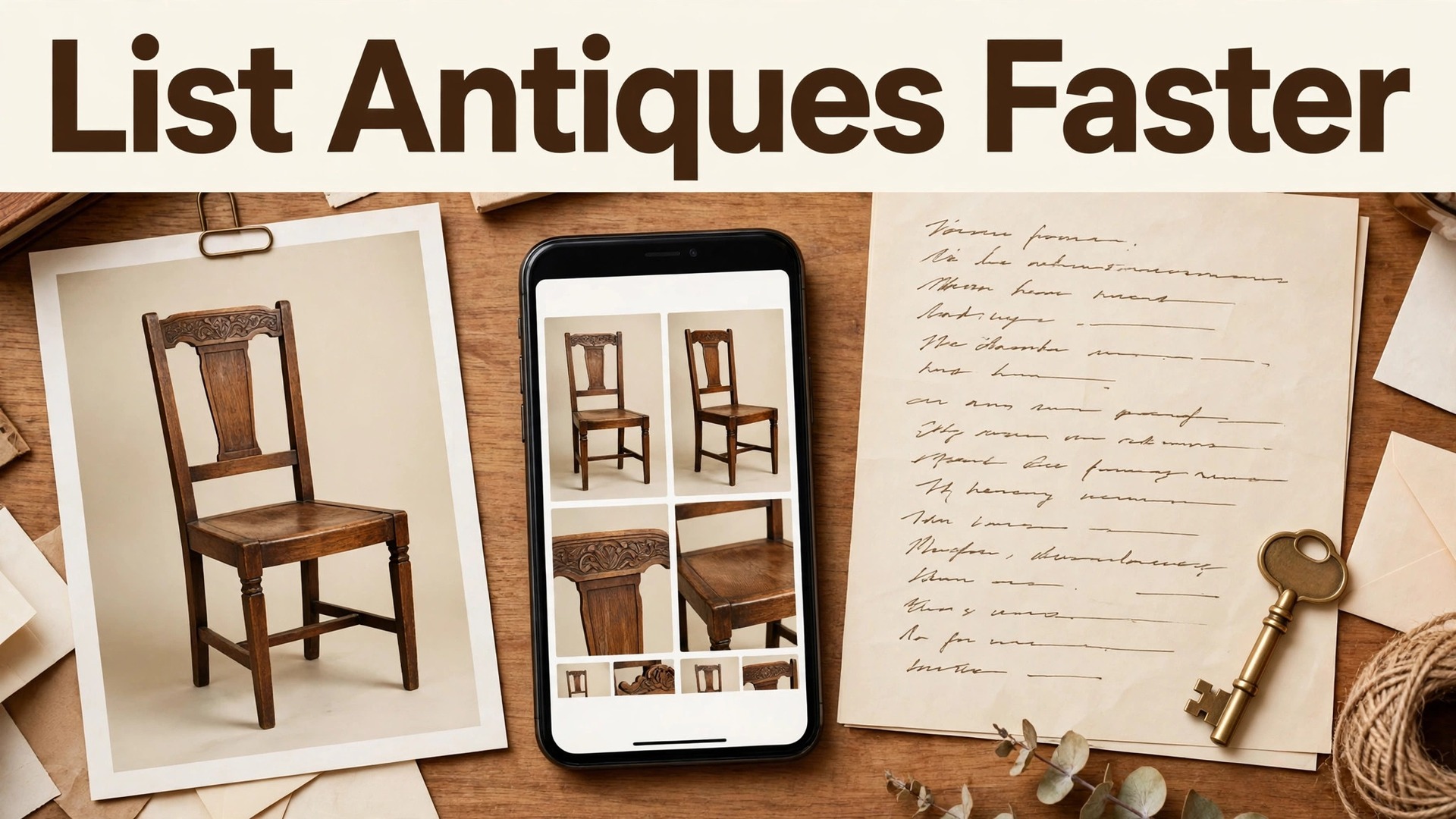
A single antique listing can take 45 to 90 minutes to prepare by hand. Photographs, measurements, era research, condition notes, and a price check all compete for the same hour, and when a shop holds 200 pieces, that work stacks into weeks of backlog. That backlog is why many shops choose to use AI for antique shop inventory listings, not to replace a dealer’s judgment, but to move routine drafting work faster while the dealer still checks every fact before anything goes live.
This guide gives you a workflow you can run in a real shop, with real tools, on a real afternoon. You will learn how to intake a piece, photograph it in a repeatable way, draft with AI, verify every claim, price from evidence, publish across channels without selling the same piece twice, and measure which listings actually work. It is written for owners, shop managers, and the one person in a small team who does everything from buying trips to packing boxes.
How to Use AI for Antique Shop Inventory Listings Without Losing the Story
Antiques sell on story and evidence together. A buyer wants to know what a piece is, when it was made, who made it if that can be proved, what condition it is really in, and why the price makes sense. AI can help you say all of that clearly and quickly. It cannot know whether the drawer runner is original, whether the marble top has a repair, or whether the gilt has been refreshed. That knowledge lives in your hands and eyes, and the workflow below keeps it at the center.
The Shop Intake System That Makes AI Useful
When you use AI for antique shop inventory listings, input quality decides output quality. A vague note like “old wooden chair, nice” will produce a vague listing, no matter how good the tool is. A structured intake note, taken in five minutes at the moment a piece arrives, will produce a listing that is close to publishable. Build intake into receiving, not into a separate admin day that never happens.
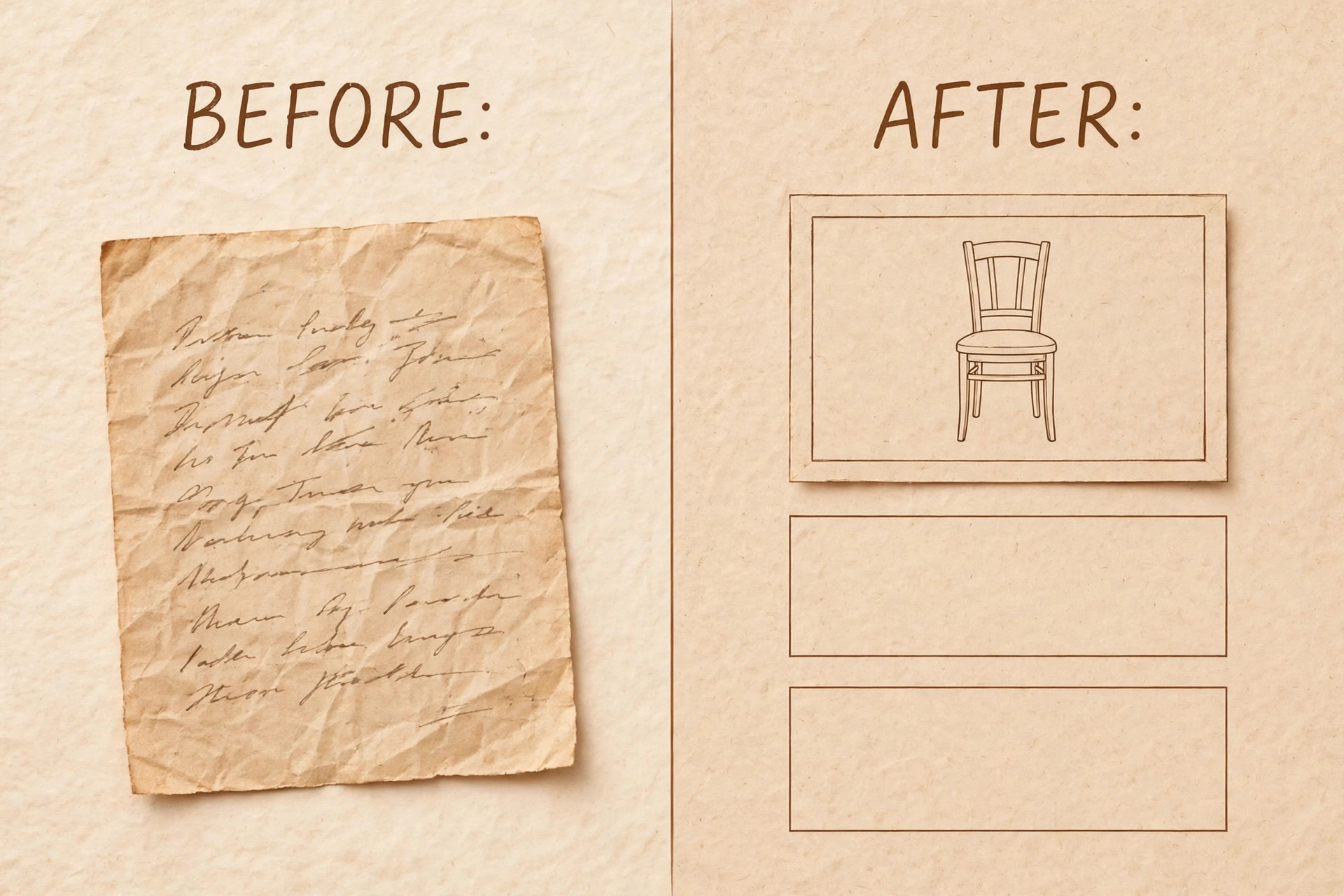
Capture the facts before you write a word
Walk around the piece once with a notebook or a phone form and record what you can see and touch. Note the form first, such as a chest of drawers, a wing chair, or a pair of wall sconces. Then note the main material, any secondary material, and the finish. Look for construction clues, such as dovetails, screws, nails, castors, and drawer linings, because those clues often date a piece more reliably than its style alone.
Record condition in plain language while you are standing next to the piece. Note scratches, chips, cracks, repairs, replaced parts, stains, fading, wobble, missing keys, and working condition for anything mechanical or electrical. Photograph each flaw as you find it. Buyers of antiques expect age and wear, and they punish surprises far more than they punish honest wear. Your condition notes are also your best protection against a return claim that says a flaw was hidden.
Measure once, in a fixed order
Measurements prevent more questions and returns than any other single habit. Use the same order every time so nothing is missed. For most furniture, record width, depth, and height in that order, then seat height and seat depth for chairs, and internal dimensions for drawers or cabinets where a buyer needs to know what will fit inside. For mirrors, clocks, lamps, and silver, record the dimensions a buyer actually plans around, such as overall height, diameter, or shade size.
Photograph in a repeatable set
Good photos do more selling than good adjectives. You do not need a studio, but you do need a repeatable set. Use daylight or two matched lamps, a plain background, and the same camera height for the main view. Photograph the front, both sides, the back, and a three-quarter view. Then add close views of marks, joints, hardware, texture, and every flaw you noted. For a set or pair, photograph the pieces together and separately, so a buyer can see whether they truly match.
The Eight Step Listing Workflow
This is the core workflow when you use AI for antique shop inventory listings. Run it piece by piece, or in small batches of similar items, and do not skip the verification step. Batching works well for sets, such as six dining chairs or a run of brass candlesticks, because the style research and the photo setup can be shared. It works badly when it tempts you to copy one description across pieces that differ in condition, because buyers notice, and returns follow.
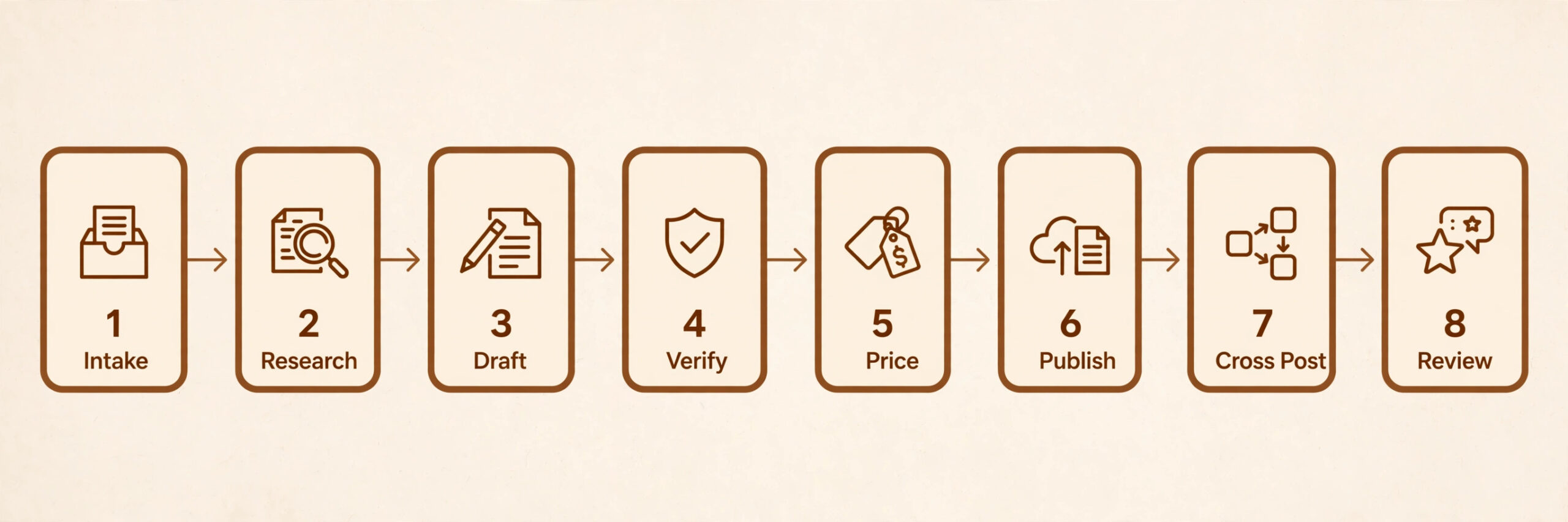
Step 1. Intake and stock number
Assign the stock number, complete the intake note, and take the full photo set. Enter the piece in your inventory system the same day it arrives, even if the listing will wait until later in the week. A piece that exists only as a photo on a phone is effectively invisible to your business, and it is easy to lose track of what you own, what you paid, and what you still need to do.
Step 2. Research the piece before drafting
Spend ten to twenty minutes on research for an ordinary piece, and longer for a high value or unusual one. Check marks against reference sources, look at sold listings for close comparables, and note construction details that support or contradict a date. Write down three to five comparable sales with dates and prices, and note how your piece differs from each one. That short research note becomes the evidence base for both the description and the price.
Step 3. Draft with AI from your facts only
Feed AI your intake note, your measurements, your condition notes, and your research points, and ask for a title, a description, a condition summary, and search terms. Do not ask AI to fill gaps in your facts. If you do not know the maker, say that the maker is unknown and ask AI to phrase that honestly. If a date is a range, keep it a range. A draft that says “maker unknown, circa 1890 to 1910, based on dovetail and hardware details” is stronger than a draft that invents a workshop name.
Step 4. Verify every claim against the piece
Read the draft with the piece in front of you, or at least with the flaw photos open. Cross out any claim you cannot support. Check dates, materials, style names, dimensions, and condition wording line by line. Pay special attention to words like original, rare, and mint, because each one makes a promise. Use “original” only for parts you believe are original, and name any replaced part plainly. Use “rare” only when you have a reason, such as a short production run or an unusual form, not as a synonym for old.
Step 5. Price from evidence, not from hope
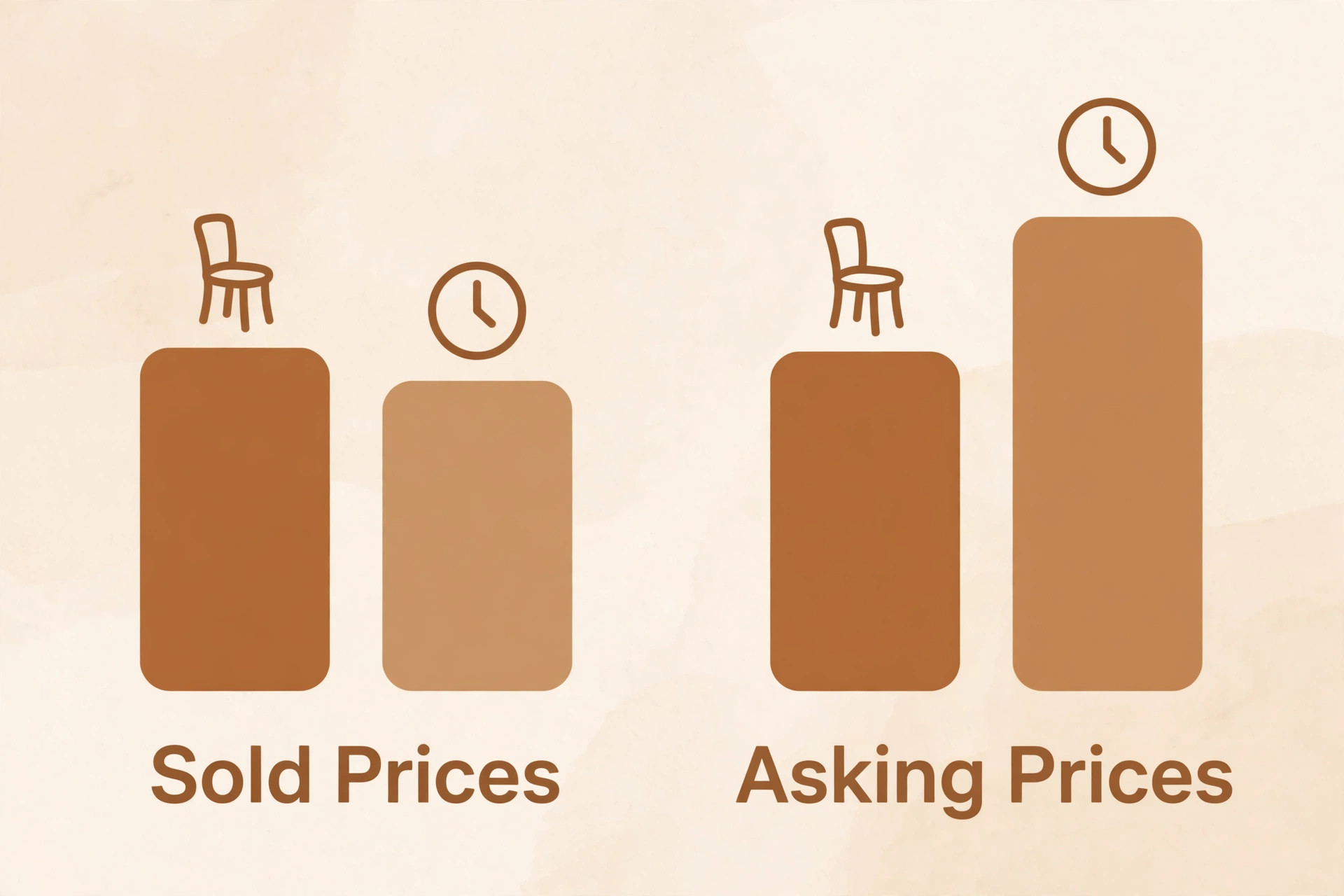
Set the price after research, not before it. Look at sold prices for close comparables, adjust for condition, provenance, size, and completeness, and factor in your costs, fees, and shipping or delivery. Write a one line price note for your own records, such as which comparables you used and what adjustment you made. That note helps you defend a price to a buyer, helps a colleague answer a question when you are away, and helps you learn which price levels actually move stock.
Step 6. Publish to the right channel first
Choose the first channel by the piece, not by habit. A high value, one of a kind piece may suit a curated marketplace or your own shop site first, where you control the story and the buyer conversation. A mid priced, shippable piece may suit a broad marketplace first, where search traffic is higher. A bulky or local piece may suit your shop floor and local delivery first. Publish fully on one channel, check how the listing renders, and only then adapt it for the next channel.
Step 7. Cross-post with a single stock truth
When you cross-post, keep one stock record as the truth and link every listing back to it. Use the same stock number in each listing, and keep a simple sheet or system field that shows where the piece is listed. The moment it sells anywhere, pull or mark sold on every other channel before you do anything else. This step is covered in detail later, because double-selling a unique antique is one of the fastest ways to damage a shop reputation.
Step 8. Review, learn, and relist with changes
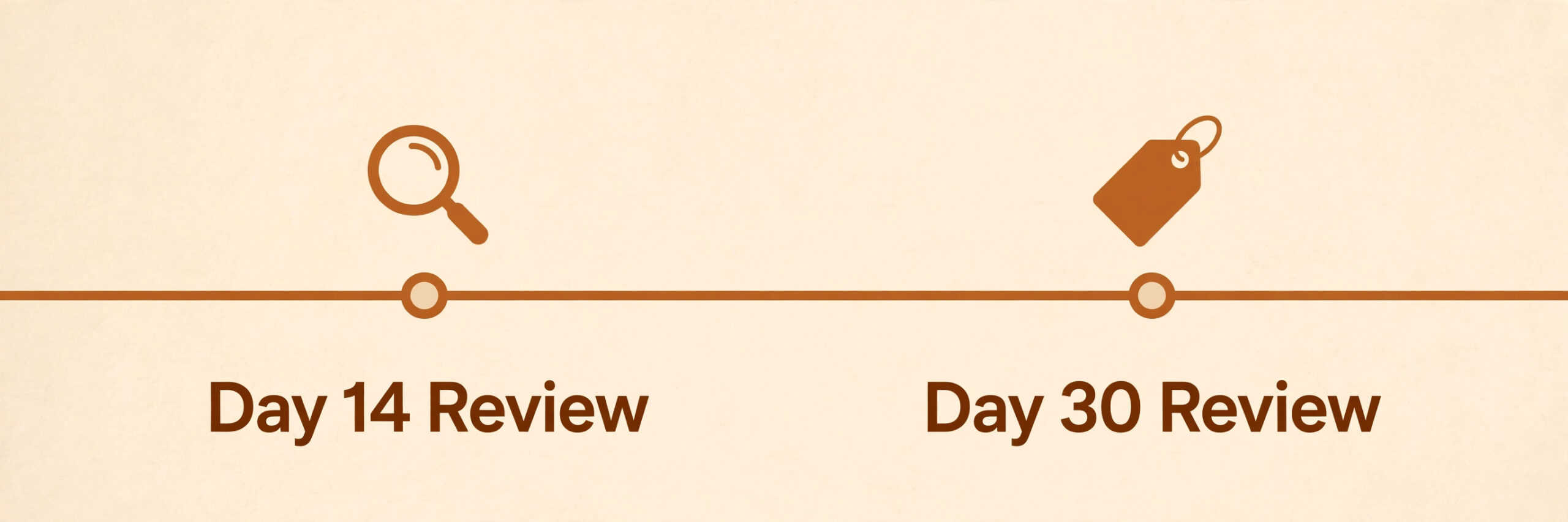
Set a review date for every listing, such as 30 days for ordinary stock and 14 days for pieces you need to move. At review, check views, saves, questions, and offers. If a listing gets views but no questions, the photos or the price may be the problem. If it gets questions about the same detail, add that detail to the listing itself. Relist with a real change, such as a better main photo, a clearer title, or an adjusted price, rather than simply republishing the same weak listing and hoping for a different result.
Listing Anatomy That Buyers Trust
A strong antique listing has the same parts every time, in the same order, so buyers learn where to look and staff learn what to write. The parts below are the minimum for a serious listing. Short listings can work for low priced, clearly photographed smalls, but for furniture and higher value pieces, a thin listing reads as a risk, and buyers move on to a seller who answered their questions before they asked them.
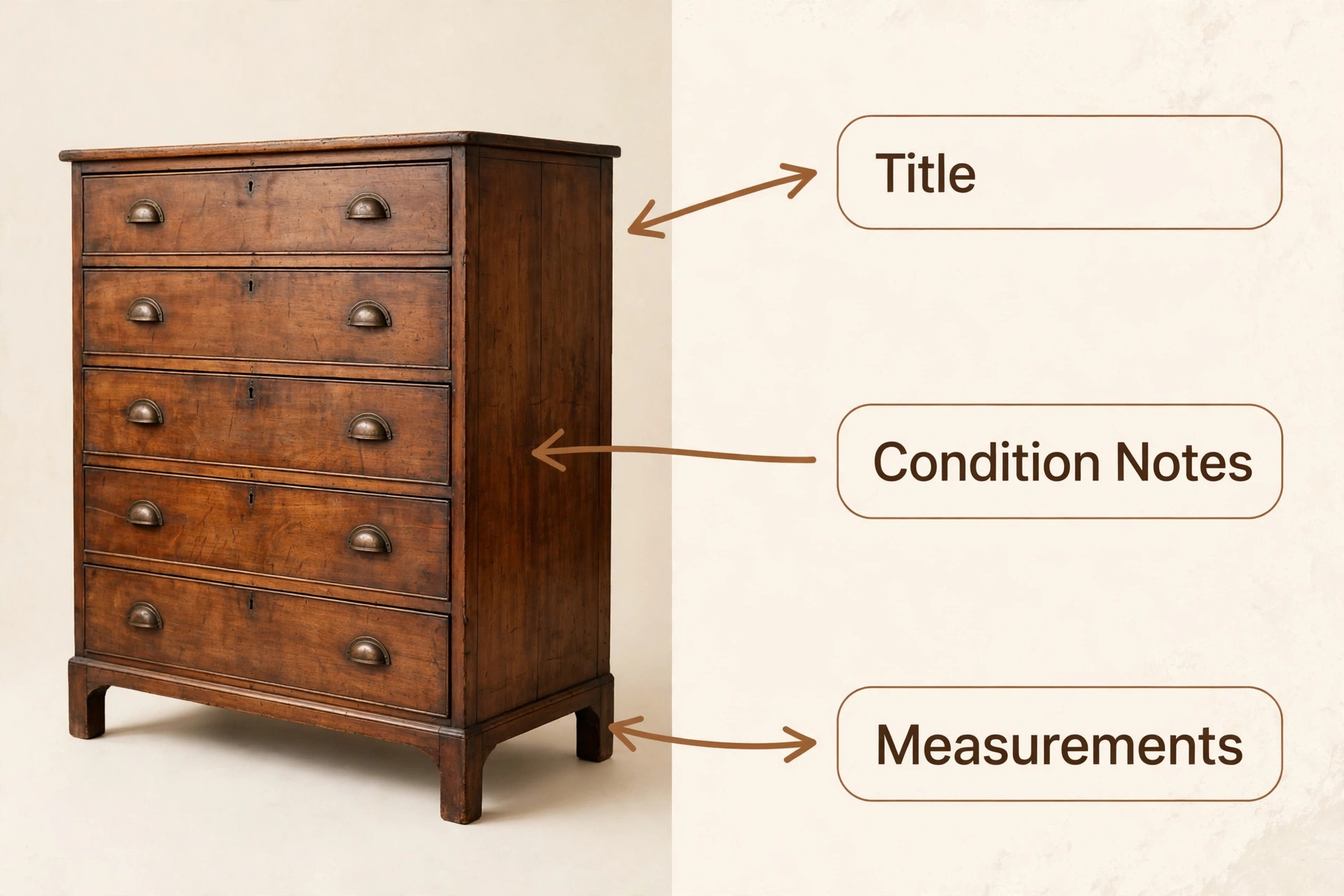
Start with a title that names the piece, its form, its material, and its era in plain words. A title such as “Victorian Walnut Chest of Drawers, Circa 1870, Original Brass Handles” tells a buyer more in one line than a title full of adjectives. Put the most searchable words early, because marketplace search and shop site search both weight the start of a title. Avoid stuffing the title with unrelated style words just to catch searches, because that brings the wrong buyers and hurts your conversion rate.
Provenance deserves care. State only what you can support, such as “purchased from a family home in the same county” or “with a 1980s receipt from a previous sale” when that is true. Do not turn a guess about a previous owner into a story, and do not attach a famous name without evidence. Collectors value a short, honest provenance line far more than a long, invented history, and a false provenance claim can destroy trust in every other listing you publish.
AI Prompts and Templates That Stay Honest
Prompts work best when you use AI for antique shop inventory listings with specific, short prompts tied to your facts. A long, vague prompt produces a long, vague listing. A prompt that pastes your intake note and asks for a structured output produces a draft you can check quickly. Keep a small set of approved prompts in a shared document, so every team member drafts in the same voice and no one has to start from a blank box each time.
A title and description prompt you can copy
Paste your intake facts after this prompt, and keep the output structure fixed. Ask for a title under a set number of characters for the marketplace you are using, a two sentence summary, a design and construction paragraph, a condition paragraph that uses only your notes, a measurements block, and a list of search terms. Tell AI to mark any fact it cannot confirm from your notes as unknown, rather than filling it in. That one instruction prevents most invented details.
When the draft returns, check it against this test. Could a buyer who reads only this listing know what the piece is, how big it is, what condition it is in, and what it will cost to get it home? If any answer is missing, add it from your notes before publishing. If the draft adds a detail you did not supply, delete it or verify it. The draft is a starting point, not a finished listing, and the ten minutes you spend checking it are the most valuable minutes in the whole workflow.
A condition summary prompt that protects you
Condition wording needs precision, not polish. Ask AI to rewrite your condition notes as short, factual sentences, one per flaw or repair, with no adjectives that soften or hide the issue. For example, a note that says “chip to back left foot, old repair to drawer runner” should stay that plain in the listing. Buyers read condition sections closely, and they trust sellers who describe flaws in the same plain tone they would use themselves.
A search term prompt that matches real buyers
Ask AI to suggest search terms from your facts, then filter them yourself. Keep terms a real buyer would type, such as the form, the material, the era, the style, and the use, and drop terms that describe a different piece or a famous maker you cannot prove. Check the terms against marketplace search suggestions, because those suggestions show real buyer language. A listing with ten accurate terms will outperform a listing with thirty loose terms, because it reaches buyers who actually want that piece.
For a deeper look at how inventory systems support this kind of structured stock record, read the guide to best inventory software for furniture retailers. It covers the stock fields that make listings, pricing, and cross-channel control easier to manage as a shop grows.
Pricing Research You Can Defend
Pricing antiques is part evidence, part judgment, and part patience. When you use AI for antique shop inventory listings, AI can gather comparables and summarize them, but it cannot walk your shop floor, see the quality of a carving, or know that a local buyer will pay more for a piece that fits a particular style of home. Use AI to speed the research, then make the price decision yourself, with a short written reason you could explain to a buyer or a colleague.
Adjust for condition, completeness, and provenance
Work through adjustments in a fixed order so your pricing stays consistent. Start with the comparable price, then adjust down for flaws, repairs, missing parts, or replaced hardware, and adjust up for rare form, strong provenance, original finish, or a complete set. Note each adjustment in your price note, even if it is only a rough percentage or a round amount. That note turns pricing from a gut feeling into a repeatable shop method, and it helps you spot when you are consistently overpricing one category.
When to hold, reduce, or reposition
Set a pricing review rule before you publish, so reductions are planned rather than panicked. A common rule is to review at 30 days, reduce by a modest step if views are healthy but offers are absent, and reposition the listing with a better photo or title at the same time. A price cut with no other change often fails, because the buyers who skipped the listing for a weak main photo will skip it again. Change the photo, the title, or the opening summary alongside the price, and record what changed, so you learn what actually moved the piece.
For shops that also sell through a till and a website, the guide to best POS systems for jewelry stores is useful reading, because it shows how a single stock record can connect shop floor sales to online listings and stop double-selling.
The Listing Quality Checklist
Use this checklist every time you use AI for antique shop inventory listings, before a listing goes live, and again when you relist. It is short on purpose, because a checklist that takes longer than the listing itself will not get used. Print it, keep it by the listing desk, and initial it for high value pieces. The goal is not perfection. It is catching the one missing photo, the one wrong measurement, or the one invented detail that would otherwise reach a buyer.
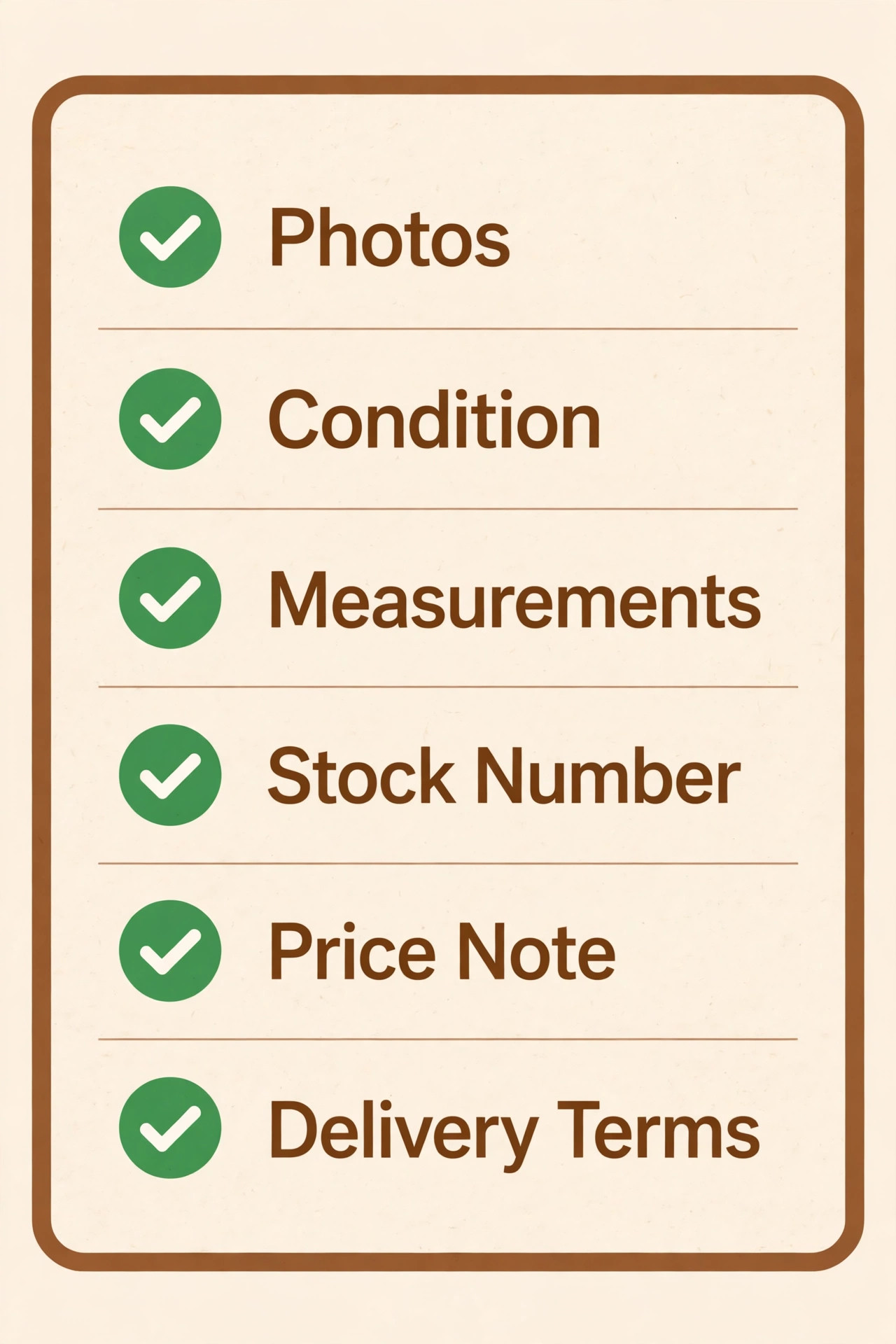
– Title names the form, material, and era in plain words, with no unrelated style words added for search traffic. – Opening summary states form, era, material, and overall condition in two or three sentences. – Design and construction paragraph names real details you observed, such as joints, hardware, carving, and finish. – Condition section lists every flaw, repair, and replaced part you noted at intake, in plain factual sentences. – Maker, date, and provenance claims match your research notes, and anything unknown is stated as unknown. – Measurements cover width, depth, and height, plus the extra dimensions a buyer plans around, in a consistent order. – Photo set includes front, sides, back, three-quarter view, marks, details, and every flaw noted. – Main photo shows the whole piece clearly, with true color and no heavy filter that changes wood or metal tone. – Stock number appears in the listing record and matches the tag, the system, and the photo folder. – Price note records the comparables used and the adjustments made, so the price can be explained later. – Delivery, collection, or shipping terms are stated plainly, including viewing options and packing. – Search terms match the actual piece, with no famous maker or style added that you cannot support. – Full draft has been read against the piece or its flaw photos, and every unverified claim has been removed. – Listing renders correctly on the target channel, with photos in the right order and no cut off text.
Run the checklist in order, and fix failures before publishing rather than noting them for later. A listing that fails on measurements or flaw photos is not ready, even if the description reads beautifully. A listing that passes the checklist but still feels thin usually needs one more photo or one more sentence of real detail, not more adjectives. When in doubt, add evidence, not praise, because evidence is what turns a browser into a buyer for antiques.
Cross-Posting Without Double-Selling
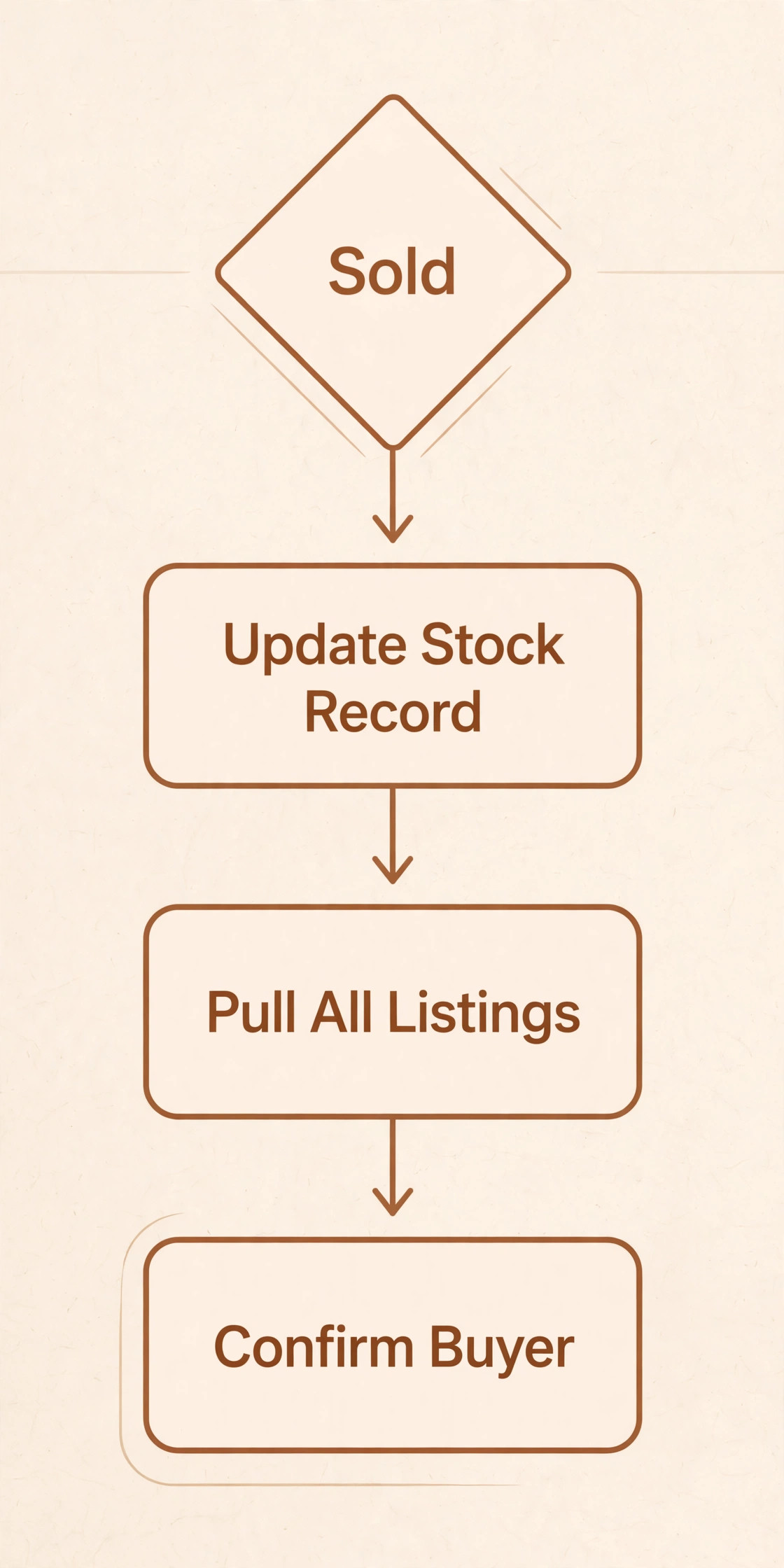
The fix, when you use AI for antique shop inventory listings across channels, is a single stock truth and a daily habit. Keep one inventory record per piece, with a status field that shows whether it is available, reserved, sold, or on hold. Every channel listing points back to that record by stock number. When a piece sells in any channel, update the stock record first, then pull or mark sold on every other channel, then confirm to the buyer. Do that in that order, every time, without exception. A team member who is unsure whether a piece is still available should check the stock record, not guess from memory or from a shop floor glance.
A daily stock sweep that takes ten minutes
Run a short sweep at open and at close. In the morning, check overnight online orders against shop floor stock, and pull any listing for a piece that sold or was reserved. In the evening, check shop floor sales against online listings, and pull anything that sold in person. That ten minute habit catches most double-selling errors before a buyer is affected. It also surfaces listings that need attention, such as pieces that have been reserved for a buyer who has not completed payment within your agreed window.
Shops that list on broad marketplaces should also read the guide to fixing an Etsy listing that does not show in search, because a listing that is live but invisible wastes the same effort as a listing that was never finished. Visibility checks belong in your weekly routine, alongside stock checks and price reviews.
Measuring Results and Improving Listings
Listings improve only when you measure them, and that measurement step matters just as much when you use AI for antique shop inventory listings. Track a small set of numbers per piece, and review them weekly, not daily, so you see patterns rather than noise. The numbers that matter most for antiques are views, saves or favorites, questions, offers, and time to sale. A listing with many views and no questions usually has a presentation or price problem. A listing with questions but no offers usually has a missing detail or a delivery problem. A listing with offers well below price usually has a pricing or positioning problem.
A simple weekly review table
| Listing focus | What to check | Action if weak |
|---|---|---|
| Main photo | Clarity, true color, full piece visible | Reshoot the main view in daylight |
| Title | Form, material, and era named early | Rewrite with searchable plain words |
| Condition | Every flaw listed plainly | Add flaw photos and plain notes |
| Price | Recent sold comparables | Adjust with a price note |
| Delivery | Terms stated plainly | Add collection and delivery options |
For sellers who build listings on a marketplace first and then expand to their own site, the guide to creating product listings for ecommerce sellers covers title and description habits that transfer well to antique stock. The marketplace habits around search terms and photo order are especially useful for shops that are new to online selling.
Common Mistakes That Hurt Antique Listings
The most damaging mistake is inventing details. AI can produce a smooth sentence about a maker, a date, or a previous owner that sounds right and is entirely unsupported. That sentence may pass a quick read, but it will fail when a knowledgeable buyer asks a follow up question, or when the piece arrives and the detail does not match. Always trace each factual sentence back to your intake note or your research note. If you cannot trace it, delete it or mark it as unknown.
The third mistake is copying one description across different pieces. A set of chairs may share a style, but each chair has its own condition, its own repairs, and its own story. Copying a description saves ten minutes and costs credibility when a buyer compares two listings and finds identical flaw notes for pieces with different damage. Write the shared style paragraph once, then write a separate condition paragraph for each piece, from its own intake note.
Frequently Asked Questions
Can AI write a whole antique listing on its own?
AI can draft a listing, but it should not publish one on its own. It does not know your piece, its flaws, or its history. Use AI for the first draft from your intake facts, then verify every claim, fix the condition wording, and set the price yourself. That human check is what keeps the listing trustworthy, and it is also what protects you if a buyer questions a detail later.
How much time does this workflow actually save?
A shop that moves from freeform writing to structured intake plus AI drafting often saves 20 to 40 minutes per listing, once the photo set and prompts are standardized. The saving comes from faster drafting and fewer rewrites, not from skipping research or verification. For a shop listing ten pieces a week, that saving can free half a working day, which can go to buying, restoration, or customer service.
What should I do when the maker is unknown?
State that the maker is unknown, and give the evidence you do have, such as style, construction details, and a date range. Buyers respect an honest unknown far more than a guessed maker name. If a mark is partly legible, describe it exactly and photograph it closely, so a knowledgeable buyer can help identify it. Never attach a famous maker name to increase the price without clear evidence.
How do I price a piece with no close comparables?
Widen the search in steps. First look for the same form in a different material or era, then for a close form by a similar maker or workshop, then for pieces with similar size and quality. Note the differences and adjust openly in your price note. If no reasonable comparable exists, price from your costs, your shop experience, and a realistic selling window, and be ready to adjust after a set review period if interest is low.
Should I list the same piece on several marketplaces at once?
Yes, if your stock control can support it. Cross-posting increases visibility, but only when every listing links to one stock record and you pull all listings the moment the piece sells. If your stock control is manual and unreliable, start with one channel, build the daily sweep habit, and add a second channel only when the habit is solid. Visibility without stock control creates more problems than it solves.
Do buyers really read condition notes and measurements?
Serious antique buyers read them first, often before the design description. Measurements decide whether a piece fits, and condition notes decide whether the price is fair. Thin condition notes and missing measurements generate the same questions again and again, and they slow down sales. Detailed, plain condition notes and complete measurements reduce questions, reduce returns, and help the right buyer commit with confidence.
A Closing Verdict for Shops Ready to List Faster
Antique selling rewards patience, knowledge, and honesty, and AI fits that world best when it speeds the routine work without touching the judgment. Use structured intake, a repeatable photo set, honest prompts, and a firm verification step, and listings will get faster, clearer, and more consistent across your whole stock. Skip verification, and speed will cost you trust, which is the one asset an antique shop cannot buy back quickly.
Start small. Pick ten pieces, run them through this workflow end to end, and compare the results with your last ten listings. Check time per listing, questions per listing, offers, and time to sale. If the new listings perform better, standardize the prompts and the checklist for the whole team. If a step feels slow, fix that step, not the whole workflow, because a workflow that survives contact with a busy shop week is the one you will still be using in six months.
For shops thinking about the wider stock system behind good listings, the guide to pricing consignment shop inventory with AI is a useful next read, because consignment pricing raises the same questions about evidence, condition, and fair adjustments. Build the listing habit first, then let the system grow around it, one verified piece at a time.