
The verdict is short. Freed is the safest first buy for most urgent care clinics, because it turns a visit into a finished note in minutes, works with any browser based record system and costs far less than the enterprise platforms. That does not make it right for every clinic, and the top 10 ai medical scribe tools for urgent care clinics are the ones that fit a fast walk-in workflow rather than the ones with the longest feature list. Urgent care lives or dies on whether the clinician finishes the note before the next patient walks in, so this guide judges every tool on note speed and accuracy first.
Urgent care clinics face a problem that hospital guides ignore. There is no scribe on staff, no time between patients and no margin for a note that takes an hour to finish, and the clinician who sees thirty patients a day cannot spend the evening typing. The software has to do the writing, which covers listening to the visit, drafting the note and putting it in the record, and it has to do that work without a learning curve that eats a week. Each tool below was verified as live in November 2026, and the prices are vendor list prices or reported figures where the vendor publishes none, so confirm the current number before paying.
The ten tools here split into three groups. Freed, Heidi Health, Nabla, Sunoh.ai and Tali AI are self-serve scribes a clinic can start this week. Suki, DeepScribe and Abridge are deeper platforms with strong record integrations. Ambience Healthcare and Nuance DAX are enterprise systems built for health systems. Each group solves a different part of the job, and a clinic that only needs one part should not pay for all three.
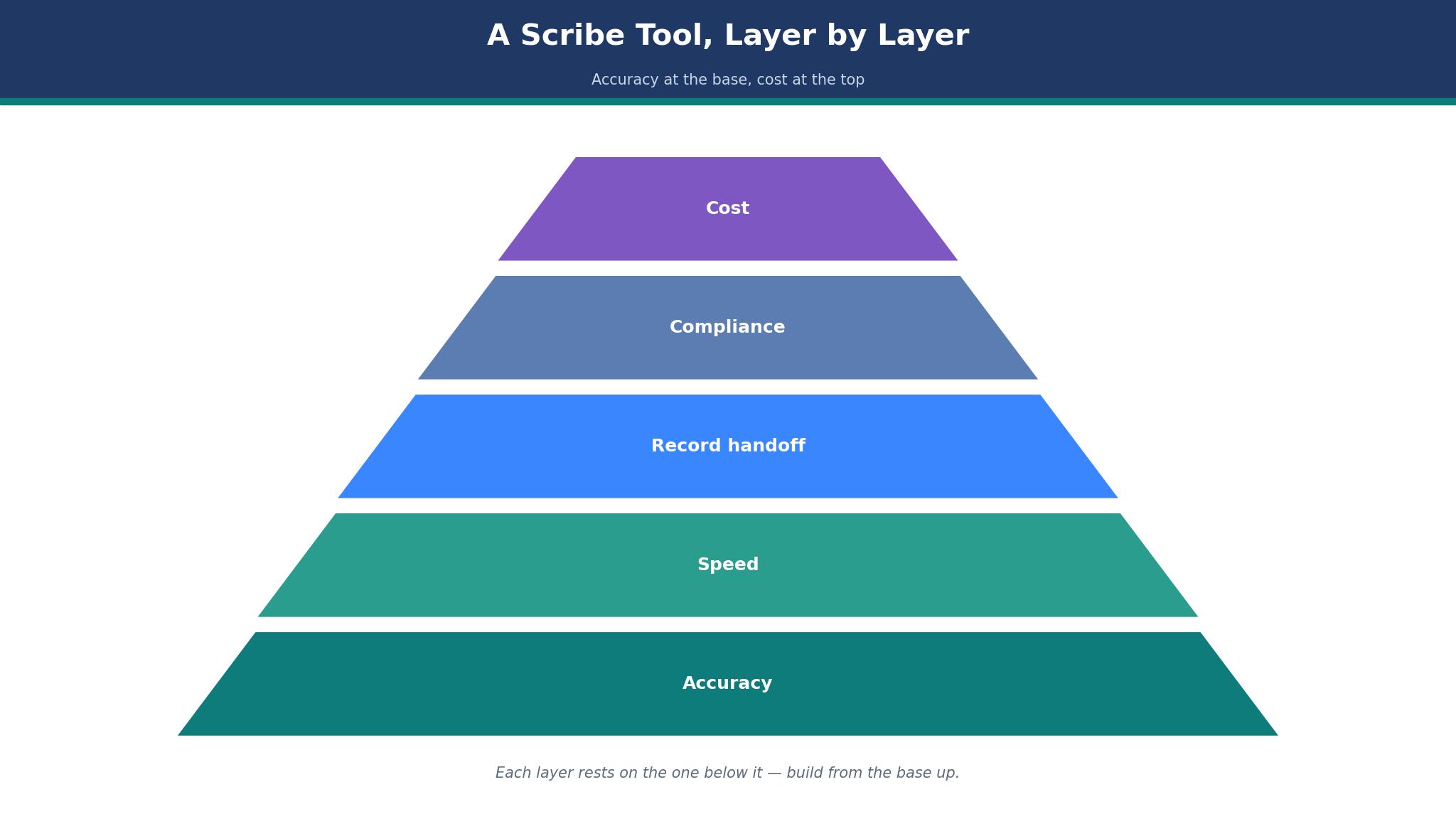
The Five Visit Test That Exposes Weak Scribe Tools
Urgent care runs on five visits of a clinician’s patience, and the test is whether the software finishes the note before the next patient arrives. Scribe five real visits in the trial, time the note from visit end to signed record, and check whether the clinician edits for minutes or for half an hour. If the note takes longer to fix than it would take to type, the tool has failed. The strong tools in this guide pass this test because they draft accurate notes that need a light edit, not a rewrite.
The second part of the test is accuracy on real urgent care language. A scribe that mishears a drug name, a dose or a diagnosis will create a safety risk, and the clinician must catch every error. Read each draft note against the visit, check the medications, the allergies and the plan, and count the errors that matter. The top 10 ai medical scribe tools for urgent care clinics treat clinical accuracy as a core feature, not a marketing claim, and the detail sections below call out which tools do that and which ones leave the clinician rewriting.
The third part is the record handoff. A note that lives in a separate app is a note that never reaches the chart, and the software must push the finished note into the clinic’s record system cleanly. Check whether the integration is native, a browser extension or a copy and paste job, and confirm the note lands in the right patient’s chart. A tool that cannot reach the record is a tool that doubles the work.
What an Urgent Care Clinic Actually Pays in Year One
The sticker price of scribe software rarely matches the first-year bill. A 79 dollar plan looks cheap until the clinic adds seats, an integration fee and a compliance add-on, and the monthly cost doubles without any new visit being scribed. The top 10 ai medical scribe tools for urgent care clinics are priced by the full stack, not by the headline plan, and the detail sections below name the add-ons that matter most.
Free trials deserve a hard look too. Freed, Heidi Health, Nabla and Tali AI all offer free tiers or trials, and for a small clinic they can be enough to test. The catch is the limit that matters most, which is usually the number of visits, the record integration or the compliance agreement. A free plan without a signed business associate agreement cannot be used for real patient visits, so check the compliance terms before testing with live patients.
The 10 Tools at a Glance
| Tool | Main job | Best for | Starting price |
|---|---|---|---|
| Freed | Fast self-serve scribe | Most urgent care clinics | From 79 dollars a month |
| Heidi Health | Scribe plus templates | Template heavy clinics | Pricing on the vendor site |
| Nabla | Ambient scribe | Clean notes | From 119 dollars a month |
| Sunoh.ai | Record native scribe | eClinicalWorks clinics | From 149 dollars a user a month |
| Tali AI | Dictation plus scribe | Dictation first | Pricing on the vendor site |
| Suki | Enterprise ambient scribe | Large clinics | Pricing on the vendor site |
| DeepScribe | Accurate ambient scribe | Accuracy first | Pricing on the vendor site |
| Abridge | Enterprise clinical AI | Epic health systems | No published price |
| Ambience Healthcare | Enterprise ambient AI | Health systems | Pricing on the vendor site |
| Nuance DAX | Dragon ambient scribe | Epic clinics | Pricing on the vendor site |
Best Pick by Job
| Job type | First pick | Second tool | Why this pair works |
|---|---|---|---|
| Starting this week | Freed | Heidi Health | Freed scribes fastest and Heidi Health adds templates |
| Record native | Sunoh.ai | Suki | Sunoh.ai lives inside eClinicalWorks and Suki integrates widely |
| Accuracy first | DeepScribe | Nabla | DeepScribe drafts most accurately and Nabla adds clean notes |
| Epic health system | Abridge | Nuance DAX | Abridge is built into Epic and Nuance DAX adds Dragon depth |
| Dictation first | Tali AI | Freed | Tali AI dictates well and Freed adds full notes |
The right scribe depends on the record system underneath it, so two clinics can buy the same product and reach opposite verdicts. A clinic on eClinicalWorks needs a native scribe, while a clinic on Epic needs one built into that system. A tool that manages the secondary need well enough still lets the clinic down when it fumbles the notes that fill the day. Choose the first tool for the record system the clinic already runs, and keep the second ready for the notes the first drafts poorly.
How to Judge the top 10 ai medical scribe tools for urgent care clinics
Start with real visits, because a demo recording hides every weakness that matters. Scribe five actual urgent care visits inside the trial, check the draft notes against the visits and count the errors that matter. A tool that drafts accurately, captures the plan and needs only a light edit will save hours a day. A tool that invents findings or misses the plan will cost hours, and the trial is the time to find out which one it is.
Next, test the record handoff on a real patient chart. Push the finished note into the record, confirm it lands in the right chart and check whether the clinician signs it without retyping. Ask whether the integration is native or a copy and paste job, because a copy and paste note will be skipped on a busy day. The top 10 ai medical scribe tools for urgent care clinics put the note in the chart without extra work, and the tools that do it well make the difference obvious in the first test.
Then check the compliance and the cost end to end. Confirm a signed business associate agreement is in place before any real patient visit, and add up the full monthly cost per clinician, including seats, integrations and support. If any step needs a second system, the clinic will eventually skip it, and the note will stay unfinished. Look at the per visit cost too, since a tool that charges per note can cost more than a flat subscription on a busy day.
The 10 Tools in Detail
Note speed sets the order below, so the tool a clinic can scribe with fastest leads the list.
1. Freed
Freed is the fastest scribe in this guide, and its simplicity is the reason. It listens to the visit, drafts a structured note and learns the clinician’s style, and the note is ready minutes after the patient leaves. Paid plans are reported from 79 dollars a month for the Core tier, with Premier at a reported 104 dollars adding native record push and more features. The tool works with any browser based record system, and the support is responsive.
The drawback is the integration depth. Freed pushes notes into browser based records well, but the deep native integrations of the enterprise tools are stronger, so a clinic on a complex record system may need more. The template options are good but lighter than Heidi Health, and the free tier is limited. A large health system will want an enterprise platform.
Freed suits most urgent care clinics, and it suits small clinics best. It fits a clinic with a handful of clinicians, a team that needs notes done before the next patient and anyone who wants a scribe live this week. The speed is the feature that matters, because a note finished in minutes is a note that never becomes evening work.
Scribe five real visits in Freed and time each note to signature. If the notes are signed before the next patient arrives, the tool has earned its fee.
2. Heidi Health
Heidi Health is the template scribe, and its customisation is the reason. It drafts notes from the visit and lets the clinic build templates for common urgent care presentations, so a sprained ankle note and a fever note each follow the right structure. Pricing is on the vendor site, since Heidi quotes by plan and region, and the platform adds a free tier, dictation and team features. The templates are the most flexible in this guide.
The drawback is the price path and the record depth. The paid tiers are reported in a wide range, so confirm the current number on the vendor site before paying, and the record integration is lighter than the enterprise tools. The free tier is useful but the compliance agreement needs a paid plan. A clinic that wants a simple scribe will find Heidi heavier than Freed.
Heidi Health suits clinics with standard presentations. It fits an urgent care clinic that sees the same complaints daily, a team that wants notes in a fixed format and anyone who values templates over speed. The templates are the feature that matters, because a note that follows the clinic’s structure is a note the next clinician can read fast.
Scribe five real visits in Heidi Health using the clinic’s templates and check the edit time. If the notes need only a light edit, the templates work.
3. Nabla
Nabla is the clean note scribe, and its accuracy is the reason. It listens to the visit, drafts a concise note and highlights the key findings, with a design that keeps the clinician in control. Paid plans are reported from 119 dollars a month, and the platform adds a free tier, dictation and team features. The notes are short and readable, which suits urgent care.
The drawback is the integration depth and the price. Nabla integrates with major record systems but the native depth is lighter than Abridge or Suki, and the paid tier costs more than Freed. The free tier limits visits, and the template options are thinner than Heidi Health. A clinic on a tight budget will feel the price.
Nabla suits clinics that want clean, short notes. It fits an urgent care clinic where clinicians read each other’s notes, a team that values readability and anyone who hates long, bloated notes. The conciseness is the feature that matters, because a short note that says what matters is read, and a long one is skimmed.
Scribe five real visits in Nabla and ask a colleague to read the notes cold. If they understand the visit from the note alone, the tool is doing its job.
4. Sunoh.ai
Sunoh.ai is the record native scribe, and its eClinicalWorks integration is the reason. It lives inside the eClinicalWorks and healow record systems, so the note is drafted, reviewed and filed without leaving the chart. Paid plans are reported from 149 dollars a user a month on a promotional price, with a higher regular price, and the platform adds order drafting, voice recognition and a compliance agreement. The integration is the deepest for eClinicalWorks clinics.
The drawback is the scope and the price. Sunoh.ai is built for eClinicalWorks, so a clinic on another record system will get little value, and the price is higher than the self-serve scribes. The promotional price may rise, and the setup needs eClinicalWorks enablement. A clinic that wants a record agnostic scribe will want Freed or Nabla.
Sunoh.ai suits eClinicalWorks clinics. It fits a clinic already on eClinicalWorks, a team that wants the note inside the chart and anyone who hates copy and paste. The integration is the feature that matters, because a note that never leaves the chart cannot be lost.
Scribe five real visits in Sunoh.ai inside eClinicalWorks and check the chart. If the notes are filed without extra steps, the integration is real.
5. Tali AI
Tali AI is the dictation first scribe, and its flexibility is the reason. It combines dictation with AI note generation and a question answering assistant, so a clinician can speak the note, ask about a patient and get a draft fast. Pricing is on the vendor site, and the reported prices conflict across sources, with figures from 68 to 150 dollars a month in different currencies, so confirm the current number on the vendor site before paying. The platform adds a free tier and Canadian record integrations.
The drawback is the record depth and the price confusion. Tali AI integrates with a handful of Canadian record systems and fewer US systems, so a US clinic may need a copy and paste workflow. The free tier lacks a compliance agreement, and the conflicting prices make budgeting hard. A clinic that needs a deep US integration will want another tool.
Tali AI suits clinicians who dictate. It fits a clinician who prefers speaking to typing, a Canadian clinic on a supported record system and anyone who wants a free start. The dictation is the feature that matters, because a clinician who dictates well will finish notes faster than one who types.
Dictate five real visits in Tali AI and check the draft notes. If the dictation is accurate and the notes need only a light edit, the tool works.
6. Suki
Suki is the enterprise ambient scribe, and its depth is the reason. It listens to the visit, drafts the note and writes it back into the record, with deep integrations into Epic, Oracle, Athena and MEDITECH. Pricing is on the vendor site, since Suki sells through enterprise contracts, and the platform adds coding support, dictation and analytics. The integration depth is among the best in this guide.
The drawback is the sales process and the cost. A small clinic must go through enterprise sales, which slows the buying decision, and the price is far higher than the self-serve scribes. The setup takes weeks, and the platform is built for scale. An urgent care clinic with a handful of clinicians will find Suki heavy.
Suki suits large clinics and health systems. It fits a clinic group on Epic, a team that needs coding support and anyone who wants a deep enterprise scribe. The integration is the feature that matters, because a note that writes back into Epic without extra work saves every clinician time.
Ask for the quote, then scribe five real visits and check the record. If the notes write back cleanly, Suki fits the clinic.
7. DeepScribe
DeepScribe is the accuracy first scribe, and its note quality is the reason. It uses a human in the loop review to catch errors, so the draft notes are among the most accurate in this guide, with clean structure and reliable capture of the plan. Pricing is on the vendor site, since DeepScribe sells through sales, and the platform adds record integrations, customisation and analytics. The accuracy is trusted by large groups.
The drawback is the price and the speed. DeepScribe costs more than the self-serve scribes, and the human review adds a delay before the note is ready. The sales process is slow, and a small clinic will find the platform heavy. A clinic that needs notes in minutes will want Freed.
DeepScribe suits clinics that prioritise accuracy. It fits a clinic where note errors carry real risk, a team that wants a reviewed draft and anyone who values accuracy over speed. The review is the feature that matters, because a note that has been checked is a note the clinician can trust.
Scribe five real visits in DeepScribe and count the errors that matter. If the drafts are clean and the plan is captured, the accuracy is real.
8. Abridge
Abridge is the enterprise clinical AI, and its Epic integration is the reason. It is built into Epic, from the phone app to the desktop, and it drafts structured notes with diagnoses, orders and coding support at the point of care. Abridge publishes no price, and third party estimates run roughly 208 to 600 dollars per clinician a month, so confirm the cost through enterprise sales before committing. The platform is sold to health systems, not to small clinics.
The drawback is the access and the cost. Abridge is enterprise only, with no self-serve plan or free trial, so a small urgent care clinic cannot buy it directly. The price is high, the implementation takes weeks and the platform is built for Epic. A clinic outside Epic will get no value from it.
Abridge suits Epic health systems. It fits a large health system on Epic, a team that needs deep clinical AI and anyone who wants the scribe inside the record. The Epic integration is the feature that matters, because a scribe that lives in Epic cannot be bypassed.
Ask the health system for the Abridge cost and scribe five real visits. If the notes are structured and the orders are captured, the tool works.
9. Ambience Healthcare
Ambience Healthcare is the enterprise ambient AI, and its breadth is the reason. It covers documentation, coding, referrals and pre-visit summaries, so the clinician gets more than a note from each visit. Pricing is on the vendor site, since Ambience sells through enterprise sales, and third party reports put the cost at roughly 500 to 700 dollars per clinician a month. The platform is built for health systems.
The drawback is the price and the access. Ambience is enterprise only, with no self-serve plan, so a small urgent care clinic cannot buy it directly. The cost is the highest in this guide, and the implementation takes weeks. A clinic that only needs notes will pay for features it never uses.
Ambience Healthcare suits health systems. It fits a large system that wants documentation plus coding and referrals, a team that needs pre-visit summaries and anyone who wants the broadest ambient platform. The breadth is the feature that matters, because a platform that handles the whole visit workflow saves more than a note alone.
Ask for the quote and scribe five real visits, then check the coding and referral drafts. If the extra work is accurate, the breadth is real.
10. Nuance DAX
Nuance DAX, now sold as Dragon Copilot, is the Dragon ambient scribe, and its voice heritage is the reason. It combines Dragon speech recognition with ambient AI, drafts the note and writes it back into Epic and more than 200 other record systems. Pricing is on the vendor site, since Nuance sells through enterprise sales, and a reseller lists Dragon Copilot at a reported 150 dollars a month billed annually. The platform is trusted by large health systems.
The drawback is the enterprise sales and the cost. A small clinic must go through sales, which slows the buying decision, and the implementation takes weeks. The platform is built for scale, and a clinic that needs a simple scribe will find it heavy. The price is higher than the self-serve tools.
Nuance DAX suits Epic clinics and large groups. It fits a clinic on Epic, a team that already uses Dragon and anyone who wants a proven ambient platform. The voice recognition is the feature that matters, because a scribe that hears accurately drafts accurately.
Ask for the quote and scribe five real visits, then check the record. If the notes write back cleanly, the tool fits.
The Three Mistakes That Break Scribe Rollouts
The first mistake is testing with demo recordings. A demo visit is clean, slow and scripted, while a real urgent care visit is fast, noisy and interrupted, and a scribe that passes the demo will fail the real visit. Test with five real visits, in a real room, with a real patient, and measure the edit time honestly.
The second mistake is ignoring the compliance agreement. A 79 dollar plan looks cheap until the clinic discovers the free tier has no business associate agreement, and real patient visits cannot be scribed on it. Confirm the agreement is signed before any live patient is recorded, and include the compliance cost in the year-one maths. The top 10 ai medical scribe tools for urgent care clinics are judged here on safety, not just speed.
The third mistake is skipping the record handoff test. A note that looks perfect in the scribe app but never reaches the chart is a note that does not exist, and the clinician will retype it at the end of the day. Push five real notes into the record during the trial, and confirm they land in the right charts.
Making the Final Call on Medical Scribe Tools
Start by listing the non-negotiables, because the list is shorter than most clinics expect. Note accuracy, record handoff, a signed compliance agreement and a clear per clinician cost are the four that eliminate most tools quickly. Note them in writing, check every tool against them, and cut any tool that fails a non-negotiable. The top 10 ai medical scribe tools for urgent care clinics pass all four without a workaround, and a tool that fails a core requirement will be replaced within a year, with the migration cost exceeding any saving.
Next, run a trial on the top two choices with five real visits. Measure three things, time from visit end to signed note, whether the draft captures the plan accurately and whether the note lands in the right chart. The winner across those three measures is usually the right buy, even when it is not the cheapest option. Then check the human factor, call support during the trial, ask a hard question about a compliance agreement, and judge the answer.

Frequently Asked Questions
Which medical scribe is best for a small urgent care clinic starting out?
Freed is the best starting point for a small urgent care clinic, because it drafts fast notes, works with any browser based record and costs a reported 79 dollars a month. Heidi Health is the better pick when templates matter most, since its custom templates fit common urgent care presentations. A small clinic should start with Freed and switch only if the templates become the priority.
How much does an AI medical scribe cost a clinic per month?
A clinic pays between 79 and 600 dollars per clinician a month on the entry tiers in this guide, with the median around 119 dollars for self-serve tools. Freed is the cheapest at a reported 79 dollars, and enterprise tools like Abridge and Ambience Healthcare cost far more. The practical entry point for the top 10 ai medical scribe tools for urgent care clinics is higher, since the cheapest tier often limits visits or integrations.
Does an AI scribe replace a human scribe for urgent care?
An AI scribe can replace the drafting work of a human scribe, which covers listening, writing and structuring the note, but it cannot replace clinical judgment about what matters in the visit. Most clinics land in the middle, using AI for the draft and the clinician for the final check. The tools in this guide are built for that middle, with AI that prepares the note rather than signing it.
Is Freed or Heidi Health better for urgent care?
Freed is better for a clinic that needs speed, because its notes are ready minutes after the visit and the setup takes days. Heidi Health is better for a clinic that needs templates, because its custom templates fit common presentations. A clinic with varied visits should test Freed first, while a clinic with standard presentations should test Heidi Health first.
Can an AI scribe work with my clinic’s record system?
Yes, most tools in this guide integrate with major record systems, but the depth varies, and some integrations are native while others are copy and paste. Freed works with any browser based record, Sunoh.ai is native to eClinicalWorks and Abridge is built into Epic. Check the integration for the clinic’s specific record system during the trial, and test five real notes before paying.
What happens to my notes if I cancel the scribe tool?
Most tools in this guide allow an export of notes and templates as files, but the export format varies and some data may need reformatting. Ask for the export terms before paying, run a test export during the trial and keep a local copy of every signed note in the record system. Skip a tool that punishes leaving, and give the export test an hour during the trial.
The Verdict on Medical Scribe Tools for Urgent Care Clinics
Freed takes the top spot because it is the tool an urgent care clinic is least likely to regret. It drafts fast, the notes are accurate enough to sign after a light edit and the price is fair, so a clinic can go from visit to signed note in minutes. The integration depth is the main weakness to watch, but the entry is fair for what it covers.
Heidi Health is the pick for templates, Sunoh.ai is the pick for eClinicalWorks and DeepScribe is the pick for accuracy. The top 10 ai medical scribe tools for urgent care clinics are not the ones with the longest feature list, they are the ones that finish the note before the next patient walks in, capture the plan accurately and put the note in the right chart without a second system.
Choose by the record system first, the note speed second and the price third. Run a real trial with five visits, measure the three things that matter and set a review date. A clinic that picks this way will spend less time typing after hours and more time with the patients the notes describe.