
The verdict is short. Relias is the safest first buy for most healthcare teams, because it pairs a deep library of clinical courses with compliance tracking that shows exactly who is current and who is overdue. That does not make it right for every team, and the best ai training tools for healthcare teams are the ones that fit the team’s compliance load rather than the ones with the longest feature list. Healthcare training lives or dies on whether staff complete the right course before the audit, so this guide judges every tool on completion tracking first.
Healthcare teams face a problem that generic training guides ignore. There is no training department for a small clinic, no time for a week of course building and no margin for a missed compliance deadline, and the person running training is usually the same person running the rota. The software has to do the chasing, which covers assigning courses, reminding staff and proving completion. I checked all fifteen tools as live in November 2026, and the prices are vendor list prices or reported figures where the vendor publishes none, so confirm the current number before paying.
The fifteen tools here split into three groups. Relias, HealthStream and MedTrainer are built for healthcare compliance. Docebo, TalentLMS, Absorb LMS, Cornerstone, Litmos, LearnUpon and Tovuti are general learning platforms a healthcare team can shape. 360Learning, iSpring Learn, Articulate 360, Coursera for Business and Udemy Business cover collaborative learning, course authoring and ready made content.
The Thirty Day Test That Exposes Weak Training Tools
Healthcare training runs on thirty days of a manager’s patience, and the test is whether the software gets a whole team through a required course in that window. Assign one real compliance course to a pilot group, watch the reminders, the completion rate and the reporting, and note every moment the manager has to chase someone by hand. If the completion rate stalls at half and the manager is still sending emails, the tool has failed.
The second part of the test is the content itself. A course that staff click through without learning is worse than no course, because the audit will show completion while the knowledge is absent. Check whether the courses are current, clinically accurate and engaging, and confirm the assessments actually test understanding.
The third part is the audit trail. A regulator who asks for proof of training needs a report that shows who completed what and when, and the software must produce it in minutes. Look for reporting that exports cleanly, tracks expiry dates and flags staff who are about to fall out of compliance. A tool that cannot prove completion is a tool that fails the audit.
What a Healthcare Team Actually Pays in Year One
The sticker price of training software rarely matches the first-year bill. A 69 dollar plan looks cheap until the team adds seats, a content library and a reporting upgrade, and the monthly cost doubles without any new course being completed. The best ai training tools for healthcare teams are priced by the full stack, not by the headline plan, and the detail sections below name the add-ons that matter most.
Free trials deserve a hard look too. TalentLMS, 360Learning, iSpring Learn and Litmos all offer free tiers or trials, and for a small team they can be enough to test. The catch is the limit that matters most, which is usually the number of learners, the course library or the reporting depth.
The 15 Tools at a Glance
| Tool | Main job | Best for | Starting price |
|---|---|---|---|
| Relias | Healthcare compliance training | Most healthcare teams | Pricing on the vendor site |
| HealthStream | Clinical education | Hospitals | Pricing on the vendor site |
| MedTrainer | Compliance plus credentialing | Small clinics | Pricing on the vendor site |
| Docebo | Enterprise learning platform | Large teams | From 250 dollars a month |
| TalentLMS | Simple cloud LMS | Small teams | Free, paid from 69 dollars a month |
| Absorb LMS | Enterprise LMS | Growing teams | Pricing on the vendor site |
| Cornerstone | Talent and learning suite | Large organisations | Pricing on the vendor site |
| Litmos | Fast cloud LMS | Quick rollout | From 6 dollars a user a month |
| 360Learning | Collaborative learning | Peer learning | Pricing on the vendor site |
| iSpring Learn | Easy course LMS | Course authoring | From 3 dollars a user a month |
| LearnUpon | Training delivery | External training | Pricing on the vendor site |
| Tovuti | All in one LMS | Mixed audiences | Pricing on the vendor site |
| Articulate 360 | Course authoring suite | Custom courses | From 1,199 dollars a user a year |
| Coursera for Business | University courses | Professional skills | Pricing on the vendor site |
| Udemy Business | Course marketplace | Broad skills | Pricing on the vendor site |
Best Pick by Job
| Job type | First pick | Second tool | Why this pair works |
|---|---|---|---|
| Compliance first | Relias | MedTrainer | Relias tracks compliance best and MedTrainer adds credentialing |
| Small team start | TalentLMS | Litmos | TalentLMS is simplest and Litmos rolls out fastest |
| Large hospital | HealthStream | Cornerstone | HealthStream knows clinical education and Cornerstone adds talent depth |
| Custom courses | Articulate 360 | iSpring Learn | Articulate builds richest courses and iSpring is easier to learn |
| Broad skills | Udemy Business | Coursera for Business | Udemy covers widest topics and Coursera adds university depth |
The right training tool depends on what the team must prove. A clinic that needs compliance proof needs tracking, while a hospital that needs custom courses needs authoring. A product that handles the secondary need competently still lets the team down when it fumbles the training the team does every month.
How to Judge the best ai training tools for healthcare teams
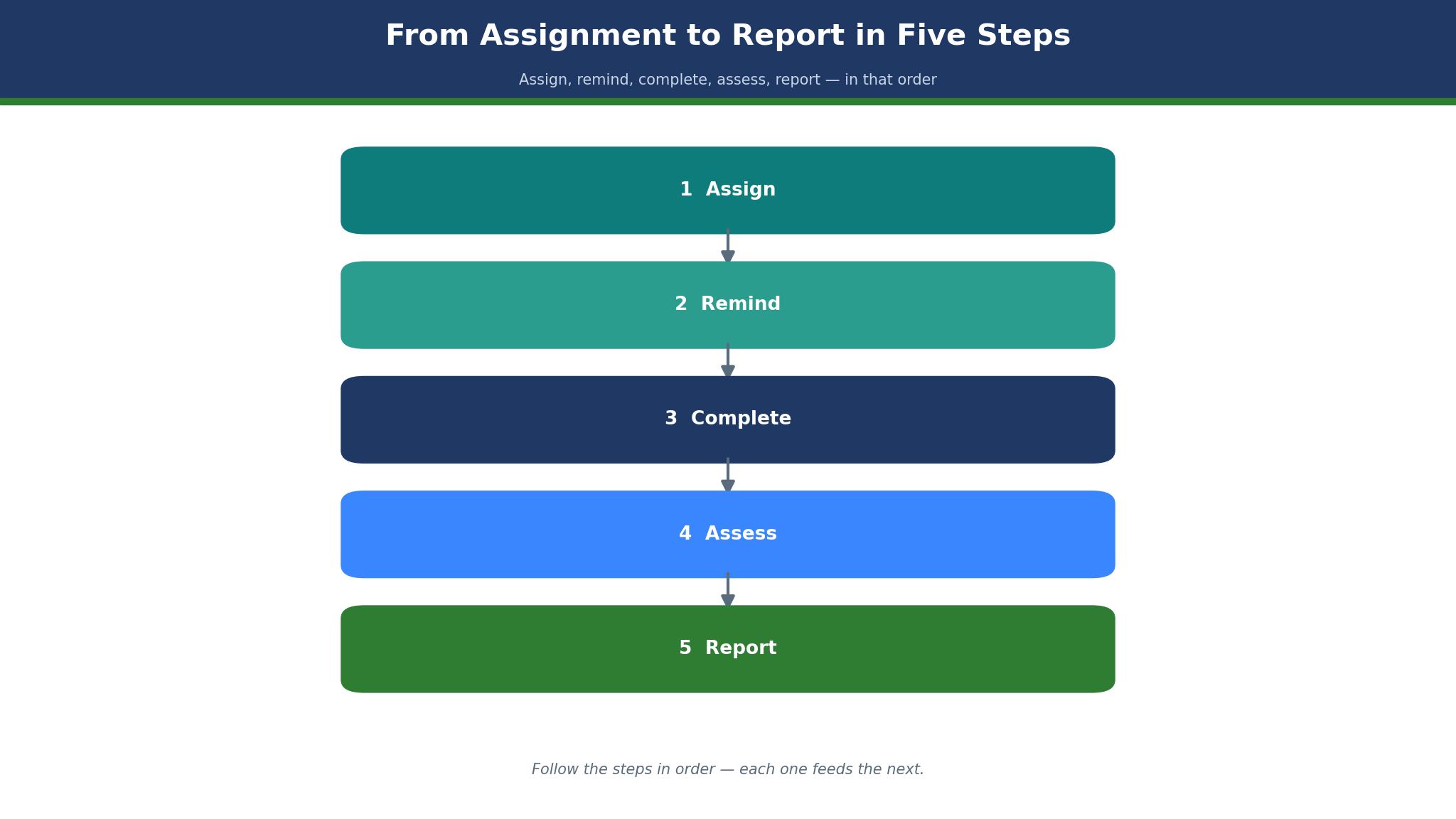
Start with a real course, because a demo library hides every weakness that matters. Take one actual compliance course, assign it to a pilot group inside the trial and check whether the reminders, the completion and the reporting all work without manual chasing. A tool that assigns fast, reminds automatically and reports clearly will save hours a month. A tool that needs the manager to chase by email will cost hours, and the trial is the time to find out which one it is.
Next, test the learning on real staff. Ask the pilot group whether the course taught them something they will use, and check the assessment scores for understanding rather than clicking. Ask whether the AI adapts the course to the learner’s role, because a nurse and a receptionist need different training. The best ai training tools for healthcare teams adapt to the learner, and the tools that do it well make the difference obvious in the first test.
Then check the audit report end to end. Export a completion report, confirm it shows who completed what and when, and check whether expiry dates are flagged. If any step needs a spreadsheet, the team will eventually skip it, and the audit will find the gap.
The 15 Tools in Detail
Compliance strength sets the order below, so the tool a healthcare team can prove training with leads the list.
1. Relias
Relias is the deepest healthcare training platform in this guide, and its clinical library is the reason. It offers thousands of courses built for healthcare, with compliance tracking that shows exactly who is current and who is overdue. Pricing is on the vendor site, since Relias quotes by team size and needs, and the platform adds assessments, analytics and onboarding paths.
The drawback is the sales process and the price path. A small team must go through a demo and a quote, which slows the buying decision, and the cost is higher than a general LMS. A clinic with a tiny budget may struggle to justify the fee.
Relias suits most healthcare teams, and it suits compliance heavy teams best. It fits a clinic, a care home or any team that must prove training to a regulator. The library is the feature that matters, because a course built for healthcare teaches faster than a generic one.
Assign one real compliance course to a pilot group and track completion for thirty days. If the rate is high and the report is clean, the tool has earned its fee.
2. HealthStream
HealthStream is the hospital education platform, and its clinical depth is the reason. It offers a large library of clinical and compliance courses, with competency tracking, credentialing and analytics built for hospitals. Pricing is on the vendor site, since HealthStream quotes by organisation size, and the platform adds resuscitation training, workforce development and quality tools.
The drawback is the scale and the complexity. HealthStream is built for hospitals, so a small clinic will find it heavy and expensive, and the setup takes real configuration time. A team that needs a simple LMS will find HealthStream too much.
HealthStream suits hospitals and large teams. It fits a hospital with hundreds of staff and a health system that needs competency tracking. The competency tracking is the feature that matters, because a hospital that can prove competence passes the audit.
Assign one real course to a ward and check the competency report. If the report shows who is competent and who needs help, the tool is doing its job.
3. MedTrainer
MedTrainer is the small clinic compliance tool, and its all in one design is the reason. It combines training, credentialing, policies and incident reporting in one place, so a small clinic can manage compliance without four systems. Pricing is on the vendor site, since MedTrainer quotes by team size, and the platform adds a course library, document management and analytics.
The drawback is the depth and the smaller community. MedTrainer covers less ground on general learning than Docebo or TalentLMS, and the course library is smaller than Relias. A team that needs broad skills training will want a second tool.
MedTrainer suits small clinics. It fits a clinic with a handful of staff and a practice that needs credentialing alongside training. The all in one design is the feature that matters, because a small clinic cannot run four systems.
Assign one compliance course and track one credential in MedTrainer for a month. If both stay current without a spreadsheet, the tool works.
4. Docebo
Docebo is the enterprise learning platform, and its AI is the reason. It offers AI powered recommendations, content creation and analytics, with a platform that scales from a small team to a global workforce. Paid plans are reported from 250 dollars a month, and the platform adds integrations, e-commerce and extended enterprise features.
What counts against Docebo is the cost and the setup. Docebo is expensive for a small healthcare team, and the setup needs real configuration time. A team that needs healthcare specific content will need to buy it separately.
Docebo suits large healthcare organisations. It fits a health system with thousands of learners and a team that needs AI recommendations. The AI is the feature that matters, because a platform that recommends the right course saves the manager hours.
Assign one real course to a pilot group and check the AI recommendations. If the recommendations match the roles, the tool is doing its job.
5. TalentLMS
TalentLMS is the simple cloud LMS, and its ease is the reason. It lets a team create courses, assign them and track completion in a clean interface that a manager can learn in an afternoon. Paid plans are reported from 69 dollars a month, with a free tier for five users and ten courses.
The drawback is depth. TalentLMS covers less ground on healthcare content and advanced analytics than Relias, so a team that needs clinical courses will need to build or buy them. A large hospital will outgrow it.
TalentLMS suits small teams starting training. It fits a clinic with a handful of staff and a manager who needs a simple LMS. The ease is the feature that matters, because a tool that takes an afternoon to learn gets used the same week.
Assign one real course to the whole team and track completion for two weeks. If the rate is high without chasing, the tool works.
6. Absorb LMS
Absorb LMS is the growing team platform, and its polish is the reason. It offers a clean learner experience, strong reporting and an AI assistant that helps build courses, with a platform that scales well. Pricing is on the vendor site, since Absorb quotes by team size, and the platform adds e-commerce, mobile learning and integrations.
The drawback is the sales process and the price. A small team must go through a demo and a quote, which slows the buying decision, and the cost is higher than TalentLMS. A clinic with a tiny budget will find Absorb expensive.
Absorb LMS suits growing healthcare teams. It fits a team that has outgrown a simple LMS and a manager who wants a polished learner experience. The learner experience is the feature that matters, because staff who enjoy the platform will complete the courses.
Assign one real course to a pilot group and ask them about the experience. If the staff complete it without complaints, the tool is doing its job.
7. Cornerstone
Cornerstone is the talent suite, and its breadth is the reason. It combines learning, performance, recruiting and HR in one platform, so a large healthcare organisation can manage the whole employee journey. Pricing is on the vendor site, since Cornerstone quotes by organisation size, and the platform adds AI skills mapping, analytics and content libraries.
The drawback is the scale and the cost. Cornerstone is built for large organisations, so a small clinic will find it heavy and expensive, and the implementation takes months. A team that only needs training will pay for HR it never uses.
Cornerstone suits large healthcare organisations. It fits a health system with thousands of staff and a team that needs learning alongside HR. The breadth is the feature that matters, because a large organisation that runs everything in one place avoids duplicate data.
Assign one real course to a department and check the skills report. If the report shows who needs what, the tool works.
8. Litmos
Litmos is the fast cloud LMS, and its rollout speed is the reason. It lets a team launch training in days, with a course library, mobile learning and simple reporting. Paid plans are reported from 6 dollars a user a month, and the platform adds integrations, gamification and AI features.
The drawback is depth. Litmos covers less ground on healthcare content and advanced analytics than Relias, and the course library is general rather than clinical. A team that needs deep compliance tracking will want a second tool.
Litmos suits teams that need training live fast. It fits a clinic that must launch compliance training this month and a manager who wants a simple LMS. The speed is the feature that matters, because training that launches in days beats training that takes a quarter.
Assign one real course to the whole team and track completion for two weeks. If the rate is high and the setup took days, the tool works.
9. 360Learning
360Learning is the collaborative learning platform, and its peer learning is the reason. It lets staff create courses together, share knowledge and learn from each other, with AI that helps turn expertise into training. Pricing is on the vendor site, since 360Learning quotes by team size, and the platform adds analytics, integrations and mobile learning.
The drawback is the compliance depth. 360Learning is built for peer learning, so a team that needs strict compliance tracking will find it lighter than Relias. A clinic that needs ready made clinical courses will need to buy them.
360Learning suits teams that learn together. It fits a hospital where senior staff teach juniors and a team that wants knowledge shared. The collaboration is the feature that matters, because a nurse who learns from a colleague remembers more than one who reads a slide.
Ask one senior staff member to build a short course in 360Learning and assign it. If the team completes it and the knowledge sticks, the tool works.
10. iSpring Learn
iSpring Learn is the easy course LMS, and its authoring is the reason. It lets a team build courses from PowerPoint, quizzes and videos in a familiar interface, with tracking and reporting built in. Paid plans are reported from 3 dollars a user a month, and the platform adds a free trial, mobile learning and integrations.
The drawback is depth. iSpring Learn covers less ground on healthcare content and advanced analytics than Relias, and the course library is built by the team. A team that needs ready made clinical courses will need a second tool.
iSpring Learn suits teams that build their own courses. It fits a clinic that knows its own procedures and a manager who wants to turn PowerPoint into training. The authoring is the feature that matters, because a team that can build a course in an afternoon will keep the training current.
Build one real course from a PowerPoint deck and assign it to the team. If the completion rate is high, the tool works.
11. LearnUpon
LearnUpon is the training delivery platform, and its simplicity is the reason. It lets a team deliver courses to staff, partners and customers from one place, with clean reporting and a good learner experience. Pricing is on the vendor site, since LearnUpon quotes by team size, and the platform adds e-commerce, integrations and AI features.
The drawback is the content and the price. LearnUpon supplies the platform rather than the courses, so a healthcare team must build or buy clinical content. A small clinic will find it expensive.
LearnUpon suits teams that train many audiences. It fits a healthcare organisation that trains staff and partners and a team that needs clean delivery. The delivery is the feature that matters, because training that reaches the learner on time is training that works.
Assign one real course to staff and one to partners, and check both completion rates. If both are high, the tool is doing its job.
12. Tovuti
Tovuti is the all in one LMS, and its range is the reason. It combines course creation, virtual classrooms, gamification and e-commerce in one platform, so a team can run live and recorded training together. Pricing is on the vendor site, since Tovuti quotes by team size, and the platform adds AI features, analytics and integrations.
The drawback is the complexity and the smaller community. Tovuti covers a lot, so a small team will find features that never get used, and the healthcare content needs to be built or bought. A clinic that needs simple compliance will find Tovuti heavy.
Tovuti suits teams with mixed training needs. It fits a healthcare organisation that runs live and recorded courses and a team that needs gamification. The range is the feature that matters, because a team that trains in many formats needs one place to run them.
Run one live session and one recorded course in Tovuti and check completion. If both work without a second tool, the range is real.
13. Articulate 360
Articulate 360 is the course authoring suite, and its depth is the reason. It lets a team build rich, interactive courses with scenarios, simulations and branching, and the output works in any LMS. Paid plans are reported from 1,199 dollars a user a year, and the platform adds a content library, AI features and team collaboration.
The price and the narrow scope are the weak points here. A clinic that needs ready made courses will get little value.
Articulate 360 suits teams that build custom courses. It fits a hospital with a training author and a team that needs interactive scenarios. The authoring is the feature that matters, because a course that simulates a real situation teaches better than a slide deck.
Build one interactive scenario course in Articulate 360 and assign it to a pilot group. If the staff remember the scenario a week later, the tool works.
14. Coursera for Business
Coursera for Business is the university course platform, and its content is the reason. It offers courses from top universities and companies, with certificates, guided projects and skills tracking. Pricing is on the vendor site, since Coursera quotes by team size, and the platform adds analytics, custom paths and integrations.
The drawback is the healthcare focus. Coursera covers professional skills broadly, so a team that needs clinical compliance will find little of it there. A clinic that needs mandatory training will need a second tool.
Coursera for Business suits teams building professional skills. It fits a healthcare organisation that wants leadership, data or management skills and a team that values university content. The content is the feature that matters, because a course from a top university carries weight.
Assign one real professional skills course to a pilot group and check completion. If the staff finish it and use the skill, the tool works.
15. Udemy Business
Udemy Business is the course marketplace, and its breadth is the reason. It offers thousands of courses on every topic, with a clean learner experience, analytics and mobile learning. Pricing is on the vendor site, since Udemy quotes by team size, and the platform adds custom paths, integrations and AI recommendations.
The drawback is the healthcare focus and the quality range. Udemy covers broad skills, so a team that needs clinical compliance will find little of it there, and the course quality varies by instructor. A clinic that needs mandatory training will need a second tool.
Udemy Business suits teams building broad skills. It fits a healthcare organisation that wants soft skills, tech skills and management training and a team that values choice. The breadth is the feature that matters, because a team that can find any course will keep learning.
Assign one real skills course to a pilot group and check completion. If the staff finish it without prompting, the tool works.
The Three Mistakes That Fail Healthcare Training
The first mistake is buying a generic LMS for a compliance job. A general platform will not track clinical expiry dates or prove completion to a regulator, and the team will build a workaround that fails at audit time.
The second mistake is ignoring the content quality. A 69 dollar plan looks cheap until the team discovers the courses are outdated or clinically wrong, and the staff learn nothing. Check the course content with a clinician before committing, and include the content quality in the buying decision. The best ai training tools for healthcare teams are judged here on what staff learn, not on the platform alone.
The third mistake is assigning without following up. A course that is assigned and forgotten will sit incomplete, and the manager will find out at the audit.
Making the Final Call on Healthcare Training Tools
Start by listing the non-negotiables, because the list is shorter than most teams expect. Compliance tracking, current content, automatic reminders and a clean audit report are the four that eliminate most tools quickly. List them in writing, test each tool against the list, and discard any tool that fails a non-negotiable. The best ai training tools for healthcare teams pass all four without a workaround, and a tool that fails a core requirement will be replaced within a year, with the migration cost exceeding any saving.
Next, run a trial on the top two choices with one real compliance course. Measure three things, completion rate after thirty days, whether staff learned something useful and whether the audit report is clean. The tool ahead on those three measures is usually the right buy, even when a cheaper rival exists.

Frequently Asked Questions
Which training tool is best for a small healthcare team starting out?
Relias is the best starting point for a small healthcare team, because its clinical library and compliance tracking cover the job a clinic actually needs. TalentLMS is the better pick when the budget is tight, since its simple LMS starts at a reported 69 dollars a month.
How much does healthcare training software cost per month?
A healthcare team pays between 3 and 250 dollars a month on the entry tiers in this guide, with the median around 69 dollars for general platforms. iSpring Learn is the cheapest at a reported 3 dollars a user, and Docebo is the most expensive at a reported 250 dollars a month. The practical entry point for the best ai training tools for healthcare teams is higher, since healthcare specific platforms quote by team size.
Does training software replace a compliance officer?
Training software can replace the tracking work of a compliance officer, which covers assigning courses, reminding staff and proving completion, but it cannot replace judgment about what training is needed and whether it is effective. Most teams land in the middle, using software for the daily tracking and a human for the decisions. The tools in this guide are built for that middle, with software that prepares the audit rather than deciding it.
Is Relias or HealthStream better for a healthcare team?
Relias is better for a small to mid-size healthcare team, because its library and tracking cover the compliance job without hospital scale complexity. HealthStream is better for a hospital, because its competency tracking and clinical depth are built for large teams.
Can staff complete training on a phone?
Yes, most tools in this guide offer mobile learning, so staff can complete courses on a phone between shifts. Relias, TalentLMS, Litmos, iSpring Learn and Udemy Business all support mobile completion. Check the mobile experience during the trial, and test one course on a phone before rolling it out.
What happens to my courses if I cancel the tool?
Most tools in this guide allow an export of courses, completions and reports as files, but the export format varies and some content may be licensed rather than owned. Ask for the export terms before paying, run a test export during the trial and keep a local copy of every completion record. A tool that traps the user is a tool to skip, and the export test deserves an hour of the trial.
The Verdict on Training Tools for Healthcare Teams
Relias takes the top spot because it is the tool a healthcare team is least likely to regret. It covers clinical content, tracks compliance and proves completion, so a clinic can face an audit with confidence.
HealthStream is the pick for hospitals, TalentLMS is the pick for a tight budget and Articulate 360 is the pick for custom courses. The best ai training tools for healthcare teams are not the ones with the longest feature list, they are the ones that get a whole team through the right course before the deadline, prove it in a clean report and teach something the staff will actually use.
Choose by the compliance load first, the content quality second and the price third. A team that picks this way will spend less time chasing completions and more time caring for the patients the training protects.