
Resy is the best restaurant reservation software pick for most independent restaurants, because Platform costs $289 a month flat with no per-cover fee, so a busy Friday costs the same as a quiet Tuesday. OpenTable is the pick for a restaurant that wants discovery from the largest diner network, and SevenRooms is the pick for a group that wants a guest CRM. The ten tools below compare monthly fees, per-cover charges and prepayment tools, so a restaurant can buy the booking system that fits its dining room rather than the one with the biggest network.
A reservation system decides who eats tonight. A book that fills itself from the website, the phone and the walk-in queue keeps the dining room full, while a book that lives on paper loses the table the moment the host is busy. The system also decides what a no-show costs, because a prepaid booking protects the table and a free booking does not, and the difference shows up in the weekly revenue.
The buying trap is the per-cover fee. OpenTable Basic costs $149 a month plus $1.50 per network cover, so 1,000 network covers a month turns a $149 plan into a $1,649 bill, while Resy at $289 a month charges nothing per cover. This guide works out the real monthly cost at a real cover count, because the headline price is only half the bill.
The 10 Tools at a Glance
| Tool | Main job | Best for | Starting price |
|---|---|---|---|
| Resy | Flat-rate reservations | Independent restaurants | $289 per month |
| OpenTable | Reservations plus discovery | Restaurants that want diners | $149 per month |
| SevenRooms | Guest CRM and reservations | Groups and hotel dining | Quote-based |
| Yelp Guest Manager | Reservations and waitlist | Restaurants on Yelp | Quote-based |
| TableCheck | Reservations for groups | Multi-location groups | Quote-based |
| Eat App | Reservations and CRM | Independent restaurants | Quote-based |
| ResDiary | Table management | Restaurants that seat by plan | Quote-based |
| Quandoo | Discovery and bookings | Restaurants that want diners | Quote-based |
| TheFork | Discovery and bookings | European restaurants | Quote-based |
| Resos | Low-cost reservations | Small restaurants on a budget | Free plan |
Best Pick by Job
| Job type | First pick | Second tool | Why this pair works |
|---|---|---|---|
| Independent restaurant, flat cost | Resy | OpenTable | Resy has no per-cover fee, OpenTable adds discovery |
| Restaurant that wants discovery | OpenTable | Resy | OpenTable brings diners, Resy keeps the cost flat |
| Group or hotel dining | SevenRooms | TableCheck | SevenRooms adds the CRM, TableCheck covers groups |
| Small restaurant on a budget | Resos | Eat App | Resos is free to 25 bookings, Eat App adds CRM |
| Restaurant that seats by plan | ResDiary | OpenTable | ResDiary plans the floor, OpenTable fills it |
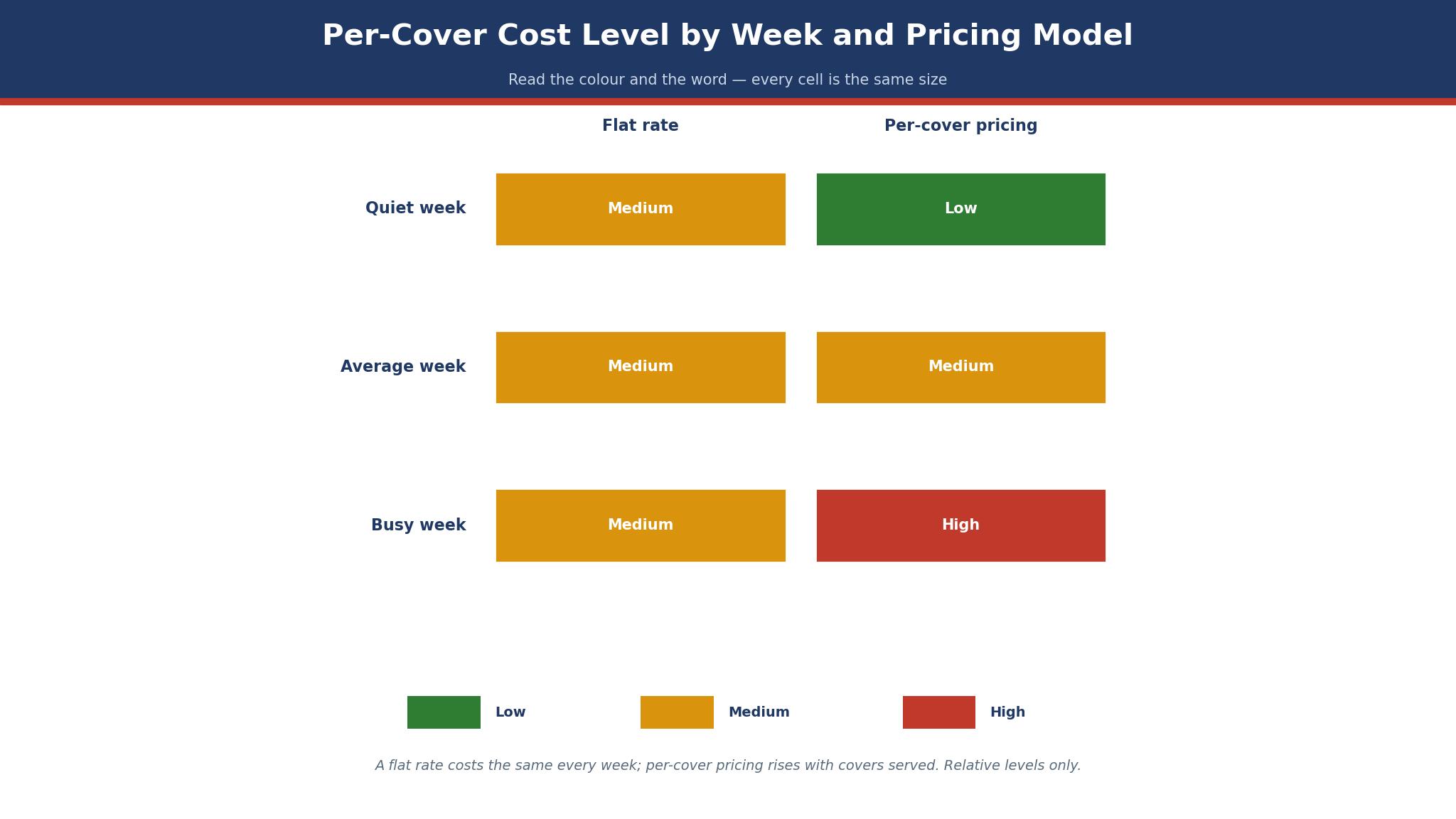
An independent restaurant should start with Resy. Platform costs $289 a month and Platform 360 costs $459, with no per-cover fees on any plan, and the Essential and Premium tiers, marked Powered by Tock, match those two prices with a 3 percent or 2 percent fee on prepayments. The flat rate means a busy month costs the same as a quiet one, which is the change that makes the monthly bill predictable.
A restaurant that wants discovery should start with OpenTable instead. Basic costs $149 a month, Core costs $299 and Pro costs $499, plus $1.50 per network cover on Basic and $1 on Core and Pro, with website covers at $0.25 each or $49 a month flat on Basic. When you compare the best restaurant reservation software side by side, the split is clear, because Resy wins on cost control and OpenTable wins on diner discovery, and a restaurant has to choose between the two.
Which Reservation Software Is Best for a Small Independent Restaurant?
Resy is the best pick for a small independent restaurant, because the flat $289 a month covers unlimited covers with no per-cover meter running. That flat rate is the test that matters most when a restaurant compares the best restaurant reservation software, because a busy Friday should not cost five times a quiet Tuesday.
Resos is the better pick if the budget is the whole decision. The free plan covers up to 25 bookings a month, and paid plans run $47 to $149 a month with no per-cover fees and no annual contract. A tiny restaurant with a short book can run on Resos free, though the discovery and the guest CRM are thinner than Resy.
OpenTable is the third option for a restaurant that needs the diner network to fill tables. The network brings guests a small restaurant cannot reach alone, and the $149 Basic plan is the cheapest entry to that network, though the per-cover fee means a busy month costs far more than the headline. A restaurant in a tourist area should weigh the discovery value against the cover bill.
How to Choose the Best Restaurant Reservation Software
Start with the cover count, not the monthly fee. OpenTable Basic at $149 a month plus $1.50 per network cover costs $1,649 a month at 1,000 network covers, while Resy Platform at $289 costs $289 at the same volume. Count last month covers, split them into network and website bookings, and work out the real bill on each finalist before comparing prices.
Next, check the prepayment terms. OpenTable charges a 2 percent service fee on prepaid experiences, Resy Essential charges 3 percent and Premium charges 2 percent on prepayments, and SevenRooms charges a transaction fee on pre-sales through its widgets. A restaurant that takes deposits for tasting menus should price the prepayment fee, because it comes on top of the card processing.
Then look at who owns the guest list. OpenTable keeps the network diner data inside its own system, Resy keeps the guest record with the restaurant, and SevenRooms is built around the guest CRM itself. A restaurant that wants to email its own guests should choose the tool that lets it keep the list, because a list the vendor owns is a list the restaurant cannot use.
Finally, test the host-stand tools with one real service. Seat a full dining room from the floor plan, manage the waitlist, and move a table when a party runs late, then check that the online book updates within minutes. If the host has to call the office to change a table, the system has not solved the problem it was bought for.
The 10 Tools in Detail
The ten tools below cover flat-rate booking, discovery networks and guest CRMs. Each one is judged on monthly fees, per-cover charges and prepayment tools, so this roundup of the best restaurant reservation software stays honest about the real cost at a real cover count.
1. Resy
Resy is the flat-rate reservation platform, and the pick for an independent restaurant that wants a predictable bill. Platform costs $289 a month and Platform 360 costs $459, with no per-cover fees on any plan, and the Essential and Premium tiers, marked Powered by Tock, match those two prices. Essential adds a 3 percent fee on prepayments and Premium adds a 2 percent fee, plus card processing, and Resy says it does not charge per cover or per reservation.
The Tock carry-over is the feature that matters most for fine dining. Tock stopped existing as a standalone product in 2026, and Resy promised that all deposit, ticketing and special-event features carry over, so a restaurant that ran prepaid tasting menus on Tock keeps the tools on Resy. The Amex network is the other side of the coin, because a restaurant that wants diners outside that ecosystem will find the discovery thinner than OpenTable.
It suits upscale and independent restaurants that want a flat monthly fee and no per-cover charge. The prepaid tools cover deposits and ticketing, and the flat rate keeps a busy month affordable.
Ask Resy for the Platform quote for one location, and confirm the prepayment fee in writing before you sign.
2. OpenTable
OpenTable is the largest diner network in this guide, and the pick for a restaurant that wants discovery as well as bookings. Basic costs $149 a month, Core costs $299 and Pro costs $499, with network covers free for 30 days on Basic, then $1.50 each, and $1 each on Core and Pro. Reservations from the restaurant own website cost $0.25 a cover or $49 a month flat on Basic, and are included on Core and Pro, while prepaid experiences carry a 2 percent service fee on every plan.
The per-cover fee is the cost that decides the pick. At 1,000 network covers a month, OpenTable Basic runs about $19,800 a year, while Resy flat top tier runs about $5,500, so a busy restaurant pays far more for the network than the headline suggests. Core is the first plan with the host-stand tools, including customisable floor plans, Smart Assign table management, an in-house and online waitlist and POS integration, while Basic has no floor plans, table management, waitlist or POS integration.
It suits discovery-focused restaurants that will pay per cover for diners. The network brings guests a small restaurant cannot reach alone, and the host-stand tools on Core keep a busy dining room organised.
Start on Basic for one location, and count the network covers before you move to Core.
3. SevenRooms
SevenRooms is the guest CRM for restaurant groups, now owned by DoorDash, and the pick for a group that wants the guest record rather than the booking alone. The platform publishes three packages, Starter, Growth and Premium, but no prices, so the figure comes from a quote, and the pricing page lists a one-time setup fee and a transaction fee on pre-sales through its booking widgets. Operator reports put the monthly figure near $300 to $700 or more per location, often with a $5,000 to $25,000 setup fee, though those are unverified reports rather than vendor figures.
The CRM depth is the reason groups choose it. SevenRooms builds a guest profile from every visit, runs automated marketing from that profile, and covers reservations, waitlist and prepayments in one system. The quote-only pricing and the setup fee are the barriers, because a single restaurant cannot compare it against Resy at $289 without a sales call.
It suits groups and hotels that want a guest CRM and will take a quote. The marketing automation and the guest profiles repay the cost across several locations, while a single restaurant will find the price hard to justify.
Request a quote by location count, and confirm the setup fee in writing before you commit.
4. Yelp Guest Manager
Yelp Guest Manager is the reservations and waitlist tool for restaurants that already live on Yelp. The system covers online bookings, waitlist management, table management and guest messaging, with the Yelp listing as the discovery source. Pricing is quote-based, so the vendor sets the figure after a demo and a look at the cover volume.
The Yelp dependence is both the strength and the limit. A restaurant with a strong Yelp presence gets bookings from the listing without a second network, while a restaurant with no Yelp traffic gets little from the tool. The waitlist tools are strong, and the guest messaging keeps the front of house informed, though the guest CRM is thinner than SevenRooms.
It suits restaurants that already draw diners from Yelp. The waitlist and the booking tools cover the daily work, and the listing link keeps the discovery in one place.
Ask Yelp for a quote by cover volume, and check how the waitlist handles a full Friday before you sign.
5. TableCheck
TableCheck is the reservation platform for multi-location groups, covering bookings, table management and guest data across several restaurants. The system handles group-wide reporting, centralised guest records and multi-location seating, with a depth that suits a group rather than a single room. No price is published, so a group has to request a quote after a demo.
The group focus is the boundary for a single restaurant. TableCheck covers the group work well, but a small independent will pay for multi-location tools it never opens, and the quote-only pricing means no number to compare before the sales call. A group with three or more locations is the right buyer, because the central reporting repays the cost.
It suits multi-location groups that need one booking system across every restaurant. The central guest records and the group reporting keep the whole estate honest.
Request a scoped quote by location count, and confirm the group reporting covers your needs before you commit.
6. Eat App
Eat App is the reservations and CRM platform for independent restaurants, covering online bookings, table management, waitlist and guest profiles in one system. The guest CRM is the standout, because the restaurant keeps its own guest list and can run marketing from it without a second tool. Pricing is quote-based, so the vendor sets the figure after a demo and a look at the cover volume.
The independent focus is the appeal and the limit. Eat App covers the single-restaurant work well, with a guest CRM that rivals SevenRooms at a smaller scale, though the discovery network is thinner than OpenTable and the brand is smaller. A restaurant that wants its own guest list without a group price will find the fit, while a restaurant that needs discovery will not.
It suits independent restaurants that want a guest CRM. The booking tools cover the daily work, and the guest profiles keep the regulars close.
Ask Eat App for a quote by cover volume, and test the guest CRM on your regulars before you sign.
7. ResDiary
ResDiary is the table management system for restaurants that seat by plan, covering bookings, floor plans, waitlist and table allocation with a focus on the dining room layout. The system lets the host plan the room, move tables and manage the waitlist from one screen, which is the work a busy service needs. The price comes from a quote, set after a demo, so a restaurant cannot compare it with a published price first.
The seating focus is both the strength and the limit. ResDiary plans the floor better than any tool here, but the discovery and the guest CRM are thinner than OpenTable and SevenRooms, so a restaurant that needs diners will need a second system. A restaurant with a complex room and a careful host will value the planning tools more than the network.
It suits restaurants that seat by plan and manage a complex dining room. The floor tools keep a busy service organised, and the waitlist keeps the door calm.
Request a quote by seat count, and test the floor plan on a full Friday before you commit.
8. Quandoo
Quandoo is the discovery and booking platform for restaurants that want diners from a network. The system covers online bookings, table management and guest reviews, with the Quandoo network as the discovery source. Pricing is quote-based, with the figure set by cover volume and the market, so a restaurant has to ask for the number.
The network dependence is the thing to weigh. Quandoo brings diners in markets where the network is strong, while a restaurant in a market where Quandoo is thin will get little from it. The booking tools are solid, though the guest CRM is lighter than SevenRooms and the host-stand depth is thinner than OpenTable Core.
It suits restaurants in markets where Quandoo is strong. The discovery brings guests the restaurant cannot reach alone, and the booking tools cover the daily work.
Ask Quandoo for a quote by cover volume, and check the network strength in your city before you sign.
9. TheFork
TheFork is the discovery and booking platform for European restaurants, covering online reservations, table management and diner reviews across the continent. The system is the strongest network in this guide for a European restaurant, with a diner base that a local book cannot match. Pricing is quote-based, with the figure set by cover volume and commission terms, so a restaurant has to ask for the number.
The European focus is the boundary. TheFork is the right network for a restaurant in Paris, Madrid or Milan, while a restaurant in the US will find the network thin and the tools less relevant. The commission model also means the restaurant pays per seated diner, so the cost grows with success, which is the same trap as OpenTable per-cover fees.
It suits European restaurants that want discovery from the largest network on the continent. The bookings fill tables, and the reviews keep the dining room honest.
Request a quote by cover volume, and confirm the commission terms in writing before you sign.
10. Resos
Resos is the low-cost reservation system for small restaurants on a budget, with a free plan covering up to 25 bookings a month and paid plans running $47 to $149 a month with no per-cover fees and no annual contract. The system covers online bookings, table management and guest messaging, with a simplicity that a small restaurant can run without training.
The small scale is the limit. Resos covers a short book well, but a restaurant doing 500 covers a month will need the paid tiers, and the discovery and guest CRM are thinner than Resy and OpenTable. A tiny restaurant with a loyal local base will find the fit, while a restaurant that needs discovery will not.
It suits small restaurants that want bookings without a monthly commitment. The free plan covers the first 25 bookings, and the paid tiers stay cheap as the book grows.
Start on the free plan with 25 bookings, and move to a paid tier when the book passes the free limit.
OpenTable vs Resy: Per Cover Against Flat Rate
The pricing model is the first difference, and it decides the winner before any feature comparison. OpenTable Basic costs $149 a month plus $1.50 per network cover, so 1,000 network covers cost $1,649 a month, while Resy Platform costs $289 a month flat for the same covers. A restaurant doing 1,000 network covers a month pays about $19,800 a year on OpenTable Basic and about $3,468 a year on Resy Platform, which is the gap that decides the pick for most independents.
The discovery gap runs the other way. OpenTable brings diners from the largest network in this guide, while Resy brings fewer new guests and relies on the restaurant own marketing. A restaurant in a tourist area or a new opening may earn back the cover fees in new tables, while a restaurant with a loyal local base will pay for discovery it does not need.
The deciding factor is the cover source. A restaurant whose tables fill from its own website and regulars should take Resy, because the flat rate keeps the cost predictable. A restaurant that needs new diners to fill the room should take OpenTable, because the network is the product, and the cover fee is the price of the guests. That split is the cleanest way to read the best restaurant reservation software when the choice narrows to two.
What Does Restaurant Reservation Software Cost?
The honest range in this guide runs from free to $499 a month for a published plan. Resos is free for up to 25 bookings a month, OpenTable Basic costs $149, Resy Platform costs $289, OpenTable Core costs $299, Resy Platform 360 costs $459 and OpenTable Pro costs $499. SevenRooms, Yelp Guest Manager, TableCheck, Eat App, ResDiary, Quandoo and TheFork are all quote-based, so a restaurant has to ask for the number before it can compare them.
The per-cover fee adds to the software cost every month. OpenTable Basic at $149 plus $1.50 per network cover costs $1,649 at 1,000 covers, while Resy at $289 costs $289 at the same volume, so the software fee alone tells less than half the story. The best restaurant reservation software is the one where the software fee plus the cover fees is lowest at the real cover count, not the one with the lowest monthly headline.
The honest way to budget is to price the real month, including every cover fee. Count last month covers, split them into network and website bookings, and work out the total on each finalist before choosing. A restaurant doing 500 network covers a month pays $899 on OpenTable Basic, $289 on Resy Platform and $99 on Resos paid, before tax and before prepayment fees.
Can Reservation Software Handle No-Shows and Prepayments?
Yes, on the best restaurant reservation software tools in this guide that build prepayments into the core. Resy Essential and Premium carry the Tock deposit, ticketing and special-event features, OpenTable charges a 2 percent service fee on prepaid experiences, and SevenRooms charges a transaction fee on pre-sales through its widgets. A prepaid booking protects the table, because a guest who has paid is far less likely to no-show than a guest who booked free.
The fee structure decides whether prepayments pay. OpenTable takes 2 percent on every prepaid experience, Resy takes 3 percent on Essential and 2 percent on Premium, and card processing comes on top of both. A restaurant that takes a $100 deposit on a tasting menu pays $2 to $3 in fees, which is a small price for a protected table, though the fees add up across a full book.
The limit is the guest experience. A restaurant that demands prepayment for every table will lose the walk-in guest and the spontaneous diner, so the smart move is to require deposits only for large parties, tasting menus and peak nights. The software can enforce the rule, but the restaurant has to set it, and the front of house has to explain it kindly when a guest asks.
A 30-Day Reservation System Switch Plan
Days one to seven are the book. Export every upcoming reservation, every regular guest and every table rule, and write down the real dining room layout, because the switch is only as good as the data it starts with. Days eight to fourteen are the clean-up. Merge duplicate guest records, agree the table naming rule, and set the prepayment policy for large parties and tasting menus.
Days fifteen to twenty-one are the parallel run. Run the new book alongside the old one, seat from both, and check that the cover count matches at the end of each service. Days twenty-two to thirty are the cutover. Switch the online booking link to the new system, train the hosts on the floor plan, and reconcile the book on day thirty against a hand count of twenty tables.
The switch earns its keep when the day-thirty book matches the hand count on eighteen of the twenty tables. A switch that skips the parallel run will import the old errors, and the hosts will go back to the old book within a week. Keep the guest list clean, keep the prepayment policy clear, and let the reconciliation decide the cutover.

Frequently Asked Questions
Which reservation software is cheapest for a small restaurant?
Resos is the cheapest, with a free plan covering up to 25 bookings a month and paid plans running $47 to $149 a month with no per-cover fees. Resy Platform at $289 a month is the cheapest flat-rate tool with no per-cover charge, while OpenTable Basic at $149 costs far more once the per-cover fees are added. A tiny restaurant should start on Resos free.
Does OpenTable charge per cover on every plan?
Yes. OpenTable charges $1.50 per network cover on Basic after the first 30 days free, and $1 per network cover on Core and Pro. Website covers cost $0.25 each or $49 a month flat on Basic, and are included on Core and Pro. A restaurant doing 1,000 network covers a month pays $1,500 in cover fees on Basic alone.
Can Resy handle prepayments and deposits?
Yes. Resy Essential and Premium carry the Tock deposit, ticketing and special-event features, with a 3 percent fee on prepayments on Essential and 2 percent on Premium, plus card processing. The flat monthly fee means a busy month costs the same as a quiet one, and the prepaid tools protect the table against no-shows.
Is SevenRooms worth the quote-only price?
SevenRooms suits a group or a hotel that wants a guest CRM, with operator reports putting the monthly figure near $300 to $700 or more per location and a setup fee of $5,000 to $25,000, though those are unverified reports. A single restaurant should shortlist Resy at $289 a month instead, because the published price lets it budget without a sales call.
How long does it take to switch reservation systems?
Thirty days is realistic for a full switch, with seven days for the book export, seven days for the clean-up, seven days for the parallel run and seven days for the cutover. A restaurant that switches without a parallel run will pay for the mistake in double bookings, because the old book and the new book will disagree. Start the switch at least thirty days before a busy period.
Does Resy work outside the US?
Resy works in the US and in several international markets, though the network is strongest in American cities. A European restaurant should compare TheFork, which is the largest discovery network on the continent, while a restaurant in a market where Resy is thin should check the network strength before it commits.
The Reservation Pick by Restaurant Type
An independent restaurant comparing the best restaurant reservation software should take Resy Platform at $289 a month, because the flat rate keeps the cost predictable and the prepaid tools protect the table. A restaurant that needs discovery should take OpenTable Basic at $149 a month, because the network brings diners a small restaurant cannot reach alone, though the per-cover fees mean a busy month costs far more. A small restaurant on a budget should take Resos free, because 25 bookings a month cost nothing.
A group or hotel should take SevenRooms, because the guest CRM repays the cost across several locations, and a European restaurant should take TheFork, because the network is the largest on the continent. Count last month covers, price the cover fees, trial one book for thirty days, and let the reconciliation decide.