

SEO in 2026 is two games at once. You still need to rank in blue links — but you also need ChatGPT, Perplexity and Google’s AI Overviews to cite you when they answer your customers’ questions. The best AI SEO tools now cover both games: classic keyword research and site audits, plus the new discipline of AI-visibility (GEO) tracking that didn’t exist as a product category two years ago.
We compared nine leading AI SEO tools across four capability areas — keyword research, content briefs and optimisation, technical audits, and AI-search visibility tracking — then scored one real article per tool to see how its optimisation workflow held up in practice. This guide covers the full platforms and specialist tools; if you want the writing-focused deep dive, see our best AI tools for SEO content writing guide. Below: the feature matrix, per-tool reviews with verified 2026 pricing, and an FAQ on whether AI SEO tools are worth it in the AI-search era.
Quick Answer: Best AI SEO Tools
| Tool | Best for | Starts at (2026) | Free plan? |
|---|---|---|---|
| Semrush | Best all-in-one + AI visibility | $139/mo | Yes (limited) |
| Ahrefs | Backlinks, keywords & Brand Radar | $129/mo | Yes (limited) |
| Surfer SEO | Content optimisation | $49/mo (annual) | No |
| Frase | Briefs on a budget | $39/mo (annual) | 7-day trial |
| Clearscope | Editorial teams | $129/mo | Demo |
| OtterlyAI | Dedicated AI-visibility tracking | $29/mo | Trial |
| Peec AI | AI-visibility for teams | $95/mo | Trial |
| RankIQ | Bloggers, low-competition keywords | $49/mo | No |
| NeuronWriter | Budget content optimisation | $19–23/mo | Trial |
One-line verdicts:
- Best overall: Semrush — the only suite that covers classic SEO and AI visibility in one subscription.
- Best for backlink-driven SEO: Ahrefs — plus the deepest AI-citation data via Brand Radar.
- Best content optimiser: Surfer SEO — still the cleanest live-scoring editor.
- Best dedicated GEO tracker: OtterlyAI — AI visibility from $29/mo without buying a full suite.
The 2026 Feature Matrix
| Capability | Semrush | Ahrefs | Surfer | Frase | Clearscope | Otterly | Peec |
|---|---|---|---|---|---|---|---|
| Keyword research | Excellent | Excellent | Basic | Basic | Basic | No | No |
| Backlink analysis | Good | Excellent | No | No | No | No | No |
| Site audit | Excellent | Good | No | Basic | No | No | No |
| Content briefs | Good | Good | Excellent | Excellent | Excellent | No | No |
| Live content scoring | Good | Basic | Excellent | Good | Excellent | No | No |
| AI-visibility (GEO) tracking | Yes | Yes (add-on) | Yes | Yes | Limited | Yes (core) | Yes (core) |
| Prompt tracking | Yes | Yes | Limited | Yes | No | Yes | Yes |
| Rank tracking | Excellent | Excellent | Basic | Basic | Basic | No | No |
Reading the matrix: no single tool wins every column — that’s the honest state of the market in 2026. Semrush is the closest to a full stack, but its content editor is weaker than Surfer’s. Surfer and Frase own the content-optimisation column but can’t do backlinks. Otterly and Peec do only AI visibility, and do it deeper than the suites’ bolt-on modules. Most serious sites in 2026 run one suite + one specialist.
How We Tested: One Article Per Tool
For each tool with a content workflow, we optimised the same real article (a 1,800-word draft on AI tools for students) using its editor and scoring, then compared the resulting grades, term suggestions and time spent:
| Tool | Time to optimise | Term suggestion quality | Editor UX | Final “grade” behaviour |
|---|---|---|---|---|
| Surfer | 25 min | 9/10 | 9/10 | Stable, actionable |
| Clearscope | 30 min | 9/10 | 9/10 | Stable, readable reports |
| Frase | 35 min | 8/10 | 8/10 | Good, brief-first workflow |
| Semrush (Writing Assistant) | 45 min | 7/10 | 7/10 | Lighter-touch feedback |
| Ahrefs (content tools) | 50 min | 7/10 | 6/10 | Research-led, not editor-led |
Winner: Surfer for pure optimisation speed and clarity — full results in our Surfer vs Frase vs Clearscope head-to-head. The suite tools (Semrush, Ahrefs) win the research half of the job, which is why the stack recommendation below pairs them.
The honest caveat: a higher content score means “more similar to currently ranking pages,” not “will rank.” Scores are a checklist for not missing obvious terms — not a quality guarantee. Every optimiser here will happily score keyword-stuffed mediocrity at 95+.
1. Semrush — Best All-in-One AI SEO Tool
What it is: The broadest SEO platform in the market: keyword research, rank tracking, site audits, competitive analysis, PPC data — and, since 2025, an AI Visibility Toolkit covering AI-mention tracking, prompt research and AI-readiness audits.
2026 pricing (verified): SEO plans start at $139/month. The AI Visibility Toolkit is $99/month per domain (billed annually) with 25 tracked prompts. Semrush One bundles start at $199/month ($165.17/month billed annually) with 50 prompts, combining the full SEO suite with AI visibility. Prompt tracking is also included on Semrush One tiers (50 daily prompts on Starter, 100 on Pro+, 200 on Advanced).
The AI angle: Semrush is the cheapest route to real AI-visibility tracking if you already need a suite. It tracks mentions and sentiment across ChatGPT, Google AI, Gemini and Perplexity, includes prompt research, and audits whether AI bots can access your site. As a standalone AI tracker, 25 prompts at an annual commitment is modest.
Pros:
- Most complete SEO suite — keywords, audits, ranks, PPC in one place
- AI visibility bundled into Semrush One — no second vendor
- Prompt research data rivals dedicated GEO tools
- Generous free tier for testing
- MCP access lets you query Semrush data from an AI assistant
Cons:
- Full value requires the $199+ Semrush One tier
- Content editor weaker than Surfer’s dedicated optimiser
- Standalone AI toolkit pricing (per domain, annual) adds up for multi-site users
- Interface depth = learning curve
Best for: Teams and agencies that want one subscription covering classic SEO and AI-search visibility.
2. Ahrefs — Best for Backlinks + Deepest AI-Citation Data
What it is: The backlink and keyword research standard, now with Brand Radar: AI-visibility tracking across Google AI Overviews, Gemini, ChatGPT, Perplexity, Copilot and Claude, plus YouTube, TikTok and Reddit in beta.
2026 pricing (verified): Core plans start at Lite $129/month (about $1,284/year on annual billing); Standard is $249/month. Brand Radar AI Visibility Index starts at $199/month; custom prompt packages start from $50/month (2,500 checks). Core plans include a small allocation of tracked-prompt checks (150–600/month depending on tier).
The AI angle: Brand Radar is the most thorough AI-visibility instrument available — mention and citation tracking, competitor benchmarking, AI traffic to your pages, and daily updates, backed by Ahrefs’ own prompt database modelled on its keyword data. There’s also a free AI visibility checker for a quick read. The catch is price: the version with real coverage is $199/month on top of your Ahrefs subscription.
Pros:
- Best backlink data and keyword research in the industry
- Deepest AI-citation dataset (Brand Radar)
- Content Explorer remains unmatched for finding what’s working
- Fast, clean interface
- Brand Radar can be bought standalone
Cons:
- Brand Radar’s real tier costs $199/mo extra — the expensive route to GEO
- Content optimisation tools lag Surfer/Clearscope
- Prompt quotas on base plans are small (5/day on Lite for custom prompts)
- No meaningful free tier for the core suite
Best for: Sites where backlinks and competitive research drive the strategy — and teams that want the best AI-visibility data money can buy.
3. Surfer SEO — Best Content Optimiser
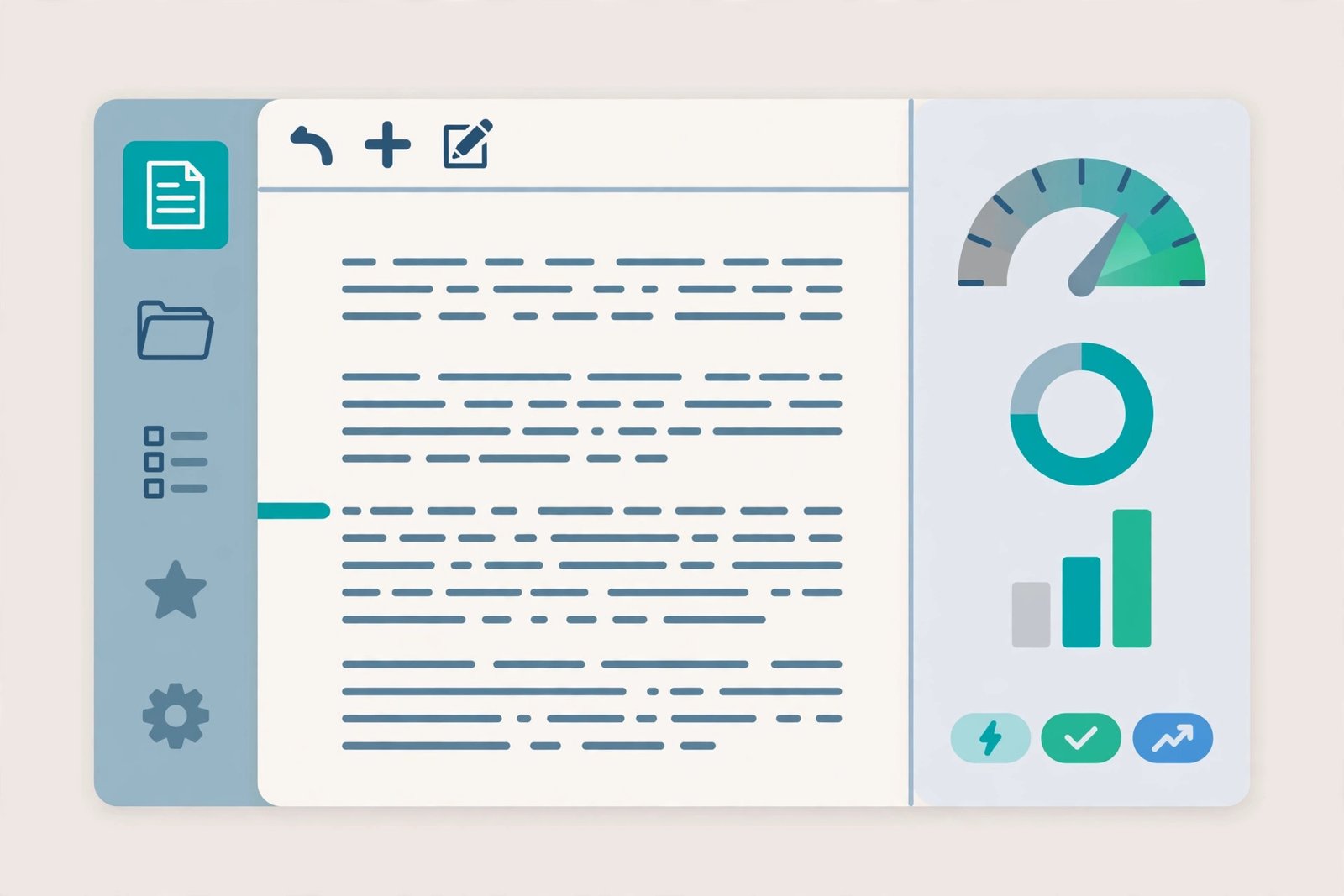
What it is: The live-scoring content editor that defined the on-page optimisation category: SERP-based briefs, real-time content scoring, and (newer) AI-visibility features.
2026 pricing (verified): Discovery is $49/month billed annually ($59 monthly) with 120 annual documents; Standard $99/month; Pro $182/month. Annual credits reset yearly, not monthly — a lower monthly-equivalent figure is not a smaller commitment.
The AI angle: Surfer added AI-visibility tracking to its optimisation workflow, so you can check whether the pages you’re optimising are also the ones AI systems cite. It won’t replace a dedicated GEO tracker for prompt-level depth, but for content teams it’s the most useful single screen in SEO: write, score, and check AI visibility in one place.
Pros:
- Cleanest live-scoring editor in the category
- Excellent briefs and structural feedback
- AI visibility included alongside optimisation
- Integrates with Jasper, WordPress, Google Docs
- Fast learning curve for writers
Cons:
- No keyword research or backlink depth — needs a suite beneath it
- Annual credit model punishes bursty publishing
- Thin on strategy: tells you how to write, not what to write
- Price climbs quickly at volume tiers
Best for: Content teams whose bottleneck is optimising drafts, not researching topics. Full comparison in our Surfer vs Frase vs Clearscope test.
4. Frase — Best Value Briefs + GEO Scores
What it is: A research-to-publishing loop built around fast SERP analysis: brief generation, question mining, AI drafting, and SEO + GEO scoring in one workspace.
2026 pricing (verified): Starter is $39/month billed annually or $49/month monthly — one seat, one site, 10 articles and 50 audit pages/month. Professional is $103/month annual (three seats, 40 articles). 7-day trial available.
The AI angle: Frase was early to add GEO scoring alongside SEO scoring — your draft gets graded for both Google-style optimisation and AI-answer readiness (question coverage, extractable structure). Its “People also ask” mining remains the best in class: in our earlier tests its briefs read like a strategist wrote them.
Pros:
- Best question mining and brief generation at this price
- SEO + GEO dual scoring
- Cheapest serious optimiser ($39/mo annual)
- Research, draft and audit in one tool
- Friendly trial terms
Cons:
- 10-article cap on Starter is tight for active blogs
- Smaller data graph than Semrush/Ahrefs for research
- White-label reporting is Enterprise-only
- Editor a step below Surfer’s polish
Best for: Solo writers and small teams who want briefs, drafting and dual SEO/GEO scoring without suite pricing.
5. Clearscope — Best for Editorial Teams
What it is: The premium content-optimisation platform favoured by larger editorial teams: high-quality term recommendations, readable reports non-SEOs can follow, and unlimited users on every plan.
2026 pricing (verified): Essentials is $129/month (50 tracked queries, 50 pages, 20 topic explorations, 20 drafts/month). Business is $399/month. Every plan includes unlimited users and projects — which changes the maths completely for teams of 4+.
The AI angle: Clearscope’s term and relevance modelling is the most “editorial” of the optimisers — its reports read like guidance from a good editor rather than a keyword list. Its AI-visibility features are more limited than Surfer’s or Frase’s, so teams deep into GEO will pair it with a dedicated tracker.
Pros:
- Unlimited seats on every plan — best per-editor economics at team scale
- Term suggestion quality matches Surfer’s best
- Most readable reports for non-SEO writers
- Excellent for enforcing editorial standards across freelancers
- Stable, trustworthy content grades
Cons:
- $129/mo entry is expensive for solo users
- No keyword research or backlink data
- AI-visibility features trail the field
- No free plan — demo only
Best for: Editorial teams of 4+ where per-seat pricing elsewhere would dominate the bill.
6. OtterlyAI — Best Dedicated AI-Visibility Tracker
What it is: A purpose-built GEO tracker: it monitors whether your brand appears in AI answers across ChatGPT, Google AI Overviews, Perplexity and Microsoft Copilot, and reports mentions, citations and competitor share of voice.
2026 pricing (verified): Lite is $29/month ($25/month billed annually) for 15 tracked prompts; Standard $189/month (100 prompts); Premium $489/month (400 prompts). Claude, Google AI Mode and Gemini are add-ons. A free trial is offered.
The AI angle: This is the specialist play. Otterly does nothing but AI visibility, so it reports prompt-level data deeper than the suites’ modules at a fraction of the entry price. The watch-out: 15 prompts on Lite is a narrow sample — enough to detect a problem, not map a market.
Pros:
- Cheapest credible entry to GEO tracking ($29/mo)
- Focused, uncluttered reporting — mentions, citations, competitors
- Daily tracking across the main AI engines
- No need to buy a full SEO suite to get visibility data
- Unlimited team members
Cons:
- 15 prompts on Lite is thin; Gemini/Claude cost extra
- No SEO features at all — it’s a single-purpose tool
- Prompt-based measurement is directional, not exact
- You’ll still need a suite or optimiser alongside it
Best for: Brands and blogs that specifically need to know whether AI answers mention them — without a $199+/mo suite commitment.
7. Peec AI — Best AI Visibility for Growing Teams
What it is: A European-built AI-visibility platform tracking brand presence across AI search engines, with prompt management, competitor benchmarking and agency-friendly reporting.
2026 pricing (verified): Plans start at $95/month for 50 prompts with unlimited users; you choose 3 models from ChatGPT, AI Mode, AI Overviews, Copilot, Gemini and others on base plans.
The AI angle: Peec sits between Otterly’s Lite tier and enterprise tools like Profound: more prompts, more models and better team reporting than entry-level trackers, at a mid-market price. The base-plan limit of 3 models is the main compromise to check.
Pros:
- 50 prompts at entry — a usable sample size
- Unlimited users included
- Clean competitor benchmarking
- Good agency/reporting features
Cons:
- Base plans include only 3 AI models
- No classic SEO features
- Less established than Semrush/Ahrefs ecosystems
- Pricing scales with prompt volume
Best for: Marketing teams and agencies that have outgrown entry-level GEO tracking but aren’t enterprise-sized.
8. RankIQ — Best for Bloggers
What it is: An AI keyword research tool built specifically for bloggers: it surfaces low-competition keywords in your niche, grades your posts against ranking content, and includes an optimiser.
2026 pricing (verified): $49/month, no free plan. Positioned as a single-purpose blogger tool rather than a suite.
The AI angle: RankIQ’s value is curation: instead of a firehose of keyword data, it pre-filters for keywords a typical blog can actually win. For bloggers without an SEO background, that filter is worth more than Semrush’s depth. Its AI features focus on title analysis and content grading rather than GEO tracking.
Pros:
- Low-competition keyword library tailored to bloggers
- Simple — no SEO expertise required
- Content optimiser included
- Title/grade analysis is genuinely useful
Cons:
- Narrow — no backlinks, audits or GEO tracking
- $49/mo is a lot for a single-purpose tool
- Keyword library depth varies by niche
- No free plan or trial
Best for: Bloggers who want winnable keywords handed to them and don’t need a full SEO suite.
9. NeuronWriter — Best Budget Optimiser
What it is: A budget NLP content optimiser: SERP analysis, term coverage scoring and a content editor at a fraction of Surfer’s price, with WordPress and Search Console integrations.
2026 pricing (verified): Plans from $19/month billed annually ($23/month monthly) for Bronze, scaling to $117/month at the top tier. Trial available.
The AI angle: NeuronWriter covers the core optimisation job — does your draft cover the terms and structure ranking pages use — for the price of a streaming subscription. For non-English content it’s also one of the stronger options. The UI is rougher and integrations fewer than Surfer’s, but the underlying NLP analysis is credible.
Pros:
- Real NLP optimisation from ~$19/mo
- Good non-English/multilingual support
- WordPress and GSC integrations
- Sensible limits for small blogs
Cons:
- Rougher UI than Surfer or Clearscope
- Fewer integrations
- Score stability slightly lower in testing
- No AI-visibility tracking
Best for: Budget-conscious bloggers and small sites that need optimisation without suite pricing.
How to Choose

Start from your actual gap, not the feature list:
- You have no SEO data at all → Semrush ($139/mo) or Ahrefs ($129/mo). Everything else builds on keyword and competitor data.
- You have data but drafts underperform → Surfer ($49/mo annual) or Frase ($39/mo annual) for optimisation; Clearscope ($129/mo) if a team shares the tool.
- You’re invisible in AI answers → Otterly ($29/mo) to measure it cheaply, Peec ($95/mo) or Semrush One ($199/mo) for depth, Ahrefs Brand Radar ($199/mo add-on) for the deepest data.
- You’re a blogger on a budget → RankIQ ($49/mo) for winnable keywords, or NeuronWriter ($19/mo) + Google Search Console (free) for optimisation.
- You’re publishing under ~2 posts/month → skip the subscriptions. Search Console (free) + a ChatGPT/Claude plan covers most of what you need.
The stack most mid-size sites actually run in 2026: one suite (Semrush or Ahrefs) + one optimiser (Surfer or Frase) + optionally one GEO tracker (Otterly) if the suite’s AI module isn’t enough. Budget $190–280/month total. Anything beyond that is usually paying twice for the same data. For the writing half of the workflow, see our guide to the best AI writing tools for bloggers.
Frequently Asked Questions
What is a GEO tool, and do I need one?
GEO (generative engine optimisation) tools track whether AI systems — ChatGPT, Perplexity, Google AI Overviews — mention or cite your brand when answering user questions. You need one if your audience asks AI those questions (increasingly true in every niche) and you want to know whether you’re visible, and against which competitors.
Semrush or Ahrefs in 2026 — which is better?
For most sites, Semrush: it bundles competitive AI-visibility tracking into its One tiers, while Ahrefs charges $199/month extra for Brand Radar. For backlink-driven strategies or agencies, Ahrefs’ data remains the best and Brand Radar is the deepest AI index — worth it if the budget allows both the suite and the add-on.
Can AI SEO tools replace an SEO consultant?
No. Tools give data and checklists; consultants give judgement — what to prioritise, what to ignore, how to read your specific market. For a small site, tools + your own judgement is the rational setup. For competitive niches, tools make a good consultant faster rather than unnecessary.
Do content scores (Surfer, Clearscope) actually improve rankings?
They improve coverage: drafts optimised with these tools reliably include the terms and structure ranking pages share, which removes a common reason for underperformance. They don’t guarantee rankings — links, intent match and content quality still dominate. Treat the score as a checklist, not a target; chasing 95+ produces worse writing.
What’s the cheapest credible AI SEO setup?
Google Search Console (free) + NeuronWriter ($19/mo) + an Otterly Lite plan ($29/mo) gives you performance data, content optimisation and AI-visibility tracking for $48/month. That’s a genuinely functional 2026 stack for a small site.
How reliable is AI-visibility tracking data?
Directional, not exact. Trackers sample AI answers using fixed prompts, and AI responses vary between runs, users and locations. Use the data for trends and competitor comparisons (“are we cited more than last month?”) rather than treating any single number as precise.
Conclusion
The best AI SEO tools in 2026 split into three jobs: research (Semrush, Ahrefs), optimisation (Surfer, Frase, Clearscope) and AI visibility (Otterly, Peec, Brand Radar). Semrush is the best single purchase because it covers all three credibly in one subscription. Ahrefs remains the research gold standard with the deepest citation data. Surfer still owns the optimisation workflow, and Otterly makes GEO tracking affordable for everyone else.
The mistake to avoid is buying three tools that do the same job. Pick your gap, buy the one tool that fills it, and use it weekly — a $49 tool you open every day beats a $500 stack you open never.
Next step: run Otterly’s trial or Ahrefs’ free AI visibility checker today to get your baseline: are AI answers mentioning you at all? That single number tells you whether your next SEO dollar belongs in classic optimisation or in AI visibility. Then read our how to rank in AI search guide for what to do about the answer.