
How to rank in AI search? Your customers’ first question used to go to Google. In 2026, a huge share of it goes to ChatGPT, Perplexity, Gemini or Claude instead — and the answer they get is a single paragraph with three to eight citations, not ten blue links.
That changes everything about content marketing. If your page is one of the sources the AI cites, you win the click, the mention and the trust. If it is not, ranking #1 on Google no longer protects you: the overlap between Google’s top ten results and the sources AI engines actually cite has fallen below 20%.
The good news: AI search visibility is a learnable discipline, and it is still early. This guide is the practical playbook — what Generative Engine Optimization (GEO) is, how AI engines actually pick their sources, and the ten steps that get your content cited in 2026.
Quick Answer: How to Rank in AI Search
To rank in AI search, make your content easy to extract, easy to verify and easy to trust:
- Lead with a direct answer — put a clear 40–60 word answer in the first paragraph of every page.
- Add statistics and citations — specific numbers and links to primary sources raise citation rates by 30–40%.
- Use structured formats — comparison tables, numbered steps and FAQ sections are the formats AI extracts most.
- Implement schema markup — FAQPage, Article and Organization schema give AI crawlers a precise map of your content.
- Allow AI crawlers — do not block GPTBot, ClaudeBot or PerplexityBot in robots.txt, and add an
llms.txtfile. - Build brand mentions — get cited and reviewed on the third-party sources AI models trust (G2, Reddit, YouTube, industry press).
- Publish original data — proprietary research is the single strongest predictor of being cited.
- Track and iterate — audit your target prompts monthly in ChatGPT, Perplexity and Claude, and close the gaps you find.
That is the whole game. The rest of this guide is how to actually execute each step.
What Is GEO (Generative Engine Optimization)?
Generative Engine Optimization (GEO) is the practice of structuring your website content so AI engines like ChatGPT, Perplexity and Google AI Overviews can easily extract, trust and cite it in AI-generated answers. It is also called AI Search Optimization or Answer Engine Optimization (AEO).
Unlike traditional SEO — which chases backlinks and keyword rankings to win a spot on a results page — GEO focuses on factual density, direct answers and structured data, so your content becomes the source inside the answer itself.
GEO does not replace SEO. It extends it. AI platforms still pull from indexed web content, so crawlability, site health, content quality and topical authority — the classic SEO foundation — remain prerequisites. What changes is the finish: your page now needs to be extractable by a model, not just rankable by an algorithm.
How big is AI search in 2026?
- 35–45% of B2B research queries now receive an AI-generated answer as the primary or secondary interaction
- ChatGPT serves hundreds of millions of weekly users and holds roughly 10–15% of US search query share
- Perplexity has grown to tens of millions of monthly users, strongest on research queries, and shows 5–8 citations per answer
- Google AI Overviews appear on roughly 30–40% of informational queries in the US
- Claude serves ~30M monthly users, skewed professional and technical
The practical consequence: for informational and comparison queries — the ones that drive blog traffic and affiliate revenue — the AI answer is the results page now. Being cited in it is the new page one.
How AI Engines Actually Choose Their Sources
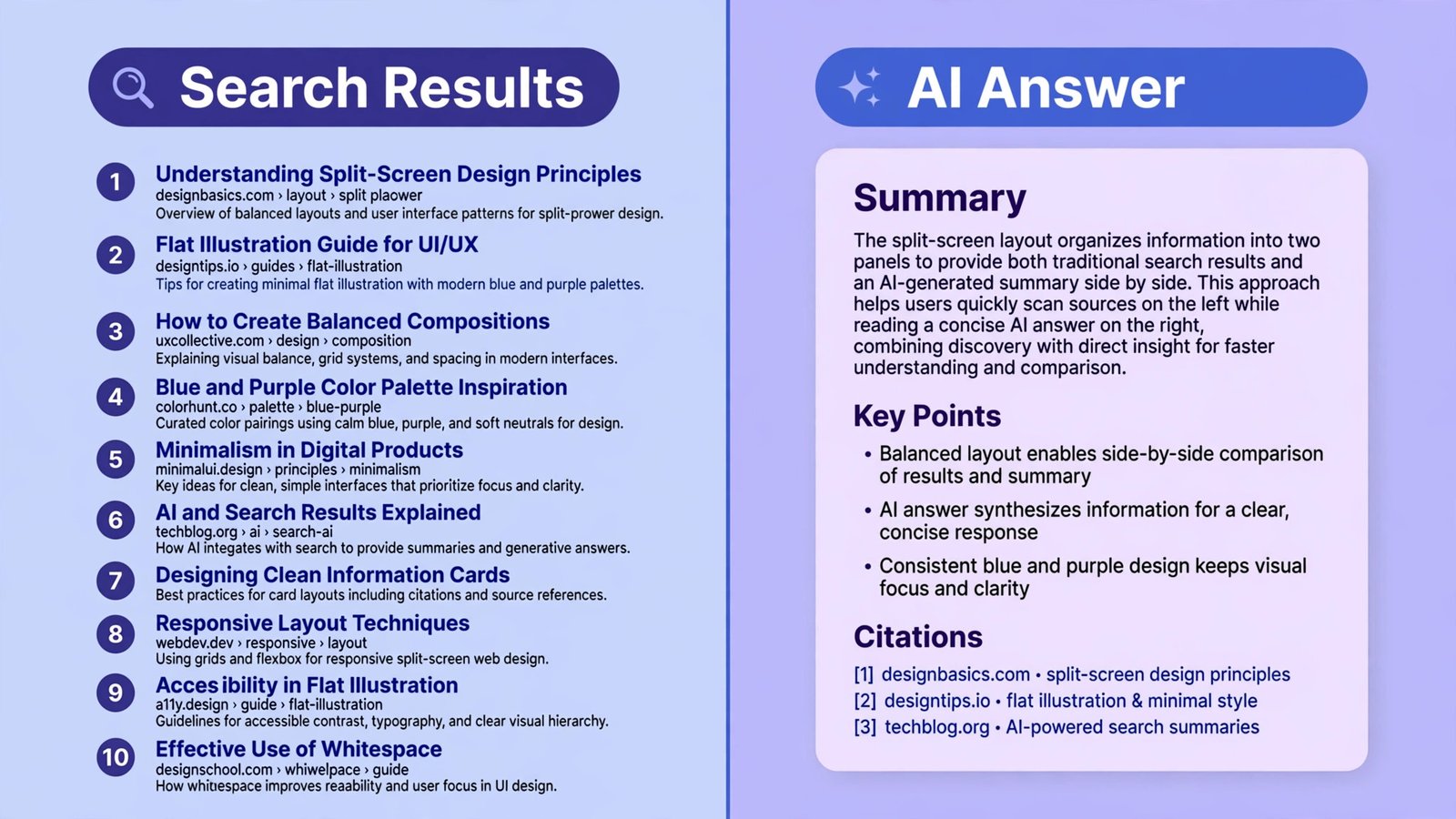
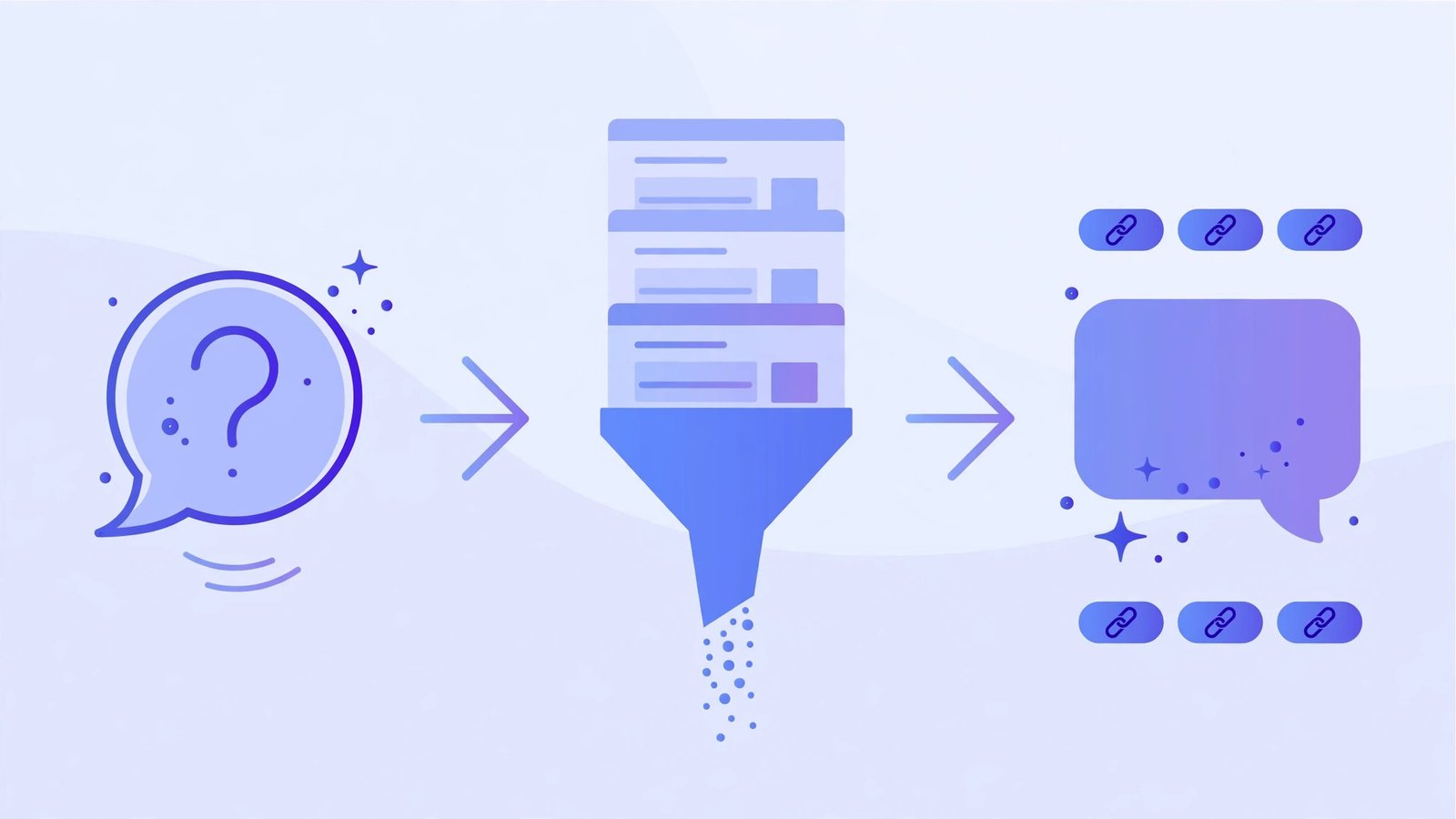
Understanding GEO starts with understanding how an AI answer is built. When someone asks ChatGPT or Perplexity a question, the system typically:
- Retrieves candidate pages from a search index (Perplexity and ChatGPT Search use web indexes; Gemini inherits Google’s)
- Extracts passages that directly answer the question in a clean, structured form
- Weighs trust signals — source authority, factual specificity, citations to primary sources, recency
- Synthesises an answer and cites 3–8 sources inline
Your content wins at steps 2 and 3. The model is looking for passages it can lift with confidence: a clear claim, a specific number, a named entity, a source it can point to. Vague marketing copy gets skipped; precise, well-formatted facts get cited.
Each platform weighs signals differently
| Platform | What it favours | Citation style |
|---|---|---|
| ChatGPT Search | Domain reputation, readability, well-structured pages | 3–5 sources per answer |
| Perplexity | Verifiable citations, fresh content, primary sources | 5–8 citations per answer |
| Google AI Overviews | Inherits Google’s ranking systems + direct-answer formatting | Inline links to ranking pages |
| Claude | Multi-source verification, balanced non-promotional content (Brave Search index) | Citations within answers |
The takeaway: you cannot optimise for one engine and ignore the others, but the shared rules — direct answers, statistics, structure, schema, brand authority — travel across all four.
The 2026 GEO Playbook: 10 Steps
Step 1: Audit your baseline visibility
You cannot improve what you have not measured. Start by querying your target prompts — the exact questions your buyers ask — across ChatGPT, Perplexity, Claude and Gemini:
- “What is the best [product category] for [audience]?”
- “How do I [task your content teaches]?”
- “[Your brand] vs [competitor] — which is better?”
Document for each prompt: is your brand mentioned? Are your pages cited? Which competitors are cited instead, and what do their pages do that yours do not? This is your gap list — every later step closes a specific gap on it.
Dedicated AI-visibility tools (Profound, Peec AI, and similar trackers) automate this at scale, running prompt audits across engines and reporting your share of voice. For a small site, a monthly manual audit of 20–30 prompts is enough to start.
Step 2: Map prompts, not just keywords
Classic SEO targets keywords; GEO targets prompt clusters. The same buyer asks AI in a different shape than they search Google:
- Google: “best AI meeting notes tools”
- ChatGPT: “I’m a 5-person sales team on HubSpot — which AI meeting notes tool should I buy, and why?”
Group your target prompts by intent (recommendation, instructional, comparison) and by topic cluster, then build one strong page per cluster. Pages that answer the specific version of the question — with the audience, tool stack and constraints named — are the ones that get cited for it.
This guide is built that way, and so is the rest of Stratilyze: our posts on topics like the best free AI tools name the audience, the use case and the constraints up front, because AI engines cite the page that matches the question.
Step 3: Lead every page with a direct answer
Put a direct answer of 40–60 words in the first paragraph of every important page: objective, declarative, no introductory filler. Research on AI citation patterns shows that front-loading a clear answer can lift citations by up to 115% for lower-ranked domains — and pages with a direct answer up top correlate with a 35% higher chance of being cited overall.
Structure that works:
[Topic] is [clear definition/verdict]. The best option for [audience] is [pick], because [reason]. [One specific number or fact that proves it.]
Then expand below. The AI gets its extractable answer; the human gets the depth. This single change is the highest-leverage GEO edit most sites can make.
Step 4: Pack in statistics and cite primary sources
AI models treat specific numbers as trust signals. Content featuring statistics and explicit citations achieves 30–40% higher visibility in AI search results than equivalent content without them.
Practically:
- Replace vague claims (“many businesses use AI”) with sourced numbers (“~70% of enterprises run AI agents in production, per Google Cloud 2026”)
- Link out to primary sources — vendor docs, official pricing pages, original studies — not just other blogs
- Date your data (“checked October 2026”) so freshness is explicit
Our own content follows this rule: our AI workflow automation tools guide, for example, cites vendor documentation and dated comparisons rather than recycling listicles — and that sourcing style is exactly what AI engines reward.
Step 5: Use the formats AI extracts
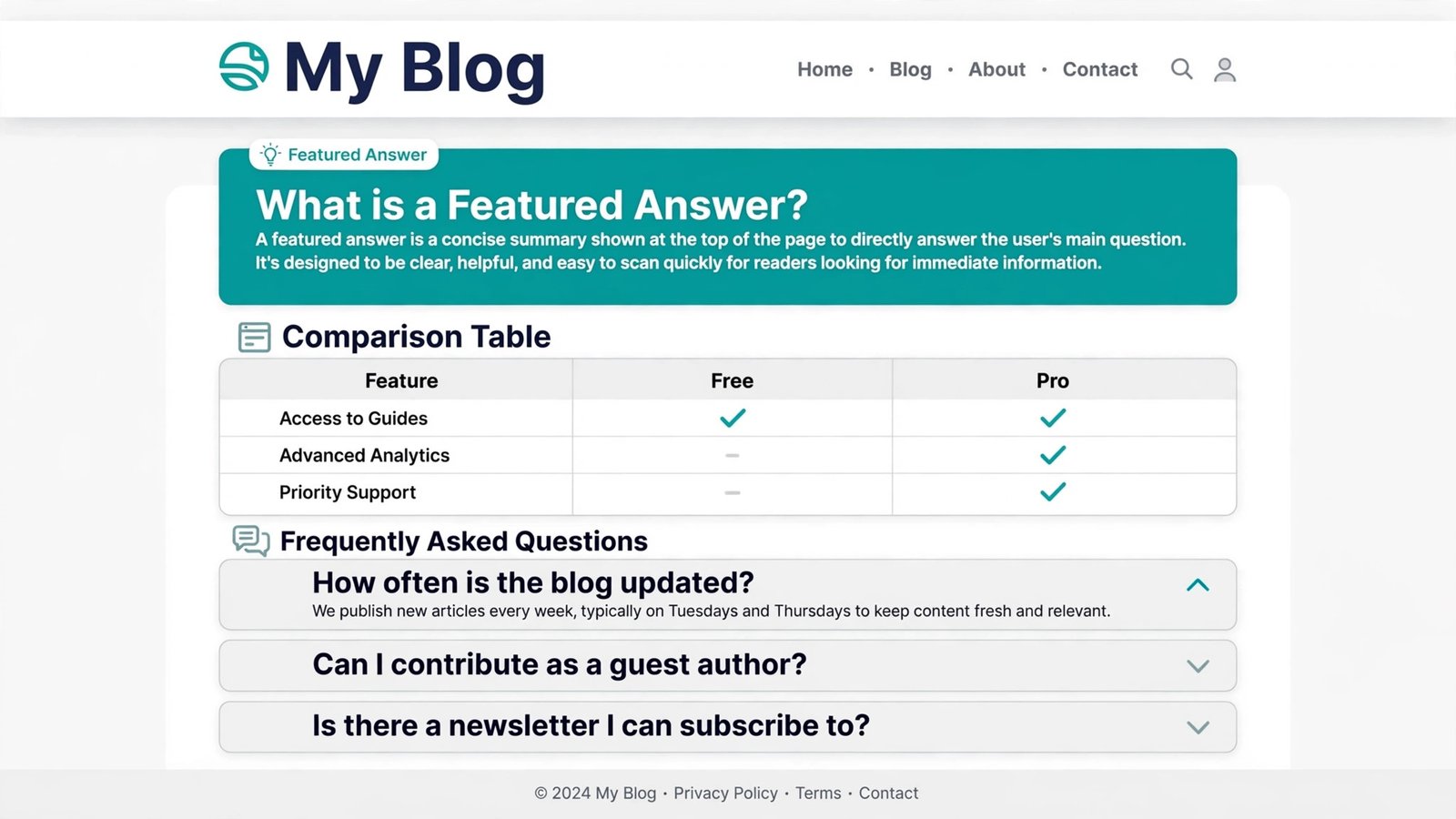
Models extract from structure. The formats that get lifted most:
- Comparison tables — the single most-cited format for “best X” queries
- Numbered steps — for how-to prompts
- FAQ sections — question phrased exactly as users ask it, answer in 2–3 sentences
- Bulleted pros/cons — for evaluation prompts
- Definition boxes / quick-answer summaries at the top of the page
If your best insight is buried in paragraph nine of flowing prose, a model will cite the competitor who put it in a table. Format is not decoration in GEO — it is the mechanism.
Step 6: Implement schema markup
Structured data gives AI crawlers a precise map of your content so they can identify specific answers without guessing context. Priorities:
- FAQPage schema on every page with an FAQ section (which should be most pages)
- Article/BlogPosting schema with author, datePublished and dateModified
- Organization schema with
sameAslinks to your verified profiles (LinkedIn, YouTube, Crunchbase, G2) — this builds your entity graph, the network of signals that tells models your brand is a real, consistent entity - HowTo schema on step-by-step guides
Entity authority is increasingly described as “the new PageRank” for AI search: models cite brands they recognise as consistent entities across the web. Schema is how you declare that entity cleanly on your own site.
Step 7: Let the AI crawlers in
Two technical files matter in 2026:
- robots.txt — check that you are not blocking the AI crawlers you want citations from:
GPTBot,ClaudeBot,PerplexityBot,Google-Extended,anthropic-ai. Many sites blocked them during the 2023–24 scraping panic and never reversed it — an invisible, total GEO failure. - llms.txt — a plain-text file at your domain root (
/llms.txt) that describes your site and links your key pages in a format models can parse trivially. It is cheap to add, standardised at llmstxt.org, and an easy early-mover advantage while most competitors have not bothered.
Also submit new content for fast indexing (IndexNow where supported, current sitemap, Search Console monitoring) — AI indexes reward freshness, especially Perplexity.
Step 8: Build brand mentions where AI looks
AI engines do not only read your site. They build their picture of your brand from third-party sources: review platforms (G2, Capterra), discussion forums (Reddit is heavily cited), YouTube, industry press, podcasts and directories (Crunchbase, Clutch).
Practical plays:
- Claim and complete profiles on G2, Capterra and relevant directories, with consistent naming and descriptions
- Earn genuine mentions in the roundups and comparisons your category already gets cited from
- Answer questions in Reddit and niche communities helpfully, under your real brand — models cite these threads constantly
- Keep brand facts (name, category, pricing, positioning) identical everywhere; inconsistency is an entity-recognition killer
For a content site like this one, the equivalent play is earning citations from other sites’ AI-visible content and maintaining consistent author/brand entities across every platform you publish on.
Step 9: Publish original data — the strongest signal of all
Across 2026 citation studies, one factor predicts AI citations more reliably than any other: original data or proprietary insight. Models cite the page that is the source, not the page that summarises sources.
You do not need a research department. Publish:
- Your own tests (like our five-task agent tests and same-meeting transcription test)
- Original price tracking — you already check prices; publish the table and date it
- Small surveys of your own audience
- Benchmarks and samples: same prompt in five tools, same brief in three writers
Top-performing content hubs get cited on 35–55% of relevant queries, versus 2–8% for generic thin content. Original data is the main reason for that gap.
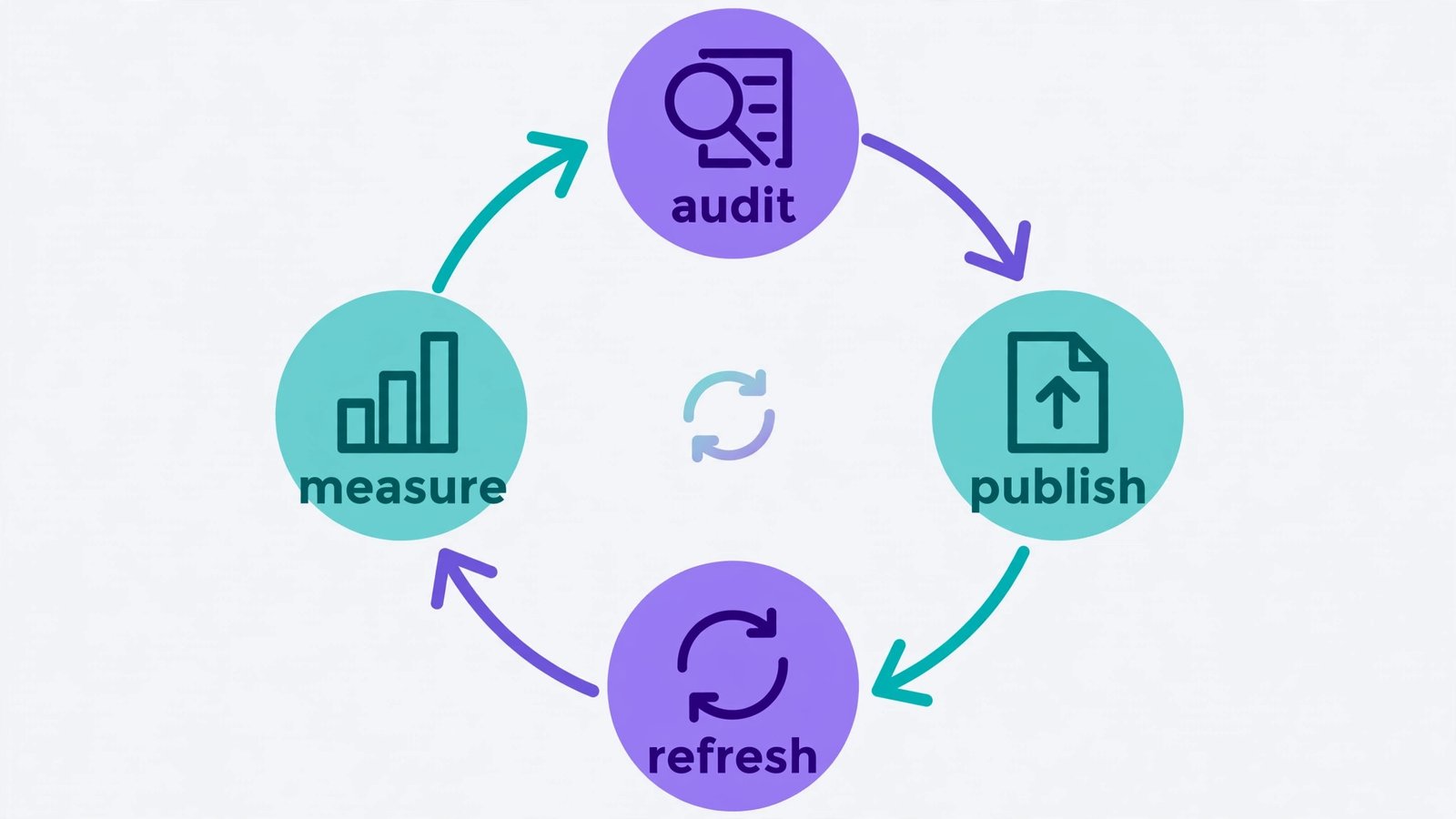
Step 10: Track, refresh, repeat
GEO is a loop, not a launch. Set a monthly ritual:
- Re-run your prompt audit (Step 1) and record citation share by engine
- Publish or update pages for the prompts where competitors are cited and you are not
- Refresh statistics, prices and screenshots on your most-cited pages — AI Overviews favour content updated within ~30 days for fast-moving topics
- Verify indexing and crawler access after every technical change
- Watch downstream signals: branded search growth, and leads/readers mentioning they found you via ChatGPT or Perplexity
Freshness deserves emphasis: for technical and pricing topics, the version of your page from this month beats the better-written page from last year. Quarterly refreshes are the minimum for comparison content.
The GEO Checklist (Pin This)
| # | Action | Why it matters | Effort |
|---|---|---|---|
| 1 | Direct answer (40–60 words) in the first paragraph | +35% citation correlation; up to +115% for smaller domains | Low |
| 2 | Statistics with dates and primary-source links on every page | 30–40% higher AI visibility | Medium |
| 3 | Comparison tables, numbered steps, FAQ sections | Most-extracted formats | Low |
| 4 | FAQPage + Article + Organization schema (with sameAs) | Machine-readable entity and answers | Medium |
| 5 | robots.txt allows GPTBot, ClaudeBot, PerplexityBot, Google-Extended | Blocked = invisible, full stop | Low |
| 6 | /llms.txt published and current | Cheap extraction advantage | Low |
| 7 | Consistent brand entity across G2, Crunchbase, directories, socials | Entity authority drives citations | Medium |
| 8 | Original tests, data or benchmarks in flagship posts | Strongest single citation predictor | High |
| 9 | Monthly prompt audit across ChatGPT, Perplexity, Claude | You cannot fix gaps you cannot see | Medium |
| 10 | Quarterly content refreshes (stats, prices, dates) | Freshness wins fast-moving topics | Medium |
5 GEO Mistakes That Kill AI Visibility
- Blocking AI crawlers by accident. Check robots.txt today. If GPTBot or PerplexityBot are disallowed from a 2023-era blocklist, you have opted out of AI search entirely.
- Burying the answer. Introductions that “set the scene” for 300 words before answering the question are the #1 structural failure. Answer first, context second.
- Vague, un-sourced claims. “Leading platform,” “many users,” “powerful features” — models skip this. Numbers with sources get cited; adjectives do not.
- Inconsistent brand facts. Different pricing, founding dates or descriptions across your site, G2 and LinkedIn confuses entity recognition. One canonical set of facts, everywhere.
- Treating GEO as separate from SEO. AI engines retrieve from indexes built on classic signals. Slow, uncrawlable, thin sites do not get cited no matter how well formatted the FAQ is. Do both.
Quick Wins by Platform
ChatGPT: Prioritise readability and domain reputation — clear headings, plain-language summaries, and content on a domain with real topical authority. ChatGPT cites fewer sources (3–5), so winning means being in the top handful, not the top fifty.
Perplexity: The most citation-generous engine (5–8 per answer) and the most freshness-sensitive. Publish dated, source-heavy content and keep it updated; link to primary sources Perplexity can verify.
Google AI Overviews: Your classic SEO still does most of the work here — ranking pages feed the overview. Add direct-answer formatting and FAQ schema to convert rankings into overview citations.
Claude: Rewards balanced, non-promotional content with multi-source verification. Overtly salesy pages underperform; genuinely comparative, even-handed content (including honest cons) travels well.
Frequently Asked Questions
What is the difference between GEO and SEO?
SEO optimises for ranking in search engine results pages (links, keywords, technical health). GEO — Generative Engine Optimization — optimises for being cited inside AI-generated answers (direct answers, factual density, structure, entity authority). They overlap heavily: GEO builds on SEO foundations, but a page can rank #1 on Google and still never be cited by ChatGPT, because the citation overlap between the two is now below 20%.
How do I get my website cited by ChatGPT?
Lead pages with a direct 40–60 word answer, include dated statistics with links to primary sources, use tables and FAQ sections, add FAQPage and Organization schema, allow GPTBot in robots.txt, publish an llms.txt, and earn mentions on third-party sources ChatGPT trusts (review sites, Reddit, industry press). Then audit your target prompts in ChatGPT monthly and close the gaps.
Does schema markup really help with AI search?
Yes. FAQPage, Article and Organization schema give AI crawlers a machine-readable map of your questions, answers and brand entity, removing the guesswork from extraction. Schema alone will not get you cited — content quality and authority still lead — but it measurably improves how accurately models can extract and attribute your answers.
Is llms.txt necessary for AI visibility?
Not strictly necessary, but it is one of the cheapest wins available: a short plain-text file that tells AI systems what your site is and which pages matter. Adoption is still low in 2026, so publishing one is an easy differentiator. Think of it as a robots.txt-era investment with sitemap-era returns.
How long does GEO take to work?
Expect 4–12 weeks to see citation movement on existing topics after structural fixes (direct answers, schema, crawler access), and longer for brand-entity work (third-party mentions and reviews compound over quarters). Freshness-sensitive engines like Perplexity can pick up new, well-structured content within days of indexing.
Will GEO replace SEO?
No. AI engines retrieve their sources from web indexes that still depend on crawlability, content quality and authority — the core of SEO. GEO is an additional layer on top of that foundation. The sites winning AI citations in 2026 are almost all sites with strong classic SEO plus GEO formatting and entity work.
Final Verdict
AI search is not a future trend — with 35–45% of research queries already receiving AI answers, it is the present tense of discovery. The brands and sites being cited are not winning through tricks. They are winning by being the most extractable, verifiable and consistent source on their topic.
Start with the three cheapest fixes this week — a direct answer at the top of your key pages, an robots.txt check, and an llms.txt file — then build the monthly audit loop. GEO rewards the sites that start early and refresh often, and in late 2026 it is still early.
Keep going: our guide to keyword research with AI pairs naturally with prompt mapping (Step 2), and our AI workflow automation tools guide shows the citation-friendly format in action.