
A realistic cart startup totals roughly 13,000 to 36,000 dollars before you pour your first paid drink, and that spread is the whole story. The low end means a basic new cart, a portable espresso machine, and a short menu. The high end means a fully branded cart, a higher capacity machine, and permits, stock, and insurance bought without cutting corners. So the cost of starting a mobile coffee cart business is less a single price and more a set of choices, and this guide prices each choice so you can see where the money goes.
Every figure below was checked against a vendor page, a supplier page, or an official permit page at draft time. Prices still vary by city, by cart builder, and by how much volume you plan to serve, so treat each range as a planning band and get a written quote for your own cart, machine, and permits before you commit.
The Short Answer on a Cart Startup
If you want one number to plan around, use 20,000 dollars as a working midpoint for a professional cart that can serve a morning rush without constant breakdowns. That midpoint sits inside the published all-in ranges from cart operators, which run from about 15,000 to 40,000 dollars for a cart and from about 24,000 to 49,000 dollars for a professional grade setup. A cheaper launch is possible, and a more expensive one is easy to reach, but 20,000 dollars buys decent equipment, legal paperwork, and enough stock to trade for a month.
Three decisions move the total more than anything else, and together they explain most of the spread in the cost of starting a mobile coffee cart business. The first is whether you buy the cart new or used, because a used cart can save thousands but may need new wheels, seals, or a water system before a health inspector passes it. The second is the espresso machine, because the gap between a portable machine and a premium compact machine is several thousand dollars. The third is your pitch, because a free market pitch keeps monthly costs down, while a prime commuter pitch can cost as much as a small shop rent.
The rest of this guide works through each line in order, starting with the headline table, then the cart, the equipment, the permits, the stock, the insurance, and the buffer you need for month one.
The Cost of Starting a Mobile Coffee Cart Business in One Table
This table covers a single operator cart with no tow vehicle, no staff wages, and no second cart. Add those separately if your model needs them.
| Startup line | Low end | High end | What drives the range |
|---|---|---|---|
| Cart itself, new and basic | 4,500 dollars | 12,000 dollars | Size, build quality, and included equipment |
| Espresso machine, portable | 3,000 dollars | 8,000 dollars | Capacity, boiler design, and brand |
| Grinder, commercial | 1,000 dollars | 2,500 dollars | Burr size and dosing control |
| Refrigeration and cold storage | 800 dollars | 2,500 dollars | Fridge size and power draw |
| Power, battery or generator | 500 dollars | 2,000 dollars | Battery size and inverter quality |
| Water system and handwash | 300 dollars | 1,200 dollars | Tank size, pump, and filtration |
| Smallwares and tools | 500 dollars | 1,500 dollars | Pitchers, tampers, scales, and spares |
| Card reader and POS | 0 dollars | 350 dollars | Phone tap to pay versus a terminal |
| Branding, signage, and menu | 300 dollars | 1,200 dollars | Wrap, boards, and printed menus |
| First stock and packaging | 900 dollars | 2,200 dollars | Beans, milk, cups, lids, and syrups |
| Permits and licenses, first year | 500 dollars | 2,000 dollars | City, county, and state rules |
| Insurance, first year | 400 dollars | 800 dollars | Limits, location, and equipment cover |
| Commissary deposit and first month | 200 dollars | 800 dollars | City rates and access frequency |
| Total startup range | 12,900 dollars | 36,050 dollars | Rounded in the text to 13,000 to 36,000 dollars |
Two lines in the table deserve a warning before you go further. Permits are the line most often underestimated, because a single city fee looks small until you add the health permit, the business license, the food handler course, and the pitch fee together. Power is the line most often bought twice, because an undersized battery or a noisy generator gets replaced within weeks once real trading exposes its limits.
The Cart Itself
A basic coffee cart from a specialist maker starts at 4,499 dollars, and a fully business ready configuration with an espresso machine, cold brew taps, and full branding runs from 7,500 to 15,000 dollars. Those published maker prices explain why the cart line in the table starts at 4,500 dollars and rises to 12,000 dollars for a larger or more finished build, and why the cart choice alone can shift the cost of starting a mobile coffee cart business by thousands. A used cart can drop the cart line to about 3,000 dollars, but check the frame, the wheels, the counter, and the water and waste tanks before you pay.
Size decides more than looks. A compact cart fits through a standard doorway, loads into a van, and sets up inside a lobby or a market hall, which opens up private events and indoor pitches. A larger cart carries more stock and a bigger fridge, but it needs a trailer or a larger vehicle, and some venues will refuse it on size alone.
Ask every cart maker the same questions before you compare prices. Does the quoted price include refrigeration, a water system, and a handwash station, or are those extras. What is the total weight when fully loaded, and what vehicle moves it legally. How is power supplied, and what happens when the battery runs out mid service. What is the warranty, and who repairs it in your city.
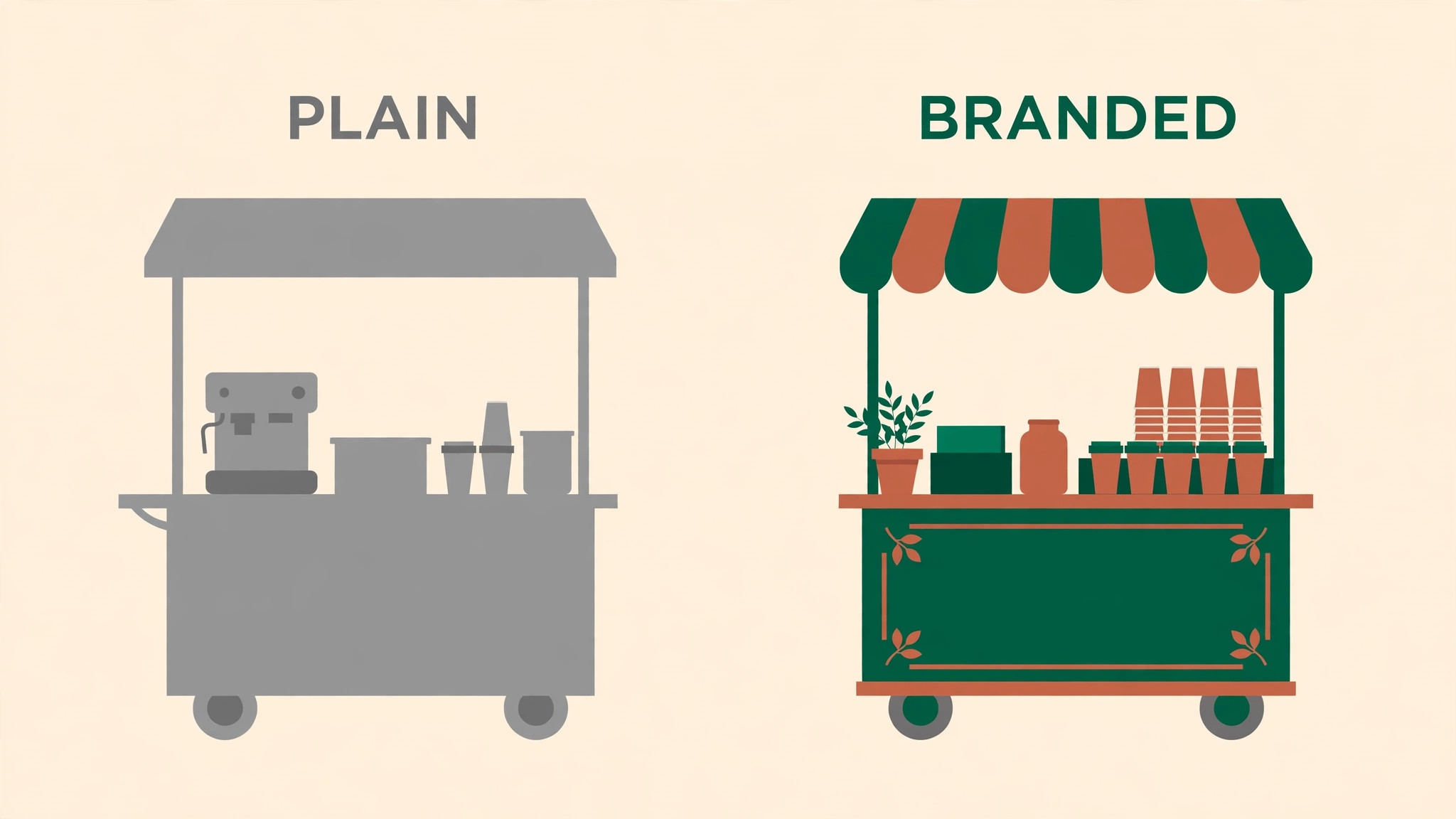
Branding is worth pricing honestly. A plain cart with a printed banner can open for a few hundred dollars, and it looks fine at a farmers market. A wrapped cart with a designed menu, matching cups, and a clear price board costs closer to 1,200 dollars, and it photographs far better.
Espresso Machine, Grinder, and Power
The espresso machine is the most consequential purchase in the whole startup, because it sets your speed, your drink quality, and your repair bill. Published mobile cart budgets put a portable espresso machine at 3,000 to 8,000 dollars, and that range covers most sensible first carts. At the top of the compact market, a La Marzocco Linea Mini lists at 6,620 dollars through a specialist retailer, which shows how quickly a premium compact machine can push the cost of starting a mobile coffee cart business toward the high end. That machine suits a cart that trades on cafe quality coffee, but it is not a requirement for opening.
The grinder matters more than most beginners expect. A commercial grinder in the 1,000 to 2,500 dollar range grinds fast, holds its setting through a rush, and produces a consistent dose, which is what keeps each drink tasting the same. A cheap grinder drifts, clogs, and slows the queue, and a slow queue at a morning pitch costs more in lost sales than the saving on the grinder.
Power is where cart budgets quietly fail. A portable machine, a grinder, a fridge, and a water pump together draw serious power, and a single leisure battery will not run them all for a full service. Published cart budgets put a power solution at 500 to 2,000 dollars, covering a battery and inverter setup at the low end and a quiet generator with proper cabling at the high end. Test the full setup at home before your first paid day.
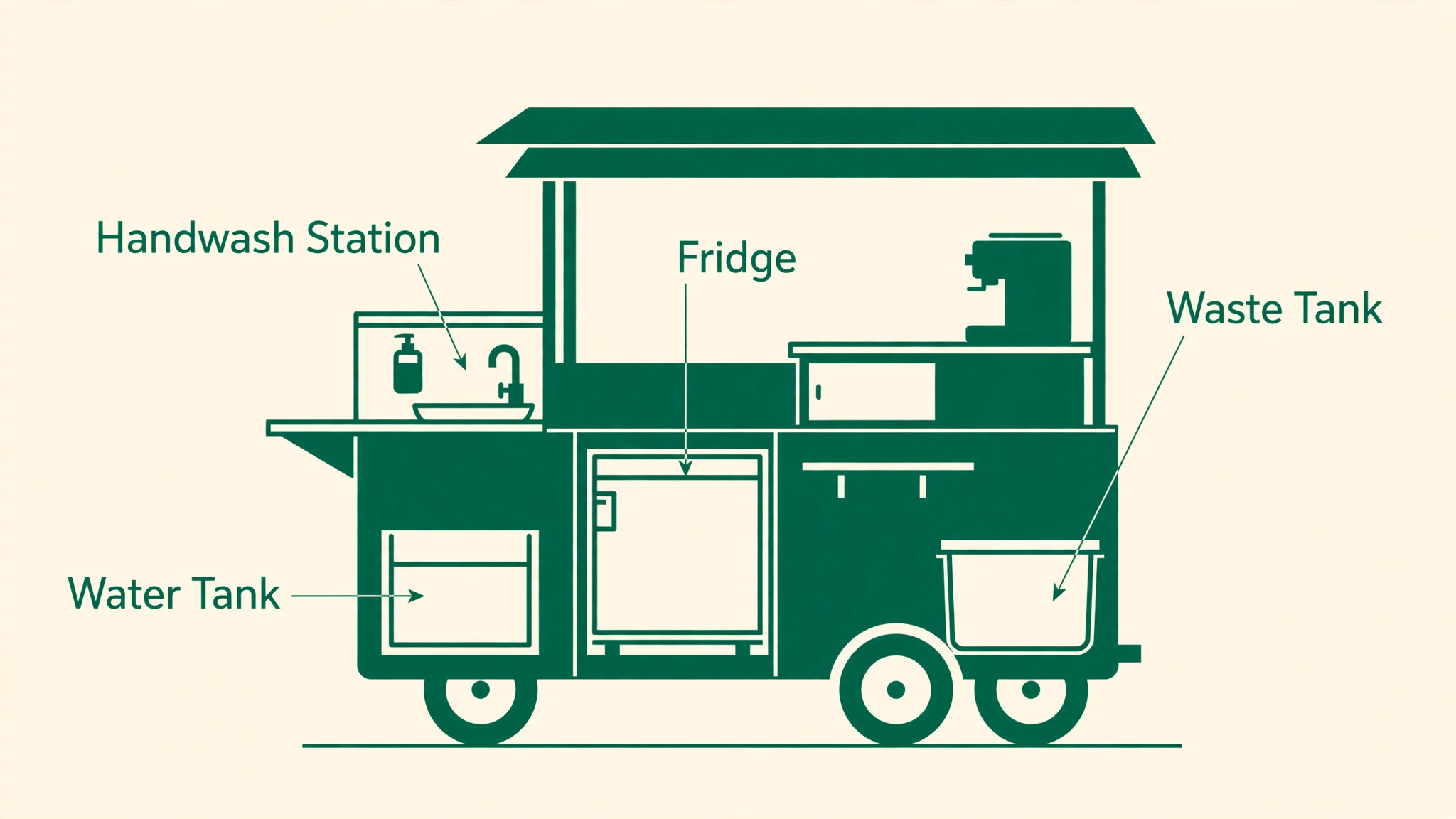
Water needs the same practical test. A cart needs fresh water for brewing and steaming, a handwash supply with soap and paper towels, and a separate waste tank, and the health inspector will check all three. Published budgets put a water system at 300 to 1,000 dollars, and the table here allows up to 1,200 dollars for a larger tank, filtration, and a proper sink.
Smallwares add up faster than the list suggests. Pitchers in two sizes, a tamper, scales, a knock box, cleaning cloths, a thermometer, jugs for milk, and spare baskets and gaskets together run 500 to 1,500 dollars. Buy spares for the parts that stop service when they break, meaning gaskets, baskets, and a spare tamper.
Permits and Licenses
Permits are the least glamorous line and the one most likely to delay opening. The honest planning range for a first year is 500 to 2,000 dollars, which combines a mobile food vendor permit, a health department permit, a business license, and a food handler course. Published guidance puts a mobile food vendor permit at 100 to 2,000 dollars depending on the city, and a health department permit at 50 to 1,000 dollars depending on the county, so a cart in a small city can sit near the low end while the same cart in a large city can sit near the high end.
That spread is why permits are the least predictable part of the cost of starting a mobile coffee cart business.
Some cities add a hard constraint that money alone cannot fix. New York City, for example, caps mobile food vending permits, charges 200 dollars for a processing food unit permit and 75 dollars for a non-processing unit, charges 50 dollars for the vendor license plus 53 dollars for the food protection course, and runs a waiting list for new year-round permits. Check permit availability before you buy a cart.
Your local health department is the first office to contact, not the last. Ask for the mobile food rules, the commissary requirement, the sink and water rules, and the inspection process, and get the answers in writing where possible. Many jurisdictions require a pre-opening inspection, a commissary agreement, a menu list, and a scale diagram of the cart layout. Virginia guidance, for instance, sets a 40 dollar plan review fee and a 40 dollar permit application fee at the state level, while local fees sit on top.
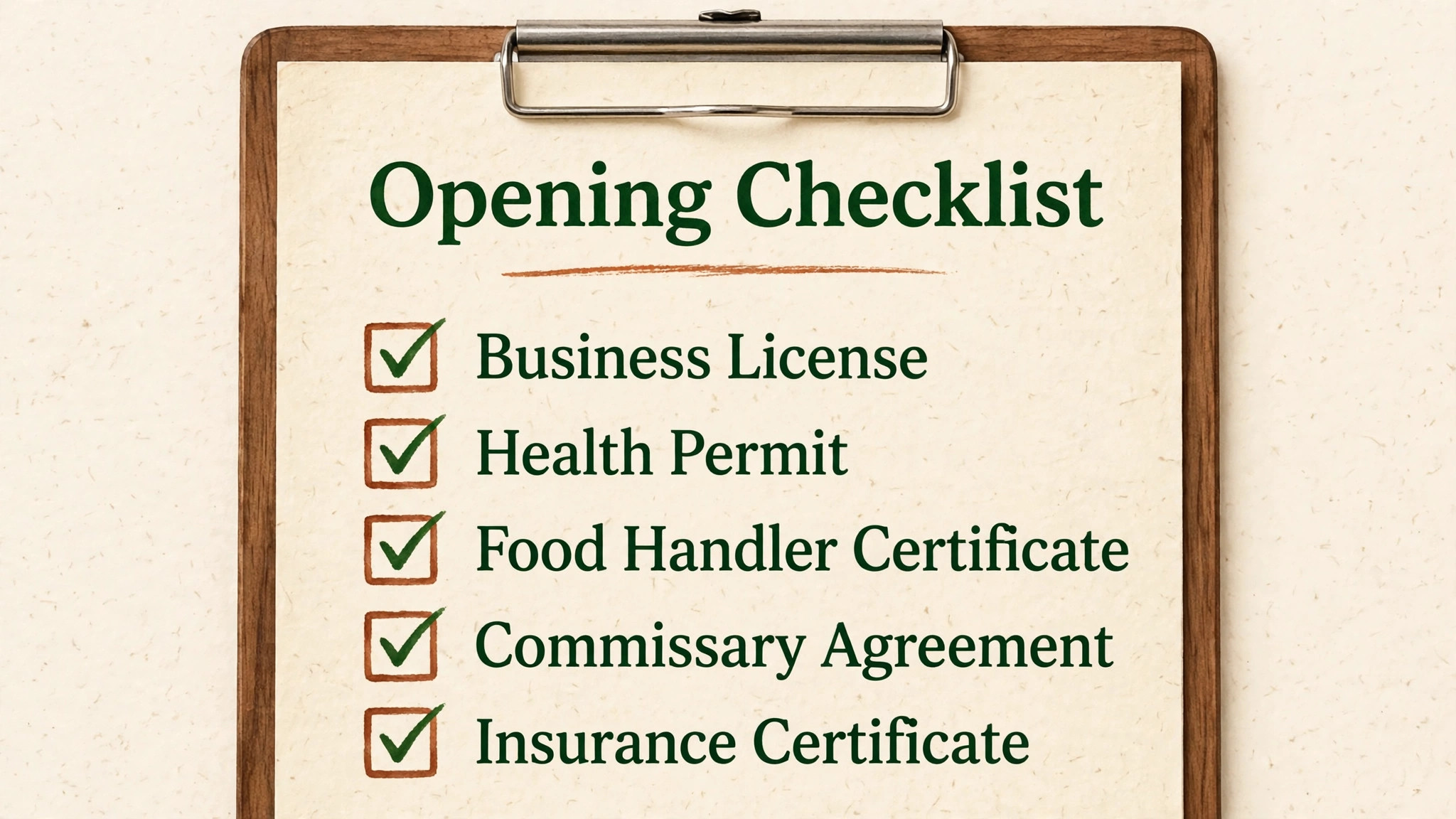
Use this checklist as your opening file, and tick each item only when you hold the document or the written confirmation.
- Business registration and tax ID, filed first
- General business license for your city or county, with the fee receipt kept on file
- Mobile food vendor permit for each jurisdiction where you plan to trade
- Health department permit, with the pre-opening inspection booked and passed
- Food handler certificate for every person who serves food or drink
- Commissary agreement in writing, signed by the commissary operator
- Cart layout diagram, menu list, and equipment list ready for the inspector
- Fire or gas safety certificate if you use gas equipment or a generator
- Pitch permission in writing for each regular site, including private land
- Insurance certificate naming any venue or organiser that requires it
- Sales tax registration, so sales are recorded correctly from day one
- Renewal dates logged for every permit, because most renew annually
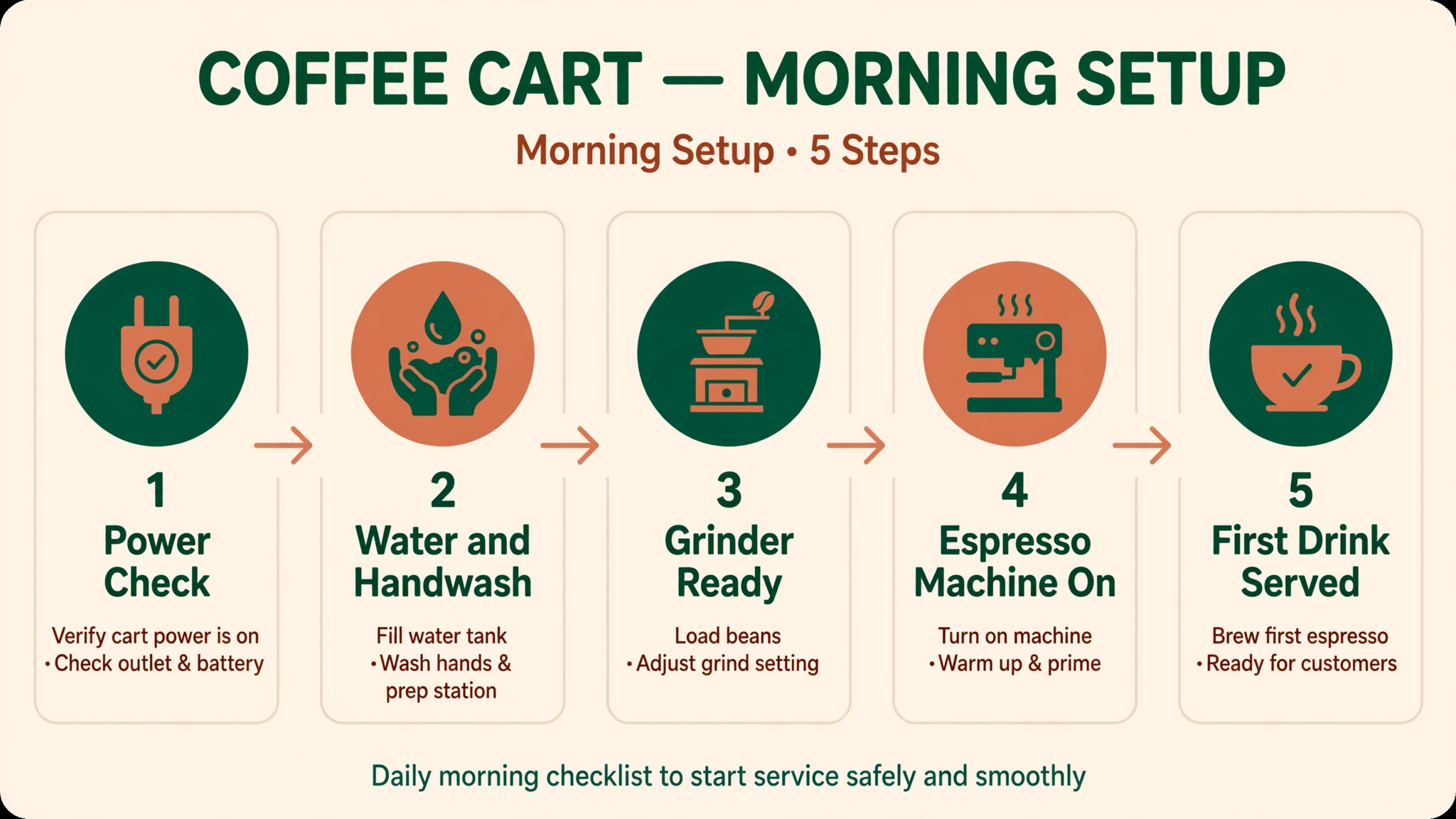
Start the permit process at least six weeks before your planned opening, and longer in a large city. Application review, inspection scheduling, and corrections after a failed inspection each take time, and a realistic timeline from submission to approval runs three to six weeks in many cities. Do not book a paid pitch or print an opening date until the core permits are in hand.
First Stock and Packaging
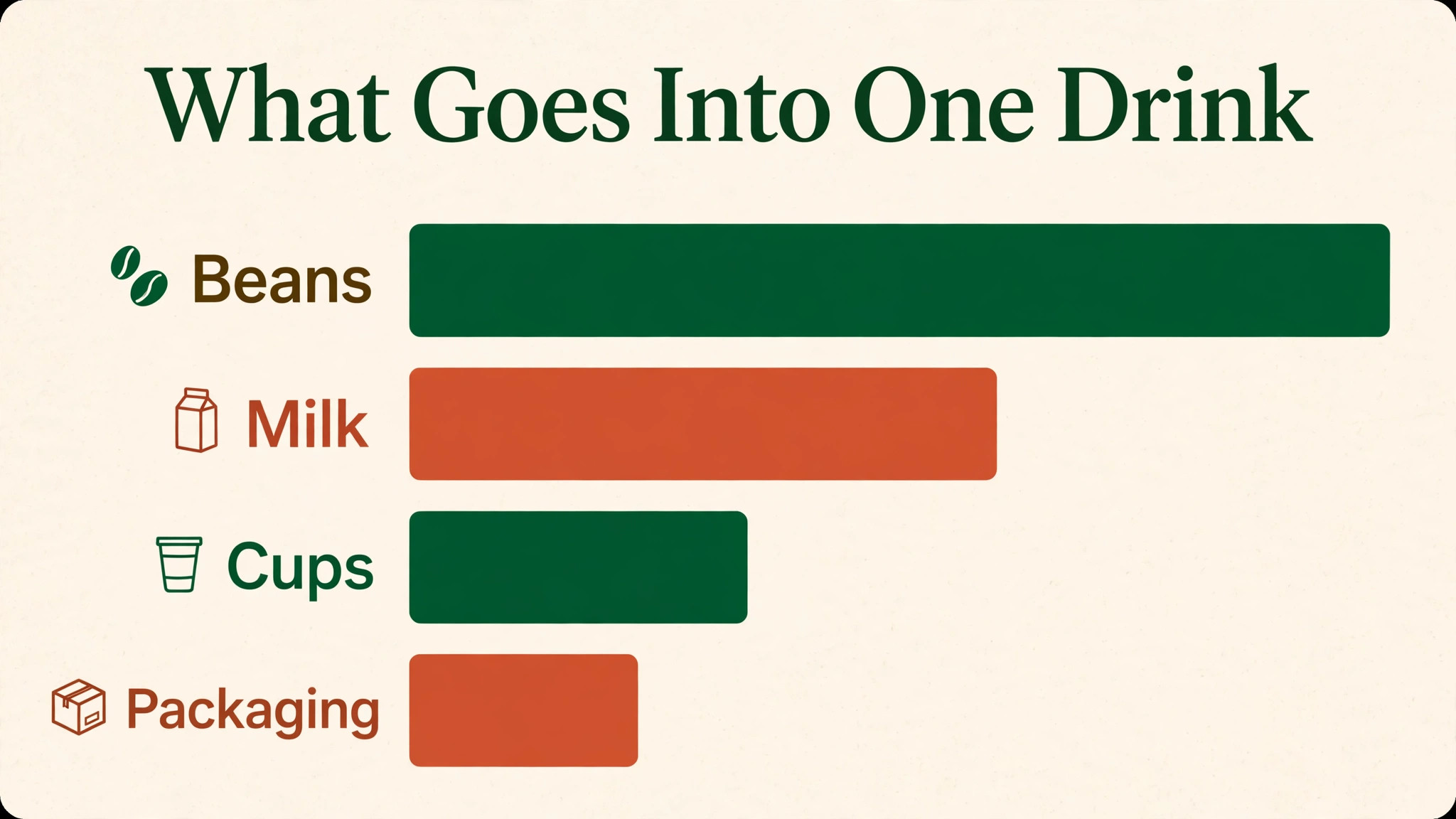
First stock is smaller than most beginners fear and easier to waste than most beginners expect. The table allows 900 to 2,200 dollars for opening stock and packaging, which covers beans, milk and milk alternatives, cups, lids, sleeves, syrups, and a small pastry line if you carry one. That range assumes a short menu of espresso drinks, filter or cold brew, and perhaps one signature drink, rather than a cafe sized menu that needs a dozen syrups and three milk types from day one.
Beans are the largest stock line and the one where quality shows fastest. Wholesale roasted coffee for cafes runs from about 3 dollars per pound for commercial blends to about 20 dollars per pound for specialty microlots, with working cafe suppliers publishing prices such as 12.99 dollars per pound for bulk bags and 17.50 dollars per pound for a roasted to order wholesale line. A cart serving 80 drinks a day at roughly 18 grams per drink uses about 3.2 pounds per day, so a 20 pound opening order at 13 to 17.50 dollars per pound costs roughly 260 to 350 dollars and covers about six trading days.
Buy a smaller first order than feels comfortable, taste it on your machine, and reorder quickly. That first stock line is a small share of the cost of starting a mobile coffee cart business, but it decides whether customers come back.
Milk and alternatives need a cold chain plan, not just a shopping list. Whole milk, oat milk, and almond milk behave differently when steamed, and each needs its own pitcher discipline to avoid cross contamination for customers with allergies. Price oat and almond milk honestly, because they cost more per litre than dairy milk. Keep one alternative milk at launch, add a second only when customers ask for it repeatedly, and track waste daily.
Cups, lids, and packaging are a per drink cost that must sit inside your price, not beside it. A double wall hot cup, a lid, a sleeve, and a stirrer together take a meaningful share of a drink price, and a cart that prices drinks without counting packaging will wonder where the margin went. Order cups in one size at launch, because two cup sizes double your storage, your lid stock, and your chance of running out of one size mid rush. Keep a two week buffer of cups and lids once trading, because a cup stockout stops sales completely.
Syrups, chocolate, and flavourings should stay short. Three syrups that sell every day beat ten syrups that sit open and spoil, and a signature drink built from one syrup, good espresso, and good milk will outsell a long list of drinks nobody remembers. The same discipline applies to pastries.
Insurance, Commissary, and Pitch Fees
Insurance is a permit gate as much as a safety net, because many venues, markets, and event organisers will not let you trade without a certificate. Food vendor businesses pay an average of 34 dollars per month, or 408 dollars per year, for general liability insurance at limits of 1 million dollars per occurrence and 2 million dollars aggregate, according to published Insureon averages. A broader small business average sits near 42 dollars per month, or 504 dollars per year, with entry level policies starting near 17 dollars per month. The table here allows 400 to 800 dollars for the first year.
That insurance line is small beside the cart and machine, but skipping it can end the cost of starting a mobile coffee cart business before trading begins, because venues will refuse an uninsured cart.
Get quotes from at least three providers and compare the same limits, the same deductible, and the same description of your work, because a cheap quote that excludes product liability or off site trading is not comparable to a fuller policy. Ask specifically whether the policy covers food poisoning claims, customer injury at the cart, damage to a venue, and theft or damage to the cart and machine. If you hire staff, add workers compensation and employer liability where your state requires them.
A commissary is a licensed base where you store stock, clean equipment, fill water, and dispose of waste, and many health departments require one even for a small cart. Shared commercial kitchen access in published city guides runs from 200 to 500 dollars per month, with daily access at 30 to 50 dollars per day where offered. The table allows 200 to 800 dollars for a deposit plus a first month, so confirm the cost in your own city before you finalise the budget, and check that the health department accepts that commissary.
Pitch fees are the monthly cost that separates a hobby cart from a trading business. A private pitch at an office park, a market stall, or a gym can run from a few hundred dollars per month to well over a thousand, and prime commuter or event pitches cost more again. Published monthly running cost guides put pitch rental at 200 to 1,500 dollars per month for private sites, with stock, fuel, insurance, marketing, and maintenance on top, for a total monthly range of about 1,000 to 5,000 dollars. Negotiate pitch fees against expected footfall, not against hope.

Your First Month Operating Buffer
A cart that opens with no buffer lives from day to day, and one rainy week or one machine repair can end it. The buffer below covers one month of trading at a modest volume, and it sits on top of the startup table, not inside it, which is an important distinction when you total the cost of starting a mobile coffee cart business. If you can fund two months of operating costs before opening, do so, because published kiosk guidance recommends holding two to three months of operating expenses in reserve.
| First month line | Low end | High end | Planning note |
|---|---|---|---|
| Beans, milk, and syrups refill | 600 dollars | 1,500 dollars | Rises with drinks per day |
| Cups, lids, and packaging refill | 200 dollars | 500 dollars | Order before you run out |
| Pitch fee | 200 dollars | 1,500 dollars | Private site or market stall |
| Commissary access | 200 dollars | 500 dollars | Monthly rate where available |
| Fuel, gas, and generator running | 100 dollars | 400 dollars | Depends on power setup |
| Card processing on sales | 150 dollars | 400 dollars | See the POS note below |
| Phone, booking, and marketing | 50 dollars | 200 dollars | Social posts and menus |
| Cleaning, maintenance, and spares | 50 dollars | 200 dollars | Descaler, cloths, and parts |
| Total first month buffer | 1,550 dollars | 5,200 dollars | Add wages if you hire staff |
Card processing deserves its own line because it scales with sales and surprises new operators. Square publishes an in person rate of 2.6 percent plus 15 cents on its free plan, with a dedicated Terminal listed at 299 dollars, which means a cart can start with phone tap to pay at no hardware cost and upgrade to a terminal later. On 5,000 dollars of card sales in a month, that free plan rate costs about 130 dollars plus the per transaction cents, so the buffer line of 150 to 400 dollars fits a first month of modest to steady card volume.
Cash flow discipline matters as much as the buffer size. Separate a business account from personal money, record every sale and every refill, and review the numbers weekly in month one, not monthly. The weekly review should answer four questions. How many drinks sold per trading day. What was the average sale per customer. Which stock ran out or wasted.
Three Ways to Open
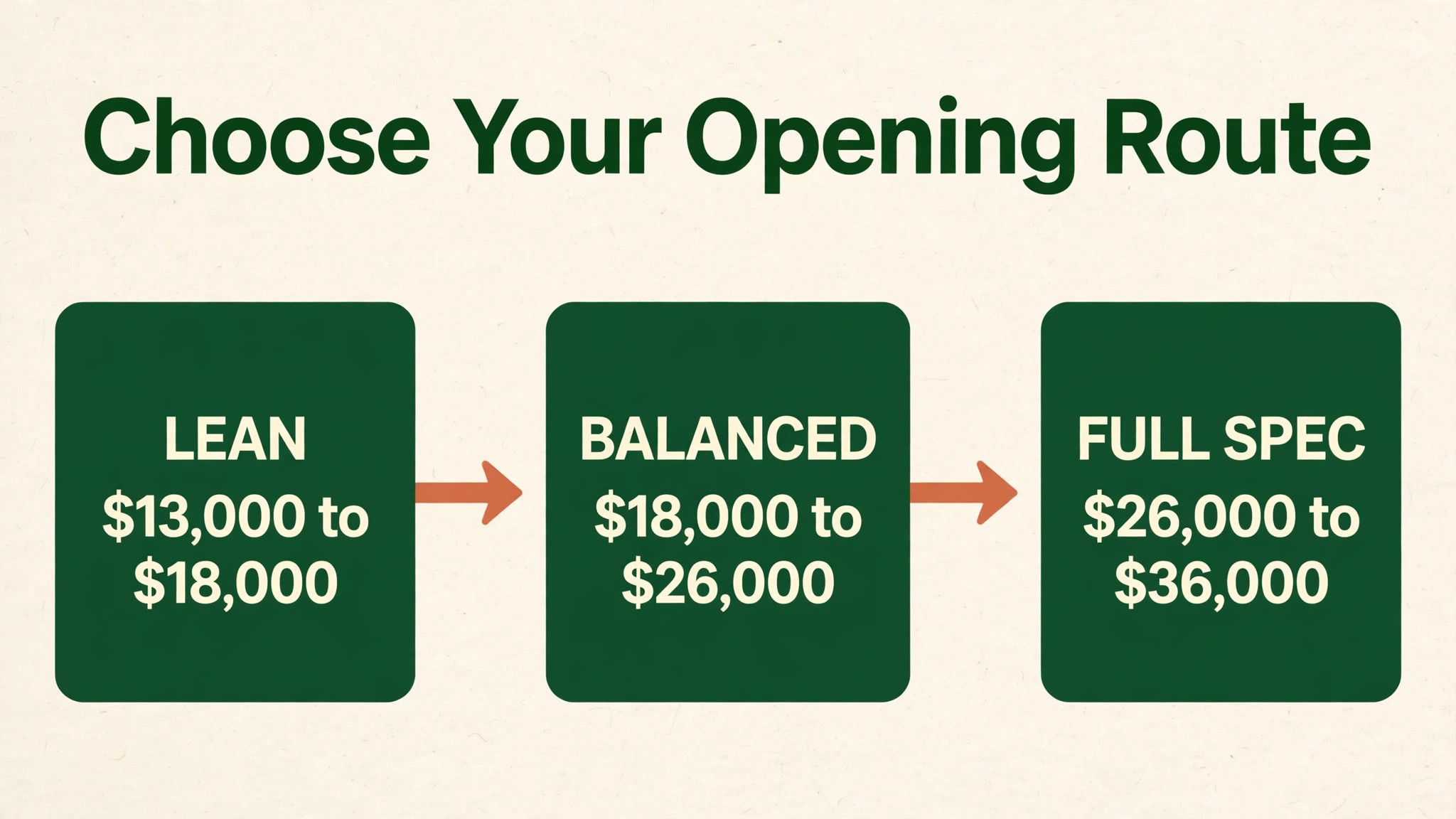
The same cart idea can open three ways, and the right way depends on your cash, your pitch, and your tolerance for risk. The lean opening suits a part time operator with a friendly pitch and a used or basic cart. The balanced opening suits a full time operator who wants a reliable machine and a professional look from day one. The full spec opening suits an events operator who needs capacity, branding, and speed for weddings and corporate days. Each route changes the cost of starting a mobile coffee cart business, so choose the route before you price the machine.
| Opening route | Startup range | Best for | Main trade off |
|---|---|---|---|
| Lean opening | 13,000 to 18,000 dollars | Part time trading and market testing | Slower service and plainer presentation |
| Balanced opening | 18,000 to 26,000 dollars | Full time street and market trading | Higher upfront cost, stronger daily capacity |
| Full spec opening | 26,000 to 36,000 dollars | Events, weddings, and corporate work | Premium machine and branding cost more |
A lean opening works when the pitch is forgiving and the menu is short. It fails when a lean cart meets a prime commuter rush, because a small machine and a small fridge cannot keep up. A balanced opening is the safest default for most first operators, because it buys a good machine, a proper water system, and enough branding to win private work, without paying for event capacity you may not need in year one. A full spec opening only makes sense when event bookings already exist or are highly likely.
Mistakes That Inflate the Bill
The most expensive mistake is buying the cart before checking the permits, because a cart built for one city may fail inspection in another, and a cart bought for street trading may not suit indoor events. The second mistake is buying a long menu before buying a short one that works, because every extra syrup, milk, and pastry adds stock, waste, and training time. The third mistake is underpricing drinks to win the first queue, because a price that ignores cups, card fees, pitch fees, and waste will need a rise later, and a rise after launch feels like a broken promise to early customers.
Those three mistakes alone can add thousands to the cost of starting a mobile coffee cart business.
Other mistakes are smaller but common. Buying a noisy generator that venues refuse. Skipping filtration and paying for boiler repairs. Ordering cups in three sizes before one size sells well. Paying for a paid POS plan before volume justifies it. Signing a pitch without checking footfall or competing vendors. And forgetting that your own time has value, because a cart that pays its bills but pays its owner nothing is a job with extra risk, not a business.
Price your drinks from the cost up, not from the competitor down. Work out the cost of beans, milk, cup, lid, syrup, card fee, and a share of pitch and commissary costs per drink, then set a price that leaves a margin after those lines. Published cart economics often cite gross margins of 60 to 80 percent on espresso drinks, because ingredient costs are low, but that gross figure excludes pitch fees, insurance, card fees, and your time.
If you are weighing a cart against a larger mobile format, the comparison with a food truck is the natural next read, because a truck costs far more upfront but serves higher volume and a bigger menu. If the numbers in this guide feel tight, a pricing read will help you set drink prices that cover pitch fees and card costs rather than just ingredients. And if bookkeeping feels like the weakest part of your plan, sort that before opening.
See the Stratilyze guide to how to start a food truck business with AI for the truck comparison, the guide to best AI pricing tools for pricing help, and the guide to best accounting software for small business for bookkeeping options.
Frequently Asked Questions
Can I start a mobile coffee cart for under 10,000 dollars
It is possible only with a used cart, a lower cost machine, and a free or very cheap pitch, and it leaves almost no buffer for repairs or a slow first month. A working cart with machine, permits, stock, and insurance realistically needs 13,000 dollars or more. If 10,000 dollars is a hard ceiling, buy used, keep the menu to three drinks, and trade part time until sales fund upgrades.
Do I need a commissary if my cart is small
In many jurisdictions, yes, because the health department requires a licensed base for storage, cleaning, water, and waste even when the cart itself is compact. Some areas allow an exemption for carts selling only prepackaged items, but a cart that brews espresso and steams milk is preparing food on site and will usually need a commissary agreement. Ask your local health department before you assume an exemption.
How long does it take to get permits for a coffee cart
A realistic timeline is three to six weeks from submission to approval in many cities, covering application review, inspection scheduling, and any corrections after inspection. Large cities with capped permits or long waiting lists can take far longer, and New York City runs a waiting list for new year-round permits. Start at least six weeks before your planned opening.
What does a coffee cart earn in a typical month
Earnings vary far more than startup costs, because pitch, hours, drink price, and volume decide the result. Published operator figures put an active cart at roughly 6,000 to 9,000 dollars per month in revenue at margins of 15 to 25 percent after ingredients, staffing, and permits, which is a useful reality check against gross margin claims of 60 to 80 percent. The gap between those figures is pitch fees, insurance, card costs, waste, and owner time, so model your own pitch and volume rather than copying a headline revenue figure.
Should I buy new or used equipment for my first cart
Buy the cart used only if you can inspect it, test the water and power systems, and confirm it can pass a health inspection in your city, because a cheap cart that fails inspection is not cheap. Buy the grinder new where possible, because a worn grinder hurts every drink, and buy the machine new or refurbished from a dealer with a warranty and local repair support. A refurbished machine from a reputable dealer often saves 40 to 60 percent against new.
Is a coffee cart cheaper than a coffee truck
Yes, by a wide margin. A cart startup realistically totals 13,000 to 36,000 dollars, while a coffee truck typically totals 60,000 to 150,000 dollars or more once the vehicle, build out, equipment, permits, and commercial vehicle insurance are counted. The truck earns its extra cost at high volume street and festival sites with a bigger menu, while the cart wins at weddings, private events, corporate lobbies, and markets where a smaller footprint and a better look matter more than raw capacity.
What to Do With These Numbers
Take the table, replace each planning range with a written quote for your city, and add the result to your first month buffer and a 1,000 dollar contingency. If the total fits your cash without borrowing for stock, you are ready to order the cart and start the permit file. If the total exceeds your cash, cut the menu, the branding, or the machine spec before you cut permits, insurance, or the buffer, because the first three can be upgraded from sales.
Open small, trade honestly, and let the second month be funded by the first. A cart that serves a short menu well, at a pitch that earns its fee, with permits in order and a buffer intact, has a far better chance than a cart that opens big and spends everything hoping volume arrives.