
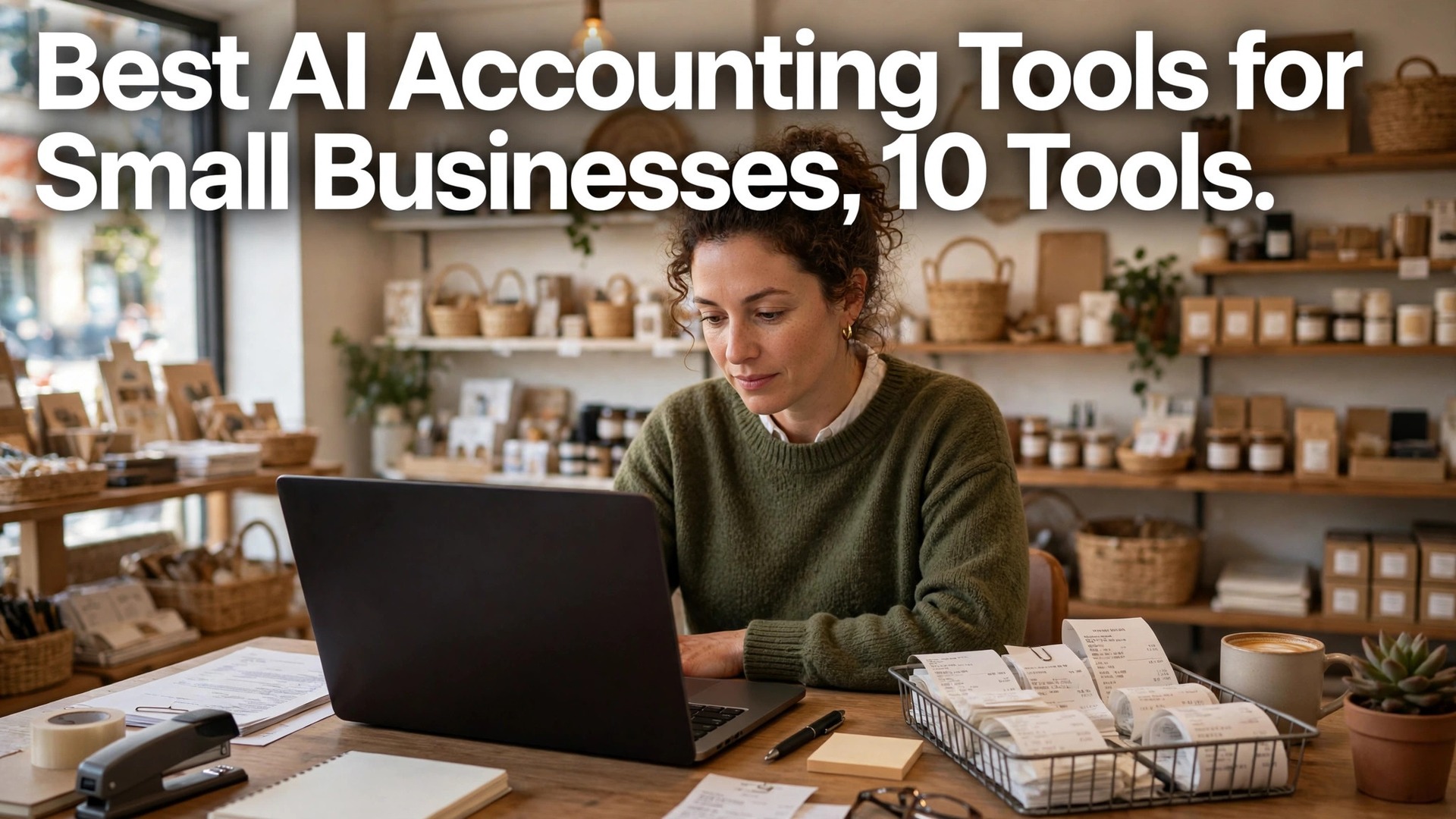
In 2026, small businesses that automate reconciliation report saving 4 to 6 hours a week on manual data entry, and that saving is the reason the best ai accounting tools for small businesses matter. The hours come back as time with customers, not as time staring at a bank feed, and for a small team that difference decides the week.
This guide compares ten tools small businesses actually use in 2026, judged on automation depth, ease of use, accountant support, and price. Prices come from vendor pages checked in late 2026, so confirm the pricing page before you commit, because accounting software pricing changes often. Judge each tool by the work it still leaves on your desk, not by the work it claims to finish. Most products still provide assisted accounting, not autonomous bookkeeping, so a human review remains part of the job.
The ten tools split into three groups. QuickBooks Online and Xero lead on full ledgers with the largest accountant networks. FreshBooks and Zoho Books lead on service businesses and value. Wave, Puzzle, Digits, and Docyt lead on free starts and AI native bookkeeping. Your choice should follow who closes your books, because the accountant who already knows your file is worth more than any feature.
Why Small Business Books Go Wrong
Small business books go wrong slowly, not suddenly. A receipt missed here, a miscategorised expense there, and by year end the profit figure is a guess rather than a fact. The owner discovers the problem at tax time, when fixing it costs the most, and the accountant charges for the cleanup. Automation earns its keep by catching the small errors daily, before they become a year end bill.
The second problem is time. An owner who spends Sunday night on bookkeeping is an owner who is not resting, selling, or planning, and that trade repeats every week. That lost evening is exactly why the best ai accounting tools for small businesses earn their place, because a tool that categorises expenses and reconciles the bank gives the Sunday back. The review still takes minutes, but minutes are not an evening.
The third problem is the tax bill surprise. A business that does not see its tax position until April cannot plan for it, and the surprise is often the largest single payment of the year. Tools with live profit and tax estimates turn the surprise into a monthly number, which lets an owner set money aside gradually instead of finding it all at once.
The 10 Tools at a Glance
| Tool | Main job | Best for | Starting paid price |
|---|---|---|---|
| QuickBooks Online | Full ledger plus AI agents | Largest ecosystem | Simple Start about $38 a month |
| Xero | Collaborative ledger | Accountant collaboration | Early about $25 a month |
| FreshBooks | Service invoicing | Client service businesses | Lite about $23 a month |
| Zoho Books | Value ledger | Value and Zoho suite | Free under $50k revenue |
| Wave | Free core accounting | Budget of zero | Free |
| Sage | Established small ledger | Long running businesses | From about $10 a month |
| Bench | Bookkeeping done for you | Hands off books | From about $299 a month |
| Puzzle | AI native ledger | Startup finance teams | Pricing on the vendor site |
| Digits | AI bookkeeping and close | Automated close | From about $65 a month |
| Docyt | AI receipt and document processing | Receipt heavy businesses | Pricing on the vendor site |
The table above shows the honest shape of this market. QuickBooks wins on ecosystem, Xero wins on collaboration, and Zoho wins on value. The best ai accounting tools for small businesses cannot be picked from this table alone, because the right answer for most owners is the tool their accountant already uses, plus a receipt app that feeds it cleanly.
Free tiers help with testing. Wave is free for core accounting, Zoho Books is free under $50,000 of revenue, and Puzzle offers a free start for small startups. QuickBooks and Xero offer trials rather than free plans, so test with a copy of your real books before paying. Promotional pricing hides the long run cost, so budget on the list price, not the first three months.
Best Pick by Job
| Job type | First pick | Second tool | Why this pair works |
|---|---|---|---|
| US business, accountant led | QuickBooks Online | Xero | Largest ecosystem plus a strong alternative for collaboration |
| Service business, invoicing first | FreshBooks | Zoho Books | Cleanest time to invoice flow plus value pricing |
| Budget of zero, simple books | Wave | Zoho Books | Free core accounting plus a free tier under 50k revenue |
| Startup, AI native books | Puzzle | Digits | AI first ledger plus ambitious automated close |
| Growing team, many users | Xero | QuickBooks Online | No per user fee plus the biggest app marketplace |
| Receipt heavy, many expenses | Docyt | QuickBooks Online | AI receipt processing plus a full ledger |
A US small business should start with QuickBooks Online, because its accountant network and app ecosystem are the largest, and keep Xero as the alternative if the accountant prefers it. The best ai accounting tools for small businesses reward that pairing, because the ledger and the accountant matter more than any single AI feature.
A service business that lives on invoicing should start with FreshBooks, which turns tracked time into an invoice in the cleanest flow in this guide. A business with no budget should start with Wave, which is free for core accounting and good enough for simple books. Match the first pick to your books, not to a ranking.
How to Judge the Best AI Accounting Tools for Small Businesses
Start with your real books, not a demo company. Import three months of transactions into three tools, and judge them on three tests. Does the categorisation match your judgement. Does the bank reconciliation complete without manual fixes. And does the profit figure match what you expect. The best ai accounting tools for small businesses separate quickly on that test, because a tool that passes all three on your books is the right tool, even if it loses on a general ranking.
Then run a full month of real bookkeeping through it before you commit. Photograph a receipt, send an invoice, chase a late payment, and run the month end reports, then time each job. A tool that makes invoicing easy but reporting hard will leave you blind at the moment you need sight. Check the full loop before you buy, because the loop is what you live in every month.
Then model the monthly cost at your real transaction volume. A business with 100 transactions a month needs far less than one with 1,000, and the plan limits matter more than the headline price. QuickBooks Simple Start at about $38 a month covers a small business, while a growing one lands on Plus at about $115 a month or more. Work out what your volume costs, and buy the plan that covers your busiest month.

The 10 Tools in Detail
Every accounting tool below answers the same three questions before it earns a recommendation. How much bookkeeping does the AI really do. How easy is the daily work. And how well does your accountant work with it.
1. QuickBooks Online
QuickBooks Online is the ecosystem pick, and its strength is the largest accountant network and app marketplace in this guide. Its Intuit Intelligence agents suggest categories, post expenses they recognise with high confidence, and answer plain language questions about the books. Simple Start costs about $38 a month, with Essentials and Plus higher.
The trade off is price and complexity, because a growing business lands on Plus at about $115 a month or more, and payroll costs extra. It suits US small businesses best, especially those whose accountant already works in QuickBooks, because that familiarity is worth more than a cheaper rival.
Test it with your real books. Import three months of transactions, and check whether the categories match your judgement or need fixing on every line. A tool that learns your business in a month is worth paying for, while one that miscategorises the same supplier every week is not learning at all. Run the test on your books, not a demo company, because your books are the only ones that matter.
Its receipt capture also reads photographed receipts and matches them to bank lines, which cuts the Sunday night pile in half.
2. Xero
Xero is the collaboration pick, and its strength is unlimited users and a clean ledger that accountants enjoy working in. Its JAX assistant answers questions and helps with tasks, bank rules reconcile the feed, and the integration marketplace covers more than 1,000 apps. Early costs about $25 a month, with Growing at about $55.
US payroll runs through a partner, which adds cost and friction, and the native AI is weaker than QuickBooks. It suits growing businesses with an accountant best, because the unlimited users mean the whole team can work in the books without per seat charges.
Test it with your accountant. Invite them into the file, and watch whether they work faster or ask you to export everything to a spreadsheet. A tool your accountant enjoys is worth more than a cheaper rival, because the accountant charges for the cleanup when the tool fights them. Ask the accountant first, and choose from their shortlist.
Its bank reconciliation also learns from your corrections, so the matching improves the longer you use it.
3. FreshBooks
FreshBooks is the invoicing pick, and its strength is the cleanest time to invoice flow in this guide. Track time, turn it into an invoice, send it, and chase it, all without leaving the app. Receipt capture and expense categorisation run alongside, and Lite costs about $23 a month.
It is not built for product businesses or complex inventory, so a shop with stock should look elsewhere. It suits freelancers and service businesses best, where invoicing is the job and the ledger follows it.
Test it with a real invoice. Create an invoice from tracked time, send it, and chase it when it goes unpaid. A tool that turns time into money in the fewest clicks earns its fee every month, while one that makes invoicing a chore will cost you the money it was meant to collect. Time the whole flow, and count the clicks.
Its late payment reminders also go out automatically, which recovers money an owner would otherwise chase by hand.
4. Zoho Books
Zoho Books is the value pick, and its strength is a full ledger free for businesses under $50,000 of revenue, with paid plans from about $20 a month. Bank rules, invoicing, and reporting are all included, and the Zoho suite adds CRM and inventory when the business grows. A small business gets serious software for nothing.
The interface is busier than FreshBooks, and the accountant network is smaller than QuickBooks. It suits value conscious businesses best, especially those already using Zoho tools, because the suite discount compounds the saving.
Test it with a free plan and real revenue. Run your books on the free tier for a month, and see whether the limits bite before the month ends. A free plan that covers a small business honestly is a genuine offer, while one that locks the useful features behind a paywall on day three is a trial in disguise. If free covers the month, keep the money.
Its client portal also lets customers view invoices and pay online, which shortens the time between sending and receiving.
5. Wave
Wave is the free pick, and its strength is core accounting, invoicing, and receipt scanning at no monthly cost. A business with simple books can run its whole ledger here for nothing, which is a genuine offer rather than a trial. Paid add ons cover payroll and payments when the business needs them.
Support is limited on the free plan, and the AI depth is modest compared with QuickBooks. It suits new and very small businesses best, where the budget is zero and the books are simple enough for a free tool to handle well.
Test it with a shoebox of receipts. Photograph twenty receipts, and see how many match to bank lines without your help. A free tool that handles receipts well saves the Sunday night pile, while one that needs manual entry for every receipt is not saving anything. The receipt test is the most honest test in this guide, because receipts are where small business books go wrong.
Its invoicing also looks professional from the first day, which helps a new business look established to its first customers.
6. Sage
Sage is the established pick, and its strength is decades of accounting depth in a small business package. Plans start from about $10 a month, with invoicing, bank feeds, and reporting that have been refined over years. A business that wants a steady, proven ledger will find Sage dependable.
The AI features are newer and less deep than the leaders, and the interface feels traditional. It suits long running businesses best, especially those already using Sage products, because migration is rarely worth the disruption.
Test it with a business that has run for years. Migrate an old ledger, and see whether the history survives or gets mangled. A tool that imports cleanly respects the years of work behind the books, while one that forces a fresh start will cost you the history your accountant needs. Keep the old file until the new one proves itself.
Its cash flow forecasting also flags shortfalls weeks ahead, which gives an owner time to act rather than react.
7. Bench
Bench is the hands off pick, and its strength is pairing software with a real bookkeeper who does the work. The AI categorises transactions, and a human reviews them, so the books stay accurate without the owner touching them. Plans start from about $299 a month, which is a service price rather than a software price.
It costs far more than any software only tool here, so it only makes sense when the owner values time over money. It suits owners who hate bookkeeping best, and who would rather pay for a done service than learn another app.
Test it with a month where you do nothing. Let the software and the bookkeeper handle the books, and see whether the reports still make sense when you read them. A service that delivers clean books without your time is worth the price when your time is worth more than the fee. Compare the cost against the hours you get back, not against the cheapest software.
Its monthly reports also arrive with a short human summary, which tells an owner what changed without reading a full ledger.
8. Puzzle
Puzzle is the AI native pick, and its strength is building the ledger around automation from the start rather than bolting AI onto an old product. It categorises transactions, flags anomalies, and keeps the books close ready for a startup finance team. Pricing is quoted by the vendor.
It is built for startups rather than Main Street shops, so a traditional small business may find it too focused on venture backed workflows. It suits startups best, especially those whose finance team wants automation rather than data entry.
Test it with a startup chart of accounts. Set up the ledger for a new company, and see whether the automation keeps up as transactions grow. A tool built for startups will handle the pace, while one built for a shop will feel wrong for a venture backed team. Test it at your real volume, not at the demo volume.
Its real time metrics also show burn and runway beside the ledger, which is the number a startup founder checks most.
9. Digits
Digits is the ambitious pick, and its strength is an AI native ledger that aims to automate the month end close. It categorises, reconciles, and reports with minimal manual work, and pricing starts from about $65 a month. A business that dreads month end will feel the difference immediately.
It is newer than QuickBooks and Xero, so the accountant network is smaller and the integrations fewer. It suits businesses that want the most automation best, and who are willing to trade ecosystem depth for a faster close.
Test it with a month end close. Run the close, read the reports, and see whether the numbers make sense without a spreadsheet rebuild. A tool that closes the month cleanly saves the weekend, while one that needs manual fixes every month is not automated at all. The close test is the one that decides whether the tool earns its subscription.
10. Docyt
Docyt is the document pick, and its strength is AI processing of receipts, bills, and documents into the ledger automatically. It reads the paperwork, categorises it, and posts it, which removes the data entry that eats a small business week. Pricing is quoted by the vendor.
It works best beside a full ledger rather than instead of one, so a business should pair it with QuickBooks or Xero. It suits receipt heavy businesses best, like restaurants and trades, where the paper pile is the problem.
Test it with a pile of bills. Feed in a week of supplier bills, and see whether the tool reads them, categorises them, and routes them for approval. A tool that handles paperwork automatically removes the data entry that eats a small business week, while one that needs typing for every bill is a ledger with extra steps. Count the bills it handles alone.
A Month End Routine That Takes Minutes
A good month end routine beats a good ledger, because the close is where errors surface and the tax position becomes clear. The routine below takes a business from a messy bank feed to a clean close in under an hour, and it works with the free tools as well as the paid ones. The key step is the human review, which no AI tool in this guide replaces.
| Step | Job | Best tool | What good looks like |
|---|---|---|---|
| 1 | Photograph every receipt | Docyt | No paper left in a drawer |
| 2 | Review AI categories | QuickBooks Online | Every line checked against your judgement |
| 3 | Reconcile the bank | Xero | Bank balance matches the ledger exactly |
| 4 | Send and chase invoices | FreshBooks | No invoice older than 30 days unchased |
| 5 | Check the tax estimate | Zoho Books | Money set aside for the next payment |
| 6 | Close and file the month | QuickBooks Online | Reports saved, next month starts clean |
Run the routine on one real month before you change anything else. Time each step, and note where the tool slows you down. The routine that takes an hour per month keeps the books clean all year. The routine that takes a weekend gets skipped, and the skipped months become the year end bill.

What Accounting Software Really Costs a Small Business in 2026
Most small businesses can start for nothing, and that is worth saying plainly. The best ai accounting tools for small businesses include free plans from Wave and Zoho Books, and a new business may never need to pay. The paid plans earn their money on automation depth, accountant access, and support, and those three things are worth paying for once the transaction volume grows.
| User type | Monthly stack | Monthly cost |
|---|---|---|
| Free only | Wave plus Zoho Books free | 0 dollars |
| Small service business | FreshBooks Lite | About 23 dollars |
| Growing US business | QuickBooks Simple Start | About 38 dollars |
| Collaborative team | Xero Growing | About 55 dollars |
| Hands off books | Bench | From about 299 dollars |
A small business paying for QuickBooks Simple Start spends about $38 a month, which is less than one hour of an accountant time, and it buys the ecosystem that makes the accountant cheaper. A business paying for Bench spends about $299 a month, which is a service price, and it only makes sense when the owner values time over money.
Mistakes Small Businesses Make With AI Accounting
The first mistake is trusting the AI categories without checking them. An automated categorisation can put a personal expense in the business, or a capital purchase in the month, and the error compounds across the year. Review the categories weekly, correct the mistakes, and the tool learns. Skip the review, and the tool learns the wrong thing.
The second mistake is choosing a tool the accountant does not use. A cheaper ledger that your accountant cannot open will cost more in cleanup fees than the subscription saves, and the best ai accounting tools for small businesses are the ones your accountant already knows. Ask the accountant first, then choose from their shortlist.
The third mistake is budgeting on the promotional price. QuickBooks and Xero both run introductory discounts that end after three months, and the list price is the real cost. Budget on the list price from day one, and treat the discount as a bonus, not the budget.
Your Eight-Step Check Before You Switch Accounting Tools
Run this check before you move your books, and keep a copy with your finance notes.
- Ask your accountant which tools they already use.
- Import three months of real transactions and check the categories.
- Reconcile the bank and confirm the balance matches.
- Test invoicing, receipts, and reporting end to end.
- Check the list price, not the promotional price.
- Confirm payroll and payments costs separately.
- Export your data first so you can leave if needed.
- Run both tools for one month before cancelling the old one.
Related Guides
Keep exploring with these guides on Stratilyze:
- Top 10 AI Call Center Tools for Small Businesses (10 Tools)
- Best AI Recruiting Tools for Small Businesses (8 Tools)
- Best Landing Page Builders for Small Businesses (15 Tools)
Frequently Asked Questions
Which AI accounting tool is best for a small US business?
QuickBooks Online is the best pick for most US small businesses, because its accountant network and app ecosystem are the largest. Simple Start costs about $38 a month. Xero is the best alternative if your accountant prefers it, at about $25 a month for Early.
Can a small business really do accounting for free?
Yes, for simple books. Wave is free for core accounting, and Zoho Books is free under $50,000 of revenue. Both handle invoicing, expenses, and reporting well enough for a new business, and the paid plans only matter once volume grows.
Does AI accounting replace a bookkeeper for a small business?
No, not yet. Most tools provide assisted accounting, not autonomous bookkeeping, so a human review remains part of the job. Bench pairs software with a real bookkeeper for owners who want the work done, from about $299 a month.
Is Xero or QuickBooks better for a growing team?
Xero is better for a growing team, because it charges no per user fee, so the whole team can work in the books. QuickBooks charges per user on higher plans, which adds up. The accountant preference should still decide, because familiarity beats features.
Which tool is best for a service business that invoices by the hour?
FreshBooks is the best pick for a service business, because its time to invoice flow is the cleanest in this guide. Lite costs about $23 a month, and the late payment reminders alone recover money an owner would otherwise chase by hand.
How do I avoid a surprise tax bill with these tools?
Use the live profit and tax estimates every month, and set money aside as you go. The best ai accounting tools for small businesses show the tax position in real time, so the April bill becomes a monthly number instead of a shock.
The Verdict Before Tax Season Arrives
QuickBooks Online is the pick for most small businesses, because its ecosystem and accountant network make everything else cheaper, and Simple Start costs about $38 a month. Xero is the pick for collaborative teams, FreshBooks is the pick for service businesses, and Wave is the pick when the budget is zero. Start with the tool your accountant already uses, and the best ai accounting tools for small businesses become a routine instead of a Sunday night chore.
Whichever tool you choose, keep the weekly review. Check the categories, reconcile the bank, and look at the tax estimate. A ledger earns its fee when the owner knows the profit figure on any day of the month, and that knowledge comes from the review, not the automation.