

An agency hands a client fifty leads a month and the client calls back to ask why the best three were never contacted, and that missed ranking is the problem the best ai lead scoring tools for agencies are built to solve. An agency does not sell leads. It sells a ranked list a sales team can work through in order, and a score that ranks a cold lead above a warm one will send the client’s reps chasing the wrong people while the real buyers go quiet.
The workflow runs in four steps. Leads arrive from many clients and many channels, the tool scores each one on fit and behaviour, the ranked list routes to the right rep or the right client, and the results feed back into the model so the next month’s scores are sharper.
HubSpot leads this guide because most agencies already run it, and its predictive scoring sits beside the CRM the team uses every day. Salesforce follows for agencies whose clients run enterprise sales. I verified all fifteen tools as live in November 2026, and the prices are vendor list prices except where the text marks a figure as reported, so confirm the current number on the vendor site before committing.
Why Agencies Score Leads Differently
An agency scores for many clients at once, and that changes everything about the tool. A single business can tune one model to one product, while an agency needs a model per client, a workspace per client, and reporting that never mixes one client’s leads with another’s. The best ai lead scoring tools for agencies keep client data separate by design, because a score that leaks across clients is a score nobody can trust.
Volume is the second difference. An agency that scores ten thousand leads a month needs automation that a small business never touches, with routing rules, enrichment and re-scoring that run without a human in the loop.
Fit, Intent and Timing in One Number
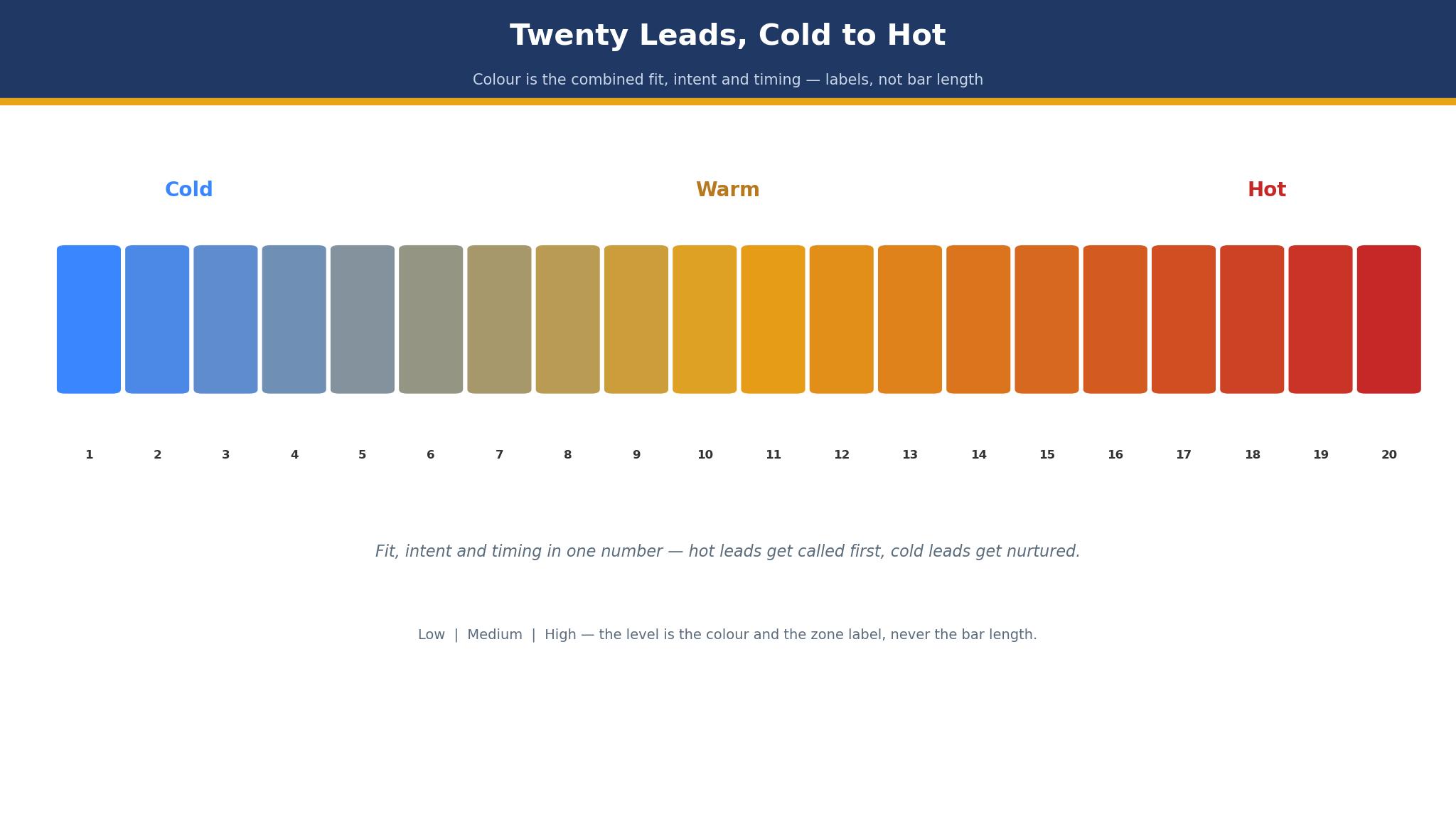
A good score blends three signals. Fit asks whether the lead matches the ideal customer, through company size, industry and role. Intent asks whether the lead is active now, through website visits, content downloads and product usage. Timing asks whether the moment is right, through budget cycles, hiring signals and recent engagement. A model that uses only one signal will rank badly, and the tools in this guide were judged on whether they show the signals behind the number.
Transparency decides whether a sales team trusts the score. A score with no reason is a guess, and a rep who cannot see why a lead ranks high will ignore the ranking within a month. The best tools expose the factors, let the team correct a wrong score, and learn from the deals the client actually wins.
The 15 Tools at a Glance
| Tool | Main job | Best for | Starting price |
|---|---|---|---|
| HubSpot | CRM-native predictive scoring | Agencies on HubSpot | Enterprise tiers |
| Salesforce Einstein | Enterprise AI scoring | Enterprise clients | Custom |
| Pipedrive | CRM scoring for small teams | Small agency clients | From 14 dollars a month |
| Zoho CRM | Budget CRM scoring | Budget clients | From 14 dollars a month |
| Freshsales | Budget AI CRM scoring | Small sales teams | From 9 dollars a month |
| 6sense | Enterprise intent and scoring | Large ABM clients | Reported from 60,000 dollars a year |
| Demandbase | Account-based scoring | Enterprise ABM | Custom |
| MadKudu | Product-led predictive scoring | PLG clients | Reported from 1,000 dollars a month |
| Apollo | Prospecting plus scoring | Outbound teams | Free, paid from 49 dollars a month |
| ZoomInfo | Data plus scoring | Data-driven teams | Custom |
| ActiveCampaign | Automation plus scoring | Small agencies | From 15 dollars a month |
| Keap | Small business CRM scoring | Small clients | Pricing on the vendor site |
| LeadSquared | Sales execution scoring | High-volume teams | Pricing on the vendor site |
| Dealfront | Website visitor scoring | B2B website leads | Custom |
| Breadcrumbs | Transparent co-dynamic scoring | Teams that want control | Free, paid on the vendor site |
Best Pick by Job
| Job type | First pick | Second tool | Why this pair works |
|---|---|---|---|
| Agency on HubSpot | HubSpot | Apollo | HubSpot scores inside the CRM and Apollo adds outbound data |
| Enterprise ABM client | 6sense | Demandbase | 6sense leads on intent and Demandbase adds account orchestration |
| Product-led client | MadKudu | Breadcrumbs | MadKudu scores usage and Breadcrumbs adds transparent models |
| Small client budget | Freshsales | Zoho CRM | Freshsales starts cheapest and Zoho adds value per dollar |
| Outbound prospecting | Apollo | ZoomInfo | Apollo joins data and sequences and ZoomInfo adds depth |
An agency serving a product-led client lives on usage signals, so it wants a scorer that reads product behaviour, while an agency serving an enterprise account wants intent data and account-level scoring.
Spend by the workload, not the sticker. A small client can run Freshsales or Zoho CRM for under 20 dollars a user a month, since the scoring sits inside a cheap CRM. The best ai lead scoring tools for agencies are judged on the score quality at the client’s real volume, not on the entry price.
How to Judge the best ai lead scoring tools for agencies
Start with twenty real leads, half won and half lost, because that is where a scoring tool either earns its fee or wastes it. Run them through the model and check whether the winners rank above the losers. A good score separates the two groups cleanly, and a score that ranks a lost lead above a won one is a model that needs retraining.
Next, test the multi-client setup. Create two client workspaces, score leads for both, and check that the data, the models and the reports stay separate. The best ai lead scoring tools for agencies keep each client’s world apart, because a report that mixes two clients is a report the agency cannot send.
Then check the routing. A high score should move a lead to the right rep or the right client automatically, and a low score should sit in nurture without manual work. Test the routing with ten scored leads and watch where they land.
The 15 Tools in Detail
Multi-client fit and score transparency set the order below, so the tool an agency can run for many clients leads the list.
1. HubSpot
HubSpot is the natural first pick for an agency because its predictive scoring lives inside the CRM the team already uses. Lead scores, Breeze AI drafting and forecasting sit beside the contact record, so a rep sees the score where the work happens, and the agency can run several client accounts from one partner setup. Predictive scoring sits on the Enterprise tiers, which also add the automation and reporting an agency needs.
The drawback is the tier and the cost. Predictive scoring is not available on the cheaper plans, so a client must pay Enterprise prices before the AI scoring appears, and the per-seat cost adds up across an agency team.
HubSpot suits an agency whose clients already run HubSpot. It fits a team that manages several HubSpot accounts, an agency that sells retainers around the CRM, and anyone who wants the score inside the tool the reps already open.
Score one real client list of twenty leads and compare the ranking with the deals that actually closed. If the winners sit at the top, HubSpot fits the agency.
2. Salesforce Einstein
Salesforce Einstein is the enterprise scoring engine, built for clients whose sales run on Salesforce at scale. The AI scores leads and opportunities from CRM data, email activity and engagement history, and it forecasts which deals will close, so an agency can report pipeline rather than activity.
The drawback is the complexity and the cost. Einstein needs a Salesforce deployment with clean data, and a client without an admin will struggle to keep the model honest.
Salesforce Einstein suits an agency with enterprise clients. It fits a team that reports to a sales leadership group, a client with hundreds of reps, and anyone whose scoring must handle custom objects. The forecasting depth is the feature that matters, because an enterprise client buys a forecast it can defend.
Score one enterprise client list through Einstein and check the forecast against the quarter that followed. If the ranking holds, Einstein fits the client.
3. Pipedrive
Pipedrive is the simple CRM pick for a small client, because its clean pipeline view shows every deal in its stage and the AI Sales Assistant helps prioritise what needs attention today. The entry plan costs 14 dollars a seat a month billed annually, and the platform is easy enough that a small client’s team can run it without an admin. Scoring is lighter than HubSpot or Salesforce, but it is honest about what it does.
The drawback is the depth and the tier jump. The practical entry point is Growth at 39 dollars a seat a month, which is nearly three times the headline price, and the scoring is simpler than a dedicated model.
Pipedrive suits a small client with a sales-led team. It fits a business that lives in its pipeline, a founder who wants to see every deal at a glance, and anyone who values a clean board over a complex suite. The pipeline view is the feature that matters, because a rep who can see the next action will take it.
Score one small client list in Pipedrive and watch the board for a week. If the pipeline stays current and the scores rank the warm leads first, Pipedrive fits the client.
4. Zoho CRM
Zoho CRM is the best value pick, with Standard at 14 dollars a user a month billed annually and Zia handling scoring, forecasting and anomaly detection. The free tier covers three users, and the platform spans the full suite from sales to support, so an agency can standardise on one vendor across many small clients. The Standard tier is genuinely functional at its price.
The drawback is the polish and the pricing opacity. The paid editions only show in the price calculator, and the interface carries the weight of a large suite, with more menus than a small team needs.
Zoho CRM suits a budget client under ten people. It fits a small business that wants the most CRM per dollar, a client already using Zoho products, and anyone who wants a functional tier without paying for Enterprise. The Standard tier is the feature that matters, because it is genuinely functional at 14 dollars a user a month.
Score one budget client list in Zoho CRM and test Zia on the real deals. If the scoring is honest and the price holds, Zoho fits the client.
5. Freshsales
Freshsales is the cheapest AI CRM in this guide, with Growth at 9 dollars a user a month billed annually and Freddy AI handling scoring, drafting and insights. The free tier covers three users, and the platform includes built-in calling, which is unusual at this price. A small client gets a real CRM with AI for less than ten dollars a user.
The drawback is the depth. Freshsales is thinner than HubSpot or Salesforce on automation, reporting and integrations, and a client that grows past twenty reps will outgrow it.
Freshsales suits a small client that needs pipeline visibility and calling under ten dollars a user. It fits a startup with a phone-heavy motion, a team that wants AI without a big bill, and anyone who values built-in calling over a separate dialer. The price is the feature that matters, because 9 dollars a user buys a real CRM with AI.
Score one small client list through Freshsales and run a week of calls through it. If the scores rank the winners first, Freshsales fits the client.
6. 6sense
6sense is the enterprise intent leader, built for large clients running account-based marketing. The platform tracks buying intent across the web, scores accounts rather than single leads, and predicts which accounts are in market, so an agency can focus a client’s whole team on the accounts most likely to buy. Pricing is typically reported from 60,000 dollars a year, which positions it firmly for enterprise buyers.
The drawback is the cost and the scale. 6sense needs a large client with a real ABM program to justify the price, and the setup takes weeks of configuration and data work.
6sense suits a large client with an ABM motion. It fits an enterprise with a named-account list, and anyone who needs intent data across the web. The account intent is the feature that matters, because an account in market is worth more than a hundred cold leads.
Score one enterprise client account list through 6sense and check whether the in-market accounts match the deals that closed. If the ranking holds, 6sense fits the client.
7. Demandbase
Demandbase is the account-based platform that pairs scoring with orchestration, so an agency can score an account, target it with adverts and alert the sales team in one system. The platform covers intent, advertising and sales intelligence, and it suits a client that wants the whole ABM motion in one place. Pricing is custom and enterprise-level, set by account volume and modules.
The drawback is the scope and the price. Demandbase is a full ABM platform rather than a scoring tool, so a client that only needs scores will pay for orchestration it never uses.
Demandbase suits an enterprise client running ABM end to end. It fits a team that wants scoring, advertising and sales alerts together, a client with a large named-account program, and anyone who needs the whole motion in one system. The orchestration is the feature that matters, because a score that triggers an advert and an alert is a score that gets worked.
Score one ABM client list in Demandbase and watch whether the alerts reach the reps in time. If the handoff is clean, Demandbase fits the client.
8. MadKudu
MadKudu is the product-led scoring specialist, built for SaaS clients whose free trials and freemium users generate the signals that matter. The platform combines fit data with product usage, such as feature adoption and usage frequency, to score leads on their likelihood to convert. Pricing is reported from around 1,000 to 3,000 dollars a month, and the company was acquired by HG Insights in 2025 while remaining a standalone product.
The drawback is the fit and the data work. MadKudu needs product usage data to score well, so a client without a product-led motion will get little from it, and the setup needs data plumbing and stakeholder alignment.
MadKudu suits a product-led SaaS client. It fits a business with free trials that convert, and anyone whose best signal is what a user did in the product. The usage-based score is the feature that matters, because a trial user who adopted the key feature is the lead most likely to convert.
Score one product-led client list through MadKudu and compare the ranking with the trials that converted. If the converters sit at the top, MadKudu fits the client.
9. Apollo
Apollo is the bundled pick, joining a prospecting database, sequences and lead scoring in one platform. A team can find contacts, enrich them, score them and run outreach without changing tools, and the free plan covers the basics while paid plans start from 49 dollars a user a month. The scoring is rules-based rather than predictive, which makes it transparent and easy to adjust.
The drawback is the depth. Apollo’s scoring is simpler than MadKudu or 6sense, and a client that needs a predictive model will find the rules-based approach too blunt.
Apollo suits an outbound team that wants one login. It fits a lean agency running SDR motions for several clients, and anyone who wants scoring without a five-figure commitment. The bundled workflow is the feature that matters, because a score inside the prospecting tool is a score that gets worked the same day.
Score one outbound client list in Apollo and run a sequence against the top twenty. If the replies come from the top of the list, Apollo fits the agency.
10. ZoomInfo
ZoomInfo is the data pick, with a large company and contact database that feeds scoring with firmographic and technographic detail. A team can score leads against rich company data, build lists by technology used or hiring signals, and route the best matches to sales. Pricing is custom, set by data volume and modules, and the platform suits teams whose scoring depends on data quality.
The drawback is the cost and the focus. ZoomInfo is a data platform first, so its scoring is only as good as the data a client buys, and the price reflects an enterprise data budget.
ZoomInfo suits a data-driven team. It fits an agency that builds lists from company signals, a client whose ideal customer is defined by technology or hiring, and anyone who needs coverage in core markets. The database depth is the feature that matters, because a score built on rich data beats a score built on a thin record.
Score one data-driven client list in ZoomInfo and check whether the top-ranked leads match the client’s best customers. If the fit is close, ZoomInfo fits the agency.
11. ActiveCampaign
ActiveCampaign is the automation pick, joining email, automation and lead scoring in one platform from 15 dollars a month. A small agency can score a lead, enrol it in a nurture sequence and alert the sales team when the score crosses a threshold, all without a second tool. The automation builder is the strongest in this price range, and the scoring rules are easy to adjust.
The drawback is the CRM depth. ActiveCampaign is an automation platform with a CRM layer, so its sales features are thinner than HubSpot or Pipedrive, and a client that needs deep pipeline reporting will find the CRM light.
ActiveCampaign suits a small agency that lives on automation. It fits a team that nurtures leads by email, and anyone who values the automation builder over a deep CRM. The automation builder is the feature that matters, because a score that triggers a sequence is a score that does work.
Score one small client list in ActiveCampaign and build a nurture flow for the middle tier. If the warm leads move up the score over two weeks, ActiveCampaign fits the agency.
12. Keap
Keap is the small business CRM pick, built for clients who need sales and marketing in one simple system. The platform covers contacts, pipelines, automation and scoring, and it suits a small business that wants one tool for the whole customer journey. Keap prices by contacts and users, and the setup is friendly enough for a team without an admin.
The drawback is the scale and the price step. Keap is built for small businesses, so a client that grows past a few dozen users will outgrow it, and the higher tiers cost far more than the entry price suggests.
Keap suits a small client that wants one system. It fits a business owner who sells and markets from the same tool, and anyone who values simplicity over depth. The combined sales and marketing flow is the feature that matters, because a lead that moves from campaign to pipeline without an export is a lead that does not get lost.
Score one small client list in Keap and run a campaign to the top tier. If the pipeline fills and the follow-up happens, Keap fits the client.
13. LeadSquared
LeadSquared is the high-volume execution pick, built for teams that process thousands of leads a month through sales and marketing together. The platform scores leads, routes them, tracks the sales process and reports on conversion, which suits an agency with clients in education, finance or real estate where volume is the challenge. The vendor sets the price by users and volume.
The drawback is the visibility and the fit. LeadSquared is less widely used in the United States than the CRM-native tools, so a buyer has fewer independent reports to lean on, and the platform is shaped around high-volume sales rather than around a general agency.
LeadSquared suits a high-volume client. It fits a business that processes leads by the thousand, and anyone whose main problem is volume rather than data. The execution tracking is the feature that matters, because a score is only useful when the follow-up is measured.
Score one high-volume client list in LeadSquared and check the conversion rate by score band. If the top band converts far better than the bottom, LeadSquared fits the client.
14. Dealfront
Dealfront, formerly Leadfeeder, is the website visitor pick, because it identifies the companies behind anonymous website visits and scores them for sales. An agency can show a client which companies visited the site, what they looked at, and which ones are worth calling, which turns a website from a brochure into a lead source. Pricing is custom, set by identified companies and features.
The drawback is the identification limit and the scope. Dealfront identifies companies rather than individual contacts, so a team still needs to find the right person, and the tool is a visitor intelligence layer rather than a full scoring platform.
Dealfront suits a B2B client with real website traffic. It fits a business whose buyers research before they enquire, and anyone who needs to know which companies are already looking. The visitor identification is the feature that matters, because a company that visited the pricing page is a lead that is already warm.
Score one client website for a month in Dealfront and check whether the identified companies match the enquiries that arrived. If the overlap is strong, Dealfront fits the client.
15. Breadcrumbs
Breadcrumbs is the transparent scoring pick, built for teams that want to see and control the model. The platform uses co-dynamic scoring that blends fit and activity, shows the factors behind each score, and offers a free plan so a team can model its scoring before paying. Public plan information is available, and the tool was acquired by MadKudu in 2024 while remaining a standalone product.
The drawback is the scale and the data dependence. Breadcrumbs is a focused scoring tool rather than a platform, so a team still needs a CRM and a data source beside it, and the scoring is only as good as the data fed into it.
Breadcrumbs suits a team that wants control over its model. It fits an agency that builds scoring models for clients, and anyone who wants to test a model free before paying. The transparent model is the feature that matters, because a score a rep understands is a score a rep will trust.
Score one client list in Breadcrumbs on the free plan and show the model to the sales team. If the reps can read the reasons and agree with the ranking, Breadcrumbs fits the agency.
Scoring Errors That Waste Client Budget
The most expensive error is scoring on activity alone. A lead that opens every email and downloads every guide can still be a student doing research, while a lead that visited the pricing page once and left can be a buyer with a budget. Activity without fit is noise, and a model that ranks the noisy lead first will waste the client’s sales time. The best ai lead scoring tools for agencies blend fit and behaviour, because a score that ignores either half will mislead the team.
A second error is never retraining the model. A scoring model built in January will drift by June, because the market moves, the product changes and the ideal customer shifts. A model that is never checked is a model that slowly stops working, and the client will notice before the agency does.

Frequently Asked Questions
How does AI lead scoring work?
AI lead scoring ranks each lead by its likelihood to convert, using fit data such as company size and role, behaviour such as website visits and email engagement, and product usage where it exists. A model trained on past wins and losses learns which signals predict a deal, and it updates as new results arrive.
Which lead scoring tool is best for an agency?
HubSpot is the best starting point for most agencies, because its predictive scoring sits inside the CRM the team already uses and it handles several client accounts. 6sense is the better pick for an enterprise ABM client, and MadKudu is the better pick for a product-led client. An agency should test the top two with one real client list before committing.
How much does lead scoring software cost?
Lead scoring costs between free and 60,000 dollars a year, because the range runs from a CRM feature to an enterprise platform. Freshsales starts at 9 dollars a user a month, Apollo starts at 49 dollars a user a month, and MadKudu is reported from 1,000 dollars a month.
Can a small agency afford AI lead scoring?
Yes, a small agency can start with Freshsales, Zoho CRM or Apollo, because the scoring sits inside a cheap CRM or a bundled platform. Breadcrumbs offers a free plan for modelling, and HubSpot’s rules-based scoring is available below Enterprise. A small agency should start with the CRM it already runs and add a dedicated tool only when the volume justifies it.
Does lead scoring replace sales development reps?
No, scoring replaces the guessing, not the people, because a ranked list still needs a rep to call the top leads and a human to judge the conversation. The tools in this guide are built for that middle, with scores that prepare the rep rather than replacing them.
What is the difference between fit and intent scoring?
Fit scoring asks whether a lead matches the ideal customer, through company size, industry and role, while intent scoring asks whether the lead is active now, through website visits, content downloads and product usage.
The Verdict on AI Lead Scoring Tools for Agencies
HubSpot takes the top spot because it is the tool an agency is least likely to regret. The scoring sits inside the CRM the team already uses, the agency can run several clients from one partner setup, and the reps see the score where the work happens. The Enterprise price is real, but the score is visible, and the best ai lead scoring tools for agencies are the ones whose scores the sales team actually follows.
6sense is the pick for an enterprise ABM client, MadKudu is the pick for a product-led client, and Freshsales is the pick for a small client on a budget. The best ai lead scoring tools for agencies are not the ones with the longest feature list, they are the ones that rank the winners above the losers and show the reasons why.
Choose by the client’s motion first, by multi-client fit second and by price third. An agency that picks this way will spend less time arguing about lead quality and more time working the leads that actually buy.