
A patient who calls a clinic and reaches voicemail rarely tries again. They call the next clinic on the list, book there, and the first clinic never learns the patient existed. The best ai receptionist software for medical clinics exists because a missed call in healthcare is not a lost sale, it is a patient who went elsewhere, and the front desk cannot answer every call while it is also checking patients in.
The numbers are stark. Studies of medical practices find more than a third of calls go unanswered, and most of those callers never ring back. Each missed call is a lost appointment, a delayed test result or a prescription refill that waits another day. A receptionist who answers every call, books the appointment and writes it into the schedule during the call changes that maths entirely.
This guide compares fifteen AI receptionist services that answer, book and triage clinic calls, judged on price, booking quality, HIPAA handling and fit for a medical practice. Each entry names what the service does well, where it falls short and who should buy it, so a clinic can shortlist two or three and trial them on real calls before committing.
Why a Missed Call Costs a Clinic More Than a Missed Sale
A clinic phone is not a sales line, because the caller is often anxious, unwell or chasing a result they are worried about. A voicemail message that is returned hours later feels like indifference, and a patient who feels ignored finds another practice. The front desk is the clinic’s reputation in the first ten seconds, and a phone that rings out damages it every time.
The second problem is volume, since one number serves three callers at once, the new patient, the existing patient and the pharmacy or lab. The receptionist must sort them, book the urgent one first and keep the queue moving, all while the waiting room fills. The best ai receptionist software for medical clinics sorts those callers instantly, books the appointment into the practice software and flags the urgent call for a human.
The third problem is after-hours, because patients call in the evening and at weekends, and a clinic that only answers from nine to five loses every caller outside those hours. An AI receptionist answers around the clock, books the morning slots overnight and takes the message when the call needs a human.
The 15 Tools at a Glance
| Tool | Main job | Best for | Starting price |
|---|---|---|---|
| Retell AI | Voice AI agents that book | Appointment booking at scale | 7 cents a minute |
| Smith.ai | Hybrid AI plus live agents | Clinics wanting human backup | 150 dollars a month |
| Goodcall | AI phone agent for bookings | Repeat callers and Google bookings | 79 dollars a month |
| Ruby | Live receptionists around the clock | Callers wanting a person | 250 dollars a month |
| Slang.ai | AI phone agent for restaurants and clinics | High call volume | Custom quote |
| Synthflow | No-code AI voice agents | Solo practices on a budget | 29 dollars a month |
| Bland AI | Programmable voice agents | Custom call flows | 9 cents a minute |
| Dialzara | Low-cost AI answering | Very low call volume | 29 dollars a month |
| My AI Front Desk | AI front desk with PMS booking | Writing bookings into practice software | 99 dollars a month |
| Abby Connect | Live receptionists with AI | Practices wanting a team | 289 dollars a month |
| AnswerConnect | Live answering with AI triage | Small clinics needing coverage | 49 dollars a month |
| PATLive | Live agents with virtual reception | After-hours coverage | 49 dollars a month |
| VoiceNation | Live answering and messaging | 24/7 live cover | 59 dollars a month |
| Davinci Virtual | Live receptionists and offices | Practices wanting a full service | 99 dollars a month |
| Open.cx | AI voice agents with native integrations | Clinics with existing systems | 70 cents a call |
Best Pick by Job
| Job type | First pick | Second tool | Why this pair works |
|---|---|---|---|
| Single clinic, low volume | Dialzara | Synthflow | Dialzara answers cheaply, Synthflow adds custom flows |
| Multi-location practice | Retell AI | Open.cx | Retell AI scales booking, Open.cx integrates the systems |
| Human-first practice | Smith.ai | Ruby | Smith.ai blends AI and humans, Ruby gives a person always |
| Booking into practice software | My AI Front Desk | Goodcall | Frontdesk writes into the PMS, Goodcall books from Google |
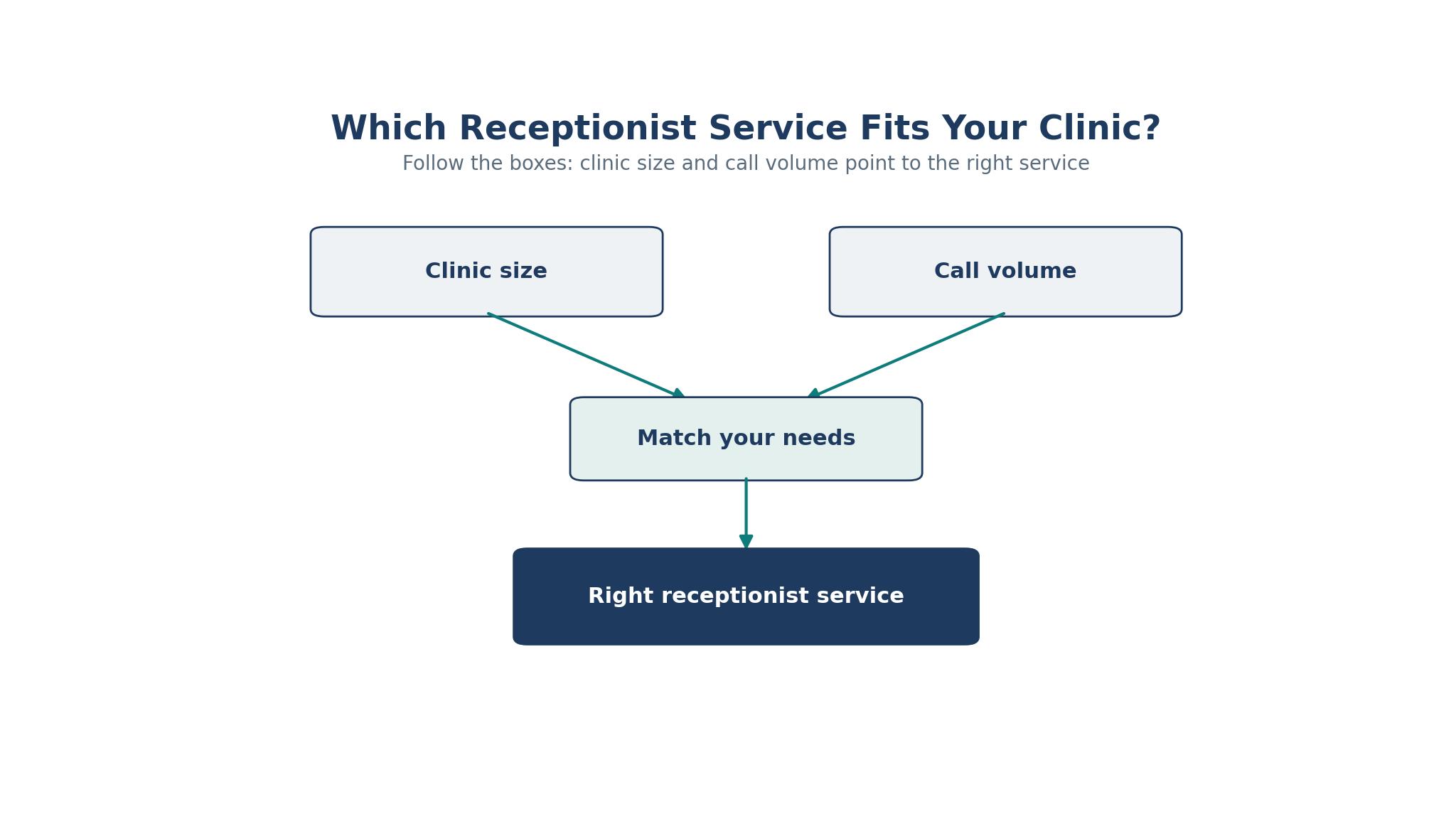
Pick by call volume and booking need, because the cheapest service that only takes messages is not the cheapest once lost appointments are counted. Trial the first pick among the best ai receptionist software for medical clinics on two weeks of real calls, add the second when the first leaves a gap, and let the front-desk team judge the result. A service the staff trusts is the one that survives.
How to Judge the Best AI Receptionist Software for Medical Clinics
Judge a service by the booking test, because the only answer that matters is whether the appointment lands in the practice software during the call. A service that takes a message and leaves the booking to the morning team has not solved the problem, and the patient who asked for Tuesday may find Tuesday full by the time anyone calls back. The best ai receptionist software for medical clinics books the appointment, writes it into the system and confirms it with the patient before hanging up.
HIPAA decides whether the service can be deployed at all, since patient calls carry protected information. Check whether the vendor signs a business associate agreement, whether the AI trains on your calls and where the recordings are stored. A vendor that cannot answer those questions clearly is not ready for a clinic, no matter how good the voice sounds.
Cost needs care, because the models vary widely, from per-minute and per-call rates to flat monthly plans and per-minute human services. A clinic taking twenty calls a day pays very differently on a 7-cent-a-minute plan than on a 250-dollar monthly plan, so model the bill on your real call volume. Confirm the number on the vendor page before you pay, since the rate card changes often.
The 15 Tools in Detail
Fifteen services made this list because each one is live, answers real clinic calls, and fits a distinct practice shape. Each service below is covered in table order, with its price, its strength and its catch.

1. Retell AI
Retell AI builds voice agents that answer calls, book appointments natively through Cal.com and Google Calendar, and handle the conversation in natural language. The platform prices from 7 cents a minute with no platform fee, includes HIPAA with a self-service business associate agreement, and scales to multi-location practices without a per-call markup. The voice quality is among the best here.
The booking is the strength, because the agent writes the appointment into the calendar during the call rather than taking a message for later. The self-service agreement removes the usual compliance delay, and the per-minute pricing means a quiet clinic pays little. For a practice that wants a calendar-aware voice agent at scale, the value is the strongest on this list.
Retell AI needs setup and testing, since the agent must be trained on the clinic’s services, hours and booking rules before it goes live. A clinic that wants a done-for-you service will find the setup a burden.
Choose Retell AI when the practice wants the best AI booking at the lowest per-minute cost. It fits multi-location clinics and dental groups that book by the calendar.
2. Smith.ai
Smith.ai is a hybrid service where AI handles routine inbound calls and more than 500 US-based live agents step in for complex intake, sensitive conversations and warm transfers. The service books appointments, qualifies leads and integrates with CRMs, with a 30-day money-back guarantee on human-first plans. AI plans start from 150 dollars a month for 75 calls, and human plans from 300 dollars a month.
The hybrid model is the draw, because routine calls cost AI prices while difficult calls get a trained human. The intake quality is high, and the agents are trained for professional services.
The price climbs fast with volume, and the per-call model punishes a busy clinic. AI at 150 dollars a month covers only 75 calls, and the booking add-on costs 1.50 dollars a call on top. A high-volume practice will find the bill growing every month, and the service is dearer than pure AI.
Pick Smith.ai when the practice wants AI efficiency with a real human as the fallback. It fits law firms, medical practices and high-stakes services that value the handoff.
3. Goodcall
Goodcall is an AI phone agent that answers calls, books appointments and surfaces real-time availability inside Google Business Profile listings. The agent books through Google Calendar or Calendly, handles repeat callers without minute charges and states HIPAA and SOC 2 compliance. Plans list at 79 dollars a month for 100 unique customers, with higher tiers above.
The Google booking is the unique strength, because patients can book from the listing itself without visiting the website. The per-customer pricing, rather than per-minute, suits practices where the same patients call repeatedly, since minutes would punish them. The setup is fast, and the agent is reliable on routine booking.
Goodcall has no human backup, so an angry caller or a complex medical question meets an AI with no person to pass to. The integrations are narrower than Open.cx or Retell AI, and the higher tiers climb to 129 and 299 dollars a month.
Choose Goodcall when the practice gets repeat callers and wants Google booking. It fits small clinics where the same patients call often.
4. Ruby
Ruby is a premium live receptionist service, with human receptionists answering around the clock, bilingual coverage and optional AI features at no extra cost. The agents book appointments, take messages and transfer urgent calls, with HIPAA-compliant services and a signed agreement. Plans run 250 dollars a month for 50 minutes, with higher tiers above.
The human voice is the product, because some callers, especially older patients, want a person every time and will not trust a machine. The receptionists are trained, the service is reliable, and the AI features add call handling without replacing the human. For a practice where every caller expects a person, Ruby is the standard.
The price is premium, and the per-minute model means a busy clinic pays far more than an AI service. Fifty minutes a month covers only a small practice, and the 500-minute tier costs 1,725 dollars a month.
Pick Ruby when the practice needs a person on every call, without exception. It fits premium clinics whose patients expect a human voice.
5. Slang.ai
Slang.ai builds AI phone agents for high-volume businesses, answering calls, booking appointments and handling the routine questions that flood a front desk. The platform handles multiple calls at once, integrates with calendars and scales with volume. Pricing is by quote, based on call volume and features.
Volume handling is the strength, because Slang.ai answers every simultaneous call instead of queuing the third caller to voicemail. The agent is fast, the booking works, and the platform suits practices where the phone never stops.
Quote-only pricing slows evaluation, and the platform is less clinic-specific than My AI Front Desk or Retell AI. The setup needs the clinic to define its flows, and the AI needs training on the practice’s services. A small clinic will find the enterprise shape heavier than it needs.
Choose Slang.ai when the clinic’s phone volume overwhelms the front desk. It fits busy practices where simultaneous calls are the daily problem.
6. Synthflow
Synthflow lets a small practice build an AI voice agent without code, with templates for answering, booking and triage. The agent answers in natural language, books into the calendar and transfers urgent calls to a human. The starter plan lists at 29 dollars a month, with higher tiers for volume.
The low price is the draw, because a solo practice can run an AI receptionist for less than a daily coffee. The no-code builder means the practice sets it up in an afternoon, and the templates cover the common clinic flows. For a budget-conscious practice, the entry point is the friendliest here.
Synthflow is a general voice platform, not a clinic specialist, so the practice must build the medical flows itself. The HIPAA position needs checking per plan, and a practice that needs a managed service will find the DIY shape a burden.
Pick Synthflow when a solo practice wants the cheapest competent AI receptionist. It fits single-doctor clinics and small practices on a tight budget.
7. Bland AI
Bland AI offers programmable voice agents that a practice can shape into any call flow, from booking to triage to prescription refill requests. The platform handles natural conversation, transfers to humans and integrates with calendars and practice systems. Pricing runs near 9 cents a minute, with volume discounts.
Programmability is the strength, because the clinic can script exactly how the agent handles each call type. The voice is natural, the latency is low, and the platform scales from one clinic to many. For a practice with unusual workflows, the flexibility is unmatched.
Bland AI is a developer platform, and the clinic needs technical help to build and maintain the flows. The per-minute bill grows with volume, and a non-technical practice will need a partner to run it.
Choose Bland AI when the practice has technical support and wants custom call flows. It fits clinics with unusual booking or triage needs.
8. Dialzara
Dialzara is the low-cost AI answering service, with plans from 29 dollars a month covering 60 minutes, and tiers at 99, 199 and 349 dollars for up to 1,000 minutes. The agent answers, books appointments and takes messages, with overage charged per minute. The price is the lowest entry on this list.
The price is the whole argument, because a very low-volume clinic can answer every call for less than a dollar a day. The setup is quick, the agent handles routine booking, and the tiered minutes let the practice grow. For a clinic taking a handful of calls a day, the maths is unbeatable.
Dialzara is thin on integrations, with no practice management system named on the pricing page, and the overage rates climb to 48 cents a minute on the cheapest tier. The AI is competent rather than leading, and the HIPAA position needs checking.
Pick Dialzara when call volume is very low and the budget is the deciding factor. It fits new clinics and solo practices starting out.
9. My AI Front Desk
My AI Front Desk, sold as Frontdesk, is the AI receptionist built for practices, booking into Dentrix, Eaglesoft, Open Dental, Curve and Practice-Web during the call. The service states HIPAA compliance and a business associate agreement, and the appointment is written into the practice software, not just the calendar. Plans start from 99 dollars a month for 200 voice minutes.
The practice-software write-back is the feature that matters most, because the appointment lands in the system the clinic actually runs on. The HIPAA position is stated clearly, and the booking flow understands dental and medical scheduling. For a practice that lives in its PMS, the fit is exact.
The price covers only 200 minutes, and heavier use needs a higher tier. The setup needs the PMS connection configured, and a clinic outside the supported PMS list gains less.
Choose My AI Front Desk when the appointment must land in the practice software during the call. It fits dental and medical practices on the supported systems.
10. Abby Connect
Abby Connect is a live receptionist service with AI handling, where trained receptionists answer calls, book appointments and manage the front desk by phone. The service covers overflow, after-hours and full-time answering, with bilingual agents and CRM integrations. Plans list near 289 dollars a month, with higher tiers for volume.
The live team is the strength, because the receptionists handle the calls a machine cannot, from distressed patients to complex scheduling. The AI layer triages first, so the human time goes to the calls that need it, and the service scales with the practice. For a clinic that wants a team rather than a tool, the model works.
The price is high for a small clinic, and the per-minute model means the bill grows with volume. The service is a managed team, so the practice gives up some control over exactly how calls are handled.
Pick Abby Connect when the practice wants a live team with AI triage behind it. It fits mid-size clinics outsourcing the front desk.
11. AnswerConnect
AnswerConnect provides live answering with AI triage, covering small clinics that need the phone answered without hiring a full-time receptionist. The service answers, books, takes messages and transfers urgent calls, with 24/7 coverage. Plans list near 49 dollars a month, with tiers for volume.
The low entry price is the draw, because a small clinic gets live cover for less than a daily coffee. The AI triage sorts the routine calls, and the live agents handle the rest, so the practice pays for human time only when it is needed. The setup is quick.
The service is general, not clinic-specific, so the booking and HIPAA handling need checking per plan. The per-call model can climb with volume, and the agent quality varies by tier.
Choose AnswerConnect when a small clinic needs affordable live cover with AI triage. It fits practices starting out that want the phone answered always.
12. PATLive
PATLive is a live answering service with virtual reception, covering after-hours calls, overflow and full-time answering for medical practices. The agents book appointments, take messages and transfer urgent calls, with HIPAA-aware handling. Plans list near 49 dollars a month, with higher tiers for volume.
After-hours coverage is the strength, because the service answers when the clinic is closed and the patient still needs to book. The agents are trained for medical calls, and the message delivery is fast. For a clinic whose patients call in the evening, the coverage pays for itself in booked appointments.
PATLive is a general answering service, and the AI layer is thinner than the AI-first tools here. The price climbs with volume, and the booking integration is lighter than Frontdesk or Retell AI.
Pick PATLive when after-hours cover is the gap and the budget is modest. It fits clinics whose patients call outside office hours.
13. VoiceNation
VoiceNation offers live answering and messaging around the clock, with agents who book appointments, take messages and handle overflow for medical practices. The service includes text messaging, so patients can reach the clinic by SMS as well as voice. Plans list near 59 dollars a month, with tiers for volume.
The messaging is the extra, because patients who will not call will text, and VoiceNation answers both. The live cover is reliable, the agents handle medical calls daily, and the price is friendly for a small practice. For a clinic that wants voice and text covered, the bundle is neat.
VoiceNation is a general service, and the AI features are lighter than the AI-first platforms. The booking integration is basic, and the per-minute model means a busy clinic pays more.
Choose VoiceNation when the practice wants live voice and text cover at a modest price. It fits small clinics that want the phone and the inbox answered.
14. Davinci Virtual
Davinci Virtual provides live receptionists and virtual office services, answering calls, booking appointments and handling mail and meeting rooms for practices that want a full service. The receptionists are US-based, the coverage is 24/7, and the plans bundle phone answering with office services. Receptionist plans list near 99 dollars a month.
The bundle is the draw, because a practice that also needs a business address, mail handling and meeting rooms gets them from one vendor. The live receptionists are professional, the coverage is reliable, and the service suits a practice building a professional front. For a new clinic, the package is convenient.
The price covers a bundle a small clinic may not need, and the AI layer is thinner than the AI-first tools. The per-minute model applies above the included allowance, and the booking integration is general.
Pick Davinci Virtual when the practice wants live reception plus virtual office services. It fits new clinics building a professional front from scratch.
15. Open.cx
Open.cx builds production-grade AI voice agents for businesses with existing phone systems, integrating natively with around fifty systems including practice management and CRM tools. The platform charges near 70 cents per fully resolved call, with HIPAA-ready deployment and native calendar and PMS connections. The voice is fast and natural.
The integrations are the reason to buy, because Open.cx connects to the systems the front desk already uses rather than replacing them. The per-call cost is low, the HIPAA position is clear, and the platform suits clinics, real estate and mid-market teams with serious infrastructure. For a practice with non-trivial systems, the fit is the best here.
Open.cx is a platform, not a managed service, so the practice needs technical help to deploy it. The per-call model needs volume modelling, and a small clinic without IT support will find the deployment heavy.
Choose Open.cx when the clinic has existing systems and wants AI voice that integrates natively. It fits multi-location practices with real infrastructure.
Switching the Front Desk to AI in Two Weeks
A clinic that switches its phones overnight invites chaos, because patients, staff and the AI all need time to adjust. Give the change two weeks, one phone line and a clear fallback, and the best ai receptionist software for medical clinics proves itself on real patient calls instead of a sales demo.
1. Pick one phone line, usually the new-patient line, and route it to the AI service. 2. Train the agent on the clinic’s services, hours, doctors and booking rules before go-live. 3. Tell the front-desk team the AI is a helper, not a replacement, and name the human fallback. 4. Listen to ten calls a day for the first week, and fix the booking rules that fail. 5. Check that every appointment landed in the practice software, and chase the ones that did not. 6. Decide at day fourteen whether to move the remaining lines, and write the reason down.
The listening step matters most, because the first week reveals the questions the agent cannot answer and the booking rules that break. Fix them daily, and by week two the agent handles the routine.
Six Front-Desk Mistakes That Drive Patients Away
The first mistake is letting the phone ring out, which costs the practice the patient it never meets. An AI receptionist answers every call, and a clinic that still relies on voicemail during busy hours is choosing to lose patients. The fix is immediate, and the cost of the service is less than one lost patient a month.
The second mistake is taking a message instead of booking, because the patient who asked for Tuesday may find Tuesday full by the time anyone calls back. The booking test in this guide is the standard, and any service that only takes messages fails it. Book during the call, or the service has not solved the problem.
The third mistake is skipping the business associate agreement, which leaves the practice exposed the moment patient information passes through the service. A vendor that will not sign is not a vendor for a clinic, and the agreement must be in place before the first call. Compliance is not a feature to add later.
The fourth mistake is hiding the AI from patients, because a caller who discovers they are talking to a machine feels tricked. Tell callers the assistant is AI, let them ask for a human at any point, and the trust holds.
The fifth mistake is never listening to the calls, which lets a broken booking rule run for months while patients quietly leave. Listen to ten calls a week, fix what fails, and the service improves every week. A service nobody monitors is a service nobody owns.
The sixth mistake is buying on price alone, since the cheapest service that only takes messages costs more in lost appointments than the dearer service that books. The best ai receptionist software for medical clinics earns its price by booking the appointment, and the booking is what pays the bill.
Frequently Asked Questions
Is AI receptionist software HIPAA compliant?
It can be, when the vendor signs a business associate agreement, does not train its models on your calls and stores recordings securely. Retell AI, My AI Front Desk and Open.cx all state HIPAA-ready deployment with an agreement available. Among the best ai receptionist software for medical clinics, check the agreement before the first patient call, and confirm the data handling in writing.
Can an AI receptionist book appointments into our practice software?
Yes, when the service integrates with your system, since My AI Front Desk writes into Dentrix, Eaglesoft, Open Dental and other practice systems, and Retell AI books through Cal.com and Google Calendar. Check that your practice software is on the vendor’s integration list before you trial it, because a service that only books a calendar is not the same as one that books the practice system.
Will patients accept talking to an AI receptionist?
Most will, when the voice is natural, the booking works and a human is one sentence away. Tell callers the assistant is AI, let them ask for a human at any point, and the acceptance rate rises sharply. Patients care about getting the appointment, not about who answered the phone.
How much does an AI receptionist cost a small clinic?
A small clinic can start at 29 dollars a month with Dialzara or Synthflow, while per-minute AI runs from 7 cents a minute with Retell AI. Live services start near 49 dollars a month, and premium human services run 250 dollars a month and above.
What happens when the AI cannot handle a call?
The call should pass to a human immediately, either a live agent on a hybrid service or a member of the clinic team. Set the fallback rules before go-live, name the person who takes the escalations, and test the handoff with a difficult call. A service with no human fallback is not safe for a clinic.
Answer Every Call, Book Every Patient
A clinic that answers every call and books every appointment fills its diary, keeps its patients and frees its front desk for the people standing in front of them. Trial Dialzara or Synthflow for a low-volume start, Retell AI for booking at scale or Smith.ai when a human must be behind the AI, and listen to the calls every day for the first fortnight. The best ai receptionist software for medical clinics earns its keep one booked appointment at a time, and the booked appointment is the outcome that pays for everything else.
Route the new-patient line this week, train the agent on your services and hours, and check that the first appointments land in the practice software. A fortnight from now the voicemail box will be empty and the diary will be fuller.