

A startup that ranks on page one for its core keyword can win 30 percent of the clicks on that search, while the same page on page two wins almost none, and the best ai seo tools for startups exist to close that gap on a budget a young company can afford. The difference between a tool that pays for itself and one that drains the budget is rarely the feature list, and it is usually the match between the tool’s strength and the startup’s actual bottleneck, whether that is keywords, content or technical health.
This guide compares ten products on keyword data, content optimisation, technical auditing, rank tracking and price, with every figure stated in plain dollars. Prices are November 2026 list prices, so check the vendor page before you pay, because several of these services charge more for extra seats, projects or keyword limits. Each entry closes with a direct call on which startup should buy it.
The ten tools cover the full SEO workflow, from finding keywords to fixing crawl errors, so the right choice follows from your biggest gap rather than from a ranking. Read the comparison table to narrow the field to three, then use the detailed entries and the decision section at the end to build a stack that fits your budget and your team size.
Why Startup SEO Budgets Fail on the Wrong Tools
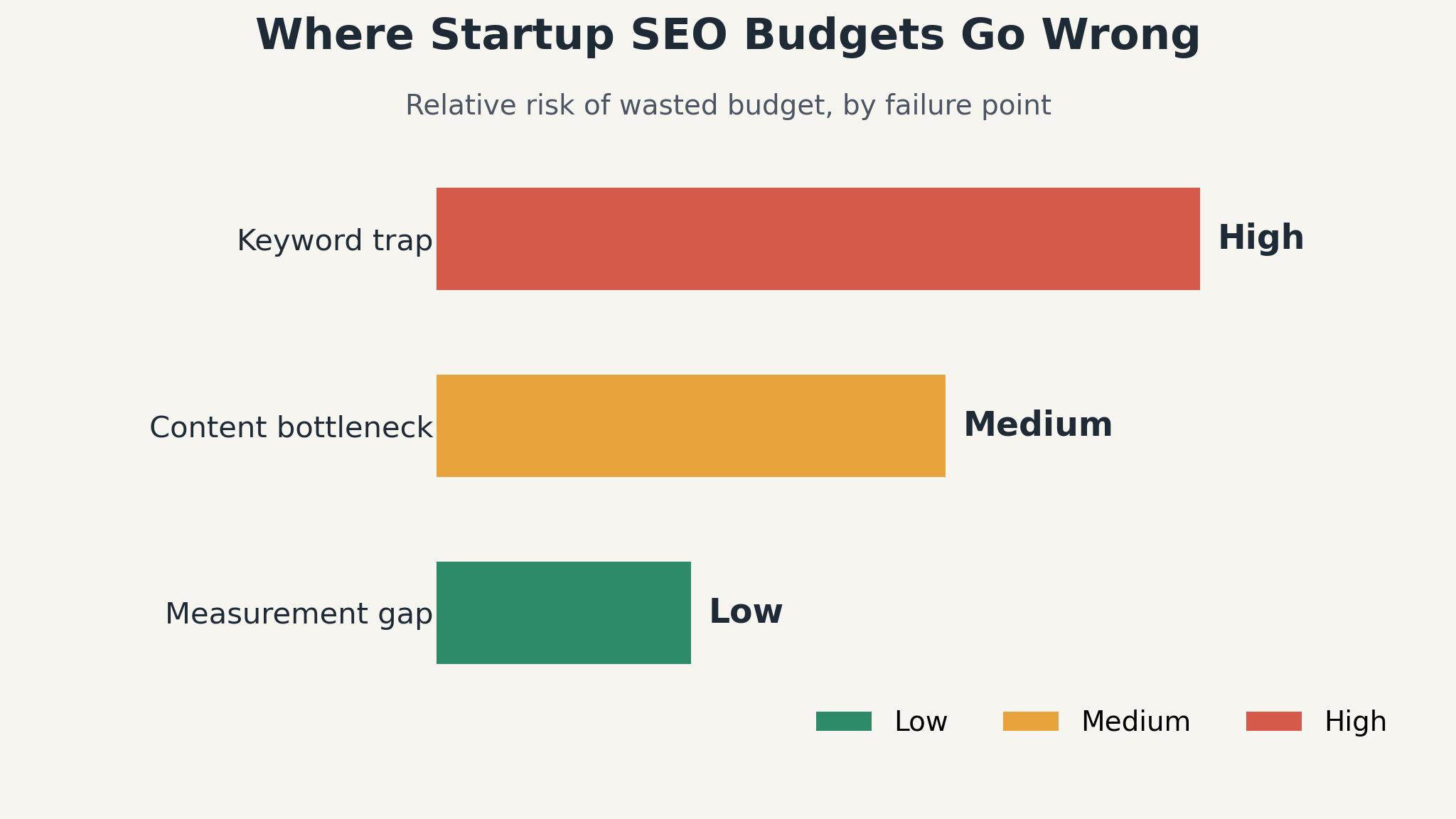
Startup SEO budgets fail most often because the team buys the biggest tool before it knows what it needs. A two-person startup that pays 140 dollars a month for an enterprise suite will use perhaps a tenth of its features, while the same money could buy a focused content optimiser plus a rank tracker and leave change for content itself. The best ai seo tools for startups are the ones that match the job in front of you, not the ones with the longest feature list.
The second problem is the keyword trap. Startups chase high-volume keywords that established sites already own, and they lose months writing content that never ranks, while the winnable keywords sit in the long tail with lower volume and far weaker competition. A good keyword tool shows difficulty and intent beside volume, and the startups that win are the ones that target keywords they can actually rank for in ninety days.
A third factor is the content bottleneck. Many startups can find keywords but cannot produce optimised content fast enough, and the gap between research and publishing is where most SEO plans stall. Content optimisation tools that score drafts against the top-ranking pages close that gap, and they pay for themselves when a writer ships two optimised posts a week instead of one.
A fourth factor is measurement. Startups often buy tools and then never check whether the rankings moved, which means the subscription renews on hope rather than evidence. A rank tracker tied to revenue, even a simple spreadsheet of target keywords checked monthly, turns SEO from a cost into a channel with a return, and that record is what justifies the next upgrade.
The 10 Tools at a Glance
| Tool | Main job | Best for | Starting price |
|---|---|---|---|
| Ahrefs | Backlinks, keywords and audits | All-round SEO research | From 129 dollars a month |
| Semrush | All-in-one marketing suite | Teams that want one platform | From 140 dollars a month |
| Moz Pro | Keyword research and tracking | Beginners and small teams | From 99 dollars a month |
| Surfer | Content optimisation scoring | Writers optimising drafts | From 79 dollars a month |
| Clearscope | Content briefs and grading | High-quality content teams | From 170 dollars a month |
| Frase | AI content briefs and outlines | Fast content production | From 15 dollars a month |
| SE Ranking | Affordable all-in-one SEO | Budget-conscious startups | From 52 dollars a month |
| Ubersuggest | Low-cost keyword research | Solo founders | From 29 dollars a month |
| Screaming Frog | Technical site crawling | Technical audits | Free, paid 259 dollars a year |
| Mangools | Keyword finder and SERP tools | Simple keyword research | From 29 dollars a month |
Best Pick by Job
| Job type | First pick | Second tool | Why this pair works |
|---|---|---|---|
| All-in-one SEO research | Ahrefs | Semrush | Deepest backlink data beside the broadest marketing suite |
| Content optimisation | Surfer | Clearscope | Real-time draft scoring beside research-grade briefs |
| Budget keyword research | SE Ranking | Mangools | Full suite at half the price beside simple keyword finding |
| Technical audits | Screaming Frog | Ahrefs | Deep crawl diagnostics beside rank and link data |
| Fast AI content briefs | Frase | Surfer | Cheap outline generation beside scoring that polishes the draft |
The pairing logic follows the gap each first pick leaves behind. Ahrefs covers research superbly but does not score drafts, so Surfer stands beside it for content, while SE Ranking covers the suite cheaply and Frase fills the brief gap. Among the best ai seo tools for startups, the strongest combinations pair a research engine with a content optimiser, because finding the keyword and writing the page that ranks for it are two different jobs.
How to Judge the best ai seo tools for startups
Start with the keyword database and ask whether it covers your niche, because a tool with strong US data can be thin on other markets, and a startup selling to a niche audience needs data on the exact terms its buyers use. Test the tool with ten keywords you already rank for and ten you want, and check whether the difficulty scores match what you see in the search results.
Next, test the content workflow on a real draft. The best ai seo tools for startups score a draft against the top-ranking pages and show which terms and headings are missing, so write one post with the tool and one without it, then compare the time taken and the quality of the result. A tool that saves an hour per post pays for itself quickly.
Finally, price the stack for a year with your real usage. A 129-dollar monthly plan costs 1,548 dollars a year, and a startup that publishes four posts a month is paying 32 dollars per post for the tool, which is cheap if the posts rank and expensive if they do not. Trial the free tier or the cheapest plan first, and upgrade only when the rankings prove the value.
The 10 Tools in Detail
The entries below keep the same order as the comparison table, so you can move from a row to its full write-up without losing your place. Each one states what the product does, where it performs best, where it falls short, and which kind of startup should shortlist it first. Prices are starting rates for the lowest paid plan, and most vendors charge less per person or per seat on annual billing.
1. Ahrefs
Ahrefs is the deepest backlink and keyword research platform in this guide, with a link index that crawls the web constantly and a keyword database covering most markets. The starter plan from 129 dollars a month includes Site Explorer, Keywords Explorer, Site Audit and Rank Tracker, which together cover the full research workflow.
The strength is the data quality. The backlink index is the largest available, the keyword difficulty scores are honest, and the Content Explorer shows which pages earn links in any niche. The Site Audit tool finds technical problems with clear explanations, and the rank tracker updates daily.
The drawback is the price and the learning curve. At 129 dollars a month, Ahrefs is the most expensive research tool here for a solo founder, and the interface assumes a working knowledge of SEO. The starter plan also limits the number of projects and tracked keywords.
Ahrefs fits a startup that treats SEO as a core channel and needs the best link and keyword data available. Solo founders on a tight budget should start with SE Ranking and upgrade later.
Ahrefs also runs a free Webmaster Tools tier that gives a site audit and basic backlink data at no cost, which is a sensible way to test the data quality before paying. The company publishes excellent free learning material, and the blog is one of the best SEO resources on the web.
2. Semrush
Semrush is an all-in-one marketing suite covering SEO, content, advertising, social media and competitive research, with plans from 140 dollars a month. The platform tracks keywords, audits sites, analyses competitors and builds content briefs, all inside one dashboard.
The strength is breadth. A startup can run keyword research, content planning, PPC analysis and social scheduling from one subscription, and the competitive research shows exactly which keywords rivals rank for. The keyword magic tool generates thousands of related terms from one seed keyword.
The drawback is the price and the sprawl. At 140 dollars a month, Semrush is expensive for a startup that only needs SEO, and the interface carries so many features that new users can feel lost. Some data, such as backlinks, is thinner than Ahrefs.
Semrush fits a startup with a small marketing team that wants one platform for SEO, content and paid search together. Pure SEO teams will get more depth per dollar from Ahrefs.
Semrush also offers a free account with limited daily searches, which is enough to test the keyword data on your niche before committing. The Academy courses teach the platform well, and the support team answers quickly on paid plans.
3. Moz Pro
Moz Pro is a long-established SEO suite covering keyword research, rank tracking, site audits and link research, with plans from 99 dollars a month. The platform is known for its Domain Authority metric and for clear, beginner-friendly reporting.
The strength is approachability. Moz explains SEO concepts in plain language, the interface is calm, and the keyword explorer shows difficulty, volume and opportunity in one view. The local SEO tools also help startups with a physical presence.
The drawback is data depth. The link index is smaller than Ahrefs, and the keyword database is thinner in smaller markets, so advanced users may find the numbers less precise. The audit tool is also less detailed than rivals.
Moz Pro fits a beginner or a small team that wants a friendly, affordable SEO suite with good education built in. Advanced link builders should choose Ahrefs.
Moz also runs the free MozBar browser extension, which shows domain and page authority for any site you visit, and the blog and Whiteboard Friday videos remain useful learning resources. The community forum is active and helpful for newcomers.
4. Surfer
Surfer is a content optimisation tool that scores drafts against the top-ranking pages for a keyword, showing which terms, headings and word counts the page needs. Plans start from 79 dollars a month, and the content editor works inside Google Docs or its own editor.
The strength is the scoring. Writers see a live score as they draft, with a clear list of terms to add and headings to match, which turns optimisation from guesswork into a checklist. The audit tool also grades existing pages and suggests fixes.
The drawback is the narrow focus. Surfer optimises content well but does not do keyword research or technical audits, so it needs a research tool beside it. The AI writing features are also weaker than dedicated AI writers.
Surfer fits a startup that already knows its keywords and needs its writers to ship optimised posts faster. Pair it with Ahrefs or SE Ranking for the research side.
Surfer also integrates with Jasper and WordPress, so the optimised draft can move straight into the publishing workflow without copy and paste. The team plans add collaboration features, and the Chrome extension brings scoring into Google Docs.
5. Clearscope
Clearscope is a premium content optimisation platform that builds research-grade briefs and grades drafts against the top-ranking content, with plans from 170 dollars a month. The tool analyses the language of the best pages and produces a term list that writers follow.
The strength is the brief quality. Clearscope briefs are detailed, with questions readers ask, headings to cover and terms to include, and the grading is stricter than cheaper rivals, which pushes writers toward genuinely comprehensive content. Enterprise content teams trust it.
The drawback is the price. At 170 dollars a month, Clearscope is the most expensive content tool here, and the per-user cost rises fast for a team. There is no free tier, and the platform does no keyword research of its own.
Clearscope fits a content team that publishes fewer, higher-quality posts and needs each one to rank. Startups publishing volume content should choose Surfer or Frase instead.
Clearscope also integrates with Google Docs and WordPress, and the reports can be shared with freelance writers without giving them a full seat. The support team is known for helping teams set up their first briefs properly.
6. Frase
Frase is an AI content tool that builds outlines and briefs from the top-ranking pages for a keyword, with plans from 15 dollars a month. The platform analyses competitors, generates a structured outline, and scores drafts against the same pages.
The strength is the price and the speed. A writer can go from keyword to outline in minutes, and the 15-dollar entry plan makes Frase the cheapest content tool in this guide. The AI writer can also draft sections that the human then edits.
The drawback is depth. The scoring is lighter than Surfer or Clearscope, and the AI-generated text needs heavy editing to reach publishable quality. The keyword research features are basic.
Frase fits a startup that needs fast briefs on a small budget and has a writer who can polish AI output. It is the best first content tool for a solo founder.
Frase also offers an answer engine that helps content rank in AI search results, which is becoming more valuable as search behaviour changes. The team plans add collaboration, and the Chrome extension brings the brief into Google Docs.
7. SE Ranking
SE Ranking is an affordable all-in-one SEO platform covering keyword research, rank tracking, site audits, backlink monitoring and white-label reporting, with plans from 52 dollars a month. The platform is popular with agencies and startups that need the full suite at half the price of the leaders.
The strength is value. At 52 dollars a month, SE Ranking covers the same workflow as tools costing twice as much, and the interface is clean and easy to learn. The rank tracker is accurate, and the white-label reports suit agencies.
The drawback is data depth. The backlink index is smaller than Ahrefs, and the keyword database is thinner in some markets, so the numbers are less precise for competitive niches. The content tools are also basic.
SE Ranking fits a budget-conscious startup that wants one affordable suite covering research, tracking and audits. Teams that live on backlink data should choose Ahrefs.
SE Ranking also offers a free trial with no card required, and the pricing scales with the number of keywords tracked, so a small site pays less than a large one. The support team is responsive, and the blog covers practical SEO well.
8. Ubersuggest
Ubersuggest is a low-cost keyword research tool from Neil Patel, covering keyword ideas, site audits, rank tracking and content ideas, with plans from 29 dollars a month and a lifetime deal option. The interface is simple and aimed at beginners.
The strength is the price and the simplicity. A solo founder can get keyword data, a site audit and rank tracking for 29 dollars a month, and the tool explains each metric in plain language. The Chrome extension brings keyword data into Google search results.
The drawback is data quality. The keyword database is smaller than the leaders, and the difficulty scores can be optimistic, so competitive keywords may look easier than they are. The audit tool is also basic.
Ubersuggest fits a solo founder or a very small team that needs basic keyword data at the lowest possible price. Growing startups should move to SE Ranking or Ahrefs as the site scales.
Ubersuggest also offers a seven-day free trial on paid plans, and the lifetime deal, when available, can be good value for a founder who plans to use the tool for years. The training videos are short and practical.
9. Screaming Frog
Screaming Frog is a desktop website crawler that audits technical SEO, finding broken links, duplicate content, missing meta data, redirect chains and crawl errors, with a free version for up to 500 URLs and a paid licence at 259 dollars a year.
The strength is the crawl depth. No cloud tool matches Screaming Frog for detailed technical diagnostics, and the custom extraction features let technical SEOs pull exactly the data they need. The paid licence covers unlimited URLs and adds integrations with Google Analytics and Search Console.
The drawback is the learning curve and the scope. Screaming Frog is a technical tool that assumes SEO knowledge, and it does no keyword research, rank tracking or content work. It runs on your own computer, so large crawls need a powerful machine.
Screaming Frog fits a startup with a technical SEO or a developer who wants the deepest audit available at a low price. Non-technical teams should use the audit tools inside Ahrefs or SE Ranking.
Screaming Frog also integrates with PageSpeed Insights and the Google Search Console API, so crawl data can be combined with performance and search data in one export. The support forum is active, and the documentation is thorough.
10. Mangools
Mangools is a suite of five simple SEO tools, including KWFinder for keyword research, SERPChecker, SERPWatcher for rank tracking, LinkMiner and SiteProfiler, with plans from 29 dollars a month. The tools are designed to be easy and visual.
The strength is simplicity. KWFinder shows keyword difficulty with a clear colour scale, and the interface is the friendliest in this guide, so beginners can find winnable keywords in minutes. The rank tracker is accurate and the reports look good.
The drawback is depth. Mangools covers the basics well but lacks the audit depth of Ahrefs and the content tools of Surfer, so growing teams will need a second product. The keyword database is also smaller than the leaders.
Mangools fits a beginner or a blogger who wants simple keyword research without a steep learning curve. Startups that need a full suite should choose SE Ranking.
Mangools also offers a ten-day free trial, and the basic plan covers 100 keyword lookups a day, which is enough for a small site. The blog and academy explain keyword research in plain language for newcomers.
SEO Tool Mistakes That Drain a Startup Budget
The most expensive mistake is paying for an enterprise suite before the site has content worth optimising. A startup with twenty pages does not need a 140-dollar monthly platform, and the best ai seo tools for startups only pay off when there is enough content and traffic to measure. Start with a cheap keyword tool, publish twenty posts, and upgrade when the rankings show what is working.
The second mistake is chasing volume instead of intent. A keyword with 10,000 monthly searches and commercial intent from buyers beats a keyword with 100,000 searches from browsers, so check what the searcher wants before you target the term. Tools that show intent and difficulty beside volume are worth more than tools that show volume alone.
A third mistake is buying three overlapping tools. A startup that pays for Ahrefs, Semrush and Moz Pro at once is paying three times for the same keyword data, so pick one research engine, one content tool and one technical audit, and stop there. The overlap is where the budget leaks.
A fourth mistake is ignoring technical health while chasing content. A site with slow pages, broken links and missing meta data will not rank no matter how good the writing is, so run a technical audit before the first content sprint and fix the errors it finds. The audit takes an afternoon and the fixes often lift every page at once.
Assembling an SEO Stack a Startup Can Actually Afford
Start with the research engine, because every other decision follows from the keywords you can win. A solo founder should pick SE Ranking or Ubersuggest, while a funded startup with a content team should pick Ahrefs, and the difference is the volume of content you plan to ship. The best ai seo tools for startups are the ones that match your publishing pace, not the ones with the biggest brand.
Then add one content tool and one technical audit, and keep the total under 200 dollars a month until the site earns organic revenue. Frase plus Screaming Frog beside SE Ranking costs about 100 dollars a month and covers the whole workflow, which is a stack a bootstrapped startup can sustain for a year.
Review the stack every quarter against the traffic it produced, and cut any tool that no longer earns its seat. A startup that publishes consistently will outgrow the cheap tier within a year, and the upgrade should follow the rankings, not the sales pitch. Write the review date into the calendar now, so the decision happens on evidence rather than on habit.

Frequently Asked Questions
How much should a startup spend on SEO tools?
Most early-stage startups should spend 30 to 130 dollars a month, which buys a keyword tool and a content optimiser. Spend more only when organic search already brings leads, because the tool should follow the revenue, not precede it.
Is Ahrefs worth it for a small startup?
Ahrefs is worth it when SEO is a core channel and the team publishes weekly, because the link and keyword data are the best available. A startup publishing monthly will get better value from SE Ranking at less than half the price.
Can I do SEO with free tools only?
Yes, for the basics, using Google Search Console, Google Keyword Planner, Screaming Frog free tier and Ahrefs Webmaster Tools. Free tools cover audits and tracking, but paid tools are faster for keyword research and content optimisation.
Which SEO tool is best for content optimisation?
Surfer is the best all-round content optimiser for most startups, because the live scoring guides writers clearly. Clearscope is better for high-stakes content where quality matters more than speed, and Frase is best on a tight budget.
How long does it take for SEO tools to pay off?
Most startups see meaningful organic traffic in three to six months if they publish consistently, and the tool pays for itself when one ranking page brings a customer. Track the revenue from organic search, not just the rankings, to judge the return.
Should a startup buy Ahrefs or Semrush?
Choose Ahrefs for link building and keyword depth, and Semrush for a broader marketing suite that includes PPC and social. A pure SEO team should pick Ahrefs, while a small marketing team that does everything should pick Semrush.
What is the cheapest SEO stack that actually works?
SE Ranking at 52 dollars a month plus Frase at 15 dollars a month covers keyword research, rank tracking, audits and content briefs for about 67 dollars a month. Add the free Screaming Frog tier for technical audits, and the stack handles the full workflow for a small site.
Ship the Content, Measure the Clicks, Then Upgrade
The best SEO stack for a startup is the smallest one that gets content published and measured, so pick a research engine, add a content scorer, and ship two posts a week before you spend another dollar. The tool cannot rank a page that does not exist, and the rankings will tell you faster than any demo whether the stack works.
Among the best ai seo tools for startups, the winners are the ones that make the next post better than the last, and that is the test that matters. Start with the cheap plan, publish consistently for ninety days, and upgrade only when the traffic earns it. Keep a simple log of the keywords you target and the positions they reach each month, because that record is the evidence that turns SEO from a gamble into a channel you can plan around, and it keeps the next budget decision honest.