
Our 50-person company hired a designer on a Monday, and by Wednesday she still had no laptop, no email and no payroll record, because five different people owned five different pieces of her first day. That hire is why we went looking for the best ai tools for employee onboarding, and why we ended up switching systems over four weeks. This is the diary of that switch, and the numbers it produced.
Week 1: The Hire That Exposed the Mess
The designer started on a Monday. Her laptop was still in a box in the IT cupboard, because nobody had told IT she was starting. Her email account did not exist, because the request had gone to a shared inbox that nobody checked. Her payroll record was a paper form on the HR manager’s desk, unsigned, because the manager had been on holiday when the offer went out. She spent her first day reading the company handbook on a borrowed laptop and her second day waiting for someone to tell her what her job actually was.
That is the week most companies start shopping for onboarding software. Not because the hiring is going wrong, because the hiring is fine, but because the first week of every hire is a scramble that the manager feels in their calendar. A company that hires one person a quarter can run onboarding on goodwill and a checklist. A company that hires two people a month cannot, because every hire touches HR, IT, payroll and the manager, and nobody owns the whole journey.
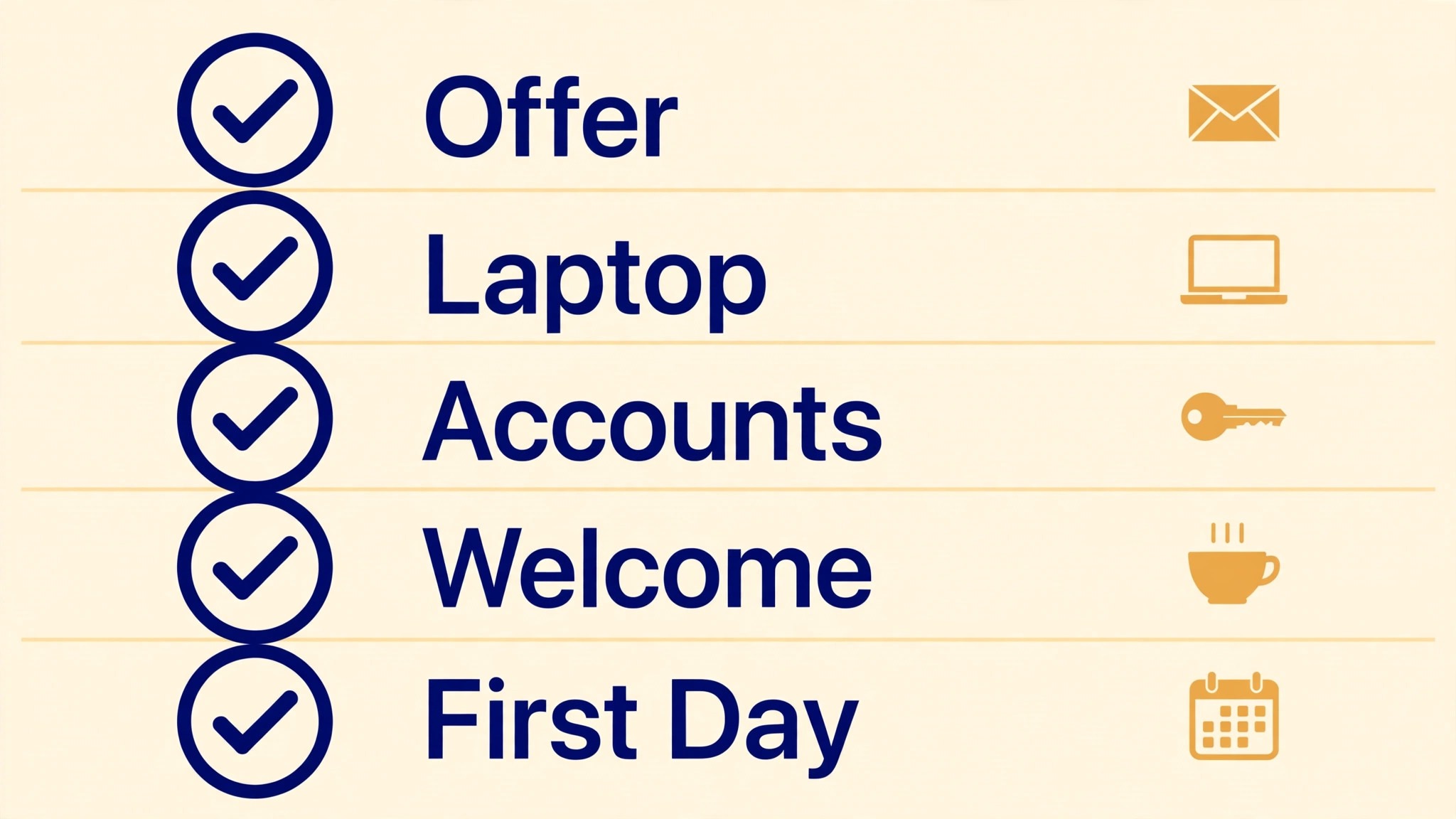
We wrote down every step that hire took from the offer letter to her first productive day, and the list had 23 steps on it. Five different people touched her file, and nobody owned the whole journey. That gap was the first thing the new tool had to fix, and it is the gap every tool in this guide should be judged on.
Week 2: One Record, Many Systems
Week 2 was the week we stopped comparing tools and started comparing systems. Rippling and BambooHR sell onboarding inside an HR system, Enboarder and Leena AI sell onboarding as a dedicated platform, and Deel sells onboarding inside a global employment system. A company that buys a standalone onboarding tool while already paying for an HR system pays twice, while a company that buys the HR system tool and never uses the HR system pays for features it will never open. That is the first trap.
The best ai tools for employee onboarding are the ones that turn one hire action into a finished setup, and Rippling does that by provisioning the HR record, the laptop, the payroll and the app access from a single trigger. That sentence is the whole test. If a tool needs a second system to finish the job, it is not a complete answer, it is a piece of one, and the company will pay for the missing piece somewhere else.
We listed the HR and IT systems we already paid for, and marked the overlaps. The payroll system, the time-off tracker, the shared drive and the chat tool all held a piece of the new hire, and none of them talked to each other. The tool we picked had to replace at least two of them, or it was not worth the switch.
How to Choose the Best AI Tools for Employee Onboarding
Start with the HR system the company already runs. A company on Rippling should use Rippling onboarding, a company on BambooHR should use BambooHR onboarding, and a company on Deel should use Deel onboarding. A second onboarding tool that does not talk to the HR system creates double entry, and double entry is where new hire data goes to die. That one rule narrows the field faster than any feature list.
Next, check what the AI actually does, because the word AI covers very different tools. Enboarder uses AI to build the onboarding journey, Leena AI uses AI to answer new hire questions in chat, and Rippling uses AI to provision accounts and draft documents. A company that wants questions answered should buy Leena AI, and a company that wants the journey built should buy Enboarder.
Then look at the real cost per hire, not the headline rate. A tool that costs 8 dollars per employee a month costs 800 dollars a month for a 100 person company, whether the company hires one person or ten. Ask every vendor whether the price covers every employee or only the HR team before deciding.
| Tool | Main job | Best for | Starting price |
|---|---|---|---|
| Rippling | Unified HR and IT onboarding | Tech forward companies | 8 dollars per employee a month |
| Enboarder | AI journey onboarding | New hire experience first | Quote based, reported about 10 dollars per user a month |
| Leena AI | Conversational HR assistant | Large companies, high volume | Quote based, reported from 3,000 dollars a year |
| Zavvy | People development and onboarding | Growing teams, learning led | Quote based |
| Workleap | Engagement and onboarding | Modern people teams | Officevibe from 5 dollars per user a month |
| BambooHR | HRIS with onboarding | Small and mid size companies | 10 dollars per employee a month reported |
| Deel | Global hiring and onboarding | Multi country teams | 599 dollars per EOR employee a month |
| Gusto | Payroll with onboarding | Small US companies | 49 dollars a month plus 6 dollars per person |
| Click Boarding | Onboarding workflows | Regulated and compliance heavy teams | Quote based |
| Talmundo | Mobile first onboarding | European and frontline teams | 5 dollars per user a month reported |
Rippling vs Enboarder: Unified HR Against Journey First
The first difference is the home base. Rippling is a unified HR and IT platform, and its onboarding value is the single trigger that provisions the HR record, the laptop, the payroll and the app access together. Enboarder is a dedicated onboarding platform, and its value is the AI journey builder that creates a personal experience for every role. A company that wants the setup automated should weigh Rippling more heavily, and a company that wants the experience personal should weigh Enboarder more heavily. That split is the cleanest way to read the choice.
The second difference is the price shape. Rippling starts at 8 dollars per employee a month, with AI features from 12 dollars per employee a month on Complete, so a 100 person company pays 800 to 1,200 dollars a month. Enboarder is quote based, with third party reports putting entry pricing near 10 dollars per user a month and a median contract near 17,000 dollars a year.
The deciding factor is the bottleneck. A company whose new hires wait for laptops and accounts should buy Rippling, because the provisioning is the fix. A company whose new hires feel lost and leave in the first month should buy Enboarder, because the journey is the fix.
Week 3: The Laptop That Arrived Ready
Week 3 was the first real test, and it was a laptop. We hired a support engineer, and this time the hire action went into Rippling on the day the offer was signed. The laptop shipped to her home before her start date. The email account, the chat access and the payroll record were all live on the morning she started. That is what the best ai tools for employee onboarding promise, and for the first time it actually happened.
The provisioning is the part nobody puts in a demo, because it is not glamorous, and it is the part that decides whether the first day works. One hire action provisions the HR record, the laptop, the payroll, the benefits and the app access together, so the new hire arrives to a working desk on day one.
We ran a test hire through the whole flow before the real one, and the test caught two gaps. The welcome message went to the wrong email address, and the first day schedule listed a meeting room that no longer existed. Both were cheap to fix in the test, and both would have been embarrassing in front of a real hire.

Best Pick by Job
| Job type | First pick | Second tool | Why this pair works |
|---|---|---|---|
| Tech company, fast hiring | Rippling | BambooHR | Rippling provisions HR and IT together, BambooHR is simpler |
| Experience first onboarding | Enboarder | Talmundo | Enboarder builds the journey, Talmundo runs it on mobile |
| Large company, many questions | Leena AI | Rippling | Leena answers in chat, Rippling provisions the accounts |
| Global team, many countries | Deel | Rippling | Deel handles local compliance, Rippling handles the IT |
| Small US company, payroll first | Gusto | BambooHR | Gusto runs payroll and onboarding, BambooHR adds the HRIS |
A tech forward company that hires every month should start with Rippling, because the best ai tools for employee onboarding are the ones that turn one hire action into a finished setup. The base plan starts at 8 dollars per employee a month, with AI features from 12 dollars per employee a month on Complete. A company that wants the best new hire experience should look at Enboarder, and a large company with high volume HR questions should look at Leena AI.
Week 4: What the New Hire Actually Felt
Week 4 was the week we asked the new hire what it had actually been like, and her answer was the most useful thing in the whole switch. She said the first day felt calm. Not exciting, not impressive, just calm, because everything she needed was already there and nobody asked her to fill in the same form twice. That calm first day is what the best ai tools for employee onboarding are actually selling.
The journey matters as much as the setup, and this is where the two halves of this guide meet. Rippling fixed the provisioning, but the feeling came from the journey. Enboarder builds that feeling deliberately, with AI generating a tailored onboarding journey for any role in minutes, then sequencing the messages and the nudges by role and stage, so the new hire gets the right message at the right time.
What I would do, if I were starting this switch again tomorrow, is this. I would pick the tool on the provisioning first and the journey second, because a beautiful journey on top of a broken setup is still a broken first day. I would run one test hire through the whole flow on a phone, and I would ask the hire on day three what was confusing.
The 10 Tools in Detail
The ten tools below are the destinations a company can move to, judged the way a switch diary judges a destination. Not on the feature list, but on the move itself. How hard is the import, how fast does a new hire become productive, and what does the bill look like when the company hires five people in one month. This is the best ai tools for employee onboarding shortlist, read as ten possible new homes for the first week of every hire.
1. Rippling
Rippling is the unified HR and IT platform for tech forward companies, and it is the most complete onboarding automation in this guide. The base plan starts at 8 dollars per employee a month, with AI features from 12 dollars per employee a month on Complete and enterprise AI from 25 dollars per employee a month. It covers HR, payroll, IT provisioning, device shipping and app access in one system.
The unified trigger is the core strength. One hire action provisions the HR record, the laptop, the payroll, the benefits and the app access together, so the new hire arrives to a working desk on day one. The AI drafts the offer letter, the onboarding documents and the IT tickets, which cuts the admin time on every hire.
The limit is the add on cost. The base price looks affordable until payroll, benefits and IT management are added, at 6 dollars, 4 dollars and 5 to 20 dollars per employee a month, so the real invoice is higher than the headline rate. Work it out at your own size. A 100 person company on base pays 800 dollars a month, and on Complete with AI features pays 1,200 dollars a month, and the payroll and IT add ons sit on top of both.
The training time is short for the HR team and near zero for the new hire, because the hire never sees the system. They see a welcome message, a laptop that works and a first day schedule, and the complexity stays behind the curtain where it belongs. A tech forward company that hires often should buy it. A small company that hires rarely should buy BambooHR or Gusto.
2. Enboarder
Enboarder is the AI native onboarding platform for companies that put the new hire experience first, and it is the most personal tool in this guide. Enboarder names its price only in a quote, and third-party reports put entry pricing near 10 dollars per user a month with a median contract near 17,000 dollars a year. It covers AI journey building, manager nudges, messaging across email, SMS and WhatsApp, and connection to the HRIS.
The journey builder is the core strength. Enboarder uses AI to generate a tailored onboarding journey for any role in minutes, then sequences the messages, the nudges and the tasks by role and stage, so the new hire gets the right message at the right time.
The limit is the enterprise price. Enboarder is built for companies that treat onboarding as a strategic investment, and a small company will find the quote high. A mid size or large company that wants the best new hire experience should buy it.
3. Leena AI
Leena AI is the conversational HR assistant for large companies, and it is the pick for a company where new hires ask the same questions a hundred times a month. Pricing is custom enterprise, with third party reports putting the Starter plan from 3,000 dollars a year for up to 500 employees and the Professional plan from 8,000 dollars a year. It covers a chat assistant, ticket routing, knowledge access and pulse surveys.
The conversational help is the core strength. The Harrison assistant answers new hire questions in seconds across more than 100 languages, inside Slack and Teams, and it closes tier one requests without a human touching them. The limit is the scale, because Leena AI is built for large enterprises, and a small company will find the sales process long and the price high.
4. Zavvy
Zavvy is the people development and onboarding platform for growing teams, and it is the pick for a company that wants onboarding to lead into learning. The vendor quotes each team individually, and publishes no list price. It covers onboarding journeys, learning paths, performance reviews and engagement, with a focus on the employee who keeps growing after the first month.
The learning link is the core strength. Zavvy connects the onboarding journey to the learning path, so the new hire finishes onboarding and moves straight into the training that makes them productive, without a second system. The limit is the price opacity and the ownership, because Zavvy was acquired by Deel, so the roadmap sits inside a larger company.
5. Workleap
Workleap is the employee experience platform for modern people teams, and it is the pick for a company that wants onboarding inside engagement. The Officevibe module starts at 5 dollars per user a month, and the platform covers pulse surveys, feedback, performance reviews, goals, recognition and onboarding in one system.
What Workleap does that the others do not:
- It connects the onboarding journey to the pulse surveys and the performance reviews, so the company sees how the new hire feels in week one and how they perform in month three, in the same dashboard.
- It streamlines the onboarding tasks and the progress tracking for the HR team, so the checklist lives next to the engagement data.
The limit is the onboarding depth. Workleap is an engagement platform first, so the onboarding is lighter than Enboarder or Rippling. A modern people team that wants engagement and onboarding together should buy it. A company that wants deep onboarding automation should buy Enboarder or Rippling.
6. BambooHR
BambooHR is the HRIS with onboarding for small and mid size companies, and it is the simplest full HR system in this guide. Pricing is reported from 10 dollars per employee a month, with a 250 dollar monthly minimum, and the best AI features sit on the Elite tier at a reported 25 dollars per employee a month. It covers the employee database, onboarding, time off, performance and reporting.
The simplicity is the core strength. BambooHR is built for a small HR team with no IT staff, so the interface is clean, the setup is fast, and the whole company runs from one dashboard. The onboarding flows straight from the offer letter to the first day checklist, so the new hire never falls through a gap.
The limit is the AI depth, because the best AI features need the Elite tier at a reported 25 dollars per employee a month, which is more than double the entry price. Work it out at your own size. A 50 person company pays about 500 dollars a month at the entry rate, and the Elite tier would cost about 1,250 dollars a month, which is a steep climb for the AI features alone. A small or mid size company that wants a simple HRIS with onboarding should buy it. A company that wants deep AI automation should buy Rippling or Enboarder.
7. Deel
Deel is the global hiring and onboarding platform for multi country teams, and it is the pick for a company that hires across borders. The EOR plan starts at 599 dollars per EOR employee a month, and the onboarding agent handles local compliance across more than 130 countries. It covers contracts, payroll, benefits, tax and onboarding in one system.
The global compliance is the core strength. Deel handles the local contract, the local tax, the local benefits and the local onboarding in each country, so a company can hire in ten countries without ten lawyers.
The limit is the price and the bundle. Deel charges 599 dollars per EOR employee a month, which is far more than a domestic onboarding tool, and the agent capability is bundled into the EOR and HR plans rather than sold on its own. A company hiring in one country should buy Rippling or BambooHR.
8. Gusto
Gusto is the payroll platform with onboarding for small US companies, and it is the cheapest full start in this guide. The Simple plan costs 49 dollars a month plus 6 dollars per person, and it covers payroll, tax filing, benefits, onboarding and time tracking. A 50 person company pays 349 dollars a month for the whole system.
The payroll first design is the core strength. Gusto runs the payroll, the tax and the benefits in one system, and the onboarding flows straight into the payroll, so the new hire gets paid correctly from the first pay run. The setup is fast, the interface is friendly, and the support team answers quickly.
The limit is the HR depth. Gusto covers payroll and onboarding well, but a company that wants performance reviews, engagement and deep AI will need a second system. Work it out per hire, because that is where Gusto wins. A company that hires five people a month pays 130 dollars per hire on Gusto at 649 dollars a month for 100 people, against 160 dollars per hire on Rippling base at 800 dollars a month.
A small US company that runs payroll first should buy it. A company that wants a full HRIS should buy BambooHR.
9. Click Boarding
Click Boarding is the onboarding workflow platform for regulated and compliance heavy teams, and it is the pick for a company where the paperwork must be perfect. No published rate exists, so the price comes from a sales call. It covers onboarding workflows, document collection, e signatures, compliance tracking and integrations with the major HR systems.
The compliance depth is the core strength. Click Boarding tracks every document, every signature and every deadline, so a hospital, a bank or a government contractor can prove the onboarding was complete. The limit is the price opacity and the narrow focus, because a company that wants AI journeys or engagement will find less here.
10. Talmundo
Talmundo is the mobile first onboarding platform for European and frontline teams, and it is the pick for a company whose new hires never sit at a desk. Pricing is reported from 5 dollars per user a month, and it covers mobile onboarding journeys, document collection, manager tasks and integrations with the HRIS.
The mobile first design is the core strength. Talmundo runs the whole onboarding on the phone, so a warehouse worker, a nurse or a retail hire completes the paperwork, watches the welcome video and meets the team without ever opening a laptop. The AI personalises the journey by role, language and location.
Is it the right pick for an office company, though? No. Talmundo is built for frontline and European teams, so a US office company will find less here than in Rippling or BambooHR. A company with frontline staff should buy it.
What Does the First Week Actually Cost?
A 100 person company pays very different amounts across this guide, and the price that matters is the cost per hire, not the monthly fee. The best ai tools for employee onboarding for that company are the ones whose price follows the hire volume rather than the headcount. Rippling base at 8 dollars per employee a month costs 800 dollars a month, and Complete with AI features at 12 dollars per employee a month costs 1,200 dollars a month. BambooHR at a reported 10 dollars per employee a month costs 1,000 dollars a month. Gusto Simple at 49 dollars a month plus 6 dollars per person costs 649 dollars a month.
The number that matters is the cost per hire. A company that hires five people a month pays 160 dollars per hire on Rippling base at 800 dollars a month, and 130 dollars per hire on Gusto at 649 dollars a month. A company that hires one person a month pays 800 dollars per hire on Rippling and 649 dollars per hire on Gusto, which is why the hire volume matters more than the monthly price.
The hours are the other half of the maths. A tool that costs 800 dollars a month and saves ten hours of HR time per hire is the cheapest tool in the guide for a company that hires five people a month, because five hires at ten hours each is 50 hours a month of admin that no longer happens. That is the number to put in front of whoever signs the invoice.
| Tool | 100 person company, monthly | Cost per hire at 5 hires a month |
|---|---|---|
| Gusto Simple | 649 dollars | 130 dollars |
| Rippling base | 800 dollars | 160 dollars |
| BambooHR | 1,000 dollars reported | 200 dollars |
| Rippling Complete | 1,200 dollars | 240 dollars |
| Workleap Officevibe | 500 dollars | 100 dollars, engagement only |
| Enboarder | Quote based, reported median 17,000 dollars a year | Ask for a written quote |
Can a Small Company Automate Onboarding Without an HR Platform?
Yes, for the basics. Workleap Officevibe at 5 dollars per user a month covers onboarding tasks and progress tracking, and a company can run the paperwork with e signatures and a shared checklist for nothing. A small company that hires one person a quarter does not need a full HR platform.
The second reason is the cost shape. A full HR platform charges per employee, so a 20 person company pays 160 to 200 dollars a month whether it hires or not. A lightweight tool charges only for the HR team, so the same company pays 25 to 50 dollars a month. A company that hires rarely should buy the cheapest tool that covers the basics, and a company that hires every week should buy the tool that automates the most.
Frequently Asked Questions
How much does Rippling cost per month for a 100 person company?
Rippling base starts at 8 dollars per employee a month, so a 100 person company pays 800 dollars a month, and Complete with AI features at 12 dollars per employee a month costs 1,200 dollars a month. Payroll adds 6 dollars per employee a month, benefits add 4 dollars, and IT management adds 5 to 20 dollars.
Is Enboarder worth the price for a mid size company?
Enboarder is worth the price when a company loses new hires in the first month, because the AI journey builder creates a personal experience that keeps them. Enboarder sets every price by quote, and third-party reports put entry pricing near 10 dollars per user a month with a median contract near 17,000 dollars a year. A company that hires rarely should buy BambooHR or Gusto instead.
Can AI onboarding replace the HR team?
No. AI onboarding automates the paperwork, the provisioning and the questions, but a person still needs to welcome the hire, judge the fit and coach the first month. Leena AI answers the questions, Rippling provisions the accounts, and Enboarder builds the journey, but the manager still owns the relationship.
Does BambooHR include AI onboarding?
BambooHR includes onboarding in every plan, and the best AI features sit on the Elite tier at a reported 25 dollars per employee a month. The entry plans are reported from 10 dollars per employee a month with a 250 dollar monthly minimum, and they cover the employee database, onboarding, time off and performance.
How long does it take to set up AI onboarding?
A platform such as BambooHR or Gusto takes a week to set up, because the onboarding, the payroll and the employee database all work out of the box. A dedicated platform such as Enboarder takes two to four weeks, because the AI journey needs to be built for each role.
Should You Switch, and When?
A tech forward company should buy Rippling from 8 dollars per employee a month, because one hire action provisions the HR record, the laptop, the payroll and the app access together. A company that wants the best new hire experience should buy Enboarder, and a large company with high volume HR questions should buy Leena AI. A small US company should buy Gusto at 49 dollars a month plus 6 dollars per person, and a small company that wants a simple HRIS should buy BambooHR from a reported 10 dollars per employee a month.
Switch when the next hire is already on the calendar, not after they start, because the switch needs a test hire and a quiet week to bed in. Run a test hire through the whole flow before paying, check the provisioning on day one, and ask the hire on day three what was confusing. That single test tells a company more than any demo.