

A manager with fifty commercial units shopping for the best property management software for commercial properties will pay anywhere from nothing to $280 a month, and the dearest option is not always the one that earns its keep. Yardi Breeze is the pick for most mixed portfolios, at $1 a unit a month, because it carries real commercial lease depth at the lowest per-unit price in this guide. The pages below price every tool at 10, 50 and 200 units, so you can see what the portfolio costs before the sales call starts.
What Does a Vacant Unit Cost per Month?
A vacant unit costs the rent you do not collect, and the software bill does not pause while the unit sits empty. That is the whole of vacancy math, and it is why a cheap tool that fills units slowly is dearer than an expensive tool that fills them fast.
Take one office unit as a worked example. The rent figure below is an illustration, not a market rate, so the shape of the math is what matters. Say the unit rents for $2,000 a month. One vacant month costs $2,000 of rent not collected. One vacant week costs about $465. One vacant day costs about $67, which is more than a whole month of Buildium at $58. The software bill keeps running through all of it, because Yardi Breeze still charges its $100 minimum and AppFolio still charges its $280 minimum whether fifty units are full or forty-five are full.
So judge every tool in this guide by the vacancy question, not the subscription question. Does it answer leasing enquiries fast, does it book tours without the manager touching it, and does it follow up with prospects who went quiet? AppFolio answers yes to all three with its Lisa leasing assistant, and that is the real reason a manager might pay $280 a month at fifty units instead of $58. A tool that fills one extra unit a month at the illustrated rent earns $2,000, which is seven months of AppFolio minimums.
A 50-Unit Portfolio, in Numbers
Start with the portfolio, because the portfolio decides the bill. Fifty commercial units is the size where spreadsheets stop working and software starts paying for itself, and it is also the size where the pricing models in this guide pull furthest apart. A flat-rate tool, a per-unit tool and a free tool all look reasonable on a pricing page, and they produce wildly different bills at fifty units.
Here is the fifty-unit bill, worked out on the published rates. Buildium Essential costs $58 a month for up to 150 units, so a fifty-unit portfolio pays $58. Yardi Breeze costs $1 a unit a month with a $100 monthly minimum, so a fifty-unit portfolio pays $100, because fifty units at a dollar is $50 and the minimum lifts it to $100. AppFolio Core costs $1.40 a unit a month with a $280 monthly minimum, so a fifty-unit portfolio pays $280, which is five times the Buildium price. TenantCloud costs nothing up to 75 units, so a fifty-unit portfolio pays nothing at all.
That spread is the first thing to understand about this market. The software bill at fifty units runs from zero to $280 a month, and the rent coming in does not change by a dollar whichever tool you pick. The best property management software for commercial properties at fifty units is therefore the one that does the commercial jobs well at a price the rent can carry, not the one with the longest feature list.
| Tool | Main job | Best for | Starting price |
|---|---|---|---|
| Yardi Breeze | Yardi platform, smaller scale | Mixed portfolios, 100 to 1,000 units | 1 dollar per unit a month |
| MRI Software | Enterprise property platform | Large commercial portfolios | Quote based |
| RealPage | Enterprise platform with analytics | Large operators, data led | Quote based |
| AppFolio | Full stack property platform | Professional managers, 50 plus units | 1.40 dollars per unit a month |
| Entrata | Enterprise platform | Large operators, many units | Quote based |
| Rent Manager | Customisable property platform | Managers who want control | 1.50 to 3 dollars per unit a month reported |
| Buildium | All in one property platform | Growing companies, flat rate | 58 dollars a month |
| Propertyware | Property platform, single family focus | Managers with mixed portfolios | Quote based |
| ResMan | Property platform, affordable housing | Affordable and market rate | Quote based |
| Rentec Direct | Simple property platform | Small landlords, low cost | 35 dollars a month reported |
| DoorLoop | Modern property platform | Growing managers, easy setup | 59 dollars a month reported |
| TenantCloud | Free tier property platform | Small landlords, zero budget | Free to 75 units |
| SimplifyEm | Simple property platform | Small portfolios, basic needs | Quote based |
| Hemlane | Property platform with service | Owners who want help | 30 dollars a month reported |
| Innago | Free property platform | Small landlords, free start | Free |
AppFolio vs Yardi Breeze: Per Unit Price Against Enterprise Depth
The first difference is the price at 200 units. AppFolio Core at $1.40 a unit a month costs $280 a month for 200 units, which is the monthly minimum. Yardi Breeze at $1 a unit a month costs $200 a month for 200 units, which is above its $100 minimum. A manager with 200 units pays $80 a month less on Breeze, and the gap grows with the portfolio, because at 1,000 units Breeze costs $1,000 a month against $1,400 on AppFolio.
The second difference is the AI. AppFolio has the Realm X AI suite and the Lisa leasing assistant, which answers leasing enquiries, books tours and follows up with prospects automatically. Yardi Breeze has automated accounting and maintenance, but no leasing AI as capable as Lisa. A manager that wants AI leasing should weigh AppFolio more heavily, and a manager that wants the lowest per-unit price should weigh Breeze more heavily.
The 15 Tools in Detail
The fifteen profiles below are priced per unit, because the best property management software for commercial properties is bought by the unit, not by the feature list. Each one starts with what it costs at a real unit count, then what it does with a commercial lease, then where it stops being the right buy.
1. Yardi Breeze
Yardi Breeze is the smaller scale Yardi platform, and it is the cheapest way into the Yardi world. It costs $1 a unit a month with a $100 monthly minimum, and Breeze Premier costs $2 a unit a month with a $400 monthly minimum. It covers residential and commercial leases, CAM reconciliations, online payments, maintenance and owner reporting.
The Yardi data model is the core strength. Breeze runs on the same data model as full Yardi Voyager, so a manager that grows from 100 units to 1,000 units moves up without a migration. The commercial version costs more than residential, but it covers the CAM reconciliations and the lease terms a commercial manager needs, which is the depth that separates it from the flat-rate tools.
Here is the worked example that makes Breeze the pick. At 10 units the bill is $100 a month, because the minimum lifts it above the $10 the per-unit rate would give. At 50 units the bill is still $100. At 200 units it is $200, and at 1,000 units it is $1,000. The minimum punishes the smallest portfolios and rewards every portfolio above a hundred units, which is exactly the manager Breeze is built for.
What I would do, if this were my portfolio, is buy Breeze the month the portfolio passes a hundred units, and not a month earlier. Below a hundred units the $100 minimum buys little that Buildium at $58 does not, and above a hundred units the Yardi depth starts earning its keep on every lease.
2. MRI Software
MRI Software is the enterprise property platform for large commercial portfolios, and it is the deepest commercial tool in this guide. It covers leasing, CAM reconciliations, accounting, facilities management, investment management and reporting, with a focus on office, retail and industrial portfolios. No list price is published, and contracts run annually.
The commercial depth is the core strength. MRI handles the complex lease structures, the multi-entity ownership and the investment reporting that a large commercial operator needs, and it integrates with the accounting and the facilities systems the operator already runs. A portfolio with thousands of commercial units needs that depth. The trade is the wall it puts up for a small manager, because MRI needs implementation, training and a team to run it, so a small manager should not consider it.
3. RealPage
RealPage is the enterprise platform with analytics for large operators, and it is the data-led pick in this guide. It covers leasing, revenue management, accounting, maintenance and analytics, with a focus on using data to price units and fill vacancies. RealPage prices under enterprise contracts, by quote.
The analytics are the core strength. RealPage prices units from market data, predicts vacancies and optimises the revenue across the portfolio, which is the difference between a full building and an empty one. The platform also covers the accounting and the maintenance, so the whole operation runs in one system. The trade is the scale. RealPage is built for large operators, and a small manager will find the sales process long and the price high.
4. AppFolio
AppFolio is the full stack property platform for professional managers, and it is the most AI-advanced tool in this guide. The Core plan starts at $1.40 a unit a month with a $280 monthly minimum, and Plus and Max add more features and integrations. It covers leasing, maintenance, accounting, owner reporting and the Realm X AI suite with the Lisa leasing assistant.
The AI leasing is the core strength. Lisa answers leasing enquiries, books tours and follows up with prospects automatically, and the Realm X suite triages maintenance, drafts lease summaries and dispatches work orders. A manager with 50 to 5,000 units gets the most capable leasing AI in this guide, and the vacancy section above shows what one filled unit a month is worth.
Here is the worked example. At 50 units the bill is $280 a month, because the minimum lifts it above the $70 the per-unit rate would give. At 200 units it is still $280. At 1,000 units it is $1,400. The minimum punishes the small portfolio and disappears at two hundred units, which is where AppFolio starts to make sense on price as well as on features.
5. Entrata
Entrata is the enterprise property platform for large operators, and it is the pick for a manager that wants one system for everything. It covers leasing, accounting, maintenance, resident experience and business intelligence, with a focus on large portfolios that need a single platform. The vendor quotes the price.
The single platform is the core strength. Entrata runs the leasing, the accounting, the maintenance and the resident portal in one system, so a large operator does not need five vendors. The business intelligence tools show the portfolio performance in real time. The trade is the scale. Entrata is built for large operators, and a small or mid-size manager will find the sales process long.
6. Rent Manager
Rent Manager is the customisable property platform for managers who want control, and it is the most flexible tool in this guide. Pricing is reported from $1.50 to $3 a unit a month, with modules priced separately. It covers leasing, accounting, maintenance, owner reporting and a marketplace of add-ons that lets a manager build the exact system needed.
The customisation is the core strength. Rent Manager lets a manager add the modules needed and skip the ones not needed, so the system fits the portfolio rather than the other way around. The trade is the module pricing. At 200 units the bill runs $300 to $600 a month before modules, which is dearer than Breeze at $200, and a manager that adds five modules pays far more than the headline rate.
7. Buildium
Buildium is the all in one property platform for growing companies, and it is the flat rate pick in this guide. Essential costs $58 a month for up to 150 units, Growth costs $183 a month, and Premium costs $375 a month. It covers leasing, maintenance, accounting, owner reporting, tenant screening and online payments.
The flat rate is the core strength. A manager pays $58 a month for up to 150 units, which is the cheapest professional start in this guide, and the price stays flat as the portfolio grows to 150 units. At 200 units the firm needs Growth at $183 a month, which is $0.92 a unit, the lowest cost per unit of any paid tool in this guide at that size.
8. Propertyware
Propertyware is the property platform with a single family focus, and it is the pick for a manager with a mixed portfolio. It covers leasing, accounting, maintenance, owner reporting and online payments, with a focus on single family rentals and small multifamily. Quotes only, no published rate.
The single family depth is the core strength. Propertyware handles the scattered site portfolio, where the units sit in different neighbourhoods and the maintenance runs on the road, better than a platform built for one big building. The trade is the commercial depth. Propertyware is built for residential and single family, so a commercial manager will find less here than in Yardi Breeze or MRI.
9. ResMan
ResMan is the property platform for affordable and market rate housing, and it is the pick for a manager that works in affordable housing. It covers leasing, compliance, accounting, maintenance and reporting, with a focus on the compliance rules that affordable housing demands. ResMan leaves pricing to the quote.
The compliance depth is the core strength. ResMan handles the affordable housing compliance, the income certifications and the reporting that a market rate tool misses, so a manager with affordable units does not need a second system for compliance. The trade is the niche. ResMan is built for affordable and conventional multifamily, so a commercial manager will find less here than in Yardi Breeze or MRI.
10. Rentec Direct
Rentec Direct is the simple property platform for small landlords, and it is the low cost pick in this guide. Paid plans are reported from $35 a month, and the platform covers leasing, accounting, maintenance, tenant screening and online payments. It is built for a landlord with a handful of units who wants the basics without a big bill.
The price is the core strength. A small landlord pays a reported $35 a month for a full property system, which is less than a single hour of a property manager time. The trade is the scale. Rentec Direct suits a small landlord, and a professional manager with hundreds of units will outgrow it.
11. DoorLoop
DoorLoop is the modern property platform for growing managers, and it is the easiest setup in this guide. Paid plans are reported from $59 a month, and the platform covers leasing, accounting, maintenance, owner reporting and online payments, with a modern interface that a new manager learns in a day.
The ease of setup is the core strength. DoorLoop onboards a manager in days rather than weeks, the interface is clean, and the support team answers fast. The trade is the youth. DoorLoop is newer than AppFolio or Yardi, so the ecosystem and the third party integrations are thinner, and a manager that needs deep integrations should check the list before buying.
12. TenantCloud
TenantCloud is the free tier property platform for small landlords, and it is the cheapest start in this guide. The free plan covers up to 75 units, Growth costs $15.60 a month, and Pro costs $29.50 a month. It covers leasing, accounting, maintenance, tenant screening and online payments.
The free tier is the core strength. A small landlord can manage 75 units for nothing, which is the most generous free plan in this guide, and the paid plans stay cheap as the portfolio grows. At 200 units, Pro costs $29.50 a month, which is $0.15 a unit, though the basics-only label matters. The trade is the depth. TenantCloud covers the basics, but a professional manager will find the accounting and the reporting thinner than AppFolio or Buildium.
13. SimplifyEm
SimplifyEm is the simple property platform for small portfolios, and it is the pick for a landlord who wants the basics and nothing else. It covers leasing, accounting, maintenance and tenant screening, with a focus on keeping the interface simple and the price low. SimplifyEm gives quotes, not prices.
- The simplicity is the core strength, because a small landlord learns it in an afternoon.
- The accounting covers the rent and the expenses, and the maintenance tracking keeps the repairs in one place.
- The trade is the scale, because SimplifyEm suits a small portfolio and nothing larger.
- The quote-only pricing slows the decision, so ask for the written quote at the real unit count before comparing it with the flat-rate tools.
14. Hemlane
Hemlane is the property platform with a service layer, and it is the pick for an owner who wants help as well as software. Paid plans are reported from $30 a month, and the platform covers leasing, accounting, maintenance and tenant screening, with a team that handles the leasing and the maintenance coordination for the owner.
What does the service layer actually do?
It pairs the software with people who answer the leasing calls, coordinate the maintenance and manage the tenant communication, so an owner with a day job can run a portfolio without doing the work. The software keeps the records, and the service team does the running.
What is the catch?
The service layer adds a cost that a manager doing the work in house does not pay, so a professional manager should buy software only. Hemlane fits the owner who wants the portfolio run for them, not the manager who runs portfolios for a living.
15. Innago
Innago is the free property platform for small landlords, and it is the pick for a landlord who wants a free start with no unit limit published. It covers leasing, accounting, maintenance, tenant screening and online payments, with no monthly fee for the core platform. The money comes from optional services such as screening and payments.
The free core is the core strength. A small landlord can run the whole portfolio for nothing, with no unit cap on the free plan, which is the most generous free offer in this guide. The trade is the depth. Innago covers the basics, but a professional manager will find the accounting and the reporting thinner than AppFolio or Buildium, and the revenue model means the optional services carry the cost.
Best Pick by Job
The pick changes with the size of the portfolio, so this table is organised by unit count, not by feature count. Find your portfolio, then read the row.
| Portfolio size | First pick | Second tool | Why this pair works |
|---|---|---|---|
| Under 75 units, zero budget | TenantCloud | Innago | Both are free to start, TenantCloud covers 75 units free |
| 50 units, flat rate | Buildium | DoorLoop | Buildium is proven at 58 dollars, DoorLoop is modern at 59 dollars |
| 100 to 1,000 units, mixed portfolio | Yardi Breeze | Buildium | Breeze is Yardi depth at 1 dollar a unit, Buildium is flat rate |
| 50 plus units, AI leasing | AppFolio | Yardi Breeze | AppFolio leads on AI leasing, Breeze is cheaper per unit |
| Large commercial portfolio | MRI Software | RealPage | MRI leads on commercial depth, RealPage leads on analytics |
A mixed portfolio manager with 100 to 1,000 units should buy Yardi Breeze at $1 a unit a month, because it is Yardi depth without the enterprise price. The best property management software for commercial properties at your size is the one that fits the unit count first, because a tool built for a different scale will fight the manager every day. A growing company should buy Buildium at a flat $58 a month, and a small landlord should start free on TenantCloud or Innago. A professional manager with 50 or more units who wants the strongest leasing AI should buy AppFolio, and accept the $280 monthly minimum as the price of that AI.
How to Choose the Best Property Management Software for Commercial Properties
Start with the unit count and the property type, because the price follows the units. A manager with 50 units should buy Buildium at a flat $58 a month, a manager with 200 units should compare AppFolio at $1.40 a unit against Yardi Breeze at $1 a unit, and a manager with 2,000 units should buy MRI Software or RealPage on a quote. A tool built for a different scale will fight the manager every day.
Next, check the commercial lease depth, because commercial leases are not residential leases. A commercial platform must handle CAM reconciliations, percentage rent, multi-year escalations and triple net terms, and Yardi Breeze, MRI Software and RealPage all do that well. A residential tool with a commercial add-on will miss the CAM reconciliation, and the manager will do it in a spreadsheet instead.
Then look at the accounting, because the accounting decides the owner report. AppFolio, Buildium and Yardi Breeze all include trust accounting, owner ledgers and bank reconciliation, while the free tools such as TenantCloud and Innago cover the basics only. The best property management software for commercial properties is the one whose owner report keeps the management contract, because a bad owner report loses the contract faster than a high subscription ever will.

Can a Small Commercial Landlord Manage for Free?
Yes, for a small portfolio. TenantCloud is free up to 75 units, Innago is free for the core platform with no unit limit published, and both cover leasing, accounting, maintenance and online payments. A landlord with 20 commercial units can run the whole portfolio for nothing, which is the cheapest start in this guide.
What Is CAM Reconciliation, and Why Does It Cost You Money?
CAM reconciliation is the annual true-up of common area maintenance costs, where the landlord compares the estimated CAM charges billed during the year against the actual costs, and bills or credits the tenant for the difference. It is the job that eats the most admin time in commercial management, and it is the job that separates a commercial platform from a residential tool with a commercial label on it.
Here is how it works in practice. The tenant pays an estimated CAM charge every month, based on the budget for cleaning, security, landscaping and repairs in the shared areas. At year end the landlord adds up what those services actually cost, compares the total with what was billed, and sends each tenant a bill or a credit for the difference. A platform that handles CAM natively runs that comparison from the ledger, tenant by tenant, with the escalation clauses already in the lease.
A tool that cannot do CAM forces the manager to build the reconciliation in a spreadsheet, and the spreadsheet is where the errors live. One wrong allocation across ten tenants means ten wrong bills, ten awkward conversations and one owner asking why the numbers do not match. Yardi Breeze, MRI Software and RealPage all handle CAM reconciliation natively, while a residential tool with a commercial add-on will miss it. The best property management software for commercial properties for a manager with office or retail units is the one that does CAM without a spreadsheet, because the reconciliation is the work, not the feature list.
Frequently Asked Questions
How long does it take to migrate property software?
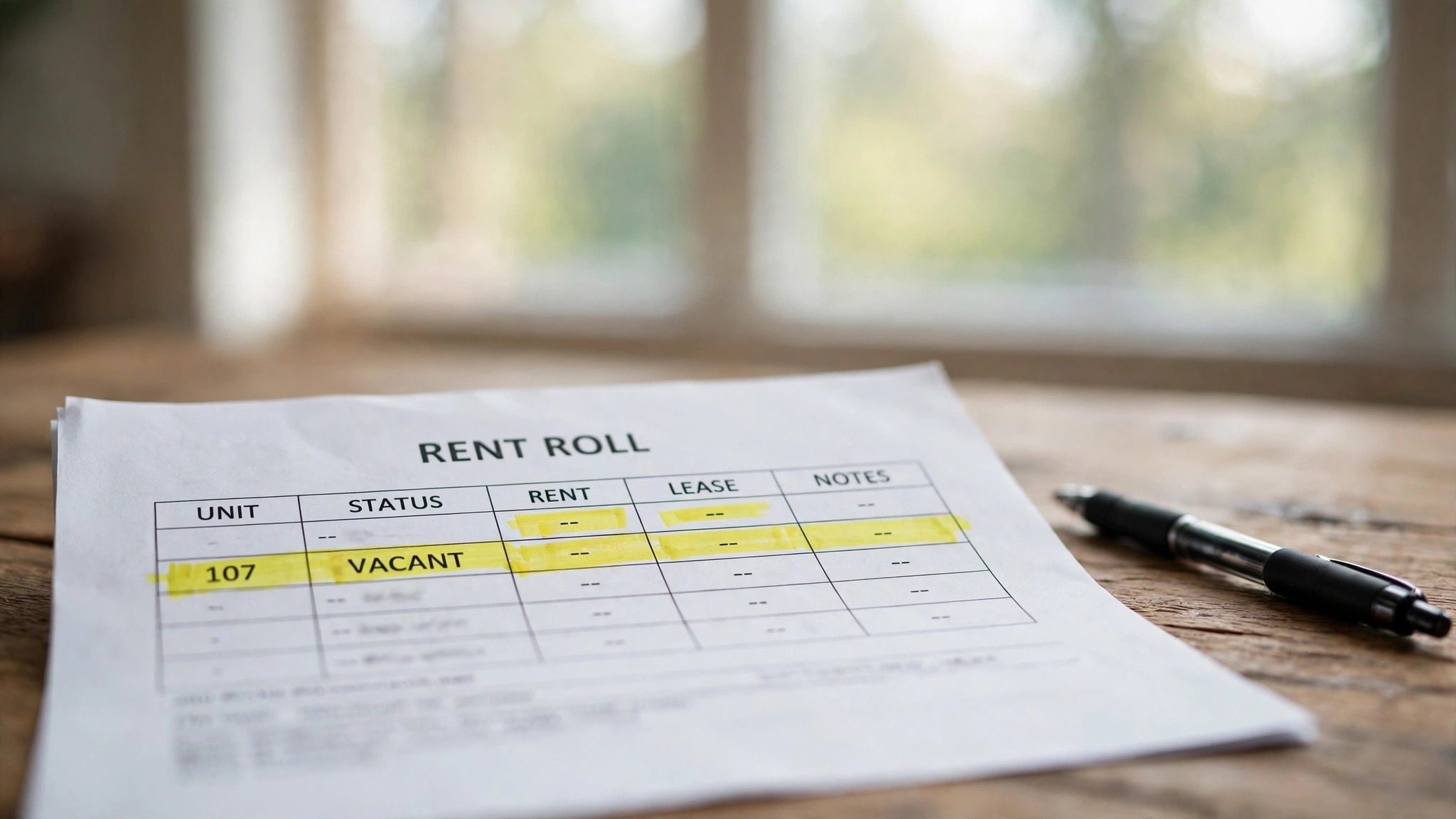
A small portfolio migrates in 30 days, and a large portfolio takes 60 days, because the leases, the tenants and the maintenance history all need to be loaded and checked. The safe method is to run both systems in parallel for two weeks, check the rent roll every day, and cut over only when the numbers match.
Is Yardi Breeze good for commercial properties?
Yes. Yardi Breeze covers residential and commercial leases, CAM reconciliations, online payments, maintenance and owner reporting, at $1 a unit a month with a $100 monthly minimum. Breeze Premier at $2 a unit a month adds more features. A manager that plans to move to full Yardi Voyager later should start on Breeze, because the data model is the same.
What is the cheapest property management software?
TenantCloud is free up to 75 units, and Innago is free for the core platform, so a small landlord can start for nothing. Buildium Essential at $58 a month is the cheapest professional start, and Yardi Breeze at $1 a unit a month is the cheapest per-unit start.
Does Buildium handle commercial leases?
Yes. Buildium covers residential, commercial, association and student housing leases, with CAM reconciliations on the commercial side, online payments, maintenance and owner reporting. The Essential plan at $58 a month covers up to 150 units, Growth at $183 a month covers larger portfolios, and Premium at $375 a month adds the most features.
How much does commercial property software cost at 200 units?
A 200-unit portfolio pays $200 a month on Yardi Breeze, $280 a month on AppFolio Core, $183 a month on Buildium Growth, $375 a month on Buildium Premium, and $300 to $600 a month on Rent Manager at its reported per-unit rates. TenantCloud Pro costs $29.50 a month at that size, though it covers the basics only.
What is CAM reconciliation in commercial property software?
CAM reconciliation is the annual true-up of common area maintenance costs, where the landlord compares the estimated CAM charges billed during the year against the actual costs, and bills or credits the tenant for the difference. Yardi Breeze, MRI Software and RealPage all handle CAM reconciliation natively. A commercial manager should check the CAM tools before buying, because the reconciliation is the job that eats the most admin time.
The Ledger: Spend, Save, Risk
Here is the whole guide as a ledger for a 200-unit portfolio, so the decision fits on one page. Find your row, check the monthly figure, and buy the platform that matches the portfolio you actually run.
| Portfolio | What you pay a month | What you get | The risk |
|---|---|---|---|
| 200 units, lowest per-unit cost | 183 dollars, Buildium Growth | Flat rate, 0.92 dollars a unit, full basics | Scale ceiling at a few hundred units |
| 200 units, Yardi depth | 200 dollars, Yardi Breeze | Commercial leases, CAM, clean path to Voyager | 100 dollar minimum punishes small portfolios |
| 200 units, AI leasing | 280 dollars, AppFolio Core | Lisa leasing assistant, Realm X AI suite | 280 dollar minimum, dearest of the three |
| 200 units, cheapest start | 29.50 dollars, TenantCloud Pro | Basics only, 0.15 dollars a unit | Thin accounting and reporting |
| 2,000 units, enterprise | Quote-based, MRI Software | Deepest commercial platform in this guide | Implementation, training and a team to run it |
Count the units, check the CAM reconciliation, and price the tool at the real unit count. That single test tells a manager more than any demo, and it is the only honest way to choose among the best property management software for commercial properties.