
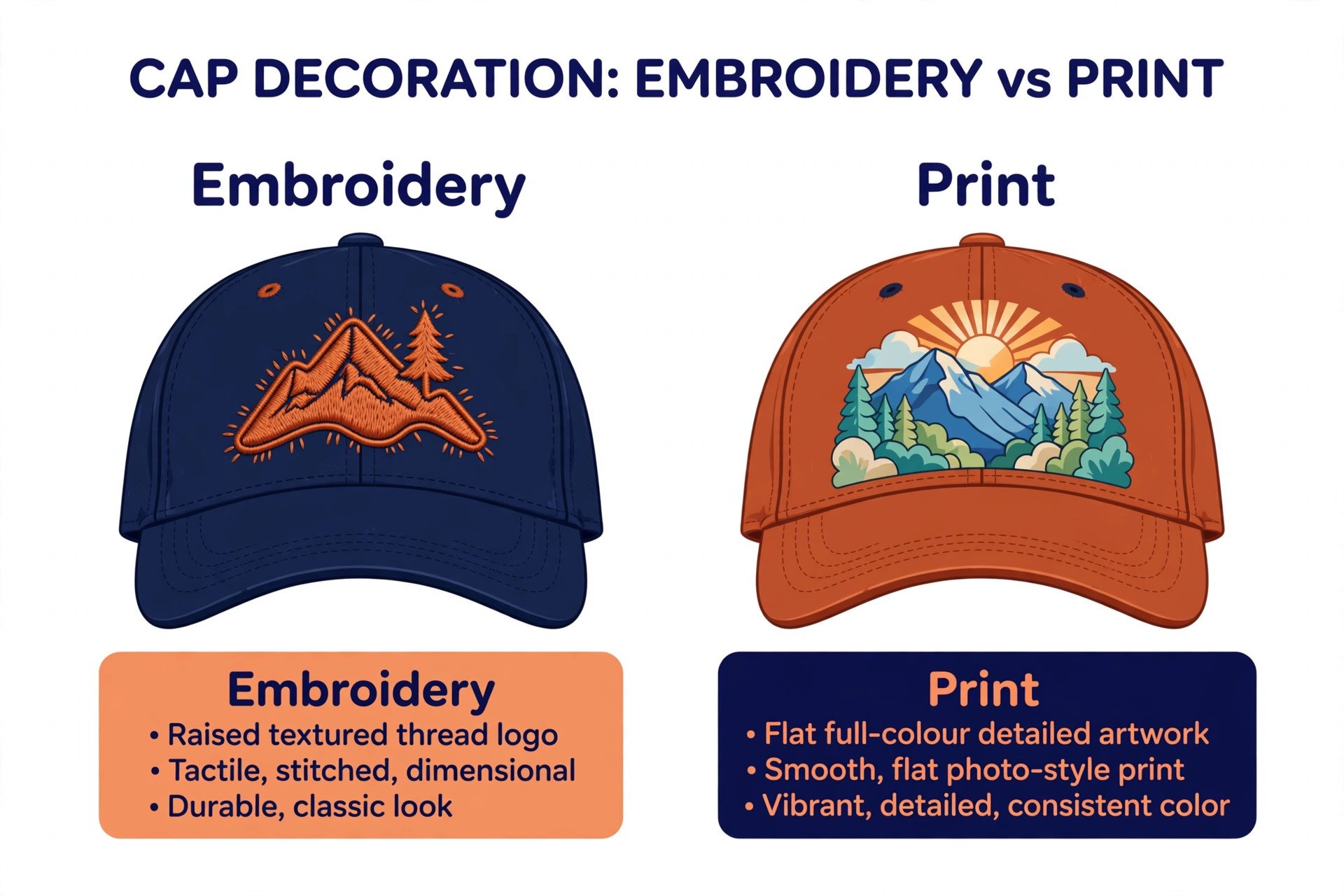
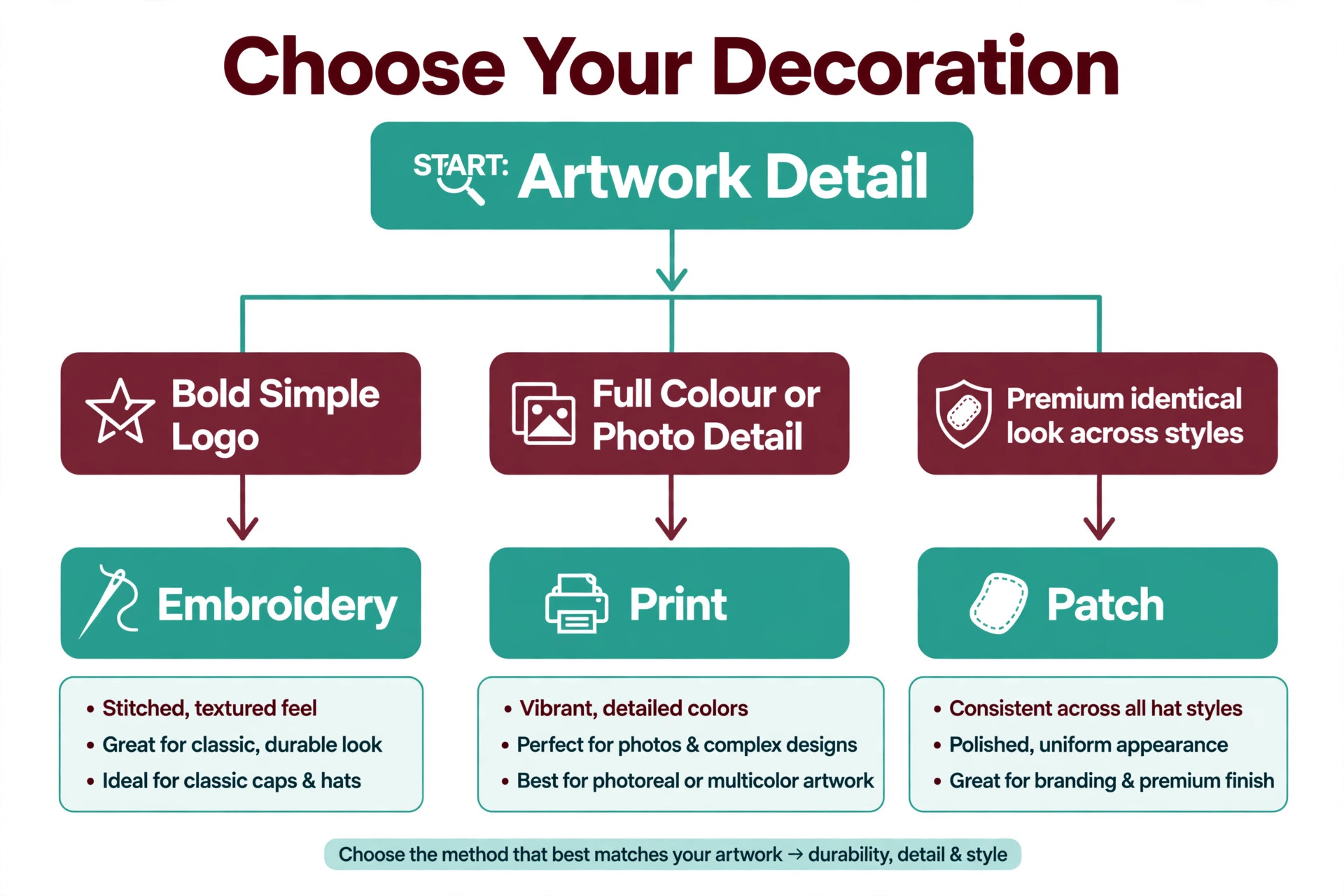
Embroidery and printing are not interchangeable on a cap, and choosing the wrong method ruins an otherwise good design. Embroidery gives a raised, textured finish that suits bold logos and short text, but it struggles with fine detail, gradients, and photographic color. Printing, including direct to film methods, reproduces full color artwork and small details far better, but it sits flatter on the fabric and can feel less premium on a structured front panel. The best custom cap design tools help you match the method to the artwork before you pay, with live previews, placement controls, and honest limits on stitch size and print area.
This guide compares nine tools that design and produce custom caps, from print on demand platforms for sellers to bulk suppliers for teams and events. Each review covers cap styles, decoration methods, minimum orders, pricing approach, and proofing, plus the limits that matter when a cap arrives and does not match the screen preview. Read the decoration explainer first if you have never ordered embroidered headwear, then shortlist two suppliers and order samples before a full run.
Embroidery, Print, and Patches Explained
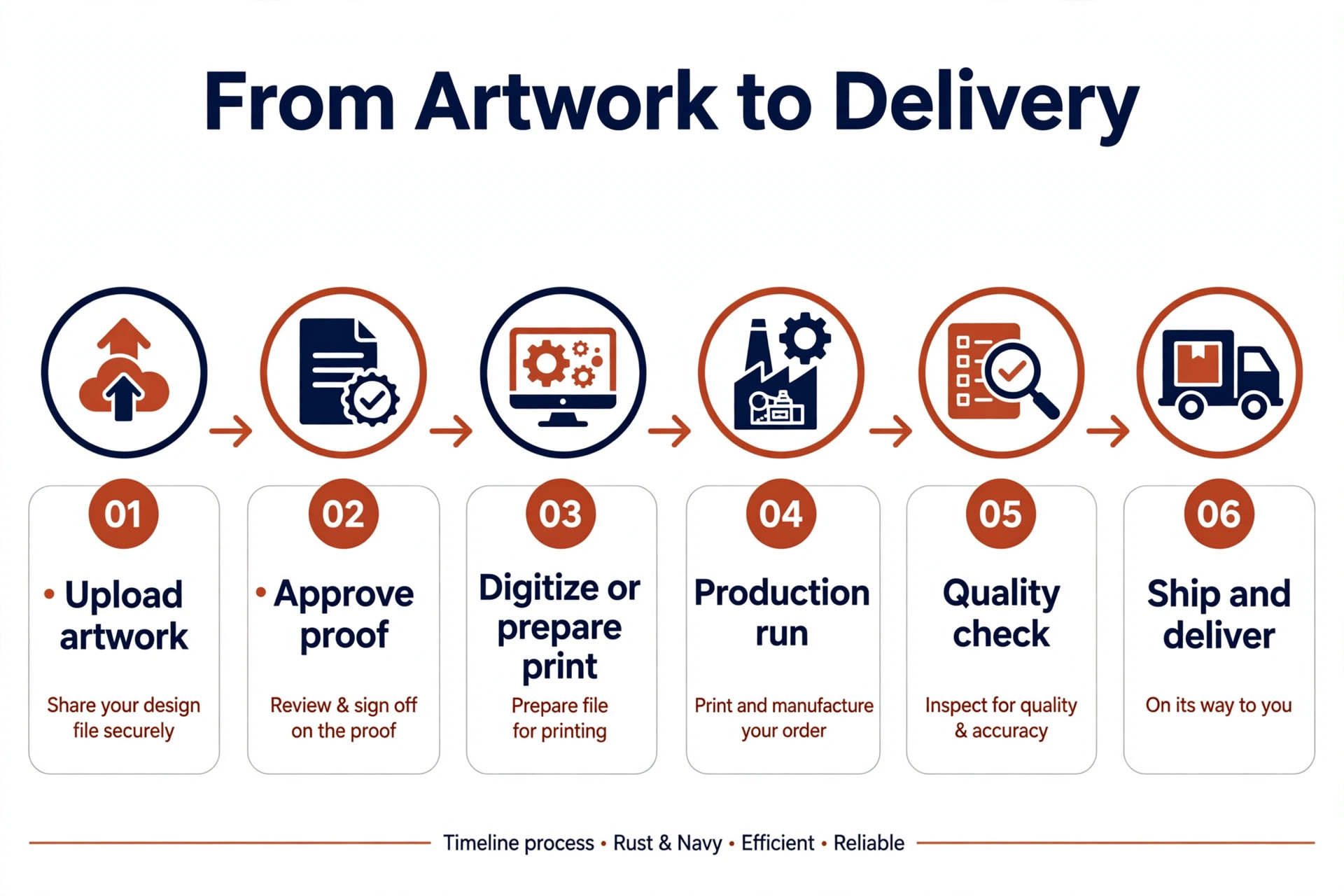
Embroidery stitches thread directly into the cap, which gives durability and a premium feel that survives washing better than many prints. The best custom cap design tools explain that trade clearly in the editor, rather than letting you discover it when a detailed logo arrives as a simplified stitch. It works best with simple shapes, bold lettering, and a limited thread palette, and most suppliers digitize your artwork into a stitch file before production. That digitizing step matters, because a logo with tiny text or thin lines may need simplification to stitch cleanly, and a good supplier will tell you that before production rather than after delivery.
Printing covers several methods, with direct to film now common for full color cap designs. Print suits detailed illustrations, gradients, and photographic elements that embroidery cannot reproduce, and it often costs less per unit for small runs with complex art. The trade is feel and longevity on some fabrics, since print sits on the surface and can wear differently from stitched thread over time. Patches offer a third route, with embroidered, leather, or PVC patches sewn or heat applied to the cap, which suits premium branding and designs that must stay identical across many cap styles.
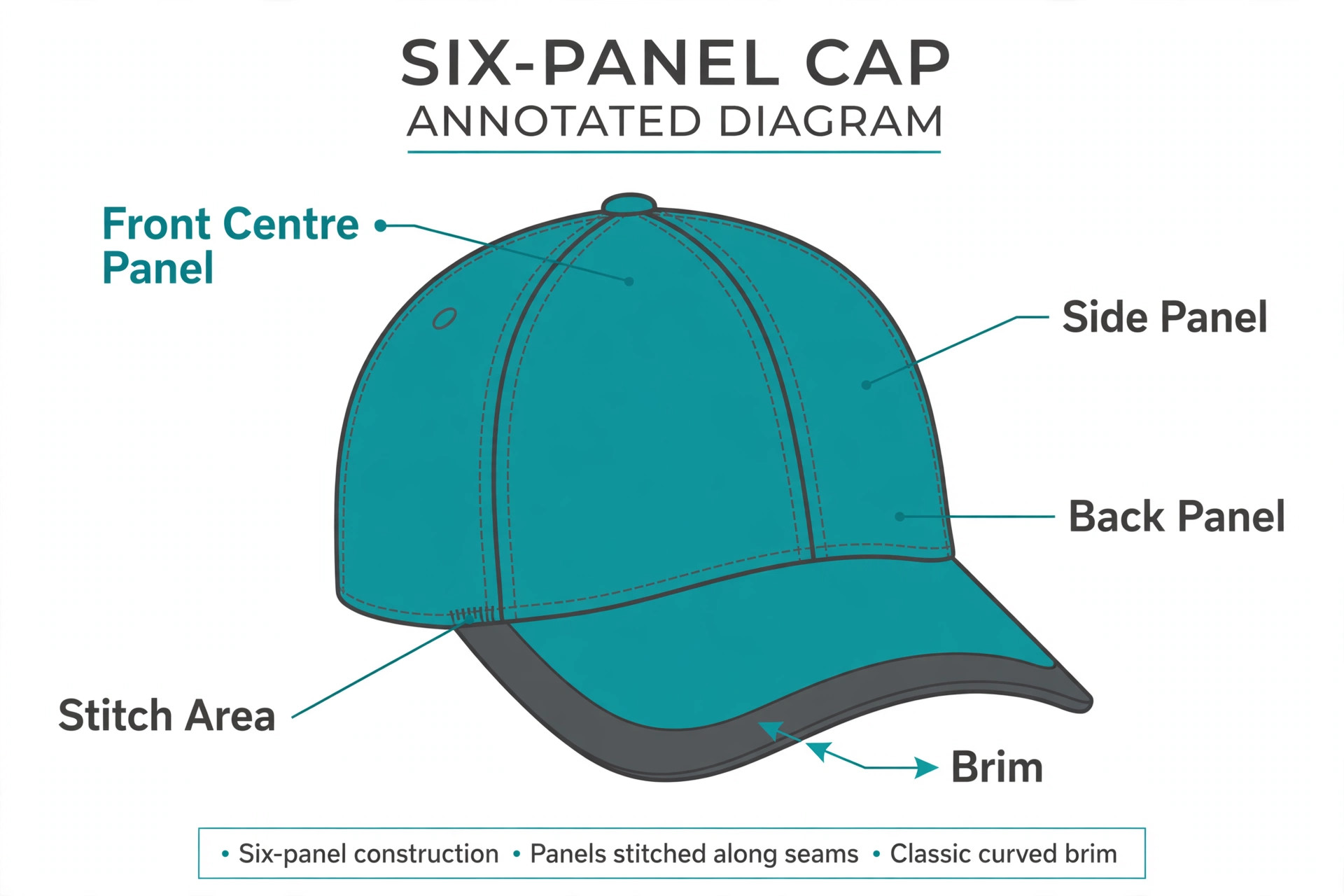
Placement is the other decision that shapes the result. Front centre panels carry the main logo, side panels suit small marks, and back panels fit short text or a web address. Curved front panels limit the flat stitch area, so a wide logo may need resizing or a patch instead of direct embroidery. Check the printable and stitchable area for your chosen cap style in the design tool, and preview the design at real size, because a logo that looks strong on a full screen mockup can look lost on a six panel dad hat.
Quick Comparison
| Tool | Best for | Minimum order | Decoration |
|---|---|---|---|
| Printful | Print on demand sellers | None | Embroidery and print |
| CustomInk | Teams and events | Low or none on many styles | Embroidery and print |
| Printify | Low cost POD sellers | None | Embroidery and print |
| RushOrderTees | Fast team orders | Low | Embroidery and print |
| Spreadshirt | Creator merch | None on many products | Print and embroidery |
| Vistaprint | Small business branding | Varies by product | Embroidery and print |
| Zazzle | Custom one off gifts | None on many products | Print and embroidery |
| The Monterey Company | Bulk brand orders | Varies, bulk focused | Embroidery and patches |
| Branded Bills | Leather patch caps | Small runs | Leather patch focus |
The best custom cap design tools in this table differ most on whether they sell one cap at a time or reward bulk orders, so match the minimum order column to your real quantity before you compare design features.
The 9 Tools Reviewed
1. Printful
Printful is the strongest print on demand choice for sellers who want to design caps, list them online, and let Printful produce and ship each order. The Design Maker lets you upload artwork, add text and clipart, test placement, and preview realistic mockups, with embroidery and direct to film options depending on the cap style. You pay per product when an order arrives, with no inventory and no minimum order, and Printful handles digitization for custom embroidery orders, which removes a technical step that trips up many first time sellers.
The catalogue covers trucker hats, dad hats, snapbacks, and other styles, with worldwide delivery and store integrations for major ecommerce platforms. Mockup quality is a real strength, with thousands of product images for listings, plus a large font and clipart library for sellers without a designer. Pricing varies by cap style and decoration, so calculate profit per cap after product cost, shipping, and platform fees before setting a retail price, and order a sample to check stitch quality and color on your exact style.
Limits include less control over production timing than a direct bulk supplier, since each order is produced on demand, and embroidery limits still apply to fine detail even with digitization help. Printful also suits sellers better than teams that need fifty identical caps on a fixed date, where a bulk supplier with a single production run may be faster and cheaper per unit. For a store, a creator, or a small brand testing demand, it is the safest first pick.
2. CustomInk
CustomInk is the best all round choice for teams, events, and businesses that need a guided design experience plus reliable delivery. The online design lab lets you upload artwork or build a design from text and graphics, preview it on many hat styles, and choose embroidery or full color printing. Many styles carry low or no minimums, with volume discounts on larger orders, and the quoted price includes products, decoration, design support, and free standard shipping on many orders, which makes budgeting simpler than a price that adds fees later.
Style range is wide, from classic dad hats and mesh truckers to snapbacks and performance Flexfit styles, with brand name blanks from known headwear makers. Customer support and design help stand out, with real people reviewing artwork and flagging problems such as text too small to embroider cleanly. That review step catches many first order mistakes, and it matters more than a slightly lower unit price when a deadline is fixed.
The trade is price on very small print on demand style orders, where a POD platform may be cheaper per unit for a single cap sold online. CustomInk also works best as a direct order supplier rather than a store integration for ongoing ecommerce sales, so sellers who need automatic fulfilment should pair it with Printful or Printify for the store side. For a team order, a fundraiser, or a company event, CustomInk is hard to beat for confidence.
3. Printify
Printify appeals to sellers who want the lowest production cost and a wide choice of print providers for the same design. The free Product Creator lets you design trucker hats, dad hats, and other styles, test embroidery and print options, and publish to a connected store with no minimum order. Published starting prices in recent listings put a classic dad hat near 13 dollars and 84 cents and a mesh back trucker cap near 14 dollars and 40 cents before Premium discounts, though provider, style, and decoration change the final figure, so confirm the live quote for your exact cap.
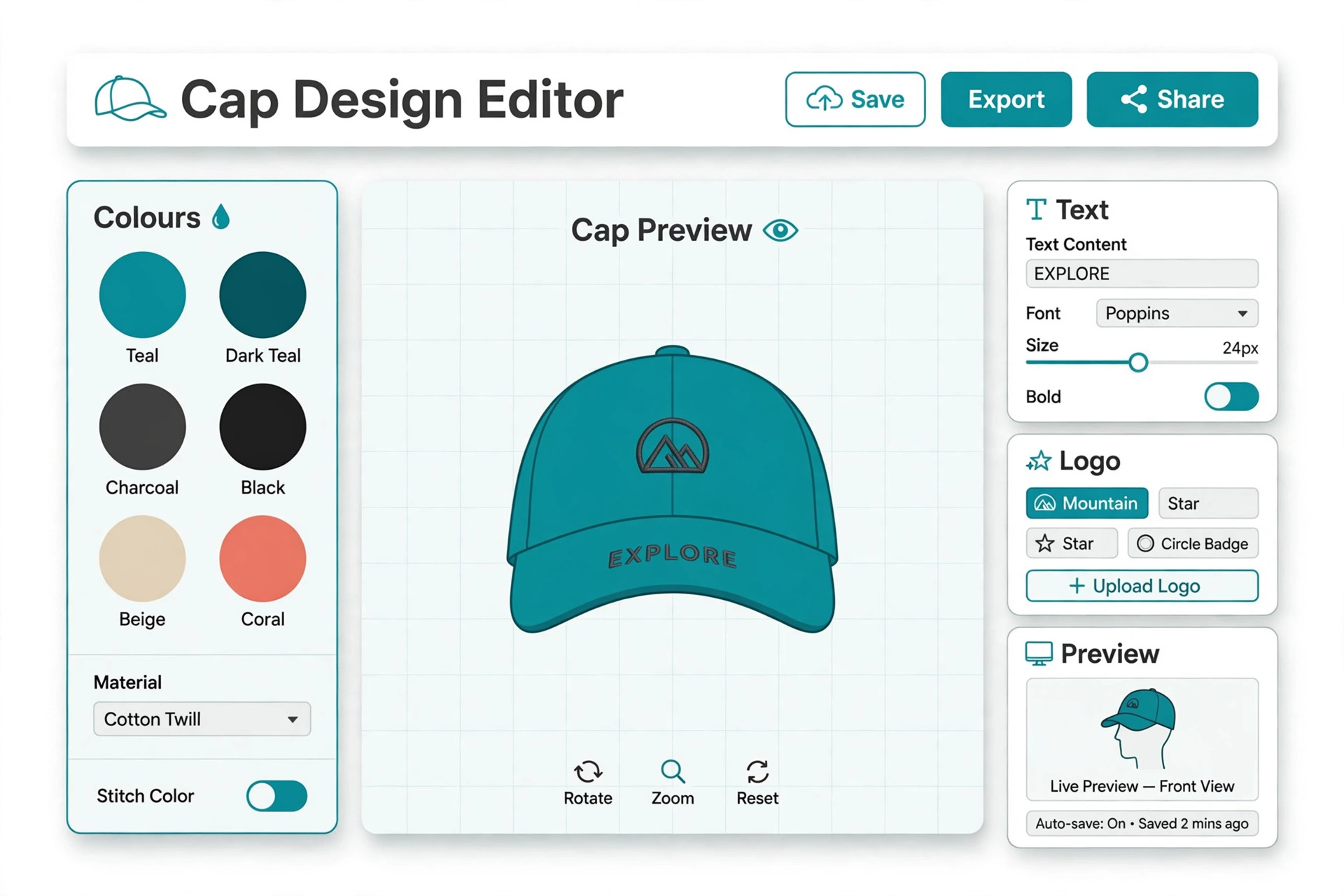
Provider choice is both the strength and the complication. Different providers offer different cap blanks, decoration methods, shipping speeds, and prices, so a seller can switch providers without redesigning, but must also compare them carefully. A provider that is cheapest for one style may be slower or less consistent for another, and sample orders are the only reliable way to judge quality. Printify suits sellers comfortable with that comparison work, and it rewards them with competitive margins.
Limits include variable quality across providers and less hands on design support than CustomInk. Printify also requires more seller effort on store setup, shipping settings, and profit calculation than Printful, which bundles more of that workflow. Choose Printify when margin and provider flexibility matter most, and order samples from your top two providers before listing.
4. RushOrderTees
RushOrderTees suits buyers who need custom hats fast, with a design studio, low minimums, and free standard shipping on many orders. The catalogue covers dad hats, truckers, beanies, bucket hats, and sustainable styles, with brand name blanks from Richardson, Yupoong, Nike, and others. Embroidery and printing are both available, with logo placement on front, side, or back panels, and volume pricing that lowers the unit cost as quantity grows.
Turnaround is a selling point, with standard delivery reported around nine to twelve business days for many dad hat orders and rush options available for tighter deadlines. That speed helps event organizers and teams who finalize artwork late, though rush fees and stock availability still apply, so confirm the delivery date in writing before promising caps for an event. Free design support and a visual studio preview help non designers get a clean result without hiring help.
The main limit is that pricing depends heavily on style, decoration locations, and quantity, so a headline price for one cap rarely matches a bulk quote. RushOrderTees also works best for direct orders rather than ongoing store fulfilment. Pick it when speed and a wide brand name catalogue matter, and get a dated quote for your exact quantity before you commit.
5. Spreadshirt
Spreadshirt is a creator friendly platform for selling custom caps and apparel without inventory. The design tool lets you upload artwork, add text, and preview caps in a store or marketplace listing, with print and embroidery options depending on style. No minimum order on many products suits creators testing a design, and the platform handles production, payment, and shipping for marketplace and shop sales, which keeps a small creator focused on design and promotion.
Pricing follows a per product model with creator margins set on top of a base price, so profit depends on the cap style and decoration chosen. Confirm the live base price for your style, because Spreadshirt pricing varies by product and region, and test the preview at real size before publishing. Marketplace reach is a bonus, since designs can sell to buyers who never visit your own store, though marketplace fees and competition also affect margin.
Limits include less bulk order support than CustomInk or RushOrderTees, and less provider choice than Printify. Design control is also simpler than a dedicated embroidery supplier, so complex stitch work may need simplification. Choose Spreadshirt for creator merch and single design tests, and move to a bulk supplier when a team or event needs identical caps in quantity.
6. Vistaprint
Vistaprint fits small businesses that already order business cards, signage, and marketing print from one supplier and want caps to match. The cap designer covers embroidery and print options across common styles, with template based starting points for logos and text, plus brand matching for businesses that use Vistaprint for other materials. Ordering is straightforward, with clear product pages, decoration choices, and delivery estimates at checkout.
Pricing varies by style, decoration, and quantity, with discounts on larger orders and frequent promotions that change the effective price. Check the final checkout total, including decoration and shipping, rather than the product page starting price, and confirm minimum quantities for your chosen style, since some options require a small batch rather than a single cap. Vistaprint suits a business that values one supplier relationship over the lowest possible unit price.
The limits are depth and specialization. Vistaprint does not match Printful for print on demand store integration, CustomInk for team design support, or The Monterey Company for bulk embroidery expertise. Cap style range is solid but narrower than specialist headwear suppliers, and premium patch options are thinner. Use Vistaprint when brand consistency across print and caps matters most, and trial a sample before a staff wide order.
7. Zazzle
Zazzle is a good choice for one off custom caps, gifts, and small creative runs where design freedom matters more than bulk pricing. The designer supports uploaded artwork, text, and graphics across cap styles, with print and embroidery options depending on the product, and no minimum order on many items. Marketplace and store options let creators sell designs to a wider audience, while direct orders suit birthdays, reunions, and team gifts.
Pricing is per product and varies by style, decoration, and any marketplace fees, so confirm the checkout total for your exact cap before comparing with a bulk supplier. Design flexibility is strong for printed caps, with full color artwork and photo based designs that embroidery cannot match, and the preview tools help non designers place art correctly. That freedom makes Zazzle fun for personal projects and creator experiments.
Limits include higher per unit costs at bulk quantities and less dedicated team support than CustomInk or RushOrderTees. Embroidery quality and digitizing help also vary by product, so order a sample for any design with fine text. Choose Zazzle for gifts, single caps, and creative tests, and switch to a bulk supplier when quantity passes twenty identical caps.
8. The Monterey Company
The Monterey Company leads for bulk brand orders where proofing, account management, and decoration range decide the result. The supplier offers embroidery, embroidered patches, leather patches, and PVC patches across trucker hats, dad hats, snapbacks, and fitted caps, with a digital proof before production and a dedicated point of contact for the order. That combination prevents the most common bulk mistakes, such as wrong colors, wrong placement, or a logo that stitches poorly at production size.
Minimums and pricing are bulk focused and vary by style and decoration, so request a quote for your exact quantity rather than expecting a single cap price. The value lies in consistency across a large run, with the same patch or stitch result on every cap, and in support for first time bulk buyers who need guidance on cap styles and decoration methods. Businesses ordering for staff, franchises, or retail lines will benefit most from that service level.
The drawback is clear for small buyers. A single cap or a tiny test run is not the sweet spot, and the quote based process takes longer than a self serve POD checkout. The Monterey Company also suits direct bulk orders better than ongoing ecommerce fulfilment. Pick it when you need a large, consistent run with a proof and a human contact, and order a physical sample of the proof before approving the full batch.
9. Branded Bills
Branded Bills specializes in leather patch trucker hats and dad hats, and that focus gives it a distinct premium look. Leather patches carry a debossed or printed logo with a texture that embroidery and flat print cannot match, and the style suits outdoor brands, breweries, gyms, and creator merch where the cap itself is part of the identity. Small runs are possible, which helps a brand test a leather patch design without committing to a large bulk order.
Pricing varies by patch style, cap style, and quantity, with premium materials costing more than standard embroidery, so request a quote for your design and compare it against an embroidered version of the same logo. Leather patch production also takes longer than simple print, and patch size limits text length, so keep wording short and bold. The result rewards that restraint, with a cap that looks retail ready rather than promotional.
Limits are scope and speed. Branded Bills does not cover the full range of decoration methods and bulk services that The Monterey Company or CustomInk offer, and leather patch caps suit a specific aesthetic that may not fit a corporate uniform. Choose Branded Bills when the leather patch look is the point of the cap, and use a broader supplier for mixed decoration needs.
How to Judge the Best Custom Cap Design Tools
Start with the cap, not the design tool. Choose a style your audience will actually wear, such as an unstructured dad hat for casual brands, a structured trucker for outdoor brands, or a snapback for streetwear, and confirm the decoration area for that style before designing. A great logo on the wrong cap still fails, while a simple logo on a well chosen cap sells. Next, match the method to the artwork using the explainer above, and simplify any design that mixes tiny text with gradients, since no method reproduces both perfectly on a curved panel.
Then compare the buying experience for your quantity. A seller needs store integration, per order production, and mockups, while a team needs a proof, a delivery date, and volume pricing. Test the preview tools with your real logo, not a placeholder, and check that text stays legible at the smallest stitch size the supplier allows. Finally, order a sample. A sample reveals thread color shifts, patch texture, and fit differences that no screen preview can show, and it costs far less than a full run of caps nobody wears.
Preparing Artwork That Produces Cleanly
Good artwork starts as a clean vector file where possible, with text converted to outlines and colors limited for embroidery. The best custom cap design tools accept vector uploads and warn you when a file is too low resolution for the chosen decoration, which saves a wasted sample order. For print, a high resolution image with a transparent background gives the cleanest result, while a low resolution screenshot will blur and pixelate on fabric. Keep the design simple for a first order, with one main element and short text, and save a version with larger lettering for embroidery and a fuller version for print if you plan to offer both.
Check colors against the cap fabric before production. Order a thread or fabric swatch when brand colors are strict, because screen colors shift under shop lighting and again in thread, and a swatch removes guesswork for the whole team. Photograph the sample cap in daylight and under indoor light as well, since a color that looks right in a studio photo can read differently at an outdoor event. Keep the approved sample as the reference for future reorders, and note the exact thread or print color codes in your order file so a second batch matches the first without a new round of samples, colour disputes, or delayed deliveries for the next event or season.
Dark thread on a dark cap disappears, light print on a light cap washes out, and thread colors shift slightly from screen to stitch, so request a thread chart or a sample when brand colors are strict. Leave breathing space around the logo, because a design that touches seams or panel edges stitches unevenly and prints awkwardly. A supplier that flags these issues during proofing is doing you a favour, even when the feedback delays the order by a day.
Ordering Checklist Before You Pay
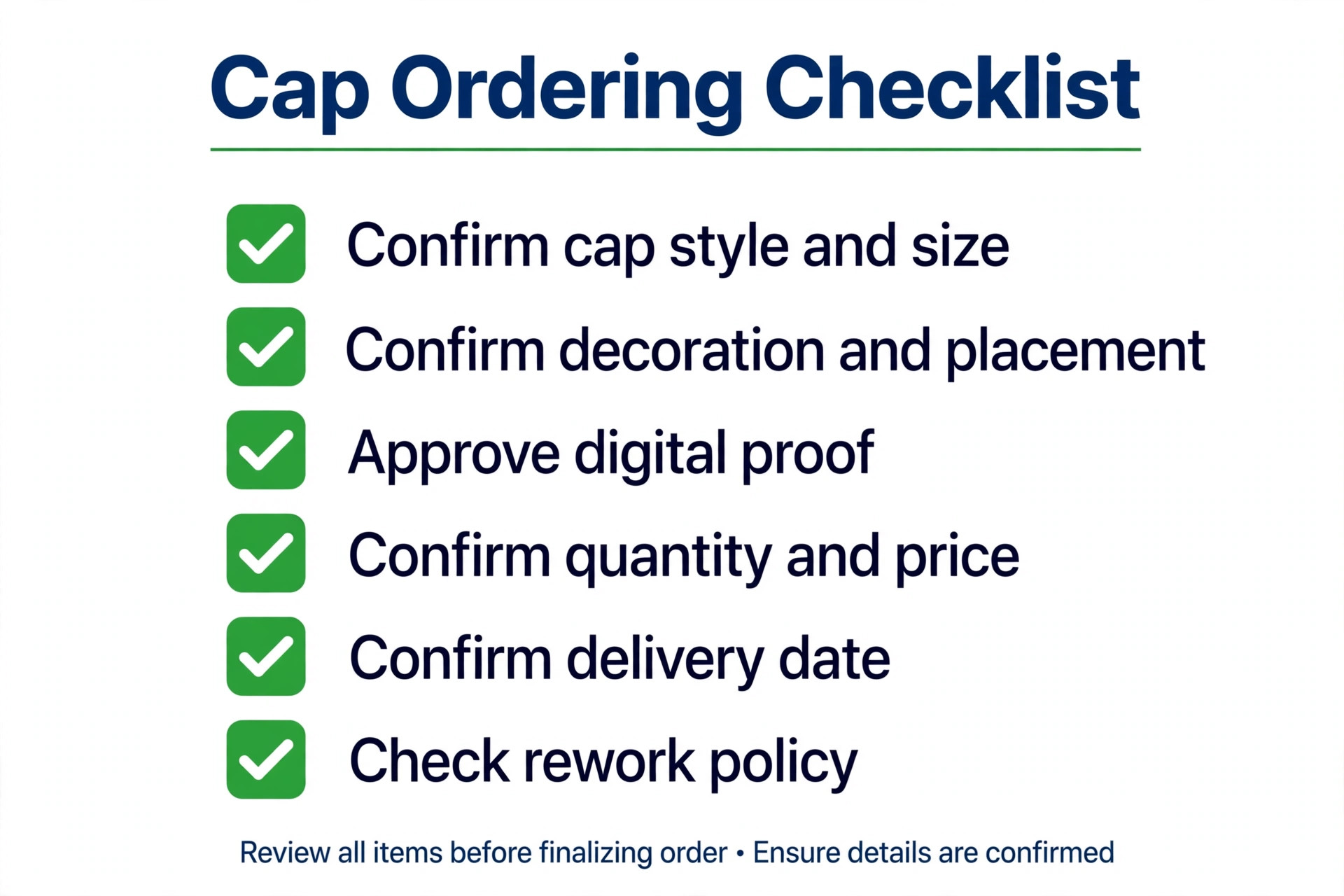
Confirm the cap style, color, and size range in writing, including whether the cap is adjustable, fitted, or snapback, since fit complaints are hard to fix after delivery. The best custom cap design tools make that confirmation easy by showing style, color, and decoration choices together on one order summary before payment. Confirm decoration method, placement, and size in millimetres or inches, and approve a digital or physical proof that shows the exact artwork at production size. Confirm quantity, unit price, decoration fees, shipping, and delivery date, and check whether setup or digitizing fees apply to a first order.
Also confirm the rework policy. Ask what happens if colors are wrong, placement shifts, or a batch arrives with stitch errors, and get that answer before payment rather than after a problem. For store sellers, confirm fulfilment times, tracking, and return handling, since customers judge your brand on delivery as much as on design. A supplier that answers these questions clearly before you pay is far more likely to handle a problem well after you pay.
Frequently Asked Questions
Is embroidery or printing better for a custom cap?
Embroidery suits bold logos, short text, and a premium textured finish, while printing suits full color artwork, gradients, and detailed illustrations. Choose embroidery for a classic brand cap that must last through regular wear, and printing for a design that relies on color detail or photography. Patches offer a third option when you want a premium look that stays identical across cap styles.
What is the smallest text that embroiders cleanly?
Small text is the most common embroidery failure, and most suppliers recommend keeping lettering above about 6 millimetres in height for clean stitching, though the exact limit depends on font and cap style. Script fonts and thin strokes fail earlier than bold sans serif fonts, so test a sample when text is central to the design. If text must be smaller, switch to print or a patch rather than forcing embroidery to do a job it cannot do well.
Do I need a minimum order for custom caps?
It depends on the supplier. Printful, Printify, Spreadshirt, and Zazzle offer no minimum on many styles for print on demand and direct orders, while CustomInk and RushOrderTees offer low or no minimums on many styles with discounts at volume. Bulk specialists such as The Monterey Company focus on larger runs and quote by quantity. Match the supplier to your real order size rather than assuming every tool sells single caps cheaply.
How long does a custom cap order take?
Print on demand orders are produced per order and typically ship within a few business days plus transit, while bulk orders need proofing, digitizing, and production time that can run one to three weeks. RushOrderTees reports nine to twelve business days for many dad hat orders, with rush options for tighter deadlines. Always confirm a delivery date in writing for events, because stock, decoration method, and quantity all affect timing.
Can I sell custom caps online without holding stock?
Yes, through print on demand platforms such as Printful, Printify, and Spreadshirt, which produce each cap after a customer orders it and ship it directly. The best custom cap design tools for sellers combine that fulfilment with strong mockups, so a listing looks professional before the first order arrives. You design the cap, set a retail price above product and shipping costs, and keep the margin without buying inventory. Order samples first to check quality, and calculate profit carefully after platform fees, because a low margin design can lose money once shipping is included.
What file type should I upload for cap design?
Upload a vector file such as SVG, AI, or EPS for the cleanest embroidery and print results, with text converted to outlines where possible. A high resolution PNG with a transparent background also works well for print, provided the image is large enough for the print area. Avoid low resolution screenshots and compressed social media images, since they blur on fabric and cannot be fixed during production.
Our Closing Take for Cap Buyers
Sellers should start with Printful for the strongest all round print on demand workflow, compare Printify on margin, and use CustomInk when a team order needs a proof and a firm delivery date. Brands that want a premium look should trial Branded Bills for leather patches and The Monterey Company for a consistent bulk run, while gift buyers and creators can test a single design on Zazzle or Spreadshirt without a minimum order. The best custom cap design tools in this guide all design a cap, so the winner is the one that matches your decoration method, quantity, and deadline, and proves it with a sample you would actually wear.
Further Reading
More Reading on Stratilyze. If caps are part of a merch or small business plan, see How to Start a Print on Demand Business with AI, Best AI Tools for Etsy Sellers, Best AI Tools for Small Business, Best AI Logo Makers, Best AI Tools for Ecommerce, and Use AI for Print Shop Quote Automation.