
Running an online store in 2026 means competing against sellers who list products faster, answer customers instantly and personalize every email — and they are doing it with AI. The problem is not knowing whether to use AI. It is knowing which of the hundreds of tools are worth paying for. This guide covers the best AI tools for ecommerce organized the way stores actually buy them: by function. Product photos, product descriptions, chatbots, reviews and dynamic pricing each get a tested pick, plus the integration and pricing facts you need before you commit.
We checked every price against vendor pages in October 2026, and for each tool we include a concrete revenue use case — because “saves time” is vague, but “recovers abandoned carts at $0.99 per resolved conversation” is a decision you can actually make.
Quick Answer: Best AI Tools for Ecommerce
| Tool | Best For (Function) | Entry Price | Free Option |
|---|---|---|---|
| Shopify Magic | Product descriptions + store admin (Shopify) | Included with any Shopify plan | Included |
| Jasper | Product descriptions & ad copy at scale | ~$49/mo | 7-day trial |
| Canva | Product photos & social creative on a budget | ~$15/mo | Yes, generous |
| Tidio (Lyro AI) | Chatbot/customer support for small stores | From $29/mo | Yes |
| Gorgias | Ecommerce support desk (Shopify/BigCommerce) | From $10/mo | Trial |
| Klaviyo AI | Email & SMS marketing automation | Free up to 250 contacts; paid from ~$20/mo | Yes |
| Octane AI | Product recommendation quizzes | $50/mo | Trial |
| Rebuy | AI upsells & cross-sells (Shopify) | From $99/mo | Yes |
| Rep AI | Storefront sales agent / cart recovery | From ~$104/mo | 100 free visitors/mo |
| AdCreative.ai | AI-generated ad creatives for D2C brands | From $40/mo | Trial |
Short version: On Shopify, start with Shopify Magic — it is already in your admin. Add Tidio for support and Klaviyo for email, and you cover the three jobs that move revenue for most small stores.
1. Shopify Magic — Best Native Tool for Product Descriptions and Admin
What it is: Shopify’s built-in AI suite. It writes product descriptions from a few keywords, generates and edits product images, summarizes reviews, and powers Sidekick — the AI assistant inside your Shopify admin that answers questions and runs actions for you (“show me last month’s best sellers,” “draft a discount for lapsed customers”).
2026 pricing (verified): Included free with any Shopify plan (Shopify itself starts at $29/mo billed annually for Basic). No separate AI fee.
Revenue use case: A store with 200 SKUs can cut listing creation from ~20 minutes per product to under 3. That is roughly 55 hours saved per catalog refresh — time that goes into ads and merchandising instead of copywriting. The built-in review summaries also lift conversion pages without a separate app subscription.
Pros
- Zero extra cost and zero extra login — it lives in the admin you already use
- Sidekick can act (draft products, discounts, collections) instead of just answering
- Image generation and background editing cover basic product-photo needs
- No integration risk — it is Shopify
Cons
- Description quality is good, not great; premium copy still needs a human pass or Jasper
- Image tools handle clean studio-style shots, not complex lifestyle photography
Best for: Every Shopify merchant. Use it before buying anything else on this list.
2. Jasper — Best for Product Descriptions and Ad Copy at Scale
What it is: A marketing-focused AI writing platform with brand-voice controls, campaign workflows and templates tuned for product copy, ads and landing pages rather than generic chat.
2026 pricing (verified): From ~$49/mo (7-day trial; no permanent free plan).
Revenue use case: Stores with 20+ SKUs launching weekly drops use Jasper to generate first-draft descriptions, meta titles and ad variants in their brand voice, then edit. The win is consistency: 50 product pages that all sound like your brand instead of five freelancers’ styles.
Pros
- Brand voice and style-guide features keep large catalogs consistent
- Campaign-level workflows (one brief → product copy + ads + email) beat one-off prompts
- Strong integrations with common marketing stacks
- Built for marketing output, not general chat
Cons
- ~$49/mo is real money for a solo store with 10 products — overkill at small scale
- Output still needs editing for anything with regulatory or technical claims
Best for: Mid-size stores and D2C brands publishing copy constantly. If you write fewer than 20 product pages a month, Shopify Magic or ChatGPT Plus ($20/mo) is enough.
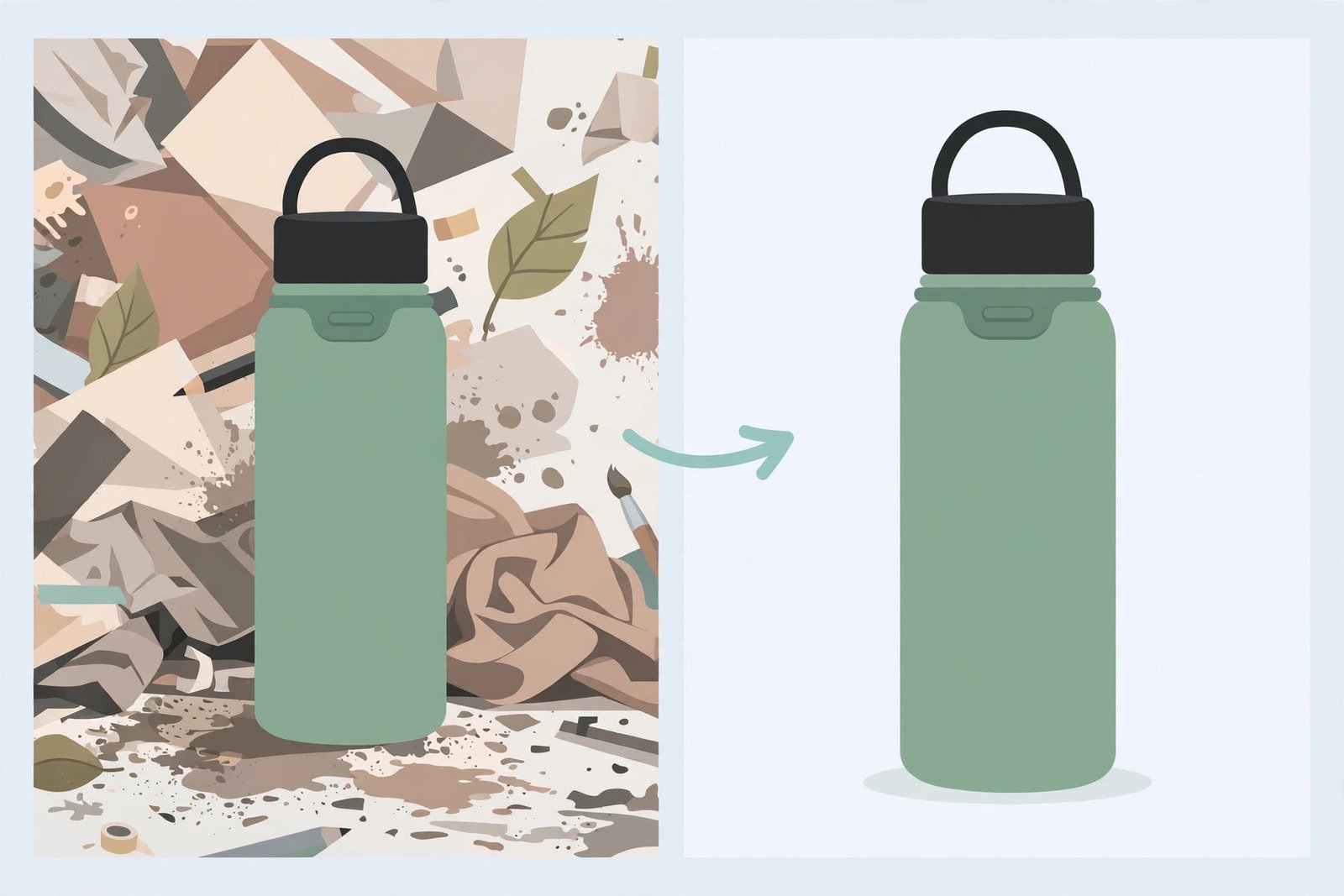
What it is: The design platform most small sellers already know, now with AI image editing (background removal/replacement, Magic Edit), template-driven product graphics and bulk-create tools for catalogs.
2026 pricing (verified): Free plan (genuinely usable); paid from ~$15/mo.
Revenue use case: Replace a $500/product-photoshoot habit for simple items: shoot on a phone, fix backgrounds in Canva, export marketplace-ready images. For many small stores, the free plan covers this entirely.
Pros
- Free plan is honestly enough to start for most stores
- Background tools fix the #1 amateur product-photo problem (cluttered backgrounds)
- Thousands of ecommerce templates for ads, banners and social posts
Cons
- Not a dedicated product-photography AI — complex items (glass, jewelry reflections) still need real shoots
- AI-generated product images must represent the real product accurately — returns and platform penalties punish fantasy renders
- Heavy AI features consume credits on lower tiers
Best for: Small stores and marketplace sellers who need clean, consistent product visuals without a photographer. Pair with Shopify Magic’s image tools if you are on Shopify.
4. Tidio (Lyro AI) — Best Chatbot for Small Stores

What it is: A live-chat and chatbot platform built for small ecommerce, whose Lyro AI agent answers customer questions from your store’s content — shipping, returns, product details — and resolves routine tickets without a human.
2026 pricing (verified): Free plan available; paid from $29/mo (Lyro is an add-on tier on top for higher volumes).
Revenue use case: The classic: a shopper at 11pm asks “does this run small?” and gets an instant, correct answer instead of bouncing. Tidio reports Lyro resolving up to 67% of routine customer requests autonomously in vendor testing — treat that as a ceiling, but even half of that meaningfully cuts support load for a two-person store.
Pros
- Fast setup on Shopify and WooCommerce — live in an afternoon
- Free plan lets you validate before paying
- Human handoff is clean; Lyro does not trap customers in bot loops
- Combines live chat, chatbot and basic helpdesk in one tool
Cons
- Lyro costs extra at volume; model your ticket count before committing
- Less deep ecommerce order-action capability than Gorgias
Best for: Small stores (under ~1,000 conversations/month) that need 24/7 answers without hiring support staff.
5. Gorgias — Best Support Desk for Shopify and BigCommerce Stores
What it is: A helpdesk built specifically for ecommerce — every ticket arrives with the customer’s order history attached, and agents (human or AI) can issue refunds, edit orders and check tracking without leaving the inbox. Its AI Agent is billed per resolved conversation on top of the base plan.
2026 pricing (verified): From $10/mo (Starter, ~50 tickets); AI resolutions add roughly $0.90–$1.00 each. A realistic 50K-visitor store with ~1,000 AI interactions/month lands around $990/mo all-in — budget accordingly.
Revenue use case: Support that sells. Because Gorgias sees order context, its AI can answer “where is my order?” with the actual tracking link and offer a discount on a delayed shipment — turning a complaint into a retained customer.
Pros
- Deepest Shopify integration in the support category — order actions inside the ticket
- Per-resolution AI pricing means you pay for outcomes, not attempts
- Scales from $10/mo starter to serious multi-brand operations
- Strong macro/automation library for repetitive tickets
Cons
- Costs climb fast with ticket volume — the $10 entry price is not your steady-state price
- Ecommerce-only focus; if you sell services too, you may need a second desk
- AI quality depends on your help-center content being complete and current
Best for: Growing Shopify/BigCommerce stores where support volume is a real line item and order context matters on every ticket.
6. Klaviyo AI — Best for Email and SMS Marketing
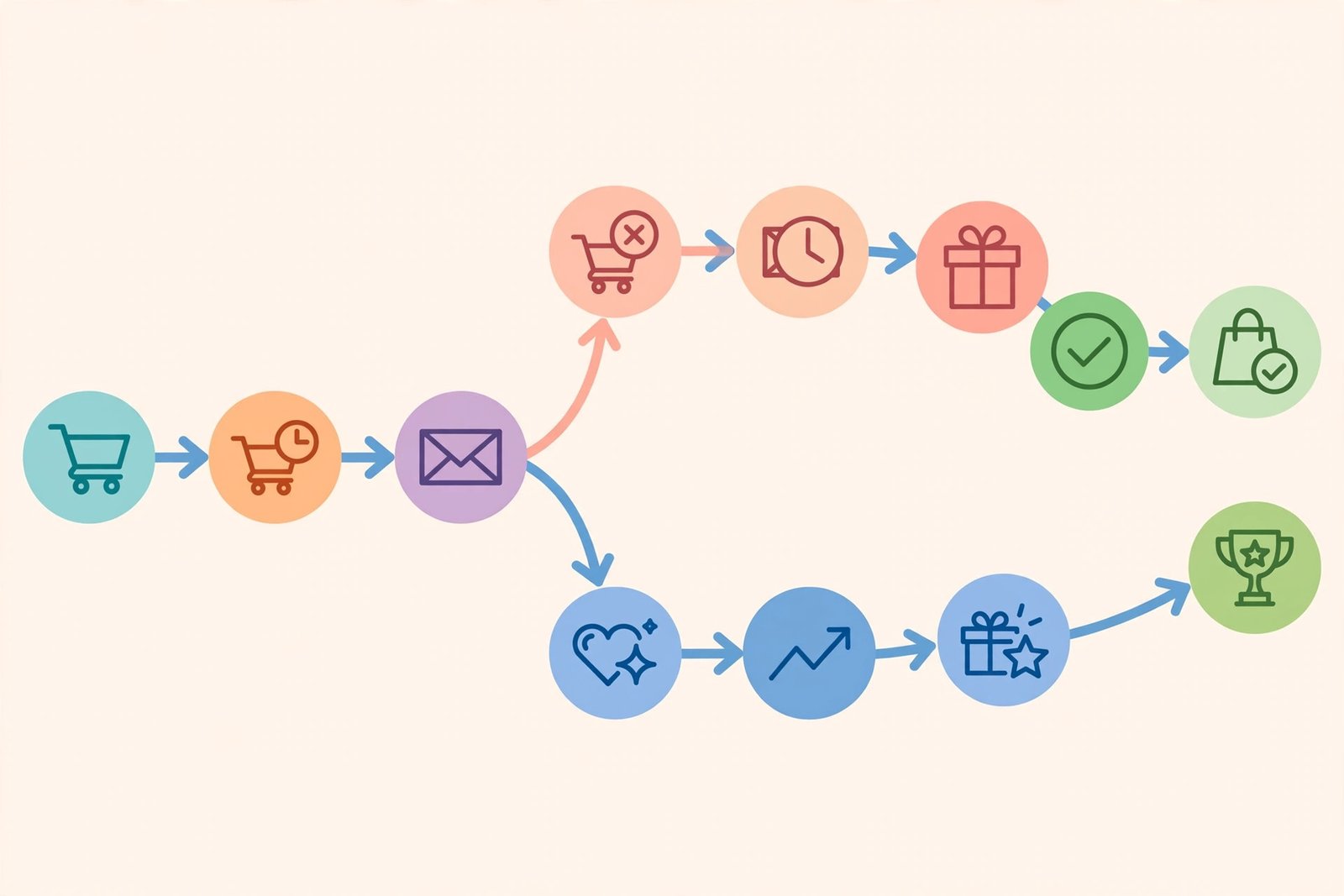
What it is: The email/SMS platform that has become the default for Shopify brands, with AI layered through it: predictive analytics (customer lifetime value, churn risk), AI segmentation, subject-line and send-time optimization, and generative copy assistance.
2026 pricing (verified): Free tier up to 250 contacts; paid plans scale with list size, starting around ~$20/mo for small lists and rising from there.
Revenue use case: This is where AI most directly prints money in ecommerce. Klaviyo’s predictive segments let you email “likely to churn, high value” customers a win-back offer before they lapse, and its flow builder automates the big three — abandoned cart, browse abandonment, post-purchase — which for most stores account for the majority of email revenue.
Pros
- Industry-standard Shopify integration; also supports WooCommerce and BigCommerce
- Predictive CLV/churn is genuinely differentiating — not just copy generation
- Free tier to 250 contacts lets tiny stores start properly
- Benchmarks show your flows against similar stores
Cons
- Pricing scales with your list whether contacts buy or not — clean your list
- Powerful enough to overwhelm beginners; expect a learning curve
Best for: Any store where email is (or should be) a top-three revenue channel — which is most stores doing over ~$10k/month.
7. Octane AI — Best for Product Recommendation Quizzes
What it is: A quiz platform for Shopify: shoppers answer 3–5 questions (skin type, fit preference, use case) and get a personalized product recommendation, while you collect zero-party data and an email address.
2026 pricing (verified): From $50/mo.
Revenue use case: For catalogs where choice paralysis kills conversion — skincare, supplements, apparel fits — a quiz converts browsers into buyers by doing the “which one is for me?” work. Stores typically place the quiz on the homepage and in ads (“find your shade in 60 seconds”), capturing emails even when the shopper does not buy immediately.
Pros
- Solves a real problem (overwhelming catalogs) that chatbots do not
- Zero-party data feeds Klaviyo segments for much better email targeting
- Recommendation logic is yours to tune — not a black box
- Strong fit for beauty, wellness and apparel
Cons
- $50/mo is wasted if your catalog is small or self-explanatory
- Quiz quality is on you — a bad quiz converts worse than none
Best for: Shopify brands with 30+ SKUs in a category where customers need guidance to choose.
8. Rebuy — Best for AI Upsells and Cross-Sells

What it is: A personalization engine for Shopify that places AI-driven product recommendations at every high-value moment: product pages, cart drawer, checkout and post-purchase — the classic “frequently bought together” and one-click post-purchase offers, tuned by purchase data.
2026 pricing (verified): Free plan available; paid from $99/mo.
Revenue use case: Average order value is the cleanest lever in ecommerce — you already paid for the traffic. Rebuy’s post-purchase offers (shown after checkout, so they cannot hurt conversion) and smart cart recommendations are designed purely to raise AOV, with results reported against a control group.
Pros
- Post-purchase offers add revenue with zero conversion risk
- Recommendations improve with your store’s actual sales data
- Free plan to test the core widgets
Cons
- Paid tiers start at $99/mo — needs real traffic to pay back
- Shopify-centric
Best for: Shopify stores with steady traffic (roughly 10k+ sessions/month) whose AOV has plateaued.
9. Rep AI — Best Storefront Sales Agent
What it is: An AI sales associate that proactively engages storefront visitors — greeting, answering product questions, recommending items and intervening when a shopper shows exit or cart-abandonment behavior.
2026 pricing (verified): 100 free visitors/month; Starter from ~$104/mo; a 50K-session store on annual billing runs about $294/mo.
Revenue use case: Cart abandonment is ~70% industry-wide; Rep’s play is to engage the wavering shopper in the moment — answering the one question (“is the warranty included?”) that stands between them and checkout — rather than relying solely on the follow-up email an hour later.
Pros
- Proactive engagement, not just reactive chat — closer to a salesperson than a support bot
- Strong Shopify focus with high G2 ratings (4.9/5)
- Behavioural triggers target the shoppers most likely to convert
Cons
- Session-based pricing punishes high-traffic, low-conversion stores
- Proactive pop-ups annoy some shoppers — tune the triggers and watch bounce rate
Best for: Mid-size Shopify brands whose problem is conversion rate, not traffic.
10. AdCreative.ai — Best for AI Ad Creatives
What it is: A platform that generates ad creatives (static and copy variants) from your product assets, scores them by predicted performance, and produces the dozens of variations Meta and Google’s algorithms now expect.
2026 pricing (verified): From $40/mo.
Revenue use case: Creative fatigue is the silent ROAS killer: the same ad stops working in 2–3 weeks. AdCreative lets a small team produce and test fresh variants weekly instead of monthly.
Pros
- Built for the volume modern ad platforms demand
- Performance scoring prioritizes which creatives to test first
- Brand controls keep generated ads on-palette and on-message
Cons
- Predicted scores are directional, not gospel — real spend still decides
- $40/mo only pays back if you actually run paid ads at some scale
- Video creative is weaker than static
Best for: D2C brands spending consistently on Meta/Google ads who cannot keep up with creative demand manually.
Shopify vs WooCommerce Integration Table
Integration depth is where tool lists usually lie by omission. Here is the honest picture:
| Tool | Shopify | WooCommerce | Notes |
|---|---|---|---|
| Shopify Magic | ✅ Native | ❌ | Built into Shopify admin |
| Jasper | ⚠️ Via apps/API | ⚠️ Via apps/API | Writing tool — platform-agnostic |
| Canva | ⚠️ App/export | ⚠️ App/export | Design tool — works anywhere |
| Tidio (Lyro) | ✅ Native app | ✅ Native plugin | Both first-class |
| Gorgias | ✅ Deep native | ⚠️ Limited | Built for Shopify/BigCommerce |
| Klaviyo AI | ✅ Native | ✅ Native | Both well supported |
| Octane AI | ✅ Native | ⚠️ Limited | Shopify-first |
| Rebuy | ✅ Native | ❌ | Shopify (incl. Plus checkout) |
| Rep AI | ✅ Native | ❌ | Shopify-focused |
| AdCreative.ai | ⚠️ Connect for assets | ⚠️ Connect for assets | Ad platform is the real integration |
Rule of thumb: Shopify has the deeper AI ecosystem in 2026 — most new AI apps launch Shopify-first. WooCommerce stores are best served by platform-neutral tools (Klaviyo, Tidio, Jasper, Canva) plus WordPress-native plugins. (Already running a store? Our best software for small business guide covers the wider stack.)
Full Comparison Table
| Tool | Function | Entry Price | Free Option | Platforms | Revenue Lever |
|---|---|---|---|---|---|
| Shopify Magic | Descriptions/admin | Included | Included | Shopify | Faster listings |
| Jasper | Copy at scale | ~$49/mo | Trial | Agnostic | Consistent catalog copy |
| Canva | Product visuals | ~$15/mo | Yes | Agnostic | Cheaper product photos |
| Tidio (Lyro) | Support chatbot | $29/mo | Yes | Shopify, Woo | Instant answers → conversion |
| Gorgias | Support desk | $10/mo + AI fee | Trial | Shopify, BigCommerce | Support that retains/sells |
| Klaviyo AI | Email/SMS | ~$20/mo (scales) | To 250 contacts | Shopify, Woo, BigCommerce | Flows + predictive segments |
| Octane AI | Quizzes | $50/mo | Trial | Shopify | Guided selling |
| Rebuy | Upsells | $99/mo | Yes | Shopify | Higher AOV |
| Rep AI | Sales agent | ~$104/mo | 100 visitors | Shopify | Cart recovery in the moment |
| AdCreative.ai | Ad creative | $40/mo | Trial | Agnostic | ROAS via creative testing |
Prices verified October 2026. Several tools price by volume (tickets, sessions, contacts) — model your real usage before comparing headline prices.
How to Choose Your Ecommerce AI Stack
Step 1: Take the free native wins first. On Shopify, enable Shopify Magic today — it costs nothing and covers descriptions and basic images. Add Klaviyo’s free tier for email if you are under 250 contacts.
Step 2: Fix the biggest leak, not every leak. Diagnose first: High traffic, low conversion → Rep AI or a quiz (Octane). Decent conversion, low AOV → Rebuy. Support inbox drowning → Tidio (small) or Gorgias (growing). Traffic fine, email weak → Klaviyo. Ad ROAS decaying → AdCreative.
Step 3: Do the volume math. Per-ticket, per-session and per-contact pricing all look cheap at the headline and grow with you. That is fair — the tool earns more as you earn more — but forecast your cost at 2x current volume so success does not surprise your margins.
Step 4: Run one 30-day test at a time. Install one tool, measure one metric (conversion rate, AOV, email revenue, tickets resolved), keep or cut. Stores that install five AI apps in a weekend learn nothing and pay for all of them. For the broader automation picture, see our AI workflow automation tools guide.
Frequently Asked Questions
What is the best free AI tool for ecommerce?
Shopify Magic for Shopify stores — it is included, native and genuinely useful for descriptions and simple images. For platform-neutral free options, Canva’s free plan handles product visuals and Klaviyo’s free tier covers email up to 250 contacts. There is no single free tool that does everything; the free stack is Magic + Canva free + Klaviyo free.
Can AI really increase ecommerce revenue, or is it hype?
Both, depending on the tool. The reliable wins are boring: faster listings (Magic), email flows that recover carts (Klaviyo), answers that stop shoppers bouncing (Tidio), and upsells that raise AOV (Rebuy). The hype is in one-click “AI stores” and generated lifestyle imagery that does not match the product. Buy one measurable lever at a time and the revenue effect is real.
Is Shopify better than WooCommerce for AI tools in 2026?
Yes — for AI specifically. Most new AI ecommerce apps launch Shopify-first, and deep native integrations (Gorgias, Rebuy, Rep AI, Octane) are Shopify-only or Shopify-best. WooCommerce stores still have strong options in platform-neutral tools (Klaviyo, Tidio, Jasper, Canva) plus WordPress-native AI plugins, but the ecosystem gap is real and widening.
How much should a small store budget for AI tools?
A sensible starting stack is $0–80/mo: Shopify Magic ($0), Canva (~$15), Tidio (from $29) and Klaviyo (free to ~$20 at small list sizes). Stores doing $50k+/mo typically spend $300–1,000/mo across support AI, personalization and email as volumes scale — roughly proportional to the revenue those tools touch.
Do AI product descriptions hurt SEO?
Not inherently. Search engines penalize thin, duplicate content — not AI assistance. AI drafts edited for accuracy, original detail (materials, sizing, use cases) and your brand voice rank fine. Publishing raw, identical AI copy across hundreds of SKUs is the actual risk. Our AI SEO content writing tools guide covers this in depth.
Which AI chatbot is best for a small Shopify store?
Tidio with Lyro AI is the best starting point for small stores: native Shopify app, free plan to validate, paid from $29/mo. Graduate to Gorgias when ticket volume and order-action needs (in-ticket refunds, order edits) justify a dedicated ecommerce helpdesk.
Conclusion: Build the Stack Around One Revenue Lever at a Time
The best AI tools for ecommerce in 2026 are not a single platform — they are a small stack, each tool bought for one job with one measurable payoff. Start with what is already included (Shopify Magic), add the tool that fixes your biggest revenue leak, measure for 30 days, and expand only when the numbers say so.
If you run a Shopify store today, the highest-probability first three moves are: enable Shopify Magic, put Klaviyo’s core flows live, and add Tidio for instant answers. That combination costs under $50/mo at small scale and touches listings, email revenue and conversion — the three places AI reliably pays for itself.
Selling is only half the business — for the support side, compare your options in our best AI chatbots for small business roundup next.